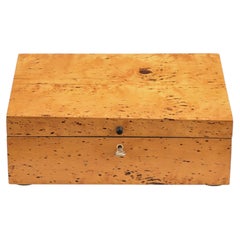
Want more images or videos?
Request additional images or videos from the seller
1 of 9

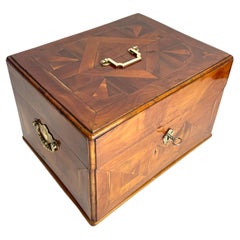
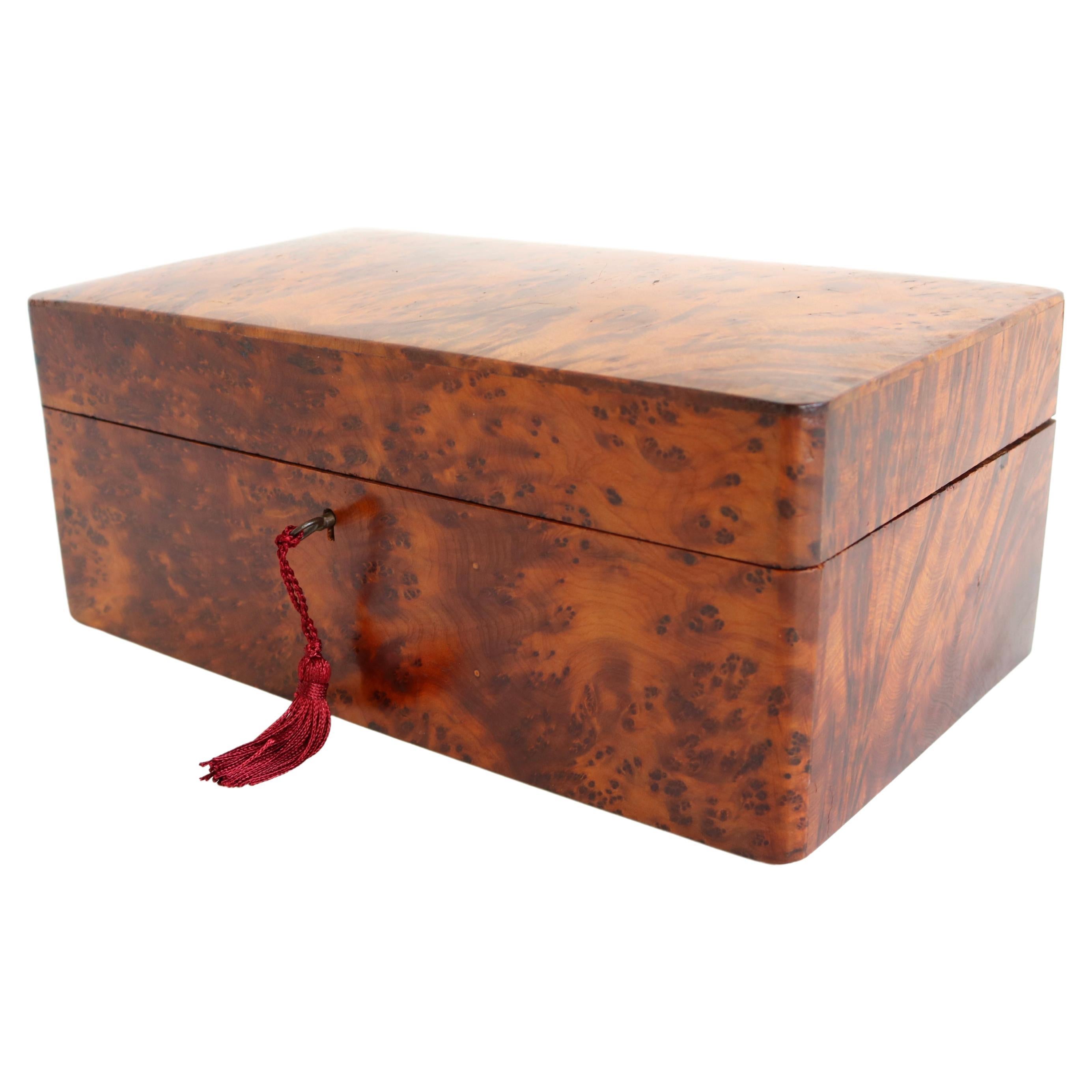
Baroque Casket, around 1760, birch burl and walnut

$1,552.39
$1,940.4920% Off
£1,152.68
£1,440.8620% Off
€1,320VAT Included
€1,65020% Off
CA$2,178.65
CA$2,723.3120% Off
A$2,208.50
A$2,760.6320% Off
CHF 1,256.13
CHF 1,570.1620% Off
MX$26,883.69
MX$33,604.6120% Off
NOK 14,733.19
NOK 18,416.4820% Off
SEK 14,769.19
SEK 18,461.4920% Off
DKK 10,064.34
DKK 12,580.4320% Off

About the Item

Casket Baroque, around 1760, birch burl and walnut, round lid with folding star inlay and pewter thread inlays, original lock and fittings, shellac hand polish Dimensions: Height: 14 cm Width: 26 cm Depth: 20 cm Most pieces of furniture from the Baroque era date from the period between 1670 and around 1750. Starting with strict but pompous forms, Baroque furniture developed into playful pieces of furniture with numerous curves and magnificent fittings by the middle of the 18th century. Baroque chests of drawers mostly date from the period between 1720 and 1750 and feature multiple curved fronts and veneer marquetry. Baroque tables and chairs feature lavishly curved legs, the lower ends of which end in volutes or animal hooves. Towards the end of the Baroque period and the Rococo period, the curved legs of tables and chairs merge into the frames in a single sweep. Baroque cabinets are usually disproportionately large by today's living standards, as they originally stood in castles. Heights of 2.40 to 2.60 meters are not uncommon for baroque cabinets. In early Baroque furniture, the architectural structure becomes increasingly less important. Ornamental forms such as the auricle and cartilage ornament appear. Starting in Nuremberg, wave and flame moldings became increasingly important in Baroque furniture. These decorate columns, pilaster strips and are used as framing. From the middle of the 17th century onwards, twisted columns (corkscrew columns) were used in addition to the classic column arrangements. The twisted columns first appeared as a turned element in Baroque furniture. From around 1700 onwards, starting in southern Holland, flower marquetry became increasingly common. After the middle of the 17th century, flower tendrils, flower and fruit hangings became increasingly popular. Starting in Italy, acanthus decorations on Baroque furniture became fashionable in the late 17th century. At the same time, the doubling of cushion and coffered fillings came from the north. This led to the development of bastion fillings and large medallion surfaces. From 1720 onwards, we see an increasing dissolution of the strict geometric forms and the front edges of the carcase are increasingly beveled. The surfaces are decorated with marquetry made from scrollwork, rocailles and chinoiserie. From the middle of the 18th century, parquet marquetry became increasingly important and Baroque furniture took on a more private character. Courtly Baroque furniture was covered with walnut marquetry - often combined with exotic woods such as boxwood, plum, amaranth, mahogany and various types of rosewood. Non-wood materials such as brass, pewter, silver, copper, ivory, mother-of-pearl, tortoiseshell and horn were very popular and were often also engraved. Both rural and bourgeois Baroque furniture was predominantly made from solid softwood or oak, occasionally also from solid walnut. Baroque furniture is a sustainable piece of furniture. The wood was felled over 200 years ago without the use of machines and pulled out of the forest by horses. The tree trunks were sawn by hand or with gang saws (using water power) and stored in the fresh air for several years. Exotic woods from overseas were also brought to Europe on sailing ships. The production was done entirely by hand and only natural materials (glues and natural resins) were used, which we still use today for restoration.
  • Dimensions:
    Height: 5.52 in (14 cm)Width: 10.24 in (26 cm)Depth: 7.88 in (20 cm)
  • Style:
    Baroque (Of the Period)
  • Materials and Techniques:
  • Place of Origin:
  • Period:
    1760-1769
  • Date of Manufacture:
    1760s
  • Condition:
    Refinished. Wear consistent with age and use.
  • Seller Location:
    Münster, DE
  • Reference Number:
    1stDibs: LU9172242226672

More From This Seller

View All
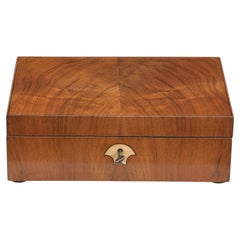
Early 19th Century German Biedermeier Casket Birchwood around 1830

Early 19th Century German Biedermeier Casket Birchwood around 1830

Located in Münster, DE

Casket Biedermeier, circa 1830, birch veneer, lockable, small knob handle, interior lined with handmade paper, shellac finish Dimensions: Height 11 cm, Width 30 cm Depth 20 cm

Category

Antique 1830s German Biedermeier Jewelry Boxes

Materials

Birch
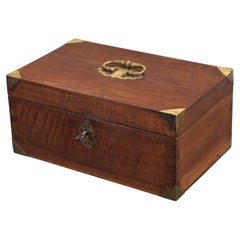
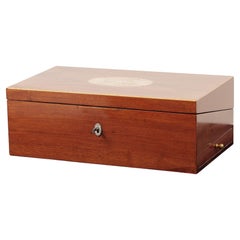
Travel Case  Baroque, ca. 1750/60, mahogany, original brass fittings

Travel Case Baroque, ca. 1750/60, mahogany, original brass fittings

Located in Münster, DE

Travel Case Baroque, ca. 1750/60, mahogany, original brass fittings and handle on the lid, very elaborate and sophisticated interior layout, beautiful patina Dimensions: Heigh...

Category

Antique 1750s German Baroque Jewelry Boxes

Materials

Brass

Early 19th Century German Biedermeier Casket Nutwood around 1830

Early 19th Century German Biedermeier Casket Nutwood around 1830

Located in Münster, DE

Casket Biedermeier, circa 1830, solid and veneered walnut, mirrored veneer on the lid, inlaid bone key plate, lined interior, shellac finish Dimensions: Height 10 cm, Width 29.5 c...

Category

Antique 1830s German Biedermeier Jewelry Boxes

Materials

Walnut

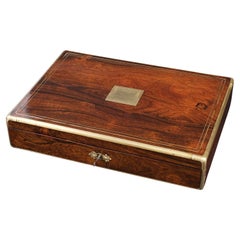
Antique French Playing Card Box, Rosewood & Brass Inlays, Circa 1860

Antique French Playing Card Box, Rosewood & Brass Inlays, Circa 1860

Located in Münster, DE

Large casket, rosewood solid and veneered, France circa 1860/70, brass handle embedded in the lid, brass inlays, nice division inside (originally for tokens and cards), restored cond...

Category

Antique 1860s French Empire Decorative Boxes

Materials

Brass

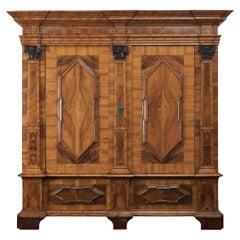
Baroque Hall Cupboard 1770/80 Walnut and Walnut Burl

Baroque Hall Cupboard 1770/80 Walnut and Walnut Burl

Located in Münster, DE

Important hall cabinet from around 1770/1780 Walnut, walnut burl and other precious woods veneered on softwood, two-door body divided by three pilasters, doors with octagonal carto...

Category

Antique 1780s German Baroque Cupboards

Materials

Oak, Walnut, Burl

You May Also Like

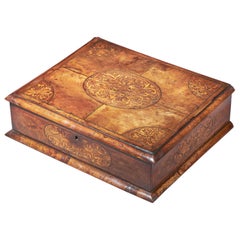
17th Century Figured Walnut and Seaweed Marquetry Lace Box

17th Century Figured Walnut and Seaweed Marquetry Lace Box

Located in Oxfordshire, United Kingdom

A fine and extremely rare figured walnut and seaweed marquetry 'lace box', circa.... let’s break it down - Seaweed marquetry first appeared in Englis...

Category

Antique 17th Century English Baroque Decorative Boxes

Materials

Walnut

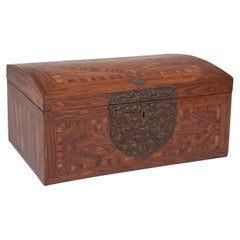
17th Century Franco Flemish Kingwood Marquetry Box

17th Century Franco Flemish Kingwood Marquetry Box

Located in Greenwich, CT

Fine 17th century domed box with highly figured kingwood marquetry veneer laid in a geometric pattern, the front having elaborate pierced and embossed brass escutcheon, the whole wit...

Category

Antique 1690s European Baroque Jewelry Boxes

Materials

Kingwood, Pine

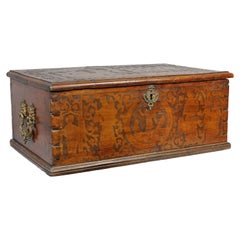
Italian Baroque Walnut Box

Italian Baroque Walnut Box

Located in Essex, MA

Hinged top, decorated overall with incised carving, lock plate and side handles.

Category

Antique 1670s Italian Baroque Decorative Boxes

Materials

Walnut

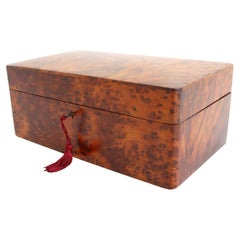
19th Century Burl Wood Box With Fruit Wood And Mother of Pearl Inlay

19th Century Burl Wood Box With Fruit Wood And Mother of Pearl Inlay

Located in Stamford, CT

19th century folk art box, with burl wood veneer and mother of pearl and fruit wood inlay. The surface decorated with geometric, diamond and star motifs. The raised top with a banded...

Category

Antique Mid-19th Century American Folk Art Decorative Boxes

Materials

Mother-of-Pearl, Fruitwood, Burl

Large box with inlay of various fruit woods. Baroque, early 18th Century

Large box with inlay of various fruit woods. Baroque, early 18th Century

Located in Knivsta, SE

Beautiful and large box with inlay of various fruit woods. Baroque, early 18th Century. Working lock and key. Interior with later fabric. Wear consistent with age and use

Category

Antique Early 18th Century Swedish Baroque Decorative Boxes

Materials

Fruitwood