Want more images or videos?
Request additional images or videos from the seller
1 of 21

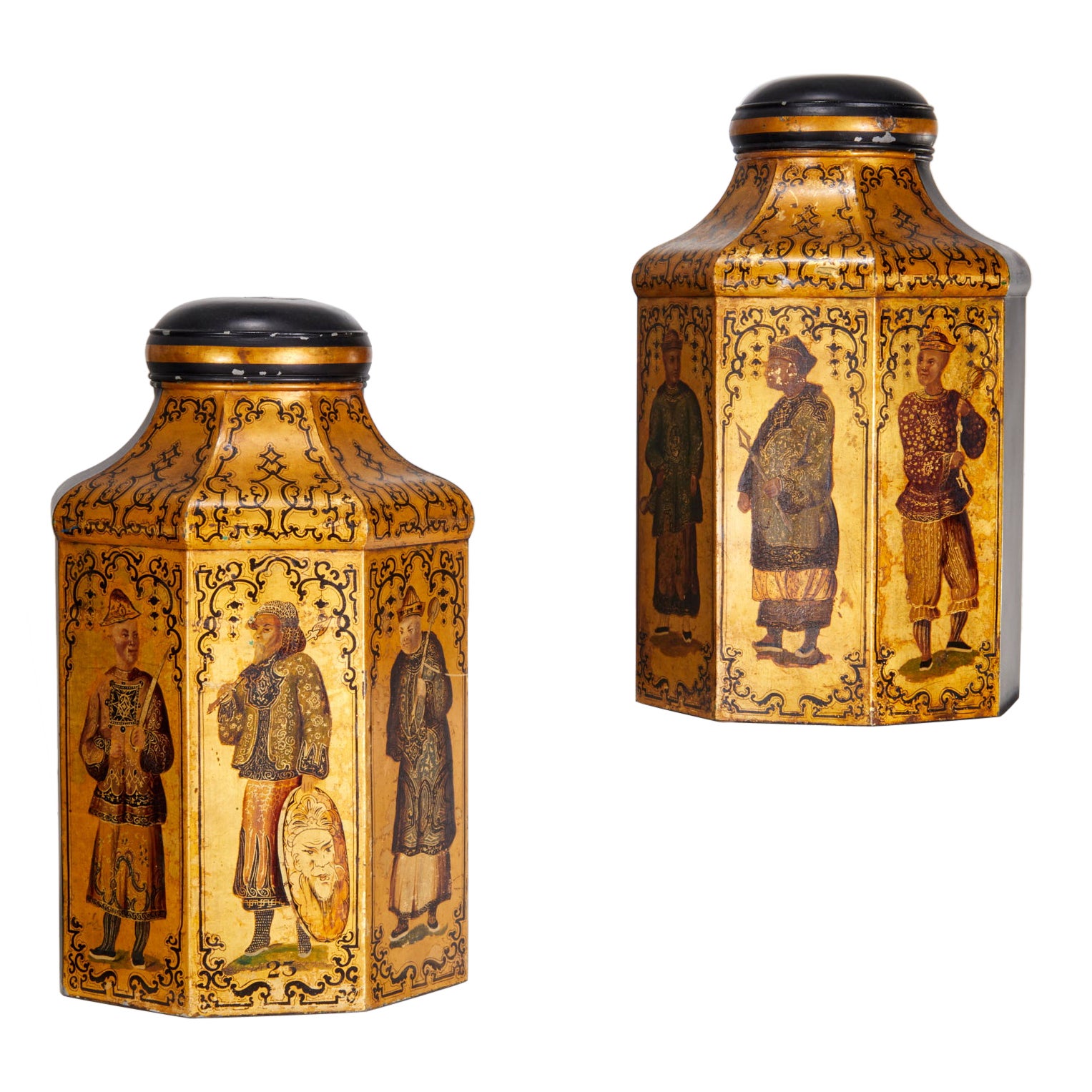
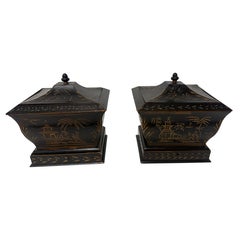
Pair of 19th Century American Henry Troemner Philadephia Pa Chinoiserie Tea Bins

$3,000per set
£2,243.24per set
€2,619.97per set
CA$4,215per set
A$4,269.57per set
CHF 2,451.50per set
MX$51,767.24per set
NOK 28,446.49per set
SEK 28,955.25per set
DKK 19,587.06per set

About the Item

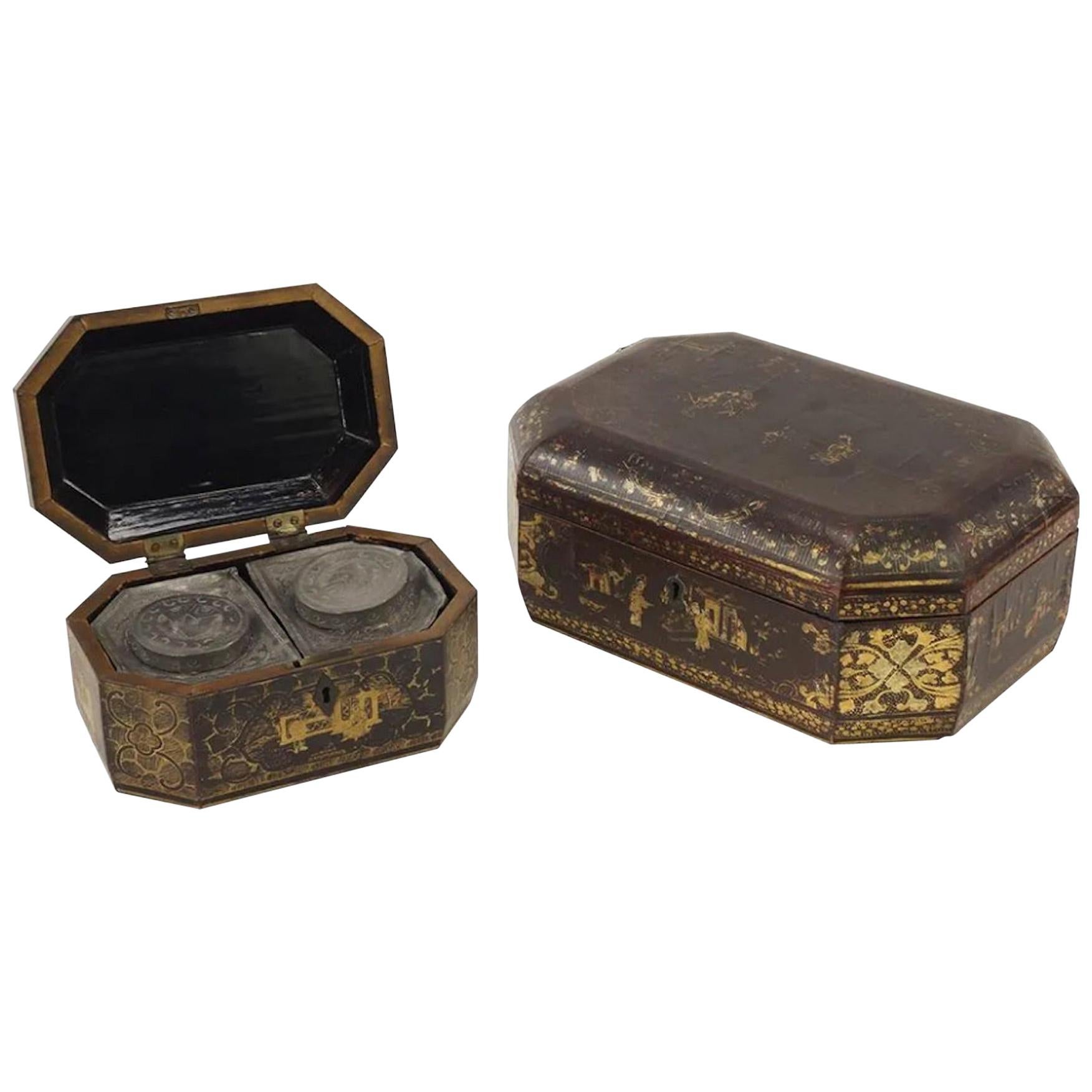
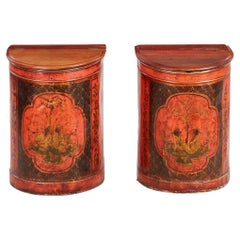
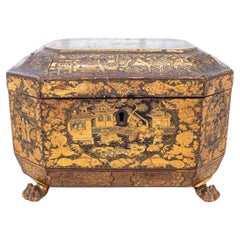
Presenting a gorgeous and extremely rare pair mid-19th century, metal tea bins, by Henry Troemner of Philadelphia, PA in the chinoiserie style. From circa 1845. Made of black enameled metal, probably tin, each tea tin/chest has a different oriental scene painted on the front in gold paint. Both featuring figures in garden settings with Pagoda’s in the background etc. The bin is opened by way of a handled lid with bronze handle (original). Both are large examples of their type. Both have different names written in cursive on the front but we cannot decipher the names. We think these are family names, but most of these rare chests had the type of tea written on the front. Extremely rare pieces!!!! Highly quality pieces!!! Henry Troemner (1809–1873) was a German-American entrepreneur. He started the Henry Troemner Company, known today as Troemner Inc. The company produced balances and scales. Troemner immigrated to the United States in 1832 and settled initially in New York City, then, by 1843, Philadelphia. He began making scales and weights in a partnership in 1840, and then established his own company in 1844. He was commissioned by the United States Mint in Philadelphia to make their balances, which he did so well that he was invited to make the bullion balances for the Department of Treasury. He later made scales for the Mexican Mint, Assay Office in New York, and the San Francisco Mint. According to Ernest Child, Troemner was probably was the first American manufacturer to follow the French mathematician Gilles Personne de Roberval's balance design. This is distinguished by the load being superimposed on the beam, rather than suspended from the beam, and allowed faster weighings.[1] After his death in 1873 his wife Catherine inherited the business, which was kept in the family until incorporating in 1955.
  • Creator:
  • Dimensions:
    Height: 22 in (55.88 cm)Width: 20.1 in (51.06 cm)Depth: 20 in (50.8 cm)
  • Sold As:
    Set of 2
  • Style:
    Chinoiserie (Of the Period)
  • Materials and Techniques:
  • Place of Origin:
  • Period:
  • Date of Manufacture:
    1845
  • Condition:
    Wear consistent with age and use. Minor losses. Minor fading. Good original condition. Some chips to enamel and fading consistent with age. Some indentations, especially on tops.
  • Seller Location:
    Dallas, TX
  • Reference Number:
    1stDibs: LU3978112159263

More From This Seller

View All
Vintage Japanese Temple Style Box

Vintage Japanese Temple Style Box

Located in Dallas, TX

PRESENTING A LOVELY Vintage Japanese Temple Style Box. Made of rosewood, this box has a cover featuring ‘Buddhist Swastikas’ on the front. The cover lifts off to reveal a tabernacle with 2 carved dragons on wither side. Probably made in the first quarter of the 20th Century, circa 1920-30. Rectangular shaped for the storage of deities statues...

Category

Early 20th Century Japanese Japonisme Decorative Boxes

Materials

Wood

19th Century Samson Paris Porcelain Trinket Box

19th Century Samson Paris Porcelain Trinket Box

By Samson & Cie

Located in Dallas, TX

Presenting a gorgeous French 19th century Samson Paris Porcelain Trinket Box probably by Edme Samson. Marked on the base with “Made in France” and unmistakably in the style and manner of Samson. The lid features hand painted floral bouquets on an ivory porcelain background with gold edging, surrounded by a sky blue lid with gold web or crackling effect.. The lid is hinged and the lid and base are edged in floral gilt metal mounts with Fleur De Lis clasp. It sits on 4 gilt metal or ormolu feet. The sides are likewise hand decorated. This wonderful antique hand painted box is just bursting with History. Inspired by Edme Samson of Samson & Co., Paris. we believe (based upon the markings and natural aging) that it was made between 1880– 1890 in France and was meant to resemble an antique of a much earlier period. It is very similar to Sevres pieces with it’s color, decoration and design. Samson specialized in reproducing antiques from the 1600 and 1700s. One of his most interesting works was his Heraldic or Armorial pieces. With this medium sized box, he was not only copying the larger porcelain caskets or coffin boxes...

Category

Antique Late 19th Century French Louis XVI Jewelry Boxes

Materials

Ormolu

19c Anglo Indian Highly Carved Teak and Sandalwood Sarcophagus Sewing Box

19c Anglo Indian Highly Carved Teak and Sandalwood Sarcophagus Sewing Box

Located in Dallas, TX

PRESENTING A VERY NICE 19C Anglo Indian Highly Carved Teak and Sandalwood Sarcophagus Sewing Box. Made in Bombay, India circa 1890-1900. The box case/body is made of sandalwood wit...

Category

Antique Late 19th Century Indian Anglo-Indian Decorative Boxes

Materials

Bone, Sandalwood, Teak

19C Anglo Ceylonese Sewing Box of Museum Quality

19C Anglo Ceylonese Sewing Box of Museum Quality

Located in Dallas, TX

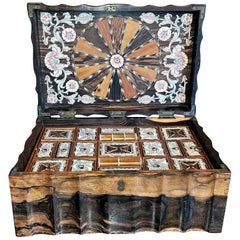
Presenting an absolutely stunning 19c Anglo Ceylonese sewing box of museum quality. Made in Ceylon (now Sri Lanka) circa 1860, this is one of the finest sewing boxes of it’s kind that we have ever seen! The box is made from coromandel wood (an exotic hardwood found in Ceylon) and has a serpentine edging all over the front, back and sides. Very often the lids/tops of these boxes suffer cracks due to shrinkage but this one is near perfect with no crack in the lid/top. There is some evidence of natural shrinkage but that is around the edges of the lid/top. It is when you open this box that it reveals it’s true beauty, quality and treasure ! The inside of the lid/top is heavily and beautifully decorated with inlaid bone in scrolling floral patterns which have then been hand painted with red and black ‘lac’ ink. The central medallion is a circle of inlaid specimen exotic hardwoods radiating towards a central bone and hand painted flower. The circle is edged in bone, wood and silver chevrons. What makes this box Exceptionally rare is that it contains 3 lift out base sections. Normally, there would be a maximum of 2. The first tray/section is clearly for the purposes ancillary to sewing with a pair of sections with bone spools for thread etc. There are 17 other lidded compartments with each one highly decorated using hand painted bone and specimen woods to replicate tortoiseshell. The first tray lifts out to reveal a second removeable tray which is made up of a pair of open sections and 8 specimen wood lidded sections each with chevron banding. The third tray is a smaller tray underneath with 14 lidded compartments each with hand painted bone and specimen wood inlaid lids again, replicating the look of tortoiseshell. Again they are banded with a chevron border. This is a museum quality piece ! It is in fantastic condition for it’s age with the minor shrinkage to the edges of the lid/top, some finger pulls missing and some very minor cracks to the tray lids and bases but nothing that in any way detracts from the piece. No key. Dimensions: Closed the box is 16.75 inches wide, 11.25 inches deep and 7.5 inches high Fully open the box is 16.5 inches high, 16.75 inches wide and 11.4 inches deep Anglo-Indian and ceylonese boxes: Anglo Indian boxes were made in India for the English residents from the early part of the 18th century. They were brought back or sent back to England usually by the people who had commissioned them. From the beginning of the nineteenth century they were imported more commercially, although not in any significant numbers until the middle decades. They were very highly valued, especially the early ones, to the extent that the designs were copied on late 19th and early 20th century tins. Anglo-Indian boxes normally consist of 3 main types:- (1) Most of the best and highest quality Anglo-Indian boxes in the 18th and 19th centuries were made in Vizagapatam, India, renowned for its exquisite craftsmanship in using ivory and tortoiseshell and lac decoration. These are referred to as ‘Vizagapatam Boxes...

Category

Antique Mid-19th Century Sri Lankan Anglo-Indian Decorative Boxes
Materials

Silver

Pair of 20C Chinese Soapstone Carved Bookends

Pair of 20C Chinese Soapstone Carved Bookends

Located in Dallas, TX

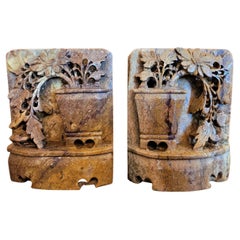
Presenting a lovely pair of 20C Chinese Soapstone carved bookends. Made in China in the early 20th Century circa 1930. This is a matching and reverse facing pair of mottled bro...

Category

Early 20th Century Chinese Chinese Export Sculptures and Carvings

Materials

Soapstone

You May Also Like

A Rare Pair of Luxury Chinoiserie Tea Cannister Shop Fittings

A Rare Pair of Luxury Chinoiserie Tea Cannister Shop Fittings

Located in Greenwich, CT

A rare pair of large-scale tea cannisters with wooden lids over rounded tin bodies each elaborately decorated with bucolic scenes of a pair of figures in Chinese dress in a garden, w...

Category

Antique 1860s English Chinoiserie Decorative Boxes

Materials

Tin

Pair of Chinese Mahogany Tole Hinged Figural & Foliage Bird Tea Bins, Circa 1840

Pair of Chinese Mahogany Tole Hinged Figural & Foliage Bird Tea Bins, Circa 1840

Located in Charleston, SC

Pair of Chinese mahogany tole demilune hinged poly chromed tea bins with gilt figural stenciling and decorative landscape scenes with foliage and bird motif, M...

Category

Antique 1840s Chinese Chinese Export Tea Caddies

Materials

Metal, Brass

Pair Antique 19th century English Regency Chinoiserie Tole Tea Caddy Canisters

Pair Antique 19th century English Regency Chinoiserie Tole Tea Caddy Canisters

Located in Litchfield, CT

Large pair antique 19th century English Chinoiserie tole tea canisters. Decorated with Chinese figures in black on a rare yellow ground with gilt highlights. The tops nicely shaped l...

Category

Antique 19th Century English Regency Jars

Materials

Metal

Pair, Japanned Chinoiserie Tea Caddies W/ Sifter Drawers, English C. 1830

Pair, Japanned Chinoiserie Tea Caddies W/ Sifter Drawers, English C. 1830

Located in Atlanta, GA

Pair Of Japanned Chinoiserie Tea Caddies With Sifter Drawers, Anglo-Indian Or English, Circa 1800–1830 Form and construction, these read as a scarce, matched pair of japanned tea ca...

Category

Antique 19th Century English Anglo-Indian Tea Caddies

Materials

Metal

19th c. English Chinoiserie Tea Caddy

19th c. English Chinoiserie Tea Caddy

Located in Dallas, TX

The 19th c. English Chinoiserie Tea Caddy is a decorative collectible box designed to store tea. This tea caddy reflects the popular aesthetic of the 19th century, featuring intricat...

Category

Antique 19th Century English Chinoiserie Tea Caddies

Materials

Wood

English Chinoiserie Tea Caddy with Dual Interior Canisters, 19th Century

English Chinoiserie Tea Caddy with Dual Interior Canisters, 19th Century

Located in Wichita, KS

19th Century English Chinoiserie Tea Caddy with Dual Interior Canisters A 19th century English chinoiserie tea caddy of faceted octagonal form, raised on carved paw feet and decorat...

Category

Antique Mid-19th Century English Chinoiserie Tea Caddies

Materials

Metal