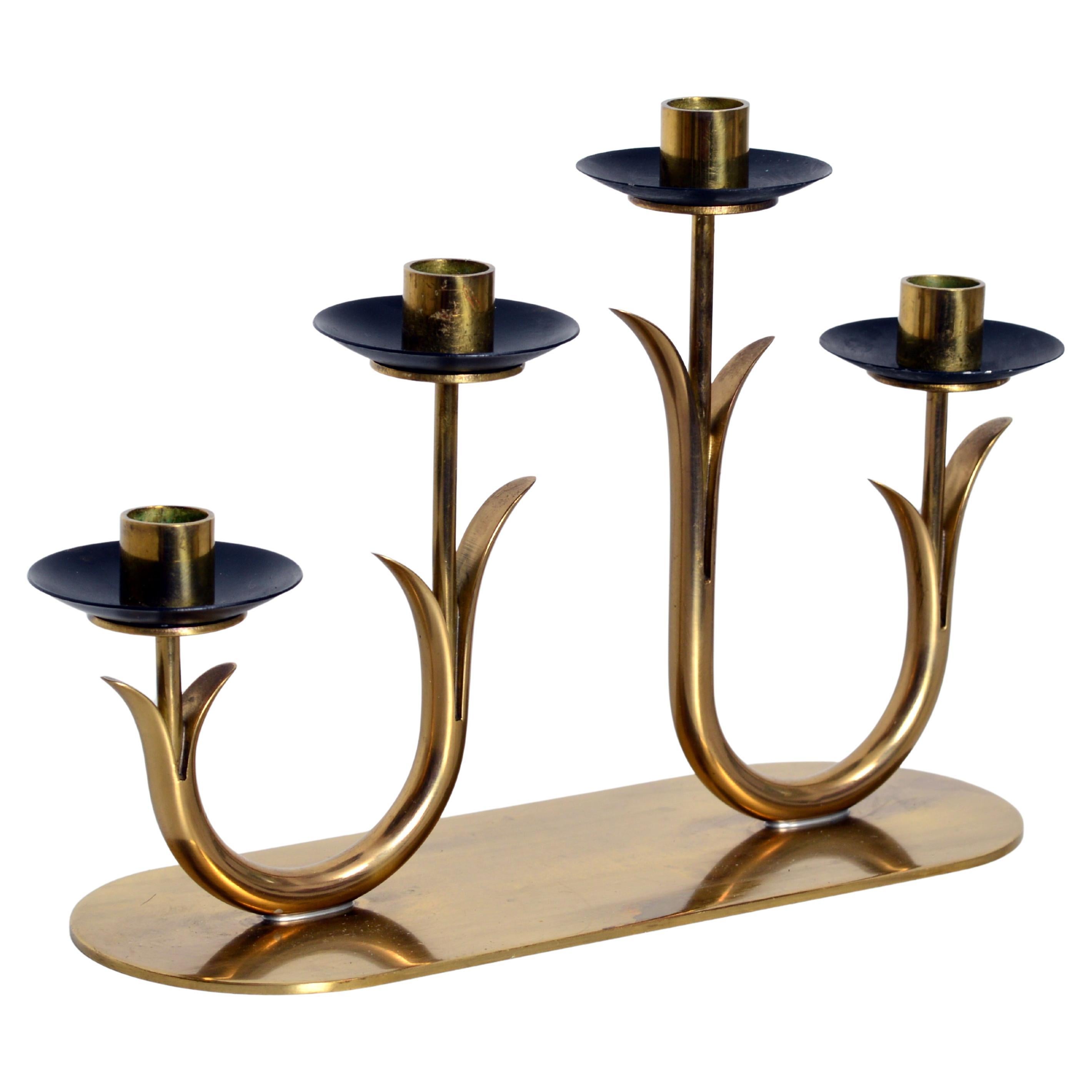
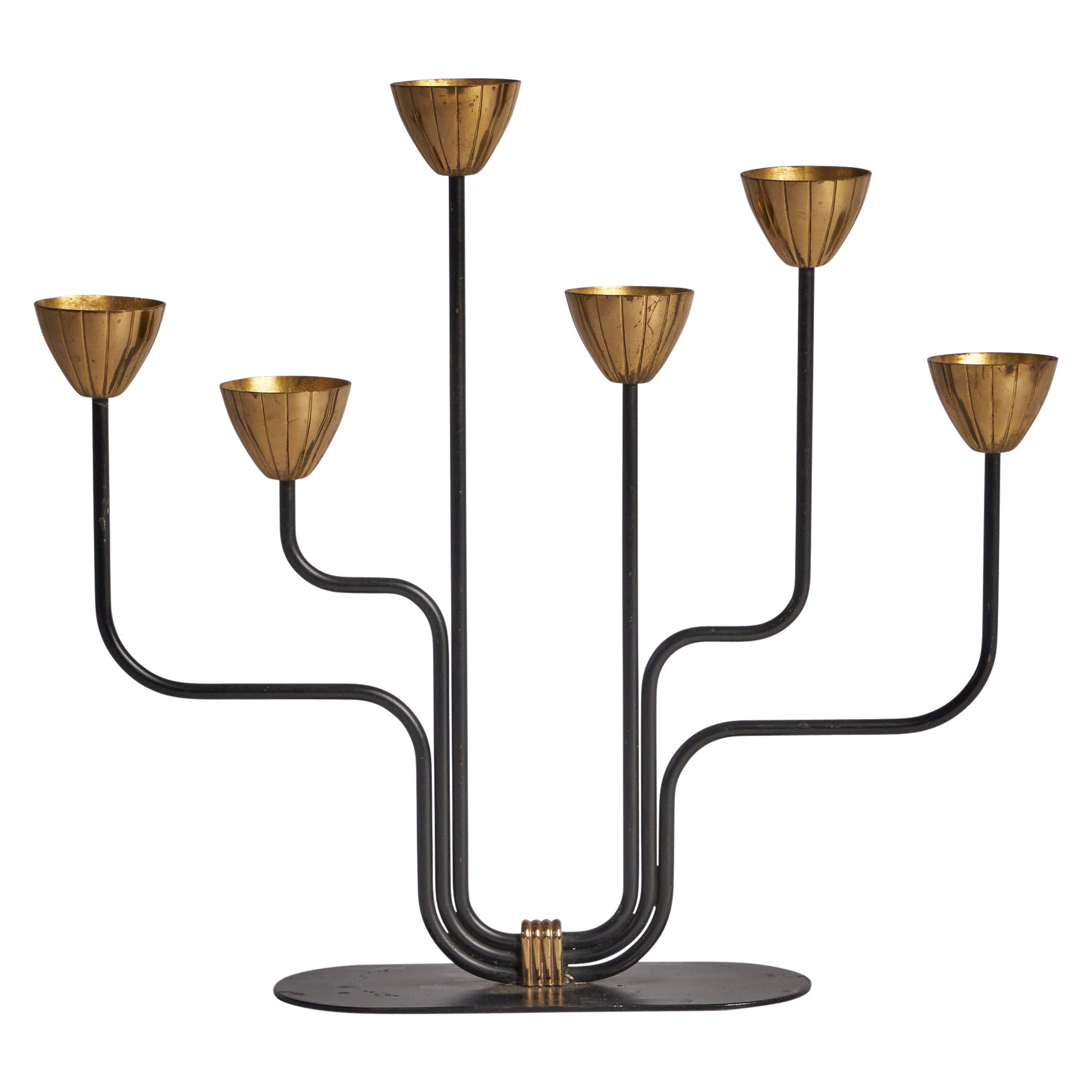
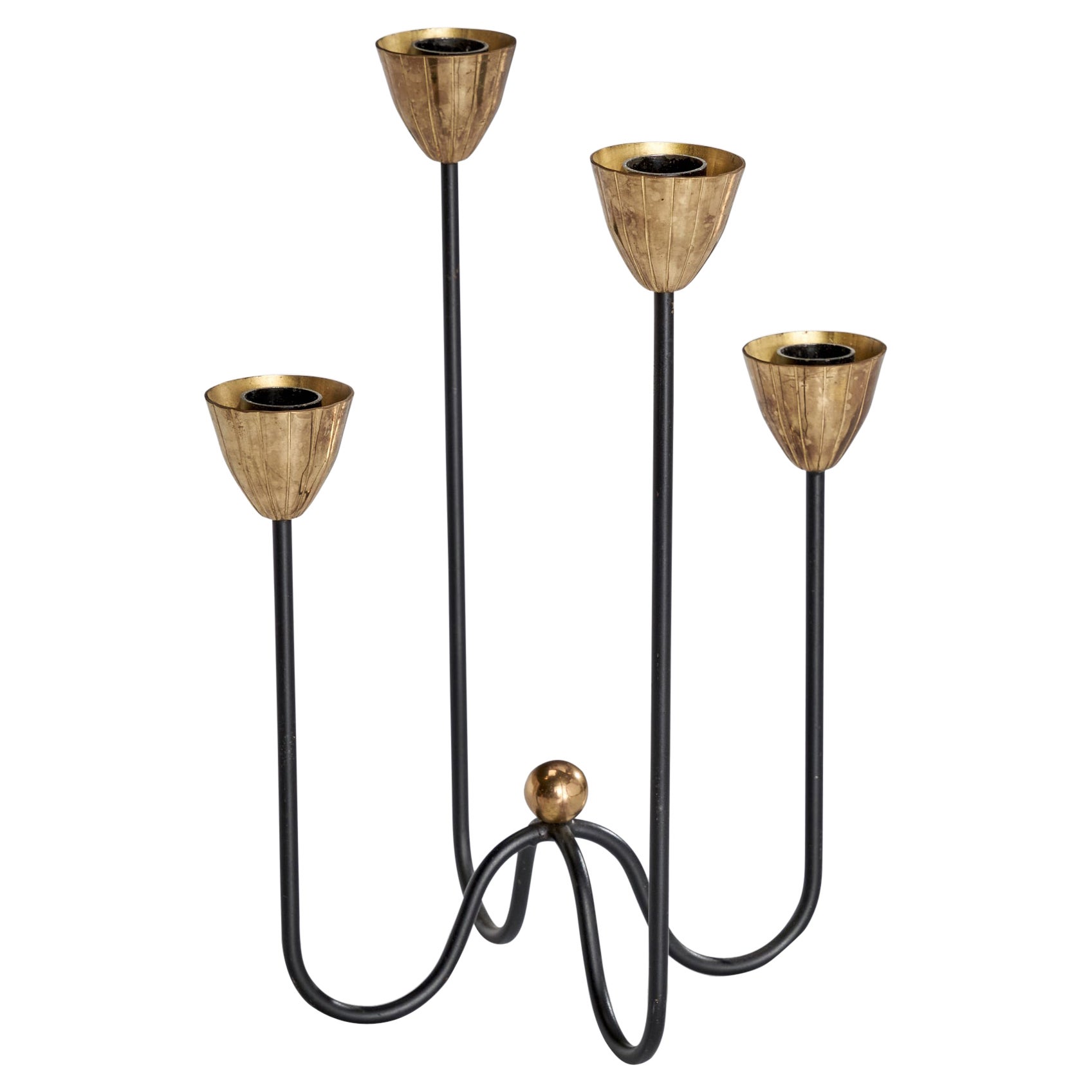
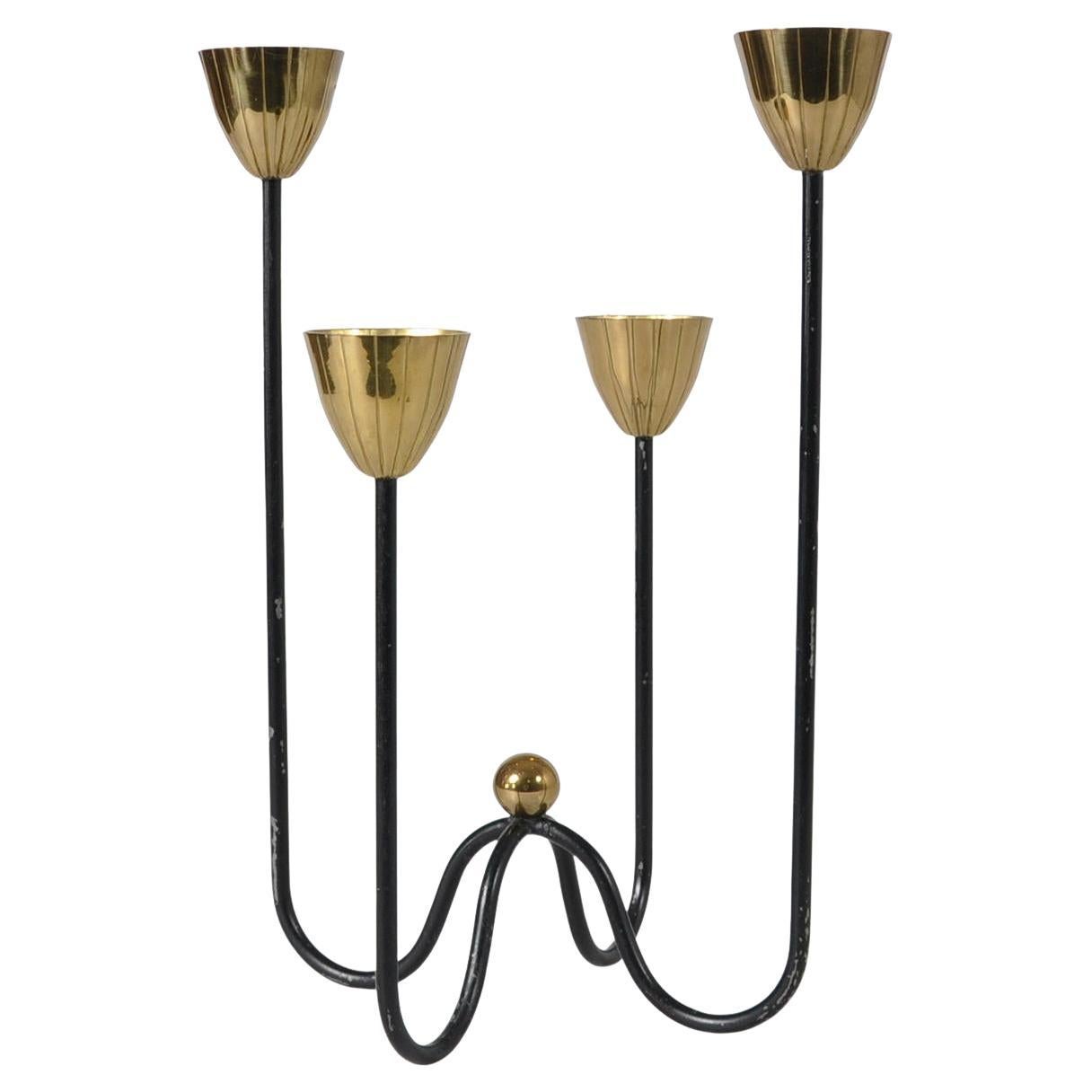
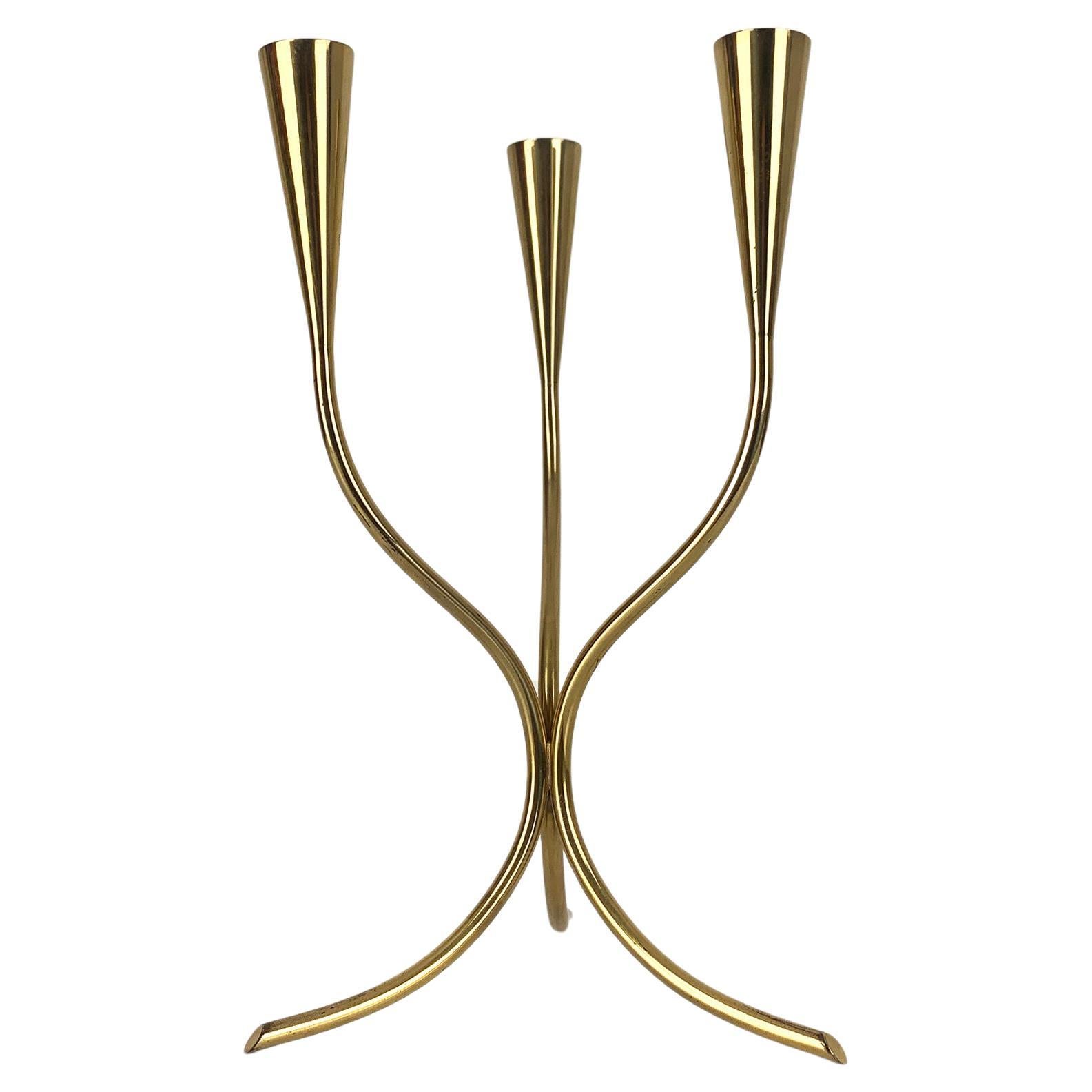
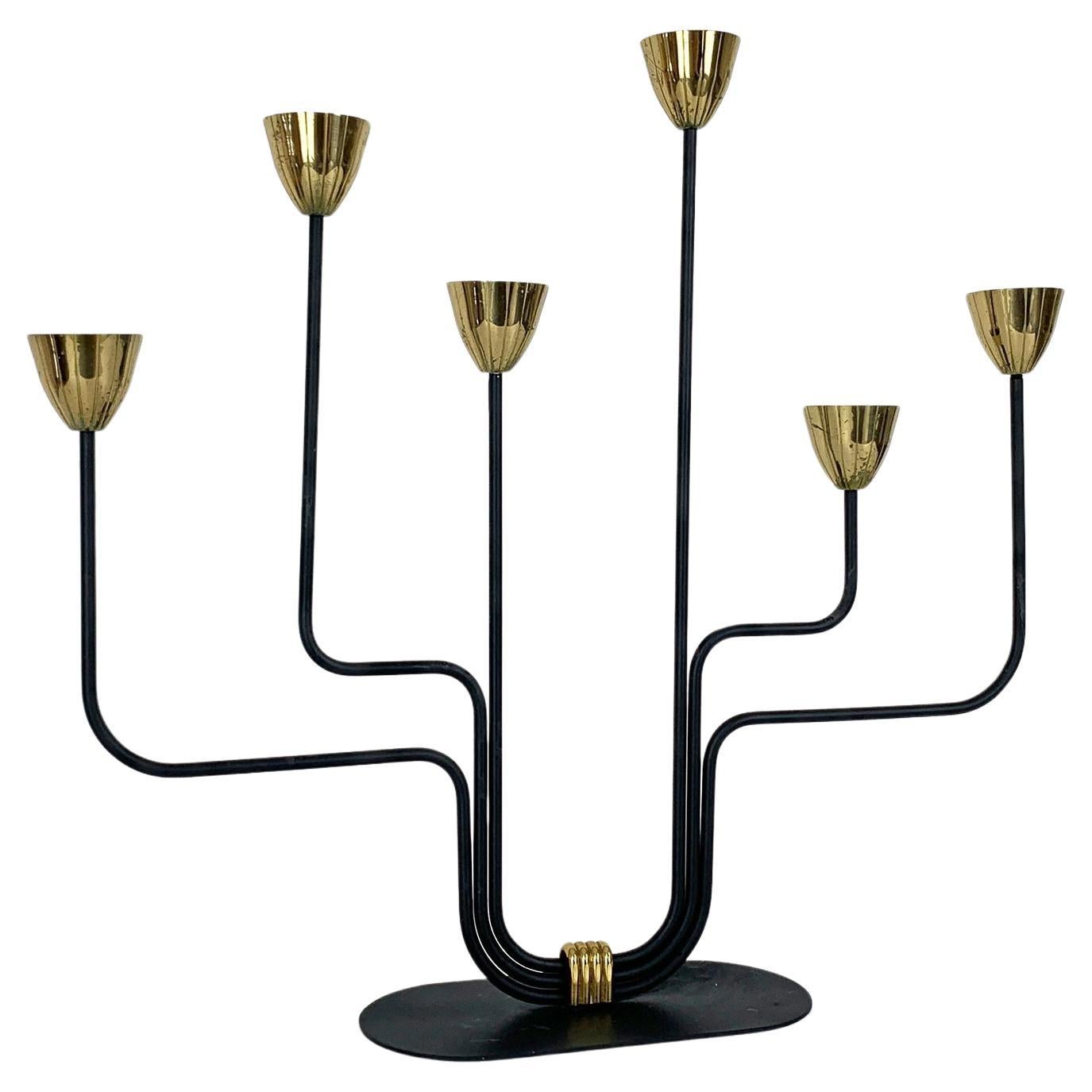
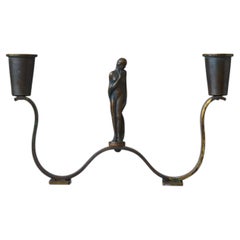
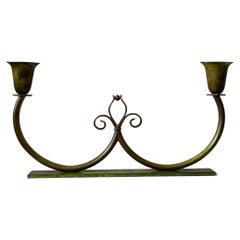
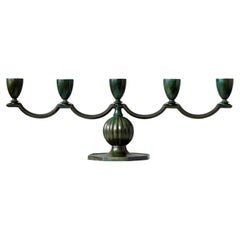
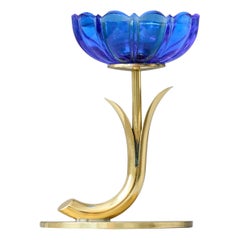
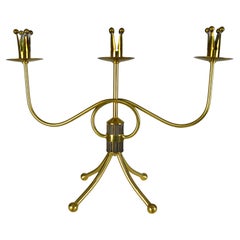
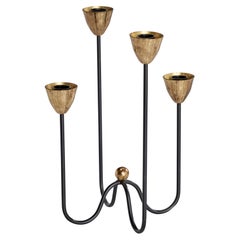
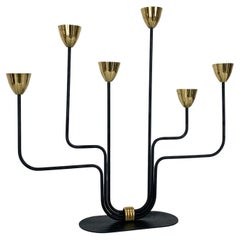
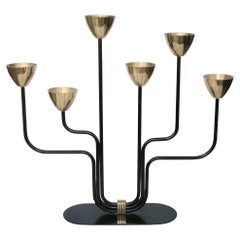
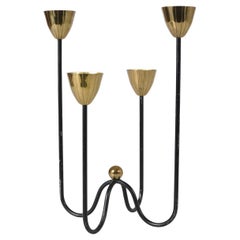
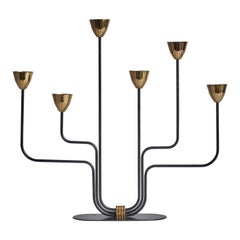
A brass candlestick with amazing patina.
Designed by Gunnar Ander and made by Ystad Metall, Sweden, 1950s.
Great original condition, only some light scratches.
Gunnar Ander (1908–1976) was a Swedish designer and architect whose work played a significant role in shaping mid-twentieth-century Scandinavian decorative design. Known especially for his elegant lighting, candleholders, and household objects in brass and glass, Ander became closely associated with the Swedish manufacturer Ystad‑Metall and is today regarded as one of the notable contributors to the development of Swedish mid-century modern design.
Ander was born in 1908 in the town of Lidköping in western Sweden. His father worked as a photographer, and the creative environment of his childhood encouraged his early interest in art and drawing. From a young age Ander showed strong artistic ability; as a teenager he was already producing illustrations and graphic work for local publications. After finishing school he moved to Stockholm to pursue formal artistic training, studying design and the applied arts, including time connected with the Royal Swedish Academy of Fine Arts. These studies exposed him to modernist ideas that were increasingly shaping Scandinavian architecture and design during the early twentieth century.
During the 1930s Ander worked as an art teacher and produced instructional books on handicrafts and design, reflecting his interest in practical creativity and craftsmanship. His professional career gradually expanded beyond teaching as he began designing decorative objects and household items. His breakthrough as an industrial designer came after the Second World War when he started collaborating with the company Ystad-Metall, one of Sweden’s leading producers of decorative metalwork and domestic accessories.
At Ystad-Metall, Ander became one of the company’s most important designers during the 1950s and 1960s. He created a wide range of products including candleholders, candelabras, lamps, trays, and fireplace tools. Many of these designs combined brass with colored glass elements, producing objects that were both practical and visually striking. His candleholders in particular became highly recognizable, often characterized by slender metal structures, rhythmic curves, and small glass cups in bright colors. These designs captured the spirit of Scandinavian modernism, blending functional simplicity with refined decorative detail.
Although his work with Ystad-Metall became the best known part of his career, Ander also collaborated with several other manufacturers. Among them was the Swedish glassworks Lindshammars Glasbruk, where he designed decorative glass objects that echoed the clear lines and vibrant colors found in his metal designs. Because he worked largely from his own studio, Ander was able to design for multiple companies simultaneously, producing a large number of sketches and product ideas throughout his career.
Ander’s design style reflected the broader ideals of Scandinavian design in the mid-twentieth century: clarity of form, practical usefulness, and careful attention to materials. Rather than elaborate ornamentation, he favored balanced proportions and subtle visual rhythms. Brass, iron, and colored glass were among his preferred materials, and he used them to create objects that were both functional and sculptural.
Although he never achieved the international celebrity of some Scandinavian designers, Gunnar Ander made a lasting contribution to Swedish decorative arts. His designs helped define the appearance of everyday domestic objects during the postwar decades, a time when modern design was increasingly entering ordinary homes. Today his works, particularly the brass and glass candleholders produced by Ystad-Metall, are widely collected and appreciated as classic examples of Swedish mid-century design.
Gunnar Ander continued working as a designer for much of his life and remained active in the Swedish design industry until his death in 1976. His objects remain popular among collectors of Scandinavian modern design, and they continue to represent the elegance and practicality that characterize Sweden’s design heritage.