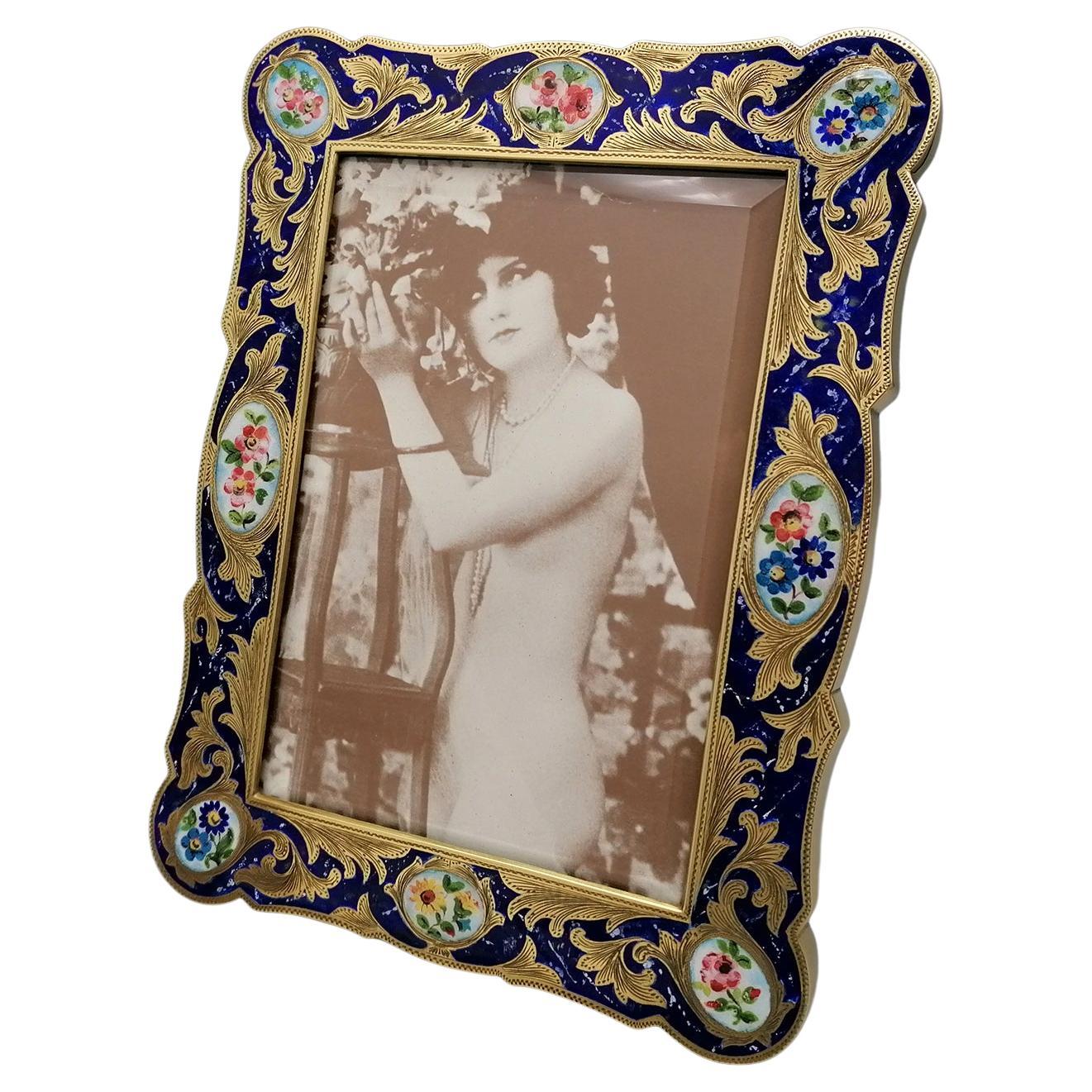
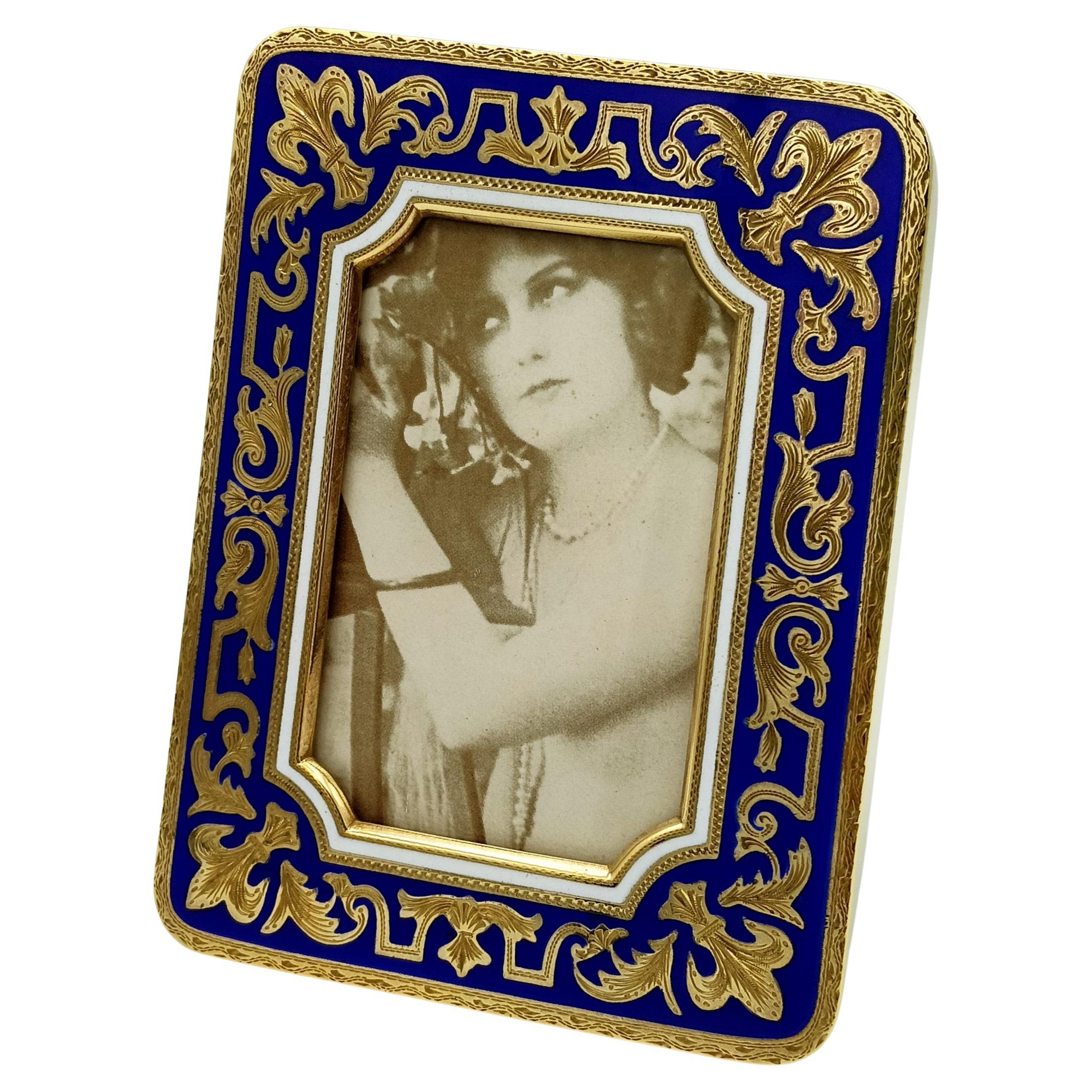
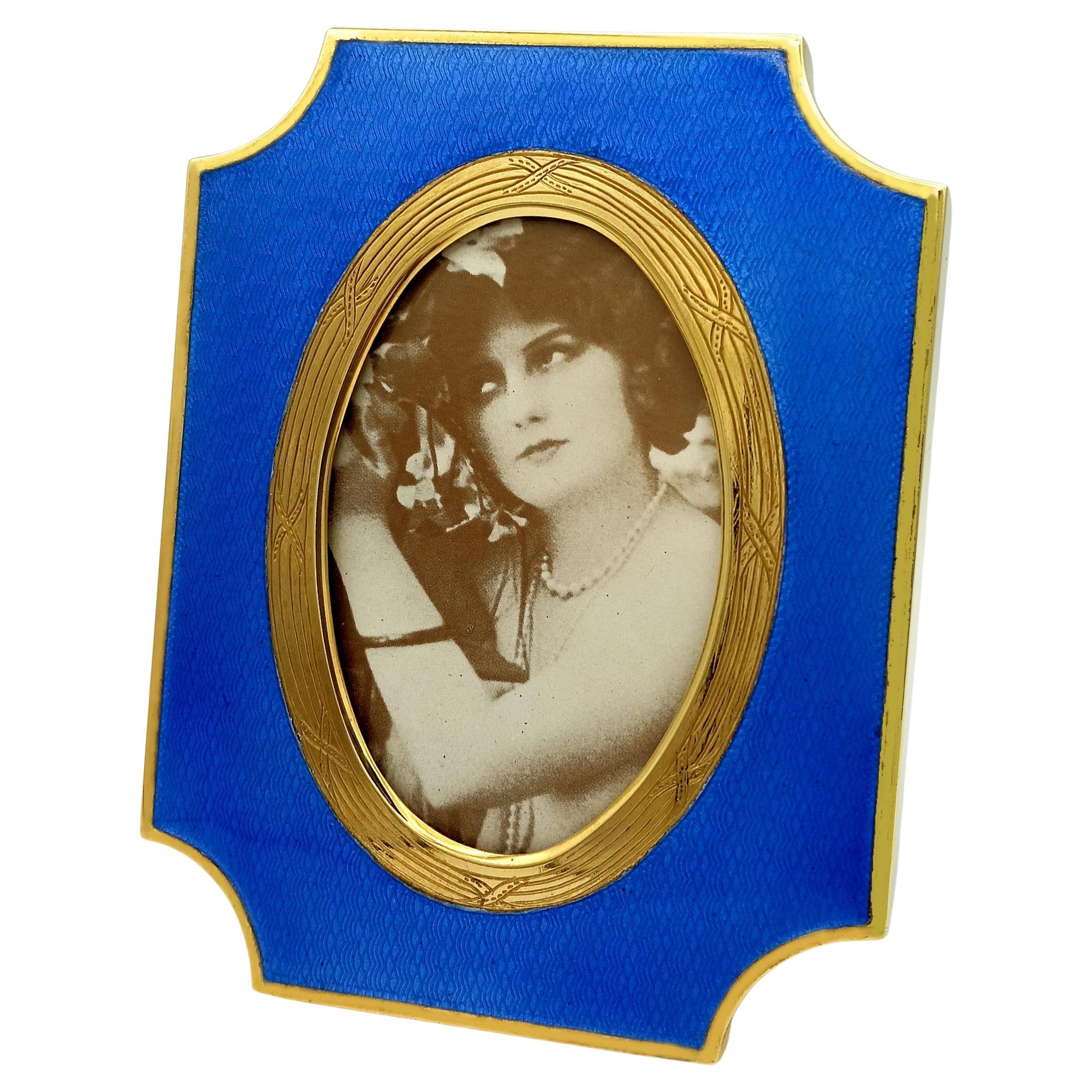
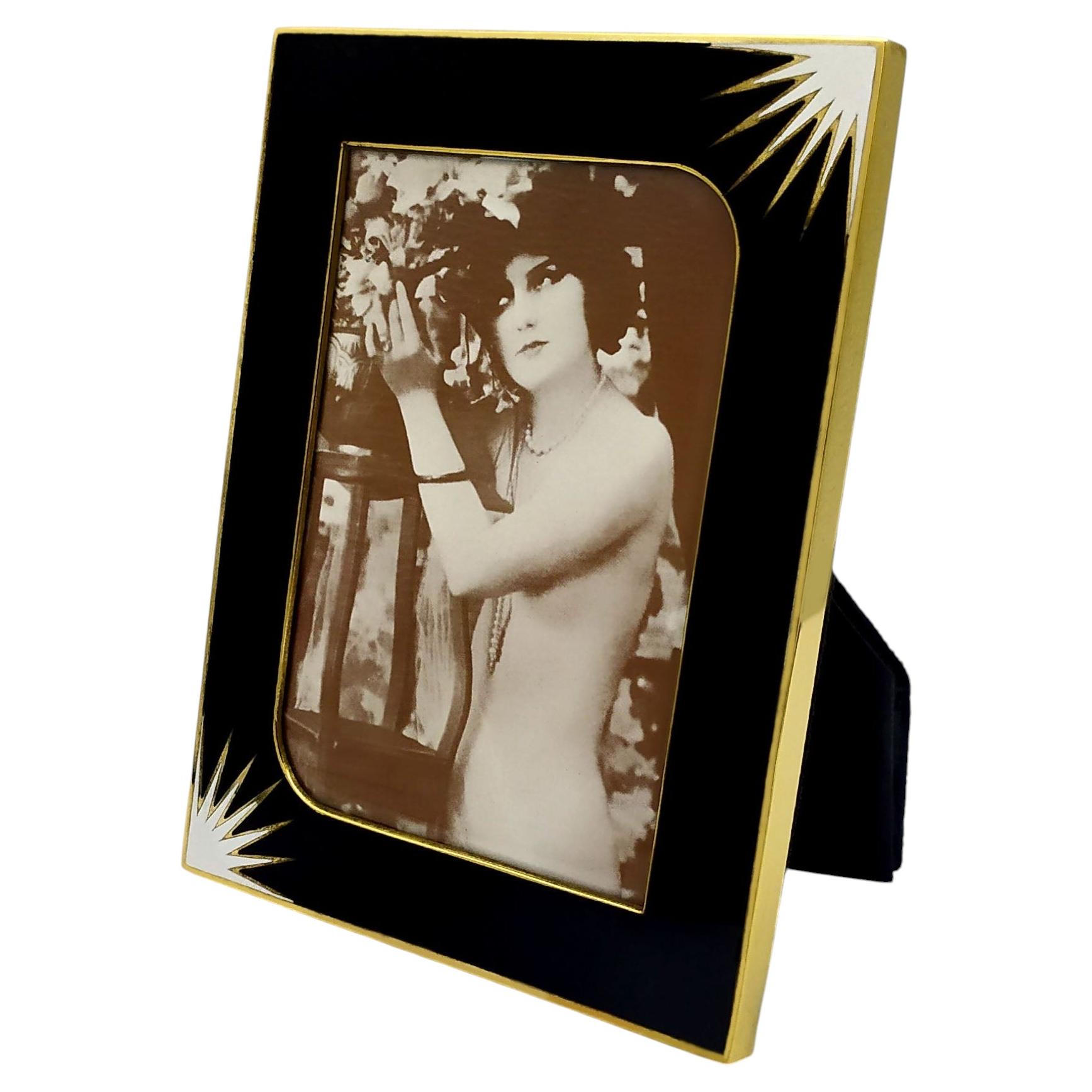
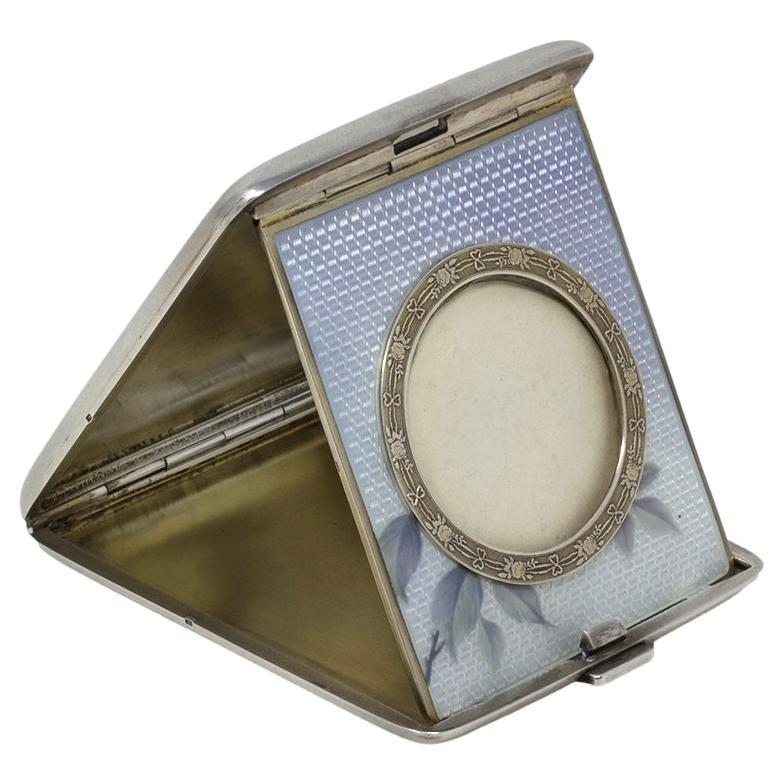
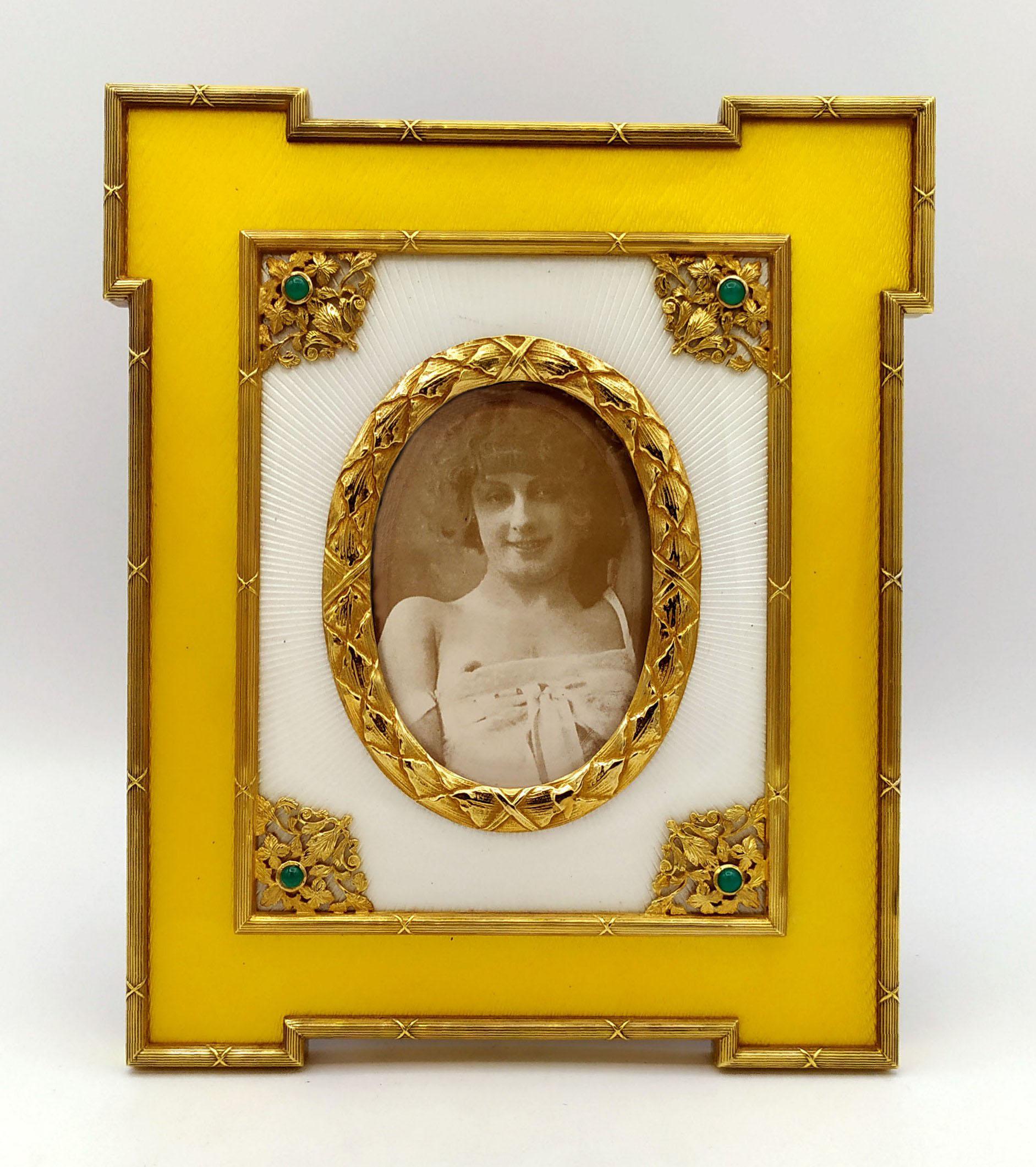
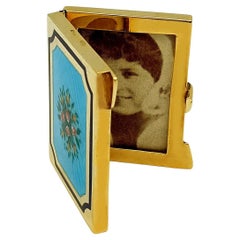
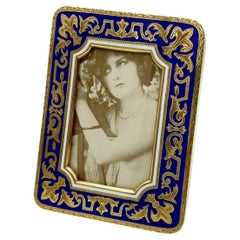
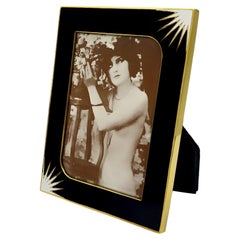
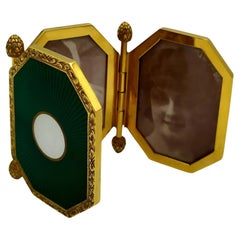
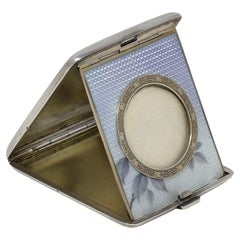
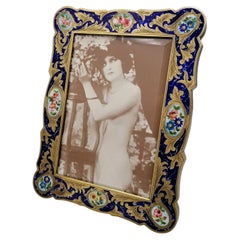
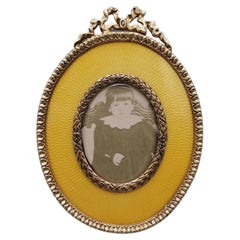
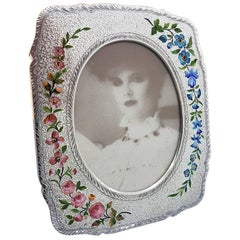
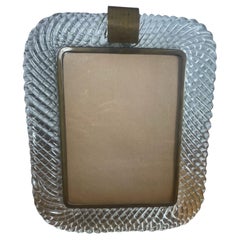
Rectangular travel photo frame with a hinged booklet, designed to hold 2 photos, made of gold-plated 925/1000 sterling silver with translucent fired enamel on a guilloché pattern in the English Art Nouveau style. Dimensions: 3 x 4 cm. Weight: 51 g. Designed by Franco Salimbeni in 1982, inspired by earlier 20th-century products from the Salimbeni company, and produced in Florence at the Salimbeni headquarters by skilled artisan artists using traditional handcrafted techniques, featuring a thick plate and substantial reinforcements designed to withstand numerous high-fire enamel firings at approximately 750–800° C.
GUILLOCHE: This is a handcrafted process performed on mostly precious metals, resulting in surfaces engraved with complex, repetitive geometric patterns.
Guilloche engraving was invented in the mid-19th century in Switzerland by watchmakers to embellish the dials of their luxurious timepieces.
The technique involves engraving metal with a burin using a machine with mostly manual controls.
A copying tool, following the curves of several dies placed on the machine, transmits movement to the object being engraved, causing the burin to "cut" the metal. By shifting the positions of the dies and the copying tool, precise, intertwined geometric engravings are obtained, creating an almost infinite number of patterns, and their continuous differentiation certainly adds value to the objects produced.
The manual skill required to perform this operation is highly specialized; existing machines are very old, as there has never been a mass market, and especially for art conservation.
After engraving, the next step is typically firing enameling, a meticulous and time-consuming process in which the guilloche-engraved surface is covered with several layers of colored glass powder and fired in small special kilns at temperatures between 700 and 800°C.
The resulting transparency and perfection may require numerous firings, especially if multi-colored surfaces are being composed.
The inclination of an object's surfaces can create significant difficulties both for guilloche engraving and during the enamel firing phase, as positioning the machine becomes more complex and requires great skill and expertise, while liquefying the enamel produces complex situations that only highly skilled artisans can achieve.
Guilloché engraving and enameling have been the core processes of Salimbeni 1891 for over a century and are found in nearly all of its products.
When crafting an object, Salimbeni 1891 begins with a drawing, which can also be provided by the customer, to handcraft the structure using silver sheets of varying thicknesses. Once the required shape has been achieved through welding and finishing-processes common to skilled silversmiths-the next step is the guilloché engraving and subsequent enameling, as well as all the final polishing and electroplating processes for gilding and/or other applications.
Our most complex and precious creations have required months of work for smaller objects, striving for a perfection that is generally not contemplated in artisanal work but which for us is the foundation of our daily lives.
ENAMEL
English: enamel
French: smalt
German: schmelzen (to melt)
A glassy substance consisting of a mixture of silicates, potash, silica, soda, red lead, quartz, feldspars, borax, and minerals containing metallic phosphors, as well as numerous metallic oxides.
The enamel base material is prepared in melting furnaces into which the aforementioned ingredients are added. The mass is heated to temperatures varying, depending on the situation, between 1000° and 1200° C until molten glass is formed; this is followed by rapid water cooling. At this point, the material is finely ground, known as "frit."
The color of the base material is obtained by adding metallic oxides, which, in varying percentages, do not compromise its transparency. These are mixed with the "frit" and then thoroughly washed with distilled water to remove any residual impurities from the powder. The whole thing is then melted again and poured into molds to store it in blocks. Before use, it must be finely ground again and washed with distilled water. There are approximately 700 different colors of enamel, but in practice today, use is limited to about two hundred. However, layering the different colors allows for a virtually infinite range of combinations and shades, which can range, even on the same object, from darker to lighter shades and vice versa.