Want more images or videos?
Request additional images or videos from the seller
1 of 7

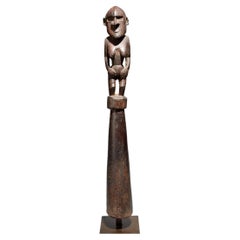
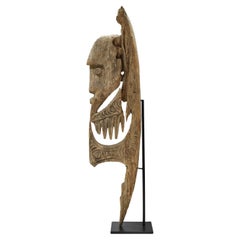
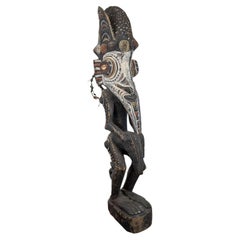
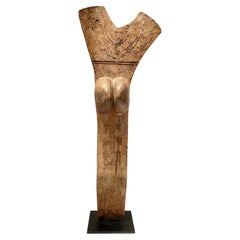
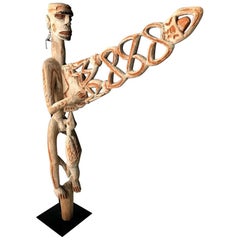
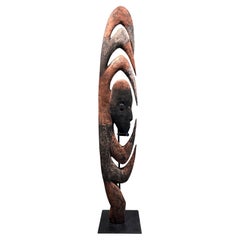
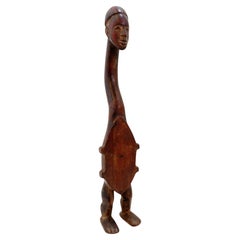
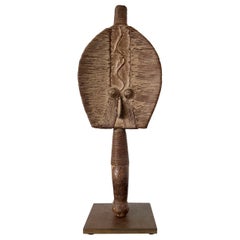
Slit Drum from Ambrym Island, Vanuatu

$86,500List Price

You May Also Like

Early 20th Century Sago Peg, Abelam/Wosera People, Papua New Guinea

Early 20th Century Sago Peg, Abelam/Wosera People, Papua New Guinea

Located in Point Richmond, CA

Sago peg, tapak, Abelam/Wosera people, East Sepik Province, Papua New Guinea Sago pegs are used to secure a screen mesh during the preparation of sago flour. This example depicts a ...

Category

Early 20th Century Papua New Guinean Tribal Abstract Sculptures

Materials

Shell

Oceanic Schouten islands Pounder Papua New Guinea Tribal Art

Oceanic Schouten islands Pounder Papua New Guinea Tribal Art

$1,114Sale Price|35% Off

H 25 in W 14 in D 3 in

Oceanic Schouten islands Pounder Papua New Guinea Tribal Art

Located in London, GB

Oceanic Schouten islands Pounder Papua New Guinea A Fine old hard wood Pounder or pestle with a standing female figure from the schouten islands off the north coast of Papua new Gui...

Category

Early 20th Century Papua New Guinean Tribal Art

Materials

Hardwood

Yipwon Figure, Papua New Guinea

Yipwon Figure, Papua New Guinea

$4,500

H 42 in W 10 in D 2 in

Yipwon Figure, Papua New Guinea

Located in Point Richmond, CA

Yiman (Alamblak) People, Southern Hills, Middle Sepik River 42 x 10 x 2 in. / 107 x 25 x 5 cm The Yipwon are the patron spirits of hunting and warfare.

Category

20th Century Papua New Guinean Other Figurative Sculptures

Materials

Wood

Large Iatmul Ceremonial Agiba Figure, East Sepik River, Papua New Guinea

Large Iatmul Ceremonial Agiba Figure, East Sepik River, Papua New Guinea

Located in Nottingham, GB

The Sepik River region of Papua New Guinea is celebrated as one of the world's great centres of indigenous sculpture, where carving traditions developed as an essential expression of...

Category

20th Century Tribal Art

Materials

Wood

Large African Antique Mounted Dogon Toguna Post or Sculpture

Large African Antique Mounted Dogon Toguna Post or Sculpture

Located in Plainview, NY

A substantial and large hand-carved wood antique Dogon Y-shaped post, from Mali, Africa featuring large voluptuous breasts above a geometric Kanaga mask sy...

Category

Early 20th Century Ghanaian Tribal Architectural Elements

Materials

Wood

Bis Pole Sculpture by Asmat People

Bis Pole Sculpture by Asmat People

$5,000

H 40 in W 8 in D 24 in

Bis Pole Sculpture by Asmat People

Located in Atlanta, GA

A ritual artifact from the tribe of the Asmat poeple, an ethnic group of New Guinea living in the Papua province of Indonesia and South-western regions of Papua New Guinea, bis or bisj pole is carved out of a wild Mangrove tree and can reach a stunning height Their carvings depict stacked human and animal figures standing and on top always phallic symbols, in the shape of a canoe prow. Bis poles...

Category

20th Century Papua New Guinean Tribal Tribal Art

Materials

Wood

Garra Hook Sculpture on Display Stand Mid-Sepik River Papua New Guinea

Garra Hook Sculpture on Display Stand Mid-Sepik River Papua New Guinea

Located in Atlanta, GA

A Garra hook by Bahinemo People of Hustein Mountains from Mid-Sepik River region in Papua New Guinea. The highly sculptural mask is one of the most iconic and mysterious designs from...

Category

Mid-20th Century Papua New Guinean Tribal Abstract Sculptures

Materials

Wood

Traditional sculpture originating from the Democratic Republic of Congo

Traditional sculpture originating from the Democratic Republic of Congo

Located in Linkebeek, BE

Traditional sculpture originating from the Democratic Republic of Congo Tribal Art - Congo - African Measures : 16x17cm H:82cm Traditional sculpture from the Democratic Republic of ...

Category

Early 20th Century African Tribal Figurative Sculptures

Materials

Wood

Kota Reliquary Figure Sculpture Mahongwe People Gabon

Kota Reliquary Figure Sculpture Mahongwe People Gabon

Located in Atlanta, GA

On offer is an African wooden and metal sculptural work called Boho na bwete from Northern part of Gabon made by Mahongwe people. Boho na bwete means Face of Ancestors in local language and the statue represents the deceased family members in an abstract way and was used as a reliquary figure fixed on top of the basket that contains the bundles of the ancestor's bones and remains, serving as a public shrine for worshipping. The style of the Kota figure...

Category

Mid-20th Century Gabonese Tribal Figurative Sculptures

Materials

Bronze, Copper

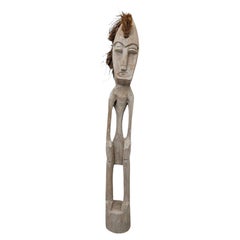
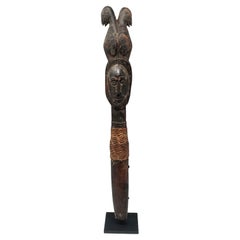
Large Oceanic Asmat Carved Wood Figure, Papua New Guinea

Large Oceanic Asmat Carved Wood Figure, Papua New Guinea

Located in Nottingham, GB

The Asmat people of southwestern Papua New Guinea are renowned for one of the most powerful sculptural traditions in Oceania. For the Asmat, wood carving was never merely decorative; it formed an essential part of spiritual life and ancestral remembrance. Ancestors remained active within the community, influencing the fortunes of the living and requiring continued acknowledgement through ritual and artistic expression. Drawing upon the forests that sustained them, Asmat carvers transformed hardwood into vessels of memory and identity, believing that the worlds of people, spirits and nature existed in profound connection. The expressive force and striking abstraction of Asmat sculpture captivated Western artists, anthropologists and collectors throughout the twentieth century, and these works remain among the most celebrated examples of Melanesian art. Description of the Ancestral Figure This substantial ancestral figure has been carved from a single block of indigenous tropical hardwood. Its commanding scale and architectural presence immediately distinguish it as an object of significance, equally compelling as a work of Oceanic art and as a sculptural focal point. The figure is depicted in a formal, frontal pose with elongated limbs and simplified anatomical features characteristic of the Asmat aesthetic. The face is rendered with quiet restraint, its stylised features conveying a sense of dignity and spiritual authority rather than individual portraiture. The elongated proportions lend the figure a timeless quality, reinforcing its role as an embodiment of ancestral presence rather than a representation of earthly likeness. A woven fibre headdress crowns the head, preserving an important cultural detail associated with traditional Asmat adornment. Such elements served not only as markers of identity and status but also strengthened the connection between the carved image and the spirit it was intended to honour. The entire surface has been treated with a white lime wash, creating a dramatic contrast against the underlying wood. This traditional finish gives the sculpture a striking, almost spectral appearance, evoking the presence of the ancestor and enhancing the deeply cut forms beneath. Traces of natural pigment remain visible throughout, accentuating the chisel work around the facial features and emphasising the rhythmic transitions between the torso, limbs and integrated circular base. The figure possesses the raw, expressive energy for which Asmat carving...

Category

20th Century Tribal Art
Materials

Wood

More From This Seller

View All
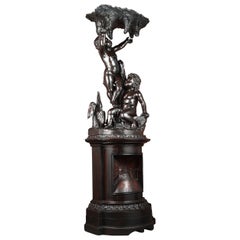
Venetian Wood Sculpture

Venetian Wood Sculpture

Located in New Orleans, LA

An exceptional and monumental Venetian wood sculpture surmounted by two putti holding a footed tray. The base is decorated with a bas-relief of the view ...

Category

Antique 19th Century Italian Other Figurative Sculptures

Materials

Wood

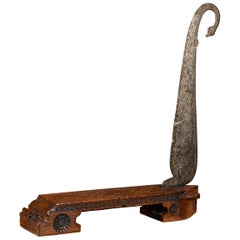
Indian Arivalmanai Culinary Cutting Tool

Indian Arivalmanai Culinary Cutting Tool

Located in New Orleans, LA

Originating from the Kerala region of Southern India, this 19th century arivalmanai, or culinary cutting instrument, is a traditional tool used in the preparation of vegetables throughout India. Comprising an engraved steel blade mounted upon a carved wood base, the user would place their weight on the wooden base by either sitting or kneeling, and prepare their ingredients accordingly. The craftsmanship and size of this fascinating relic denotes its usage in a Hindu temple setting, as offering food to the deities is believed to direct the mind towards spirituality. Food plays an important role in Hindu worship, and because of the veneration of the cow and belief in non-violence, most followers follow a vegetarian diet. The vast majority of Hindu religious...

Category

Antique 19th Century Indian Other Butcher Blocks

Materials

Steel

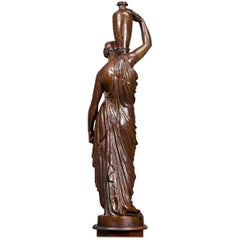
French Figural Statue

French Figural Statue

By Mathurin Moreau

Located in New Orleans, LA

This extraordinary and monumental cast-iron sculpture was likely specially commissioned to the Fonderies d'Art du Val d'Osne for an important public or private collection. Designed by celebrated Parisian sculptor Mathurin Moreau, the striking work takes the form of a beautiful young maiden clad in classical robes with an amphora gracefully held aloft in one hand. The work displays a remarkable level of detail considering its iron casting, including a wreath of laurel leaves atop the woman's head and a stunning necklace adorning her neck. Due to its large size and subject matter, the remarkable work would most probably have been exhibited in a public or private fountain, garden, estate or hotel. French cast-iron sculptures such as this one were historically preferred over bronze for outdoor decorations...

Category

Antique 19th Century French Classical Greek Figurative Sculptures

Materials

Bronze

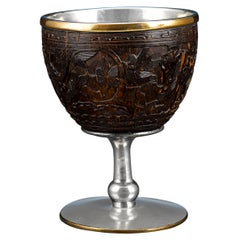
Chinese Coconut Cup

Chinese Coconut Cup

Located in New Orleans, LA

Carved from the shell of a coconut, this enchanting Chinese cup exhibits exceptional artistry. An elegant floral design encircles the entire cup, while the interior is fully lined with silver. In addition to the poison detecting powers attributed to coconuts, the Chinese believed that silver would tarnish when in contact with poison. In fact, many wealthy Chinese used silver lined cups and chopsticks tipped with silver fittings as an assurance against poisoning. To find a silver-lined coconut cup...

Category

Antique Early 19th Century Chinese Other Sculptures and Carvings

Materials

Coconut

Nubian Dancer by Carl Kauba

Nubian Dancer by Carl Kauba

By Carl Kauba

Located in New Orleans, LA

Exemplary of Art Nouveau elegance, the sensuous female form is the focus of this Viennese bronze by Austrian sculptor Carl Kauba (1865 - 1922). The intricately detailed bronze captures the supple form of an exotic Nubian dancer in a true representation of the era’s predominant aesthetic. Both classical and evocative, the nude figure is adorned by an array of bronze jewelry, including a stunning golden belt with chained pendants. Set upon a marble base, she is a stunning example of the erotic bronzes popular at the turn of the century. Born in 1865 to a shoemaker, the Vienna-born Kauba became a well-known early 20th-century sculptor of Native Americans and other western figures. A pupil of Carl Waschmann and Stefan Schwartz in Austria, he studied at the Academy of Fine Arts in Vienna and traveled widely in the American West, sketching and modeling, after spending two years in Paris. He is also noted for his "Naughties" - a collection of mechanical push button sculptures...

Category

20th Century Art Nouveau Figurative Sculptures

Materials

Marble, Bronze

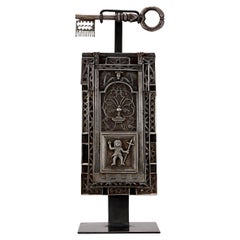
18th-Century French Master’s Lock

18th-Century French Master’s Lock

Located in New Orleans, LA

French Master’s Lock 18th Century Ingeniously crafted with a hidden mechanism, this 18th-century French lock, known as a serrure de maîtrise, or master’s lock, was likely used by sa...

Category

Antique 18th Century French Historical Memorabilia

Materials

Iron