Want more images or videos?
Request additional images or videos from the seller
1 of 9

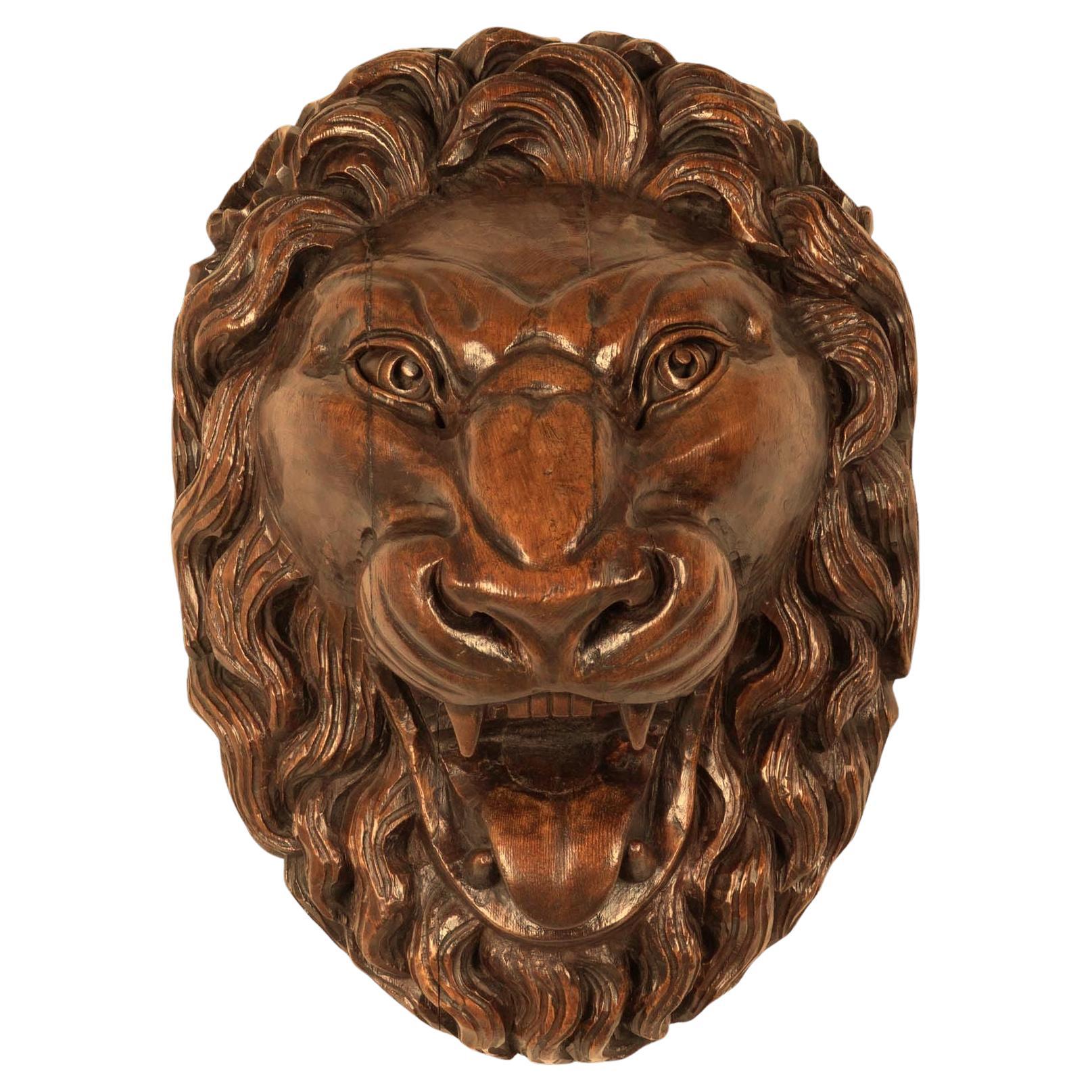
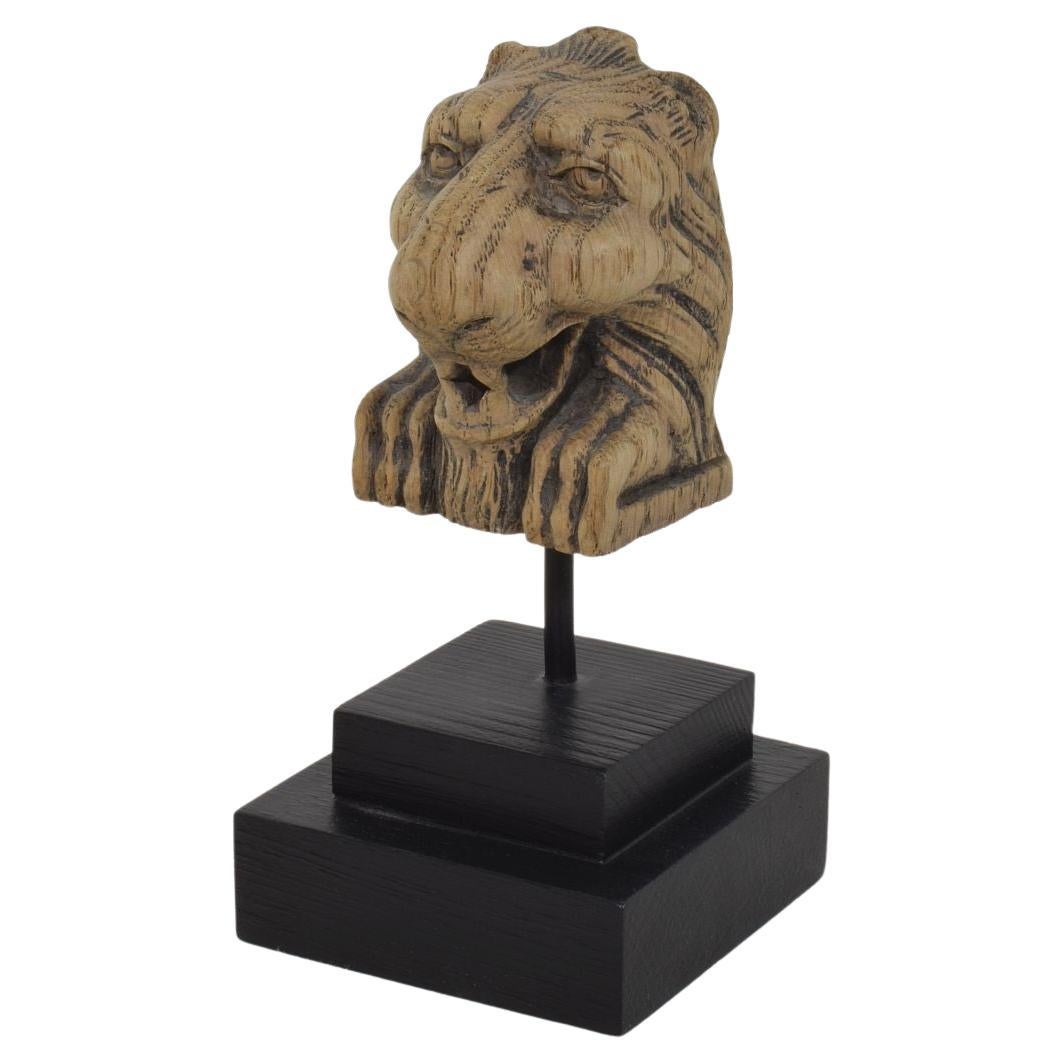
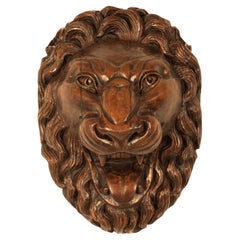
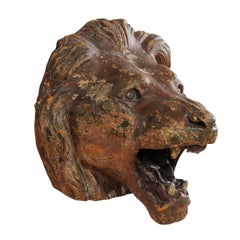
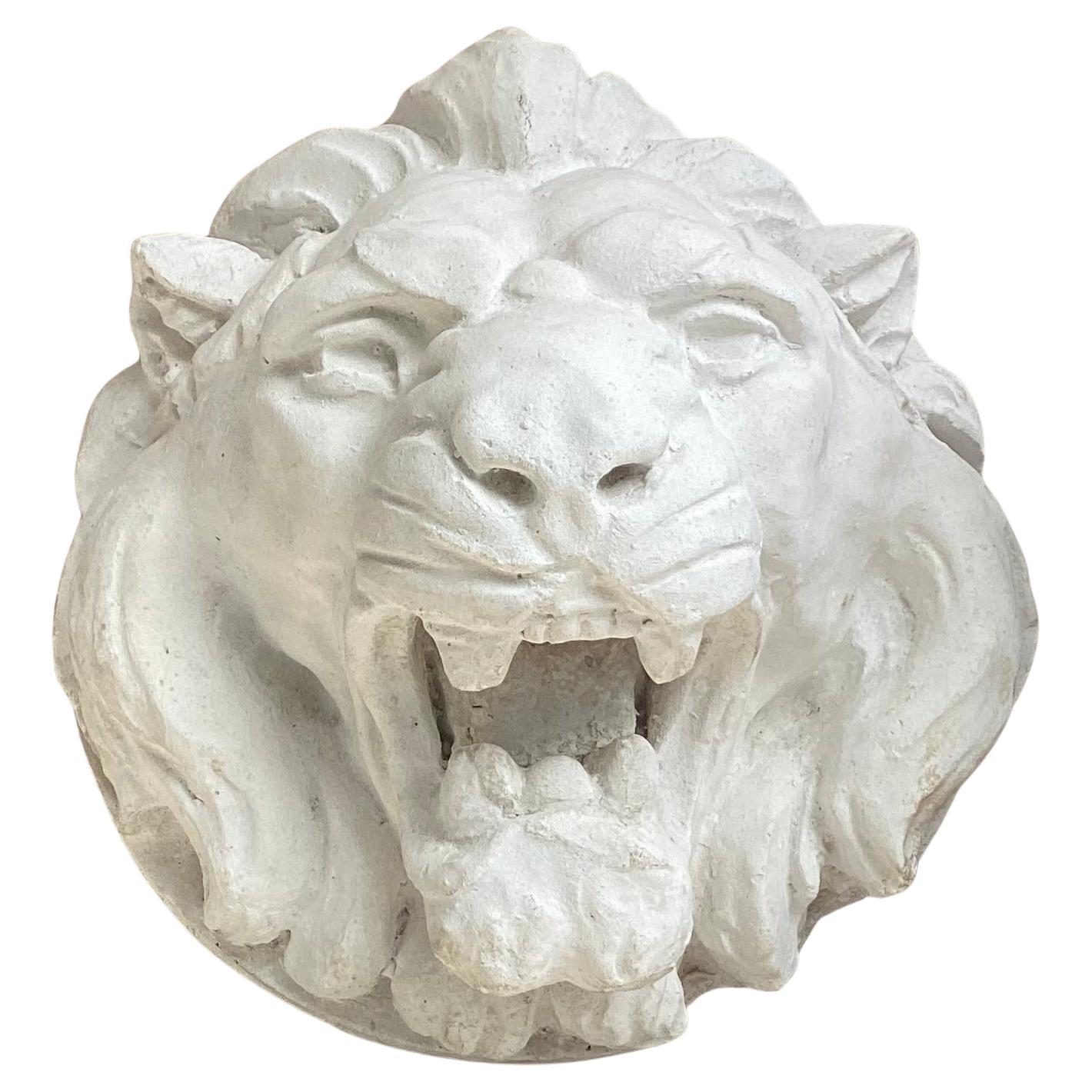
Antique Carved Wood Lion’s Head from a Manhattan Bar, ca. 1880s-1890s

$4,800
£3,590.24
€4,197.30
CA$6,785.51
A$6,816.93
CHF 3,932.07
MX$82,958.57
NOK 45,676.41
SEK 46,333.79
DKK 31,377.24

About the Item

Dimension: Height: 14 inches Width: 13 inches Depth: 12 inches. About the object: This elaborately carved wood lion's head was an integral decorative piece of a bar counter or shelf unit in a Manhattan bar, and dates from around the 1880s. Since electricity was one of the main and newfangled inventions of that time, the small electric bulbs embedded in the lion's eyes are especially noteworthy.
  • Dimensions:
    Height: 14 in (35.56 cm)Width: 13 in (33.02 cm)Depth: 12 in (30.48 cm)
  • Style:
    American Classical (Of the Period)
  • Materials and Techniques:
  • Place of Origin:
  • Period:
  • Date of Manufacture:
    circa 1880s-1890s
  • Condition:
    Wear consistent with age and use. We make our best effort to provide a fair and descriptive condition report. Please examine photos attentively, as they are an integral part of the description. Send us a message to request more details or discuss price.
  • Seller Location:
    New York, NY
  • Reference Number:
    1stDibs: LU2819330233082

More From This Seller

View All
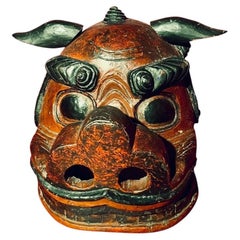
Japanese Meiji Carved Wood Shishi Parade Lion Mask, circa 1880

Japanese Meiji Carved Wood Shishi Parade Lion Mask, circa 1880

Located in New York, NY

Japanese Meiji Carved Wood Shishi Parade Lion Mask, circa 1880 A rare and impressive Japanese Parade Lion Mask (Shishi), dating to the Meiji Period (1868–1912), circa 1880. This po...

Category

Antique 1880s Japanese Japonisme Sculptures and Carvings

Materials

Wood

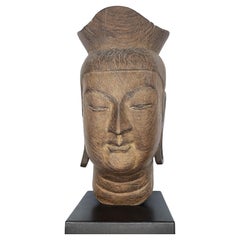
Japanese Late Meiji Period Head of Buddha in Wood, Ca. 1910

Japanese Late Meiji Period Head of Buddha in Wood, Ca. 1910

Located in New York, NY

Japanese Late Meiji Period Head of Buddha in Wood, Ca. 1910 DIMENSIONS: Height: 22 inches Width: 7 inches Depth: 7 inches ABOUT A serene and finely carved wooden Head of Buddha fro...

Category

Vintage 1910s Japanese Japonisme Busts

Materials

Wood

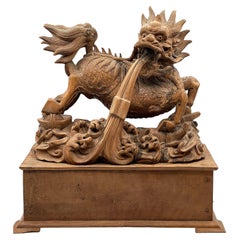
Japanese Edo Period Okimono Carving of a Mythological Figure of Kirin, Ca. 1860

Japanese Edo Period Okimono Carving of a Mythological Figure of Kirin, Ca. 1860

Located in New York, NY

Japanese Edo Period Okimono Carving of a Mythological Figure of Kirin, Ca. 1860 (Edo Period 1603-1868) 19th Century DIMENSIONS: Height: 13 i...

Category

Antique 1860s Japanese Figurative Sculptures

Materials

Wood

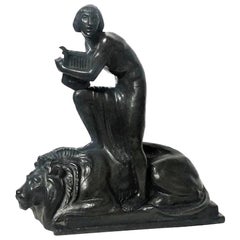
Ernst Seger, David and Lion, German Art Deco Patinated Bronze Sculpture, c. 1920

Ernst Seger, David and Lion, German Art Deco Patinated Bronze Sculpture, c. 1920

By Ernst Seger

Located in New York, NY

Signed “E. Seger”. Black patina. Dimensions Height: 8 inches (20cm) Width: 7.5 inches (18.75cm) Depth: 8.5 inches (21.25cm) THE BIBLE STORY Samuel 17:34-36 Originally, Saul would not allow David to fight Goliath (17:33). Saul’s reason was simply that Goliath would be stronger than David. David was young and he did not have the experience to fight such a capable enemy as Goliath. David was likely to die, and his death would benefit nobody. Often people wrongly imagine that they are acting in faith (in other words, that they are trusting God). Really, they are acting in a foolish manner, as if the danger is not real. They are not trusting in God, but in their own thoughts, hopes and desires. David’s reply to Saul shows us his attitudes. This reply explains clearly why David had offered to fight Goliath. In other words, it shows how David considered himself able to defeat Goliath. Like many boys and young men in Israel, David had worked as a shepherd. That is, he looked after sheep. He was responsible to look after those sheep in every way. In particular, he had to protect them from wild animals. Lions and bears are some of the fiercest large wild animals. They were common in Israel at the time of the Bible. They are much stronger than a man (see for example 1 Kings 13:24 and 2 Kings 2:24). Only the bravest and strongest men were able to kill a lion (Judges 14:5-6; 2 Samuel 23:20). However, David had killed both a lion and a bear. He had killed animals that were stronger than him. David did not believe that the strongest man would win the fight. David had a close relationship with God; he was trusting God to rescue him (17:37). David was not pretending that there was no danger. However, God’s Holy Spirit was active in David’s life (16:13). By the power of his Holy Spirit, God had given David the faith (trust in God) to fight Goliath. Because David really was trusting God, there was no reason for him to be afraid of Goliath. THE ARTIST Ernst Seger (1865 1939), born in Neurode (Nowa Ruda, now Poland), studied sculpturing from 1884 at the Kunstschule in Breslau under Robert Härtel. From 1886 he worked in the Atelier of Christian Behrens, where he created the Eichendorff-Memorial for the Silezian City of Neisse. From 1893 to 1894 Seger stayed in Paris where he worked in the atelier of Auguste Rodin. However, Seger finally chose a ‘Jugenstill’ and a more ‘naturalistic’ or ‘Neuklassizismus’ style. His sculptures, modelled like the Greek antiques, were later greatly admired by the National Socialists. At the end of 1894 Ernst Seger went back to Berlin, founded his own atelier and created the Kaiser Wilhelm I memorial for the Silesian City of Glatz. In 1897 Seger created the sculpture ‘Jugend’ (‘Youth’), which was displayed at the ‘Große Berliner Kunstausstellung’ in 1898, at the ‘Große Berliner Kunstausstellung’ in 1899, at the ‘Münchener Glaspalast Ausstellung’ in 1899 and at the ‘Münchener Glaspalast Ausstellung’ in 1908. As a sculptor Seger regarded this as his first relevant work, his breakthrough. A copy of the sculpture in bronze, 1.60 metres high, was placed in the ‘Scheitniger Park’ in Breslau (now Wroclaw). In 1898 Segers ‘Diana’, the Roman Goddess of the Hunt, the Moon and Childbirth, was unvealed in Park Szczytnicki, Breslau, Polen (earlier ‘Schneitniger Park’). Until 1945 the sculpture stayed in the Schneitniger Park, Breslau. This part of the park is still called ’Dianagarten’. After the turn of the century the elegant female dancers and nudes by Seger gained great popularity. In 1905 Ernst Seger created -together with the sculptor Bernhard Sehring- the ‘Bismarck Brunnen’ (‘Bismarck Fountain’) in Breslau. This memorial-fountain (which still exists) represents the allegories ‘Kampf’ and ‘Sieg’ (‘Battle and Victory’). Seger’s ‘Verwundete Amazone’ (‘Wounded Amazon’), displayed at the Grosse Münchner Kunstausstellung in the Glaspalast in 1908, was placed in the garden of the ‘Kaufhauses Wertheim’ in Berlin. In the same year he was appointed as a professor. Seger’s marble sculpture ‘Kypris’, created in 1916, was placed in the Alten Nationalgalerie in Berlin. In 1925 the City of Berlin acquired his sculpture ‘Anbetung’ and placed it at the Johannaplatz. ‘Storchenbrunnen’ (‘Stork-fountain’), was placed in 1931 at the Adolf-Scheidt-Platz in Berlin. In 1935 the American newspaper publisher William Randolph Hearst bought Seger’s sleeping ‘Ganymede’. During the Third Reich Ernst Seger was commissioned numerous Hitler busts...

Category

Vintage 1920s German Art Deco Figurative Sculptures
Materials

Bronze

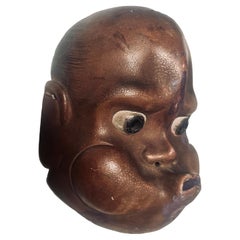
18th Century Japanese Edo Carved Keyaki Wood Hyottoko Mask, circa 1750–1790

18th Century Japanese Edo Carved Keyaki Wood Hyottoko Mask, circa 1750–1790

Located in New York, NY

18th Century Japanese Edo Period Carved Hyottoko Mask in Keyaki Wood, Circa 1750–1790 A rare and expressive Japanese Hyottoko mask carved during the Edo period, dating to approximat...

Category

Antique 1760s Japanese Japonisme Sculptures and Carvings

Materials

Wood

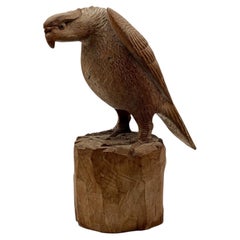
Japanese Meiji Boxwood Okimono of Perched Hawk, Signed, circa 1910

Japanese Meiji Boxwood Okimono of Perched Hawk, Signed, circa 1910

Located in New York, NY

Japanese Finely Carved Boxwood Okimono of a Perched Hawk Signed Meiji Period (1868–1912), circa 1910–1920 An exceptional Japanese boxwood okimono depicting a majestic hawk perched i...

Category

Vintage 1910s Japanese Japonisme Sculptures and Carvings

Materials

Boxwood

You May Also Like

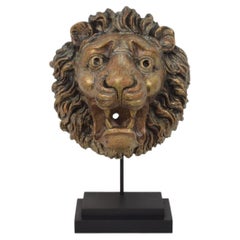
Antique French Carved Wooden Lion Head, Weathered, Circa 1850-1900

Antique French Carved Wooden Lion Head, Weathered, Circa 1850-1900

Located in Buisson, FR

Amazing hand carved wooden lion head with a strong expression.. Wonderful period piece with traces of old color. France circa 1850-1900 Weathered. measurements include the wooden bas...

Category

Antique 19th Century French Architectural Elements

Materials

Wood

Large 19th Century Carved Lion Wall Mask

Large 19th Century Carved Lion Wall Mask

Located in Shipston-On-Stour, GB

A rare and large early C19th carved pine wall mask in the form of a lions face, boldly carved with flowing mane and alert expression with mouth wide and exposing his tongue. Circa 18...

Category

Antique 1820s Italian Neoclassical Wall-mounted Sculptures

Materials

Pine

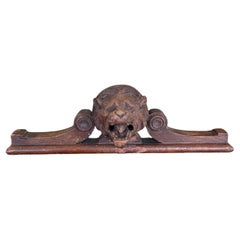
Antique Hand-Carved Wooden Architectural Fragment with Lion Head Motif

Antique Hand-Carved Wooden Architectural Fragment with Lion Head Motif

Located in Seattle, WA

This likely antique wooden architectural fragment features a finely carved lion's head flanked by scroll details. The carving is executed in solid wood with a rich, aged patina, show...

Category

Early 20th Century Mid-Century Modern Figurative Sculptures
Materials

Wood

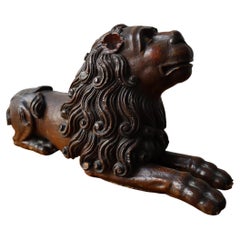
Antique Baroque Handcarved Lion Sculpture, Italian or Austrian

Antique Baroque Handcarved Lion Sculpture, Italian or Austrian

By Antonio Raggi

Located in Vienna, AT

Early fine carved sculpture of a lying lion. Attributed to the circle of Alessandro Vittoria, located in northern Italy/ Venice. Original late Renaissance or early Baroque figure. T...

Category

Antique 17th Century Italian Baroque Animal Sculptures

Materials

Wood

Glazed Antique Lion Mask Attributed to LEFCO

Glazed Antique Lion Mask Attributed to LEFCO

By Lefco

Located in Wormelow, Herefordshire

A glazed antique lion mask attributed to LEFCO dating back to the 1900s. This distinctive piece is modelled with high detail using various sculpting tech...

Category

Early 20th Century English Victorian Animal Sculptures

Materials

Clay