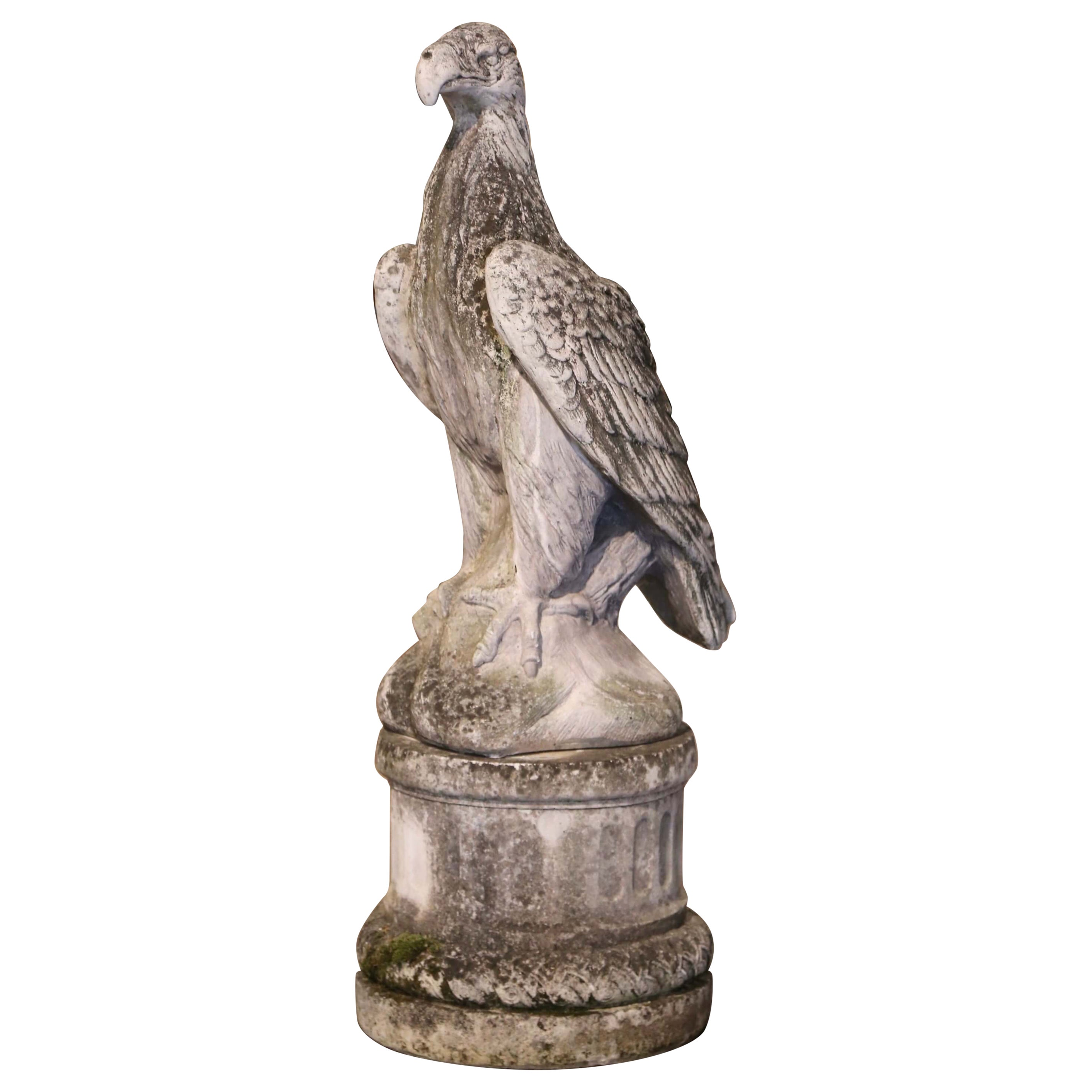
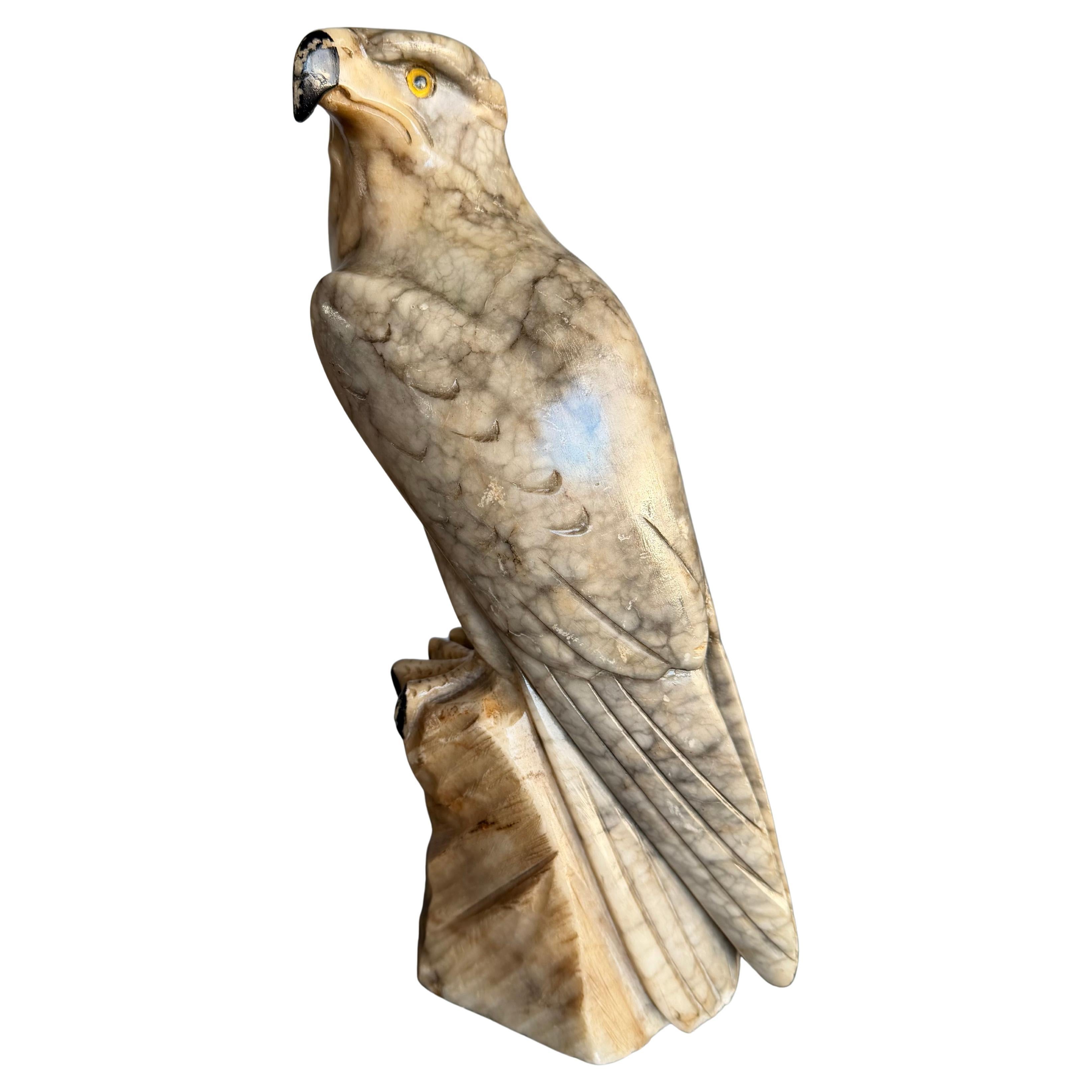
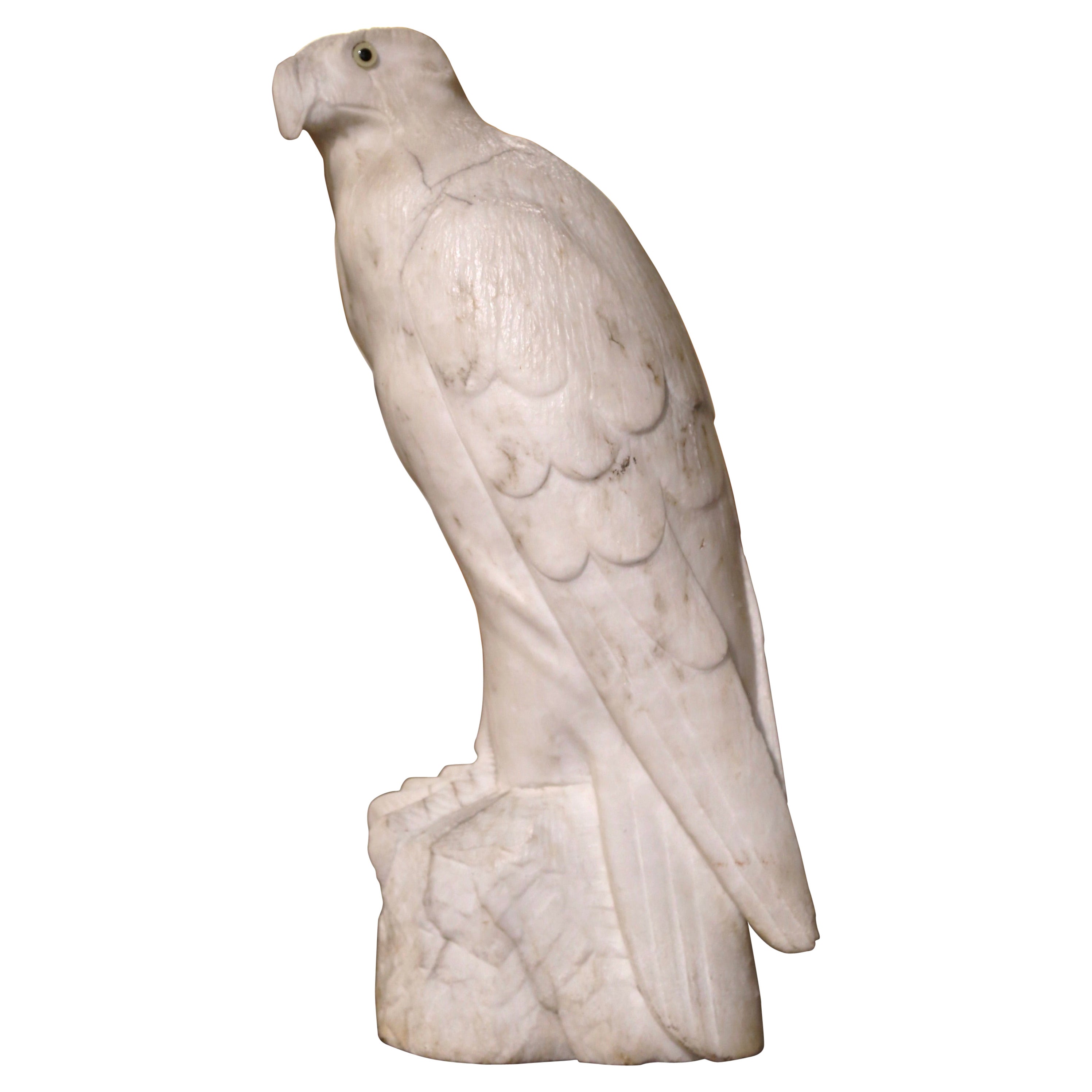
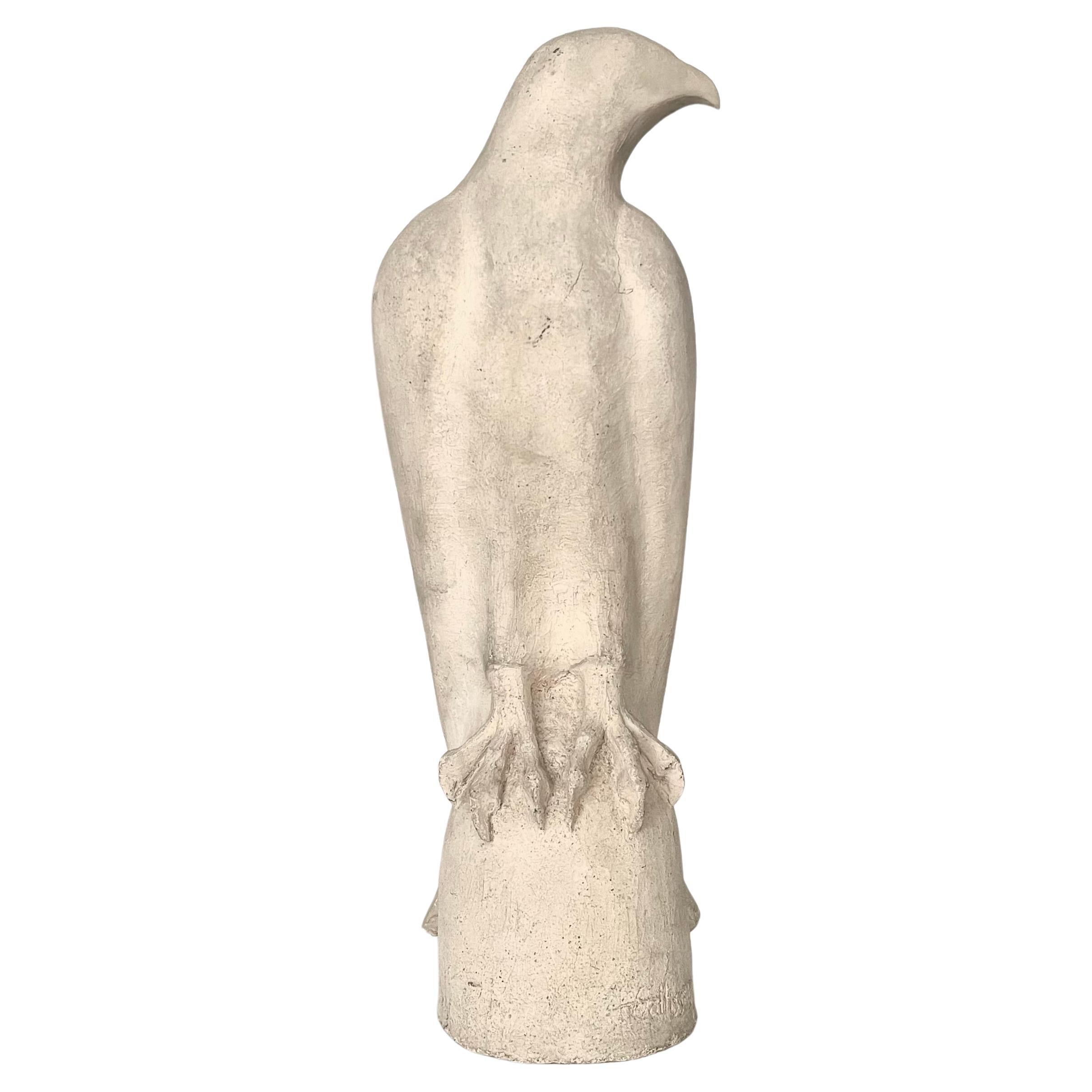
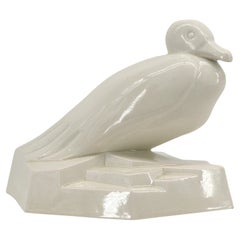
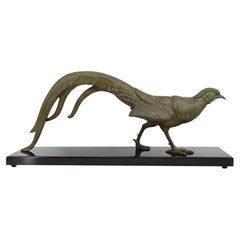
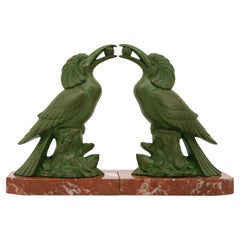
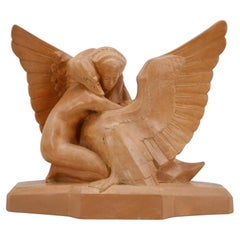
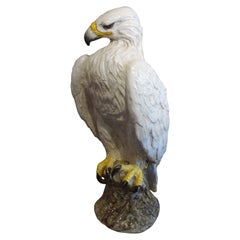
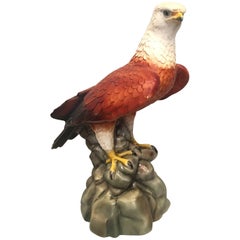
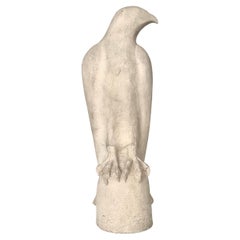
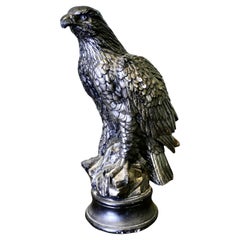
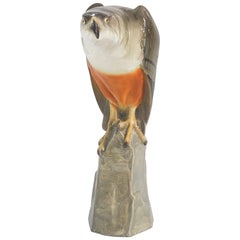
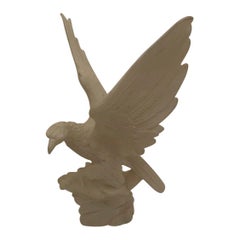
Art Deco Crackle-Glaze Ceramic Eagle Sculpture by Lejan, Orchies, France, circa 1920.
Rare and highly sculptural French Art Deco ceramic eagle executed in an expressive crackle glaze, created by Lejan at Orchies, France, circa 1920. This powerful animal sculpture exemplifies the bold forms and textured surfaces that defined early Art Deco ceramic production in northern France.
The eagle is modeled with strong geometric stylization, dramatic wing articulation, and a commanding vertical presence, emphasizing strength, vigilance, and modernity—iconic themes of the Art Deco period. The richly craquelé glaze enhances the sculptural depth and gives the surface a striking visual tension, highly sought after by collectors of French crackle-glaze ceramics.
The sculpture is marked “LEJAN” on the base (extremely faint, as often encountered with early Orchies productions). It is documented and illustrated in the reference book Les Craquelés Art Deco by Alain-René Hardy and Bruno Giardi, Editions Penthesilia, 2009, page 115, confirming its importance and authenticity.
Measurements
Height: 16.1 in. (41 cm)
Width: 7.3 in. (18.5 cm)
Depth: 7.5 in. (19 cm)
Condition
Exceptional original condition with no chips, cracks, or restorations. Outstanding glaze preservation.
Biography – Lejan (Orchies, France)
Lejan was an important French ceramic artist and workshop active in Orchies, in northern France, during the late 1910s and 1920s, a pivotal period for the development of Art Deco ceramics. Closely associated with the Orchies ceramic tradition, Lejan specialized in crackle-glaze (craquelé) faience, producing sculptural animal figures, vases, and decorative objects characterized by bold silhouettes and experimental glazing techniques.
Lejan’s work reflects the broader Art Deco movement’s fascination with modernity, stylization, and texture, often favoring powerful animal subjects such as eagles, panthers, and birds—symbols of strength and dynamism. The workshop’s production stands alongside that of other notable Orchies-related makers and is today highly regarded for its technical mastery of crackle glazes and its strong sculptural presence.
Original Lejan ceramics, particularly large-scale animal sculptures, are now considered rare and are actively sought by collectors of French Art Deco ceramics, with documented examples appearing in major reference publications and specialized collections.