Video Loading
Want more images or videos?
Request additional images or videos from the seller
1 of 12

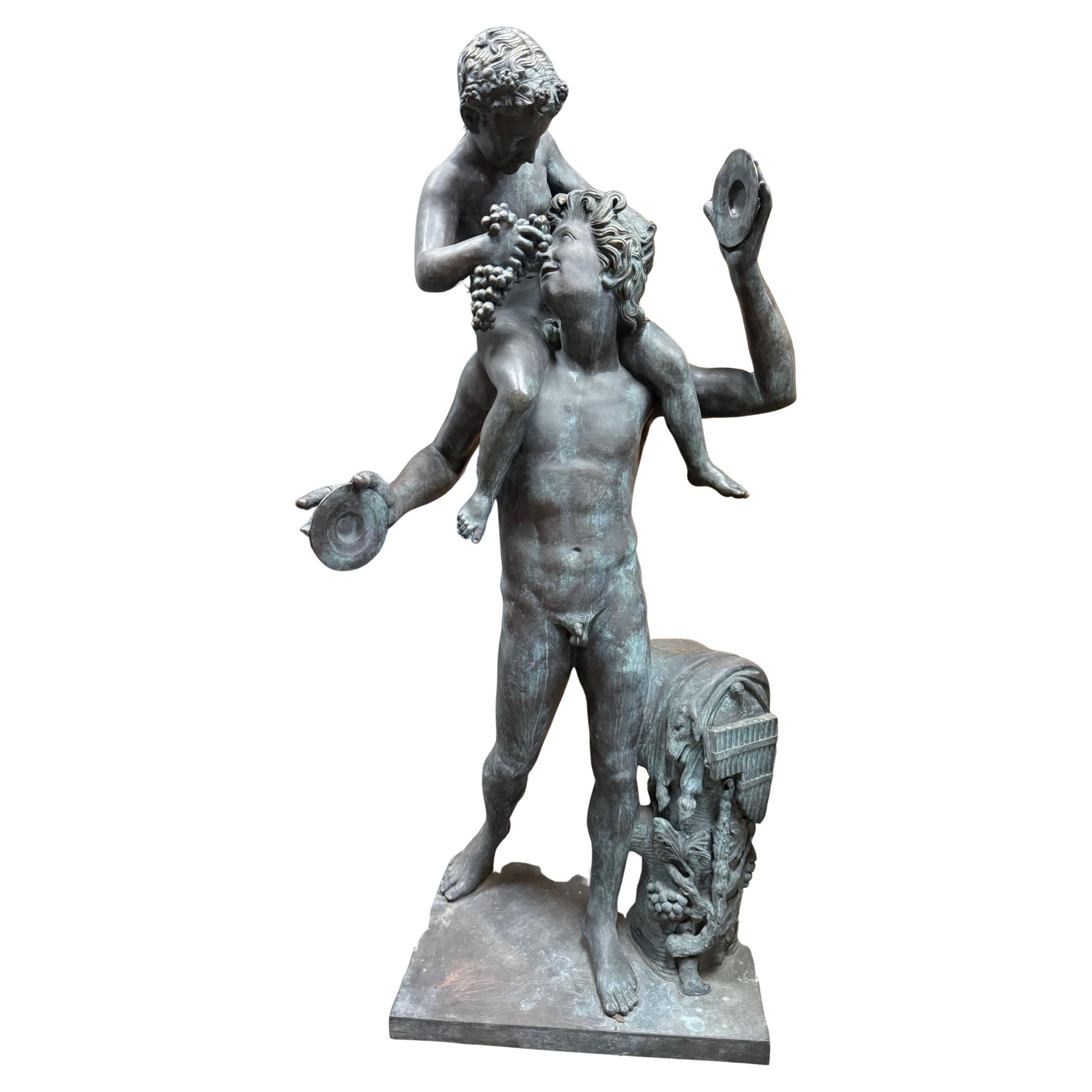
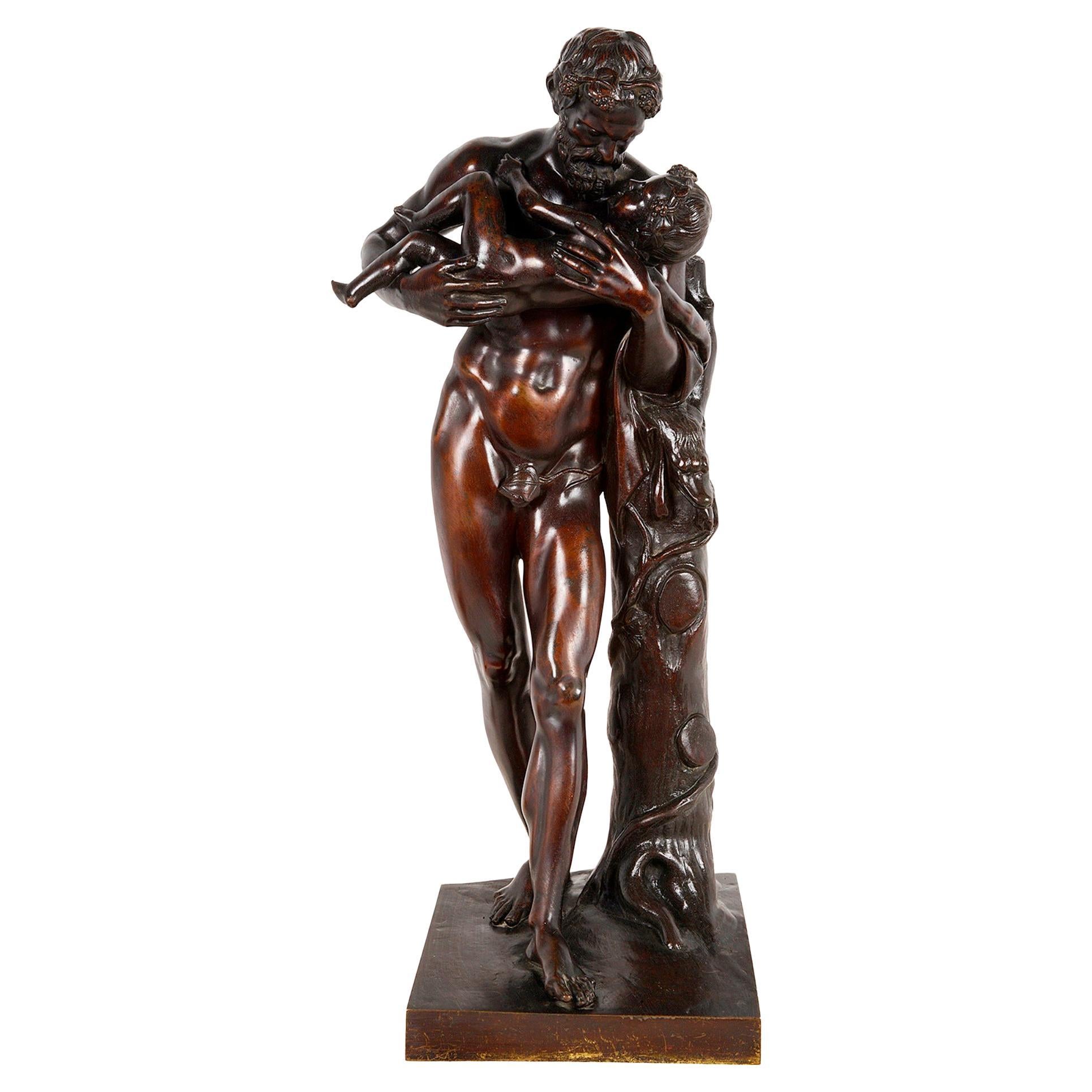
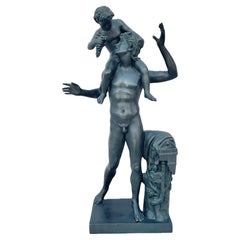
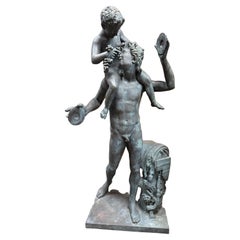
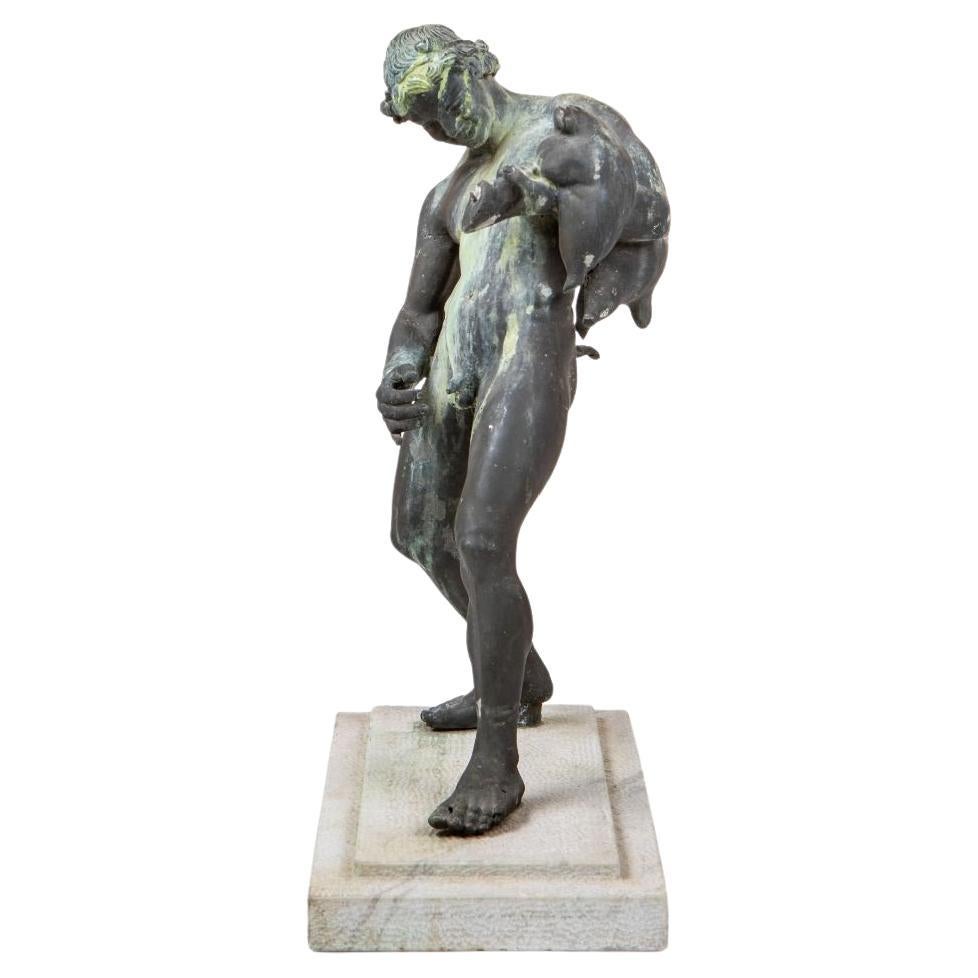
18th Italian bronze statuette of a Satyr and the Young Bacchus

$10,293.67
£7,500VAT Included
€8,921.95
CA$14,484.56
A$14,603.23
CHF 8,315.26
MX$177,508.41
NOK 98,157.63
SEK 97,875.84
DKK 66,690.51

About the Item

This fine bronze cast, with a golden patina, represents and 18th century bronze version of the famous ancient marble 'Satyr with young Bacchus' that was formerly in the Farnese collection, now in the Museo Nazionale in Naples (inv. 6022). In the 16th century the statue formed part of the collection of antiquities of the Cesarini family, a prominent Roman aristocratic family, who - in a fashion not uncommon at the time - traced their lineage to no less than Julius Caesar (M. de Montaigne, Journal de Voyage en Italie, Paris, 1580-81, pp. 275-276). In 1593 Cardinal Odoardo Farnese acquired the Satyr with young Bacchus from Duke Giuliano IV Cesarini, along with the rest of the collection. The theme of Bacchus's childhood, spent on the hills of mount Nysa in the company of satyrs and maenads, had enjoyed significant popularity since antiquity, as testified above all by the famous Hermes and the infant Dionysus group attributed to Praxiteles (4th century BC, now Archaeological Museum, Olympia, Greece). The present bronze depicts a satyr playing cymbals whilst the infant Bacchus sits on his shoulders holding a bunch of grapes. This lively scene captures a seminal event in the life of the young god, for this is the moment when he is first introduced to the fruits of the vine. In the ancient world, many different cultures throughout Europe and Asia Minor established cults of Bacchus, centred on festivals such as the Athenian Dionysia and Lenaia, in which musical instruments like the cymbals and panpipe represented here played a key role.
  • Dimensions:
    Height: 11.23 in (28.5 cm)Width: 5.91 in (15 cm)Depth: 3.94 in (10 cm)
  • Style:
    Neoclassical (Of the Period)
  • Materials and Techniques:
    Bronze,Cast
  • Place of Origin:
  • Period:
  • Date of Manufacture:
    circa 1750 - 1800
  • Condition:
    Wear consistent with age and use.
  • Seller Location:
    York, GB
  • Reference Number:
    1stDibs: LU10896249443432

More From This Seller

View All
Early 19th century Roman bronze of the Sleeping Ariadne

Early 19th century Roman bronze of the Sleeping Ariadne

Located in York, GB

Initialled: ‘A V’ - this work is likely connected to the famous Roman workshop established by Andrea Valadier (1695 - 1759), with this bronze being cast in the early 19th century. Th...

Category

Antique Early 19th Century Italian Neoclassical Figurative Sculptures

Materials

Marble, Bronze

16th Century Renaissance Hercules and the Nemean Lion

16th Century Renaissance Hercules and the Nemean Lion

Located in York, GB

Throughout the sixteenth century, sculptors working in the German city of Nuremberg carved sculptural reliefs in various media. This polychrome example, which depicts Hercules’ battl...

Category

Antique 16th Century German Renaissance Figurative Sculptures

Materials

Boxwood

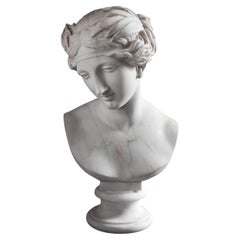
19th century Italian Medici Venus statue

19th century Italian Medici Venus statue

Located in York, GB

Medici Venus fragment (After the antique) Italian, 19th century, Carrara marble, 68 cm high 22 cm wide 25 cm deep A very well carved and executed version of the iconic ancient Medic...

Category

Antique 19th Century Figurative Sculptures

Materials

Carrara Marble

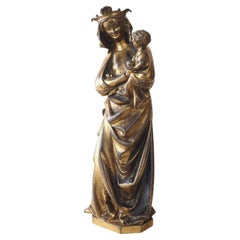
19th century French bronze statuette of a Virgin and Child

19th century French bronze statuette of a Virgin and Child

Located in York, GB

Wonderful French 19th century gilt bronze statuette in the medieval style, very similar to the Golden Madonna of Amiens, dated to 1260-1270, in the south portal, porte Sainte-Honoré ...

Category

Antique 19th Century French Medieval Figurative Sculptures

Materials

Bronze

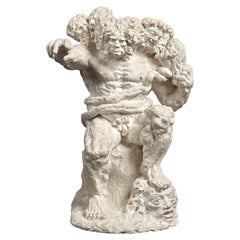
Multi-headed giant plaster sculpture by Axel Waldemaar Johannessen, 1912

Multi-headed giant plaster sculpture by Axel Waldemaar Johannessen, 1912

Located in York, GB

Axel Waldemaar Johannessen (Oslo 1880 - 1922) Multi-headed giant, with a portrait of playwright Henrik Ibsen Signed and dated (lower left): ‘1912 Johannessen’ Plaster 45 cm (17 ¾ in...

Category

Early 20th Century Norwegian Figurative Sculptures

Materials

Plaster

Bust of a Naiad, Attributed to John Gibson RA, Hand-Carved Carrara marble

Bust of a Naiad, Attributed to John Gibson RA, Hand-Carved Carrara marble

By John Gibson, R. A.

Located in York, GB

This finely executed bust of a Naiad is attributed to the neoclassical sculptor John Gibson (1790 – 1866). A Naiad was a type of mythological water nymph and is depicted here with her head bowed and cocked slightly to the side, displaying her strong neo-Hellenistic profile. In her hair, the nymph wears a headdress that is comprised of long and slender reed leaves, which not only identifies her iconographically as a water spirit, but draws a close comparison with those worn by the female figures in John Gibson’s Hylas Surprised by the Naiades (1827 - 1837) (fig.1). The downwards and off-centre orientation of our Naiad bust mirrors that of the taller figure on the left of the group, who rests her cheek on the head young Hylas (fig.2) Her facial physiognomy follows the neo-Hellenistic archetype established by Gibson and can be closely compared with his Tinted Venus – one of the most important statues of the Victorian era (1851–56, Walker Art Gallery, Liverpool) (fig.3). While Gibson’s Tinted Venus is known best for its controversial polychrome ‘tinting’, the essential structure of the face—broad brow, finely drawn nose, wide (and slightly drooping) almond-shaped eyes - provided a template that Gibson returned to repeatedly in his depiction of mythological maidens. Critics of the time noted the consistency of his female types, with some seeing their idealised severity as an antidote to the sentimentality of much mid-Victorian sculpture (fig.4 – 6). The facial physiognomy is also very similar to a drawing by Gibson at the Royal Academy that depicts Hero weeping over the dead body of Leander (fig.7). The socle style of the present work also finds comparisons with Gibsons busts of Cupid and Aurora. This was of course somewhat standardised, but it is interesting to note the extent of their similarity with our bust. John Gibson RA is considered by many to be the greatest British sculptor of the nineteenth century working in the Neoclassical style. It is hard to overestimate the impact Rome had on the life and art of the artist. He first arrived in the city around 1817, when he was just twenty-six, and remained a resident there until his death. Not only did Rome’s ancient sculptural treasures and architectural fragments offer Gibson a lifetime of inspiration, but the Grand Tourists who poured into Rome in the first half of the nineteenth century provided him with many commercial opportunities. These rich or aristocratic travellers sought out mythological sculptures for their grand, palatial residences. However, since the papal decrees of Doria Pamphilj and Pacca of 1803 banned the export of ancient Greek and Roman works of art from Rome, there was a large demand for modern idealised sculpture in the Neoclassical style (Frasca-Rath 2016, p. 10). During his early days in the city he had the great fortune to train under both Antonio Canova and Bertel Thorvaldsen (Roscoe and Hardy 2009, p. 522). He referred continuously to Canova as his “master”, particularly in his memoirs, which he dictated to Margarete Sandbach at the beginning of the 1850s; these were subsequently published by Lady Eastlake in 1870. Moreover, he claimed to be Canova’s last pupil in a letter to Antonio Gacini, Secretary of the Royal Academy in Milan in 1861, written to thank the Academy for accepting him as an Honorary Member: “The first instruction which I received in my art was from an Italian. It was Canova whose pupil I became in the year 1817 and studied under him for five years when he died. I was his last pupil” (Royal Academy Archive GI/1376). By 1821, Gibson had established his own studio in the via Fontanella, off the via Babuino. From here he aimed to produce sculpture of “the sublime and the purest beauty”, believing that the sculptor’s role was to select and combine the most beautiful parts of nature to create a harmonious whole, which would delight and elevate the viewer. By the mid nineteenth century he was one of the few remaining exponents of the so-called ‘pure’ and ‘neo Hellenistic’ style of sculpture, resolutely upholding the Neoclassical ideals established by Wincklemann, in a period when naturalism and modern subjects preoccupied the majority of artists in Europe (Turner, ed., 1996, p. 598). Gibson was convinced of the importance of disseminating artistic ideas through the younger generations, an ideal no doubt impressed upon him by Canova, and established ‘the British Academy of Arts in Rome’. His students included William Theed (1804–1891), Benjamin Spence (1822–1866), Harriet Hosmer...

Category

Antique Mid-19th Century Italian Neoclassical Busts
Materials

Carrara Marble

You May Also Like

19th Century Grand Tour Bronze Sculpture of Satyr With Infant Dionysus

19th Century Grand Tour Bronze Sculpture of Satyr With Infant Dionysus

Located in Bradenton, FL

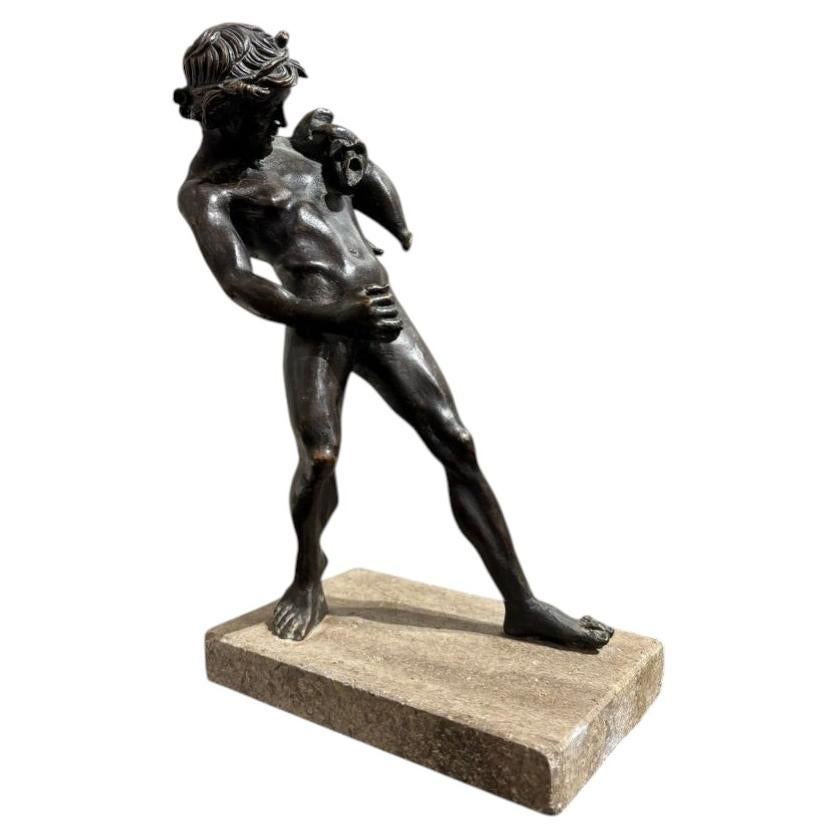
Italian 19th century Grand Tour Bronze Figure of Satyr With Infant Dionysus. The Satyr, often associated with music, mischief, and sensual pleasure, is shown with one arm cradling Di...

Category

Antique 19th Century Italian Grand Tour Figurative Sculptures

Materials

Bronze

Life Size Bronze of a Nude Bacchus Statue God of Wine and Revelry

Life Size Bronze of a Nude Bacchus Statue God of Wine and Revelry

Located in Stamford, CT

Life Size Bronze of a nude Bacchus statue God of wine, revelry and ecstasy. He is associated with the cultivation of the grapevine, the process of winemaking and festivals. Bacchus, ...

Category

Late 20th Century Thai Statues

Materials

Bronze

18th Century Bronze Sculpture of a Young Bacchus in the style of Ponce Jacquiot

18th Century Bronze Sculpture of a Young Bacchus in the style of Ponce Jacquiot

By Ponce Jacquiot

Located in Kittery Point, ME

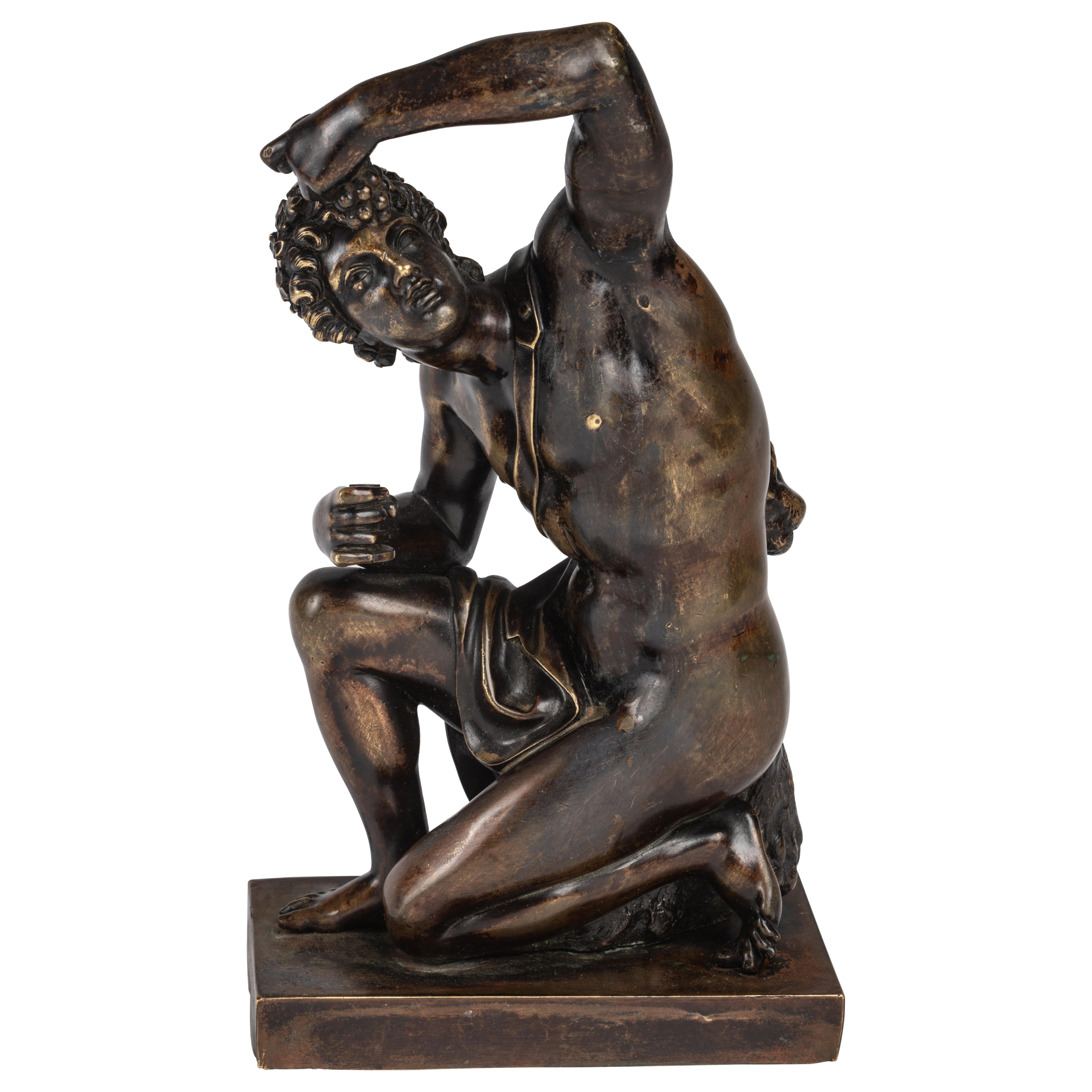
A young Bacchus cast in bronze, the Roman god of wine, half kneels half sits on a rock while holding grapes in one hand raised above his head and a cup in the other, his head tilted ...

Category

Antique Late 18th Century French Renaissance Figurative Sculptures

Materials

Bronze

19th Century Italian Grand Tour Bronze of a Satyr Sculpture, Pompeii

19th Century Italian Grand Tour Bronze of a Satyr Sculpture, Pompeii

Located in Stamford, CT

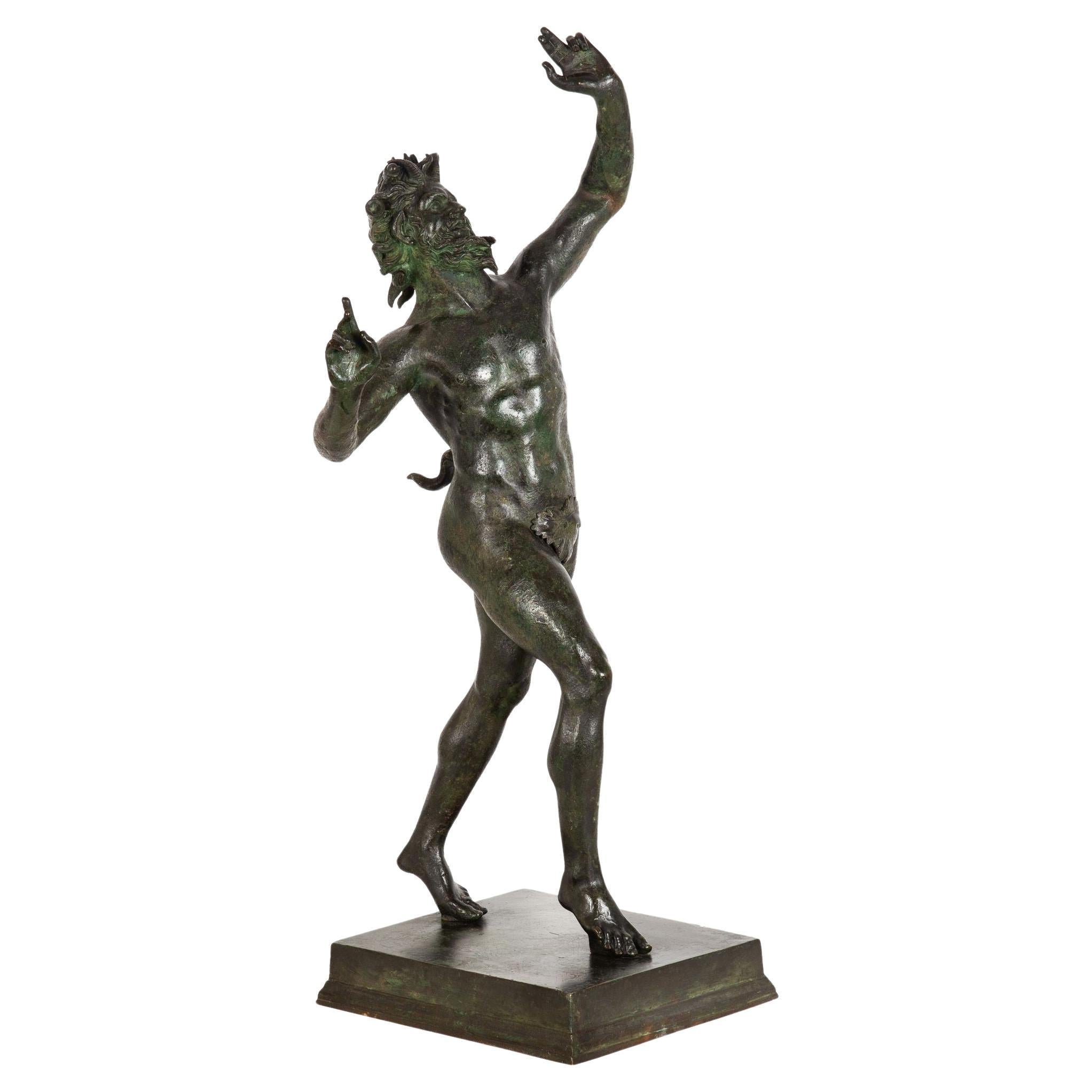
19th century Neapolitan Grand Tour bronze of a Satyr with wine skin, also known as the 'Drunken Satyr'. The cup he would have been holding was lost in the conflagration. The lean, mu...

Category

Antique Late 19th Century Italian Grand Tour Figurative Sculptures

Materials

Travertine, Bronze

Dionysus On The Shoulders Of A Satyr

Dionysus On The Shoulders Of A Satyr

Located in Honnelles, WHT

Dionysus on the shoulders of a satyr, bronze after the antique on a yellow base from Siena marble, 19th century

Category

Antique 19th Century Italian Greco Roman Figurative Sculptures

Materials

Marble, Bronze

Italian Bronze Figure of the Dancing Faun, After the Antique

Italian Bronze Figure of the Dancing Faun, After the Antique

Located in Kittery Point, ME

With right foot resting on a set of bellows and hands holding cymbals, on integrally cast circular plinth. The Hellenistic marble on which this bronze is based was moved from Rome to...

Category

Antique 18th Century and Earlier Italian Sculptures

Materials

Bronze