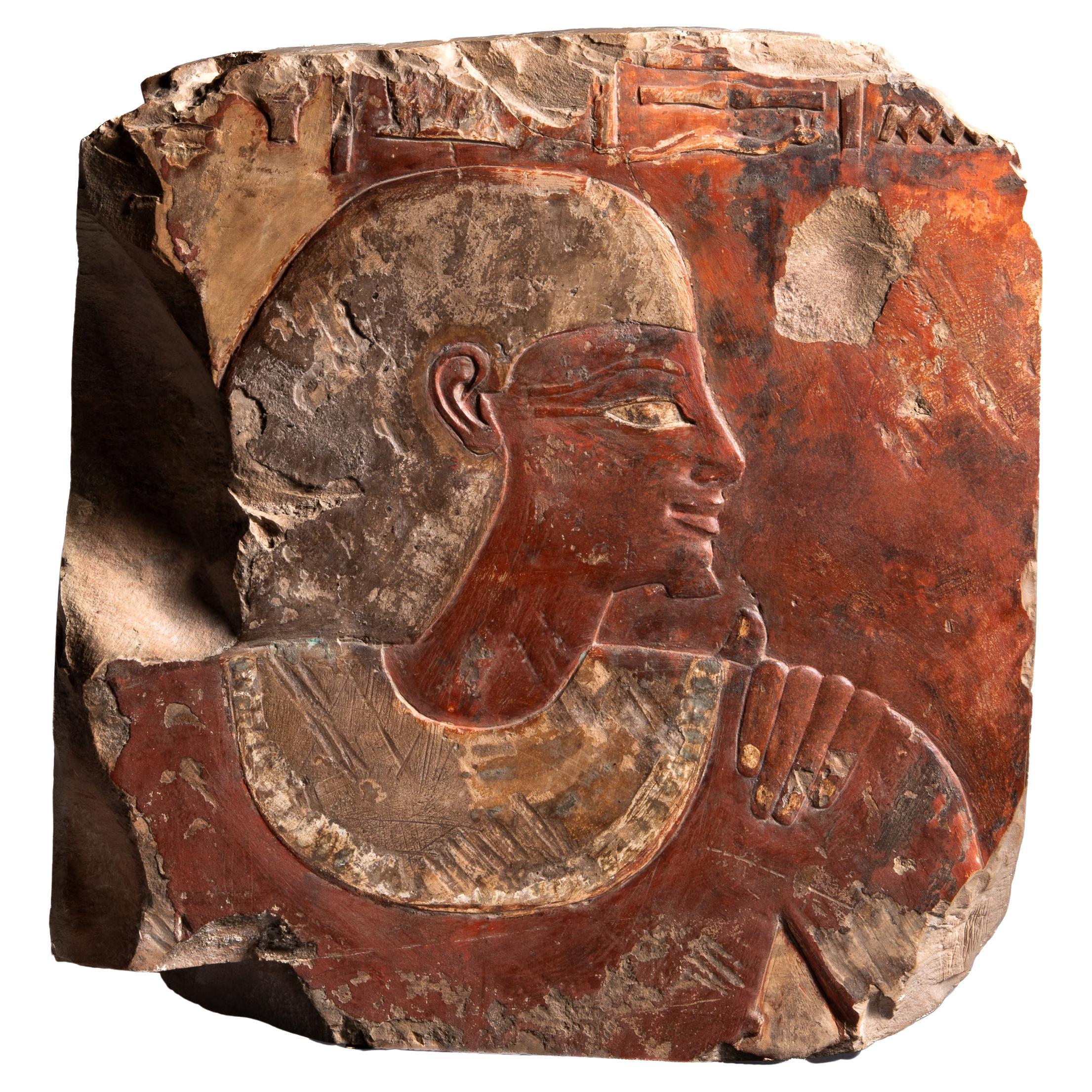
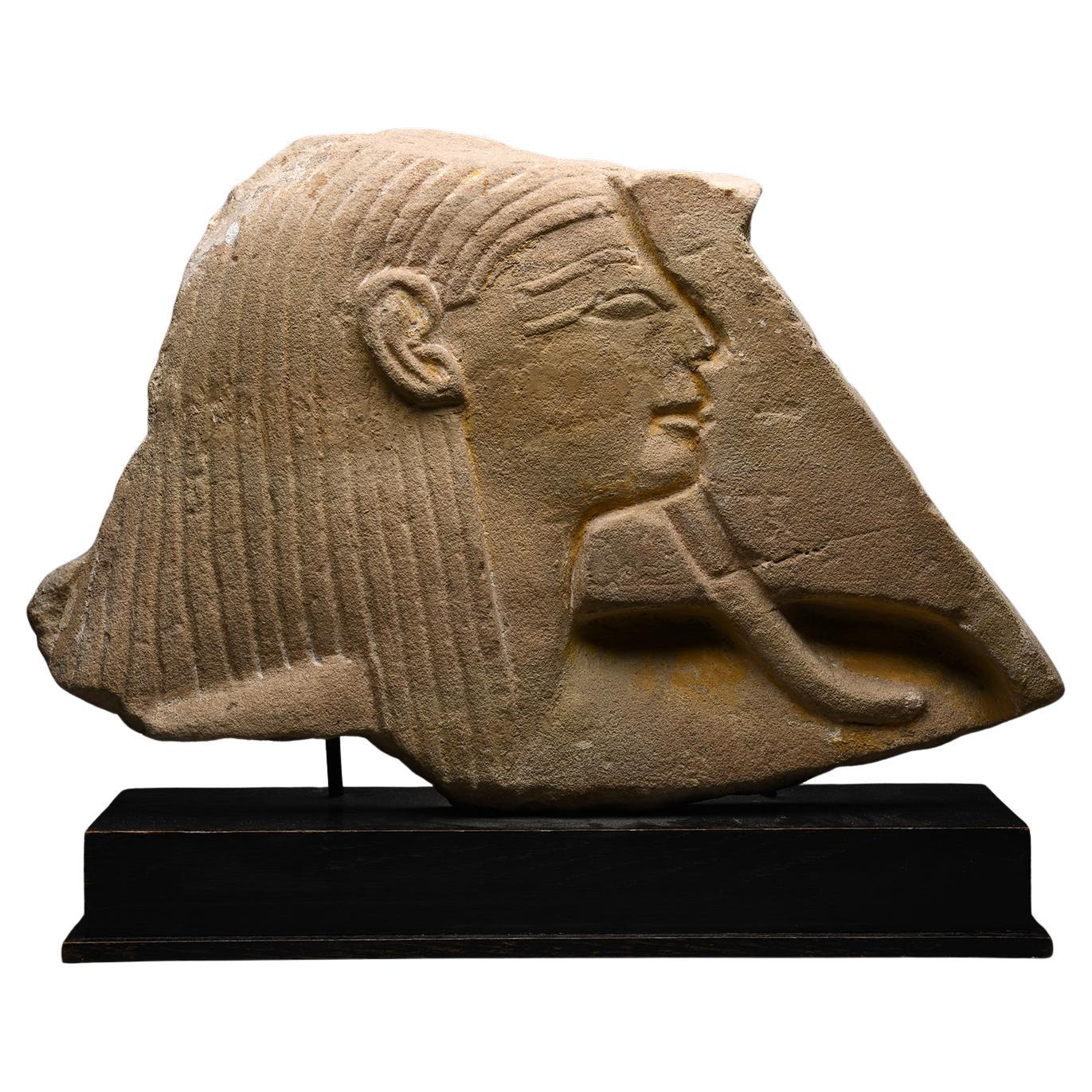
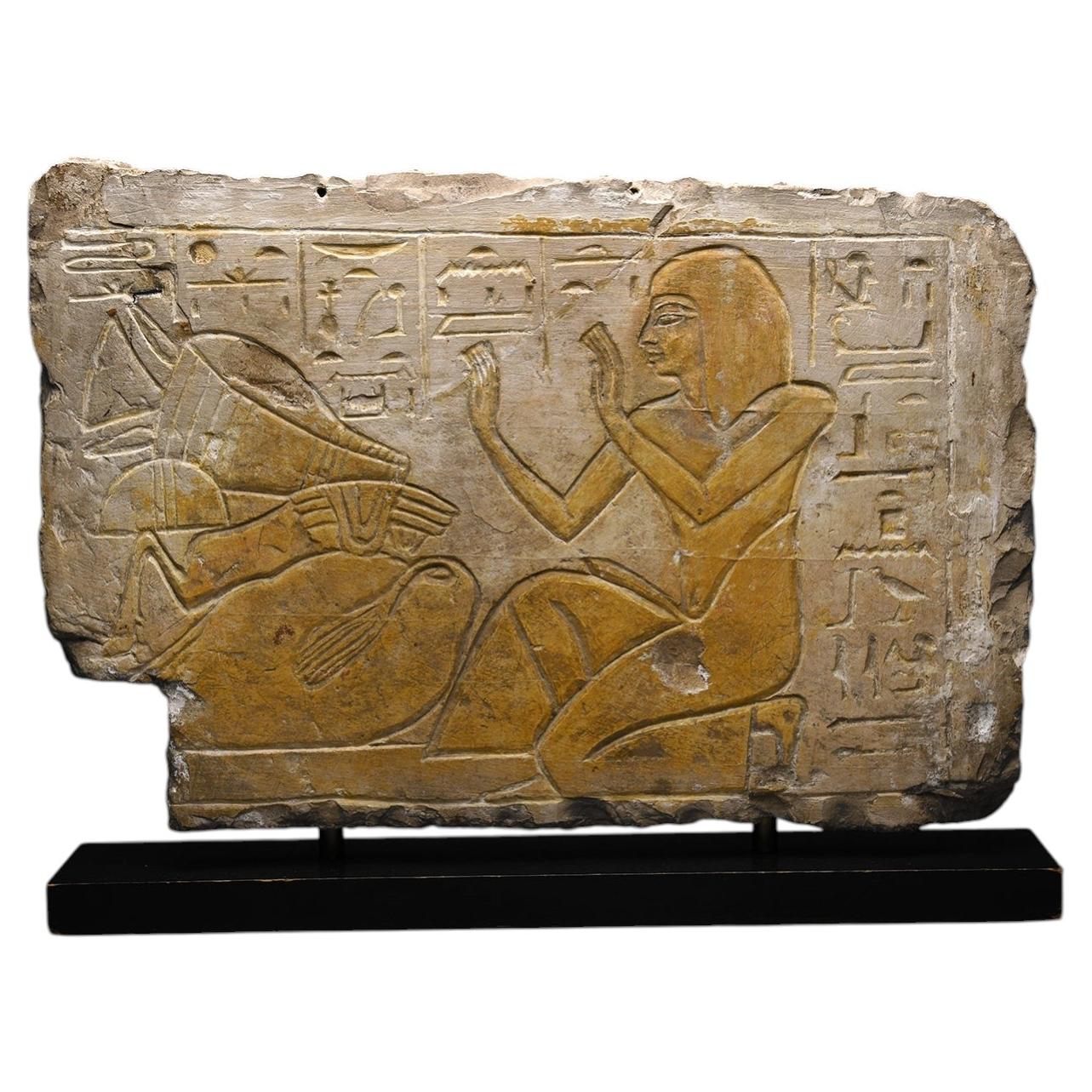
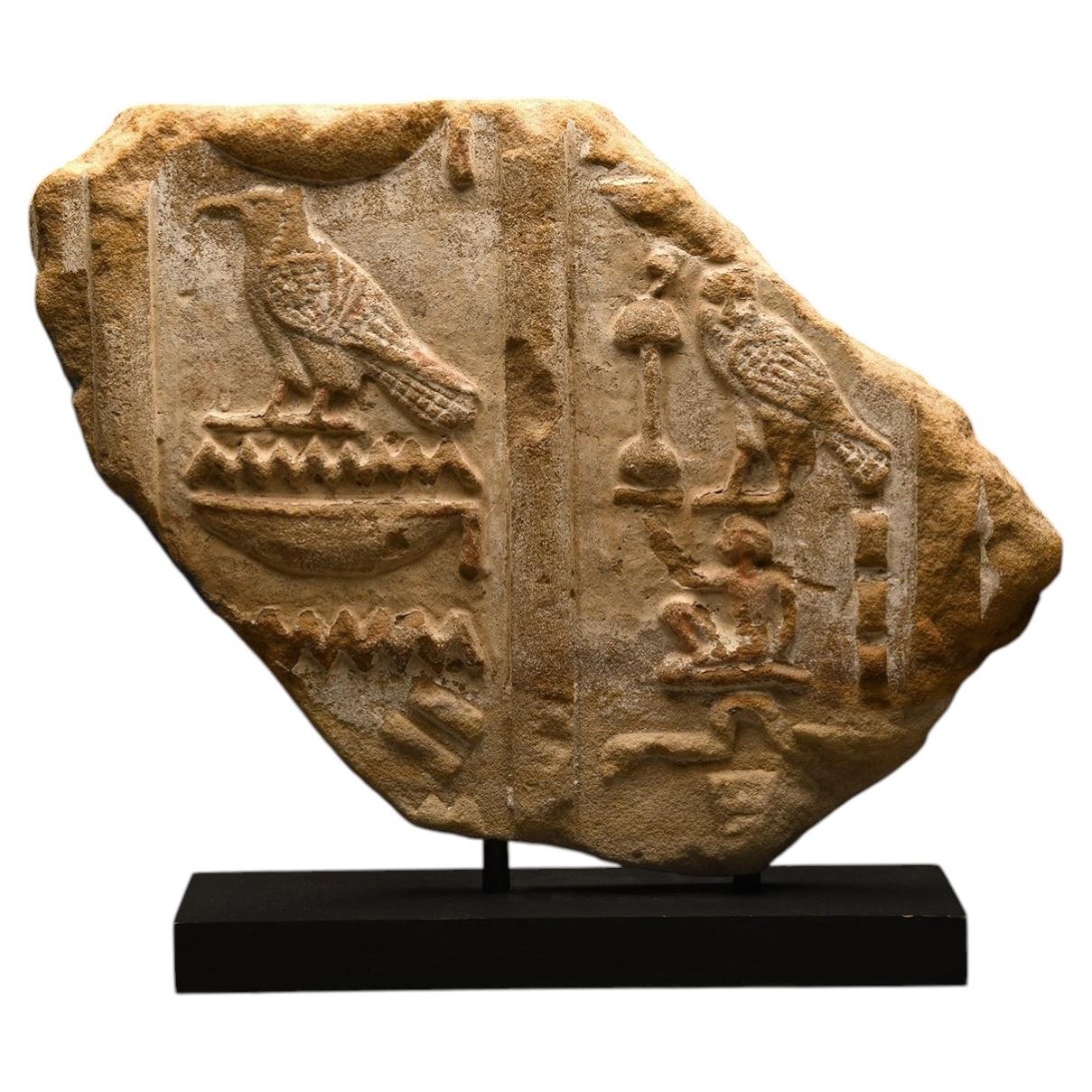
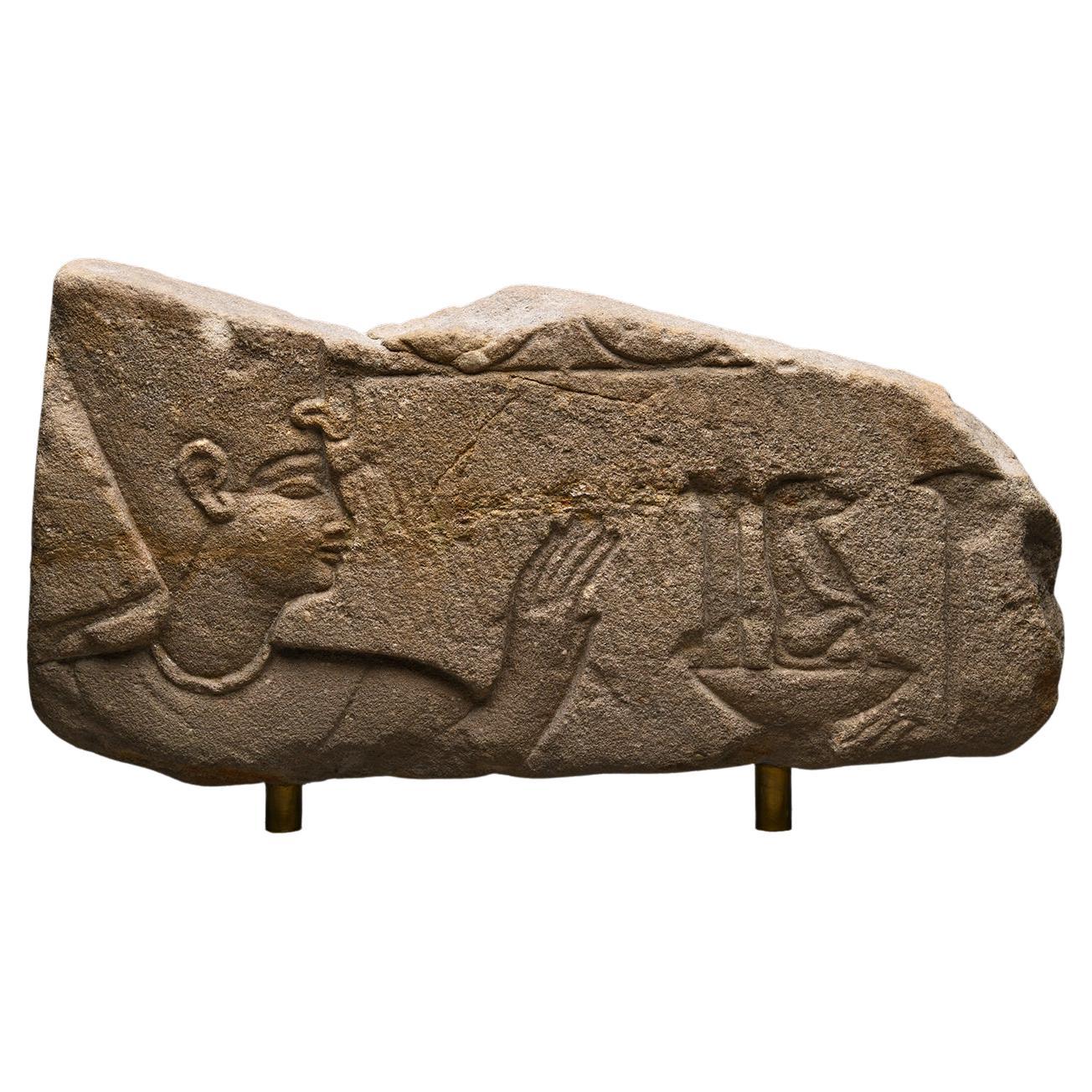
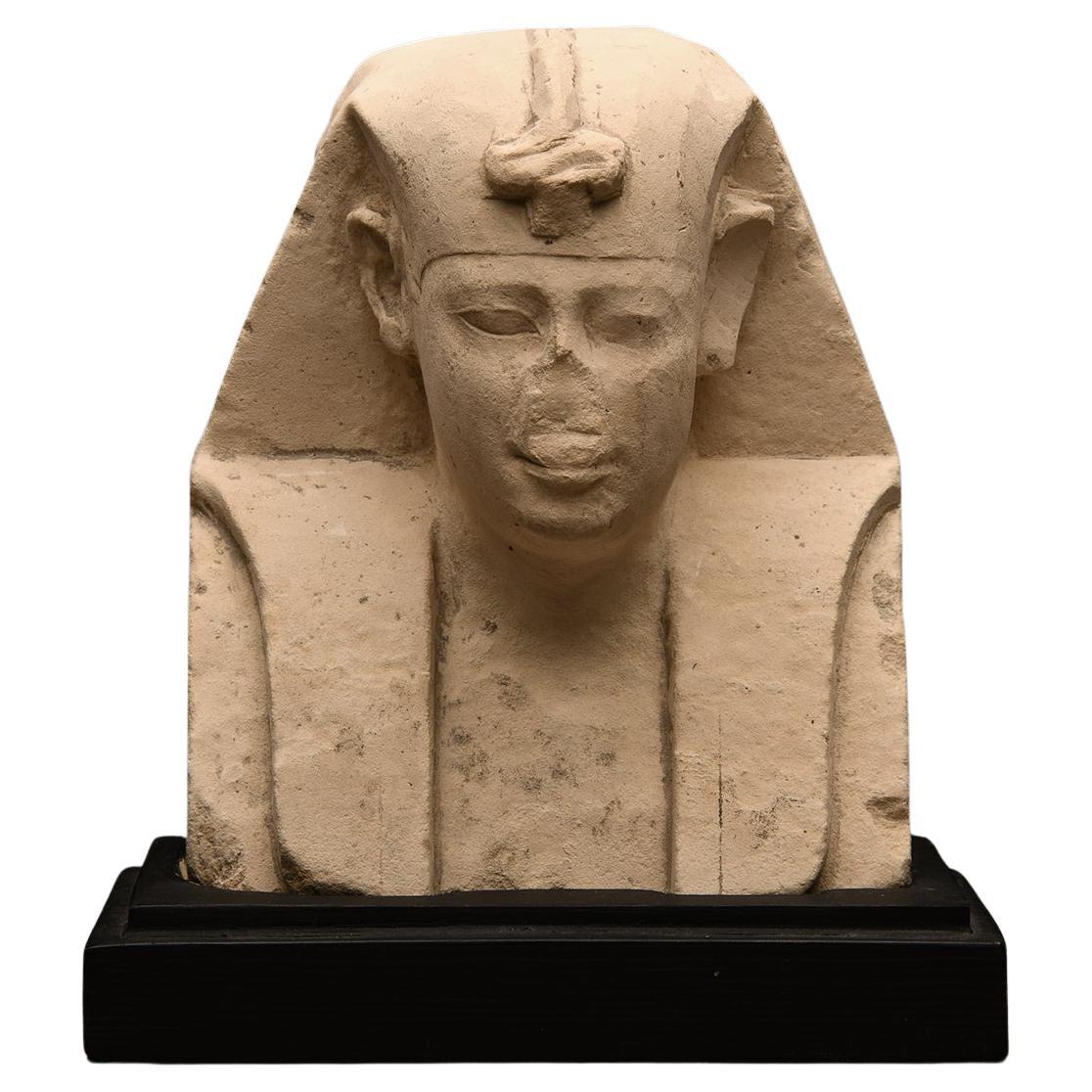
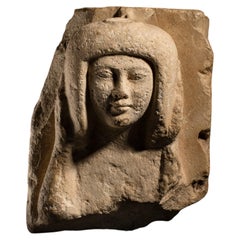
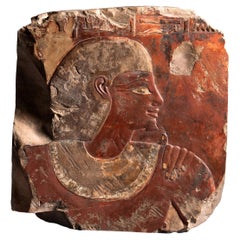
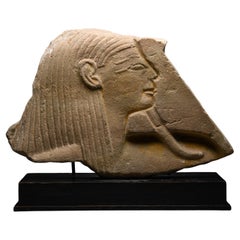
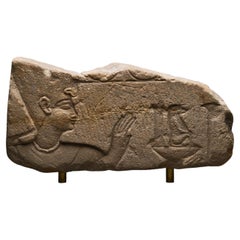
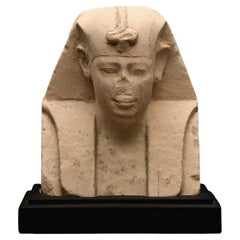
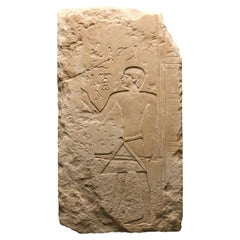
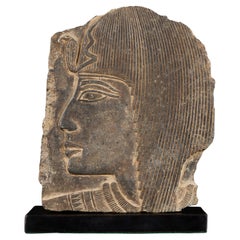
Parietal relief with the figure of the god Onuris.
Ancient Egypt, Late Period - P. Ptolemaic, 664 - 30 B.C.
Limestone.
40 cm height.
Provenance
- Private collection, Mr. and Mrs. Myron C. Taylor, Florida, USA
- Donation by previous owners to charity on February 24, 1949. Cataloged under number 70.32.
- Sold by this institution in 2022.
Parietal fragment with the image of the god Onuris in bas-relief, which given its dimensions, would come from some temple or chapel, following the classic Egyptian position, head in profile to the right, frontal shoulders, and surely erect with the right arm holding a scepter or one of his attributes, and the left one fallen parallel to the body.
The identification with the deity is due to its iconographic elements, the god is represented with a male human figure, with a long and curved beard and a short wig, wears a headdress with four feathers, sometimes two, and a ribbon. He is dressed in a long tunic, on most occasions, although he can also wear a short skirt. On his forehead a ureus is shown erect.
On his chest he wears a usekh necklace (the wide one) with four rows in the central part, with an upper and a lower edging of seed-shaped beads that, imitating floral motifs, used to be made of faience beads ( Egyptian earthenware) and glass paste. On his arm he wears a bracelet, also made with faience beads. Below the collar is a wide strap that holds the god's characteristic long tunic.
Onuris is the Greek name of the Egyptian Inheret, "he who has brought the distant goddess". In mythology, Onuris was originally a foreign god of hunting, whose kingdom was in the desert, who became a god of war during the Tinite Period, and began to be worshiped in the Egyptian area of Abydos, especially in Tinis. , during the XI dynasty. He had the title of Destroyer of enemies and was the patron of the Egyptian army, personified the king's warriors and was the protector of his faithful against his enemies and harmful animals. At festivals in his honor, simulated battles were held between priests and the people in which they beat each other with sticks. During Roman times, Emperor Tiberius was depicted on Egyptian temple walls wearing the distinctive four-plumed crown of Onuris.
The myth says that he would have brought his wife, Menhit from Nubia, meaning of his name. According to legend, Ra sent his messenger Onuris to bring back his Eye, which had a life of its own. According to another tradition he brought back home a goddess who had fled to Nubia, she being identified with Tefnut.
Because Onuris's name could also mean sky bearer, and by his headdress, he was later identified as Shu, husband of Tefnut, becoming Onuris-Shu. In the New Kingdom, his popularity increased and he also came to have the title of Savior, becoming their liberator for the people, due to his vision of war as a source of freedom and victory. His fixation on warfare, as defender of the sun, shared with Horus, contributed to his eventual identification with the god Horus. Onuris is often depicted carrying a spear like Horus against Seth. As a hunter of wild animals he appears on stelae that would later serve as a model for magical stelae depicting Horus standing on crocodiles.