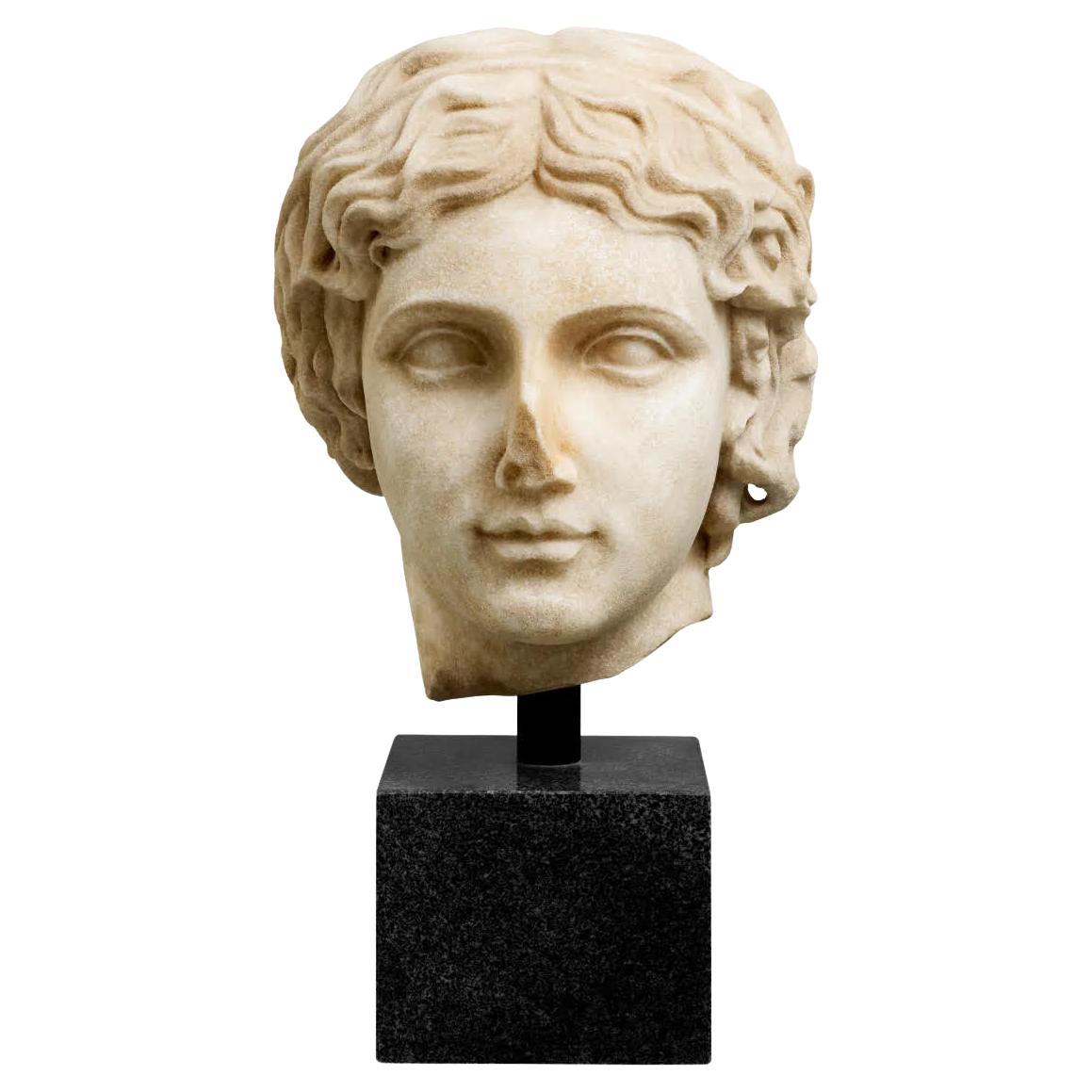
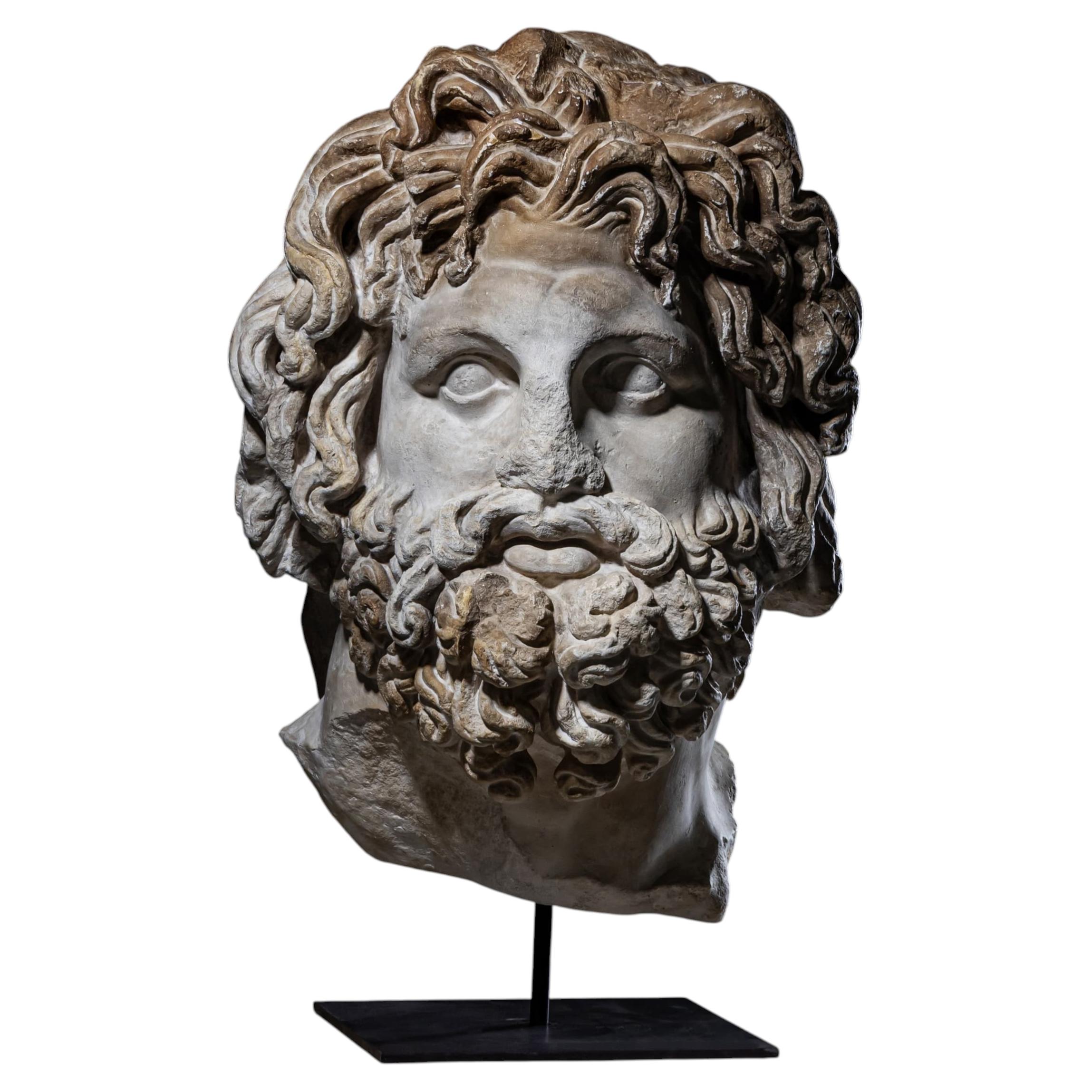
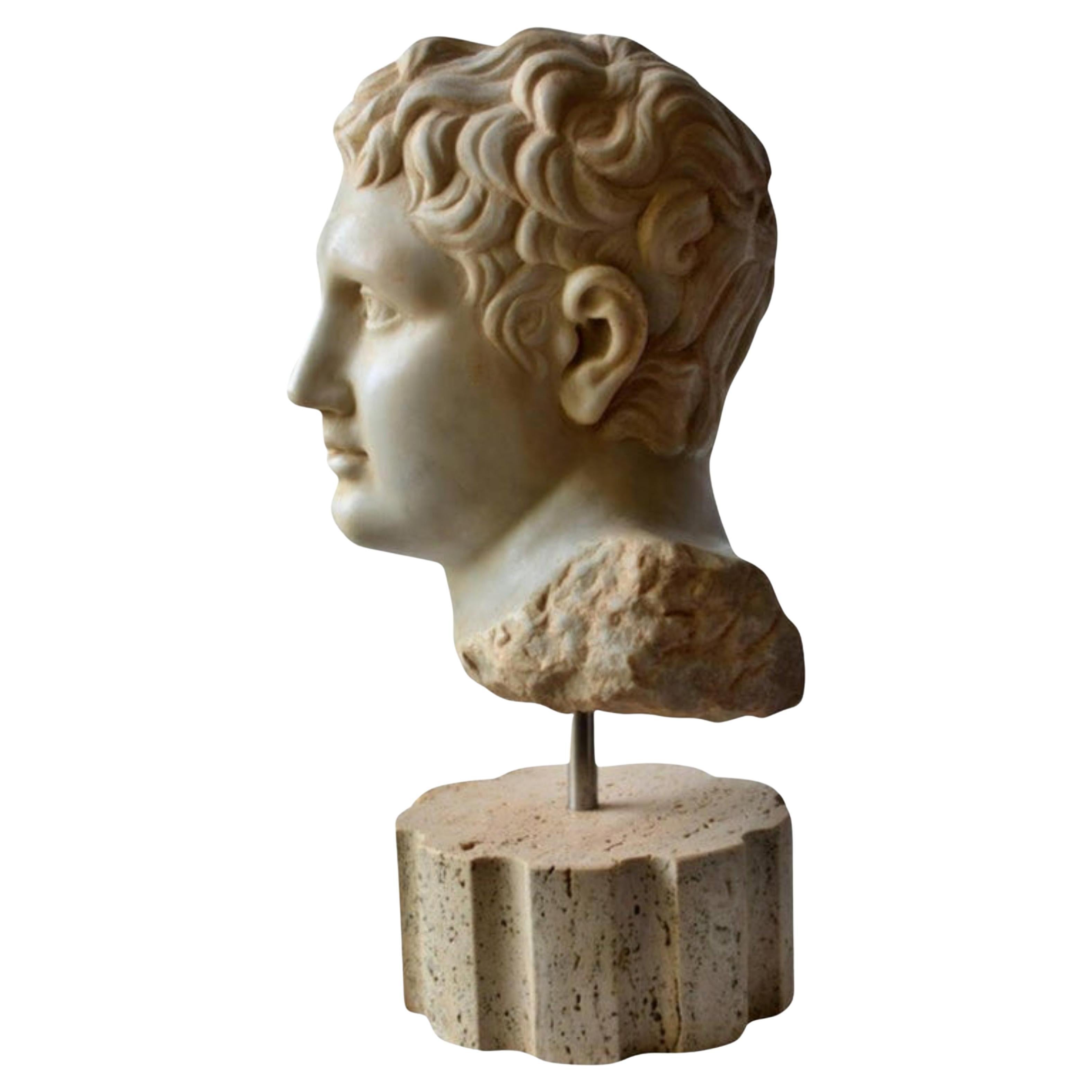
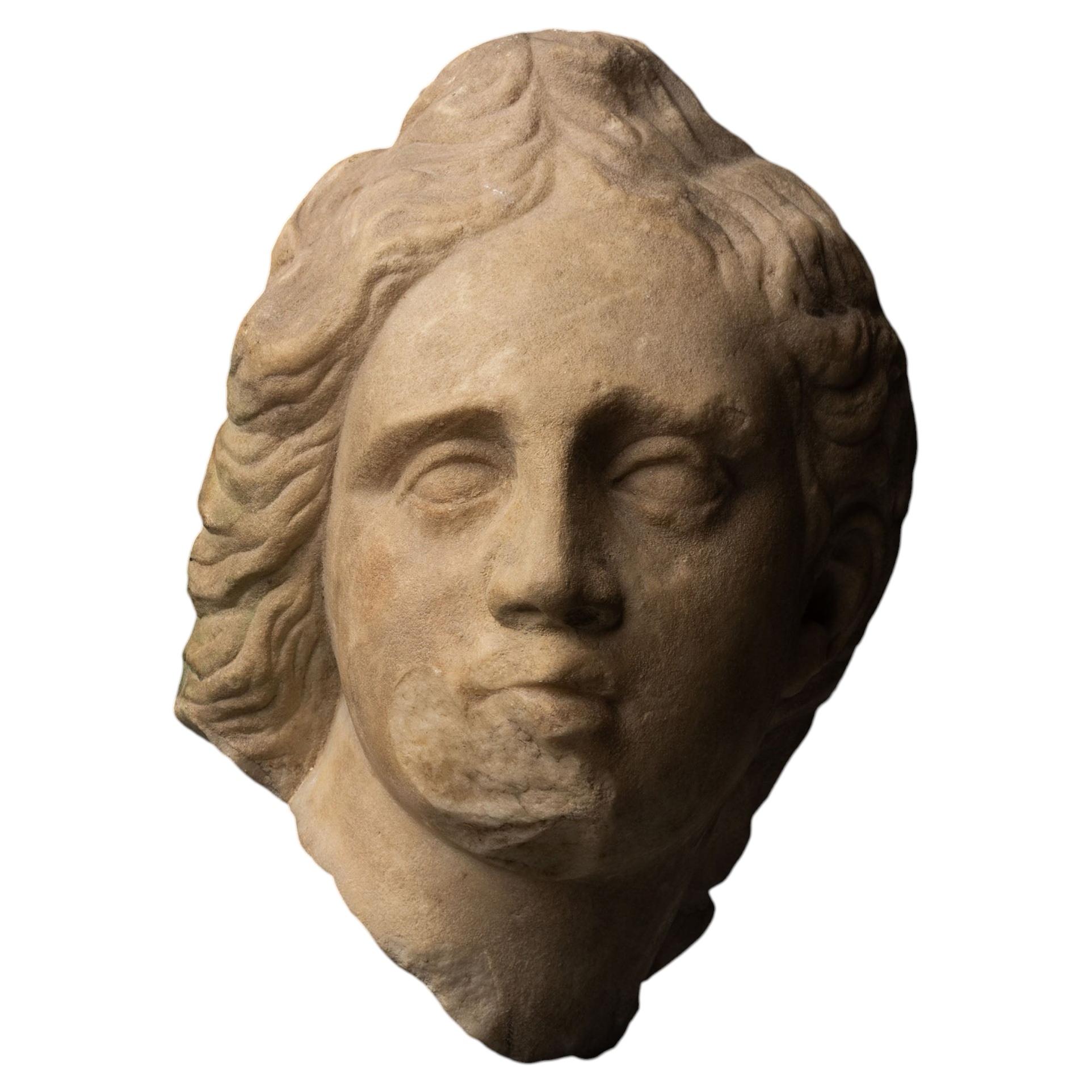
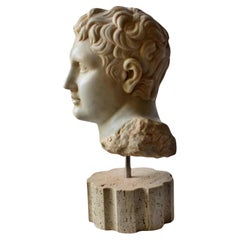
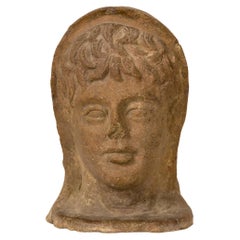
28 cm with the stand.
Provenance: Private collection, Kenneth Worcester Dow, St. Augustine, Florida (USA), acquired in the 1940s.
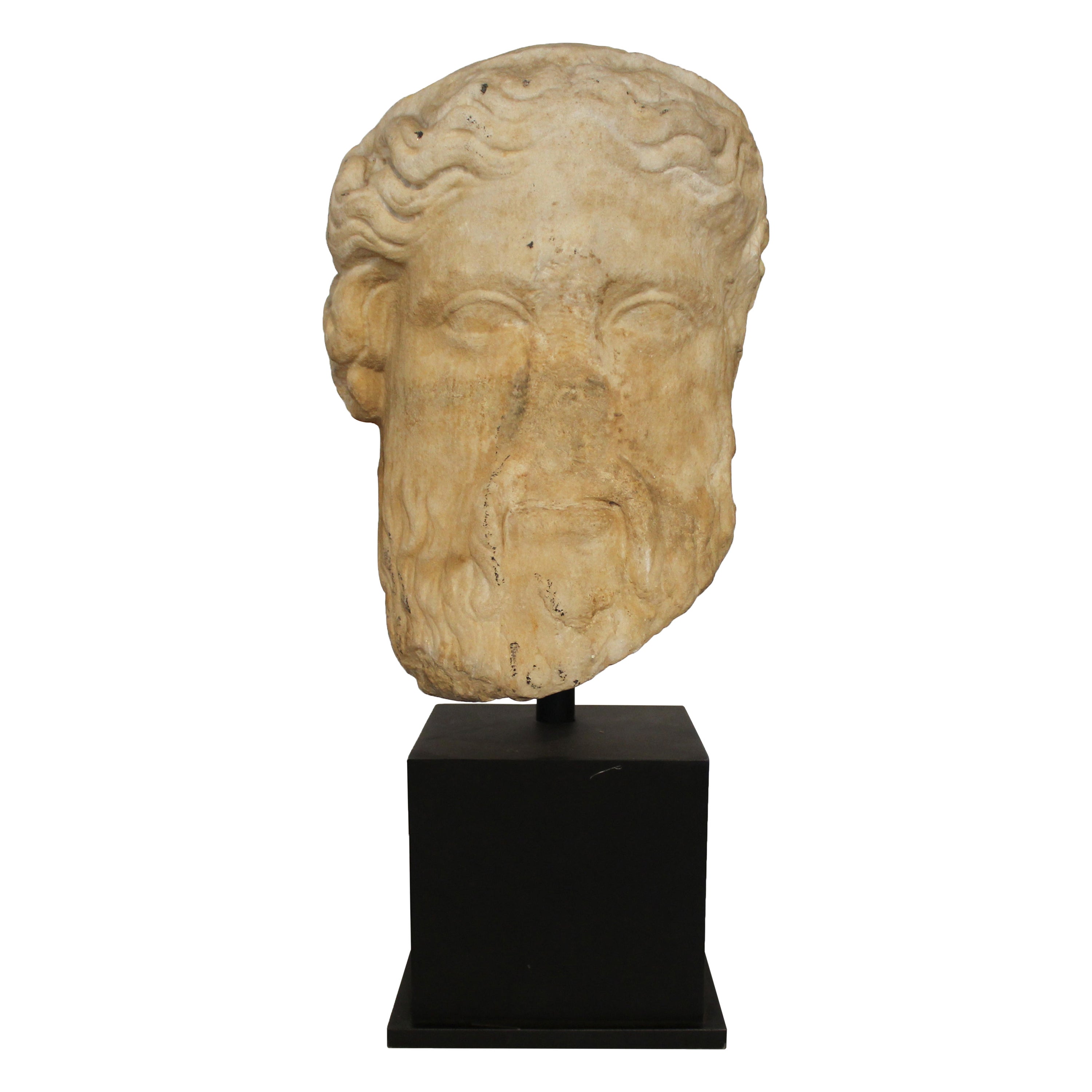
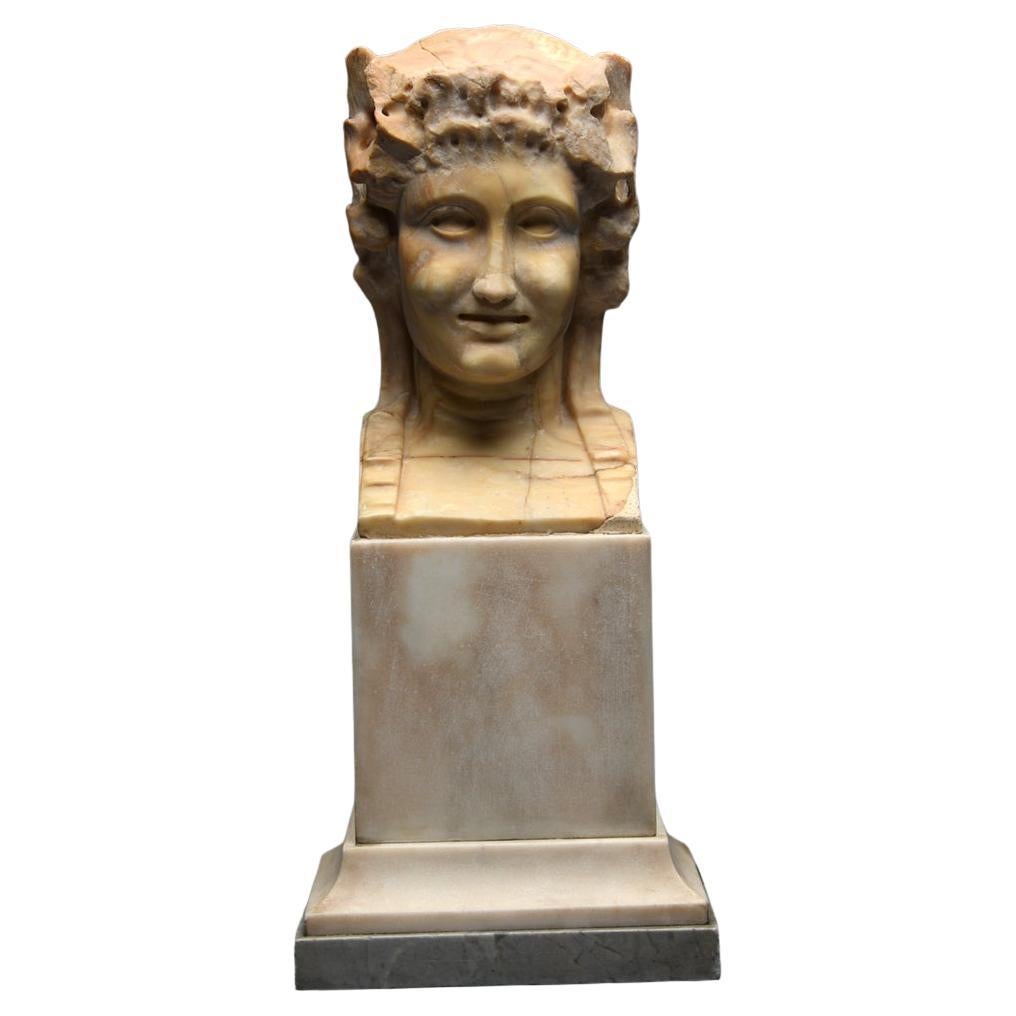
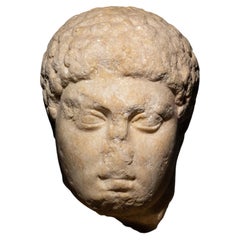
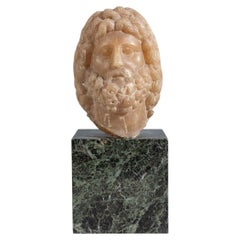
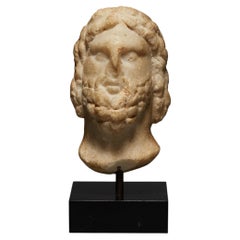
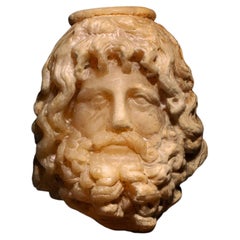
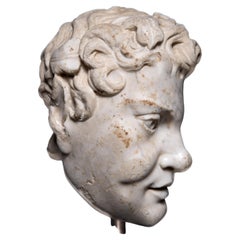
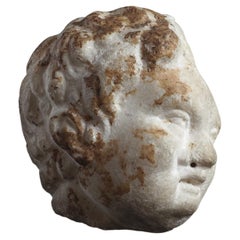
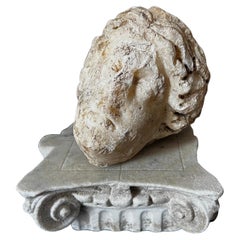
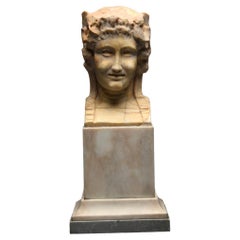
A marble-carved face representing a satyr, identifiable through the treatment of the hair, characterised by unruly and seemingly disordered curls, and by the smile, both of which are typical features in depictions of this mythological figure.
Regarding the aesthetic treatment of the piece, it should be noted that the sculptor combines idealism and realism in the representation of the human figure, a practice that was common in Roman statuary. The hair, the rendering of the eyes, and the strict symmetry of the features evoke the idealism that sought to portray beauty. However, the tightly pressed lips and the treatment of the neck area reveal a stronger inclination towards realism.
Associated with the Maenads, satyrs formed part of the “Dionysian retinue” that accompanied the god Dionysus. They were depicted in various ways; the most common representation (and essentially Roman in character) was that of a creature half-man and half-ram, with pointed ears, horns on its head, abundant hair, a flat nose, a goat’s tail, and permanent priapism. According to one tradition, the sons of Silenus—Maron, Lenaeus and Astraeus—were considered the progenitors of the satyrs. All three accompanied Dionysus during his journey to India, and Astraeus in particular served as the driver of his chariot.
As can be observed in this Roman-period sculpture, satyrs are cheerful and mischievous creatures, a quality evident in the faintly suggested smile. However, their carefree and festive nature could also become dangerous and even violent, which may explain the furrowed brow shown in this sculpture. As Dionysian beings, they are lovers of wine and women, and delight in physical pleasures.
The Romans introduced two major innovations to the world of sculpture: portraiture and historical relief, neither of which had existed in the Greek world. Nevertheless, they continued to follow Greek models for much of their sculptural production, combining them in Rome with the Etruscan artistic tradition.
Following their earliest encounters with Classical Greece through the colonies of Magna Graecia, the Romans conquered Syracuse in 212 BC, a wealthy and important Greek colony in Sicily adorned with numerous Hellenistic works of art. The city was plundered, and its artistic treasures were transported to Rome, where the new style represented by these works soon supplanted the prevailing Etrusco-Roman tradition.
Shortly afterwards, in 133 BC, the Roman state inherited the Kingdom of Pergamon, home to an original and flourishing school of Hellenistic sculpture. The Great Altar of Pergamon, the Dying Gaul (also known as The Gaul Committing Suicide), and the dramatic sculptural group Laocoön and His Sons were among the key creations of this Hellenistic school.
Furthermore, after Greece was conquered in 146 BC, the majority of Greek artists settled in Rome, and many devoted themselves to producing copies of Greek sculptures, which had become highly fashionable in the capital of the Empire.