Want more images or videos?
Request additional images or videos from the seller
1 of 10

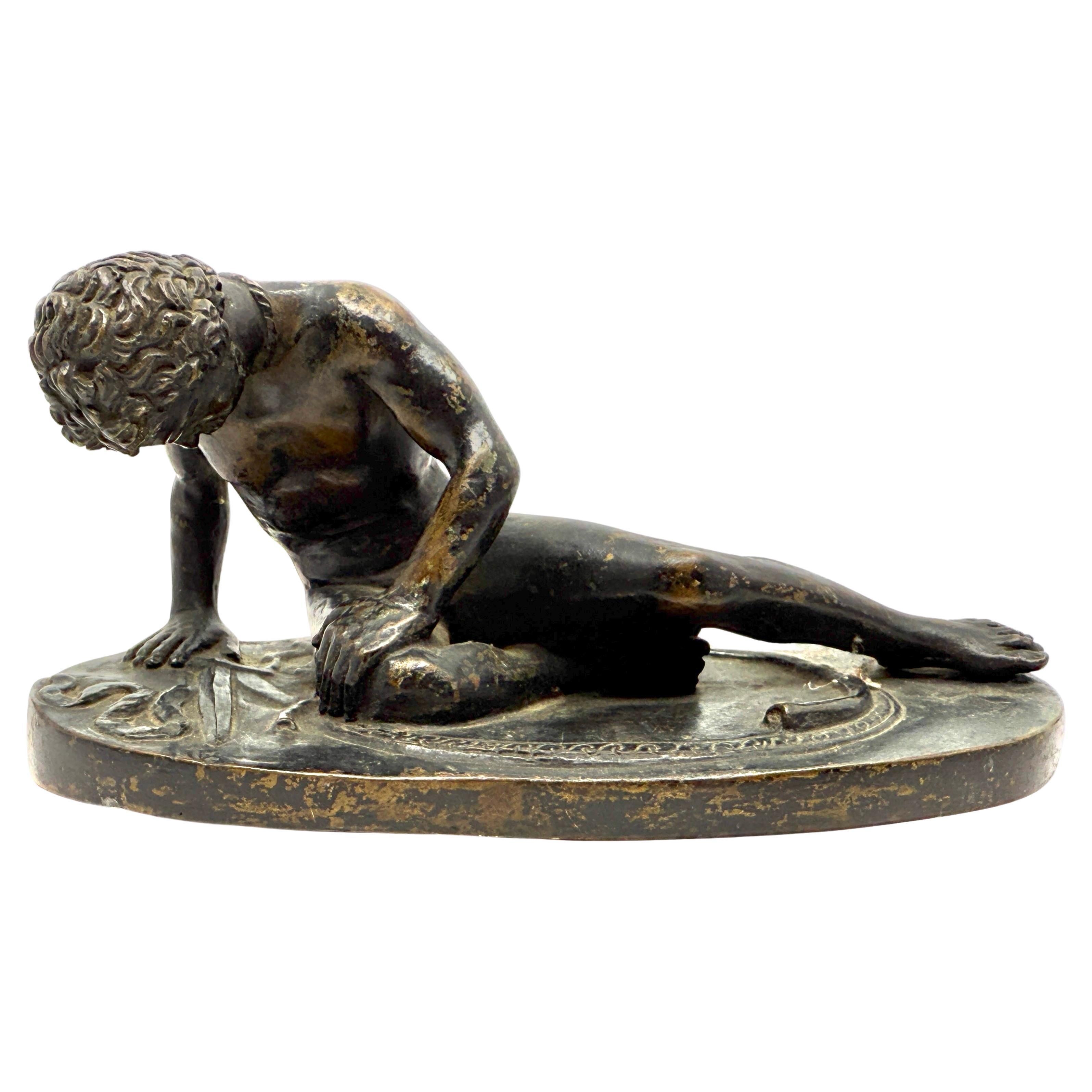
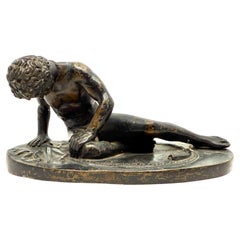
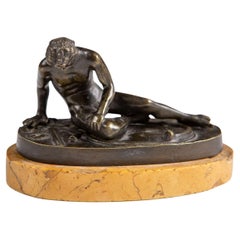
Italian 19th Century Patinated Statue of ‘The Dying Gaul’

$14,100
£10,690.49
€12,480.64
CA$20,161.62
A$20,472.47
CHF 11,686.78
MX$247,374.97
NOK 137,280.35
SEK 136,905.80
DKK 93,302.78

About the Item

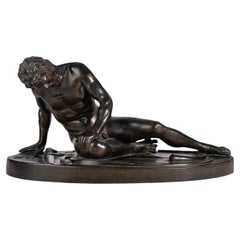
A handsome Italian 19th century patinated statue of 'The Dying Gaul'. The statue is raised by an oval shaped terrain like designed base. The fallen gladiator wears a neck tork, laying on his side and leaning on his arm. His sword and a horn are at his side. Wonderful proportions and attention to detail throughout.
  • Dimensions:
    Height: 11.25 in (28.58 cm)Width: 21.75 in (55.25 cm)Depth: 10.75 in (27.31 cm)
  • Materials and Techniques:
    Bronze,Patinated
  • Place of Origin:
  • Period:
  • Date of Manufacture:
    19th Century
  • Condition:
    Wear consistent with age and use.
  • Seller Location:
    West Palm Beach, FL
  • Reference Number:
    Seller: 93791stDibs: LU949925898802

More From This Seller

View All
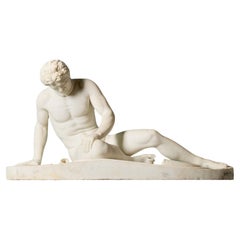
Italian 19th Century Verde Antico Marble and Giltwood Statue of The Dying Gaul

Italian 19th Century Verde Antico Marble and Giltwood Statue of The Dying Gaul

Located in West Palm Beach, FL

A handsome Italian 19th century Verde Antico marble and giltwood statue of The Dying Gaul. The statue is raised by its original oval giltwood base and displays terrain like design. T...

Category

Antique 19th Century Italian Figurative Sculptures

Materials

Marble

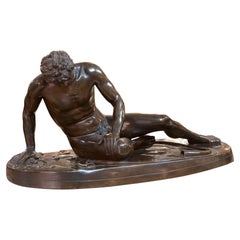
French 19th century Grand Tour patinated Bronze statue of the Borghese Gladiator

French 19th century Grand Tour patinated Bronze statue of the Borghese Gladiator

Located in West Palm Beach, FL

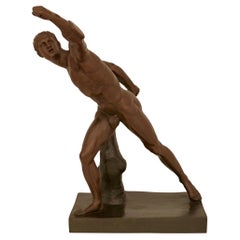
An impressive and large scale French 19th century Grand Tour patinated Bronze statue of the Borghese Gladiator. The handsome Gladiator is raised on a Verdigris patinated Bronze base ...

Category

Antique 19th Century French Grand Tour Statues

Materials

Bronze

French 19th century Grand Tour Period Bronze statue of the Borghese Gladiator

French 19th century Grand Tour Period Bronze statue of the Borghese Gladiator

Located in West Palm Beach, FL

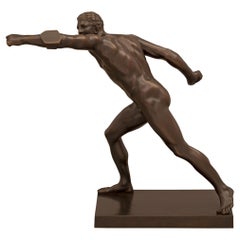
An impressive and large scale French 19th century Grand Tour Period patinated Bronze statue of the Borghese Gladiator. The handsome Gladiator is raised on a patinated Bronze rectangu...

Category

Antique 19th Century French Grand Tour Figurative Sculptures

Materials

Bronze

Italian 19th Century Grand Tour Period Bronze Statue of the Borghese Gladiator

Italian 19th Century Grand Tour Period Bronze Statue of the Borghese Gladiator

Located in West Palm Beach, FL

An impressive and high quality Italian 19th century Grand Tour Period patinated bronze statue of the Borghese Gladiator. The statue is raised by a rectangular base where the handsome...

Category

Antique 19th Century Italian Grand Tour Figurative Sculptures

Materials

Bronze

Italian 19th century patinated Bronze and marble statue of Hermes

Italian 19th century patinated Bronze and marble statue of Hermes

Located in West Palm Beach, FL

An impressive and high quality Italian 19th century Neo-Classical st. Grand Tour Period patinated Bronze and marble statue of Hermes. This handsome depiction of a youthful and athlet...

Category

Antique 19th Century Italian Grand Tour Figurative Sculptures

Materials

Marble, Bronze

French 19th Century Patinated Bronze Statue Of A Young David Signed A Gaudez

French 19th Century Patinated Bronze Statue Of A Young David Signed A Gaudez

Located in West Palm Beach, FL

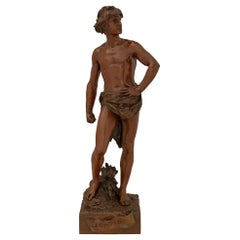
A handsome French 19th century Patinated bronze statue of a young David signed A Gaudez. The statue is raised on a square base displaying a front scroll with ...

Category

Antique 19th Century French Figurative Sculptures

Materials

Bronze

You May Also Like

Mid-19th Century Grand Tour Bronze Figurative Sculpture 'The Dying Gaul', Italy

Mid-19th Century Grand Tour Bronze Figurative Sculpture 'The Dying Gaul', Italy

Located in North Miami, FL

Mid-19th Century Grand Tour Bronze Figurative Sculpture 'The Dying Gaul', Italy By: unknown Material: bronze, copper, metal Technique: cast, molded, polished, metalwork, patinated D...

Category

Antique 1850s Italian Grand Tour Figurative Sculptures

Materials

Metal, Copper, Bronze

Antique Bronze Figure of The Dying Gaul

Antique Bronze Figure of The Dying Gaul

Located in London, GB

A bronze figure of the dying Gaul after the Antique, on verde marble base, Italian, nineteenth century. Dimensions: 30.5cm (12") High, 35cm (13¾") Wide, 65cm (25½") Long, 13.5cm (5¼...

Category

Antique 19th Century Italian Classical Greek Figurative Sculptures

Materials

Marble, Bronze

Grand Tour Neoclassical Bronze of “The Dying Gaul”

Grand Tour Neoclassical Bronze of “The Dying Gaul”

Located in Palm Springs, CA

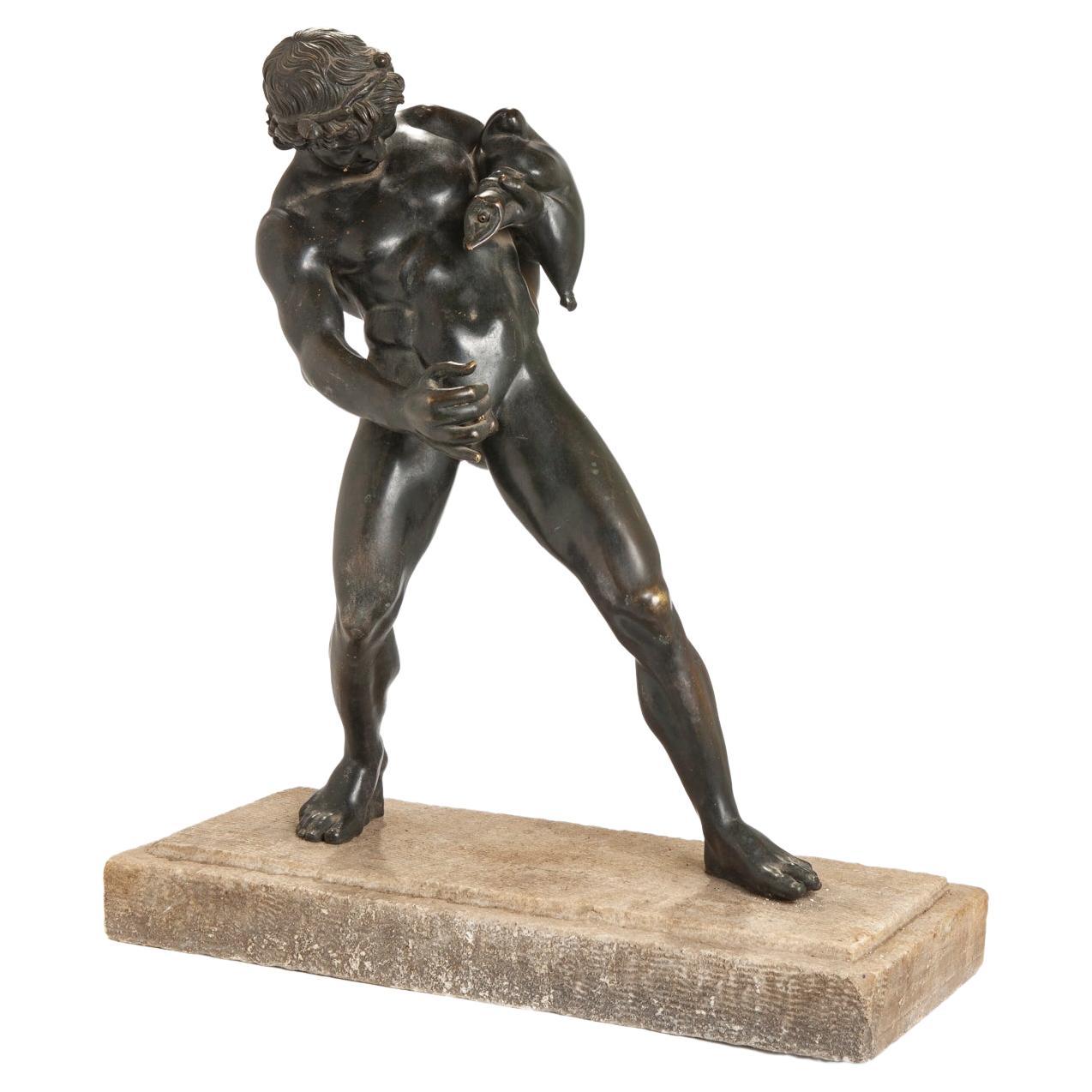
A nice little bronze Grand Tour souvenir bronze of the Dying Gaul a famous sculpture of antiquity preserved in Rome. This bronze has nice detail. The patina is worn in some places and it is in estate found condition. We haven’t tried to clean or polish it. Some patina loss minor nicks and surfaces scratches, please see the detailed photos. For this interested this from Wikipedia about the original sculpture: The Dying Gaul, also called The Dying Galatian[2] (Italian: Galata Morente) or The Dying Gladiator, is an ancient Roman marble semi-recumbent statue now in the Capitoline Museums in Rome. It is a copy of a now lost Greek sculpture from the Hellenistic period (323–31 BC) thought to have been made in bronze.[3] The original may have been commissioned at some time between 230 and 220 BC by Attalus I of Pergamon to celebrate his victory over the Galatians, the Celtic or Gaulish people of parts of Anatolia. The original sculptor is believed to have been Epigonus, a court sculptor of the Attalid dynasty of Pergamon. Until the 20th century, the marble statue was usually known as The Dying Gladiator, on the assumption that it depicted a wounded gladiator in a Roman amphitheatre.[4] However, in the mid-19th century it was re-identified as a Gaul or Galatian and the present name "Dying Gaul" gradually achieved popular acceptance. The identification as a "barbarian" was evidenced for the figure's neck torc, thick hair and moustache, weapons and shield carved on the floor, and a type of Gallic carnyx between his legs.[5] Description The white marble statue, which may originally have been painted, depicts a wounded, slumped Gaulish or Galatian Celt, shown with remarkable realism and pathos, particularly as regards the face. A bleeding sword puncture is visible in his lower right chest. The warrior is represented with characteristic Celtic hairstyle and moustache with a Celtic torc...

Category

Early 20th Century Italian Figurative Sculptures
Materials

Bronze

19th Century Italian Grand Tour Bronze of “The Dying Gaul”

19th Century Italian Grand Tour Bronze of “The Dying Gaul”

Located in Kastrup, DK

A neoclassical Grand Tour sculpture in dark-patinated bronze depicting The Dying Gaul — an iconic motif after the famous ancient original from Pergamon. Mounted on an oval Siena marb...

Category

Antique Late 19th Century Italian Grand Tour Paperweights

Materials

Siena Marble, Bronze

Statuary Marble Sculpture of The Dying Gaul After the Antique

Statuary Marble Sculpture of The Dying Gaul After the Antique

Located in Wormelow, Herefordshire

A mid 19th century statuary marble sculpture of the ‘Dying Gaul’ after the antique. This marble sculpture is a scale depiction of the larger Dying Gaul marble statue, currently loca...

Category

Antique Mid-19th Century Italian Neoclassical Figurative Sculptures

Materials

Marble, Statuary Marble

"Galata Morente" Sculpture in Bronze, sign: F. Barbedienne Fonduer

"Galata Morente" Sculpture in Bronze, sign: F. Barbedienne Fonduer

By F. Barbedienne Foundry

Located in Ciudad Autónoma Buenos Aires, C

F. Barbedienne fonduer Ferdinand Barbedienne (6 August 1810 – 21 March 1892) was a French metalworker and manufacturer, who was well known as a bronze founder. The son of a small farmer from Calvados, he started his career as a dealer in wallpaper in Paris. In 1838 he went into partnership with Achille Collas (1795-1859), who had just invented a machine to create miniature bronze replicas of statues. Together they started a business selling miniatures of antique statues from museums all over Europe, thus democratising art and making it more accessible to households.[2] From 1843 they extended their scope by reproducing the work of living artists and also diversified by making enamelled household objects. With the outbreak of the Franco-Prussian war in 1870 the firm briefly had to switch to cannon founding owing to the shortage of metals but resumed business afterwards. Following Barbedienne's death in 1892, he was buried in the Père-Lachaise cemetery and the firm was carried on by his nephew Gustave Leblanc until 1952. Among the principal artists reproduced by the firm were Antoine Louis Barye and Auguste Rodin. The Dying Galata (Italian: Galata morente...

Category

Antique 1870s French Classical Roman Figurative Sculptures
Materials

Bronze