Video Loading
Want more images or videos?
Request additional images or videos from the seller
1 of 13

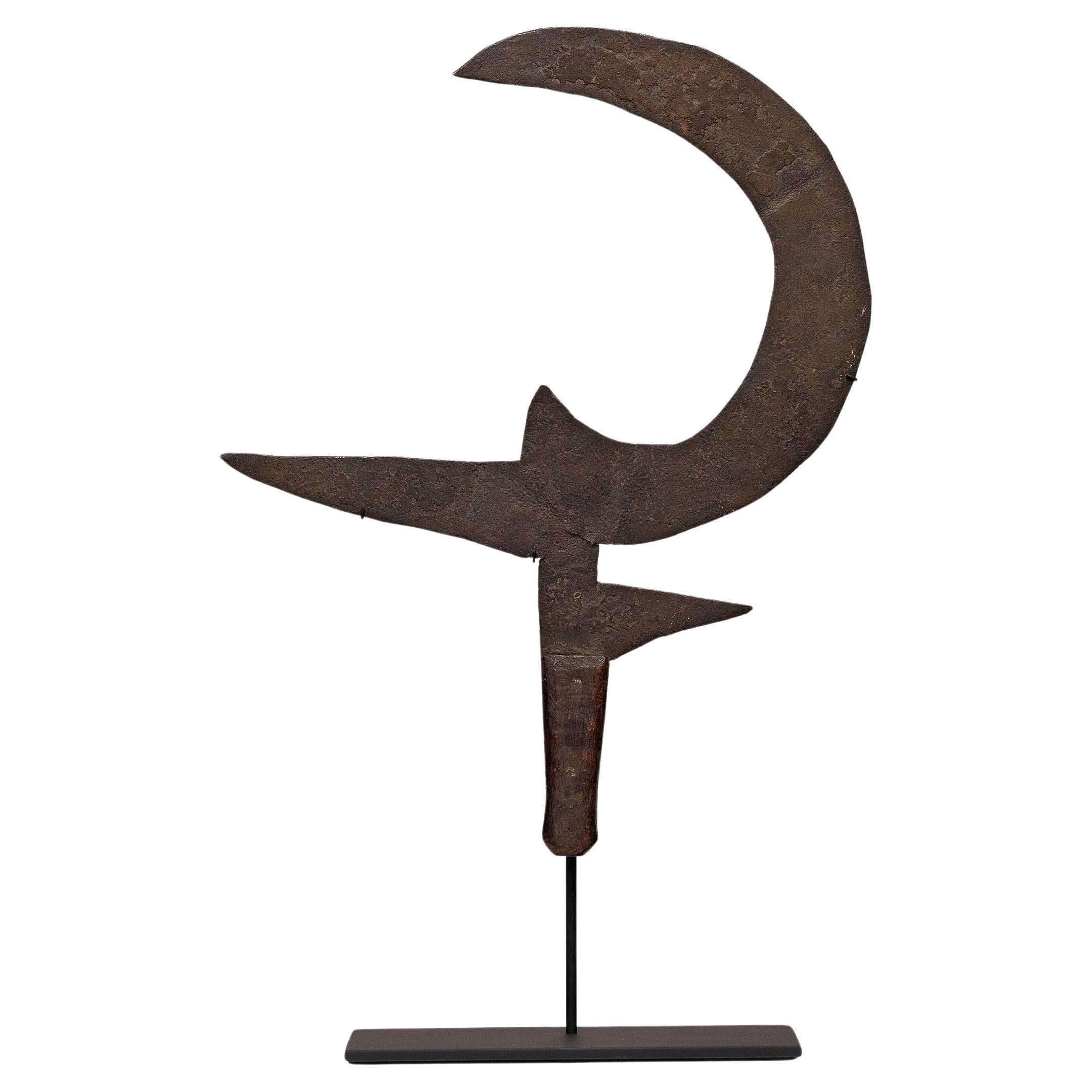
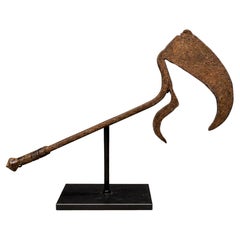
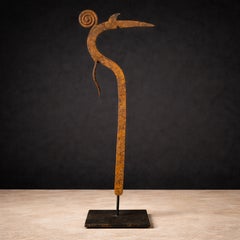
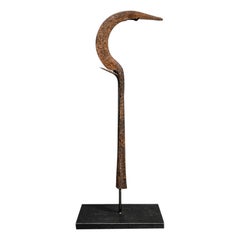
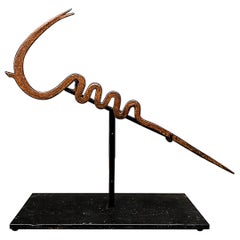
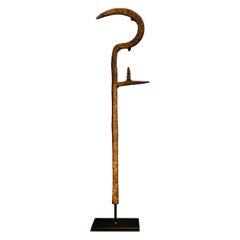
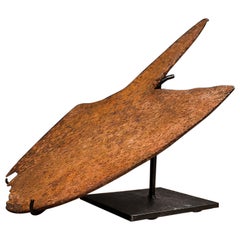
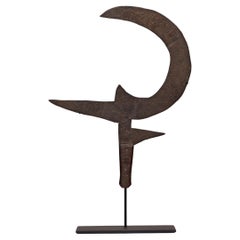
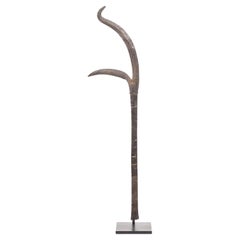
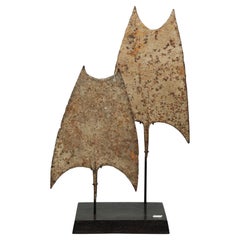
Magali & Fali Ceremonial Throwing Knives, Northeastern Cameroon & Niger, 1920s

$3,650per set
£2,760.82per set
€3,223.63per set
CA$5,198.17per set
A$5,274.16per set
CHF 3,012.93per set
MX$63,856.90per set
NOK 35,396.20per set
SEK 35,349.33per set
DKK 24,097.97per set

About the Item

A rare paired set of forged iron throwing knives attributed to the Magali and Fali peoples of Northern Cameroon and Northeastern Nigeria—forms that exist at the intersection of weaponry, ritual symbolism, and early systems of value exchange. Ethnological literature often compares their silhouette to the rooster, an animal deeply embedded in local cosmology, associated with vitality, sacrifice, and spiritual mediation. Beyond their sculptural presence, objects of this type were historically tied to what is broadly referred to as “African currency”—a term used by scholars and collectors to describe pre-colonial systems of wealth that operated outside coinage. Across many regions of Africa, value was stored and exchanged through objects: iron blades, manillas (bracelet currencies), textiles, beads, and ceremonial weapons. These were not merely tools or ornaments, but socially recognized units of wealth—used in bridewealth transactions, rites of passage, diplomatic exchange, and displays of status. Throwing knives such as these occupied a complex position within that system. While functional as weapons, their elaborate forms, material weight (iron being a historically valuable resource), and regional specificity elevated them into symbolic currency—objects that could signify power, identity, and economic standing. Ownership conveyed more than utility; it communicated access to resources, craftsmanship, and cultural knowledge. Today, surviving examples—especially in matched pairs—are increasingly scarce. Their appeal to collectors lies not only in their striking, almost modernist abstraction, but in their layered meaning: objects that bridge anthropology, design, and early economic history. Mounted on a custom blackened steel base, this pair reads as both artifact and sculpture—an enduring testament to a system where value, belief, and form were inseparable.
  • Dimensions:
    Height: 12 in (30.48 cm)Width: 20 in (50.8 cm)Depth: 6 in (15.24 cm)
  • Sold As:
    Set of 2
  • Style:
    Tribal (Of the Period)
  • Materials and Techniques:
    Iron,Metalwork
  • Place of Origin:
  • Period:
  • Date of Manufacture:
    1890-1920s
  • Condition:
    Wear consistent with age and use. Knives are in the original condition. Base is new custom made.
  • Seller Location:
    New York, NY
  • Reference Number:
    Seller: 9051stDibs: LU7095249327942

More From This Seller

View All
19th Century African Throwing Knife Currency — Marghi / Mofu, Nigeria, Cameroon

19th Century African Throwing Knife Currency — Marghi / Mofu, Nigeria, Cameroon

Located in New York, NY

Before coinage became standardized across West and Central Africa, wealth was often held in iron. In parts of present-day northeastern Nigeria and northern Cameroon, highly forged th...

Category

Antique 1890s Nigerian Tribal Mounted Objects

Materials

Metal, Iron

Marghi / Kapsiki Throwing Knife (Hunga Munga), Nigeria & Cameroon, 1890-1920

Marghi / Kapsiki Throwing Knife (Hunga Munga), Nigeria & Cameroon, 1890-1920

Located in New York, NY

A sculptural iron throwing knife attributed to the Marghi, Mofu, or Kapsiki peoples of northeastern Nigeria and northern Cameroon. Known broadly as a hunga munga, this form transcend...

Category

Antique 1890s Nigerian Tribal Mounted Objects

Materials

Steel, Iron

Igbo Iron Currency Knife Sculpture on Custom Platform, Nigeria, 1890-1920s

Igbo Iron Currency Knife Sculpture on Custom Platform, Nigeria, 1890-1920s

Located in New York, NY

A striking example of West African material culture, this Igbo iron currency knife from Nigeria embodies the intersection of economy, artistry, and ritual within traditional African societies. Before the widespread adoption of coinage and paper money, many regions across Africa used forms of metal currency—objects whose intrinsic material value, craftsmanship, and symbolic form made them widely accepted as units of exchange. Among the Igbo people of southeastern Nigeria, iron currency objects such as knives, rods, and bracelets circulated not only as mediums of trade but also as markers of wealth, social status, and ceremonial exchange. This particular form—often referred to as a currency knife—features an elegantly curved profile with a tapering blade-like extension and finely incised surface decoration. Forged and hand-carved from iron, the piece demonstrates the remarkable skill of traditional blacksmiths, whose work held both practical and spiritual significance in Igbo culture. The etched geometric motifs along the surface speak to a visual language of craftsmanship passed through generations, transforming what was once a utilitarian object into a sculptural artifact rich with cultural meaning. Mounted on a custom-made platform for display, the piece now reads as a refined sculptural object. Its weathered iron patina, subtle textural variations, and dynamic crescent silhouette give it a commanding presence—equally compelling as a collectible ethnographic artifact or as a distinctive decorative accent in a contemporary interior. Today, objects like this Igbo currency...

Category

Antique 1890s Nigerian Tribal Mounted Objects
Materials

Metal, Iron

Kirdi Forged Iron Currency – Tribal Currency Blade, Cameroon, 19th Century

Kirdi Forged Iron Currency – Tribal Currency Blade, Cameroon, 19th Century

Located in New York, NY

Before the widespread adoption of coinage, many African societies developed sophisticated systems of exchange using forged metal objects as currency. These iron forms—used in marriag...

Category

Antique 1890s Cameroonian Tribal Mounted Objects

Materials

Iron

Igbo Iron Currency Knife — Sculptural Trade Form, Southeastern Nigeria, 1900

Igbo Iron Currency Knife — Sculptural Trade Form, Southeastern Nigeria, 1900

Located in New York, NY

A striking expression of pre-colonial value systems, this Igbo iron currency knife from southeastern Nigeria operates at the intersection of economy, ritual, and sculpture. Forged by...

Category

Antique Early 1900s Nigerian Tribal Mounted Objects
Materials

Iron

Mambila / Chamba Hoe African Currency — North Eastern Nigeria & Cameroon

Mambila / Chamba Hoe African Currency — North Eastern Nigeria & Cameroon

Located in New York, NY

A sculptural iron form once used as currency among the Mambila and Chamba peoples of northeastern Nigeria and the Cameroon highlands, this forged hoe-shaped object embodies the inter...

Category

Antique 1890s Cameroonian Tribal Mounted Objects
Materials

Metal, Iron

You May Also Like

Ngombe Throwing Knife, c. 1900

Ngombe Throwing Knife, c. 1900

Located in Chicago, IL

With its many blades and dramatic form, this impressive throwing knife would have been a status symbol and a form of currency among the Ngombe peoples o...

Category

Early 20th Century Congolese Tribal Tribal Art

Materials

Iron

Knife From The Momvu Meje Mangbetu Tribe - Dr Congo Uele Region - 19th African

Knife From The Momvu Meje Mangbetu Tribe - Dr Congo Uele Region - 19th African

Located in Linkebeek, BE

Knife From The Momvu Meje Mangbetu Tribe - Dr Congo Uele Region - 19th African Wear consistent with age and use Tribal Art - Congo - African Measures : 6cmx4,5cm H:31cm

Category

Antique Late 19th Century Congolese Arts and Crafts Mounted Objects

Materials

Metal, Metallic Thread

Traditional Throwing Knife (Ngalio) Chad Africa

Traditional Throwing Knife (Ngalio) Chad Africa

Located in Point Richmond, CA

Throwing Knife (Ngalio) Sara People, Chad, Africa Mid-20th century Material: Iron Height on custom display stand: 28 in. / 71 cm Known as "ngalio", thi...

Category

Mid-20th Century Chadian Other Tribal Art

Materials

Iron

Pair of Iron Spatulate Currencies, Chamba or Mambila, Cameroon or Nigeria

Pair of Iron Spatulate Currencies, Chamba or Mambila, Cameroon or Nigeria

Located in Point Richmond, CA

Pair of iron flat spatulate currency pieces, made by the Chamba or Mambila peoples of Cameroon or Nigeria. Mid 20th century or older. 10 1/2 inches high for larger currency. Pair ...

Category

Mid-20th Century Cameroonian Tribal Tribal Art

Materials

Iron

African Ceremonial Sword, Iron and Wood, Congo, Circa 1920s

African Ceremonial Sword, Iron and Wood, Congo, Circa 1920s

Located in Miami, FL

African ceremonial sword from the democratic Republic of Congo, circa 1920s. Iron and wood, in a case made of cloth and animal skin. This status symbol tribal sword...

Category

20th Century Congolese Tribal Arms, Armor and Weapons

Materials

Metal

Pair of African Iron Sword Currencies on Custom Stands

Pair of African Iron Sword Currencies on Custom Stands

Located in Atlanta, GA

This is a pair of African iron currency blade or sword currency from the Nkutshu, Topoke & Songo Meno peoples, Democratic Republic of Congo (Zaire) which are nicely presented upon custom metal stands. Such blades were used by various tribal groups in the Democratic Republic of Congo as a form of currency. They were used to close a variety of important transactions such as land deals or the proposal of marriage. These African sword...

Category

Antique 19th Century Congolese Mounted Objects

Materials

Metal, Iron