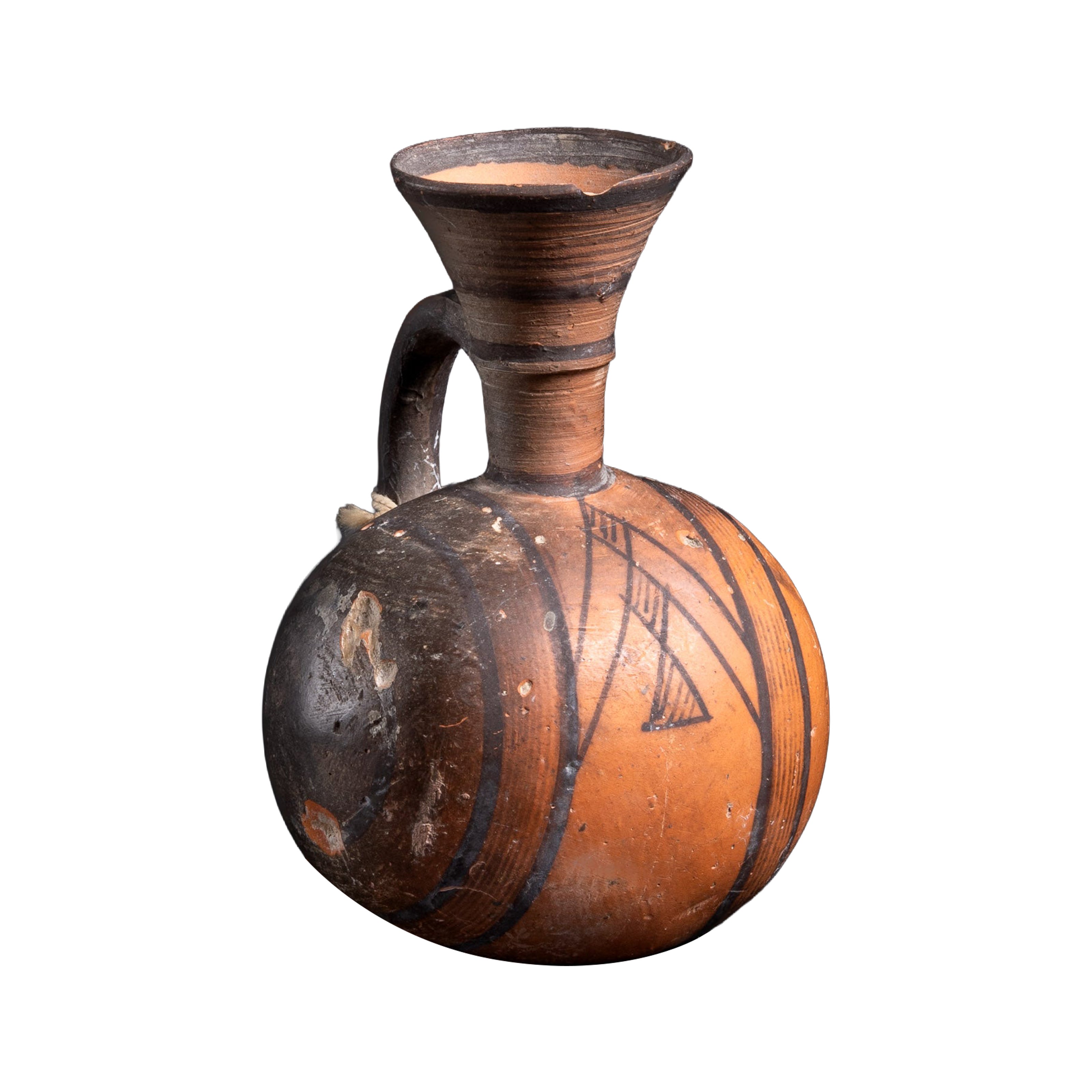
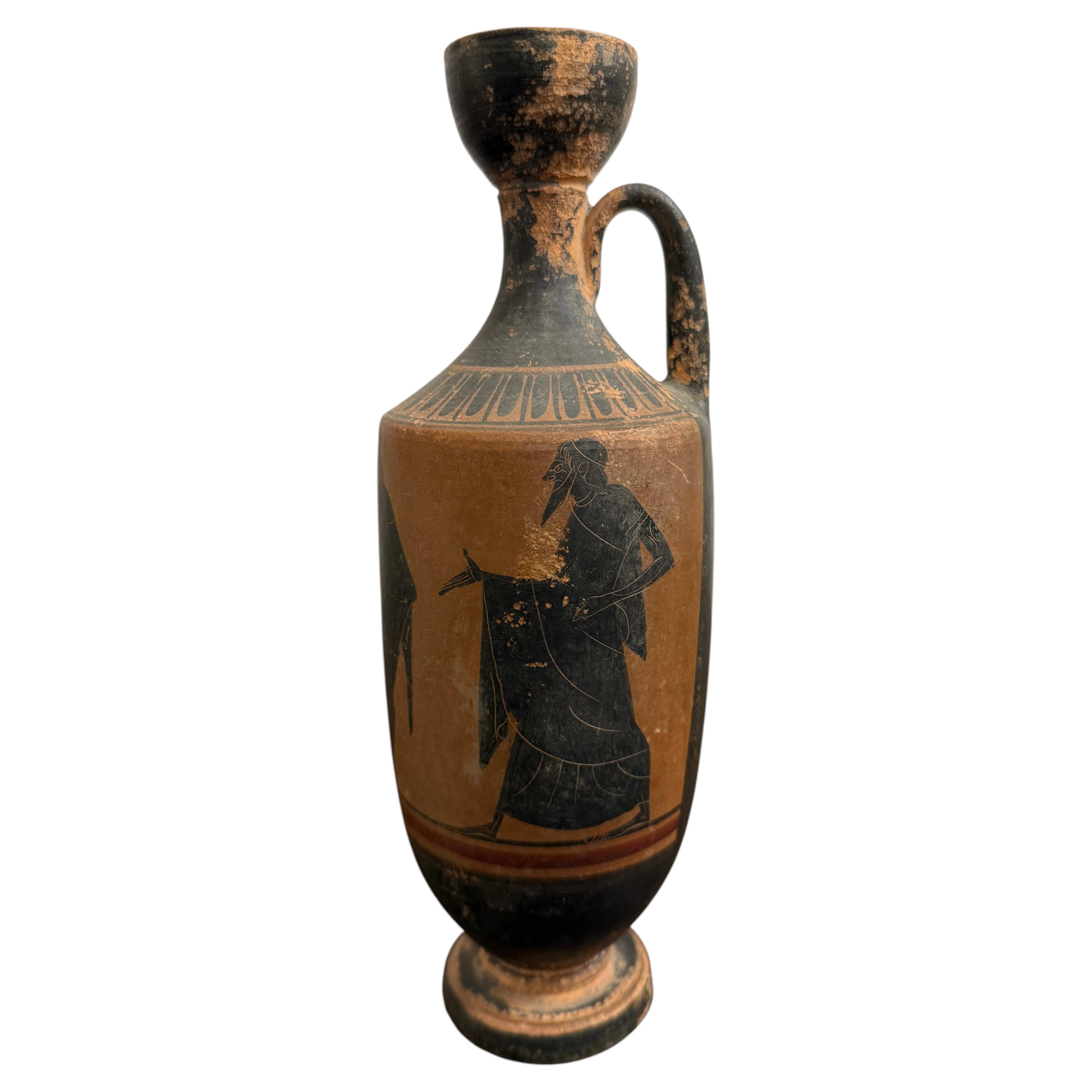
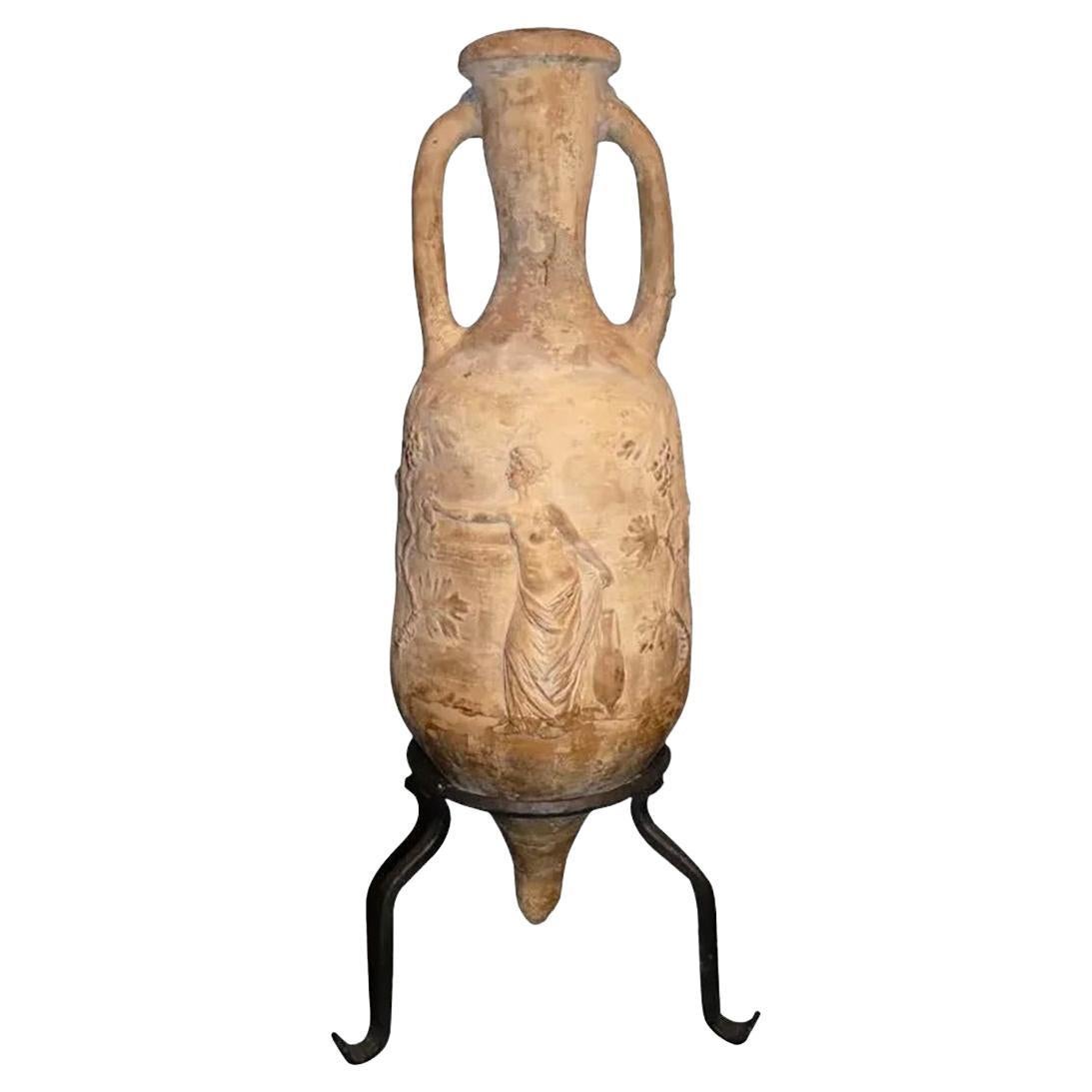
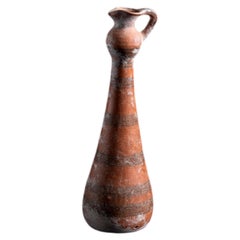
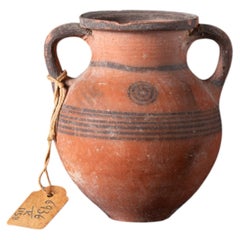
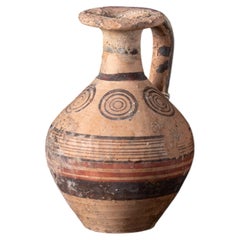
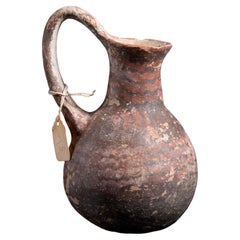
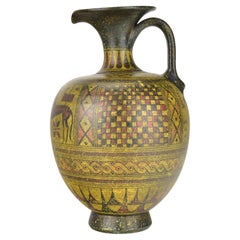
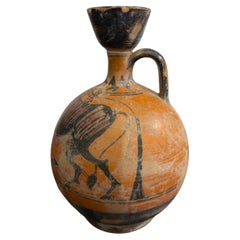
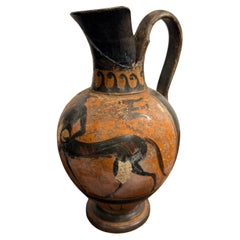
This charming pottery vase, decorated with black and red paint, dates to around 1500 years BC, during the height of ancient Egypt’s New Kingdom, and the celebrated Amarna period. Elegantly proportioned, with its long, slender neck and foot, this vessel is typical of the pottery produced under the rule of the then-Pharaoh, Akhenaten. It is painted with two concentric bands of alternating red and black paint which frame the central motif of a leaping bull, with vegetal motifs to the rear - the image mirrored in the reverse. Alternating rays and vegetal motifs radiate outwards from the base of the neck, while six horizontal bands adorn the neck itself. The central motif of a bull is particularly significant in Egyptian mythology, and adopted by Amarna kings as a powerful symbol of fertility, strength, and royal authority. The most renowned was the Apis bull, revered throughout Egypt as the son of Hathor, and identified as sacred on account of precise markings on its fur. Worshipped at Memphis, the Apis bull was treated as a divine being in life and, upon its death, was mummified and buried with immense ceremony in the great Serapeum at Saqqara, underscoring its profound religious and political significance. This vase with its muted, earthy tones and sleek, elegant form is a striking display piece, and a timeless addition to any collection.
Provenance
Collection of Plaisant Jozef Nestor (1886-1950), Brussels, acquired 1910-1940;
Thence by descent to his grandson;
Christie’s, London, Antiquities, 11 June 2003, Lot 11;
Collection of Saud bin Mohammed Al Thani (1966-2014).
Condition
The surface exceptionally well preserved with original, vibrant pigment and no overpainting. Restoration to the foot and part of the neck.
Please note that this item is a work of art and is thus exempt from US reciprocal tariffs.
ArtAncient are dealers in rare wonders from the formation of the Solar System to late antiquity, discovering, studying and placing objects in extraordinary collections. Please contact us for more details on this piece.