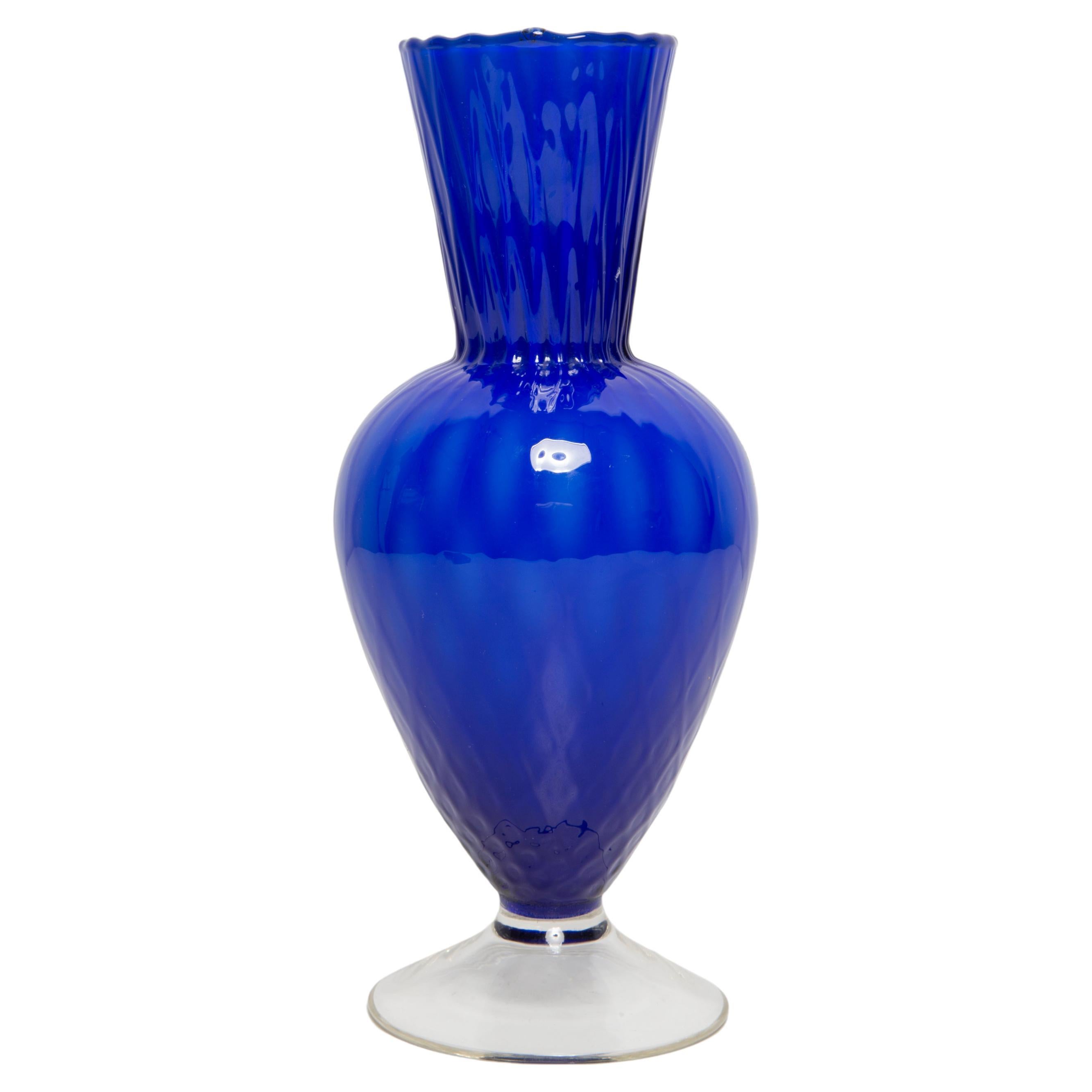
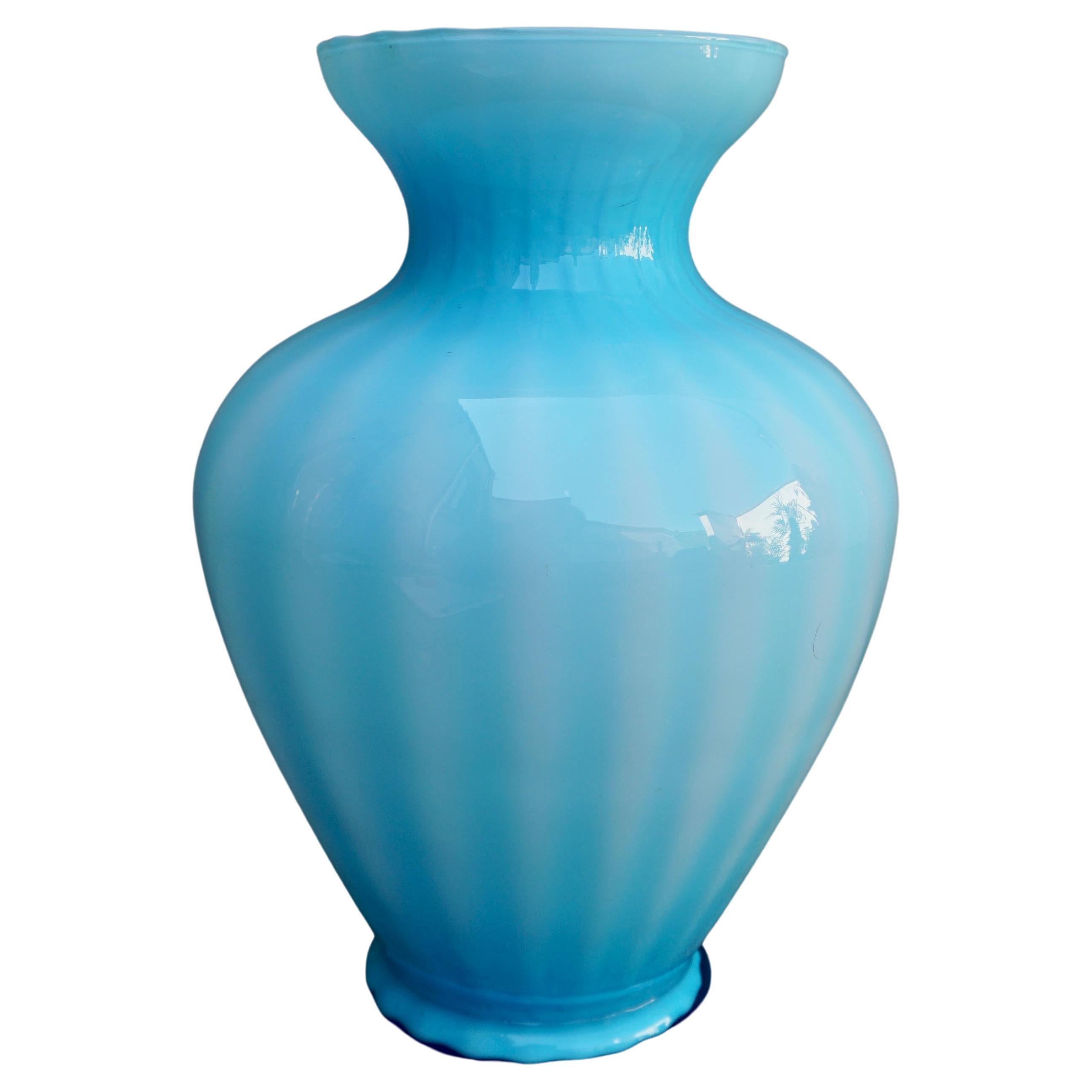
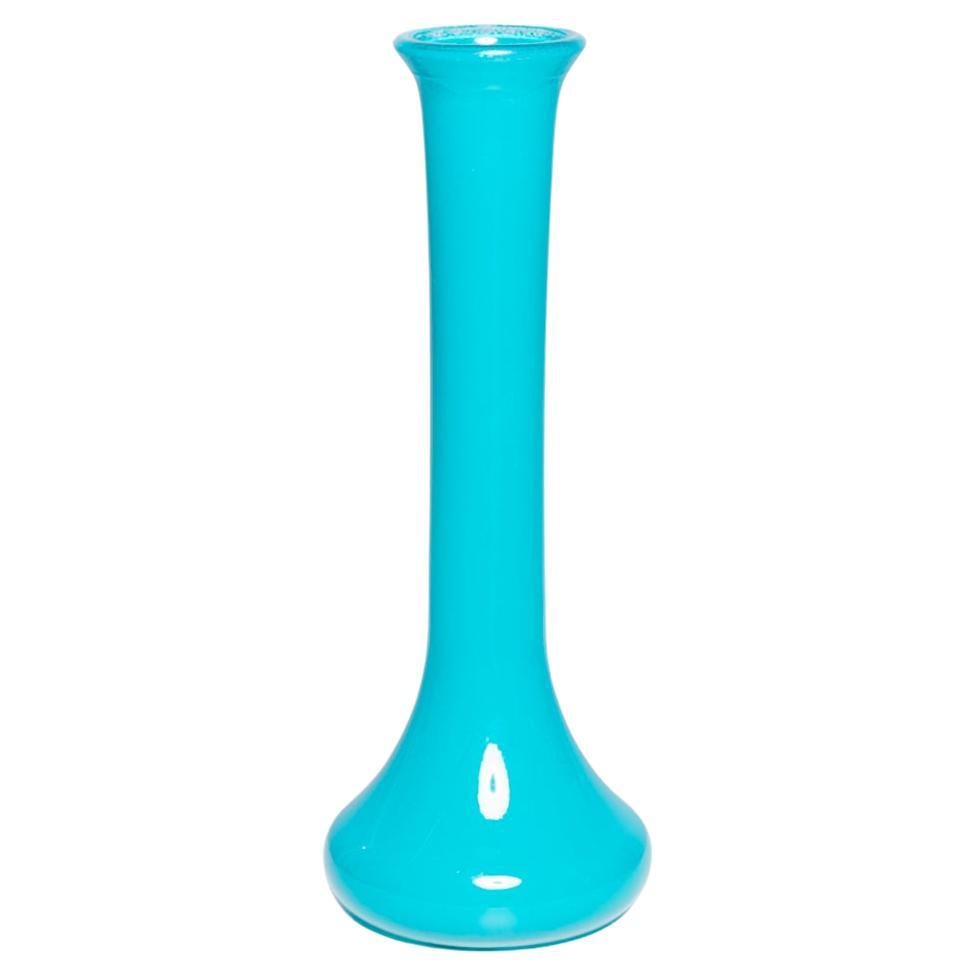
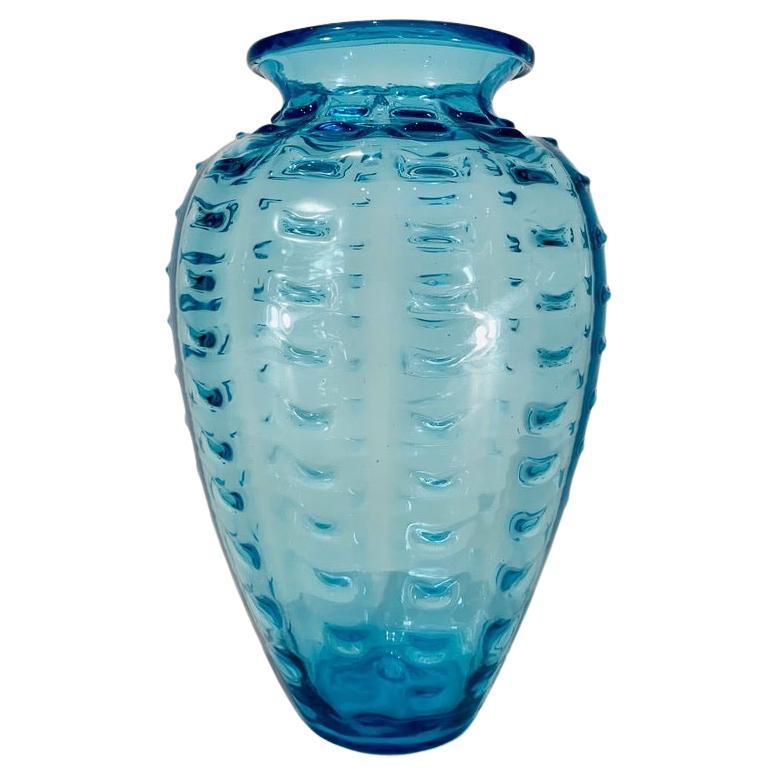
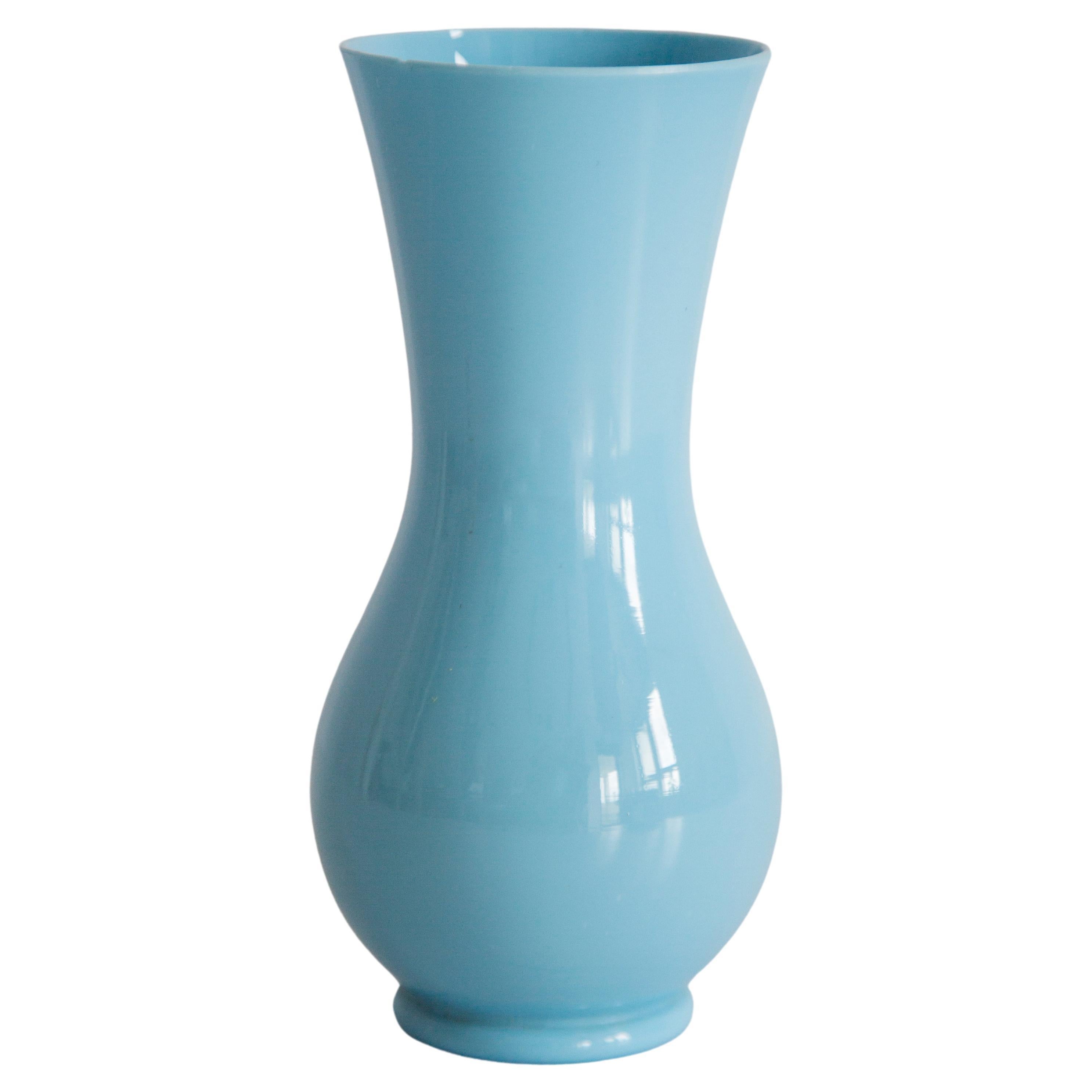
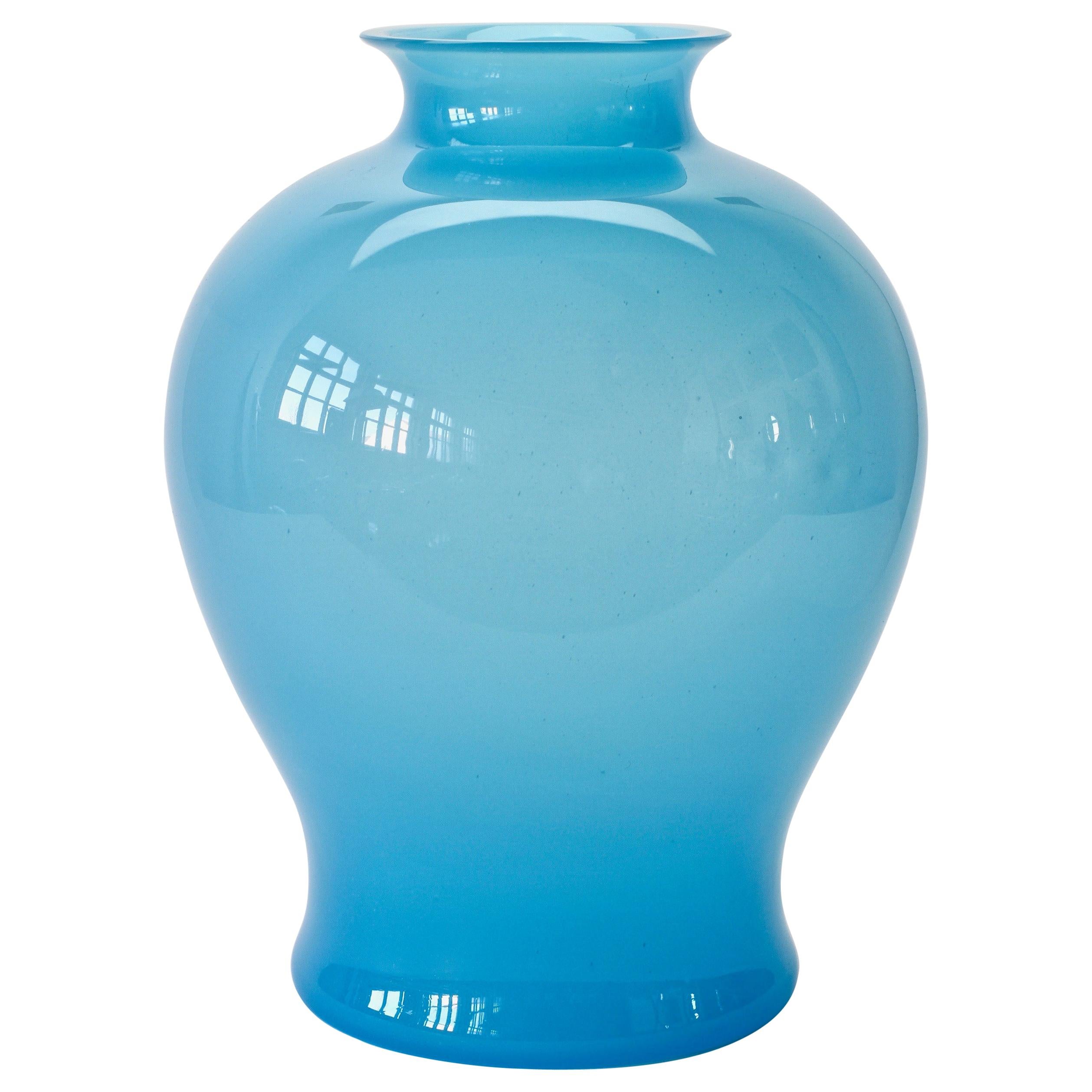
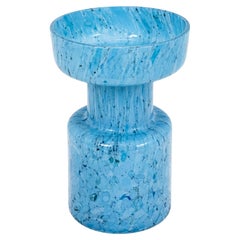
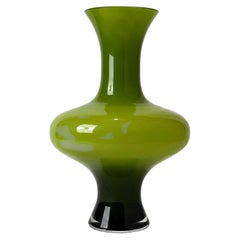
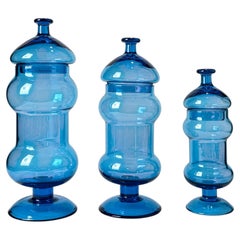
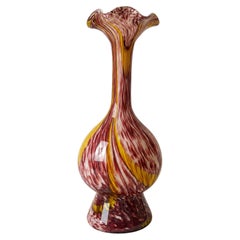
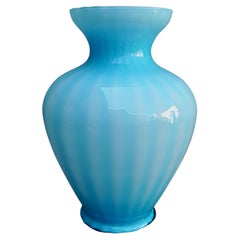
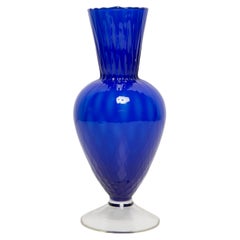
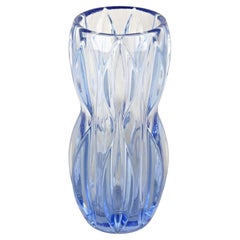
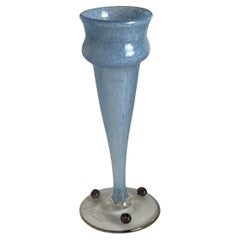
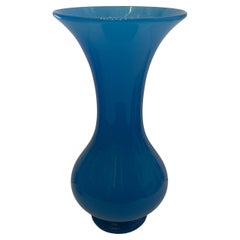
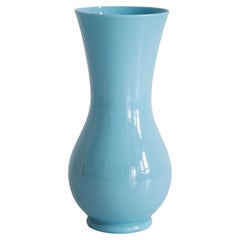
Early 20th-century European blue opaline glass baluster vase, circa 1930. The elegant vessel features a flared rim, a ringed neck, a gently ribbed baluster body, and a trumpet-shaped pedestal base. Its balanced proportions combine a classical silhouette with the cleaner decorative language that emerged during the early decades of the twentieth century.
The opaline glass has a smooth, luminous appearance that softens the passage of light through the vessel. Subtle molded ribs emphasize the elongated body and create a restrained play of highlights across the surface. The carefully articulated transitions between the rim, neck, body, stem, and foot give the vase a refined architectural rhythm.
Opaline glass became one of Europe’s most admired decorative materials during the nineteenth century and remained popular into the twentieth. By adding opacifying ingredients to molten glass, makers achieved a distinctive milky translucence that combined the brilliance of glass with the visual softness of porcelain. France became particularly celebrated for this tradition, producing opaline objects in forms inspired by classical urns, baluster vases, perfume bottles, and ceremonial vessels.
During the early twentieth century, these historic forms were simplified for changing interiors. Traditional profiles were retained, but decoration increasingly relied on proportion, molded detail, surface luminosity, and color rather than elaborate painted or gilt ornament. This vase reflects that transition: graceful and historically informed, yet sufficiently restrained for a modern setting.
The baluster form has long symbolized balance, abundance, and permanence. Its wide body visually anchors the composition, while the flared rim and trumpet base create an elegant sense of vertical movement. Displayed without flowers, the vase reads as a sculptural decorative object; with a floral arrangement, its height and narrow profile provide a natural framework for stems and branches.
Today, the piece can bring history, softness, and architectural form to a console, mantel, dining table, bookshelf, or pedestal. It works comfortably in Art Deco, traditional, neoclassical, contemporary, collected, and eclectic interiors.
Owning an opaline vase of this period means preserving a European decorative tradition in which technical glassmaking and classical design were brought together for the domestic interior. Its enduring appeal lies in the harmony of its proportions, the luminosity of the material, and its ability to function equally well as a vessel and as an object of art.
A refined example of early 20th-century European opaline glass, distinguished by its baluster silhouette, flared rim, molded vertical detail, and trumpet-shaped base.