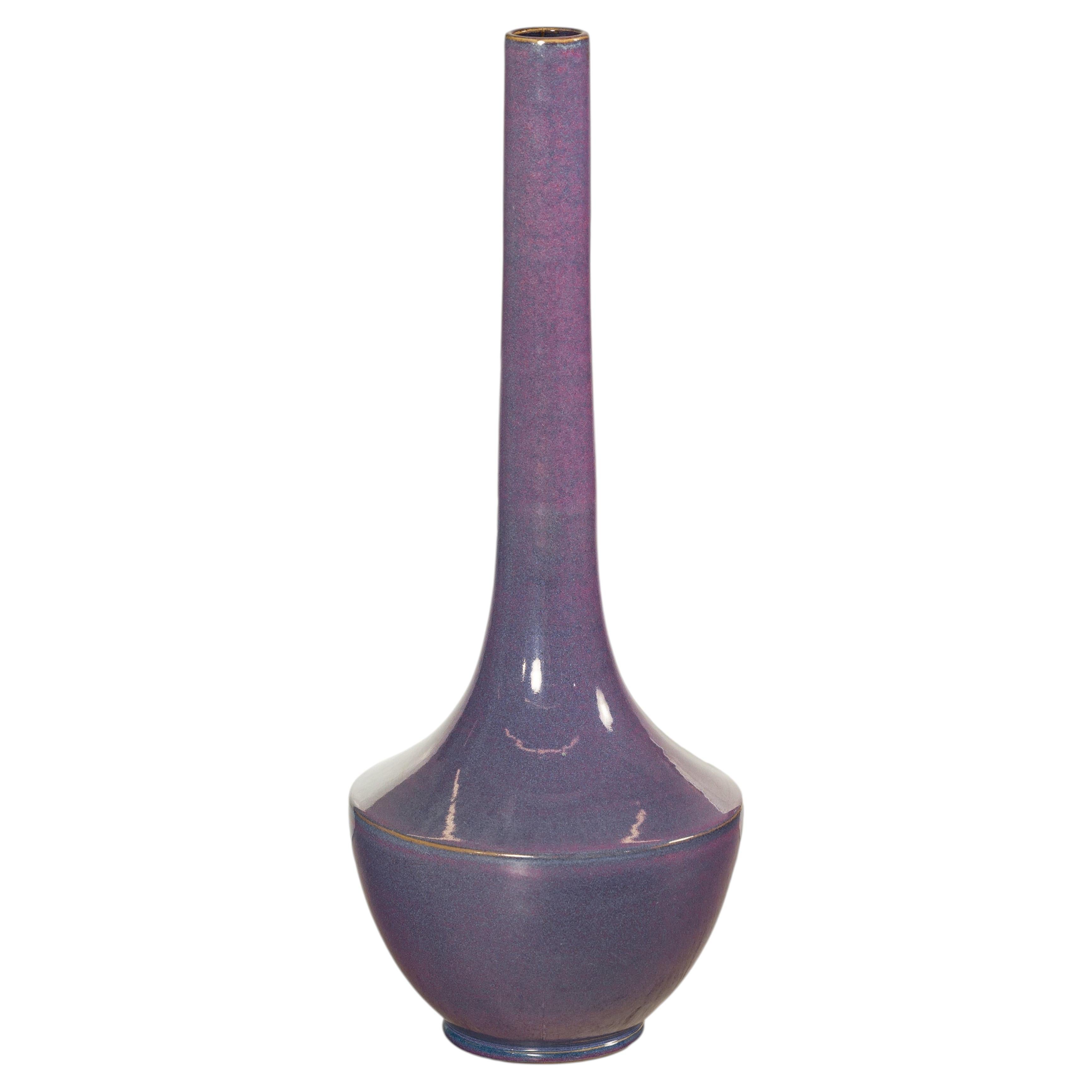
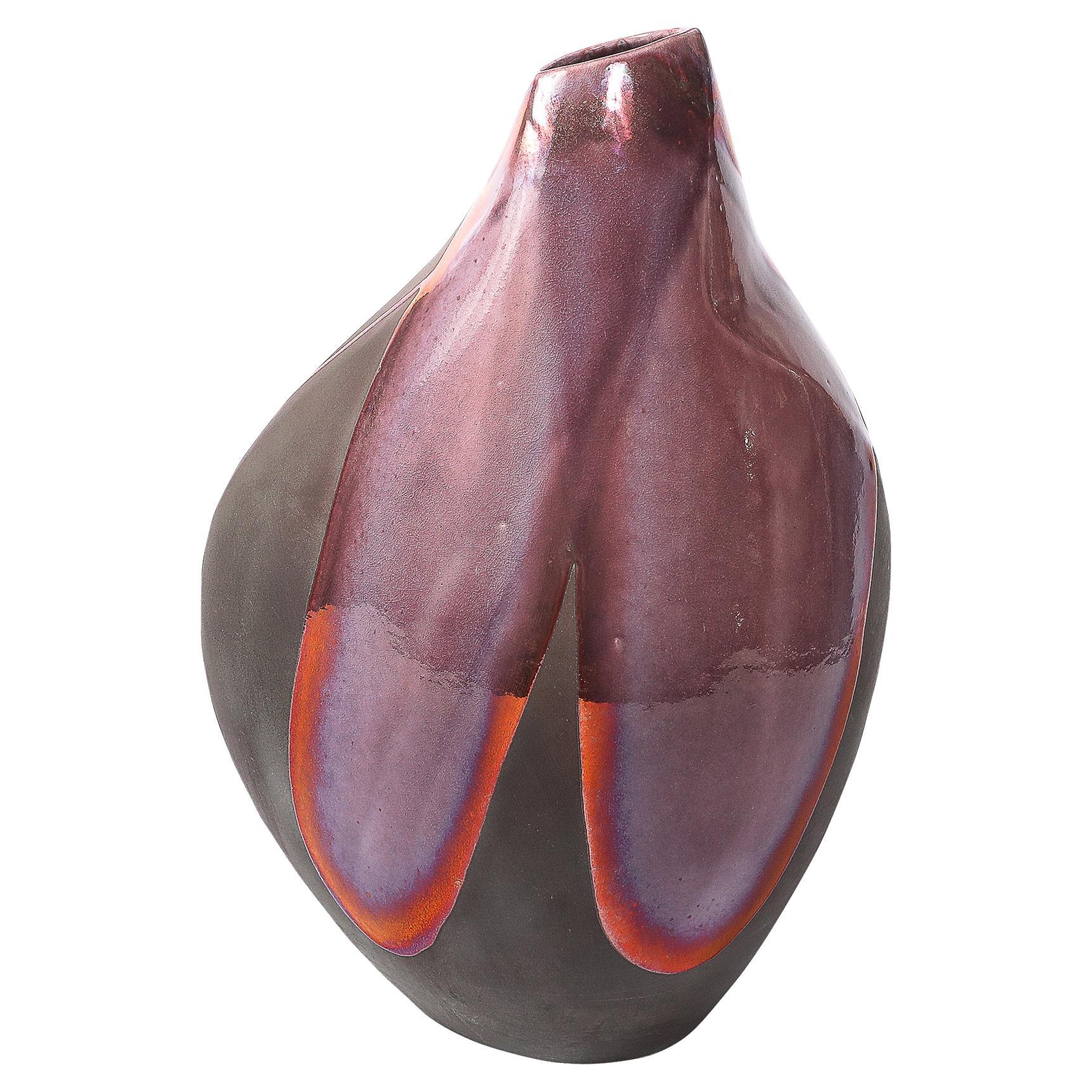
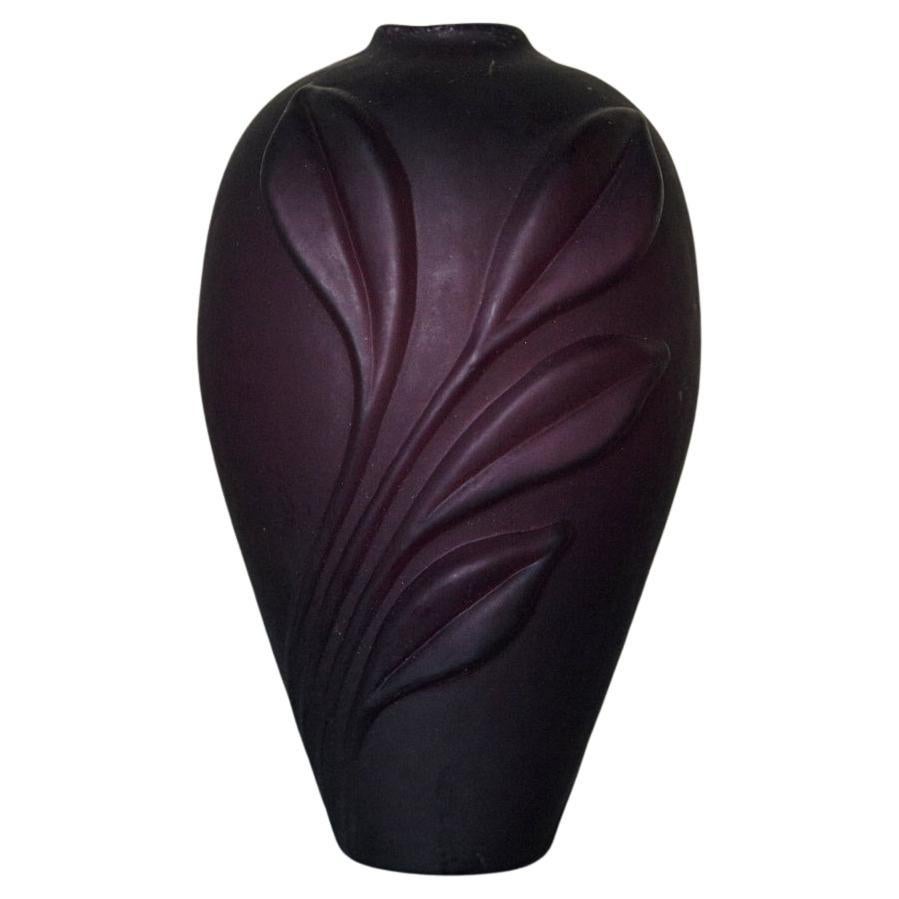
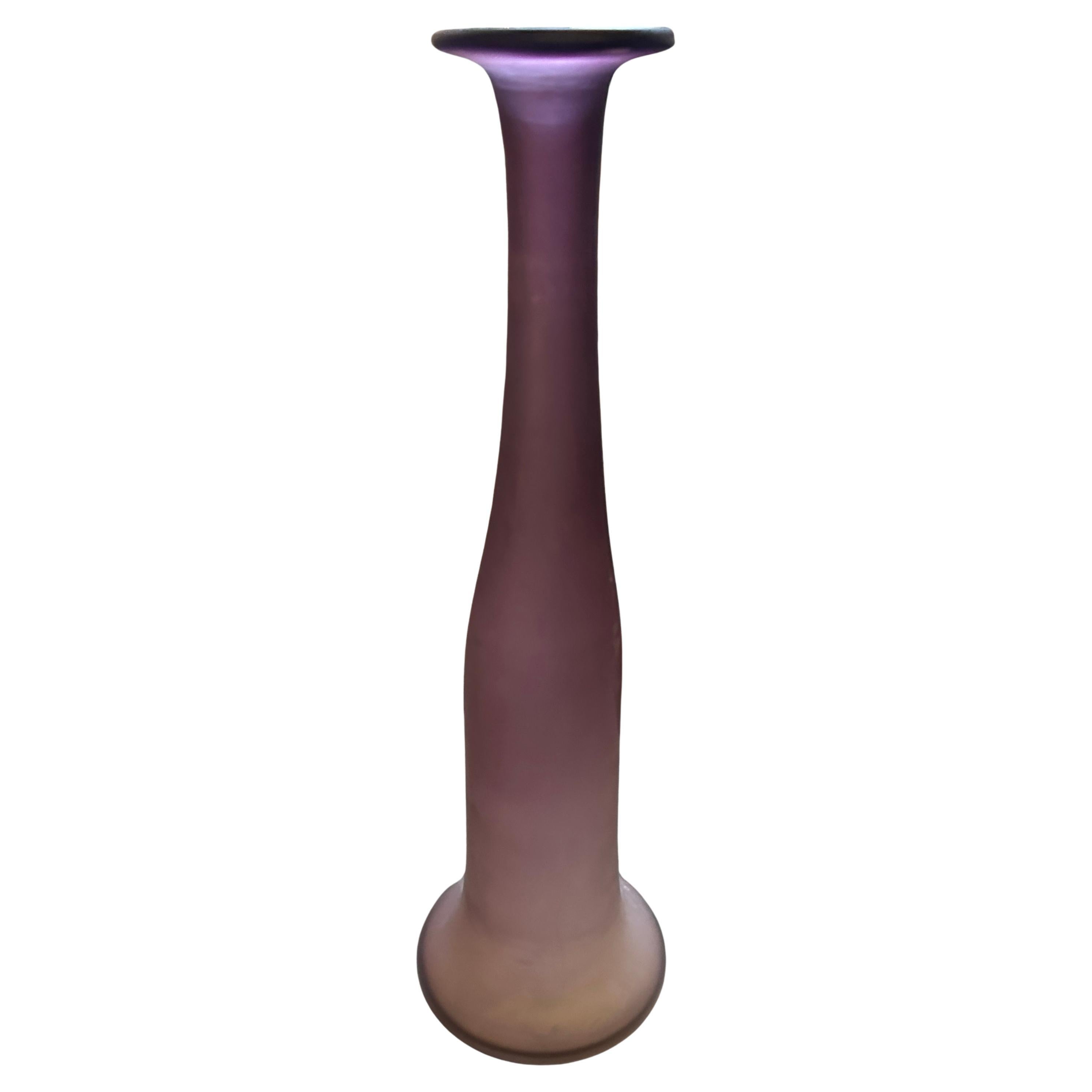
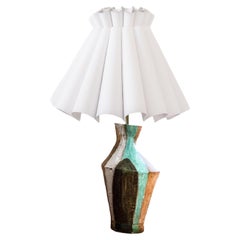
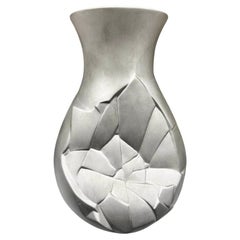
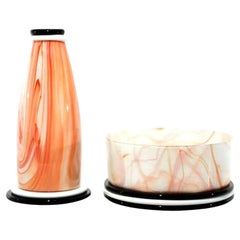
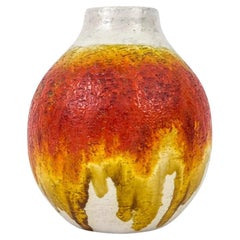
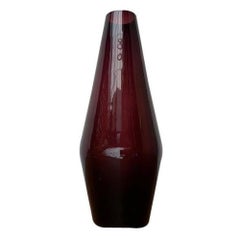
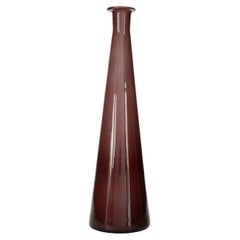
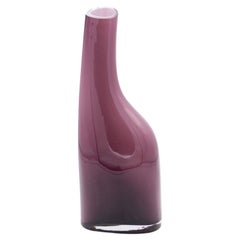
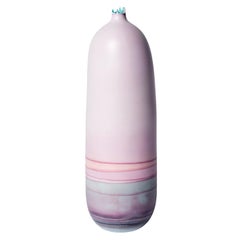
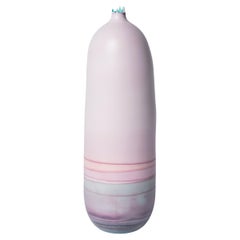
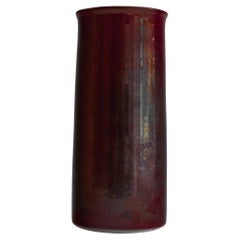
Rose and Erni Cabat glazed porcelain feelie vase, purple, gray ceramic. Signed and dated.
Rose Cabat worked in earthenware, stoneware and, finally, porcelain beginning in the 1950s. Although best known for her expressive "feelies", small forms usually between two to eight inches in height with thin neck openings challenging their assumed vessel function. Cabat also created a series of wind-bells in the 1950s and other forms based on insects and animals.
Cabot, a self taught artist, first encountered clay as an artistic medium in 1940 when her husband, Erni, brought it home from work. Her first works were coil built, then, as electric wheels became increasingly available, she started throwing pottery. After a glaze calculation class at the University of Hawaii in 1956 she and Erni began developing the lustrous satin glazes used on her signature form; the “feelie.”
Public Collections
Arizona State University Art Museum, Tempe, Arizona
Everson Museum of Art, Syracuse, New York
Kansas City Art Institute, Kansas City, Kansas
Museum of Arts and Design, New York, New York
Metropolitan Museum of Art, New York, New York
National Museum of American History, Washington, DC
Philadelphia Museum of Art, Philadelphia, Pennsylvania
Phoenix Art Museum, Phoenix, Arizona
Smithsonian American Art Museum, Renwick Gallery, Washington, DC
Tucson Museum of Art, Tucson, Arizona
Bibliography
Block, Bruce. “A Visit with Rose Cabat.” Journal of the American Art Pottery Association. 20, no.4 (2004).
Kaplos, Janet and Bruce Metcalf. Makers: A History of American Studio Craft. Salem, NC: The University of North Carolina Press, 2010.
Rago, David and John Sollo. Collecting Modern: A Guide to Midcentury Studio Furniture and Ceramics. Salt Lake City, Utah: Gibbs Smith Publisher, 2001.
Regan, Margaret. “Ninety and Nimble.” Tucson Weekly (October 7, 2004).
Wolf, Peter. “Hooked on a Feelie.” Modernism (Spring 2005).