Want more images or videos?
Request additional images or videos from the seller
1 of 5

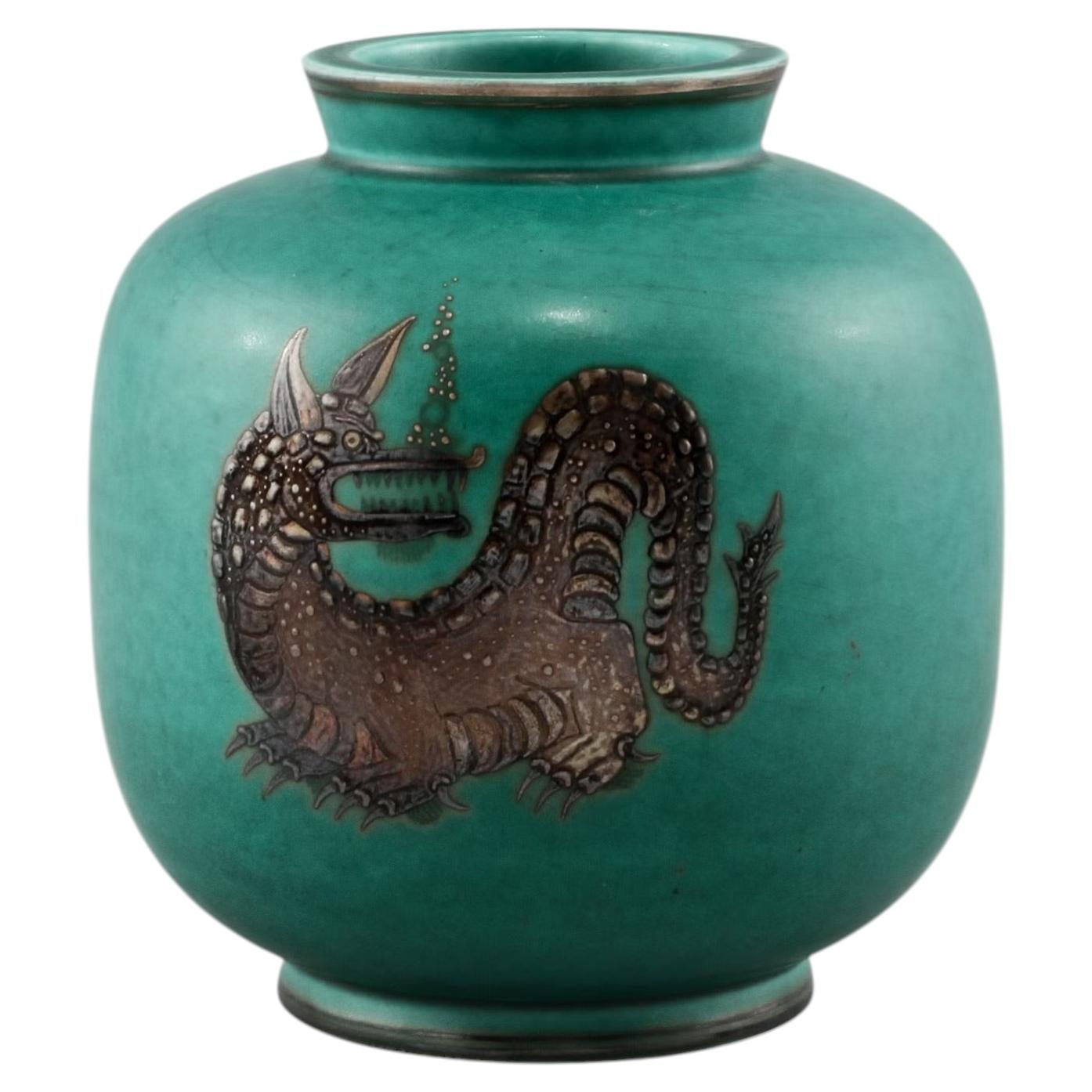
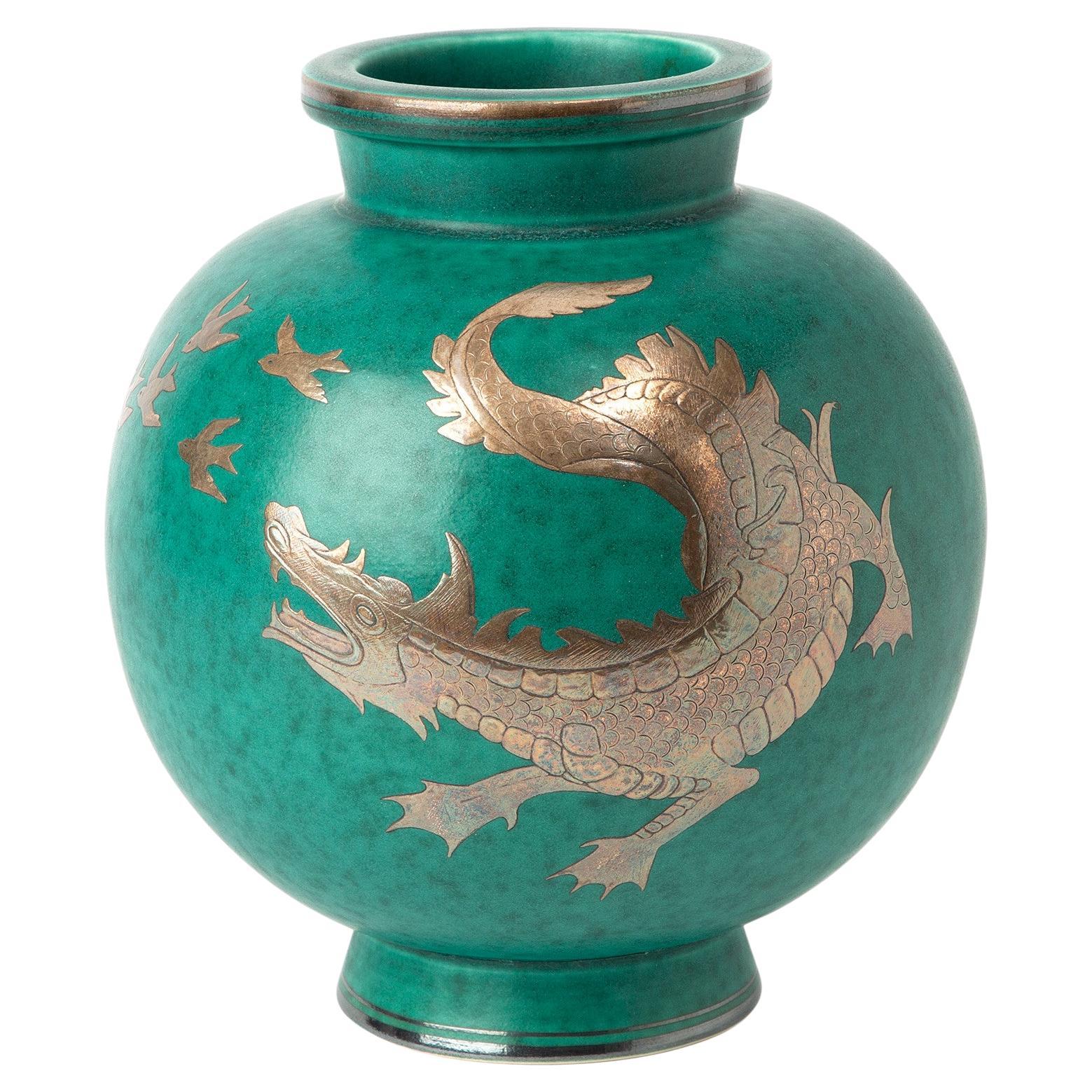
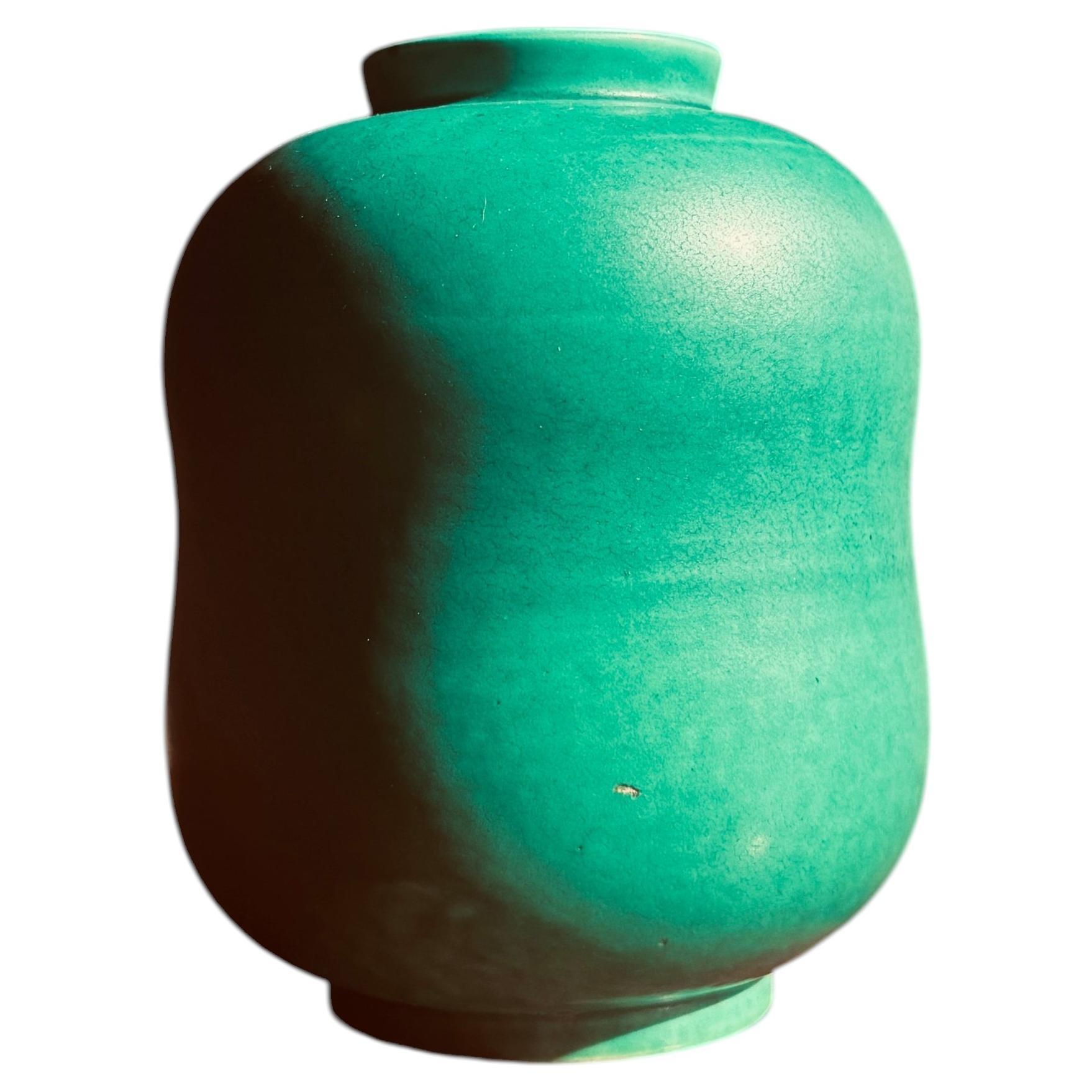
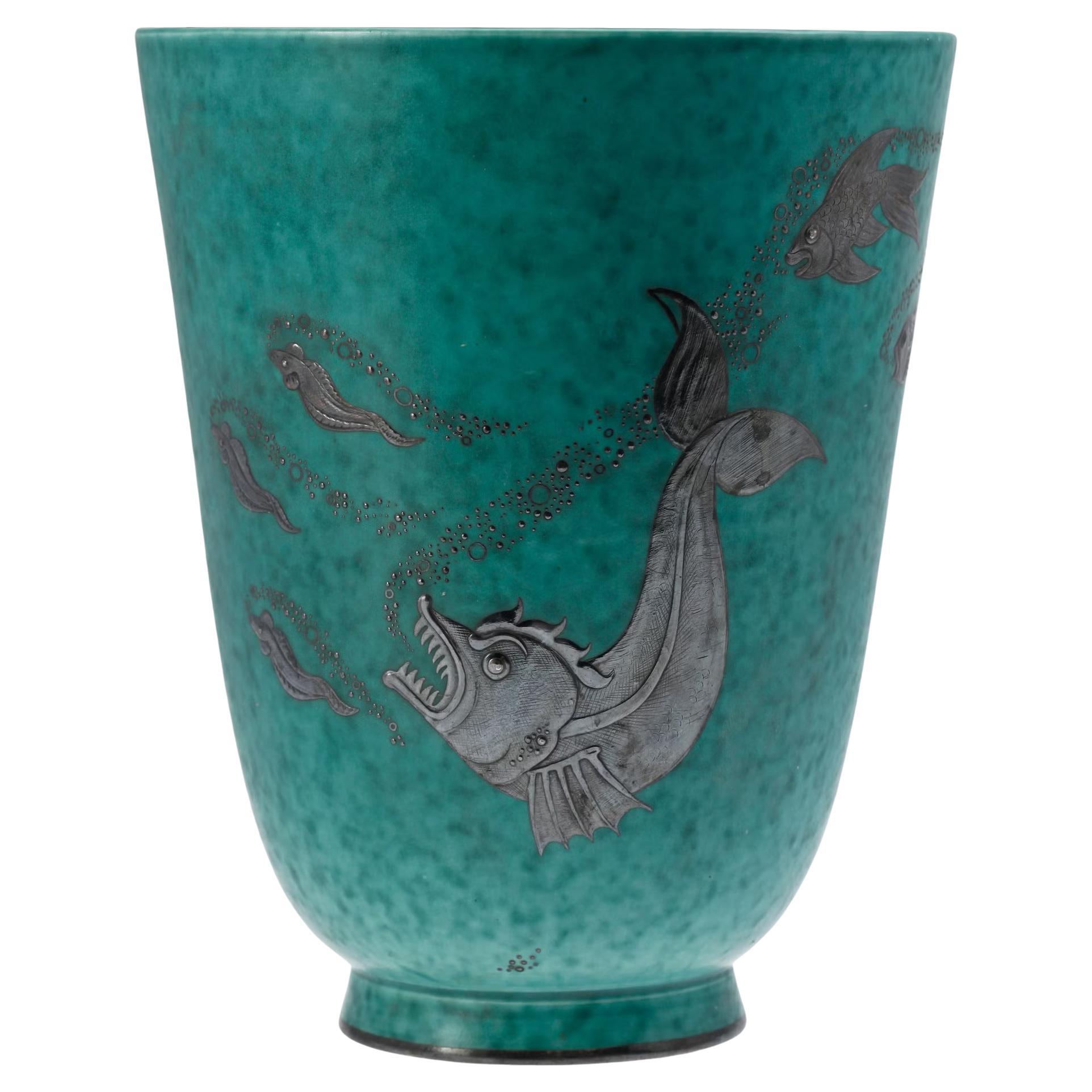
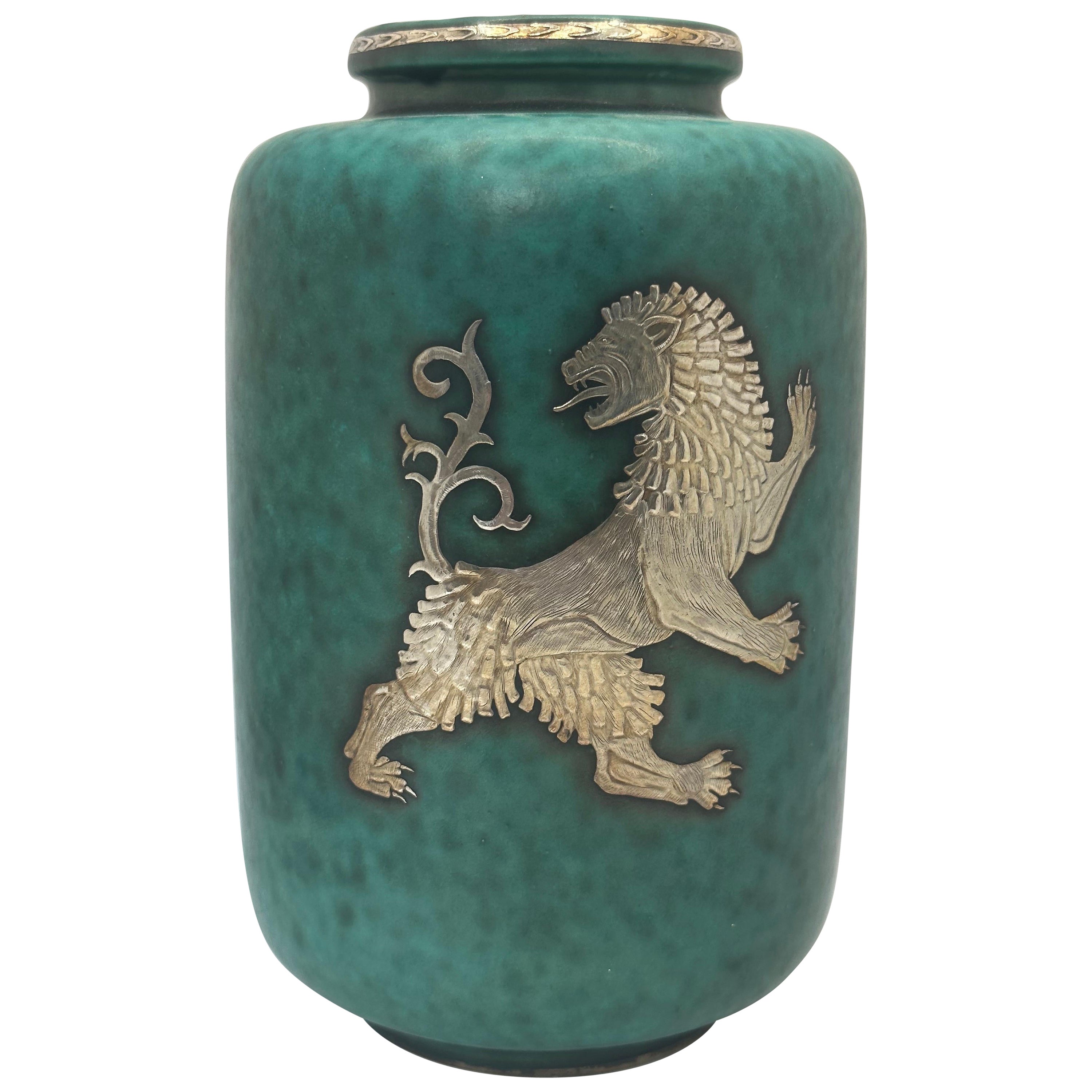
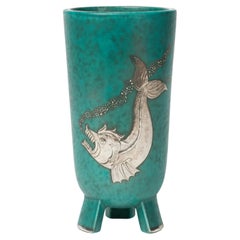
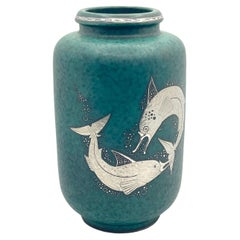
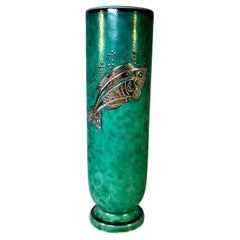
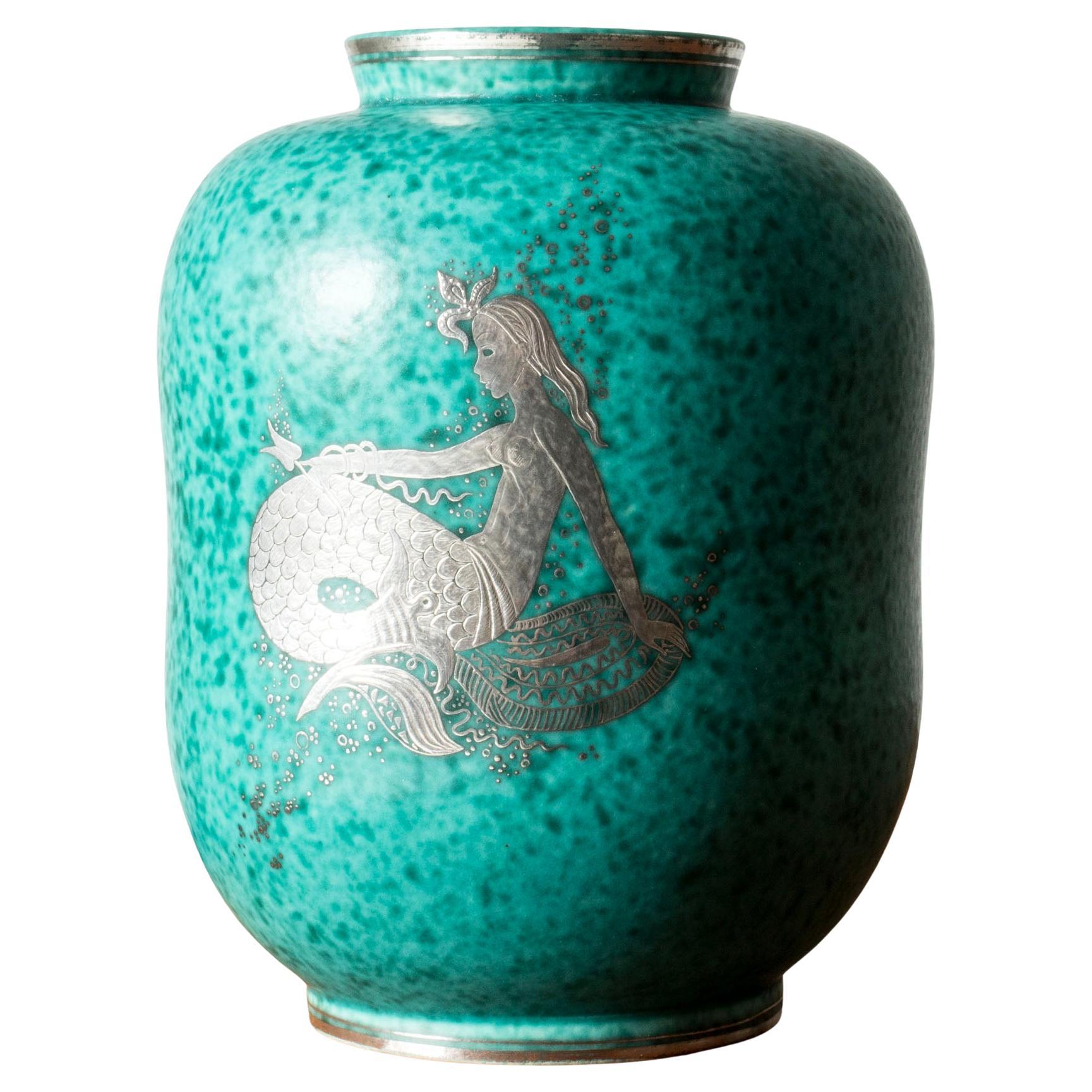
Swedish Art Deco Stoneware and Silver inlay Vase, 1940's

$1,824.06
£1,351.64
€1,875.50VAT Included
CA$2,539.23
A$2,583.27
CHF 1,484.39
MX$31,064.05
NOK 17,329.94
SEK 17,433.69
DKK 11,818.80

About the Item

Wilhelm Kåge (1889-1960) is one of the most well-known representatives of the illustrious Swedish ceramic design of the 20th century. This piece is signed with sticker "Gustavsberg Argenta 1079 II". Swedish ceramic artist and designer, Wilhelm Kåge (1889-1960) was primarily active in the late-1920s through the 1950s and is best known for his contribution to functionalist style, as well his work as the artistic leader of the Gustavsberg porcelain factory. Algot Wilhelm Kåge (originally Nilsson) was born in 1889 in Stockholm. Kåge studied decorative painting at the Technical School, later known as the School of Art Konstfack, in Stockholm (never graduating), and subsequently at the Valand Academy in Gothenburg, where he studied under Scandinavian painters Carl W. Wilhelmson and Johan Rodhe. Between 1914 and 1917, he began designing colorful graphic posters for theaters and exhibitions, becoming one of the first Swedish designers to use posters as a medium for communication. In 1917, Kåge exhibited his posters and his Liljeblå tableware at the Hemutstallningen exhibition at Liljevalchs art gallery in Stockholm, organized by the Swedish Society, the national organisation charged with promoting Swedish design. His tableware caught the eye of Gustavsberg—a well-known porcelain manufactory—and Kåge was offered the job of reinventing their dinnerware service. He was soon appointed artistic director, a position he maintained until 1949, when he was succeeded by Stig Lindberg (1916-1982). During his time at Gustavsberg, Kåge developed new glazes and designs for over thirty different tableware series. In 1930, Kåge exhibited his Argenta Series at the Stockholm Exhibition. This was his first successful foray in ceramics. The series, which included everything from ashtrays to urns, was glazed in red, brown and blue; but it was the pieces finished in a green glaze with silver adornments that really caught people’s attention. The earliest productions were handpainted by Kåge himself, but demand soon dictated that Gustavsberg expand, and by the late 1930s over 30 people were dedicated solely to the painting of Argenta. The most successful of all Kåge’s works, the series epitomizes the style that became known as Swedish Grace. A forerunner of democratic design, Kåge used his designs to express his dissatisfaction with certain aspects of Swedish society. His Praktika tableware (1933) was his attempt to alleviate social injustice, by creating functionalist tableware with working-class families in mind. The tableware was, above all practical. It was easy to clean, made for compact storage, and perfect for everyday use. Unfortunately, Praktika wasn’t as popular among his target market as hoped, as many families preferred more conservative, traditional designs. More successful designs include, Pyro (1929), an oven-safe porcelain, and Farsta stoneware (1930), which is considered his best work. The clay for this collection originated from the Farsta Bay, from which the stoneware takes its name, close to the Gustavsberg factory. The pieces from the Farsta collection are regarded today as some of the most influential ceramics to have been produced in Sweden during the 20th century. Sometime in the 1940s, together with Stig Lindberg and Berndt Friberg, Kåge founded Gustavsberg Studio, where he continued to design until his death in 1960. Kåge passed away at the age of 71 in Stockholm. Kåge’s work can be found in the National Museum and the Royal Library in Stockholm, the Industrial Art museums in Oslo, Copenhagen, Vienna, Budapest and Prague, and at the Metropolitan Museum in New York . Notably, he was awarded the Prince Eugen Medal in 1949.
  • Creator:
    Wilhelm Kage (Designer)
  • Dimensions:
    Height: 10.63 in (27 cm)Diameter: 5.52 in (14 cm)
  • Style:
    Art Deco (Of the Period)
  • Materials and Techniques:
  • Place of Origin:
  • Period:
  • Date of Manufacture:
    1940s
  • Condition:
    Wear consistent with age and use.
  • Seller Location:
    Uccle, BE
  • Reference Number:
    1stDibs: LU6101242458272

More From This Seller

View All
Scandinavian Modern Vase Stoneware and silver, 1950's

Scandinavian Modern Vase Stoneware and silver, 1950's

By Wilhelm Kage

Located in Uccle, BE

Wilhelm Kåge Argenta Vase H29,5 x Top D12 x Bottom D10cm This elegantly designed Argenta vase, created by Wilhelm Kåge for Gustavsberg in Sweden during the 1950s. Features a signatur...

Category

Mid-20th Century Swedish Scandinavian Modern Ceramics

Materials

Silver

Swedish Grace Argenta vase Wilhelm Kage, 1944

Swedish Grace Argenta vase Wilhelm Kage, 1944

By Wilhelm Kage

Located in Uccle, BE

The bottom is hand painted with Argenta 1042 III and N (year symbol for 1944) Stamped Gustavsberg, Kåge 1 The production technique of Argenta ceramics Throwing or moulding of the ...

Category

Mid-20th Century Swedish Art Deco Ceramics

Materials

Stoneware

Swedish Art Deco Ceramic Fish Silver and Aquamarine Vase, 1947

Swedish Art Deco Ceramic Fish Silver and Aquamarine Vase, 1947

By Wilhelm Kage

Located in Uccle, BE

Wilhelm Kåge (1889-1960) is one of the most well-known representatives of the illustrious Swedish ceramic design of the 20th century. This piece is marked "Gustavsberg Argenta 47 Made in Sweden". Swedish ceramic artist and designer, Wilhelm Kåge (1889-1960) was primarily active in the late-1920s through the 1950s and is best known for his contribution to functionalist style, as well his work as the artistic leader of the Gustavsberg porcelain factory. Algot Wilhelm Kåge (originally Nilsson) was born in 1889 in Stockholm. Kåge studied decorative painting at the Technical School, later known as the School of Art Konstfack, in Stockholm (never graduating), and subsequently at the Valand Academy in Gothenburg, where he studied under Scandinavian painters...

Category

Vintage 1940s Swedish Art Deco Vases

Materials

Silver

Swedish Modern Carl Harry Stålhane Stoneware Vase, 1950's

Swedish Modern Carl Harry Stålhane Stoneware Vase, 1950's

By Carl-Harry Stålhane

Located in Uccle, BE

Carl Harry Stålhane was a renowned Swedish ceramicist, born in 1920. He is best known for his remarkable work in the field of ceramics. Stålhane developed a distinctive style that c...

Category

Mid-20th Century Swedish Scandinavian Modern Ceramics

Materials

Stoneware

Swedish Modern Floor Stoneware Vase by Gunnar Nylund, 1950's

Swedish Modern Floor Stoneware Vase by Gunnar Nylund, 1950's

By Gunnar Nylund

Located in Uccle, BE

Mid-century ceramic artist Gunnar Nylund's Glazed Stoneware Vase made for Rörstrand, circa 1950s. Incised signature and studio mark to underside: [R Rubus GN Sweden 9]. Image 7: Gunn...

Category

Vintage 1950s Swedish Scandinavian Modern Vases

Materials

Stoneware

You May Also Like

Wilhelm Kåge Argenta Vase, Ceramic with Silver Inlay, Sweden, 1950

Wilhelm Kåge Argenta Vase, Ceramic with Silver Inlay, Sweden, 1950

By Wilhelm Kage

Located in Paris, IDF

Vase by Wilhelm Kage figuring silver inlay with 2 stylised fishes with bubbles. Signed GUSTAVSBERG ARGENTA with anchor 1016. Wilhelm Kåge (1889-1960) is one of the most well-known r...

Category

Mid-20th Century Swedish Mid-Century Modern Vases

Materials

Silver

Piscine Stoneware Vase Applied Silver, Wilhelm Kage, Argenta, Gustavsberg #1029

Piscine Stoneware Vase Applied Silver, Wilhelm Kage, Argenta, Gustavsberg #1029

By Wilhelm Kage

Located in Rothley, Leicestershire

Superb bijou vase by Wilhelm Kage for Gustavsberg, Sweden from the Argenta collection. Decorated with a stylised fish of applied silver on mottled green stoneware. Circa 1930's Ba...

Category

Vintage 1930s Swedish Art Deco Vases

Materials

Silver

Wilhelm Kage “Argenta” vase 1045 glazed stoneware silver Gustavsberg Sweden 1950

Wilhelm Kage “Argenta” vase 1045 glazed stoneware silver Gustavsberg Sweden 1950

By Wilhelm Kage

Located in Paris, IDF

Wilhelm Kage “Argenta ”vase 1045 glazed stoneware silver made by Gustavsberg in Sweden around 1950. Good condition Beautiful stoneware “Argenta” vase by Wilhelm Kåge in a sphere for...

Category

Mid-20th Century Swedish Mid-Century Modern Vases

Materials

Silver

Wilhelm Kåge 'Argenta' Vase for Gustavsberg, 1940s – Silver Inlaid Fish Design

Wilhelm Kåge 'Argenta' Vase for Gustavsberg, 1940s – Silver Inlaid Fish Design

By Wilhelm Kage, Gustavsberg

Located in Göteborg, SE

This round ceramic vase from the Argenta series was designed by Wilhelm Kåge for Gustavsberg in the 1940s. It features a deep green glaze with a speckled finish and is decorated wit...

Category

Vintage 1940s Swedish Scandinavian Modern Vases

Materials

Silver

Wilhelm Kåge, Vase, Stoneware, Sweden, 1950s

Wilhelm Kåge, Vase, Stoneware, Sweden, 1950s

By Wilhelm Kage, Gustavsberg

Located in High Point, NC

A green-glazed stoneware vase designed by Wilhelm Kåge and produced by Gustavsberg, Sweden, c. 1950s.

Category

Vintage 1950s Swedish Scandinavian Modern Vases

Materials

Stoneware

Wilhelm Kage Vase ceramic ‘Argenta’ for Gustavsberg Sweden 1940s Marked

Wilhelm Kage Vase ceramic ‘Argenta’ for Gustavsberg Sweden 1940s Marked

By Wilhelm Kage, Gustavsberg

Located in Paris, IDF

WILHELM KÅGE. Vase, "Argenta", Gustavsberg 1940s, green-glazed stoneware with silver decoration of fishes and air bubbles on one side. Marked on the bottom with “Gustavsberg Argent...

Category

Mid-20th Century Swedish Mid-Century Modern Ceramics

Materials

Silver