Video Loading
Want more images or videos?
Request additional images or videos from the seller
1 of 15

French Faience Chinoiserie Footed Tray, Marseille, Leroy Manufactory

$5,200
£3,925.67
€4,567.86
CA$7,339
A$7,362.10
CHF 4,299.38
MX$89,635.72
NOK 49,369.09
SEK 50,842.49
DKK 34,143.64

About the Item

18th Century French Faience Chinoiserie Footed Tray, Marseille, Leroy Manufactory, Knafel Collection Circa 17309 This Marseille faience footed tray, of the form known in French as a bannette, is painted in the grand feu palette of blue, olive green, ochre yellow and iron red with a chinoiserie scene of two courting couples in a garden. At the left a gentleman in a plumed flat hat and spotted tunic, holding a tall flowering staff, addresses a lady seated on a low bench with a basket of flowers in her lap. At the right a man in a conical plumed hat runs forward to offer a sprig of red blossom to a lady in a blue robe and feathered headdress standing before a red lattice fence, a vase of fruit on a pedestal behind him and a group of tall feathery red plants beyond. The two couples are divided by a luxuriant flowering plant rising from a rocky mound, its blossoms drawn in the hatched red that is characteristic of the factory, and in the foreground a spotted dog chases a blue hare across a rocky bank. Flowering sprigs extend into the well from the long sides, and the ground is scattered with small sprigs, a fanciful butterfly and fragments of trellis and pavilion at the corners, the whole enclosed by a blue line at the rim. The tray is rectangular with slightly bowed sides and rounded corners and stands on a spreading rectangular foot. The sides are painted with a running band of blue and green flowers and hatched red blossoms, and the foot with a trailing vine of red flowers and blue leaves. The rope-twist handles rising from the short ends are sponged with tiny dots of blue, ochre and olive green. The underside is glazed within an unglazed rectangular foot rim showing the reddish body. The attribution to the Leroy manufactory rests on the palette, in particular the hatched or striated red that recurs on the factory’s documented pieces, including the starfish-like red flower borders of the 1720s and 1730s that are its best-known signature (Perlès, 2016). The tray was formerly in the collection of Sidney R. Knafel, New York, where it was catalogued as no. 130 in Christophe Perlès’s 2016 catalogue of the collection, and it retains the Knafel collection label together with the earlier printed label of the d’Espezel collection, Carcassonne, numbered S42. Dimensions Length: 11¾ inches (29.9 cm) Width: 8 inches (20.3 cm) Height to top of handles: 3¼ inches (8.3 cm) Marks Unmarked. Paper collection labels to the underside: a printed label reading “COLLECTION / D’ESPEZEL / CARCASSONNE” with the manuscript number S42 within a rococo cartouche, and an oval “SIDNEY R. KNAFEL COLLECTION” label numbered 130. Provenance Collection d’Espezel, Carcassonne (label no. S42); Collection Thuile; Tajan, Hôtel Drouot, Paris, 24 October 2007, lot 131; Sidney R. Knafel Collection, New York, no. 130; Earle D. Vandekar of Knightsbridge. Condition Good, with small glaze chips to the rim edges and foot rim of the kind usual for grand feu faience. References Perlès, Christophe. French Faïence: The Sidney R. Knafel Collection. 2016, cat. no. 130. Vignon, Charlotte. Masterpieces of French Faience: Selections from the Sidney R. Knafel Collection. New York: The Frick Collection in association with D Giles Ltd, 2018. The Metropolitan Museum of Art. “French Faience.” Heilbrunn Timeline of Art History. Historical Context The Leroy manufactory descended from the pioneering Clérissy workshops of Saint-Jean-du-Désert outside Marseille. Anne Clérissy left the family’s second factory to her daughter Madeleine Héraud (1685–1749), wife of Louis Leroy, who ran it as a widow from 1706, first near the Porte d’Aix and, after the site was expropriated for street building in 1727, in the rue de la Calade within the city walls; her son Louis Leroy (1704–1778) and grandson Antoine carried it on until 1780. Its output was essentially grand feu faience, painted in the metallic-oxide colors that could survive a single high-temperature firing with the glaze: cobalt blue, copper green, antimony yellow and an iron red that was notoriously difficult to fix and became a hallmark of the house. The compositions of the early period show the influence of Rouen, and chinoiserie scenes of this kind, fanciful European visions of the East adapted from engraved sources, answered the same taste that drove the market for Chinese export porcelain. Sidney R. Knafel assembled his collection of French faience over more than fifty years, and seventy-five pieces from it were shown at The Frick Collection, New York, in 2018–2019 as Masterpieces of French Faience, when the collection was announced as a promised gift to the museum. (Ref: NY10522-nlir)
  • Dimensions:
    Height: 3.25 in (8.26 cm)Width: 11.75 in (29.85 cm)Depth: 8 in (20.32 cm)
  • Style:
    Rococo (Of the Period)
  • Materials and Techniques:
  • Period:
  • Date of Manufacture:
    1730
  • Condition:
    Wear consistent with age and use.
  • Seller Location:
    Downingtown, PA
  • Reference Number:
    Seller: NY10522-nlir1stDibs: LU861040394632

More From This Seller

View All
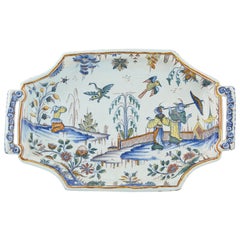
French Faïence Oblong Octagonal Chinoiserie Tray (Bannette), Most likely Rouen

French Faïence Oblong Octagonal Chinoiserie Tray (Bannette), Most likely Rouen

By Rouen

Located in Downingtown, PA

French Faïence Oblong Octagonal Chinoiserie Letter or Document Tray, Circa 1730-1740, This exquisite piece is a French Faïence Oblong Octagonal Chinoiserie Letter or Document Tray,...

Category

Antique 1730s Georgian Delft and Faience

Materials

Faience

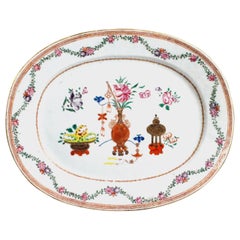
Chinese Export Famille Rose 'Precious Objects' Porcelain Dish

Chinese Export Famille Rose 'Precious Objects' Porcelain Dish

Located in Downingtown, PA

Chinese Export Famille Rose 'Precious Objects' Porcelain Dish, Qianlong Period, Circa 1765-1775 This superb oval dish is a quintessential example of Chinese Export porcelain create...

Category

Antique Mid-18th Century Chinese Chinese Export Platters and Serveware

Materials

Porcelain

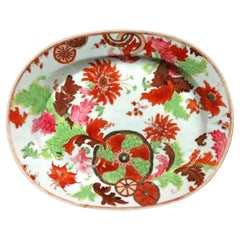
Chinese Export Pseudo Tobacco Leaf Porcelain Dish, Famille Rose, Circa 1765 (

Chinese Export Pseudo Tobacco Leaf Porcelain Dish, Famille Rose, Circa 1765 (

Located in Downingtown, PA

Chinese Export Porcelain Pseudo Tobacco Leaf Oval Dish, Qianlong, Circa 1765 Circa 1765 This Qianlong period oval dish carries a rare variant of the most coveted of all Chinese Expo...

Category

Antique 1760s Chinese Chinese Export Platters and Serveware

Materials

Porcelain

Chinese Export Porcelain Armorial Dish, Arms Hutchinson impaling Calthrop

Chinese Export Porcelain Armorial Dish, Arms Hutchinson impaling Calthrop

Located in Downingtown, PA

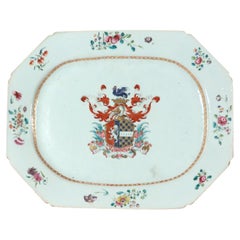
The Hutchinson & Calthrop Armorial Platter: The Massachusetts Link Circa 1755 This Chinese Export porcelain platter, dating to the Qianlong period, circa 1755, is painted in vibrant...

Category

Antique 1750s Chinese Chinese Export Platters and Serveware

Materials

Porcelain

First Period Worcester Porcelain Blue Scale Kidney Dish, Flower Panels, 1770

First Period Worcester Porcelain Blue Scale Kidney Dish, Flower Panels, 1770

By 1st Period Worcester Dr. Wall

Located in Downingtown, PA

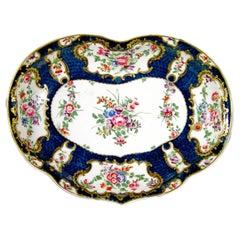
First Period Worcester Porcelain Blue Scale Kidney Dish, Flower Panels, 1770 This First Period Worcester porcelain dish of the Dr. Wall period takes the kidney shape used for the sh...

Category

Antique Mid-18th Century English Rococo Porcelain

Materials

Porcelain

Chinese Porcelain Famille Verte Large "Flower Basket" Dish, Kangxi Period

Chinese Porcelain Famille Verte Large "Flower Basket" Dish, Kangxi Period

Located in Downingtown, PA

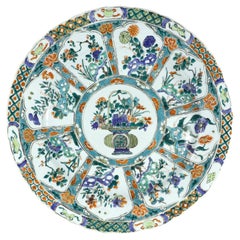
Vibrant Prosperity: A Famille Verte 'Flower Basket' Dish from the Kangxi Golden Age This magnificent Chinese Export porcelain dish, dating to the height of the Kangxi Period (c. 1700-1710), is a resplendent example of the famed famille verte (green family) palette. This enameling technique, characterized by its brilliant, translucent greens, yellows, and blues, reached its zenith under the patronage of the Kangxi Emperor, ushering in a golden age of ceramic production at the imperial kilns in Jingdezhen (Guest and Gray). Auspicious Symbolism and Design Mastery The dish is a feast of intricate design and rich symbolism, centered on an openwork beribboned basket of peony and lotus flowers. The flower basket motif is highly auspicious in Chinese art, being one of the attributes of the Daoist Immortal Lan Caihe, and symbolizes longevity and good fortune (Sotheby's, Lot 657, 2015). This meaning is powerfully reinforced by the inclusion of a central shou character (寿) in the basket, the Chinese ideograph for Longevity, a core wish in Chinese culture for a long, healthy, and prosperous life (Metropolitan Museum of Art). The presence of the shou character, often incorporated into designs for Imperial birthday celebrations during this era, underscores the dish's grand and celebratory intent. The radial design radiates outward with petal-shaped reserves in the cavetto, each containing detailed flowering plants issuing from rockwork, all set against a signature pale-green stippled ground (Dizi). The border completes the composition with an ornate pattern of green trellis-work punctuated by iron-red flower heads, alternating with oval panels containing various Precious Objects (Ba Gu), further emphasizing wealth and good fortune. This large dish, at over 14 inches in diameter, was one of the exquisite items commissioned for the European export market, particularly by the Dutch East India Company (VOC), where its vibrant colors and complex iconography were highly prized by wealthy clientele (Guest and Gray). The reverse, painted in underglaze blue with delicate floral sprays, maintains a link to the more traditional Chinese aesthetic. This piece is a tangible embodiment of the technical sophistication and artistic brilliance that made Kangxi famille verte porcelain...

Category

Antique Early 1700s Chinese Chinese Export Platters and Serveware
Materials

Porcelain

You May Also Like

Faience Chinoiserie Dish Alcora Spain, c. 1735-1760

Faience Chinoiserie Dish Alcora Spain, c. 1735-1760

Located in Charlottesville, VA

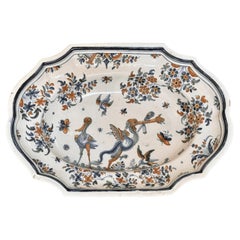
Alcora Spain, c. 1735-1760 tin-glazed Earthenware Faience Polychrome-decorated Chinoiserie shaped oblong dish. This is a very rare piece and in outstanding condition. from the 'Chin...

Category

Antique 1730s Spanish Chinoiserie Decorative Dishes and Vide-Poche

Materials

Faience

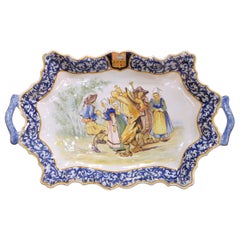
19th Century French Porquier-Beau Quimper Faience Tray Platter with Handles

19th Century French Porquier-Beau Quimper Faience Tray Platter with Handles

By Grande Maison HB Quimper

Located in Dallas, TX

Dress a kitchen wall, dining room, or French country vignette with this elegant hand-painted faience platter, crafted in Brittany circa 1895 by the celebrated Porquier-Beau workshop ...

Category

Antique Late 19th Century French Delft and Faience

Materials

Faience

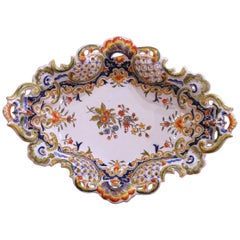
19th Century French Avallon Faience Rouen Style Pierced Centerpiece Tray

19th Century French Avallon Faience Rouen Style Pierced Centerpiece Tray

By Rouen

Located in Dallas, TX

Decorate a table, console or buffet with this elegant antique faience tray crafted in Avallon, Burgundy circa 1880. Of elongated oval form, the piece features a richly contoured silh...

Category

Antique Late 19th Century French Delft and Faience

Materials

Faience

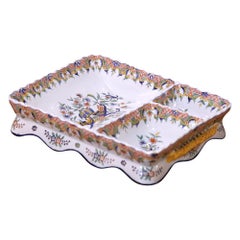
19th Century French Desvres Hand Painted Faience Divided Serving Tray

19th Century French Desvres Hand Painted Faience Divided Serving Tray

By Desvres

Located in Dallas, TX

19th Century French Faience Divided Serving Tray in the Rouen taste. Crafted in France circa 1880, this elegant antique faience serving piece features a rectangular divided form with...

Category

Antique Late 19th Century French Delft and Faience

Materials

Faience

Early 20th Century French Hand Painted Faience Serving Tray from Rouen

Early 20th Century French Hand Painted Faience Serving Tray from Rouen

By Rouen

Located in Dallas, TX

Serve your guests in style with this exquisite antique French faience serving platter. Crafted in Rouen, France, circa 1930, this hand-painted ceramic masterpiece features a striking...

Category

Early 20th Century French Delft and Faience

Materials

Faience

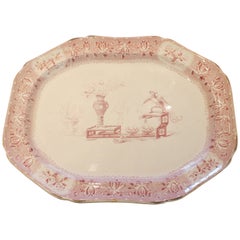
19th century English Large Faience Serving Platter with Chinoiserie Scene

19th century English Large Faience Serving Platter with Chinoiserie Scene

Located in Palm Desert, CA

A 19th century English octogonal faience serving platter with scalloped rim decorated in red with a chinoiserie scene. The central scene depicts a table ornamented with pierced Chinese...

Category

Antique Late 19th Century English Chinoiserie Platters and Serveware

Materials

Faience