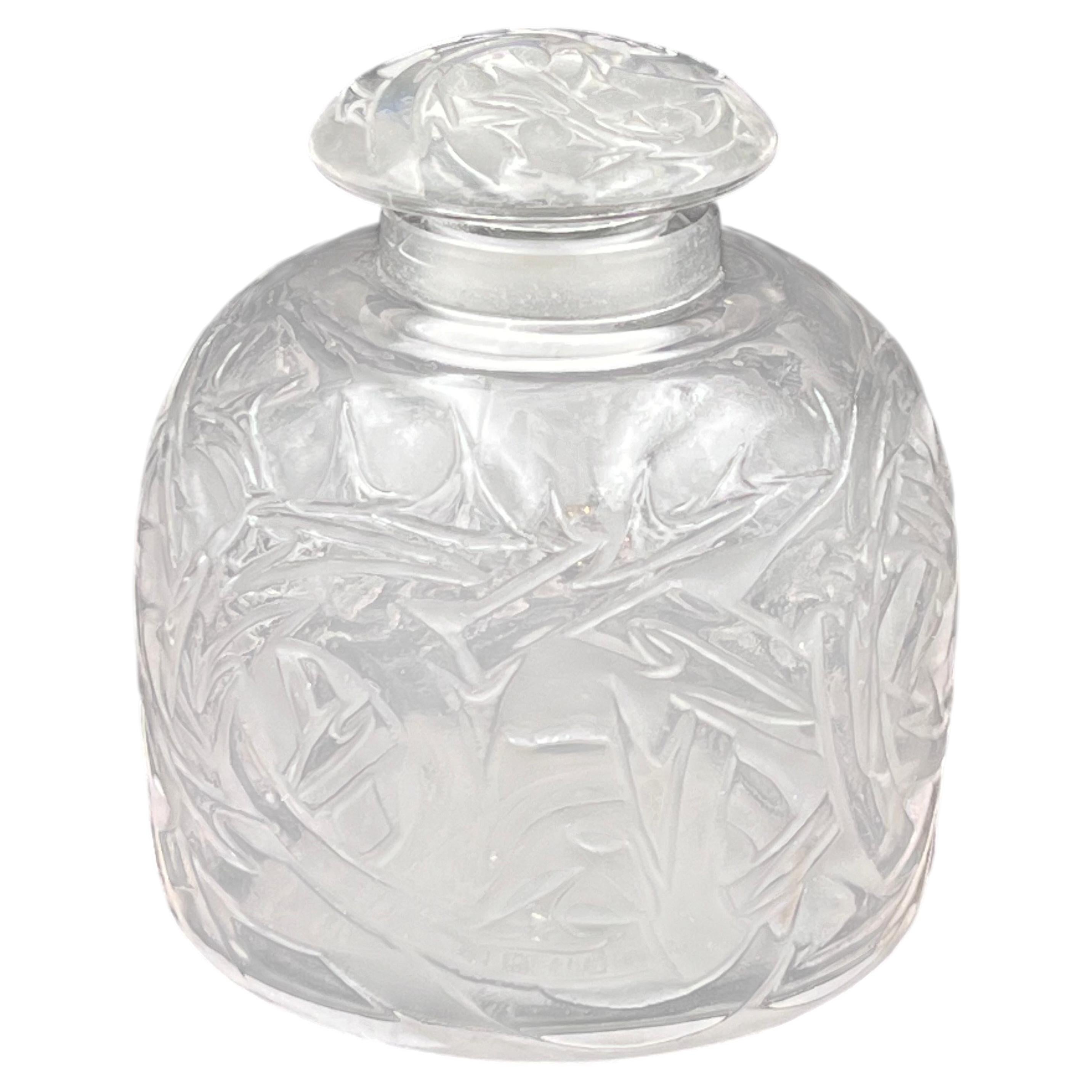
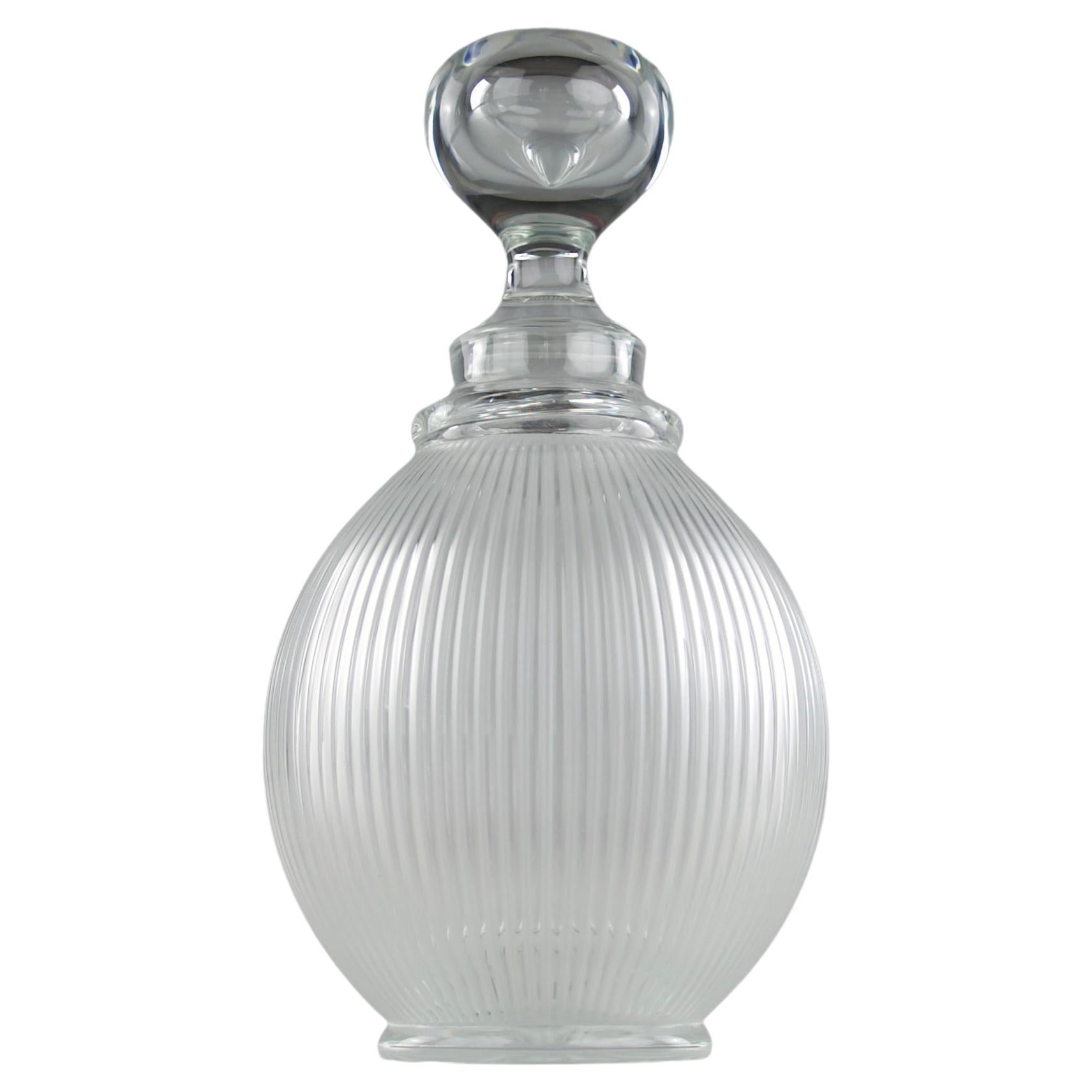
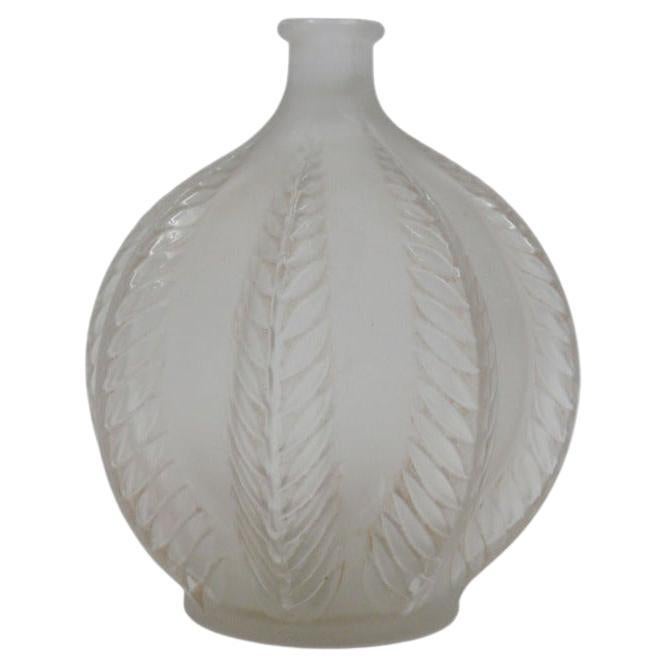
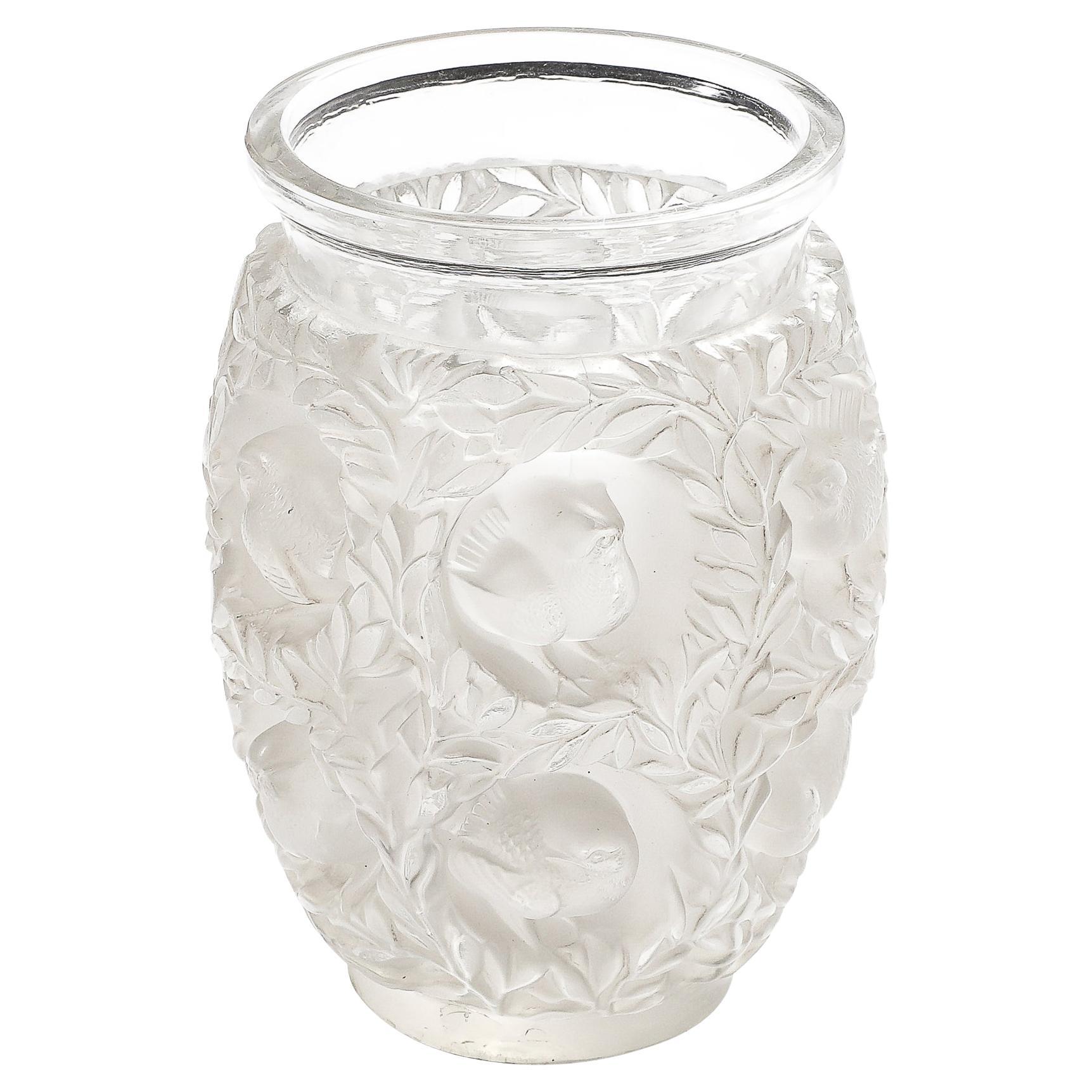
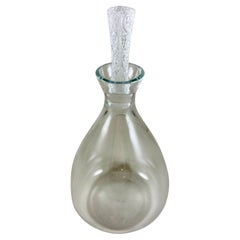
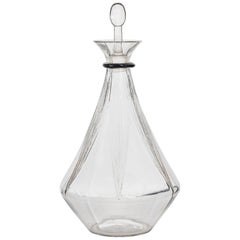
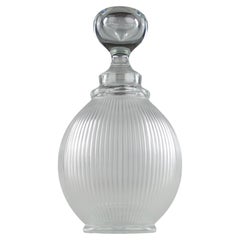
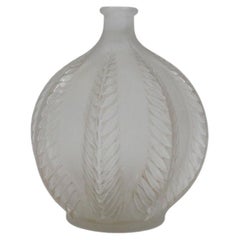
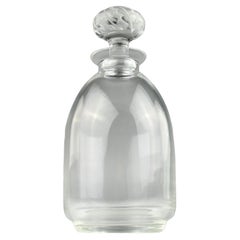
Baccarat, France, Art Deco Vase in Clear Crystal Glass, 1930s
Located in København, Copenhagen
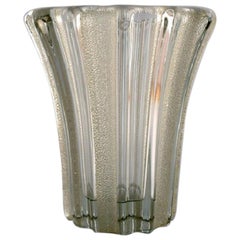
Baccarat, France. Art Deco vase in clear crystal glass. 1930s. Measures: 28 x 11 cm. In excellent condition.
Vintage 1930s French Art Deco Vases
Art Glass

Large and Early René Lalique, Rare "Antilopes" Vase in Art Glass
Located in København, Copenhagen
Large and early René Lalique. Rare "Antilopes" vase in art glass with leaping antelopes. Model Number 875. Designed in 1925. Stamped: R. Lalique. In very good condition. Measures:...
Art Glass

Large Early René Lalique Tokyo Jardinière in Art Glass, circa 1934
Located in København, Copenhagen
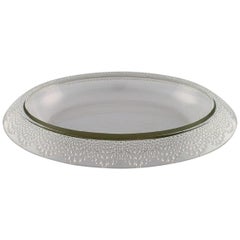
Large early René Lalique Tokyo jardinière in art glass with moulded pearls decoration around the rim, circa 1934. Measures: 42 x 31 x 6 cm. Stamped. I...
Art Glass

Vintage Nina Ricci "Capricci" perfume bottle. Lalique, 1960s
Located in København, Copenhagen
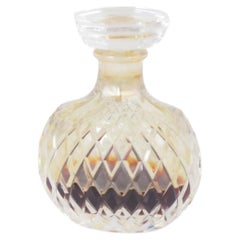
Nina Ricci "Capricci" perfume bottle. Designed by Marc Lalique in 1964. Crystal perfume bottle with faceted decoration and original stopper. Elegant model produced for Nina Ricci and...
Art Glass

Danish glassworks, mouth-blown Art Deco wine decanter in smoked glass
Located in København, Copenhagen
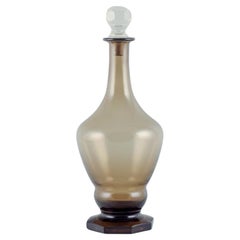
Danish glassworks, mouth-blown Art Deco wine decanter in smoked glass with faceted base. Dating from the 1930s/1940s. In excellent condition. Di...
Glass
Pierre Gire '1901-1984', aka Pierre d'Avesn, Art Deco Vase in Clear Art Glass
Located in København, Copenhagen
Pierre Gire (1901-1984), aka Pierre D'Avesn. Art Deco vase in clear mouth blown art glass. 1940's. Measures: 17 x 14.5 cm. In very good condition. Pierre Gire (1901-1984), aka Pie...
Blown Glass

Lalique Crystal Phalsbourg Decanter
By René Lalique
Located in Philadelphia, PA
A Lalique crystal Phalsbourg pattern Decanter, France - circa 1980s In the Art Nouveau style, a tear-drop shaped transparent bottle with an elongated floral pattern stopper finishe...
Crystal

R. Lalique Molded Glass Decanter in the 'Selestat' Pattern
By René Lalique
Located in West Palm Beach, FL
R. Lalique molded glass decanter in the 'Selestat' pattern. Of colorless glass with applied black glass band, undersides with molded R. Lalique. Literature: Felix Marcilhac Reference...
Glass

Lalique, "Langeais" Decanter, France 1990s
By Marc Lalique, Lalique
Located in PARIS, FR
Beautiful Lalique "Langeais" decanter. Dimensions in cm ( H x D ) : 24.5 X 12.5 Secure shipping. This model was created by Marc Lalique in 1976. The Langeais service is inspired b...
Crystal

Rene Lalique art deco vase
By René Lalique
Located in Buenos Aires, Argentina
Rene Lalique art deco vase Circa 1915 Origin France Art deco style Excellent condition with no chips or restorations Forested glass technique Signed on the...
Art Glass

Lalique, "St-Hubert" Decanter, France 1980s
By Lalique
Located in PARIS, FR
Beautiful St-Hubert decanter by the Lalique Maison. Stopper with decorations of oak tree leaf. Signed Lalique France. In very good condition. Secure shipping. The Lalique Maison was created by René Lalique who was one of the greatest artists of his time, whether as a jeweler or master glassmaker. He marked the Art Nouveau and Art Deco periods with his unique style. Lalique is recognized as one of the most important jewelry designers and glass maker of the French Art Nouveau period, creating innovative pieces for Samuel Bing's new store in Paris, Maison de l'Art Nouveau. He began exhibiting his work under his own name as early as 1894, notably at the Salon des artistes français, 1897 and 1898. The great glassmaker Émile Gallé discovered him at the first one and praised him highly. His Stand at the 1900 Universal Exhibition in Paris was a great success. While keeping sources of inspiration from the Art Nouveau woman, fauna and flora - including the peacock, various insects and sometimes a fantastic bestiary - he innovated by using materials barely used for jewelry at the time: glass, enamel, leather, Horn, mother of pearl, often preferring semi-precious stones to precious stones. The introduction of volume in jewelry is facilitated by his knowledge in modeling. He designed his models, having them made by a team of chisellers, sculptors and enamellers that he carefully recruited. Many women from the nobility, the bourgeoisie and the entertainment world began to wear his extraordinary jewelry, such as the Marquise Arconati-Visconti, the Countess of Béarn, Madame Waldeck-Rousseau, and Sarah Bernhardt, for whom he created a stage costume in 1902 for the revival of the play Théodora at the Sarah-Bernhardt Theater. Lalique was the only modern artist whose client and friend Calouste Gulbenkian became. Gulbenkian acquired the famous Pectoral à la libellule (circa 1897-1898), a masterpiece much admired at the 1900 World's Fair, which he lent to the tragedienne Sarah Bernhardt. After the end of the First World War, Lalique's colorful and fantastic jewelry were no longer in fashion. The creator sensed this and decided to convert to the Art Deco style through glassware in 1920. Thus, the neo-classical and geometric Art Deco replaces Art Nouveau. According to Olivier Mauny, former CEO of Lalique, his creations paved the way for an industrialization of art objects, because one of the best ways to include luxury and aesthetics in everyday life is to make everyday objects. He will create many objects such as vases, cups, candlesticks, perfume bottles, radiator caps for the Citroën 5CV (1925), decorations for the restaurant cars of the Côte d'Azur Pullman Express (1929), decorations for the dining room of the first class of the Normandie liner...
Crystal
Rene Lalique Glass 'Six Tetes' Decanter
By René Lalique
Located in Chelmsford, Essex
Rene Lalique clear and frosted glass Six Tetes decanter. This pattern features six heads around the neck. Each has a different expression. There is a clear glass pattern running down...
Glass