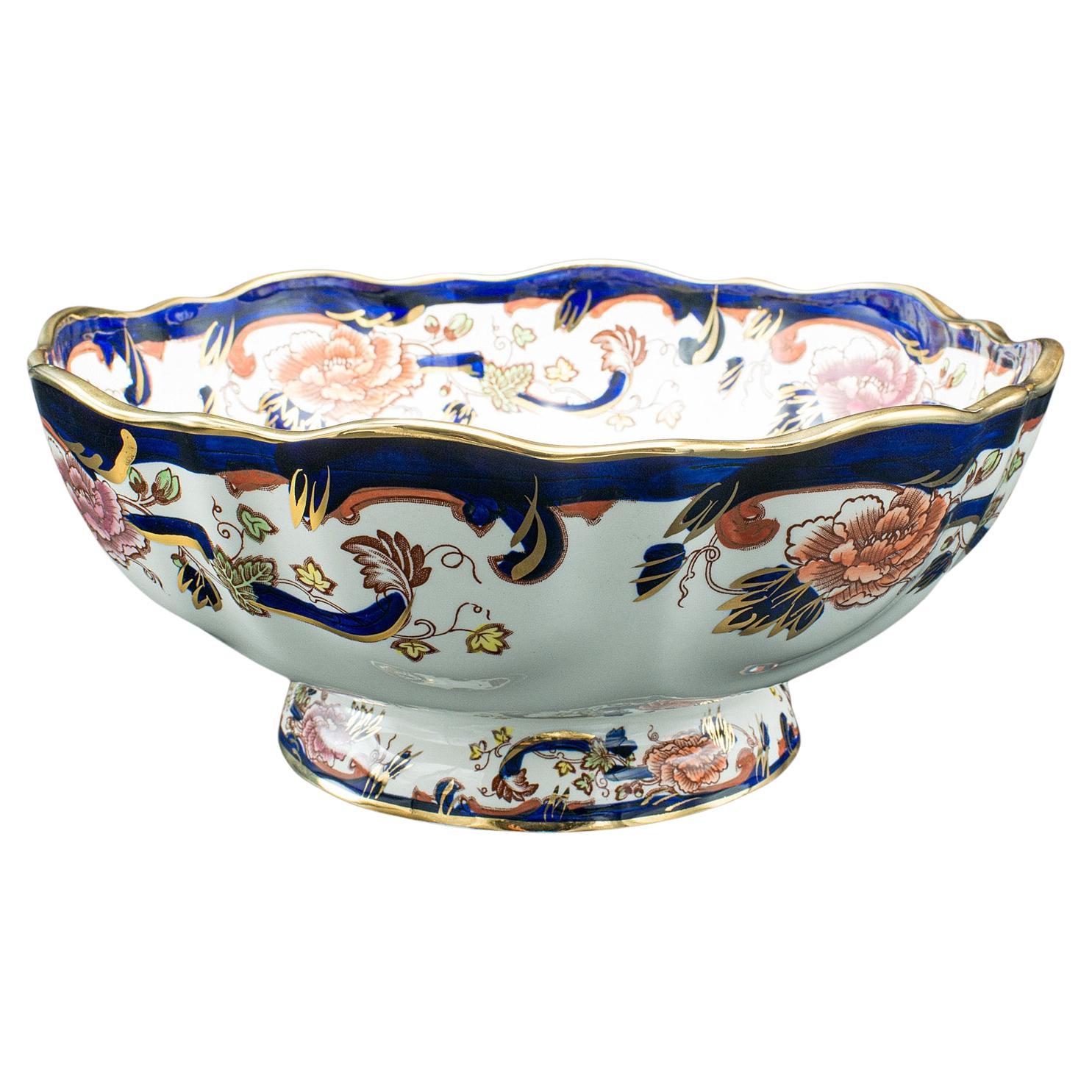
Old Hall Earthenware Shell Pattern Polychrome Tazza or Comport, Victorian
Circa 1861–1886
Old Hall Earthenware Co. Ltd., Hanley, Staffordshire, England
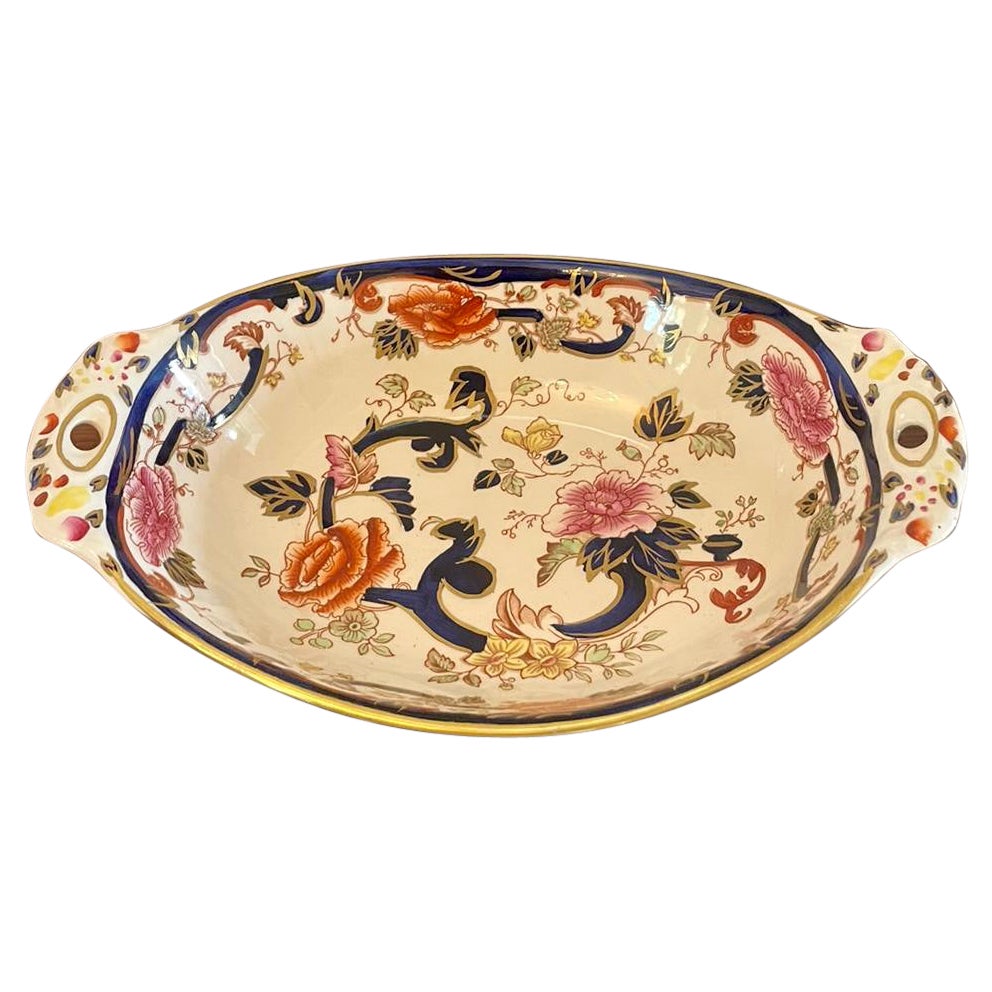
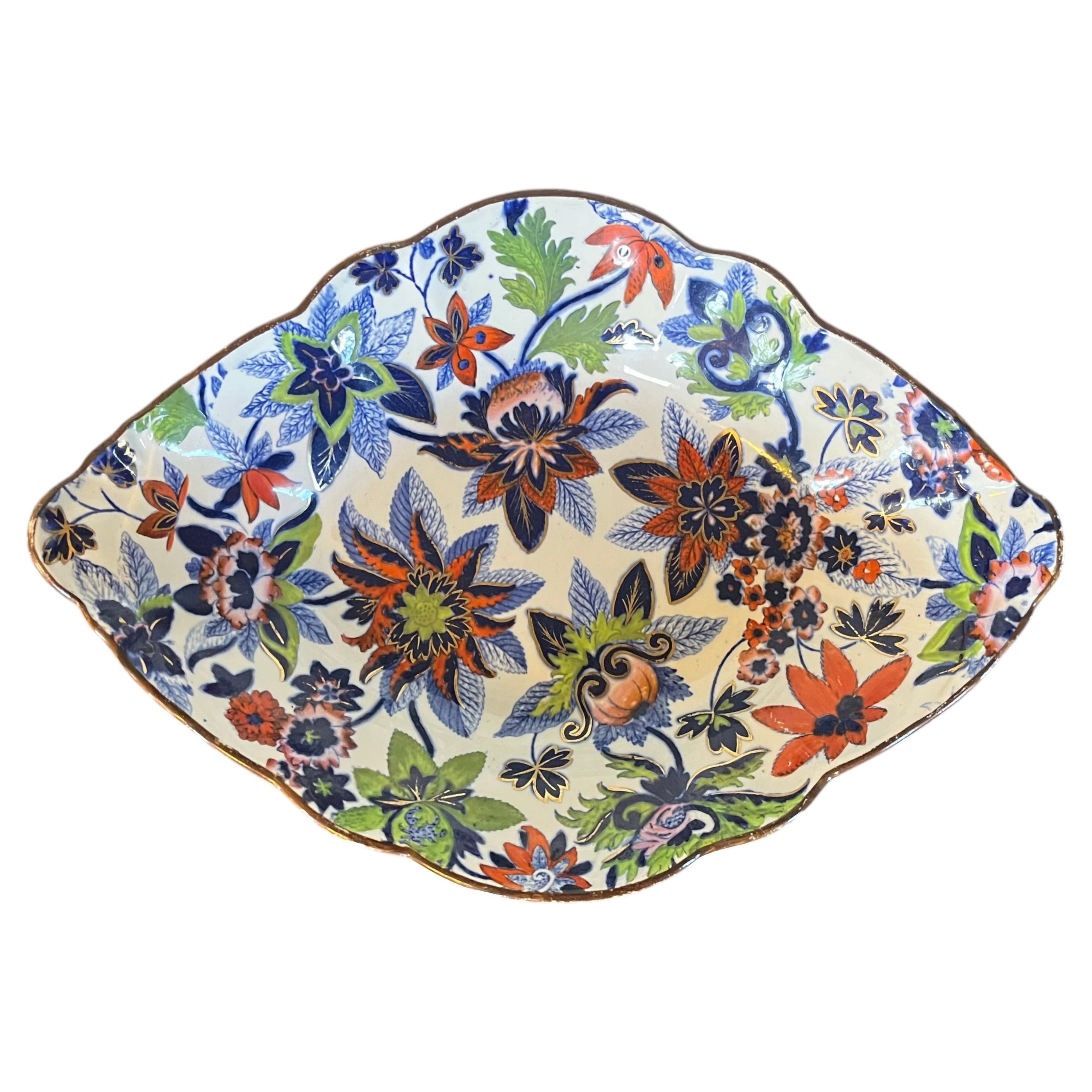
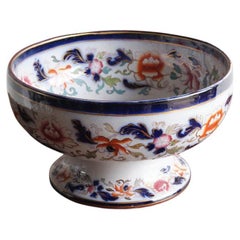
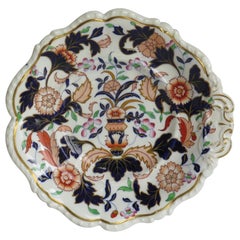
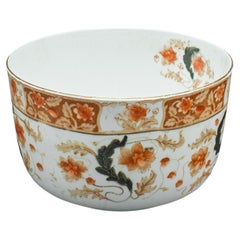
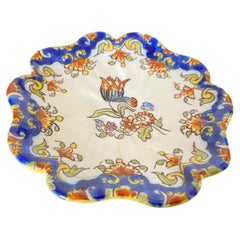
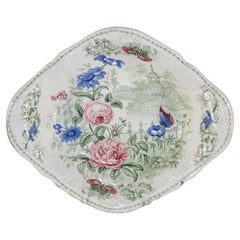
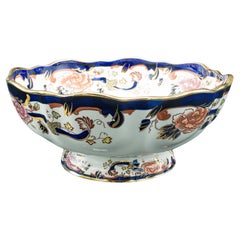
This oval tazza, or footed comport, is raised on a spreading pedestal foot and molded at either end with a scroll-and-shell handle, the rim shaped and scalloped in a series of shallow lobes. It is decorated overall in the pattern named Shell, a dense all-over ground of fine fern- and seaweed-like fronds transfer-printed in green across every visible surface, over the well and the exterior of the bowl, down the stem, and around the spreading foot.
Scattered through the green are small clusters of stylized scallop shells, hand-enameled over the print in crimson, cobalt blue, and yellow, gathered into loose sprays across the well and thinning to single shells over the lower body and the foot. The enameling is applied freely, a little outside the printed outlines in places, in the manner of Staffordshire hand-finished wares of the period.
Dimensions
Height: 4¾ inches (12.1 cm)
Width: 12 inches (30.5 cm)
Depth: 8½ inches (21.6 cm)
Marks
The tazza is unmarked beneath, the underside plain glazed white within the footrim. The green printed mark recorded for this service is a scalloped cartouche enclosing the pattern name “Shell” in script, with a painted numeral “43” alongside as a batch or paintress’s number; it is found on companion pieces rather than on the present example.
Provenance
Earle D. Vandekar of Knightsbridge.
Condition
Good.
References
Godden, Geoffrey A. Encyclopaedia of British Pottery and Porcelain Marks. London: Herbert Jenkins, 1964, for the Old Hall Earthenware Co. Ltd. marks, dates, and successors.
Wakefield, Hugh. Victorian Pottery. London: Herbert Jenkins, 1962, for the popularity of decorative earthenware, comport forms, and natural history patterns in the mid-nineteenth century.
Historical Context
The Old Hall Earthenware Co. Ltd. worked the Old Hall Works at Hanley from 1861 to 1886, taking over the historic pottery from the Meigh family, and is generally cited as the first earthenware manufacturer in Staffordshire to constitute itself as a limited company. Its earthenware body was marketed under names including Imperial Granite and Imperial Parisian Granite, as impressed on some companion plates, part of the wider trade in durable, dense, and affordable ceramics for a rapidly expanding middle-class market.
The mid-Victorian period saw a great proliferation of decorative earthenware in which transfer-printed grounds were finished by hand in enamel colors. Patterns drawn from flora and fauna, and from marine life in particular, answered the era’s enthusiasm for natural history and for the collecting of botanical and marine specimens, and a dense all-over design of shells and seaweed such as this belongs squarely to that taste.
Ref: NY7248A-irr