Want more images or videos?
Request additional images or videos from the seller
1 of 14

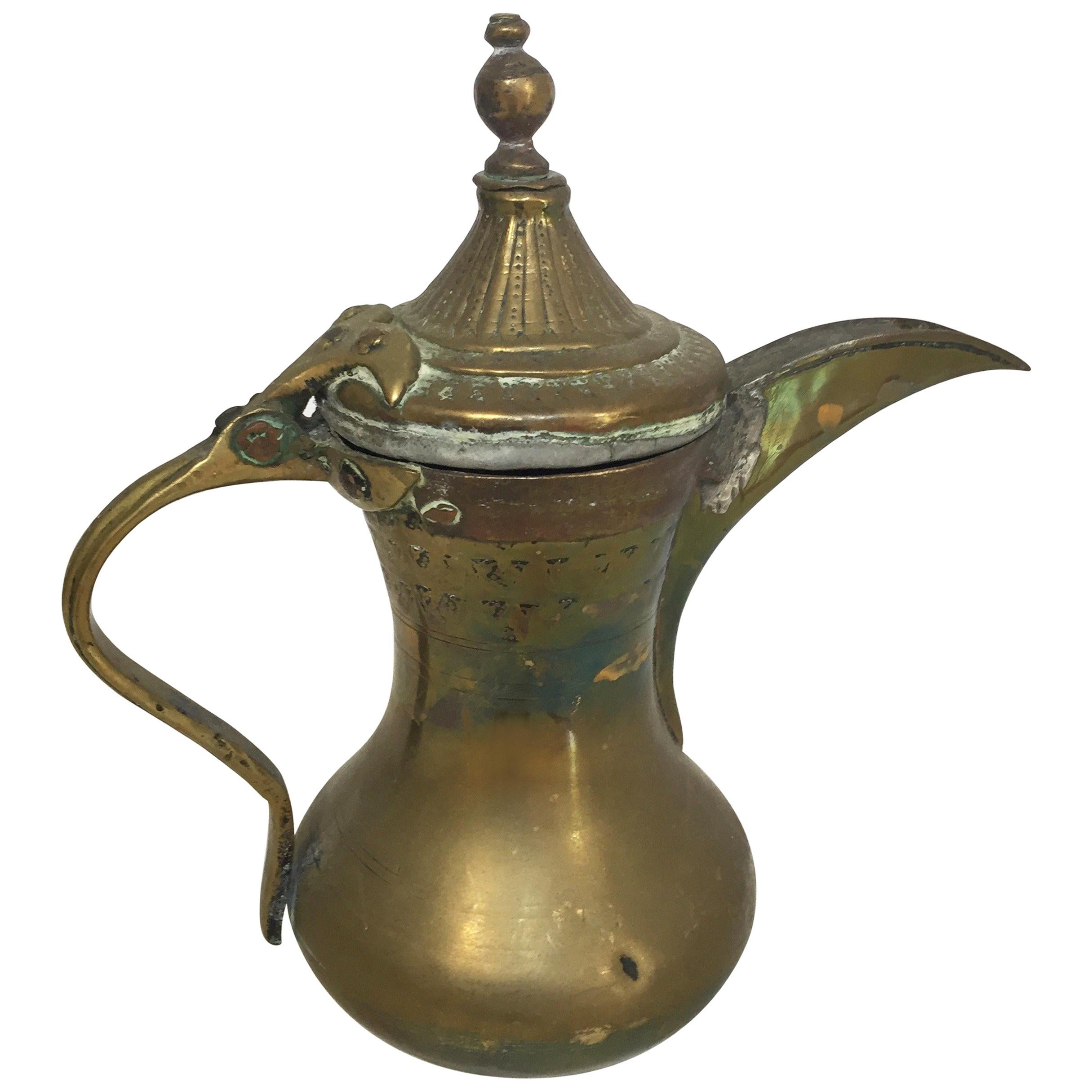
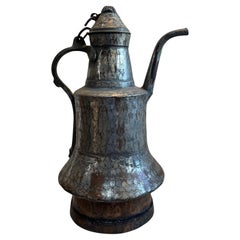
Egyptian Dallah Coffee Pot: A Symbol of Hospitality and Cultural Richness

$2,382.62
£1,746.66
€2,420VAT Included
CA$3,281.94
A$3,324.43
CHF 1,908.82
MX$40,307.75
NOK 22,149.41
SEK 22,545.55
DKK 15,251.16

About the Item

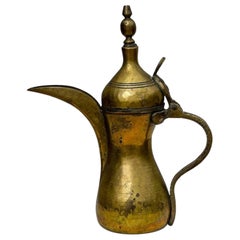
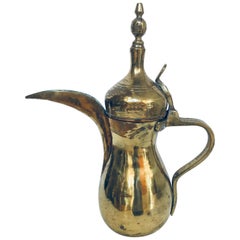
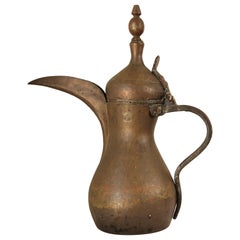
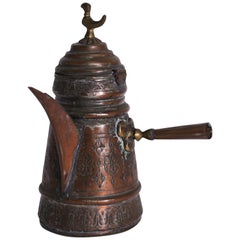
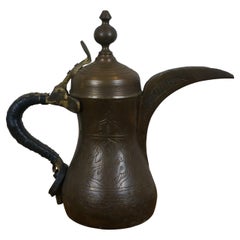
Egyptian Dallah Coffee Pot: A Symbol of Hospitality and Cultural Richness. - Object: A dallah (Arabic: دلة) is a traditional Arab coffee pot used to prepare and serve coffee in the Arabian Peninsula and the Persian Gulf. Due to its intimate association with the coffee ritual, the dallah is a strong symbol of identity for Arab and Gulf populations, who see it as an allegory of their tradition of hospitality. - Visual Details: • General Shape: The pot has a distinctive shape with a bulbous body that narrows at the waist and widens towards the top. It is covered with an arrow-shaped lid topped with a large finial and held by a sinuous handle. The most distinctive feature is its long, crescent-shaped spout, decorated with motifs. • Motifs: o Spout: The spout is adorned with engraved motifs, probably representing traditional designs. o Body: The body of the pot is richly decorated with scenes and motifs evoking ancient Egypt: a pyramid, a sphinx, and a radiant sun. These elements are emblematic of Egyptian culture and iconography. Floral and serpentine motifs add an additional decorative dimension. A man dressed in traditional attire leads a camel carrying a load. The motifs are surrounded by geometric borders and diamond patterns. o Lid: The lid is simple, with a handle topped with a crescent moon-shaped motif, often symbolizing Islamic culture. - Origins: The origins of the dallah are not known with certainty. It likely appeared in the 16th century when coffee spread throughout the Ottoman Empire, although its specific shape may not have appeared until the mid-17th century. In any case, the dallah is later than the Turkish cezve and even more so than the Ethiopian jebena. Function: The dallah is inseparable from Arabic coffee. It is part of the tradition of hospitality among Arab and Gulf populations, although it is also associated with festive events such as weddings. It is the first drink served to guests, welcomed with the invitation "come in for a coffee," regardless of other food and drinks offered. Any failure to follow the ritual attached to serving coffee, or any reluctance to offer it, can be perceived as a lack of respect for the guest. The dallah, closely associated with this moment, is therefore emblematic of the identity of Arab and Gulf populations: it is proudly displayed in homes as a symbol of their hospitality. Arabic coffee—and with it the dallah—has been recognized as an intangible cultural heritage of Saudi Arabia, the United Arab Emirates, Oman, and Qatar since 2015. - Aesthetics and Manufacturing: The dallah can be made of brass, steel, silver, and even 24-karat gold for the grandest occasions or those used by royal families in the peninsula. There are four traditional motifs: a swirl, a diamond, a flower inside a square, and a motif based on a cardamom pod. Artisanal production is gradually disappearing in the Gulf countries in favor of imports from Pakistan or Morocco. - Iconography: A dallah adorns the coins of a UAE dirham and frequently graces a number of urban places (corniches or roundabouts). It is also an essential item in souvenir shops and souks, as a symbol of life in the Arabian Peninsula.
  • Dimensions:
    Height: 7.88 in (20 cm)Diameter: 3.94 in (10 cm)
  • Style:
    Egyptian (Of the Period)
  • Materials and Techniques:
    Brass,Engraved,Hand-Crafted,Metalwork,Patinated,Polychromed
  • Place of Origin:
  • Period:
  • Date of Manufacture:
    Inconnu
  • Condition:
    Wear consistent with age and use.
  • Seller Location:
    Ixelles, BE
  • Reference Number:
    1stDibs: LU10116242386662

More From This Seller

View All
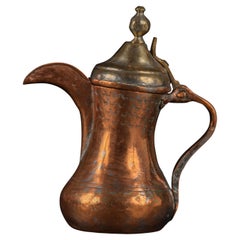
Dallah Coffee Pot: A Masterpiece of Arab Hospitality and Art

Dallah Coffee Pot: A Masterpiece of Arab Hospitality and Art

Located in Ixelles, BE

Dallah Coffee Pot: A Masterpiece of Arab Hospitality and Art The "Dallah" coffee pot we see here is a magnificent piece representative of Arab culture. Likely made of copper, it fea...

Category

Early 20th Century Unknown Islamic Serving Pieces

Materials

Copper

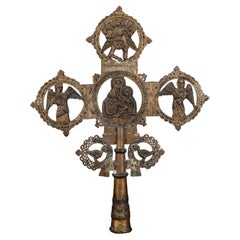
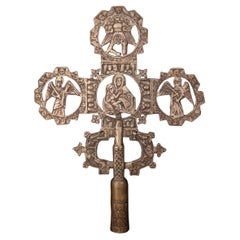
Ethiopian Procession Cross: A Sacred Heritage and Craftsmanship

Ethiopian Procession Cross: A Sacred Heritage and Craftsmanship

Located in Ixelles, BE

Ethiopian Procession Cross: A Sacred Heritage and Craftsmanship. Structure and Composition: This finely crafted Ethiopian procession cross is rich in iconographic detail. Constructed from metal, likely bronze or brass, it features a complex structure with several decorative elements. - Central Part: • Madonna and Child: At the heart of the cross is a depiction of the Virgin Mary holding the Child Jesus. This central image is framed within a circle adorned with openwork motifs and small inlays that appear to be precious stones or colored glass pieces. Arms of the Cross: • Angelic Musicians: Each lateral arm of the cross features an angelic musician, playing instruments and depicted in a flying position. The angels are finely detailed, with spread wings and carefully sculpted garments. • Cherub: At the apex of the cross, a cherub is depicted, a celestial being with multiple wings and surrounded by cloud-like motifs. • Bird Motifs: The lower extremities of the cross are adorned with bird motifs, likely doves, symbolizing peace and the Holy Spirit, placed within openwork circles. Base and Handle: • Engraved Base: The base of the cross, which serves as a handle, is also richly engraved with floral and geometric motifs, providing a sturdy and decorative grip for processions. History of Ethiopian Procession Crosses Origins and Evolution: Ethiopian procession crosses have a long history, dating back to the introduction of Christianity to Ethiopia in the 4th century under King Ezana. Influenced by Coptic and Byzantine traditions, these crosses evolved to adopt a distinctive style unique to Ethiopia. - Characteristics: • Style and Iconography: Ethiopian crosses...

Category

Antique 19th Century Ethiopian Tribal Art

Materials

Brass

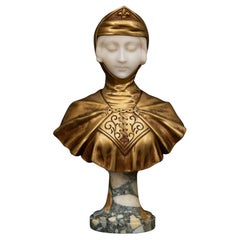
GUSTAVE VAERENBERGH (1873-1927) Bust in Alabaster and Gilt Bronze "JEANNE D'ARC"

GUSTAVE VAERENBERGH (1873-1927) Bust in Alabaster and Gilt Bronze "JEANNE D'ARC"

By Gustave van Vaerenbergh

Located in Ixelles, BE

GUSTAVE VAERENBERGH (1873-1927) Bust in Alabaster and Gilt Bronze "JEANNE D'ARC" (end 19th century-early 20th century) - THE WORK: The alabaster and gilt bronze bust of Joan of A...

Category

Antique Late 19th Century French Art Nouveau Busts

Materials

Alabaster, Bronze

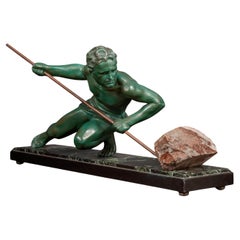
Attributed to GUSTAVE LOUIS BUCHET (1888-1963) Bronze statue "L'EFFORT"

Attributed to GUSTAVE LOUIS BUCHET (1888-1963) Bronze statue "L'EFFORT"

By Gustave Buchet

Located in Ixelles, BE

Attributed to GUSTAVE LOUIS BUCHET (1888-1963) Bronze statue "L'EFFORT" or "L'ATHLETE". Description of the work The statue "L'EFFORT" or "THE MAN LIFTING A STONE" Attributed to Gust...

Category

20th Century Swiss Art Deco Figurative Sculptures

Materials

Bronze

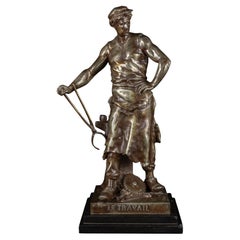
Emile Louis Picault (1833-1915) « LE TRAVAIL » bronze statue

Emile Louis Picault (1833-1915) « LE TRAVAIL » bronze statue

By Émile Louis Picault

Located in Ixelles, BE

Emile Louis Picault (1833-1915) « LE TRAVAIL » bronze statue The bronze statue 'Le Travail' by Émile Louis Picault is much more than a mere work of art. It embodies the very essence...

Category

Antique 19th Century French Industrial Figurative Sculptures

Materials

Bronze

You May Also Like

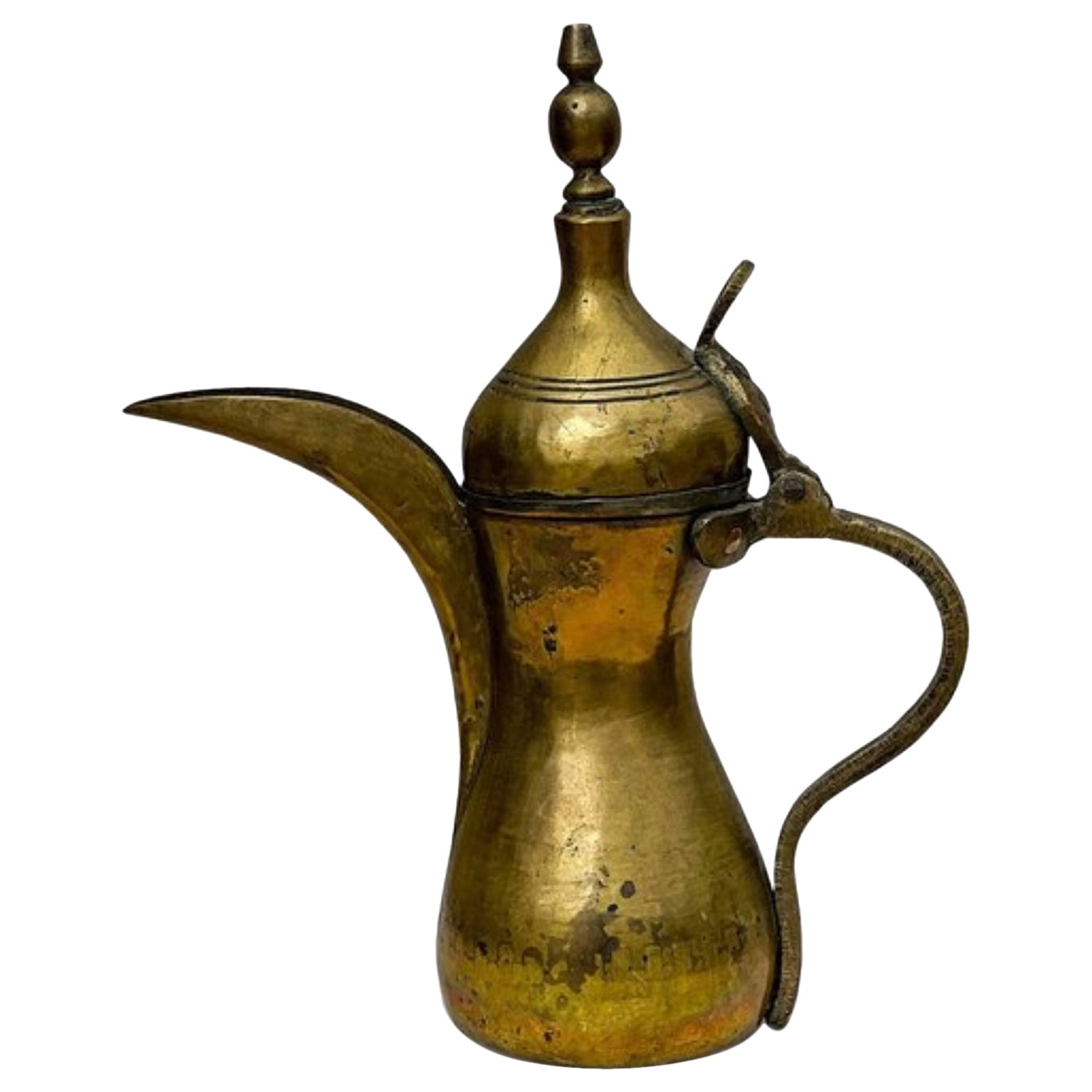
Antique Middle Eastern Dallah Arabic Brass Coffee Pot

Antique Middle Eastern Dallah Arabic Brass Coffee Pot

Located in West Hollywood, CA

This elegant antique Middle Eastern brass dallah coffee pot is a beautiful representation of traditional Arabic craftsmanship and cultural herita...

Category

Antique 19th Century African Moorish Platters and Serveware

Materials

Brass

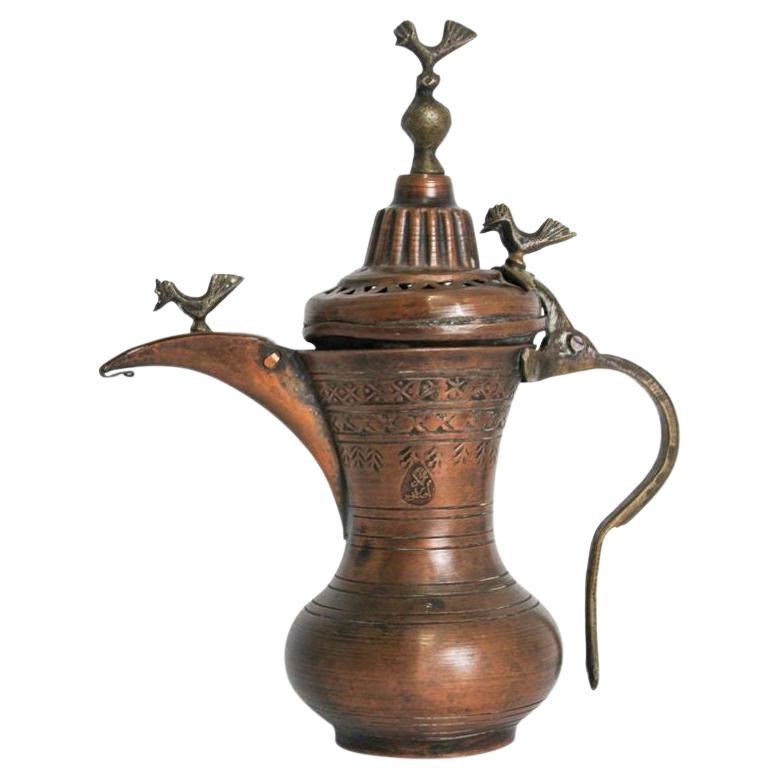
Middle Eastern Dallah Islamic Arabic Brass Coffee Pot

Middle Eastern Dallah Islamic Arabic Brass Coffee Pot

Located in Moreno Valley, CA

Middle Eastern traditional Arabian brass Dallah coffee pot. Islamic Arabian Coffee pot hand-hammered and chased Moorish brass with riveted brass finish an...

Category

Mid-20th Century Omani Islamic Metalwork

Materials

Brass

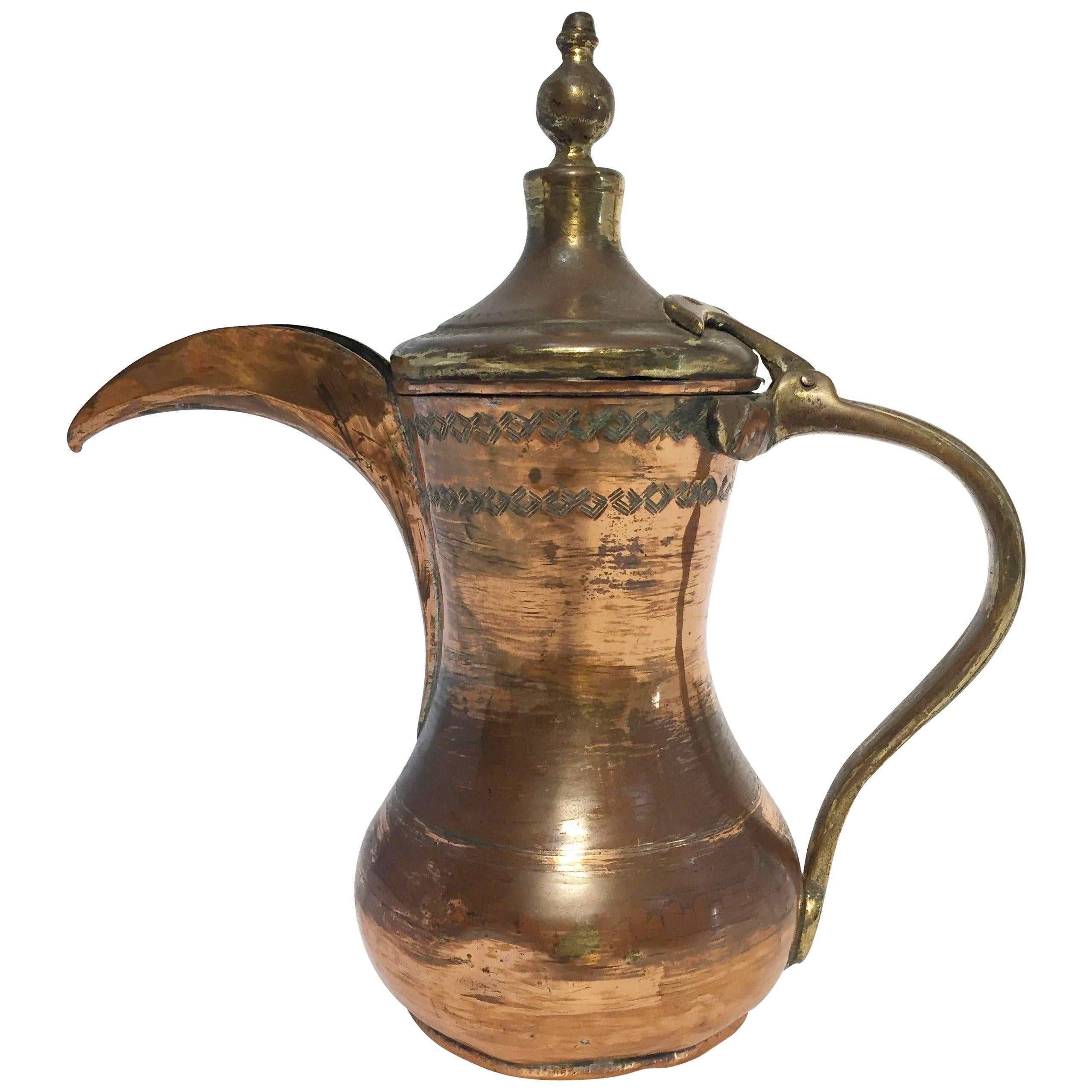
19th Century Middle Eastern Dallah Arabic Coffee Pot

19th Century Middle Eastern Dallah Arabic Coffee Pot

Located in Moreno Valley, CA

19th century Middle Eastern traditional Arabian tinned copper and brass Dallah coffee pot. Coffee pot hand-hammered and chased copper with riveted brass...

Category

Antique Late 19th Century Omani Islamic Metalwork

Materials

Brass, Copper

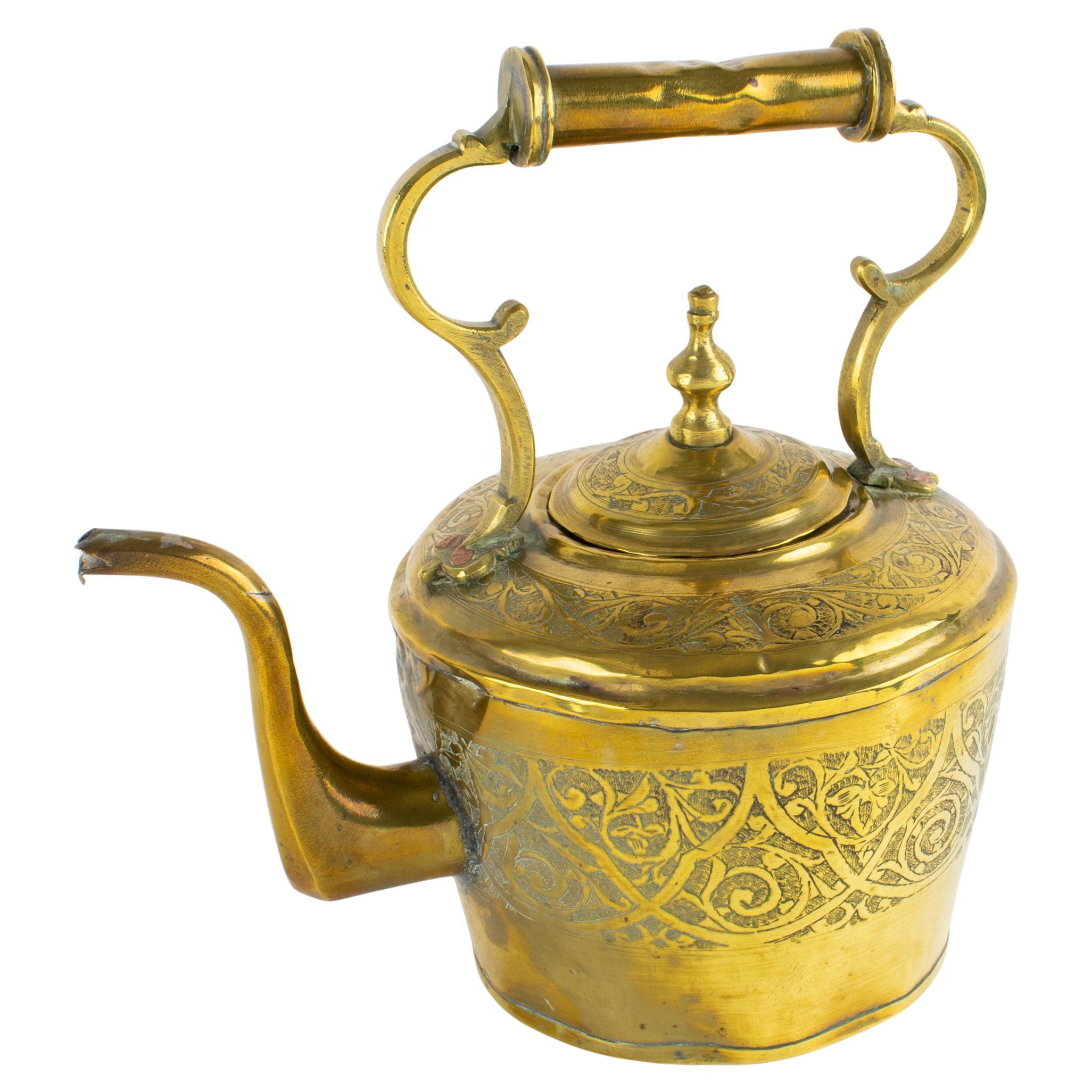
Middle Eastern Turkish Arabic Copper Dallah Coffee Pot

Middle Eastern Turkish Arabic Copper Dallah Coffee Pot

Located in Moreno Valley, CA

Middle Eastern Asian traditional Turkish ottoman copper Dallah coffee pot. Coffee pot hand-hammered and chased tinned copper with riveted brass finish a...

Category

Mid-20th Century Omani Islamic Metalwork

Materials

Brass

Antique Hand-Hammered Middle Eastern Dallah Coffee Pot

Antique Hand-Hammered Middle Eastern Dallah Coffee Pot

Located in West Hollywood, CA

This authentic antique Middle Eastern Dallah coffee pot is a beautifully preserved example of traditional Arabian metalwork, hand-hammered from copper and likely tin-lined for functional use. The vessel features the classic Dallah silhouette: a gently flared base, rounded midsection, and tapered neck crowned with a domed, hinged lid secured by a delicate chain. Its long, elegantly curved spout and tall, arched handle create a refined and instantly recognizable profile associated with centuries of Arabic coffee ceremonies. The surface displays a richly textured hammered finish, now enhanced by a deep, naturally developed patina with areas of oxidation and tonal variation. Subtle traces of its original tin lining are visible, speaking to its utilitarian origins while adding to its historical authenticity. The forged handle and hand-formed spout demonstrate skilled craftsmanship, with each hammer strike contributing to the vessel’s organic character. Traditionally used for serving gahwa (Arabic coffee) as a symbol of hospitality and cultural ritual, the Dallah holds strong significance throughout the Middle East. Today, this piece serves as both a collectible artifact and a striking decorative object. It can be styled in a curated global interior, displayed among antique metalware, or even repurposed as a distinctive watering vessel or sculptural accent. A timeless representation of heritage, craftsmanship, and functional beauty, this antique Dallah...

Category

Early 20th Century Asian Rustic Serving Pieces

Materials

Iron, Tin