Want more images or videos?
Request additional images or videos from the seller
1 of 21

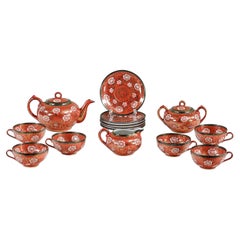
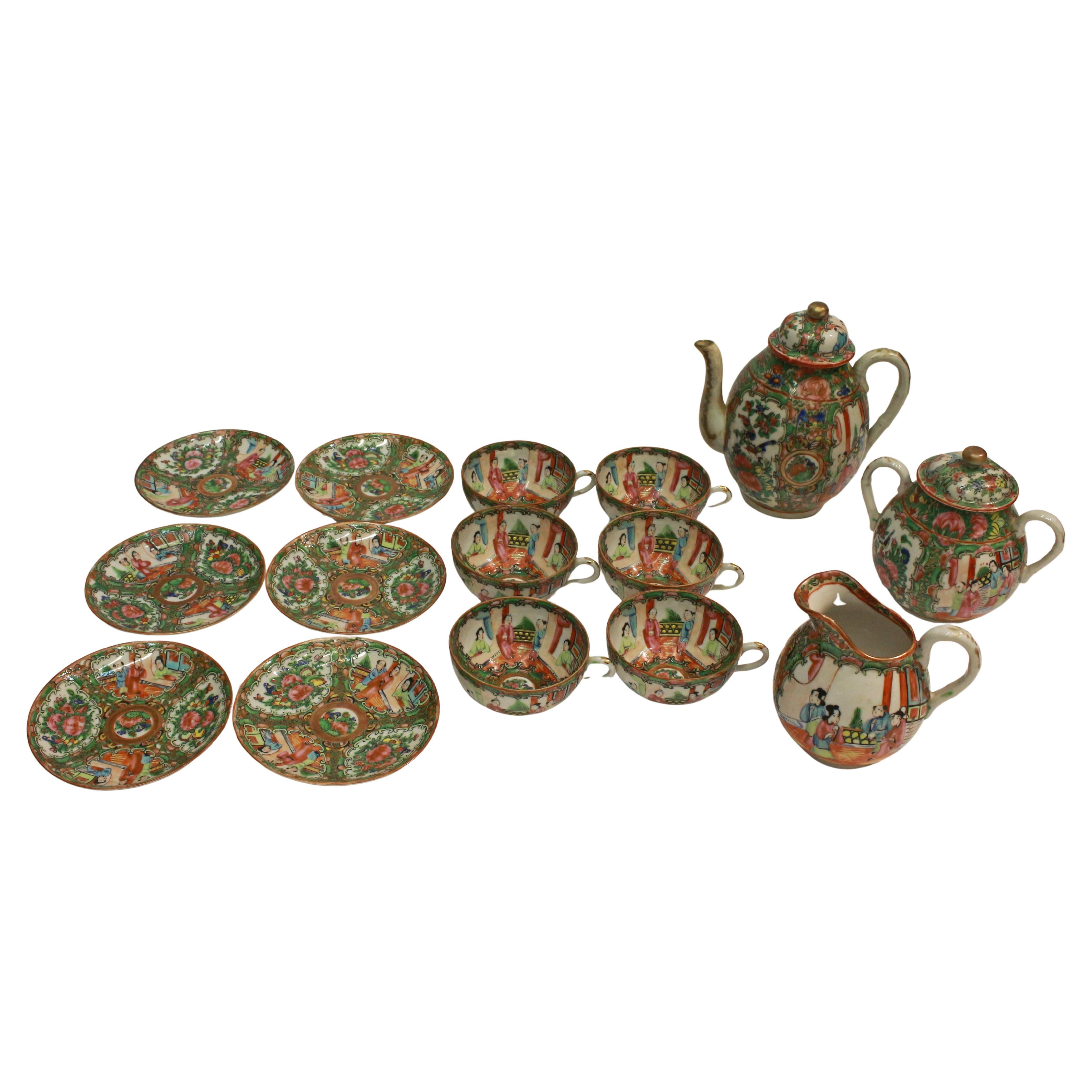
18th Century, Chinese Export Coral and Puce Porcelain Tea Service

$10,000per set
£7,558.25per set
€8,840.84per set
CA$14,199.18per set
A$14,445.47per set
CHF 8,300.58per set
MX$173,707.97per set
NOK 96,907.80per set
SEK 97,487.94per set
DKK 66,089.88per set

About the Item

Chinese Export Porcelain Coral Fish Scale Tea Service, Qianlong, circa 1750 Description This attractive and rare Chinese Export porcelain tea and coffee service is a superb illustration of the luxury China trade of the mid-18th century. Produced at Jingdezhen during the celebrated Qianlong period, the service features a distinctive and complex coral-colored fish-scale ground, densely and minutely painted over the entire surface of each piece. This intricate ground required painstaking application of the difficult overglaze coral-red enamel, signifying the set’s high status upon export to Europe. The main decorative fields are reserved in elegantly shaped panels and roundels painted with delicate puce flower sprays, bordered by deep blue-black enamel scrollwork heightened with gilt, with smaller gilt-dotted dark roundels scattered across the ground. This combination of refined famille rose enamel work, Japanese-inspired paneling, and a European Rococo sensibility made such services highly desirable in the West, where they graced the elaborate tea tables of wealthy European and American homes and the defining social ritual of tea drinking. The service comprises: teapot and cover (good condition); covered tea caddy, or teapoy (good condition); covered milk jug (good condition); slop bowl (good condition); covered bowl (hairline and three frits); spoon tray (good condition); nine saucers (seven good, two with damages); four tea bowls (two good, two with hairlines); six cups with handles (two good, two with small chips, one handle reattached, one with very faint hairline).
  • Dimensions:
    Height: 5 in (12.7 cm)Width: 5 in (12.7 cm)Depth: 4 in (10.16 cm)
  • Sold As:
    Set of 31
  • Style:
    Chinese Export (Of the Period)
  • Materials and Techniques:
  • Place of Origin:
  • Period:
  • Date of Manufacture:
    1750-1760
  • Condition:
    Minor structural damages. Nine saucers, (7 in good condition, 2 with damages) Teapot and cover, (Good condition) Slop bowl, (Good condition) Covered teapoy (caddy), (Good condition) Covered milk jug, (Good condition) Four tea bowls, (2 good condition, 2 with hairline) Six cu.
  • Seller Location:
    Downingtown, PA
  • Reference Number:
    Seller: NY7090-ckca1stDibs: U090207861022

More From This Seller

View All
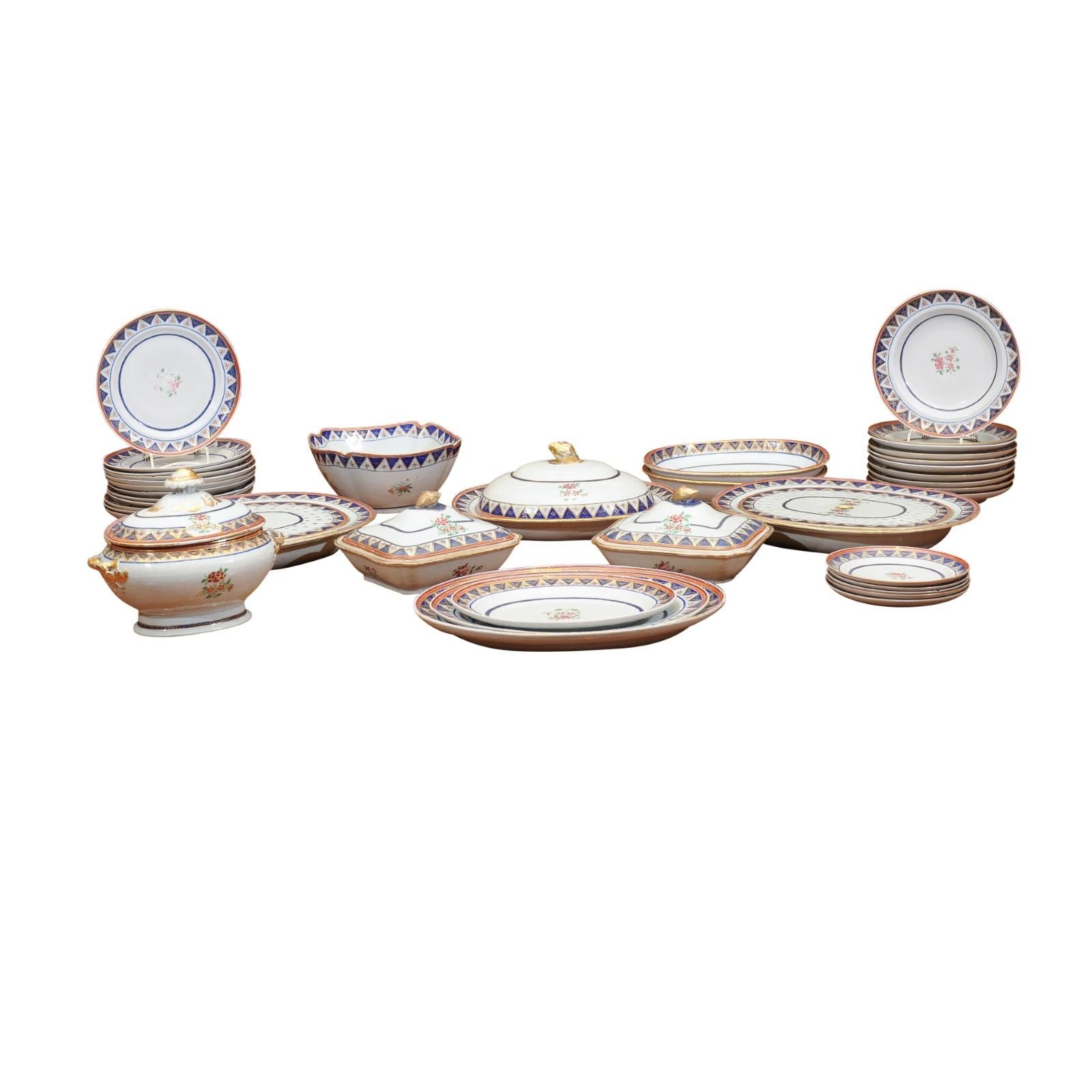
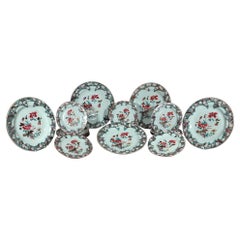
Chinese Export Famille Rose Porcelain Dinner Service-Eighteen Pieces

Chinese Export Famille Rose Porcelain Dinner Service-Eighteen Pieces

Located in Downingtown, PA

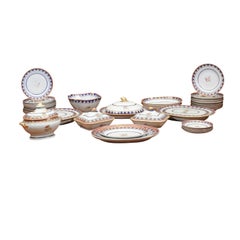
Exquisite Bloom: Chinese Export Famille Rose Dinner Service This magnificent eighteen-piece Chinese Export Porcelain Dinner Service, dating from Circa 1730–1735, is a superb example...

Category

Antique 1730s Chinese Chinese Export Dinner Plates

Materials

Porcelain

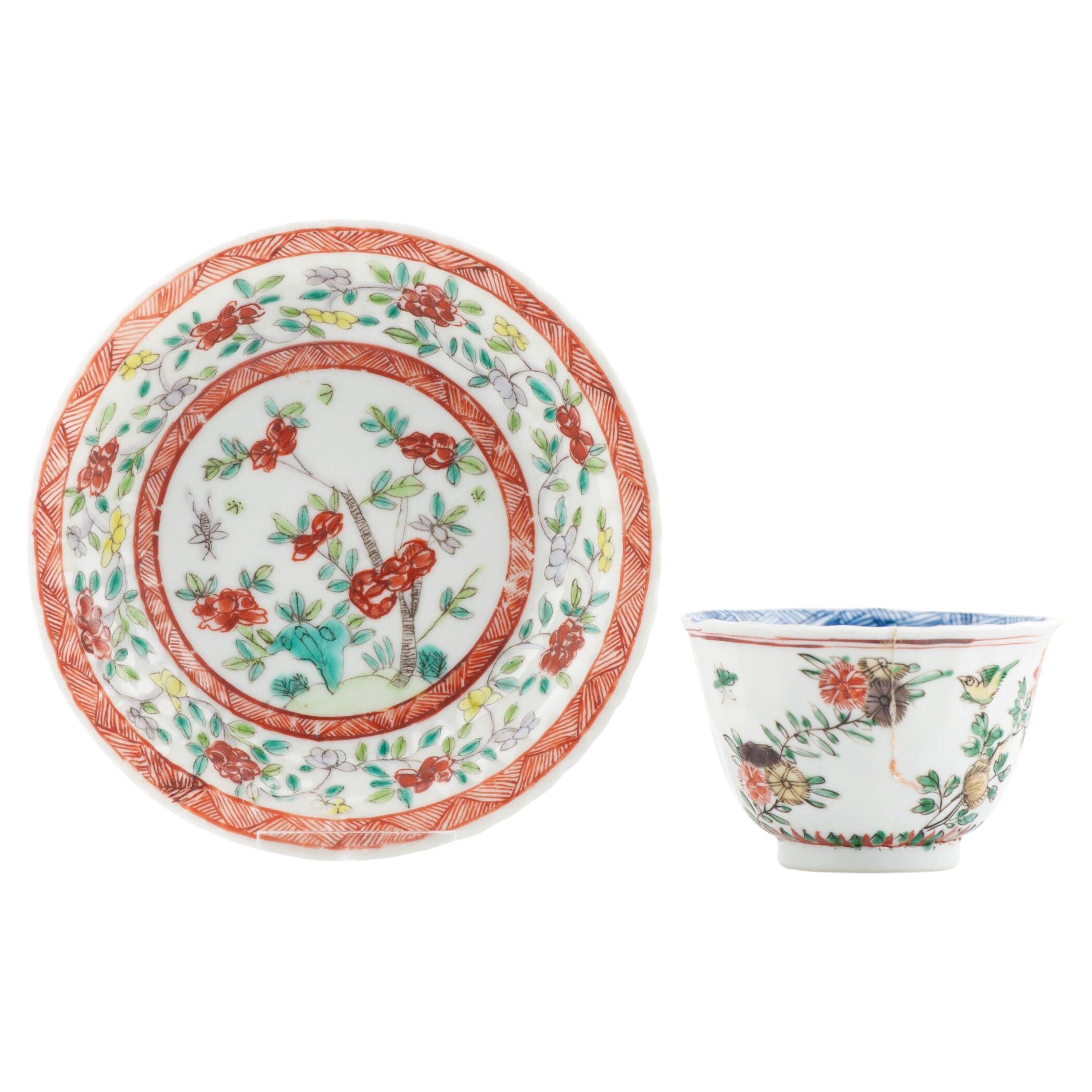
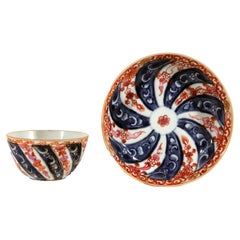
Chinese Export Porcelain "Queen Charlotte" Pattern Tea Bowl & Saucer, Kangxi Per

Chinese Export Porcelain "Queen Charlotte" Pattern Tea Bowl & Saucer, Kangxi Per

Located in Downingtown, PA

Chinese Export Porcelain Tea Bowl and Saucer Kangxi Period, Early 18th Century This finely potted Chinese export porcelain tea bowl and saucer is decorated in a striking polychrome ...

Category

Antique Early 18th Century Chinese Chinese Export Porcelain

Materials

Porcelain

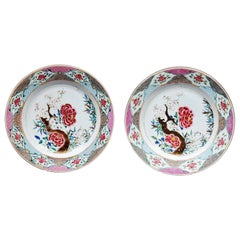
Chinese Export Famille Rose Porcelain Large Dishes, circa 1765-1775

Chinese Export Famille Rose Porcelain Large Dishes, circa 1765-1775

Located in Downingtown, PA

Chinese Export famille rose porcelain dishes, circa 1765-1775. The pair of Chinese Export famille rose large dishes are finely painted with a flowering branch design with two la...

Category

Antique Mid-18th Century Chinese Chinese Export Platters and Serveware

Materials

Porcelain

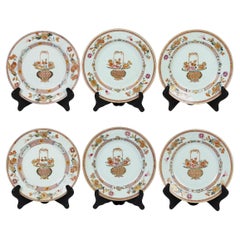
Chinese Export Porcelain Famille Rose Plates Painted with Flower Baskets

Chinese Export Porcelain Famille Rose Plates Painted with Flower Baskets

Located in Downingtown, PA

Exquisite Prosperity: Chinese Export Porcelain Famille Rose Plates with Flower Baskets Set of Six. This beautiful pair of Chinese Export porcelain plates, dating from the Yongzheng ...

Category

Antique Early 18th Century Chinese Chinese Export Dinner Plates

Materials

Ceramic, Porcelain

Federal Elegance: Chinese Export Soup Tureen for the American Market

Federal Elegance: Chinese Export Soup Tureen for the American Market

Located in Downingtown, PA

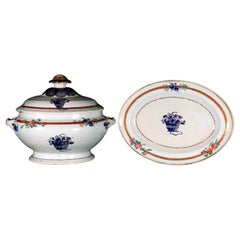
Federal Elegance: Chinese Export Soup Tureen for the American Market This impressive Chinese Export Porcelain Soup Tureen with Cover and Stand dates to Circa 1780, a period marking ...

Category

Antique Late 18th Century Chinese Chinese Export Soup Tureens

Materials

Porcelain

Chinese Export Porcelain Group of Batavia-ware Urns & Covers

Chinese Export Porcelain Group of Batavia-ware Urns & Covers

Located in Downingtown, PA

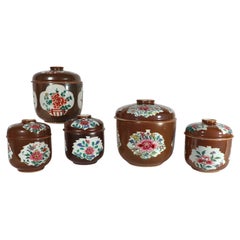
Collection of Five Chinese Export 'Batavia-ware' and Famille Rose Jars and Covers Qianlong Period, China, Circa 1750s This handsome collection of five graduated covered jars is a magnificent and rare example of mid-18th-century Chinese Export porcelain, illustrating the highly successful fusion of Chinese ceramic technology and European market demand during the height of the global trade era. ________________________________________ Description and Aesthetic Medium: Porcelain with underglaze brown glaze and overglaze Famille Rose enamels. Period: Qianlong (1736–1795). Origin: Jingdezhen kilns, China, made for the European export market. The collection comprises two large, two medium, and one small jar, intended to be displayed together as a garniture—a decorative set prized for mantelpieces and cabinets in opulent European interiors. • The 'Batavia' Ground: Each piece is characterized by a luxurious, deep chocolate-brown glaze covering the exterior, a distinctive aesthetic known historically as "Batavia-ware" or descriptively as café au lait. This rich, monochrome ground was achieved by bathing the porcelain in an iron-rich slip before glazing and firing. • The Famille Rose Reserves: The dark ground provides a dramatic backdrop for finely painted, leaf-shaped reserves (panels). These panels are adorned with exquisite floral sprays executed in the vibrant Famille Rose palette (meaning "pink family"), which was introduced to China from Europe in the early 18th century. The opaque enamels—dominated by the rose-pink created from colloidal gold—allow for subtle shading and realism, brilliantly depicting the peony (mudan), the Chinese flower of wealth, nobility, and honor. • The Covers: The domed covers maintain this contrast, with a high, lustrous brown glaze broken by Famille Rose floral sprays that echo the motifs on the body. ________________________________________ Historical Context: Global Trade and Naming The name "Batavia-ware" is a crucial historical reference, even though the porcelain was manufactured in the kilns of Jingdezhen. 1. The Dutch East India Company (VOC): Batavia (modern-day Jakarta, Indonesia) served as the fortified administrative and trading headquarters of the Dutch East India Company (VOC) in Asia. 2. The Trade Route: Porcelain destined for the European market was collected from various Chinese ports and then centrally transshipped through Batavia. This particular style became famously associated with that major transit port among Western collectors, hence the name, which links the sophisticated manufacturing of China to the powerful trade infrastructure of the Dutch. 3. 18th-Century Opulence: Garnitures like this were highly desirable statements of wealth and worldliness in 18th-century Europe. Their acquisition signified participation in the exotic, global market and a cosmopolitan taste capable of appreciating the high technical and artistic quality of Chinese porcelain. The successful combination of the deep, rich brown glaze—which evokes a feeling of luxurious Eastern lacquer or polished wood—with the delicate, luminous European-inspired Famille Rose palette represents a brilliant convergence of East-West artistic demands at the height of the Qianlong Emperor’s reign. ________________________________________ Dimensions Largest Jar: 7 1/2 inches high x 7 1/2 inches diameter; Second Jar: 7 1/4 inches high x 6 1/2 inches diameter; Third Jar: 5 1/2 inches high x 5 inches diameter; Pair of Smaller Jars...

Category

Antique 1750s Chinese Chinese Export Jars
Materials

Porcelain

You May Also Like

Circa 1891-1911 Chinese Export Rose Medallion Porcelain Tea Service

Circa 1891-1911 Chinese Export Rose Medallion Porcelain Tea Service

Located in Chapel Hill, NC

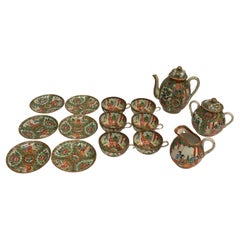
Circa 1891-1911 Chinese export Rose Medallion porcelain tea service. Service for 6: cups & saucers, teapot, covered sugar & cream jug; each piece marked "China". C-scroll bamboo hand...

Category

Antique Late 19th Century Chinese Chinese Export Tea Sets

Materials

Porcelain

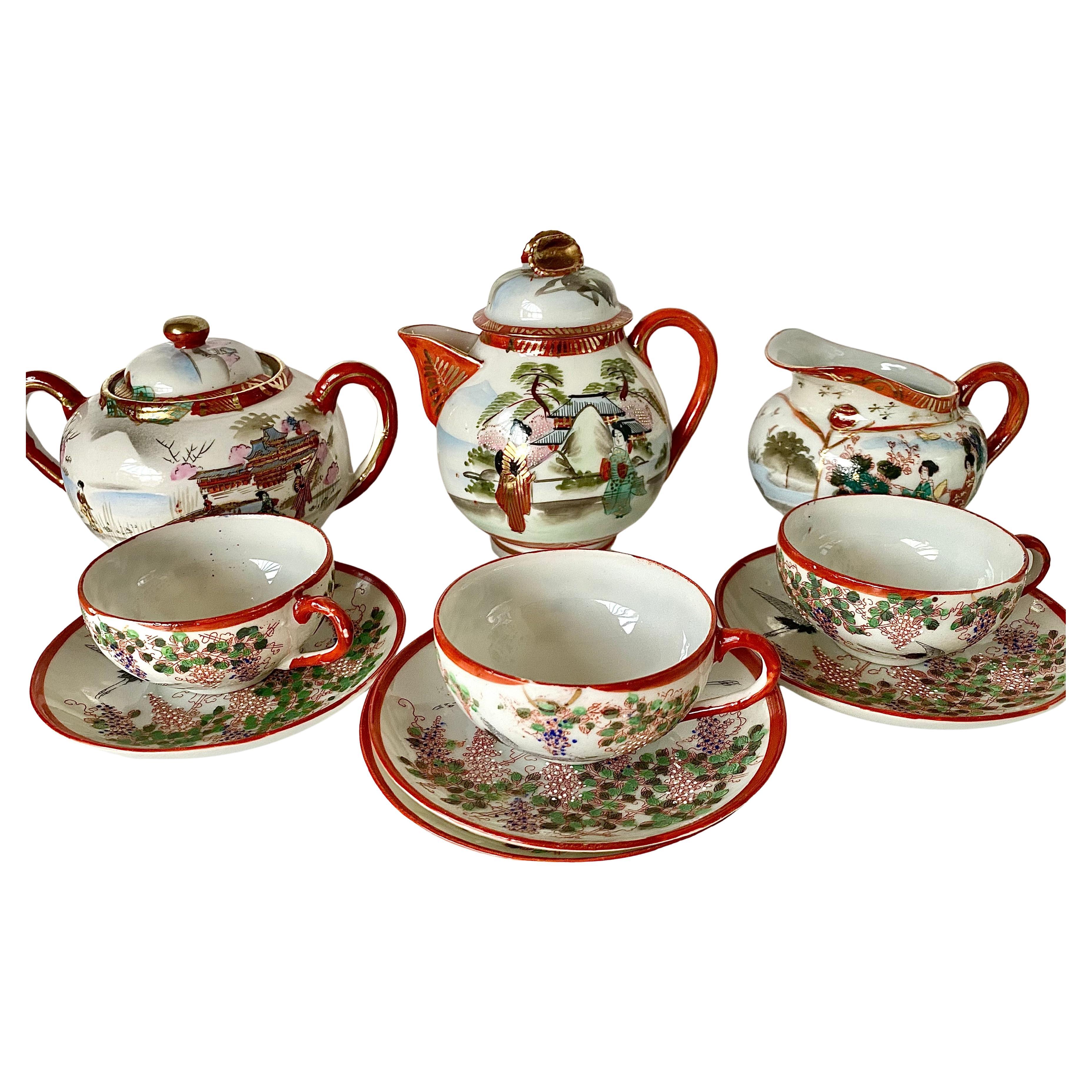
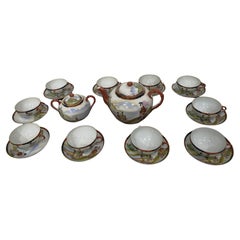
Oriental Chinese Red & Gold Hand Painted Porcelain Tea Set Made in Japan

Oriental Chinese Red & Gold Hand Painted Porcelain Tea Set Made in Japan

Located in Topeka, KS

Gorgeous vintage Oriental Chinese red & gold hand painted porcelain tea set marked “Made in Japan.” Beautiful condition, keeping in mind that these are vintage and not new so will ha...

Category

Mid-20th Century Japanese Chinese Export Tea Sets

Materials

Porcelain

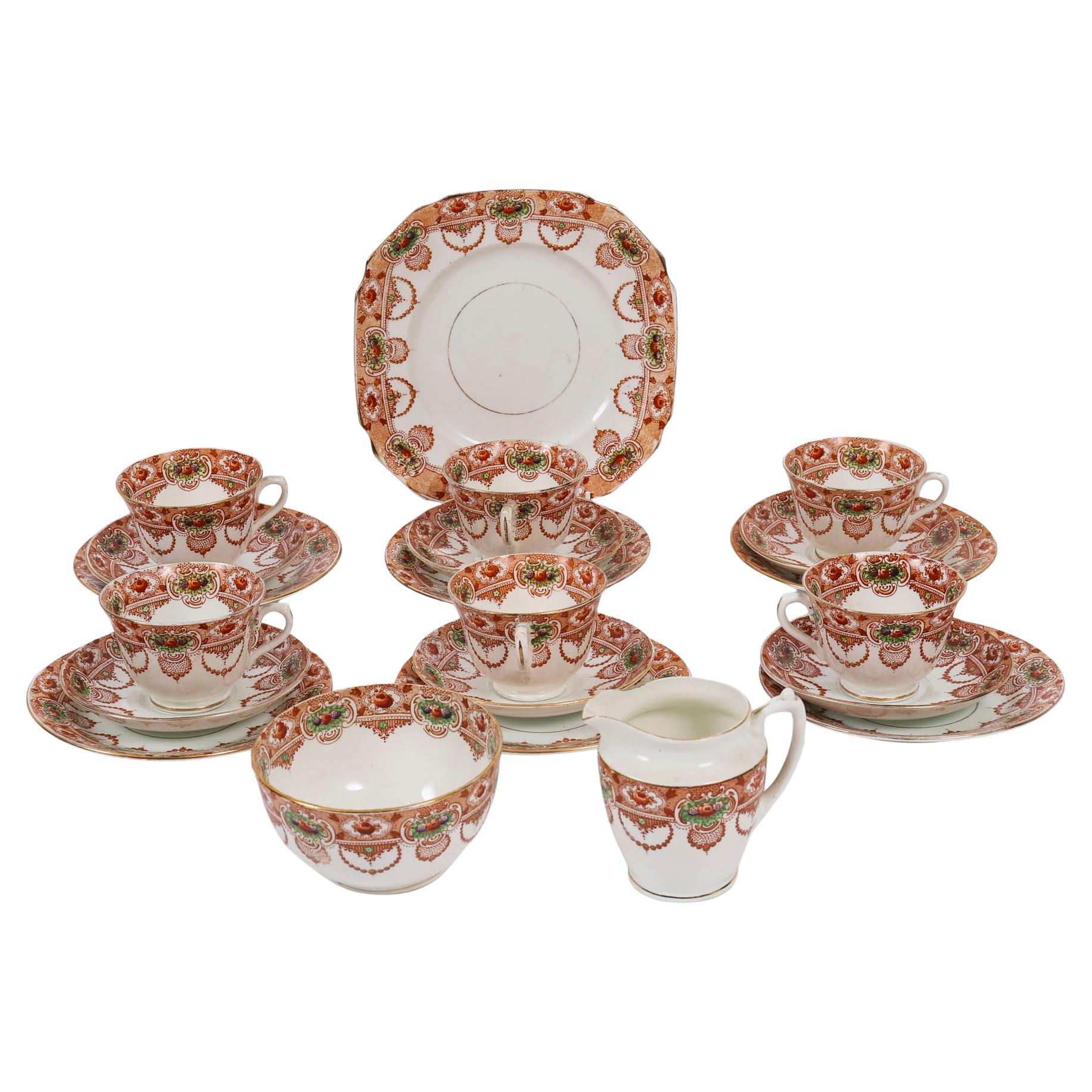
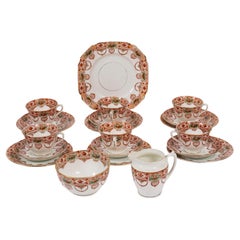
Antique 21 piece Doric China Longton Stafford Porcelain Tea Set 20th Century

Antique 21 piece Doric China Longton Stafford Porcelain Tea Set 20th Century

Located in London, GB

This is a wonderful Antique Doric China High Street Longton Staffordshire porcelain tea set Circa 1926 - 35 in date.   It contains 21 pieces and is beautifully made with superb decor...

Category

Early 20th Century English Neoclassical Porcelain

Materials

Porcelain

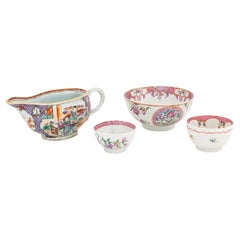
Chinese Export Famille Rose Porcelain Tableware, 4

Chinese Export Famille Rose Porcelain Tableware, 4

Located in Astoria, NY

Collection of Four Chinese Export Famille Rose Porcelain Tableware Pieces, comprising: a ewer with hand-painted vignettes of figural interior scenes, a bowl with hand-enameled floral...

Category

Antique 19th Century Chinese Qing Tableware

Materials

Enamel