Video Loading
Want more images or videos?
Request additional images or videos from the seller
1 of 10

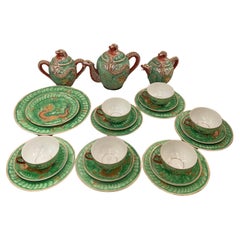
Jules Vieillard & Cie Manufacture, Japanese-style Tea Service

$28,322.12
£20,929.74
€24,000VAT Included
CA$39,301.19
A$40,014.32
CHF 23,044.63
MX$482,141.65
NOK 267,434.47
SEK 269,824.86
DKK 182,977.90

About the Item

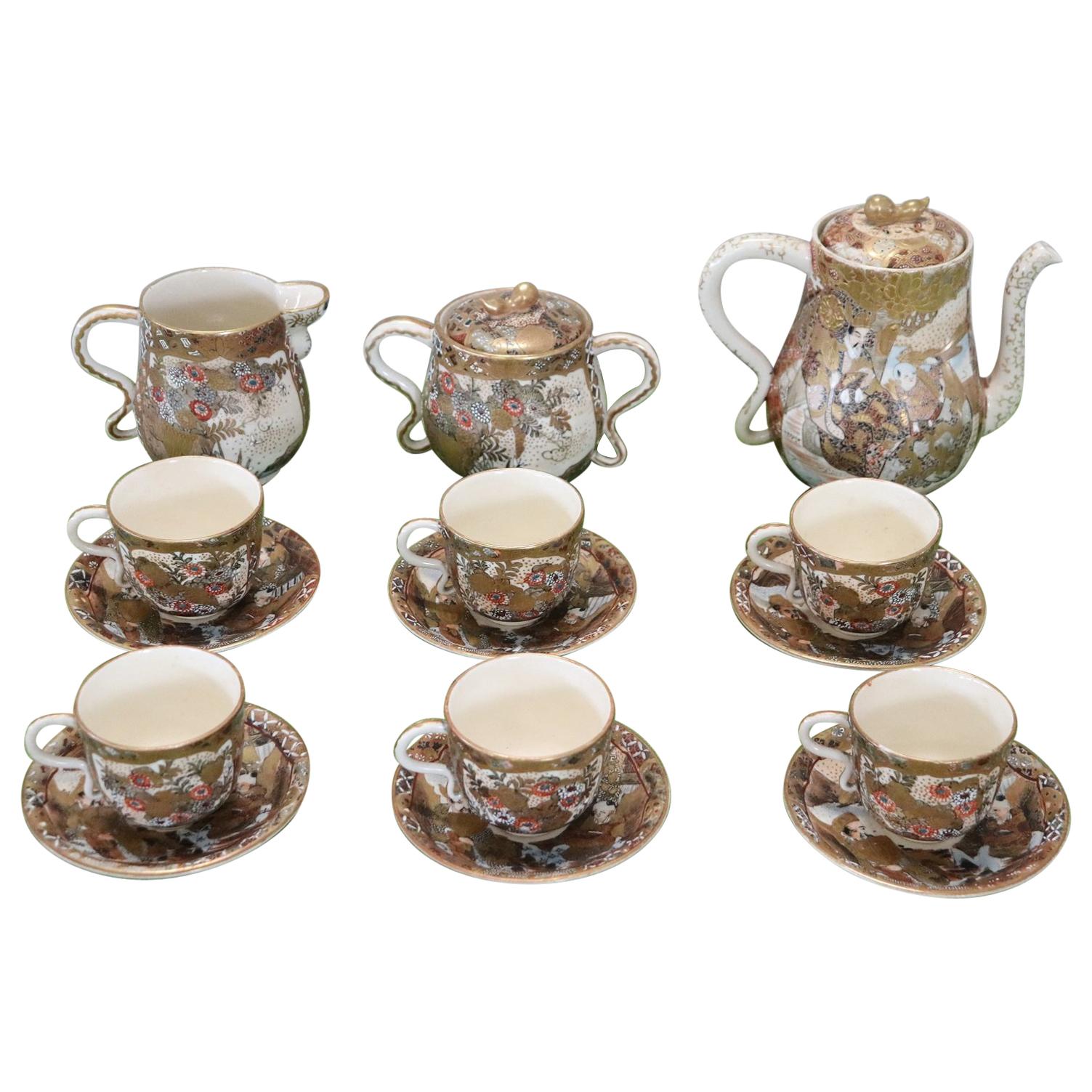
Cups : H. 6,2 cm/2'' 7/16 ; L. 9,5 cm/3'' 3/4 ; D. 7,2 cm/2'' 13/16 Saucers : H. 2 cm/13/16'' ; D. 13,5 cm/5'' 5/16 Teapot : H. 16 cm/6'' 5/16 ; L. 19,7 cm/7'' 3/4 ; P. 7,5 cm/2'' 15/16 Milk jug : H. 9 cm/3'' 9/16 ; L. 12,5 cm/4'' 15/16 ; P. 6 cm/2'' 3/8 Sugar bowl : H. 15 cm/5'' 15/16 ; L. 17 cm/6'' 11/16 ; P. 8,5 cm/3'' 3/8 This exceptional Japonism tea set was created for the Jules Vieillard & Cie Manufacture in Bordeaux between 1878 and 1886. This exceptional work is attributed to Amédée de Caranza, its prestigious collaborator between 1878 and 1886. After the death of Jules Vieillard in 1868, the Jules Vieillard & Cie Manufacture, then the third largest ceramic factory in France, passed to his sons, Albert and Charles. The Vieillard brothers then developed new designs and shapes, launching a production of artistic faience intended to decorate the finest interiors. The son of a ceramist, Amédée de Caranza (1843-1914) developed a deep understanding of the art of ceramics and constantly sought new techniques. After working in his own workshop and for the Creil-Montereau factory, he became the workshop manager at the Vieillard Manufacture from around 1878 to 1886. He then opened his own workshop before moving to New York. He served as artistic director at Henri Copillet & Cie, where he worked with glass. This extremely rare service comprises twenty-seven fine earthenware pieces decorated with polychrome enamels on a green background sprinkled with gold. It comprises a teapot, a milk jug, a sugar bowl and twelve cups accompanied by their plates. An eminent exponent of Japonism, Caranza was fascinated by Hokusai's masterpieces, particularly the "Manga". Here he drew inspiration from the postures of Hokusai's characters to depict animals and fantastic creatures. Caranza pays tribute to the master of Japanese prints by quoting his signature and the ideogram that forms the end of the word "manga". The use of gold dust is characteristic of Caranza's contribution to the Vieillard factory.
  • Creator:
    Jules Vieillard et Cie (Manufacturer)
  • Attributed to:
    Amedee de Caranza (Artist)
  • Style:
    Japonisme (Of the Period)
  • Materials and Techniques:
  • Place of Origin:
  • Period:
  • Date of Manufacture:
    Between 1878 and 1886
  • Condition:
  • Seller Location:
    SAINT-OUEN-SUR-SEINE, FR
  • Reference Number:
    Seller: 140821stDibs: LU7662240206522

More From This Seller

View All
Edmond LACHENAL for L'ESCALIER DE CRISTAL, Bowl decorated with flowers

Edmond LACHENAL for L'ESCALIER DE CRISTAL, Bowl decorated with flowers

By L'Escalier de Cristal, Edmond Lachenal

Located in SAINT-OUEN-SUR-SEINE, FR

This elegant ceramic bowl was created by Edmond Lachenal for L’Escalier de Cristal around 1890. It bears his signature. A ceramist and painter, Edmond Lachenal is known for his past...

Category

Antique Late 19th Century French Japonisme Decorative Bowls

Materials

Earthenware

MAISON Alphonse Giroux – Japonisant decorative porcelain dish

MAISON Alphonse Giroux – Japonisant decorative porcelain dish

By Alphonse Giroux et Cie

Located in SAINT-OUEN-SUR-SEINE, FR

This decorative Japanese-style painted porcelain dish is a product of the Alphonse Giroux company, founded in 1799. Bearing a "Maison Alph. Giroux" label on the reverse, our dish can...

Category

Antique Mid-19th Century Japonisme Ceramics

Materials

Porcelain

Émile GALLÉ, Precious Egyptian Ship, a rare earthenware piece

Émile GALLÉ, Precious Egyptian Ship, a rare earthenware piece

By Émile Gallé

Located in SAINT-OUEN-SUR-SEINE, FR

Taking Mediterranean Antiquity as his theme, Emile Gallé created this rare and original piece. A ceramist and glassmaker, Gallé was one of the greatest names in the Art Nouveau move...

Category

Antique Late 19th Century French Egyptian Revival Ceramics

Materials

Earthenware

Théodore DECK, Large vase of Far Eastern inspiration

Théodore DECK, Large vase of Far Eastern inspiration

By Theodore Deck

Located in SAINT-OUEN-SUR-SEINE, FR

This large turquoise pot holder in glazed earthenware was made by the reknowned ceramist Théodore Deck at the end of the 19th century. Its beautiful bl...

Category

Antique Late 19th Century French Japonisme Ceramics

Materials

Faience

Henry II Cup by Manufacture Nationale de Sèvres, 1860

Henry II Cup by Manufacture Nationale de Sèvres, 1860

By Manufacture Nationale de Sèvres

Located in SAINT-OUEN-SUR-SEINE, FR

The Vincennes factory, the forerunner of the Sèvres factory, was founded in 1740 by workers who had transferred from the Chantilly factory. The Vincennes factory became royal in 1752...

Category

Antique 1860s French Renaissance Revival Vases

Materials

Bronze

THESMAR André-Fernand (1843-1912) hemispherical cup in gold plique-à-jour enamel

THESMAR André-Fernand (1843-1912) hemispherical cup in gold plique-à-jour enamel

By André Fernand Thesmar

Located in SAINT-OUEN-SUR-SEINE, FR

Fernand Thesmar (1843-1912) was a French painter and master enameller specialising in motifs on glass and porcelain. Famous for having breathed new life into the rare and demanding t...

Category

Early 20th Century French Belle Époque Ceramics

Materials

Enamel

You May Also Like

13-Piece Vintage Japanese Tea Set

13-Piece Vintage Japanese Tea Set

Located in Los Angeles, CA

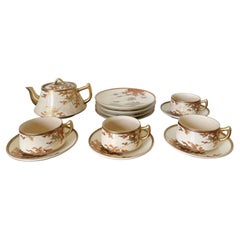
Vintage sumatsu serving set hand painted with maple leaves and birds / Made in Japan circa 1960s 1 tea pot, width 7 inches, height 4 inches, depth 6 inches 4 plates, diameter 6.75 in...

Category

20th Century Japanese Porcelain

Materials

Porcelain

Japanese Satsuma Moriage Porcelain Tea Set, Set for Six, Japan

Japanese Satsuma Moriage Porcelain Tea Set, Set for Six, Japan

By Satsuma

Located in Milano, IT

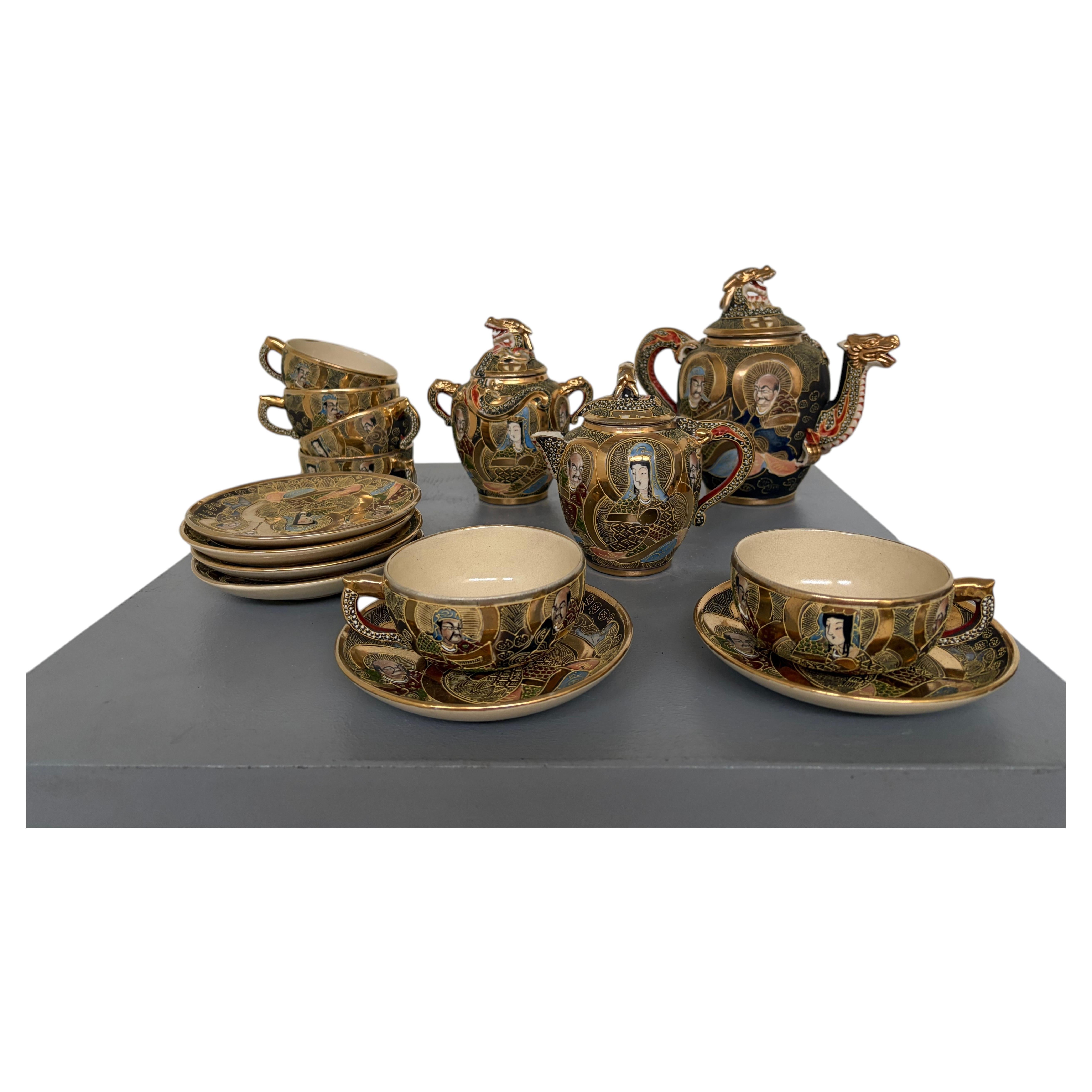
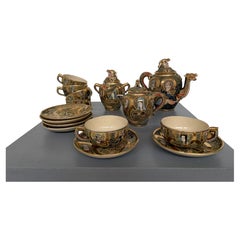
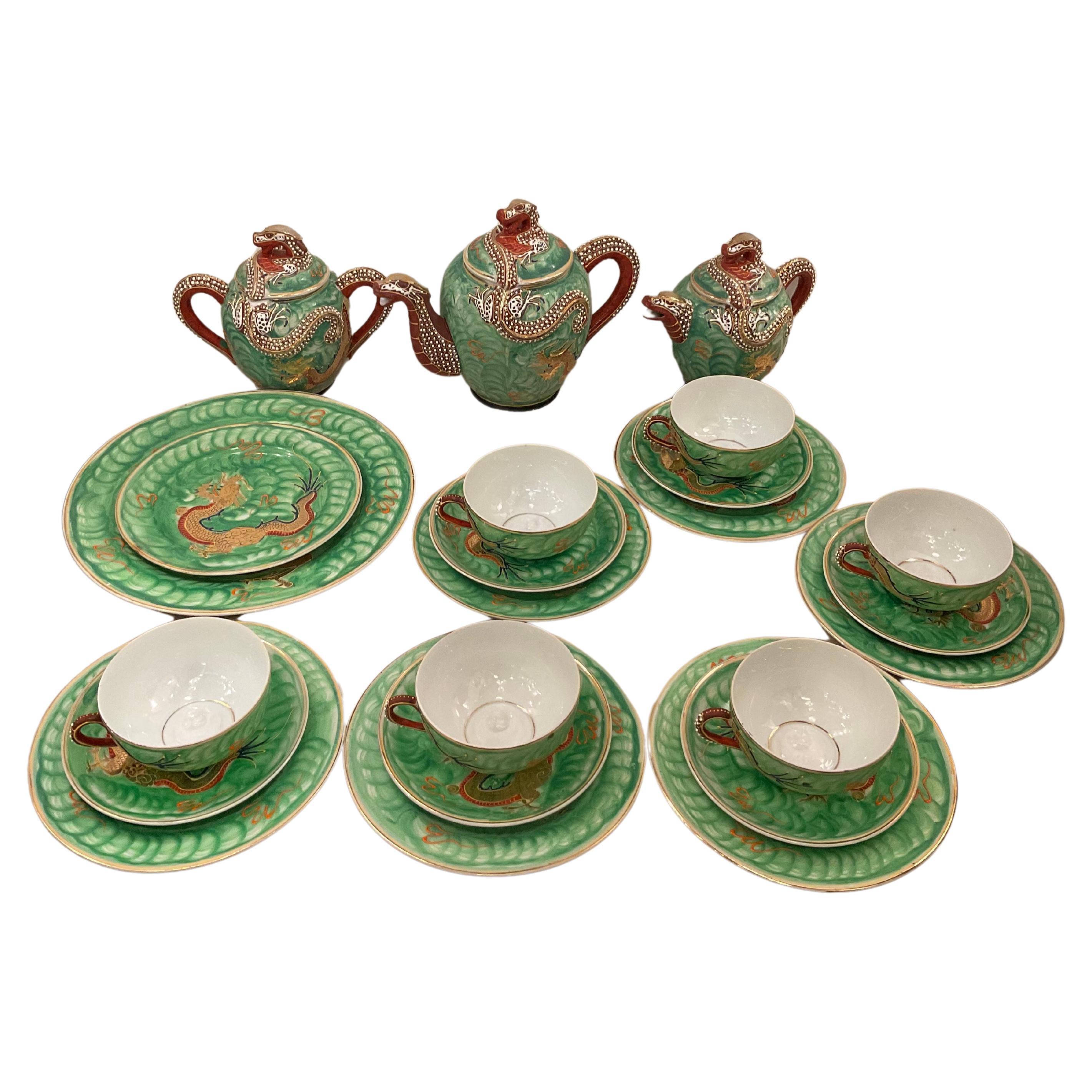
Japanese Satsuma Moriage Porcelain Tea Set, 19th Century An exceptionally decorative and highly evocative Japanese Satsuma Moriage porcelain tea service, dating from the 19th century, consisting of a teapot, creamer, sugar bowl, and six teacups with matching saucers. This elegant set immediately catches the eye with its richly ornamented surfaces, where deep tones, luminous gilding, and finely hand-painted figural motifs come together in a composition of extraordinary visual impact. Each piece is carefully adorned with traditional Japanese figures—likely inspired by courtly or legendary subjects—framed within intricate decorative cartouches and surrounded by elaborate ornamental motifs. A particularly noteworthy feature of this service is the use of the Moriage technique, characterized by its delicate raised enamel decoration, which creates a softly sculptural, almost three-dimensional surface. This refined treatment enhances the depth and texture of the decoration, giving each element a precious and tactile quality. The interplay between the rich gilding, the polychrome accents, and the relief work demonstrates the high level of craftsmanship associated with Satsuma ware. The set is further enhanced by a series of beautifully rendered details: elegantly shaped handles, finely decorated spouts, and especially the expressive finials modeled in zoomorphic form, which give the lidded pieces a distinctive and dramatic presence. The contrast between the richly decorated exterior and the lighter-toned interior of the cups adds an additional sense of balance and refinement. Each piece contributes to a harmonious and visually opulent ensemble, reflecting the fascination with Japanese decorative arts that flourished during the Meiji period and beyond. More than just a tea set, this is a work of art worthy of display—an object capable of enhancing a cabinet, salon, or formal interior with its character, elegance, and historical significance. This set, which originated in a private home in Milan, is in good overall antique condition, with minor flaws and signs of age consistent with its age and use. These slight imperfections do not detract from its beauty; rather, they speak to its authenticity and its history. Elegant, rare, and highly decorative, this Satsuma tea service...

Category

Antique Early 1900s Japanese Japonisme Tea Sets
Materials

Porcelain