Video Loading
Want more images or videos?
Request additional images or videos from the seller
1 of 19

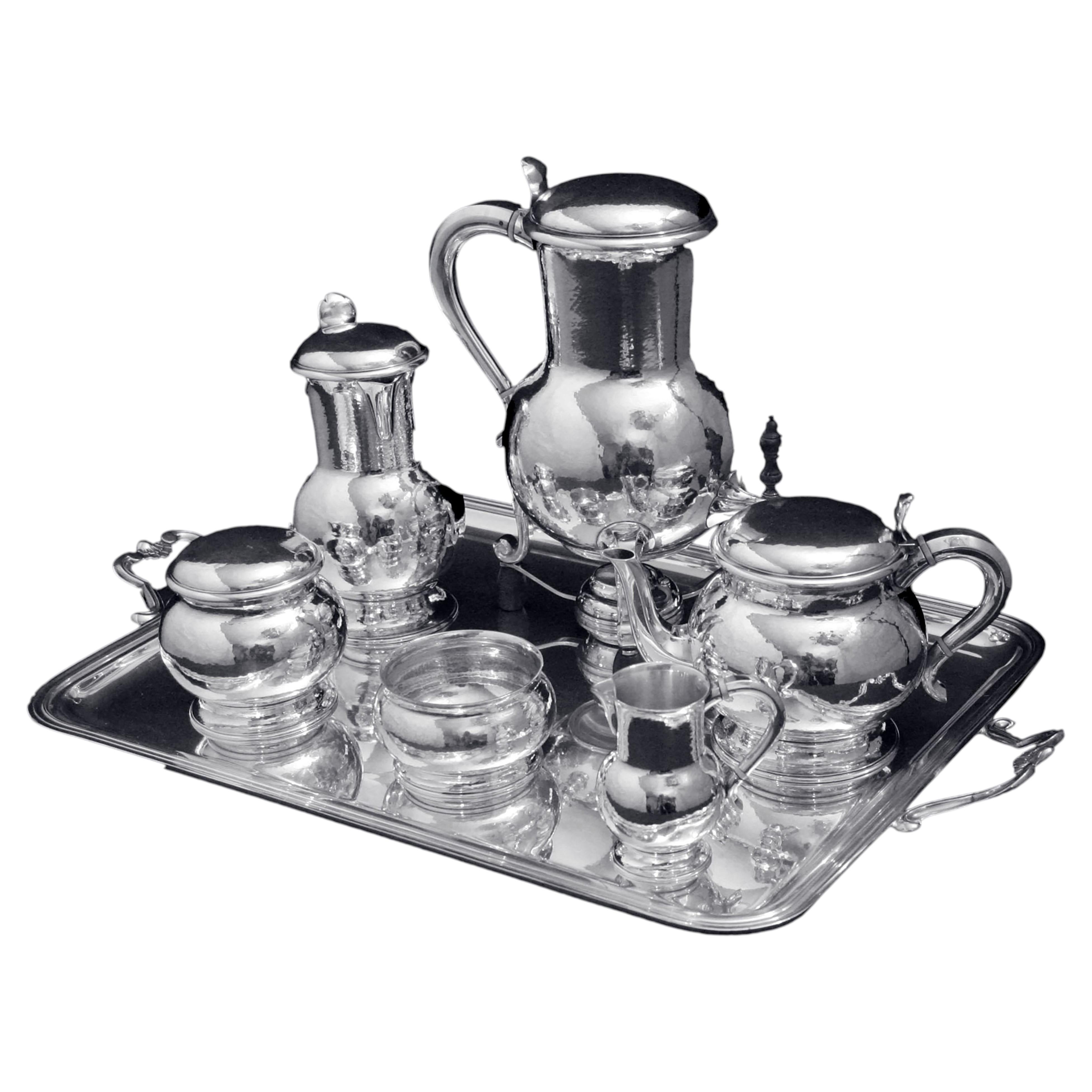
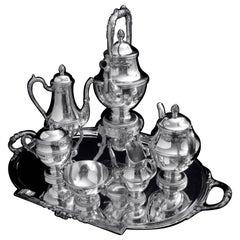
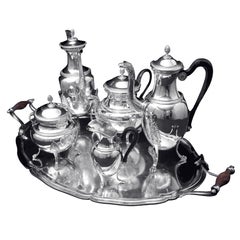
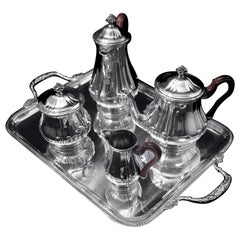
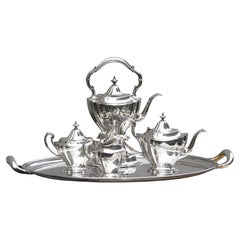
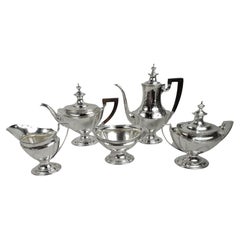
Tetard - 6pc French Art Deco (Gatsby Era) 950 Sterling Silver Tea Coffee Set

$51,699per set
£38,959.60per set
€45,564.35per set
CA$73,155.14per set
A$74,239.07per set
CHF 42,797.24per set
MX$898,905.62per set
NOK 496,740.87per set
SEK 502,053.78per set
DKK 340,622.88per set

About the Item

Direct from Paris, the birthplace of Art Deco, a truly magnificent original French Art Deco, “Gatsby Era”, 6 pc. sterling silver tea set with serving tray by one of France's Premier Silversmiths "Tetard Freres", professionally refinished to near new condition and includes6 anti-tarnish wraps for easy storage - Circa 1920s. The Art Deco movement, which emerged in the early 20th century, left an indelible mark on various forms of art and design, including the realm of silversmithing.  Among the notable figures in this domain, Tetard stands out as a luminary whose craftsmanship and artistic vision epitomized the essence of Art Deco.  The Art Deco Movement: Art Deco emerged in the aftermath of World War I, flourishing in the 1920s and 1930s. It was characterized by its embrace of modernity, geometric forms, luxurious materials, and bold designs. This aesthetic permeated various spheres of artistic expression, from architecture and interior design to fashion and fine arts.  Silversmithing, too, experienced a renaissance during this period, with artisans pushing the boundaries of traditional craftsmanship to create pieces that embodied the spirit of theage. Tetard’s Art Deco Elegance: Established in 1903 by Louis Albert Tetard, Tetard Frèreset Cie quickly gained renown for its exquisite silverware and jewelry. Louis Albert Tetard, along with his brothers, Henri and Jean, nurtured the company into a bastion of artistic excellence. However, it was under Louis Albert's leadership that Tetard truly flourished, becoming synonymous with Art Deco elegance. Tetard's designs were characterized by a harmonious fusion of classical motifs and modernist aesthetics.  His creations often featured sleek lines, geometric patterns, and intricate ornamentation, reflecting the zeitgeist of the Art Deco era. Tetard's mastery of the craft, coupled with his keen eye for design, garnered him widespread acclaim both in France and abroad.  Royal Patronage: One of the hallmarks of Tetard's success was his patronage by royalty and aristocracy. Members of Europe's elite sought out Tetard's creations for their palaces, chateaux, and private collections, cementing his reputation as a purveyor of luxury and refinement. Among Tetard's notable royal patrons was Queen Marie of Romania, who commissioned several pieces from the silversmith for her royal residences. Tetard's ability to cater to the tastes of royalty underscores his versatility as an artisan, capable of creating pieces that transcended mere utility to become objets d'art fit for royalty.  Awards and Recognitions: Tetard's contributions to the world of silversmithing were duly recognized through numerous awards and accolades. In 1925, Tetard participated in the Exposition Internationale des Arts Décoratifs et Industriels Modernes, a seminal event that propelled the Art Deco movement to global prominence. Tetard's exhibits at the exposition garnered critical acclaim, earning him prestigious awards and accolades. Oneof Tetard's most significant achievements was being awarded the Legion of Honor,France's highest order of merit, for his contributions to the arts. This prestigious accoladenot only affirmed Tetard's status as a master silversmith but also underscored the cultural significance of his work within the broader context of French artistic heritage. Quality and Craftsmanship: At the heart of Tetard's success lay his unwavering commitment to quality and craftsmanship. Each piece bearing the Tetard hallmark was a testament to the meticulous attention to detail and technical prowess of the artisans who crafted it. From exquisite tea sets to elaborate candelabras, Tetard's repertoire encompassed a diverse array of silverware, each imbued with a sense of timeless elegance and refinement. Tetard's mastery extended beyond mere technical proficiency; it was infused with artistic innovation and creativity. His willingness to experiment with form, texture, and ornamentation set him apart from his contemporaries, elevating his work to the realm of fine art. Whether inspired by classical antiquity or the avant-garde trends of the day, Tetard's designs bore the unmistakable imprint of his artistic vision. The Tetard Legacy: Tetard's influence on French silversmithing endures to this day, serving as a touchstone for contemporary artisans seeking to evoke the glamour and sophistication of the Art Deco era. His legacy lives on not only through his surviving works but also through the continued appreciation and emulation of his aesthetic ideals. Tetard's contributions to the Art Deco movement were nothing short of transformative. His exquisite craftsmanship, artistic innovation, and royal patronage solidified his reputation as one of the preeminent silversmiths of his time. Through his enduring legacy, Tetard continues to inspire successive generations of artisans to push the boundaries of creativity and craftsmanship in pursuit of excellence in silversmithing. Set Composition: This is an amazing original 6 pc. art deco sterling silver tea / coffee set dating from the 1920s by one of France's premier Silversmiths "Tetard Frères" accompanied by a 950-sterling silver serving tray by "Orbrille". Each piece in this magnificent set has been professionally refinished to near new condition and there are nomonograms on any of the pieces. The teapot, coffee pot, water fountain, sugar bowl and cream pitcher each bears the “Tetard Frères” sterling silver manufacturer's hallmark in addition to the French government's Head of the Minerva-1 hallmark. The sterling silver serving tray also bears the French government's Head of the Minerva 1 hallmark in addition to the “Orbrille” sterling silver manufacturer's hallmark. The set comes with ndividual anti-tarnish storage wraps for each piece.  The majestic water fountain (samovar) measures an astounding 42cm. high to the top of the lid, 16 cm. across at its widest point and weights an amazing 1,902 grams. The stunning teapot measures roughly 20 cm. high to the top of the lid, 25.50 cm. from the outer edge of the handle to the tip of the spout, 14 cm. across at its widest point and weights an amazing 724 grams. The luxurious coffee pot measures approximately 23.50cm. high to the top of the lid, 18.50 cm. across from the outer edge of the handle to the tipof the spout, 11 cm. across at its widest point and weights 652 grams. The elegant sugar bowl measures approximately 15.50 cm. high to the top of the lid, 15.50 cm. wide to the tips of the handles, 12 cm. across at its widest point and weights 483 grams. The sturdy sterling silver serving tray measures a whopping 73 cm. in length to the tips of the handles, 48 cm. across and weights in excess of 4.5 kilograms.
  • Creator:
    Tetard Freres (Manufacturer)
  • Sold As:
    Set of 6
  • Style:
    Art Deco (Of the Period)
  • Materials and Techniques:
  • Period:
  • Date of Manufacture:
    1920s
  • Condition:
    Refinished. Wear consistent with age and use. Each piece has been professionally refinished.
  • Seller Location:
    Wilmington, DE
  • Reference Number:
    1stDibs: LU9583249020992

More From This Seller

View All
Puiforcat (Hermes) Tetard - 5pc. Louis XVI Sterling Silver Tea Set !

Puiforcat (Hermes) Tetard - 5pc. Louis XVI Sterling Silver Tea Set !

By Puiforcat, Tetard Freres

Located in Wilmington, DE

Direct from Paris: A superb 5-piece, 19th century, Louis XVI 950 sterling silver tea set by two of the world's top French silversmiths - the "House of Puiforcat", currently owned by ...

Category

Antique Late 19th Century French Louis XVI Tea Sets

Materials

Sterling Silver

Puiforcat / Hermes - Antique 5pc. French 950 Sterling Silver Tea Set, Louis XVI

Puiforcat / Hermes - Antique 5pc. French 950 Sterling Silver Tea Set, Louis XVI

By Puiforcat, Tetard Freres

Located in Wilmington, DE

Direct from Paris: A magnificent 5pc., 19th century original French 950 sterling silver tea & coffee set by two of the world's premier French silversmiths the "House of Puiforcat", c...

Category

Antique Late 19th Century Louis XVI Tea Sets

Materials

Sterling Silver

SAVORY and Sons - 9pc. 19th Century Victorian (British) Sterling Silver Tea Set

SAVORY and Sons - 9pc. 19th Century Victorian (British) Sterling Silver Tea Set

By Maison Odiot Paris, A. B. Savory

Located in Wilmington, DE

Direct from a private mansion in Paris, a stunning 9-piece antique Victorian sterling silver tea set by one of Britain’s premier silversmiths “Savory and Sons” professionally refinished to near new condition and including 8 anti-tarnish storage wraps for easy storage – circa early 1800s. The annals of British silversmithing are replete with illustrious names, each contributing to an enduring legacy of artistry and opulence. Among these distinguished firms, Savory and Sons occupies a position of particular reverence. From its early 19th-century origins in the heart of the City of London to its eventual evolution into a larger commercial entity, the name Savory became synonymous with the pinnacle of quality, elegance, and refined taste. More than mere retailers or manufacturers, they were arbiters of style, purveyors of luxury to a clientele that included royalty, and creators of some of the most exquisite silver objects of the Victorian era. Savory - A Foundation of Quality and Craftsmanship: The story of Savory and Sons is one of entrepreneurial spirit, family partnership, and an unwavering commitment to excellence. The firm's origins can be traced to 1812, when Adey Bellamy Savory, a man of Huguenot descent—a heritage often associated with exceptional skill in the precious metal trades—established his business at 14 Cornhill in the City of London. Initially listed in directories under various specializations, from goldsmith to dealer in foreign coins, A.B. Savory was building a foundation as a purveyor of fine and curious goods. This early period was crucial for establishing the reputation for reliability and discernment that would become the firm's hallmark. A pivotal transformation occurred in 1833 when Adey Bellamy's sons, Joseph and Albert, were taken into partnership, and the firm's name was officially changed to A.B. Savory & Sons. This marked the beginning of its most celebrated era. The business model was sophisticated, operating on two fronts. They maintained a retail presence at various addresses on Cornhill, strategically positioned opposite the Bank of England, a locale that placed them at the very center of British commerce and affluence. Simultaneously, they operated a significant manufacturing enterprise, or "silver manufactory," at 5 Finsbury Place, South, and later at 15 Gee Street and 18 Red Lion Street in Clerkenwell, the historic heart of London's watchmaking and silversmithing trades. This vertical integration allowed Savory & Sons to exert unparalleled control over the quality of their wares, from the initial design concept to the final polish. The exceptional quality and craftsmanship associated with the Savory name was not solely the product of the founding family, but also of the master artisans they employed. A prime example is the silversmith William Smily and his sons. William Smily, who had been apprenticed to a spoon and fork maker, began working in Savory's Gee Street factory and eventually rose to become the works manager for A.B. Savory & Sons. It was Smily who registered his own maker's mark, which was used on silverware manufactured for the firm, often accompanied by the stamp "A.B. Savory & Sons". This practice of collaborating with and retaining craftsmen ensured that the silver bearing the Savory name was not merely retailed but was conceived and executed to the highest international standards. The "SS" mark, used by both William and later his son Samuel (who succeeded him as works manager), became an internal stamp of quality, signifying that a piece had been crafted under the watchful eye of a master. The detail lavished on even the most functional items is a testament to this culture of excellence. Royal Patronage and Public Accolades: For a firm like Savory and Sons, the ultimate validation of its status came in the form of royal patronage. Their location opposite the Bank of England and their reputation for supplying "the World's Elite," placed them in the direct orbit of the aristocracy and the royal household. To be a silversmith of choice for the upper echelons of society was, in effect, to operate under a de facto royal warrant, as taste and fashion flowed...

Category

Antique Early 19th Century British Early Victorian Tea Sets

Materials

Vermeil, Sterling Silver

Keller - 8pc. Louis XVI 19th Century 950 Sterling Silver Tea Set, Museum Quality

Keller - 8pc. Louis XVI 19th Century 950 Sterling Silver Tea Set, Museum Quality

By Gustave Keller Freres

Located in Wilmington, DE

Direct from Paris, a gorgeous 19th century Louis XVI, 8 pc. 950 sterling silver the / coffee set by one of France's premier silversmiths, Gustave Keller. The set is in like new condition and includes a large sterling silver serving tray and 7 anti-tarnish storage wraps for easy storage - Circa 1890s. The art of silversmithing has long been a hallmark of French craftsmanship, embodying the nation's rich cultural heritage and artistic excellence. Among the luminaries of this venerable tradition, Gustave Keller stands out as a paragon of skill, innovation, and elegance. Active during the late 19th and early 20th centuries, Keller's work epitomizes the fusion of technical mastery and aesthetic refinement that characterizes the finest French silverware. The Early Years: Gustave Keller was born in the mid-19th century, a period marked by significant social, political, and artistic transformations in France. The aftermath of the French Revolution and the rise of the bourgeoisie created a new market for luxury goods, including silverware. Keller emerged as a prominent figure in this milieu, establishing himself as a master silversmith whose work would grace the tables of royalty and aristocracy. Keller's apprenticed under some of the most esteemed silversmiths in Paris, the epicenter of French silversmithing. By the late 19th century, he had established his own workshop, where he produced a wide range of silver items, from tableware to decorative objects. His work quickly gained recognition for its exceptional quality and artistic merit, earning him a distinguished clientele and numerous accolades. Quality and Craftsmanship: The hallmark of Gustave Keller's work is its unparalleled quality and craftsmanship. Keller was a perfectionist, and his pieces reflect a meticulous attention to detail and a deep understanding of the properties of silver. He worked primarily in 950 sterling silver, a high-grade alloy containing 95% pure silver, which is renowned for its luster, durability, and workability. This choice of material allowed Keller to create pieces that were not only beautiful but also functional and long-lasting. Keller's craftsmanship is evident in every aspect of his work, from the precision of his engraving to the elegance of his designs. He was particularly known for his ability to blend traditional techniques with innovative approaches, resulting in pieces that were both timeless and contemporary. His tea sets, for example, often feature intricate floral motifs, delicate chasing, and finely detailed handles and spouts, all executed with a level of skill that is truly remarkable. One of the most striking aspects of Keller's work is his ability to imbue his pieces with a sense of movement and life. This is particularly evident in his Louis XVI model tea sets, where the curves and lines of the silverware seem to flow seamlessly, creating a harmonious and dynamic composition. The result is a collection of pieces that are not only functional but also works of art in their own right. Royal Patronage: Gustave Keller's reputation for excellence soon attracted the attention of royalty and aristocracy. His work was highly sought after by European nobility, who appreciated the combination of luxury and artistry that his pieces embodied. Among his most notable patrons were members of the French royal family, who commissioned Keller to create bespoke silverware for their palaces and estates. Keller's royal patronage was a testament to his status as one of the leading silversmiths of his time. His ability to cater to the tastes and preferences of his elite clientele, while maintaining the highest standards of craftsmanship, set him apart from his contemporaries. His work was not only a symbol of wealth and status but also a reflection of the cultural and artistic values of the French aristocracy. One of the most significant commissions Keller received was from the court of Louis XVI. The king, known for his appreciation of fine art and craftsmanship, was particularly fond of Keller's work and commissioned a series of tea sets in the Louis XVI style – like this magnificent set. These sets, which are among Keller's most celebrated creations, exemplify the elegance and sophistication of French silversmithing during this period. Awards and Accolades: Throughout his career, Gustave Keller received numerous awards and accolades, both in France and internationally. His work was regularly exhibited at prestigious events such as the Exposition Universelle in Paris, where it was met with critical acclaim. These exhibitions provided Keller with a platform to showcase his talent and to gain recognition from his peers and the public alike. One of the most significant honors Keller received was the Grand Prix at the 1900 Exposition Universelle in Paris. This award, which was the highest accolade at the event, was a testament to Keller's exceptional skill and artistry. It also cemented his reputation as one of the leading silversmiths of his generation. In addition to the Grand Prix, Keller received numerous other awards and medals throughout his career. These included the Gold Medal at the 1889 Exposition Universelle, the Silver Medal at the 1894 Exposition Internationale in Lyon, and the Legion of Honor, one of France's highest civilian awards. These accolades not only recognized Keller's contributions to the field of silversmithing but also highlighted the importance of French craftsmanship on the global stage. Keller's 950 Sterling Tea Sets...

Category

Antique Late 19th Century Louis XVI Tea Sets
Materials

Sterling Silver

Puiforcat (Hermes) - 6pc. French Sterling Silver Tea Set, Empire Model

Puiforcat (Hermes) - 6pc. French Sterling Silver Tea Set, Empire Model

By Puiforcat

Located in Wilmington, DE

Direct from Paris: Direct from private mansion in Paris, a magnificent 6 piece antique French sterling silver Empire style tea set by France’s premier silversmith “Puiforcat” – curr...

Category

Antique Late 19th Century Empire Tea Sets

Materials

Sterling Silver

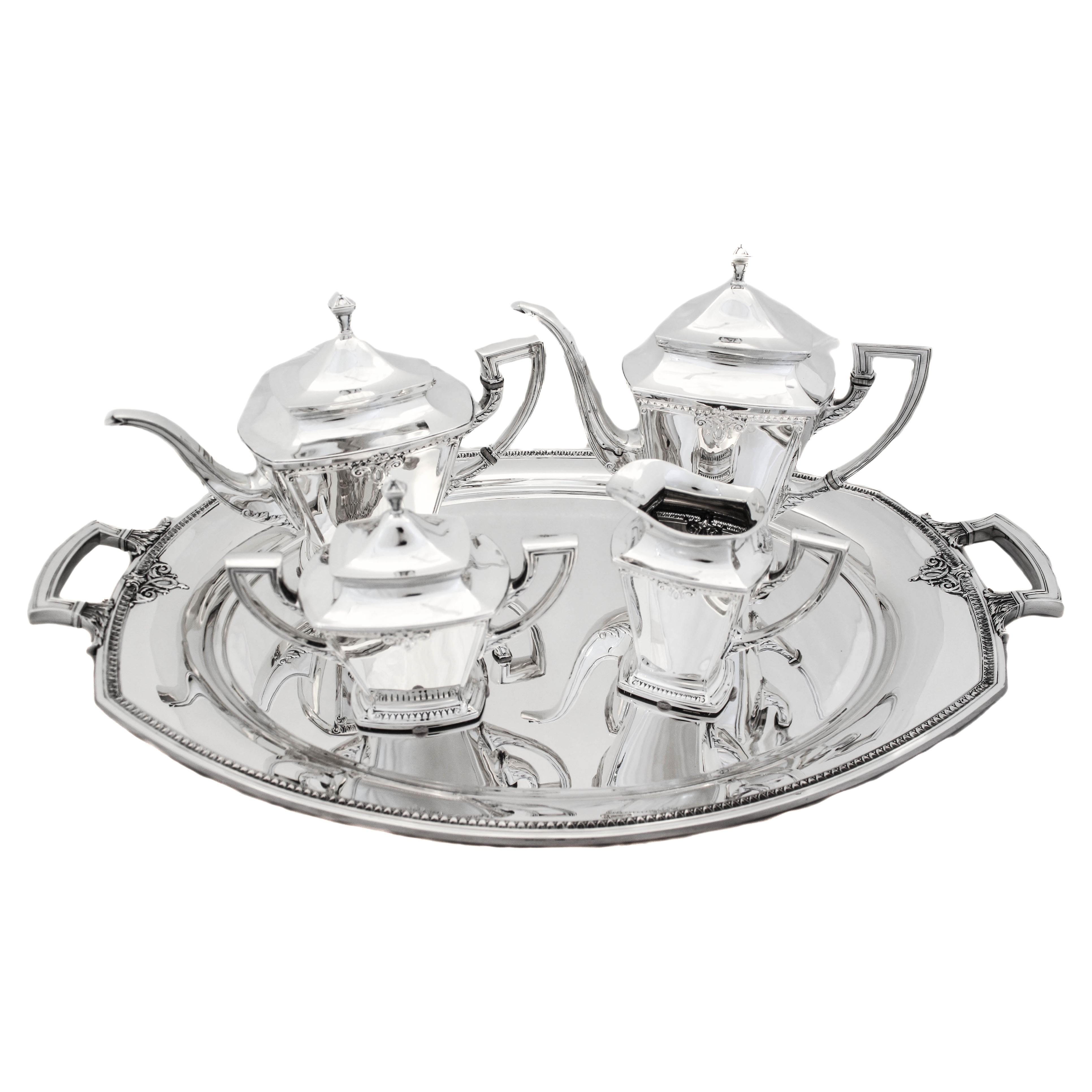
Puiforcat (Hermes): 4pc. Antique French Louis XVI Sterling Silver Tea Set + Tray

Puiforcat (Hermes): 4pc. Antique French Louis XVI Sterling Silver Tea Set + Tray

By Puiforcat

Located in Wilmington, DE

Direct from Paris: A stunning 4pc. antique French 950 sterling silver Louis XVI tea set by France’s premier silversmith “Puiforcat”, currently owned by Hermes, in like new condition...

Category

Antique Late 19th Century French Louis XVI Tea Sets

Materials

Vermeil, Sterling Silver

You May Also Like

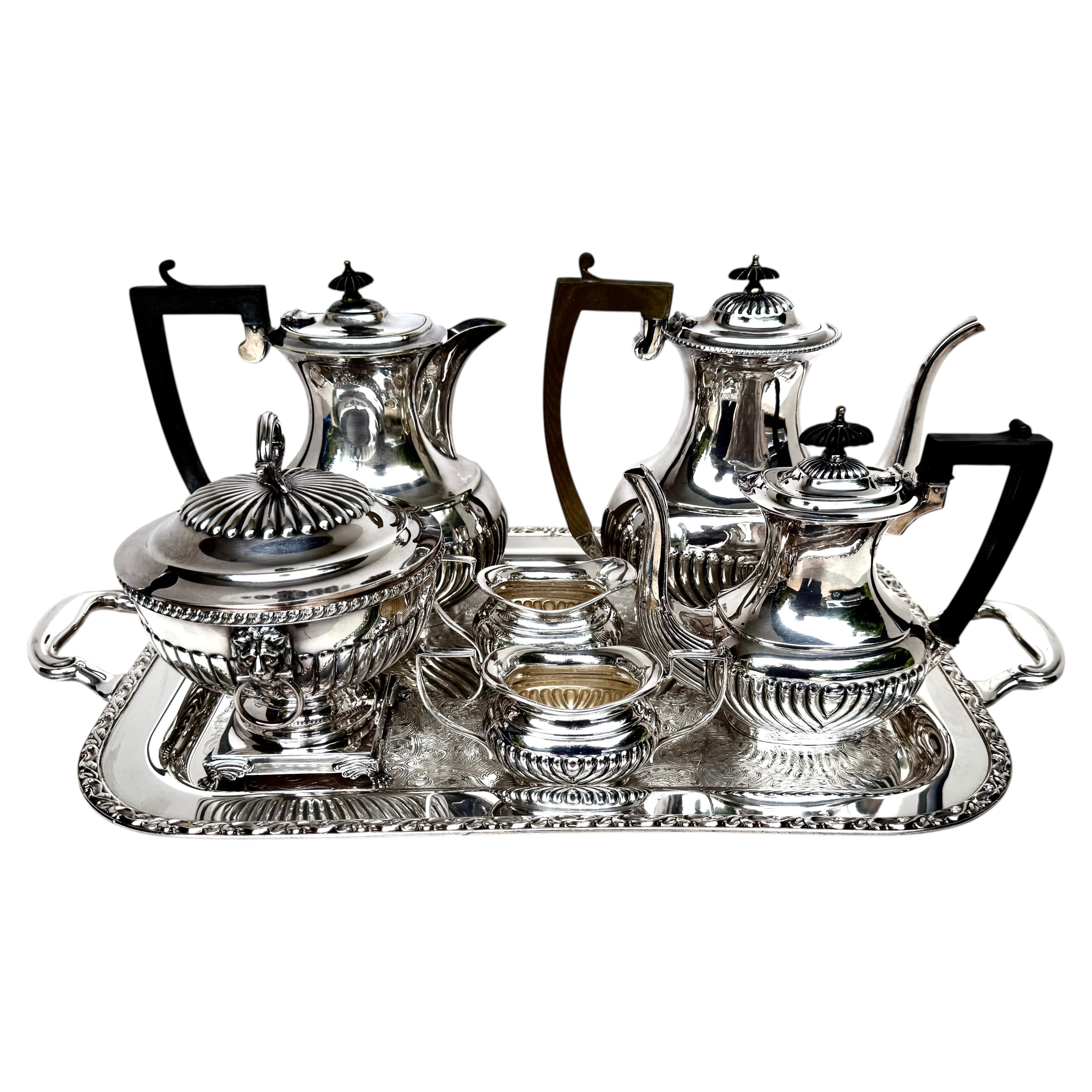
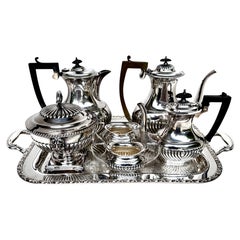
Antique Eight-Piece Silver Coffee and Tea Set by Tétard

Antique Eight-Piece Silver Coffee and Tea Set by Tétard

By Tetard Freres

Located in London, GB

Antique eight-piece silver coffee and tea set by Tétard French, early 20th century Tray: Height 6cm, width 73.5cm, depth 46.5cm Water jug: Height 19cm, width 21cm, depth 11cm T...

Category

Early 20th Century French Sterling Silver

Materials

Silver

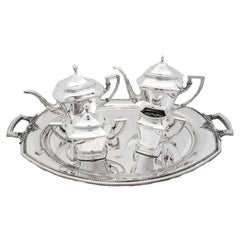
Reed And Barton Sterling Silver Four-Piece Tea And Coffee Service with a Tiffany

Reed And Barton Sterling Silver Four-Piece Tea And Coffee Service with a Tiffany

By Reed & Barton

Located in West Palm Beach, FL

Reed And Barton Sterling Silver Four-Piece Tea And Coffee Service with a Tiffany & Co. Silver Plated Tray 1928, marked with Reed and Barton eagle symbols, Sterling, 650.b, the tray m...

Category

20th Century Tea Sets

Materials

Silver

Victorian Classic Fine Quality Silver Plated (7) Piece Tea Service England C1890

Victorian Classic Fine Quality Silver Plated (7) Piece Tea Service England C1890

Located in Incline Village, NV

Culled from a high quality collection of silver plate with the best and most unique pieces selected for this top of the line seven piece English tea service; this antique ensemble, w...

Category

Antique 1890s English Victorian Tea Sets

Materials

Sheffield Plate, Silver Plate

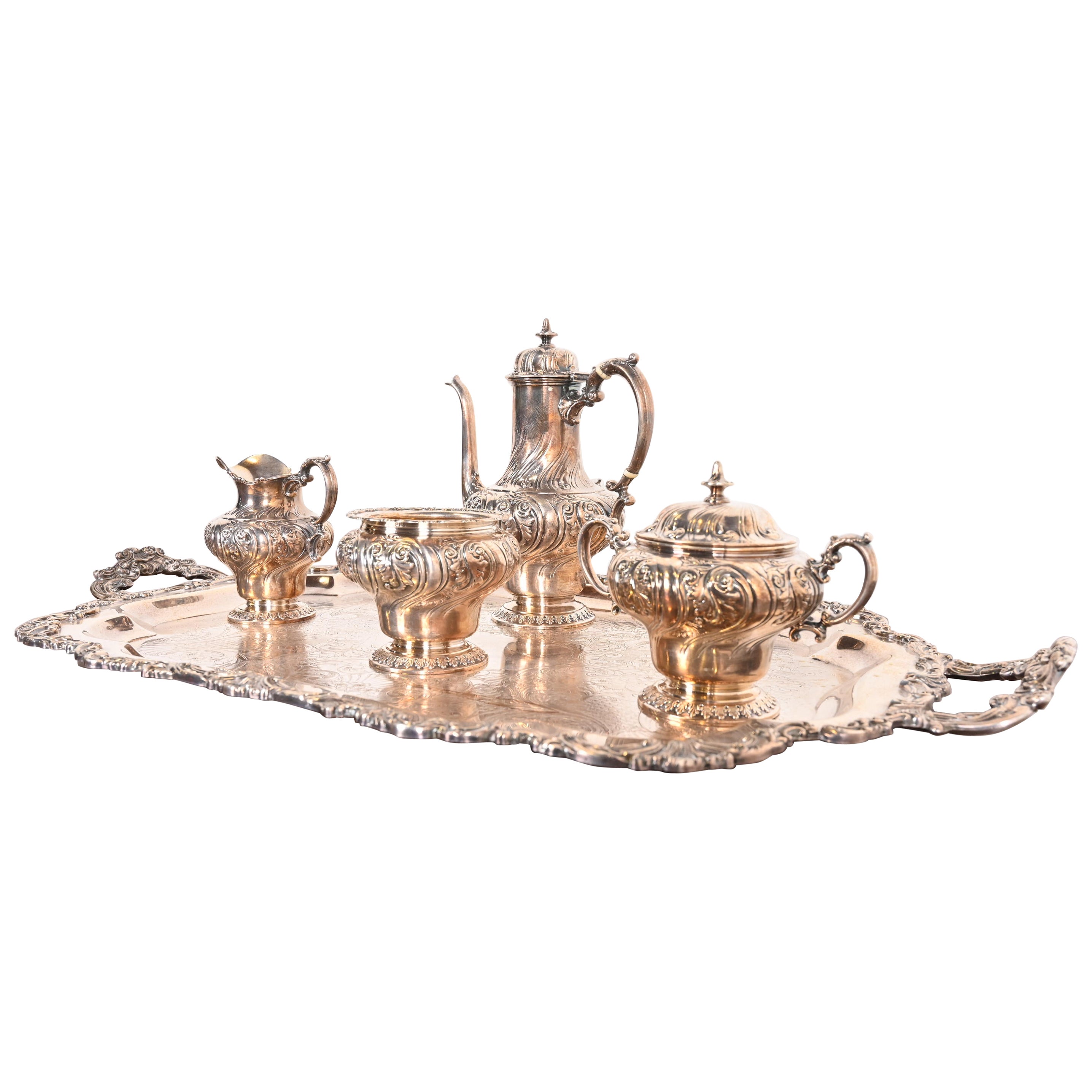
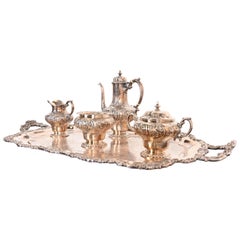
Tiffany & Co. Antique Repousse Silver Plate Coffee or Tea Service Set

Tiffany & Co. Antique Repousse Silver Plate Coffee or Tea Service Set

By Tiffany & Co.

Located in South Bend, IN

A gorgeous antique silverplate tea or coffee service set, including: tea pot, sugar, creamer, bowl, and large service tray. By Tiffany & Co. Tray is associated and is marked "Ascot Sheffield Design...

Category

Antique Late 19th Century American Art Deco Tea Sets

Materials

Silver Plate

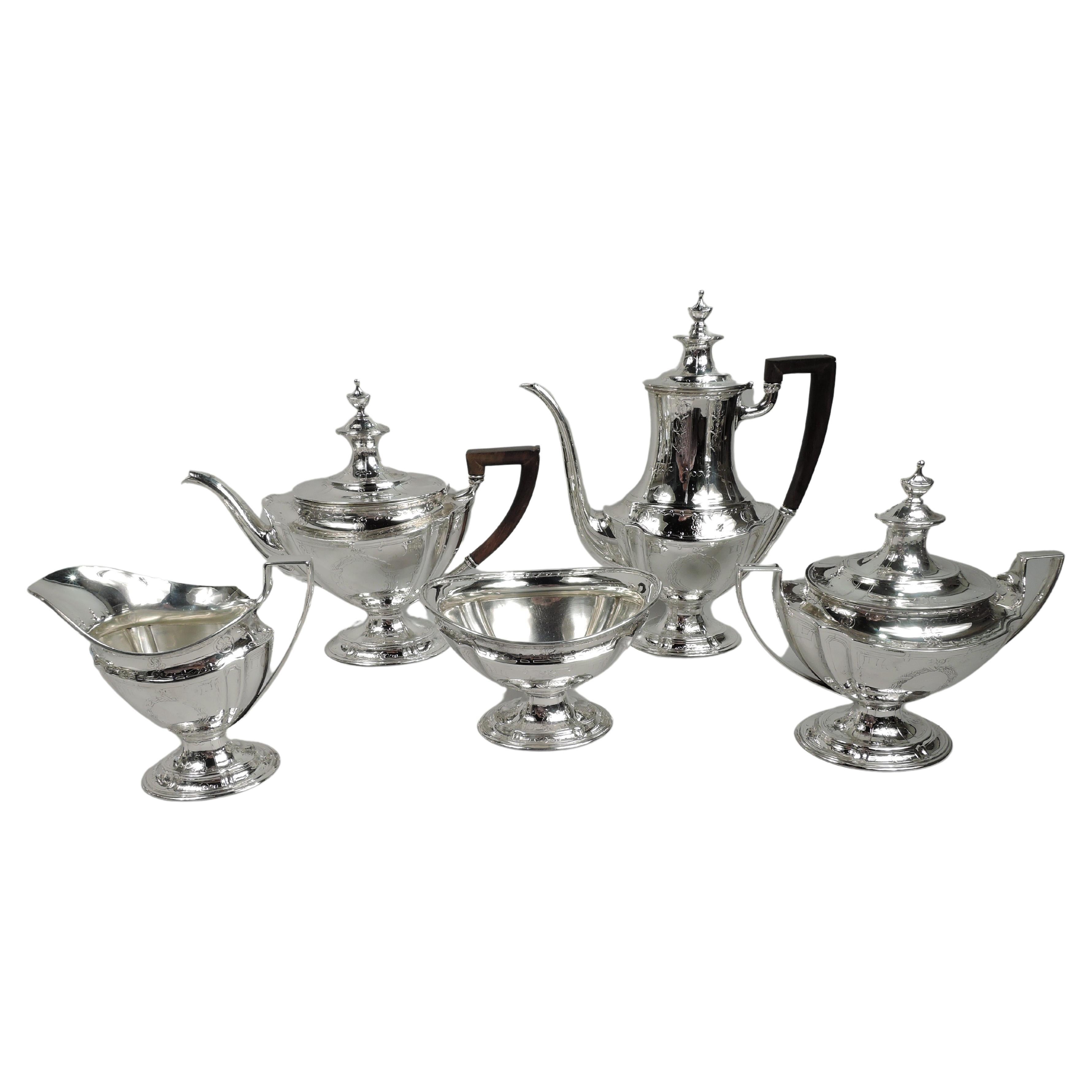
Antique Tiffany Edwardian Classical 5-Piece Coffee & Tea Set

Antique Tiffany Edwardian Classical 5-Piece Coffee & Tea Set

By Tiffany & Co.

Located in New York, NY

Edwardian Classical sterling silver coffee and tea set. Made by Tiffany & Co. in New York, ca 1910. This set comprises 5 pieces: Coffeepot, teapot, creamer, sugar, and waste bowl. Ta...

Category

Early 20th Century American Edwardian Sterling Silver

Materials

Sterling Silver