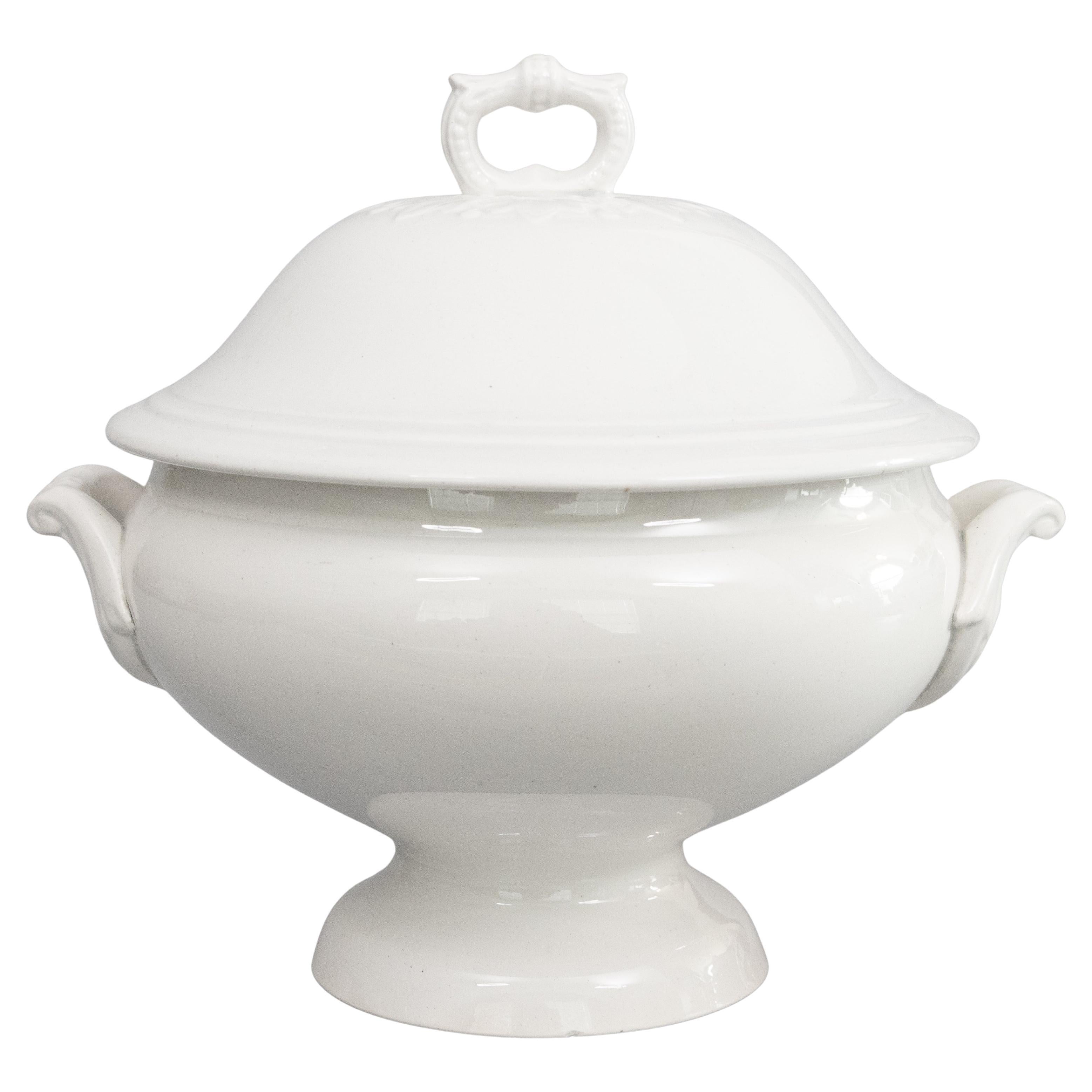
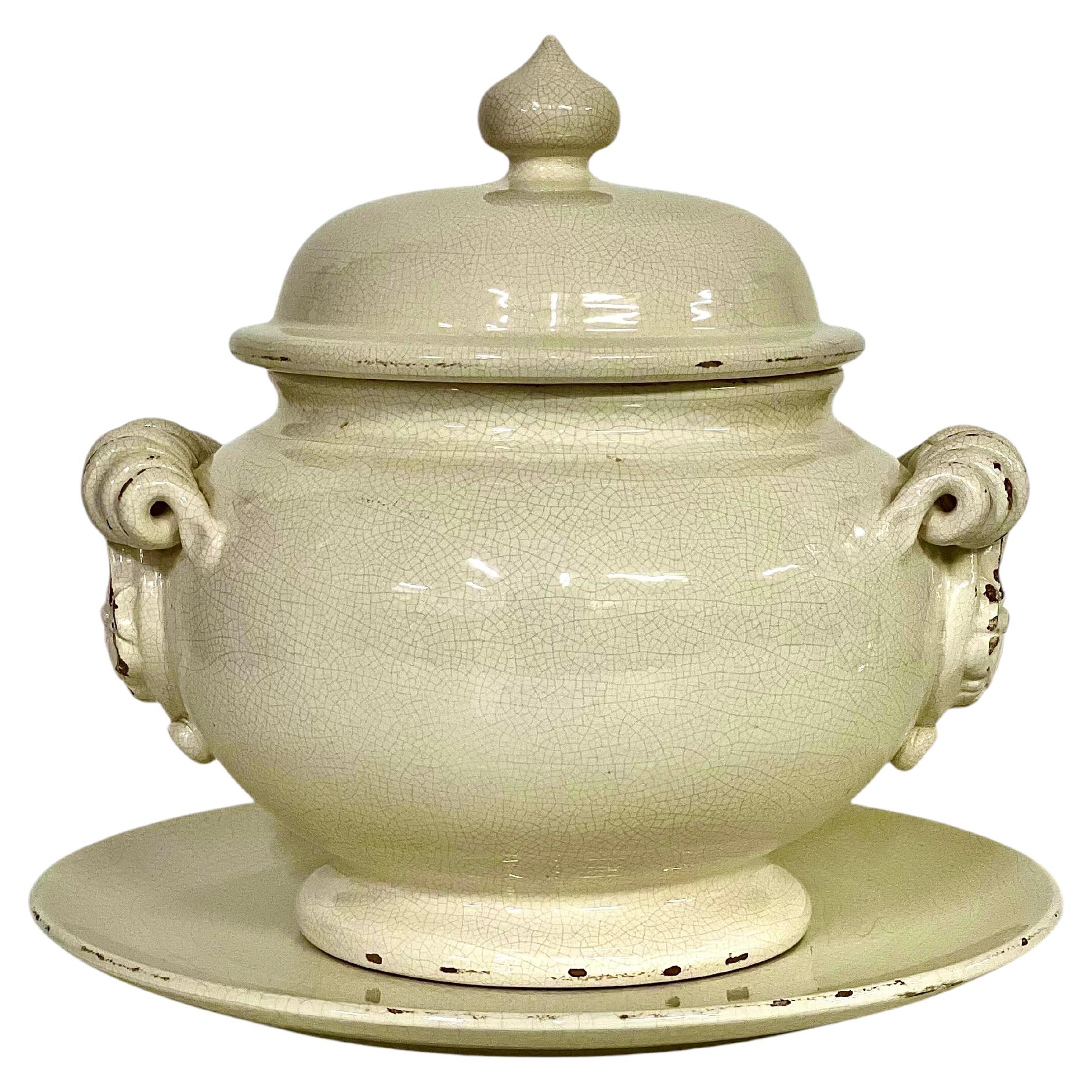
The Genesis of Elegance: A Creamware Tureen from the Georgian Table
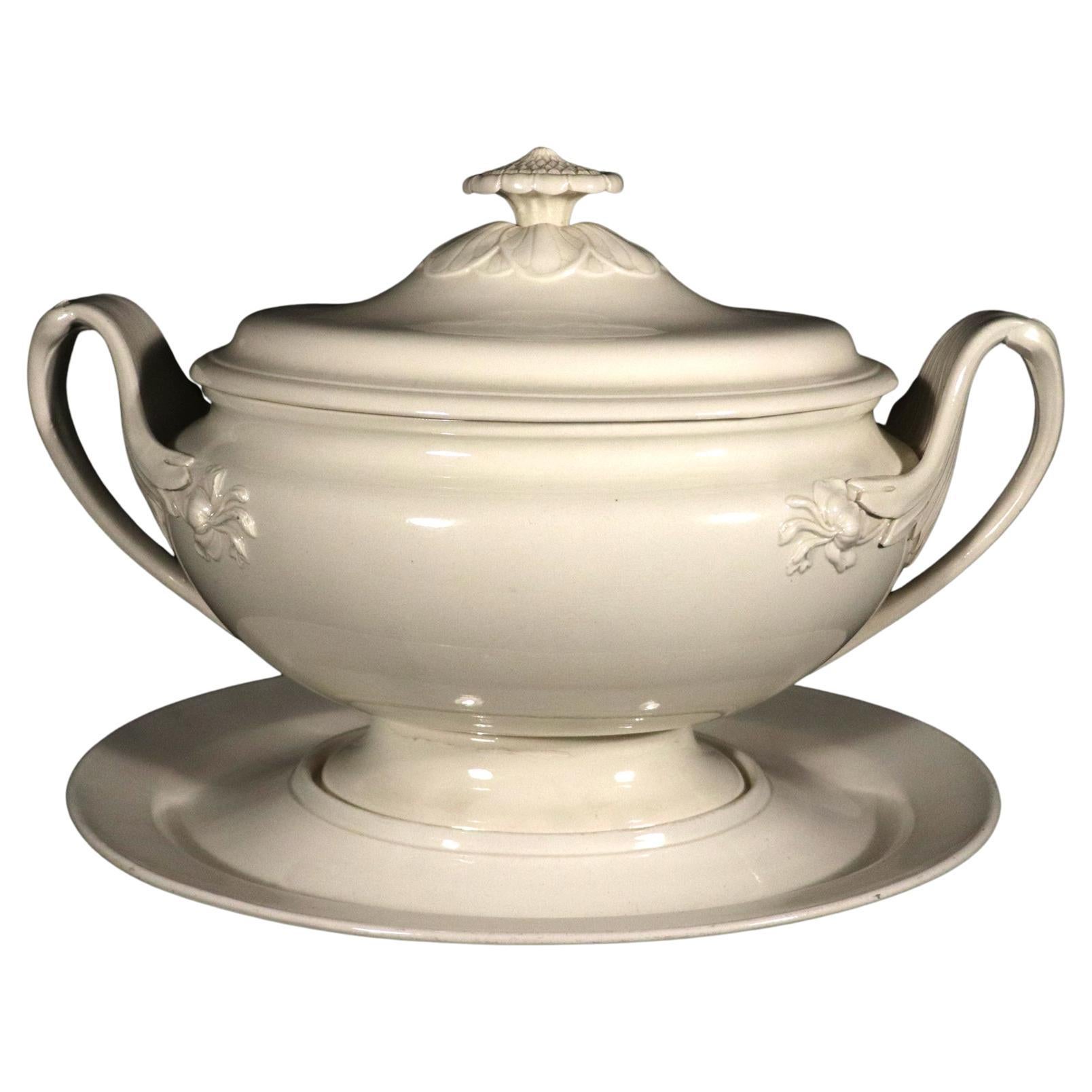
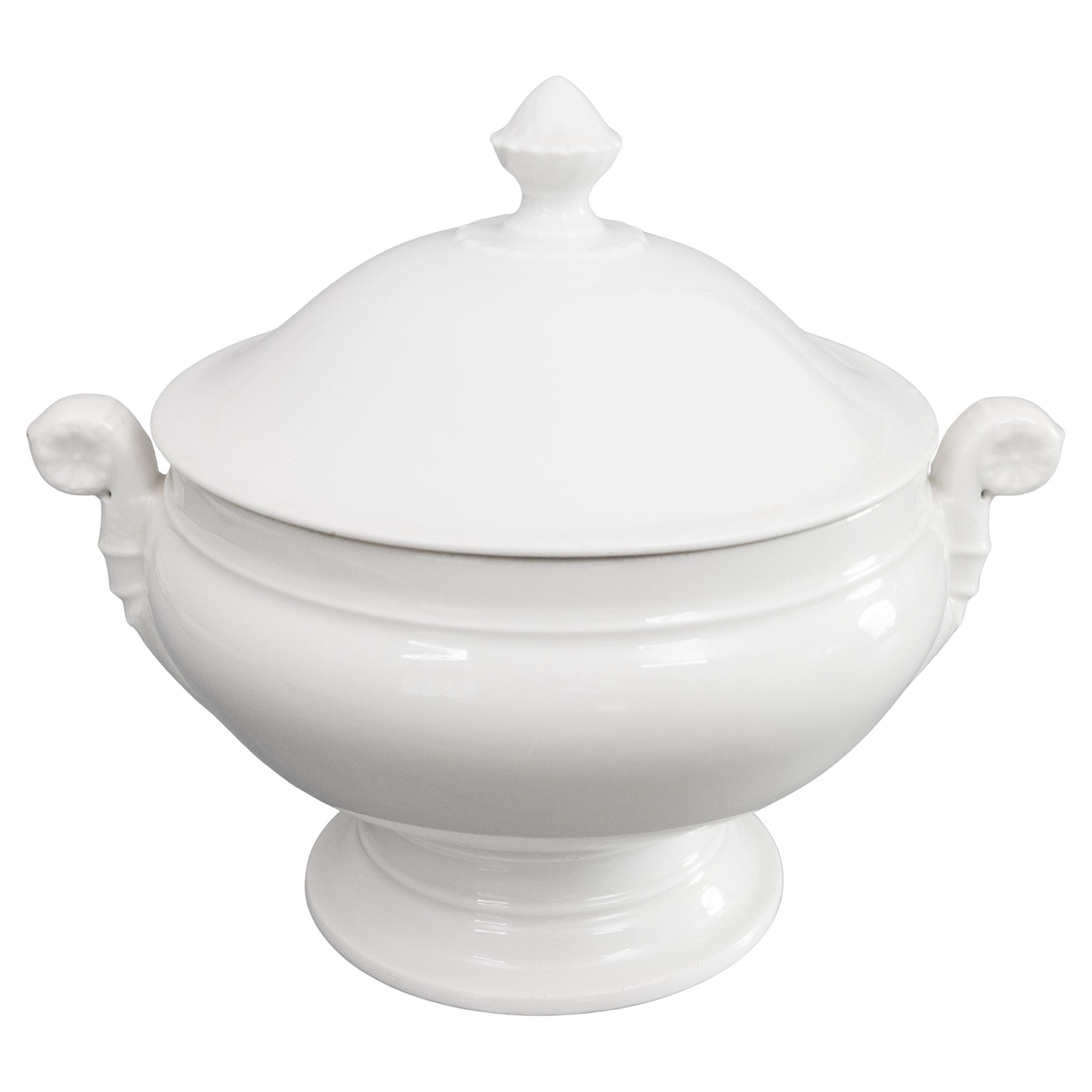
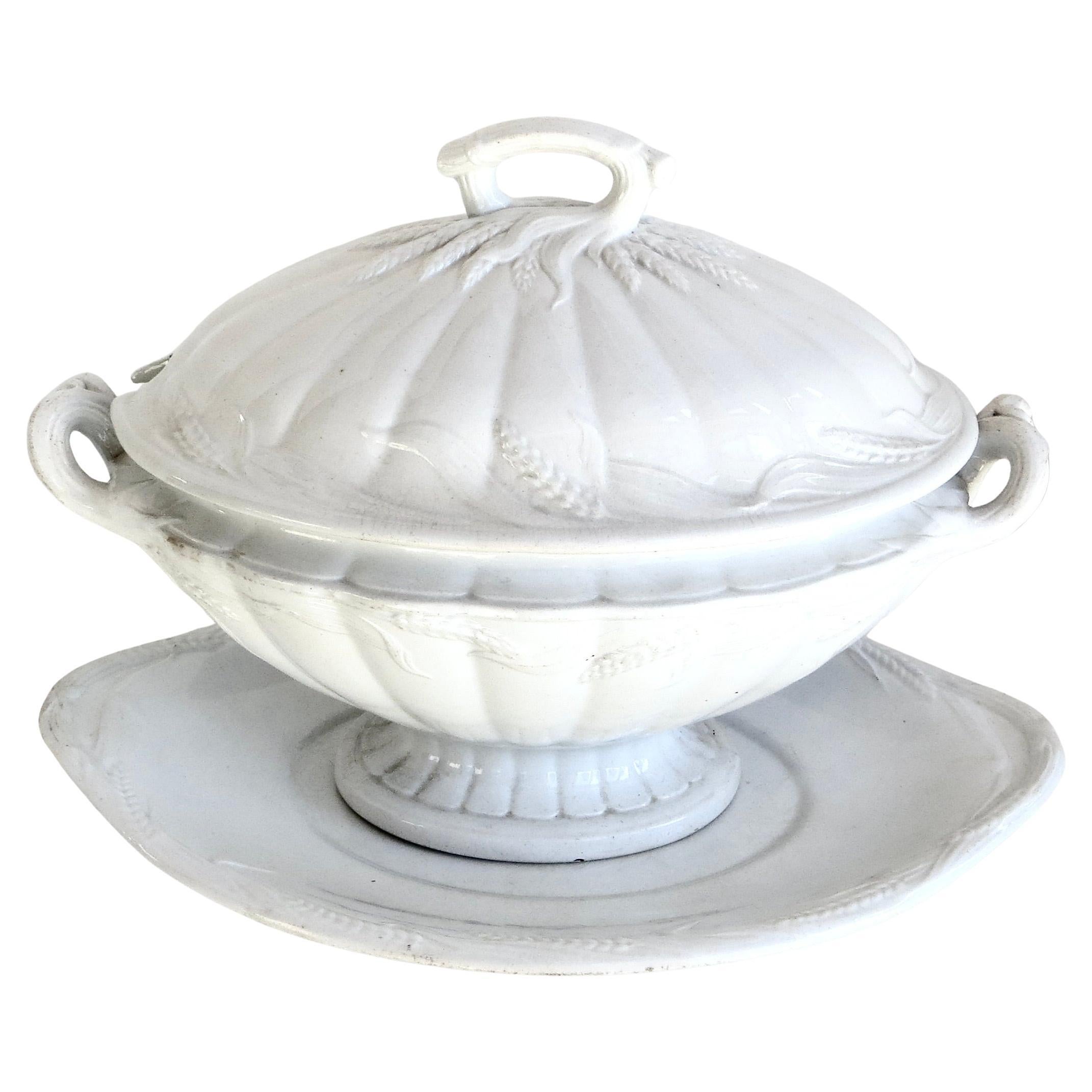
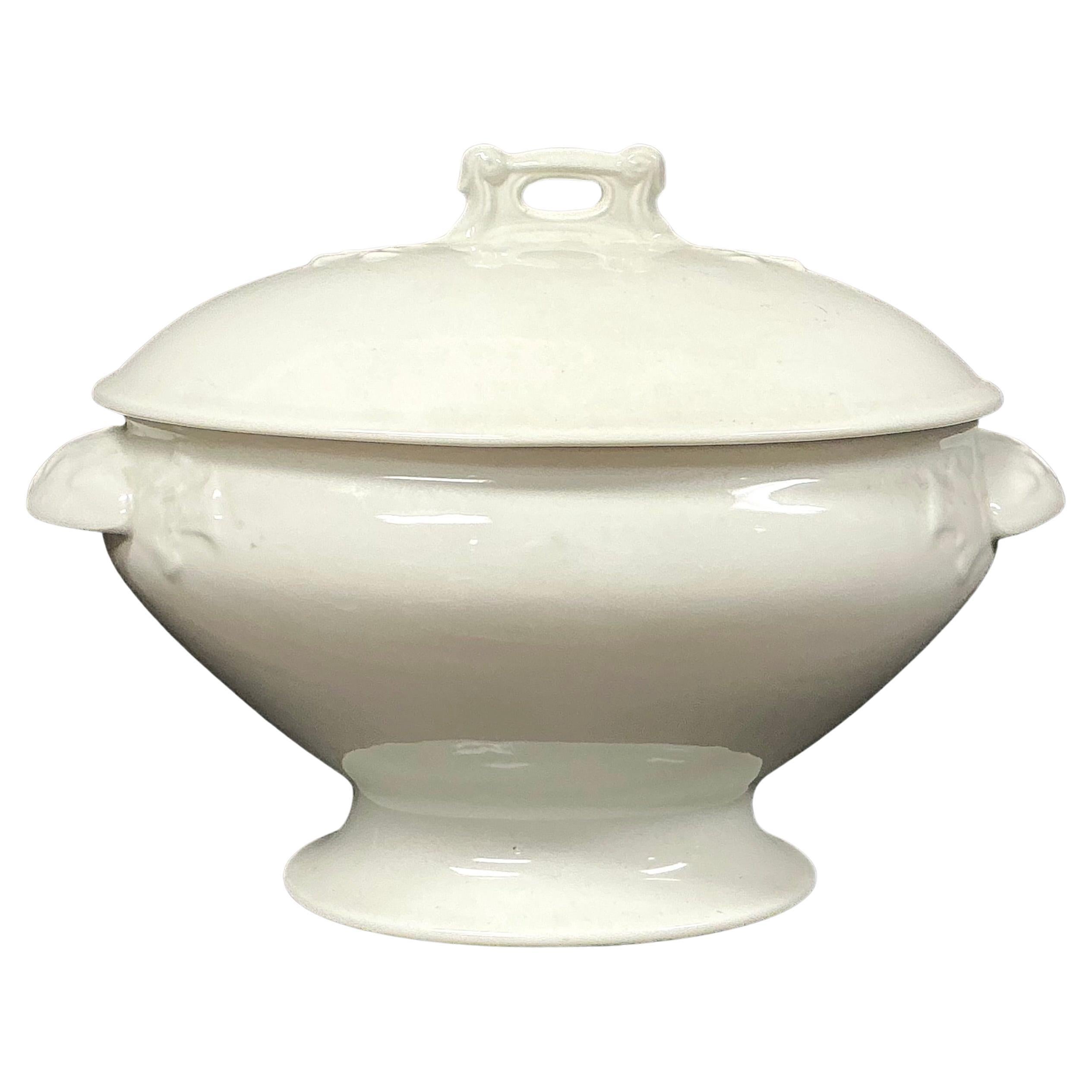
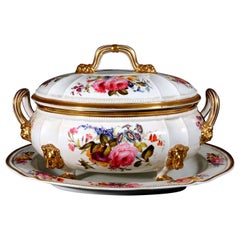
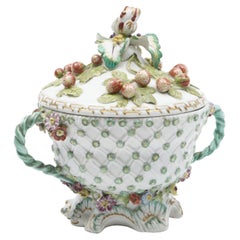
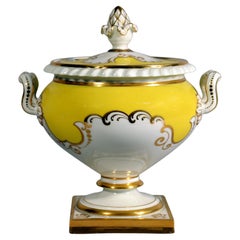
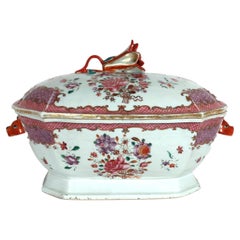
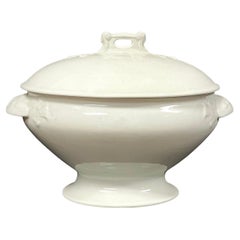
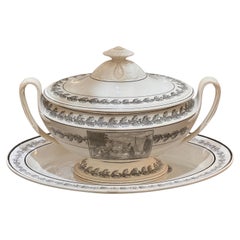
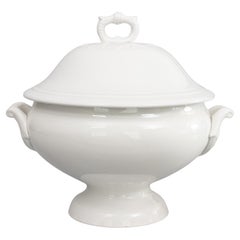
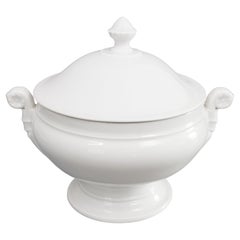
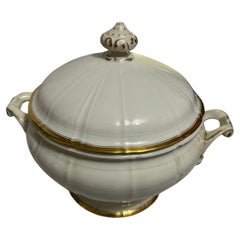
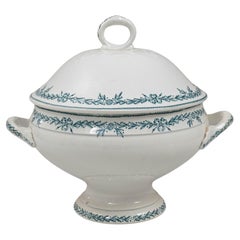
This exceptional creamware soup tureen, dating from the late 18th century (c. 1770–1800), is a magnificent example of how British ceramic innovation revolutionized the European dining table. Crafted during the pinnacle of the Georgian and Neoclassical periods, this piece is not merely a serving vessel but a durable, stylish expression of the era's sophisticated design philosophy.
The tureen features the distinctive creamy white, lead-glazed earthenware that was aggressively marketed by master potters like Josiah Wedgwood as a fashionable, affordable alternative to porcelain. The purity of the glaze was celebrated as "Queen's Ware" after Queen Charlotte patronized the product, establishing it as essential for well-appointed homes.
Its form is a study in Neoclassical restraint and symmetry. The clean, oval body is supported by a delicate, spreading foot, while the domed lid is often crowned with a simple, decorative knop or finial. The most compelling features are the rope-twist handles and corresponding rim ornamentation—a signature motif of late 18th-century decorative arts. This detailed molding speaks to the technical prowess achieved by the potteries of the Staffordshire region, showcasing sharp, clear relief work that the smooth creamware glaze was designed to enhance.
Central to the grand manner of 18th-century dining, this tureen was designed to preside over the first course, holding consommé or rich soups during formal, multi-course dinners. Its enduring presence illustrates the triumph of the Neoclassical ideal: beauty achieved through clarity of form, balanced proportion, and delicate ornamentation applied to a functional, everyday object.
Dimensions: 9 1/2 inches high x 12 1/2 inches wide x 9 inches deep
References & Historical Context:
The Rise of Creamware (Queen's Ware): Creamware was perfected by Josiah Wedgwood around 1762 and dominated the ceramics market until the introduction of Pearlware around 1780. Its success was due to its superior durability, light color, and capacity to take clear, sharp molded detail, making it ideal for the Neoclassical style. (See: Towner, Donald. Creamware. Faber and Faber, 1978. Chapter 2: The Heyday of Creamware.)
Neoclassical Influence: The design of this tureen—with its emphasis on simple geometric forms, symmetry, and classical motifs like the rope-twist (a form derived from ancient Greek and Roman architecture)—is entirely consistent with the Adam style and the broader Neoclassical movement that swept through European decorative arts between 1760 and 1800. (See: Hughes, G. Bernard. English Pottery and Porcelain. Antique Collectors' Club, 1991. Pages 148-155 on Georgian Wares.)
18th-Century Dining: Tureens were essential to the service à la française—the practice of serving all courses on the table simultaneously, with the tureen as a majestic centerpiece for the opening soup course. (See: Langford, Paul. A Polite and Commercial People: England 1727–1783. Oxford University Press, 1989.)
“Creamware and Other English Pottery at Temple Newsam House, Leeds,” p.94, by Peter Walton fo ar similar. example.
(Ref: NY10691-nnrr)