Want more images or videos?
Request additional images or videos from the seller
1 of 11

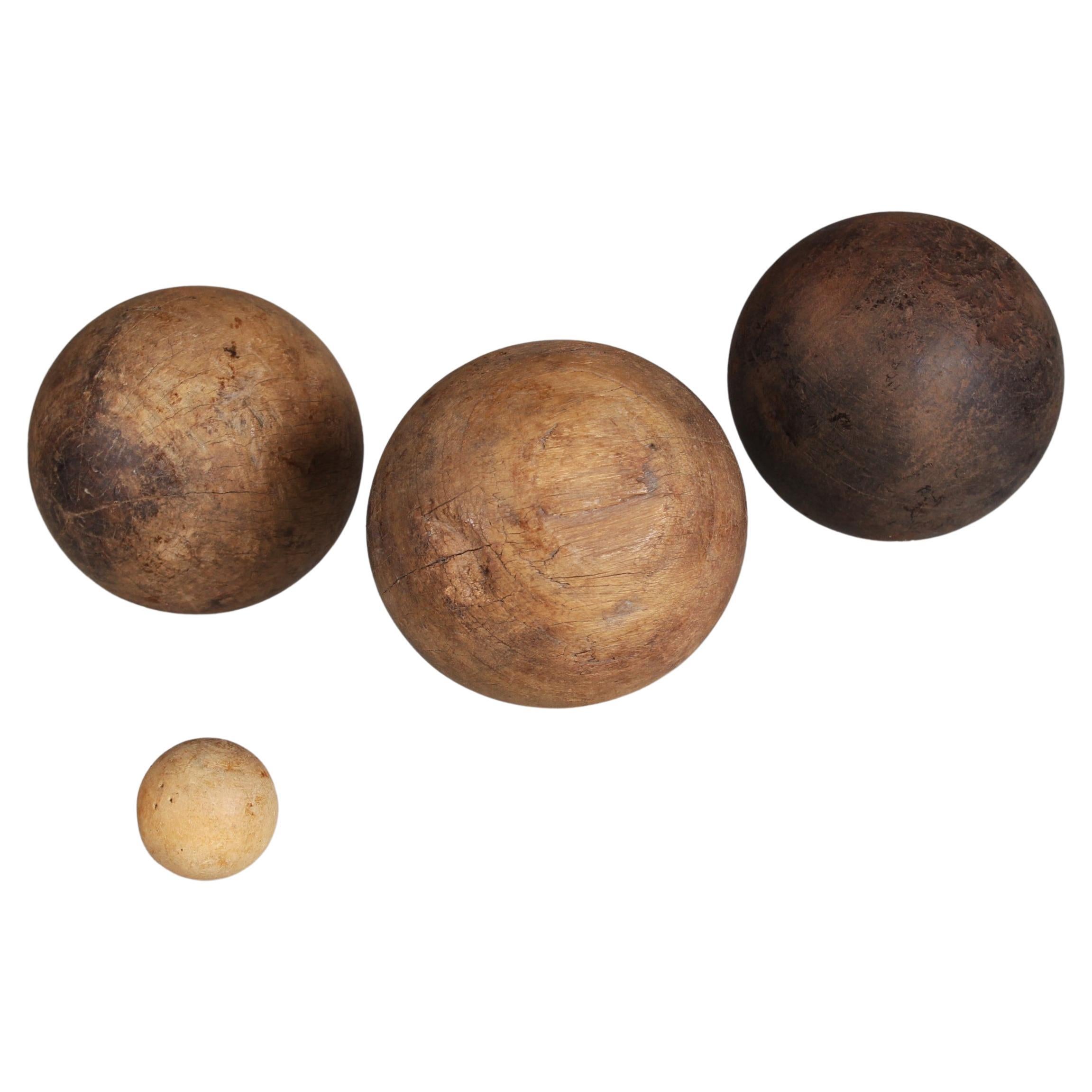
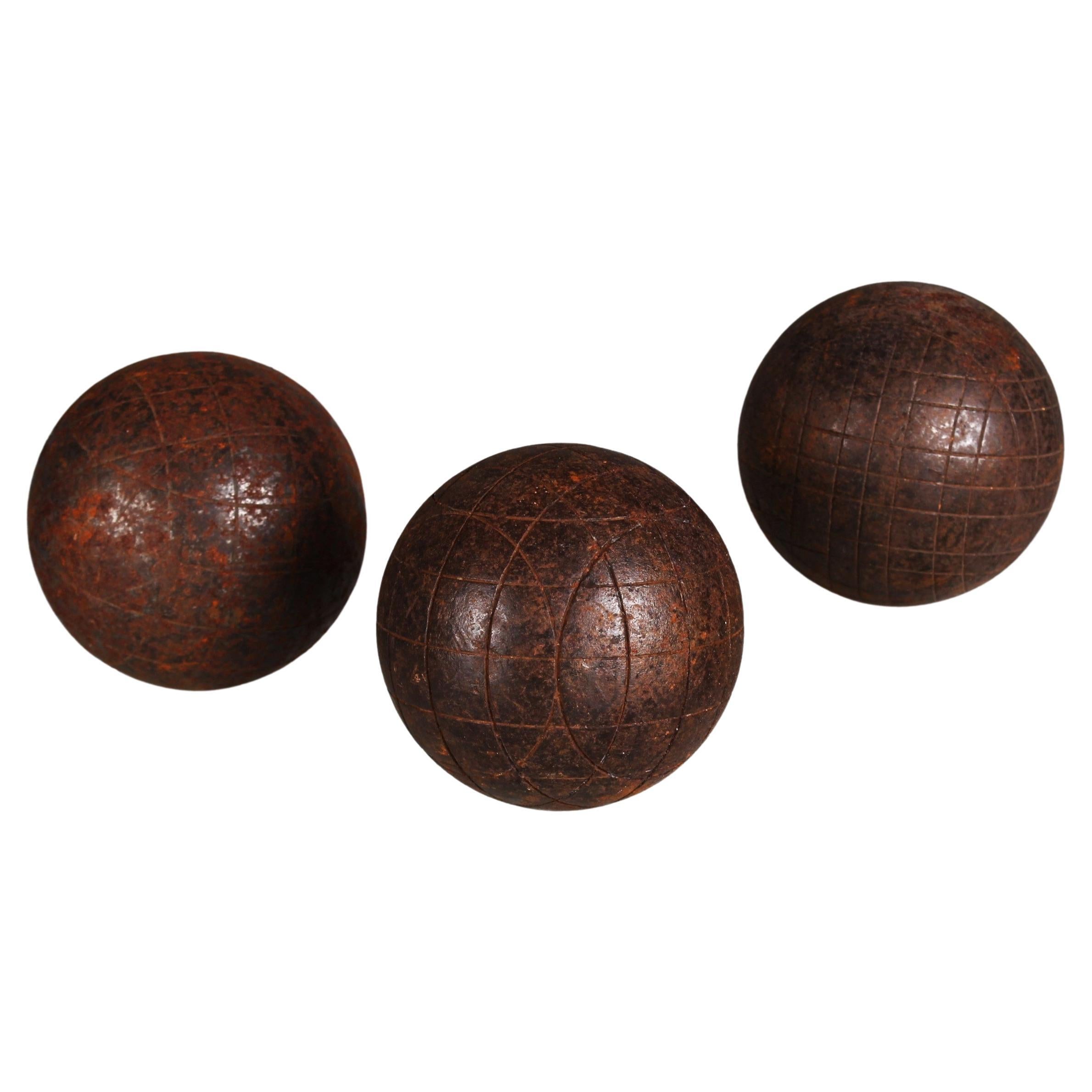
Antique Boule Balls Set "9", Pétanque, 1880s, France, Craftsmanship

$509.43per set
£376.88per set
€430per setVAT Included
CA$705.08per set
A$707.55per set
CHF 412.65per set
MX$8,602.91per set
NOK 4,741.76per set
SEK 4,876.66per set
DKK 3,278.77per set

About the Item

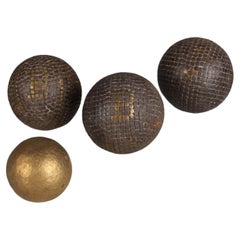
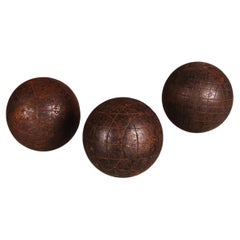
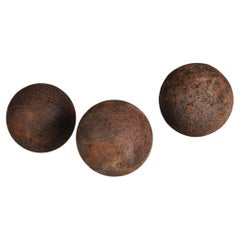
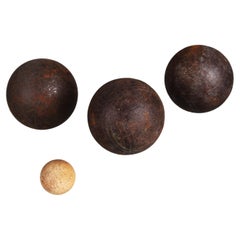
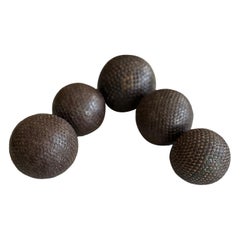
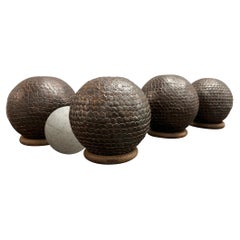
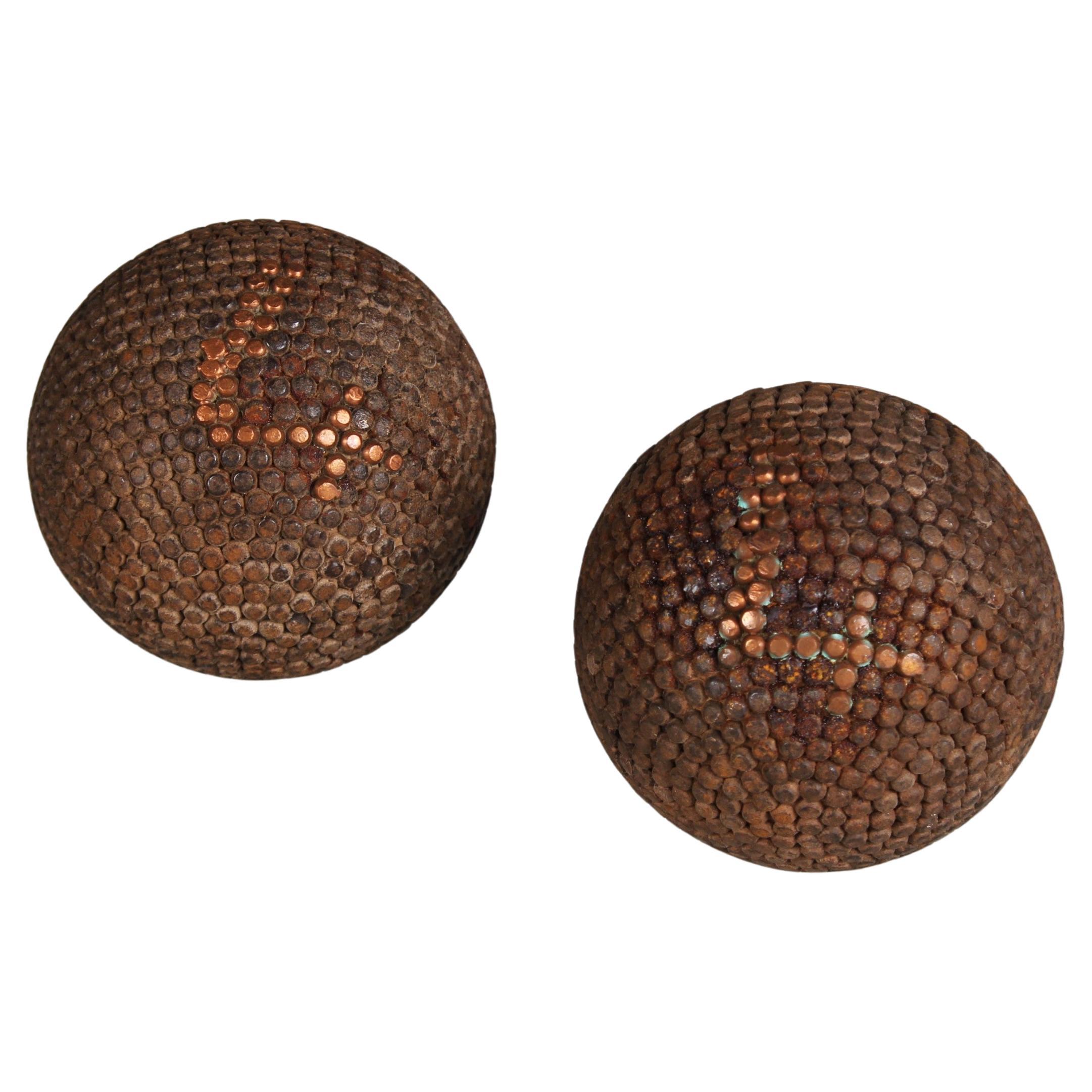
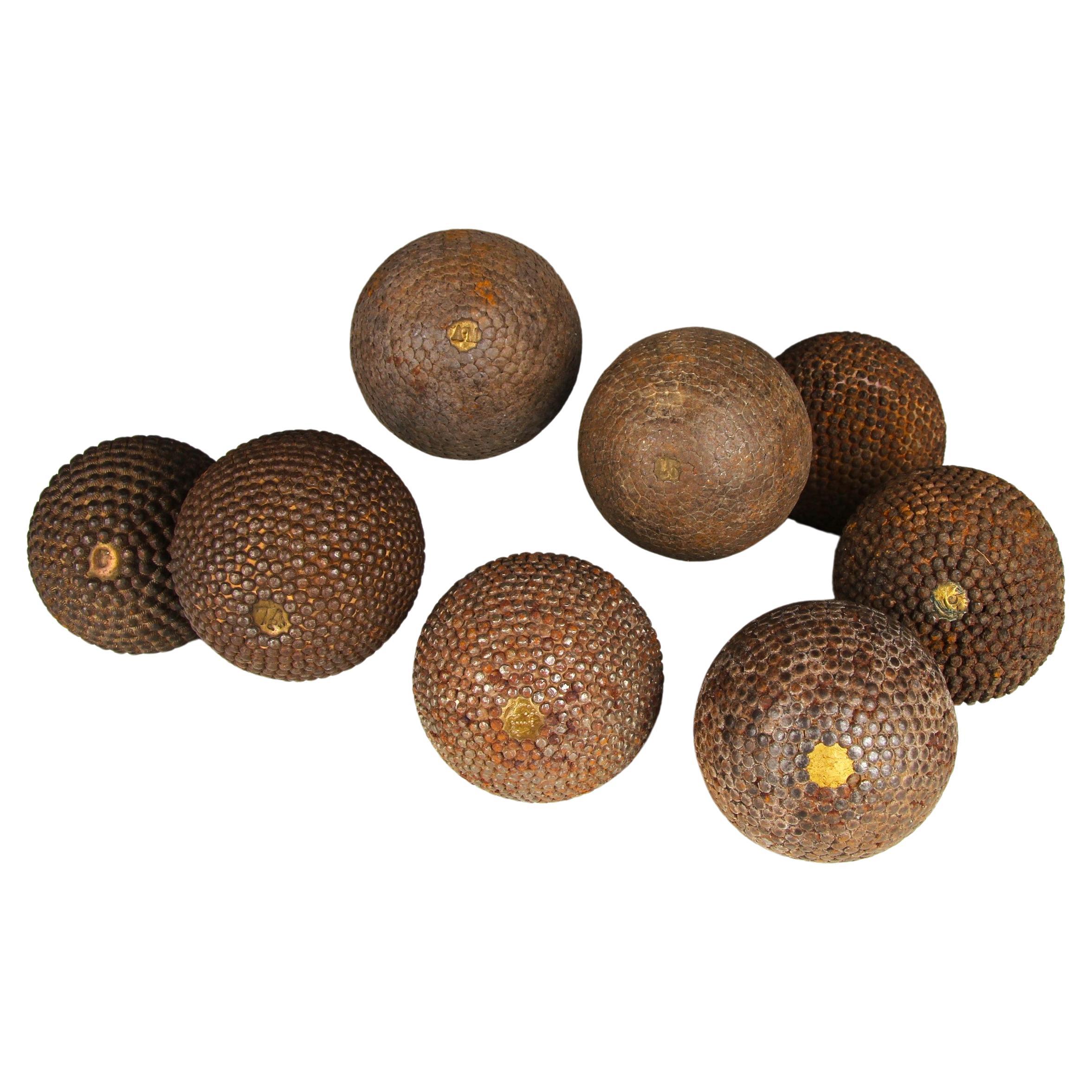
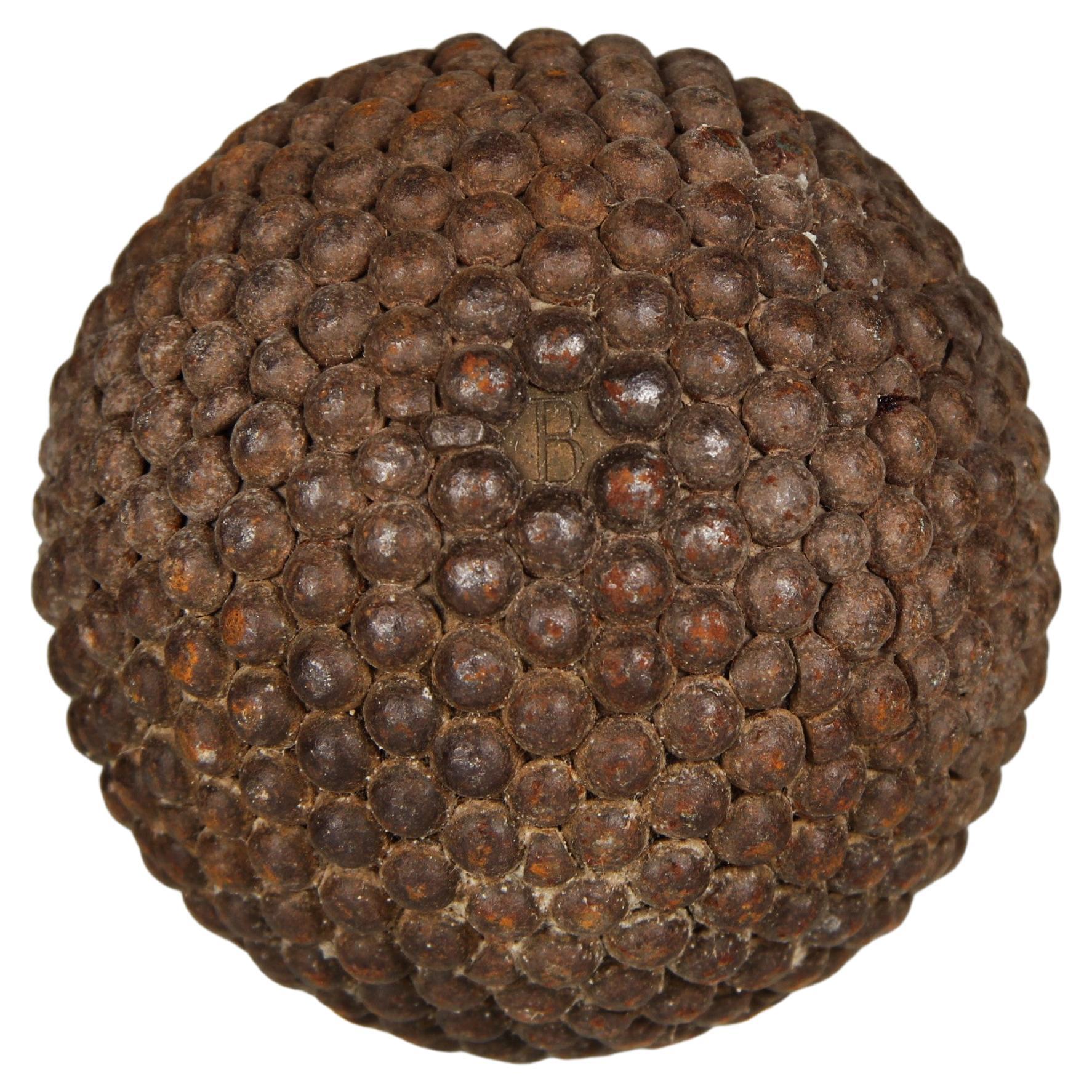
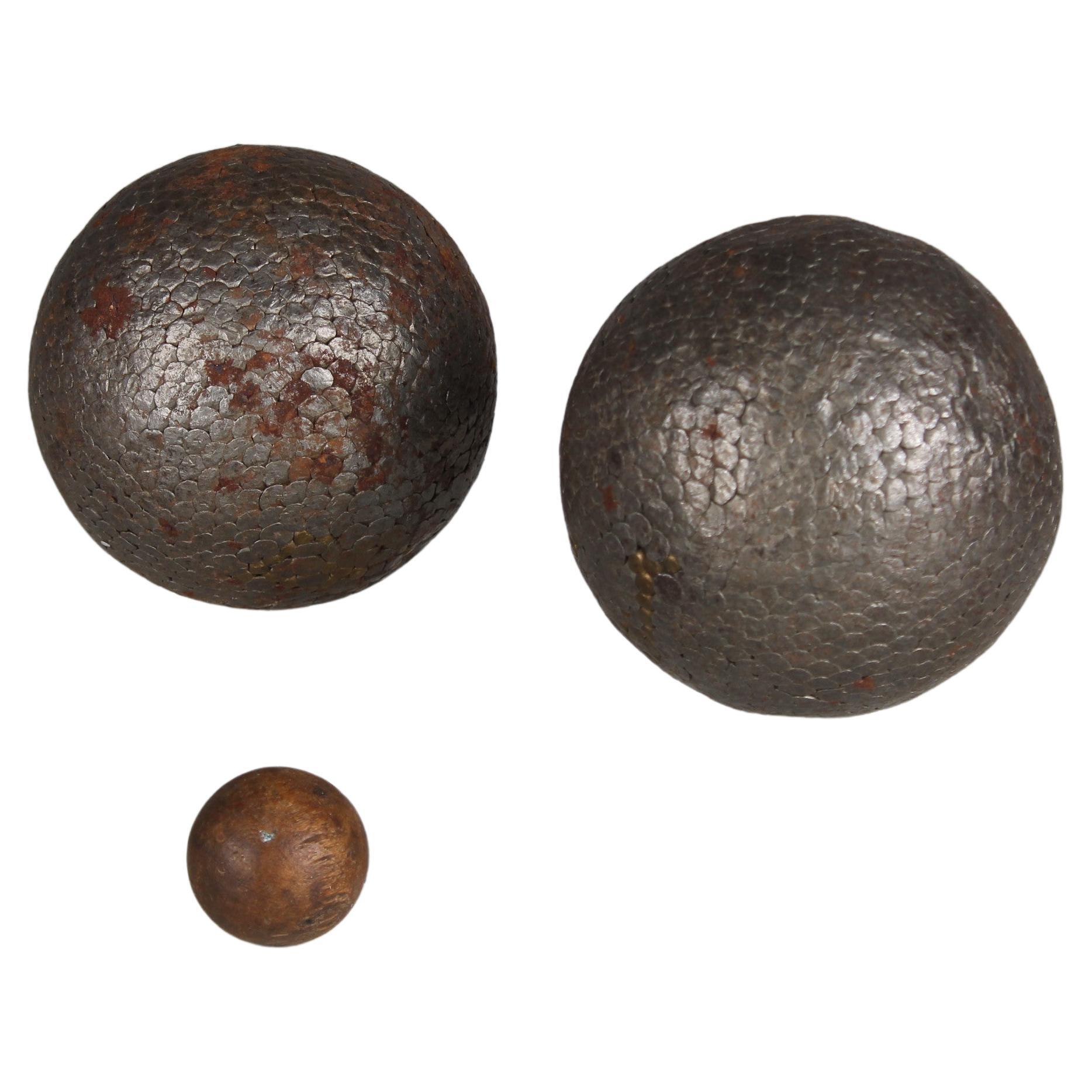
Beautiful, unique Boule set of three Boule balls and one target ball, France, late 19th century. In the 19th century, the manufacture of boules balls underwent significant development in France as the game of boules, particularly the pétanque variant, gained in popularity. The manufacture of boules balls during this period was a manual process that required expertise, precision and love to detail. In the late 19th and early 20th centuries, particularly in rural areas of France and other Mediterranean regions, olive wood was a commonly used source of material for making boules balls. This was not only due to the availability of the material, but also to the outstanding properties of olive wood, which was characterized by hardness, strength and a rich grain. First, the olive wood was carefully selected and shaped into raw balls, which were then sanded to the desired size and shape. The nails were then hammered into the balls one by one, making sure that they were evenly distributed and firmly anchored. Finally, the spheres were polished and coated with a protective varnish to enhance their natural beauty and protect them from the elements. The use of nails to decorate and reinforce olive wood boules was a traditional practice that not only gave the ball a rustic aesthetic, but also improved its durability and contributed to customization. Many balls were made according to the specific requirements and preferences of the players. Nails were driven at regular intervals around the ball, with each nail hole precisely placed so as not to affect the balance and weight distribution of the ball. These nails not only served as a decorative element, but also helped to strengthen the structure of the ball and make it more resistant to the hard knocks and wear and tear during play. Individual engravings or decorations were often applied to the balls to make them unique and identify the player. Antique boules are now sought-after collector's items, representing not only the history and tradition of the game of boules, but also the craftsmanship and cultural heritage of the regions in which they were made. Each ball tells a story of craftsmanship and local artisanship that continues to be admired over time.
  • Dimensions:
    Height: 3.15 in (8 cm)Diameter: 3.15 in (8 cm)
  • Sold As:
    Set of 4
  • Style:
    Late Victorian (Of the Period)
  • Materials and Techniques:
  • Place of Origin:
  • Period:
  • Date of Manufacture:
    Circa 1880
  • Condition:
    Wear consistent with age and use. Very nice, age-related and cleaned condition.
  • Seller Location:
    Greven, DE
  • Reference Number:
    1stDibs: LU5419239379422

More From This Seller

View All
Antique Boule Balls Set "B", Pétanque, 1880s, France, Craftsmanship

Antique Boule Balls Set "B", Pétanque, 1880s, France, Craftsmanship

Located in Greven, DE

Beautiful, unique Boule set of three Boule balls, France, late 19th Century. In the 19th century, the manufacture of boules balls underwent significant development in France as the game of boules, particularly the pétanque variant, gained in popularity. The manufacture of boules balls during this period was a manual process that required expertise, precision and love to detail. In the late 19th and early 20th centuries, particularly in rural areas of France and other Mediterranean regions, olive wood was a commonly used source of material for making boules balls. This was not only due to the availability of the material, but also to the outstanding properties of olive wood, which was characterized by hardness, strength and a rich grain. First, the olive wood was carefully selected and shaped into raw balls, which were then sanded to the desired size and shape. The nails were then hammered into the balls one by one, making sure that they were evenly distributed and firmly anchored. Finally, the spheres were polished and coated with a protective varnish to enhance their natural beauty and protect them from the elements. The use of nails to decorate and reinforce olive wood boules was a traditional practice that not only gave the ball a rustic aesthetic, but also improved its durability and contributed to customization. Many balls were made according to the specific requirements and preferences of the players. Nails were driven at regular intervals around the ball, with each nail hole precisely placed so as not to affect the balance and weight distribution of the ball. These nails not only served as a decorative element, but also helped to strengthen the structure of the ball and make it more resistant to the hard knocks and wear and tear during play. Individual engravings or decorations were often applied to the balls to make them unique and identify the player. Antique boules...

Category

Antique Late 19th Century French Late Victorian Antiquities

Materials

Olive

Antique Boule Balls Set "B", Pétanque, 1880s, France, Craftsmanship

Antique Boule Balls Set "B", Pétanque, 1880s, France, Craftsmanship

Located in Greven, DE

Beautiful, unique Boule set of three Boule balls and one target ball, France, late 19th century. In the 19th century, the manufacture of boules balls underwent significant development in France as the game of boules, particularly the pétanque variant, gained in popularity. The manufacture of boules balls during this period was a manual process that required expertise, precision and love to detail. In the late 19th and early 20th centuries, particularly in rural areas of France and other Mediterranean regions, olive wood was a commonly used source of material for making boules balls. This was not only due to the availability of the material, but also to the outstanding properties of olive wood, which was characterized by hardness, strength and a rich grain. First, the olive wood was carefully selected and shaped into raw balls, which were then sanded to the desired size and shape. The nails were then hammered into the balls one by one, making sure that they were evenly distributed and firmly anchored. Finally, the spheres were polished and coated with a protective varnish to enhance their natural beauty and protect them from the elements. The use of nails to decorate and reinforce olive wood boules was a traditional practice that not only gave the ball a rustic aesthetic, but also improved its durability and contributed to customization. Many balls were made according to the specific requirements and preferences of the players. Nails were driven at regular intervals around the ball, with each nail hole precisely placed so as not to affect the balance and weight distribution of the ball. These nails not only served as a decorative element, but also helped to strengthen the structure of the ball and make it more resistant to the hard knocks and wear and tear during play. Individual engravings or decorations were often applied to the balls to make them unique and identify the player. Antique boules...

Category

Antique Late 19th Century French Late Victorian Antiquities

Materials

Olive

Antique Boule Set, Boule Balls, Pétanque, 1880s, France, Craftsmanship

Antique Boule Set, Boule Balls, Pétanque, 1880s, France, Craftsmanship

Located in Greven, DE

Beautiful, unique Boule set of three Boule balls, France, late 19th century. In the 19th century, antique metal boules balls experienced a renaissance that took the game of boules to a new level. These ornately crafted balls were not only instruments of the game, but also symbols of elegance and sophistication in leisure activities. Made from high-quality metals such as steel or brass, Boule balls were forged and polished by skilled craftsmen to ensure a smooth and even surface. The antique boules...

Category

Antique Late 19th Century French Late Victorian Antiquities

Materials

Metal

Antique Boule Set, Boule Balls, Pétanque, 1880s, France, Craftsmanship

Antique Boule Set, Boule Balls, Pétanque, 1880s, France, Craftsmanship

Located in Greven, DE

Beautiful, unique Boule set of three Boule balls and one target ball, France, late 19th Century. Diameter 8,5 cm. Fantastic colour and patina! In the 19th century, antique metal boules balls experienced a renaissance that took the game of boules to a new level. These ornately crafted balls were not only instruments of the game, but also symbols of elegance and sophistication in leisure activities. Made from high-quality metals such as steel or brass, Boule balls were forged and polished by skilled craftsmen to ensure a smooth and even surface. The antique boules...

Category

Antique Late 19th Century French Late Victorian Antiquities

Materials

Metal

Antique Boule Set, Boule Balls, Pétanque, 1880s, France, Craftsmanship

Antique Boule Set, Boule Balls, Pétanque, 1880s, France, Craftsmanship

Located in Greven, DE

Beautiful, unique Boule set of three Boule balls and one target ball, France, late 19th Century. Fantastic colour and patina! In the 19th century, antique metal boules balls experienced a renaissance that took the game of boules to a new level. These ornately crafted balls were not only instruments of the game, but also symbols of elegance and sophistication in leisure activities. Made from high-quality metals such as steel or brass, Boule balls were forged and polished by skilled craftsmen to ensure a smooth and even surface. The antique boules...

Category

Antique Late 19th Century French Late Victorian Antiquities

Materials

Metal

Large Set Of Antique Boule Balls, 13 Pieces, Pétanque, 1880s, France

Large Set Of Antique Boule Balls, 13 Pieces, Pétanque, 1880s, France

Located in Greven, DE

Large Boule ball set of 13 pieces, France, late 19th Century. Unrestored, original condition with signs of age and use. In the 19th century, the manufacture of boules balls underwen...

Category

Antique Late 19th Century French Late Victorian Antiquities

Materials

Metal, Copper, Steel

You May Also Like

Antique French Nail-Studded Boules, Traditional Pétanque Game Balls

Antique French Nail-Studded Boules, Traditional Pétanque Game Balls

Located in Hamburg, DE

This authentic collection of antique French boules represents a traditional form of pétanque balls widely used in Southern Europe before the introduction of modern solid metal versi...

Category

Antique Early 1900s Toys

Materials

Iron

Set of 19th Century French Pétanque Boules

Set of 19th Century French Pétanque Boules

Located in Chicago, IL

A playful set of 19th century French pétanque boules, comprised of four iron studded balls and one marble cochonnet (jack). The set can be used in pla...

Category

Antique 19th Century French Rustic Mounted Objects

Materials

Marble, Iron

9 Antique French Boule Lyonnaise Cloutees Studded Nailed Petanque Balls 3" & 4.5

9 Antique French Boule Lyonnaise Cloutees Studded Nailed Petanque Balls 3" & 4.5

Located in Dayton, OH

Set of 9 antique French bowling game/boules cloutees / nailed balls - spheres of wood studded throughout with nails for durability. Four large, five small. Dimensions: Large - 4.5...

Category

Early 20th Century Sports Equipment and Memorabilia

Materials

Iron

French Antique 12 Brass & Iron Boules, Circa 1880, Patina Finish

French Antique 12 Brass & Iron Boules, Circa 1880, Patina Finish

Located in Baton Rouge, LA

A collection of 12 brass & iron boules from France, circa 1880. Boule has been a popular game played in France since the Middle Ages and continues to be a family friendly game all ov...

Category

Antique 19th Century French Other Games

Materials

Metal, Brass, Iron

19th Century Bocce Balls, France, Set of Three

19th Century Bocce Balls, France, Set of Three

Located in Point Richmond, CA

Late 19th to early 20th century bocce balls, France, set of three boxwood, iron and brass nails. The first ball has the letters PP in brass, the second ha...

Category

Antique Late 19th Century French Folk Art Game Boards

Materials

Brass, Iron