Video Loading
Want more images or videos?
Request additional images or videos from the seller
1 of 8

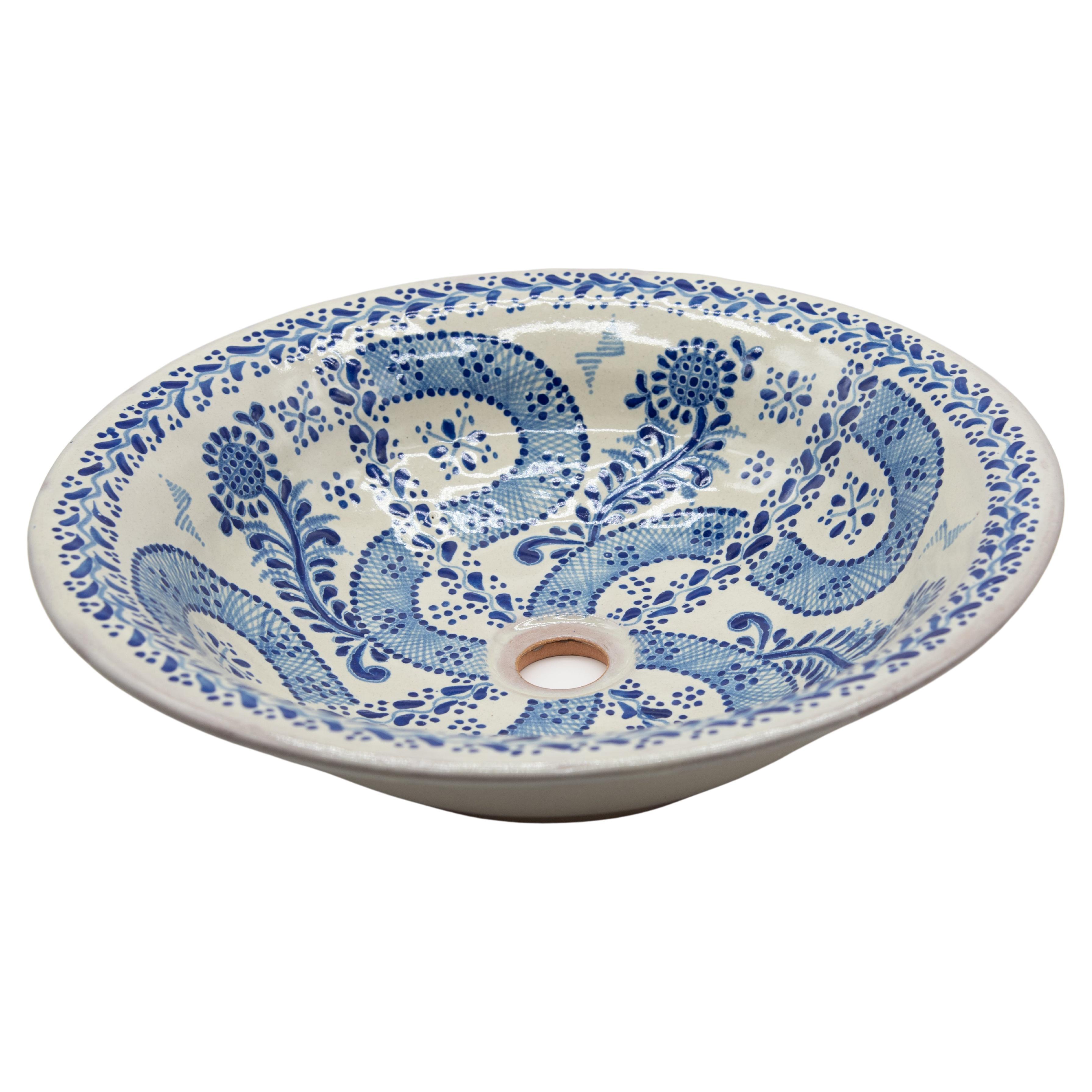
Talavera Decorative Lavabo Sink Folk Art Mexican Ceramic Spanish Colonial

$520per item
£389.60per item
€454.13per item
CA$731.91per item
A$745.01per item
CHF 424.07per item
MX$8,992.80per item
NOK 4,944.92per item
SEK 5,004.54per item
DKK 3,394.91per item
Quantity

About the Item

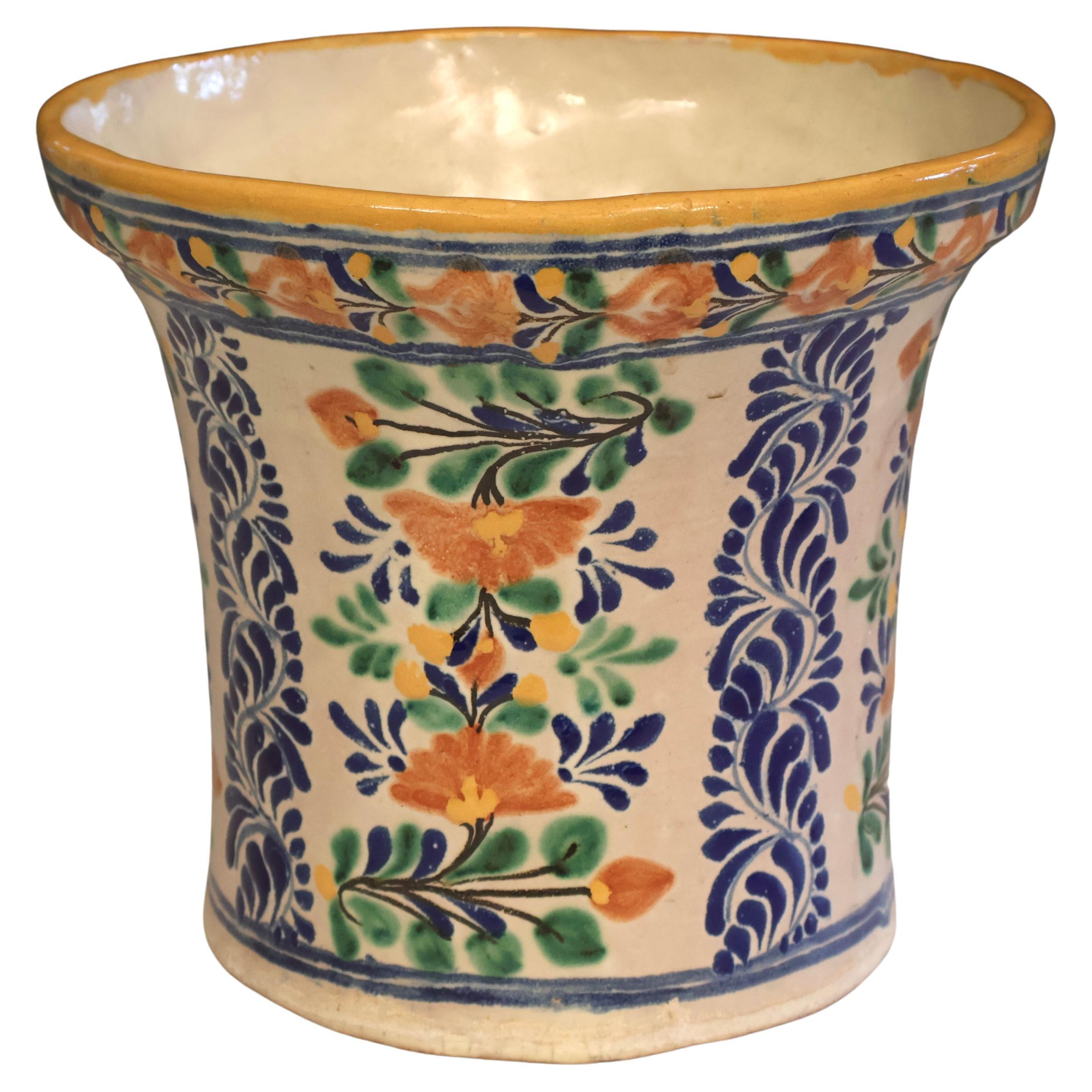
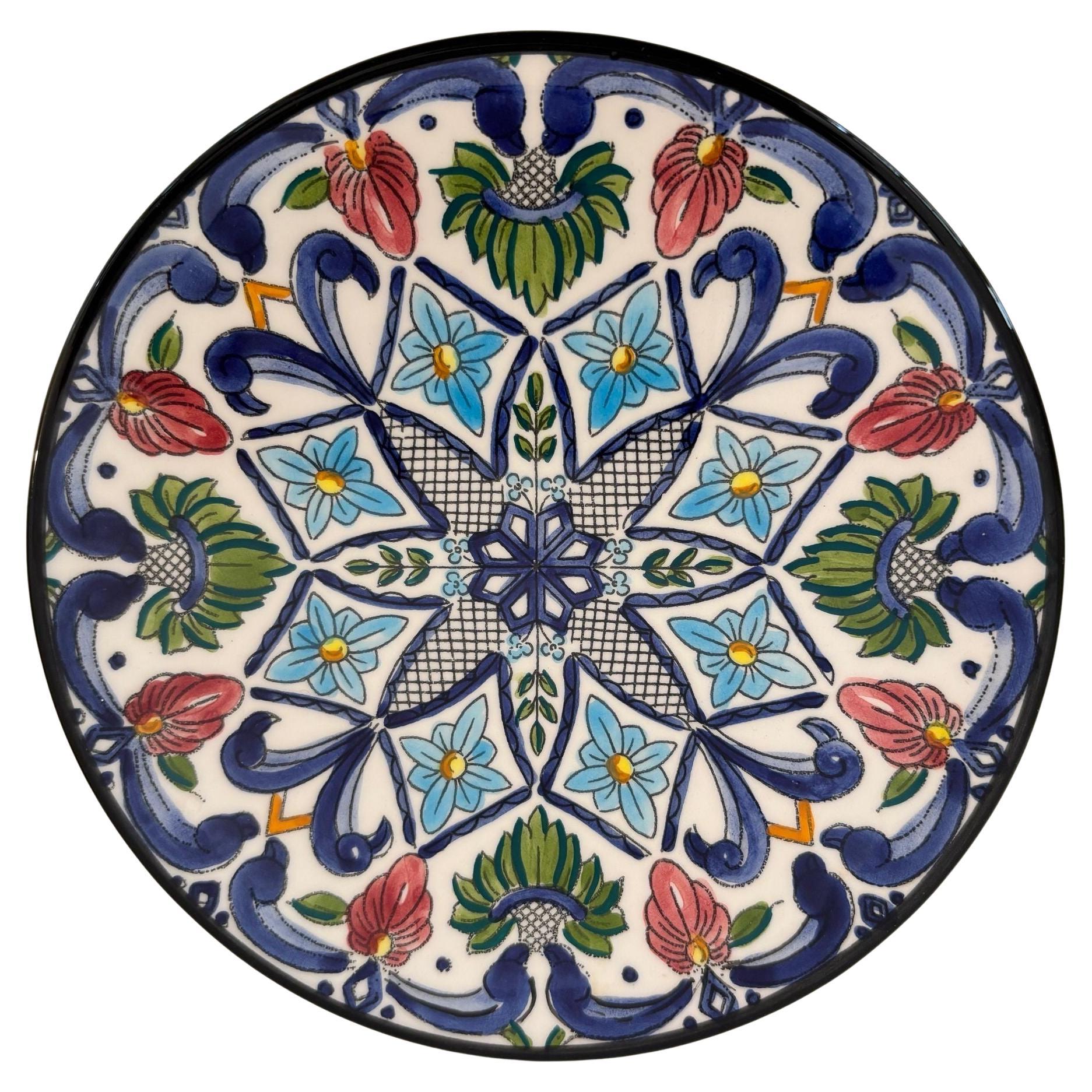
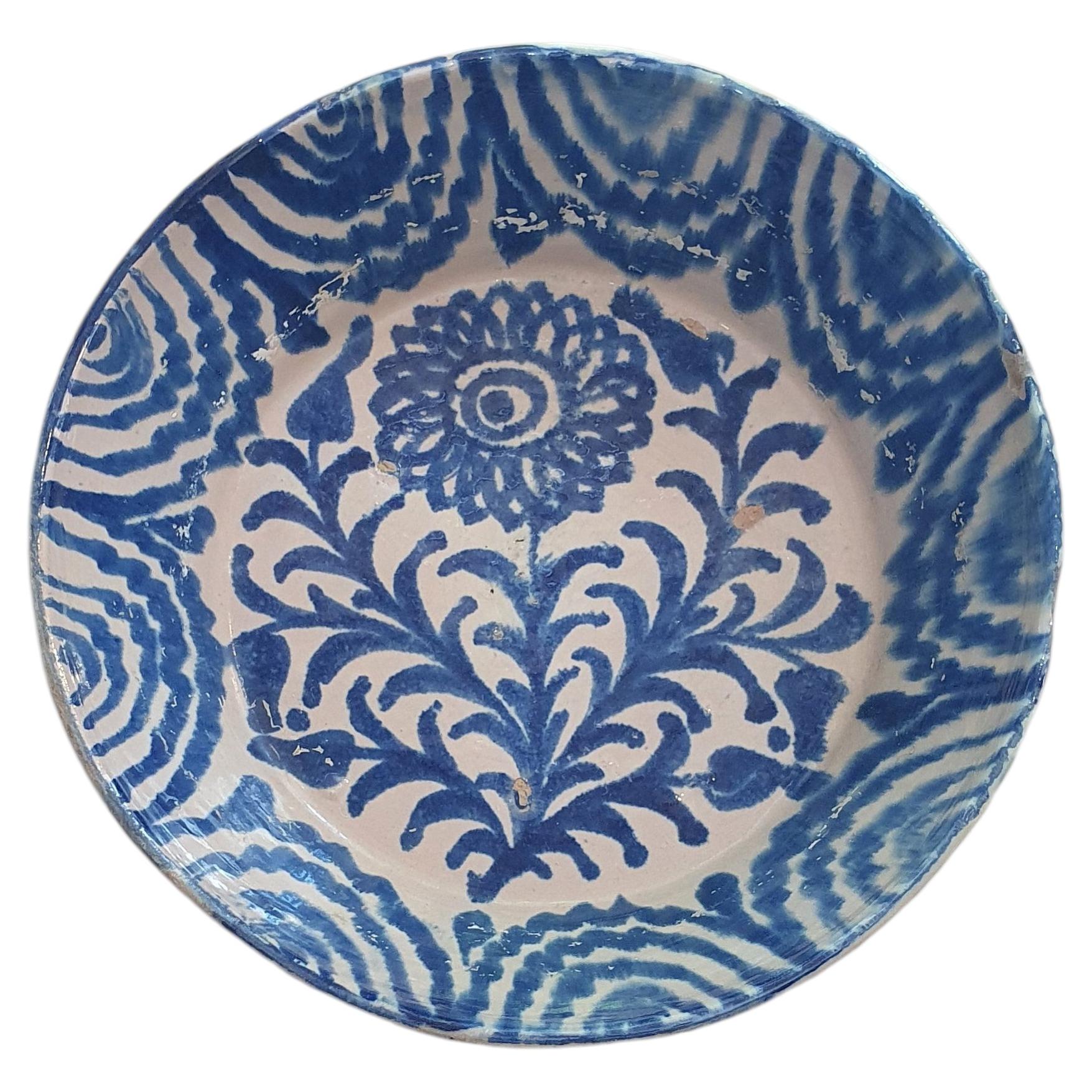
Elegant surrealist sink lavabo made with the Talavera technique. Artist, Cesar Torres portraits the colonial art of Mexico. The Spanish colonial style sink is a perfect piece to bring personality and light to bathrooms and restrooms. Its warm colors bring light to the piece, creating a cozy effect in the atmosphere where it is placed. The Talavera is not just a simple painted ceramic: its exquisite decoration is the product of a delicate process of alchemy that translates into fine enamels. In Puebla, Mexico few people still produce using Talavera with the ancestral techniques.One of those few is Cesar Torres, Don Cesar learned his art in the workshop of the Uriarte family, an excellent workshop where his grandfather worked. In his creations he uses the black and white mud that is obtained from the nearby hills of Loreto and Guadalupe, and colors of mineral origin that he creates in his workshop with recipes from his grandfather. All the pieces are modeled in a traditional way and go through a production process that usually takes from one to two months, between drying, burning, and painting. Being surrounded by a living tradition, Cesar Torres Jr., learned from his father since childhood. Architect by profession, Cesar Jr. has come to revolutionize and modernize with new designs and ideas of the current world, nevertheless always respecting the tradition of the processes and materials that make Talavera a Creole art.To this day, father and son together join forces to unite their ideas and leave both tradition and contemporary ideas in an ancestral art. This piece has been crafted with natural clays and enamels, always conserving the traditional, method dating back to the 19th century. Handmade by master artisan Cesar Torres in Puebla, Mexico Talavera's history: Originates in Baghdad in the 9th century. The Arabs with the desire to imitate the Chinese ceramic that came to that area, discover this ingenious technique. They transported to Spain during the invasion of the moors and subsequently set roots in Mexico with the Spanish conquest in the 16th century.

More From This Seller

View All
Talavera Decorative Lavabo Sink Folk Art Mexican Ceramic Blue White

Talavera Decorative Lavabo Sink Folk Art Mexican Ceramic Blue White

By Cesar

Located in Queretaro, Queretaro

Elegant white and blue sink lavabo made with the Talavera technique. Artist, Cesar Torres portraits the colonial art of Mexico. The Talavera is not just a simple painted ceramic: its exquisite decoration is the product of a delicate process of alchemy that translates into fine enamels. In Puebla, Mexico few people still produce using Talavera with the ancestral techniques. One of those few is Cesar Torres, Don Cesar...

Category

21st Century and Contemporary Mexican Spanish Colonial Ceramics

Materials

Ceramic, Clay, Majolica
Authentic Talavera Decorative Plate Folk Art Vessel Mexican Ceramic Blue White

Authentic Talavera Decorative Plate Folk Art Vessel Mexican Ceramic Blue White

By Cesar

Located in Queretaro, Queretaro

Elegant white and blue plate made with the Talavera technique. Artist, Cesar Torres portraits the colonial art of Mexico. The Talavera is not just a simple painted ceramic: its exquisite decoration is the product of a delicate process of alchemy that translates into fine enamels. In Puebla, Mexico few people still produce using Talavera with the ancestral techniques. One of those few is Cesar Torres, Don Cesar learned his art in the workshop of the Uriarte family, an excellent workshop where his grandfather worked. In his creations he uses the black and white mud that is obtained from the nearby hills of Loreto and Guadalupe, and colors of mineral origin that he creates in his workshop with recipes from his grandfather. All the pieces are modeled in a traditional way and go through a production process that usually takes from one to two months, between drying, burning, and painting. Being surrounded by a living tradition, Cesar Torres Jr., learned from his father since childhood. Architect by profession, Cesar Jr. has come to revolutionize and modernize with new designs and ideas of the current world, nevertheless always respecting the tradition of the processes and materials that make Talavera a Creole art...

Category

21st Century and Contemporary Mexican Spanish Colonial Ceramics

Materials

Clay, Ceramic, Majolica

Authentic Talavera Decorative Vase Folk Art Vessel Mexican Ceramic Blue White

Authentic Talavera Decorative Vase Folk Art Vessel Mexican Ceramic Blue White

By Cesar

Located in Queretaro, Queretaro

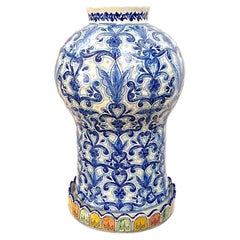
Elegant white and blue vase made with the Talavera technique. Artist, Cesar Torres portraits the colonial art of Mexico. The Talavera is not just a simple painted ceramic: its exquisite decoration is the product of a delicate process of alchemy that translates into fine enamels. In Puebla, Mexico few people still produce using Talavera with the ancestral techniques. One of those few is Cesar Torres, Don Cesar learned his art in the workshop of the Uriarte family, an excellent workshop where his grandfather worked. In his creations he uses the black and white mud that is obtained from the nearby hills of Loreto and Guadalupe, and colors of mineral origin that he creates in his workshop with recipes from his grandfather. All the pieces are modeled in a traditional way and go through a production process that usually takes from one to two months, between drying, burning, and painting. Being surrounded by a living tradition, Cesar Torres Jr., learned from his father since childhood. Architect by profession, Cesar Jr. has come to revolutionize and modernize with new designs and ideas of the current world, nevertheless always respecting the tradition of the processes and materials that make Talavera a Creole art...

Category

21st Century and Contemporary Mexican Spanish Colonial Ceramics

Materials

Ceramic, Clay, Majolica
Authentic Talavera Decorative Vase Folk Art Vessel Mexican Ceramic Blue White

Authentic Talavera Decorative Vase Folk Art Vessel Mexican Ceramic Blue White

Located in Queretaro, Queretaro

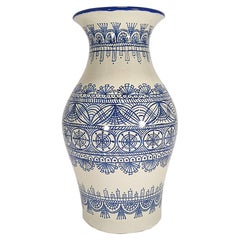
Elegant white and blue vessel made with the Talavera technique. Artist, Cesar Torres portraits the colonial art of Mexico. The Talavera is not just a simple painted ceramic: its exquisite decoration is the product of a delicate process of alchemy that translates into fine enamels. In Puebla, Mexico few people still produce using Talavera with the ancestral techniques. One of those few is Cesar Torres, Don Cesar learned his art in the workshop of the Uriarte family, an excellent workshop where his grandfather worked. In his creations he uses the black and white mud that is obtained from the nearby hills of Loreto and Guadalupe, and colors of mineral origin that he creates in his workshop with recipes from his grandfather. All the pieces are modeled in a traditional way and go through a production process that usually takes from one to two months, between drying, burning, and painting. Being surrounded by a living tradition, Cesar Torres Jr., learned from his father since childhood. Architect by profession, Cesar Jr. has come to revolutionize and modernize with new designs and ideas of the current world, nevertheless always respecting the tradition of the processes and materials that make Talavera a Creole art...

Category

21st Century and Contemporary Mexican Spanish Colonial Ceramics

Materials

Clay, Ceramic, Majolica

Talavera Jar Decorative Vase Folk Art Vessel Mexican Ceramic Blue White

Talavera Jar Decorative Vase Folk Art Vessel Mexican Ceramic Blue White

By Cesar

Located in Queretaro, Queretaro

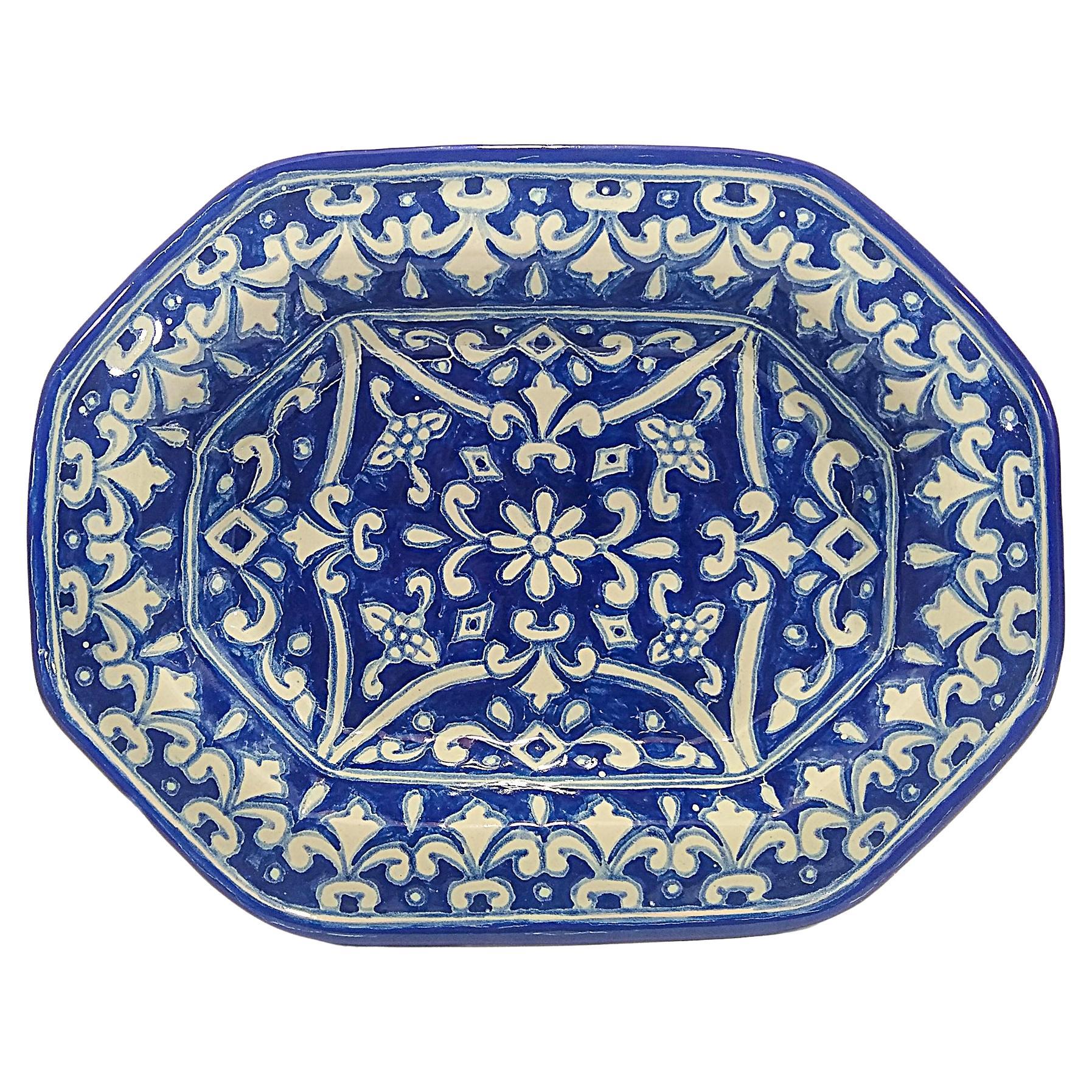
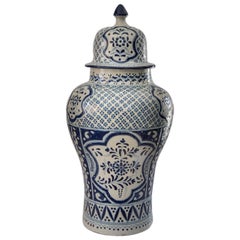
Elegant white and blue jar made with the authentic Talavera technique. Master artisan, Cesar Torres portraits the colonial art of Mexico. The Talavera is not just a simple painted ceramic: its exquisite decoration is the product of a delicate process of alchemy that translates into fine enamels. In Puebla, Mexico few people still produce using Talavera with the ancestral techniques. One of those few is Cesar Torres, Don Cesar...

Category

21st Century and Contemporary Mexican Spanish Colonial Ceramics

Materials

Ceramic, Clay, Majolica

Talavera Mural Azulejo Tile Folk Contemporary Mexican Ceramic Blue White Mosaic

Talavera Mural Azulejo Tile Folk Contemporary Mexican Ceramic Blue White Mosaic

By Cesar

Located in Queretaro, Queretaro

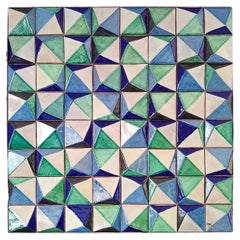
This contemporary azulejo tile forms a mosaic perfect for kitchen decorations or any exterior space. Made with the Talavera technique. Artist, Cesar Torres portraits the colonial art of Mexico, but this time with a contemporary touch. This wall decoration can be arranged to fit specific spaces or simply hanged as a painting on the wall. The Talavera is not just a simple painted ceramic: its exquisite decoration is the product of a delicate process of alchemy that translates into fine enamels. In Puebla, Mexico few people still produce using Talavera with the ancestral techniques. One of those few is Cesar Torres, Don Cesar learned his art in the workshop of the Uriarte family, an excellent workshop where his grandfather worked. In his creations he uses the black and white mud that is obtained from the nearby hills of Loreto and Guadalupe, and colors of mineral origin that he creates in his workshop with recipes from his grandfather. All the pieces are modeled in a traditional way and go through a production process that usually takes from one to two months, between drying, burning, and painting. Being surrounded by a living tradition, Cesar Torres Jr., learned from his father since childhood. Architect by profession, Cesar Jr. has come to revolutionize and modernize with new designs and ideas of the current world, nevertheless always respecting the tradition of the processes and materials that make Talavera a Creole art...

Category

21st Century and Contemporary Mexican Spanish Colonial Ceramics

Materials

Ceramic, Clay, Majolica

You May Also Like

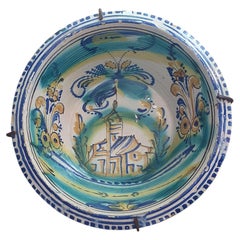
Glazed or enameled ceramic basin, Seville - Triana, 19th century.

Glazed or enameled ceramic basin, Seville - Triana, 19th century.

Located in GRANADA, ES

Lebrillo de cerámica esmaltada o vidriada , Sevilla - Triana , S.XIX . Representando una casa de campo . Diametro : 37 cm . Alto : 13 cm Grosor : 2 cm .

Category

Antique Mid-19th Century Ceramics

Materials

Ceramic

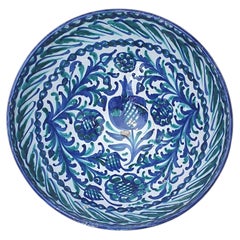
Fuente Glazed or enameled ceramic bowl or basin from Fajalauza, Granada, 20th c

Fuente Glazed or enameled ceramic bowl or basin from Fajalauza, Granada, 20th c

Located in GRANADA, ES

Fuente o lebrillo de cerámica vidriada o esmaltada de Fajalauza Granada , S.XX Representando granada central con 4 capullos de rosas y3 grandes girasoles .Vidriado en blanco , azu...

Category

Early 20th Century Ceramics

Materials

Ceramic

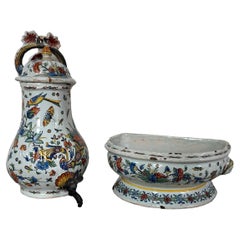
19th Century Hand-Painted Ceramic Lavabo with Floral Motifs

19th Century Hand-Painted Ceramic Lavabo with Floral Motifs

Located in Atlanta, GA

Elevate your space with the timeless charm of this exquisite antique hand-painted lavabo. Originating from the 19th century, this decorative wall-mounted basin set features intricate...

Category

Antique 19th Century European Fountains

Materials

Ceramic

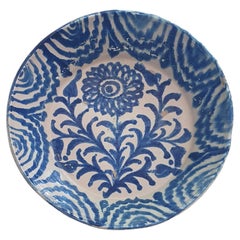
Glazed or enameled ceramic bowl or basin from Fajalauza, Granada, 19th century

Glazed or enameled ceramic bowl or basin from Fajalauza, Granada, 19th century

Located in GRANADA, ES

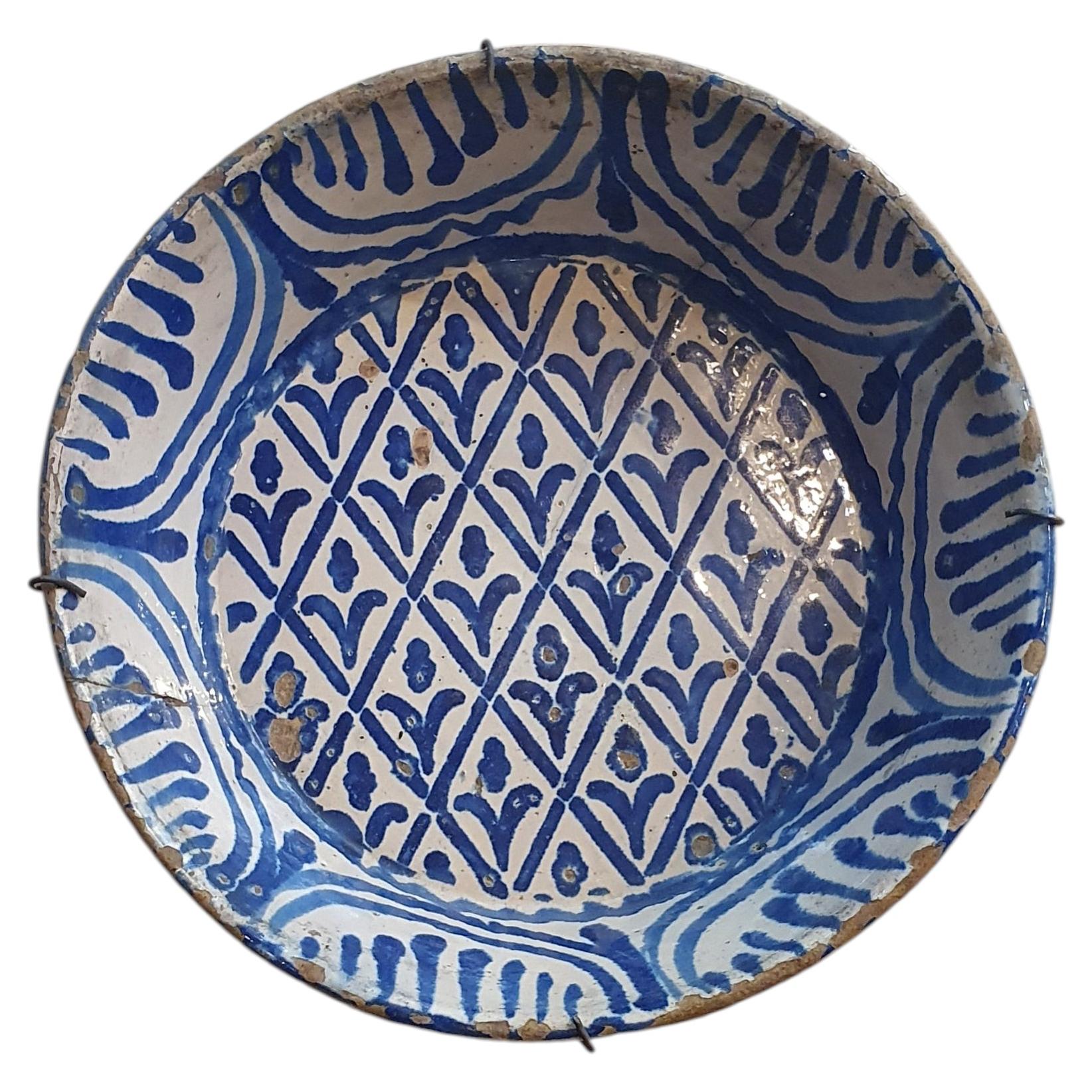
Fuente o lebrillo de cerámica vidriada o esmaltada de Fajalauza Granada , S.XIX Representando un girasol y dos flor de lis. Diámetro : 33 Alto : 9 cm Grosor : 0,8 cm

Category

Antique Mid-19th Century Ceramics

Materials

Ceramic

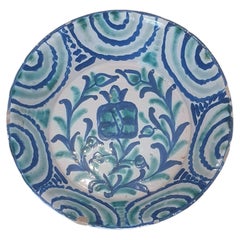
Glazed or enameled ceramic bowl or basin from Fajalauza, Granada, 19th century

Glazed or enameled ceramic bowl or basin from Fajalauza, Granada, 19th century

Located in GRANADA, ES

Fuente o lebrillo de cerámica vidriada o esmaltada de Fajalauza - Granada , S.XIX . Representando una granada y vidriado en blanco , verde y azul . Diámetro : 30 cm Alto : 7,5 cm Gr...

Category

Antique Late 19th Century Ceramics

Materials

Ceramic