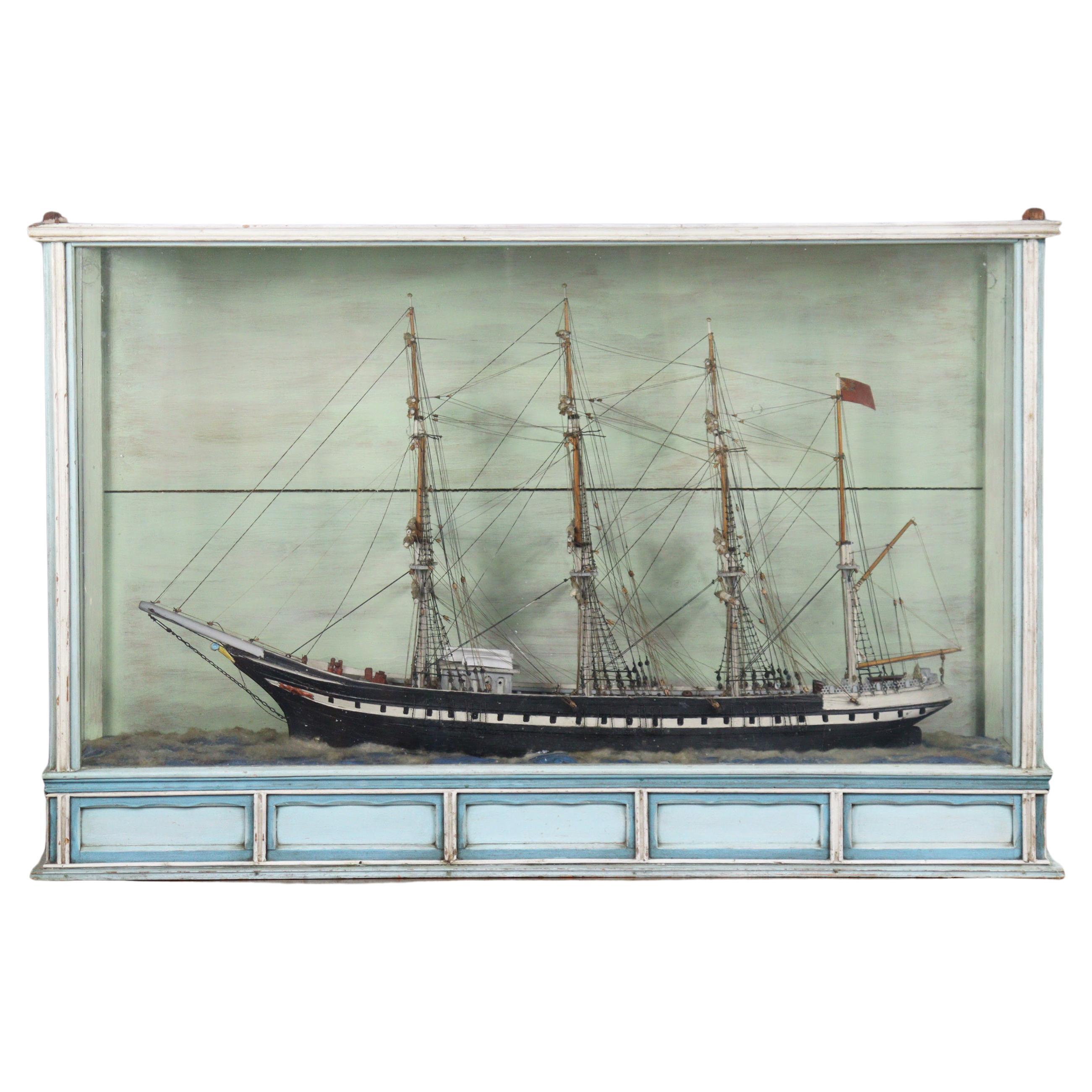
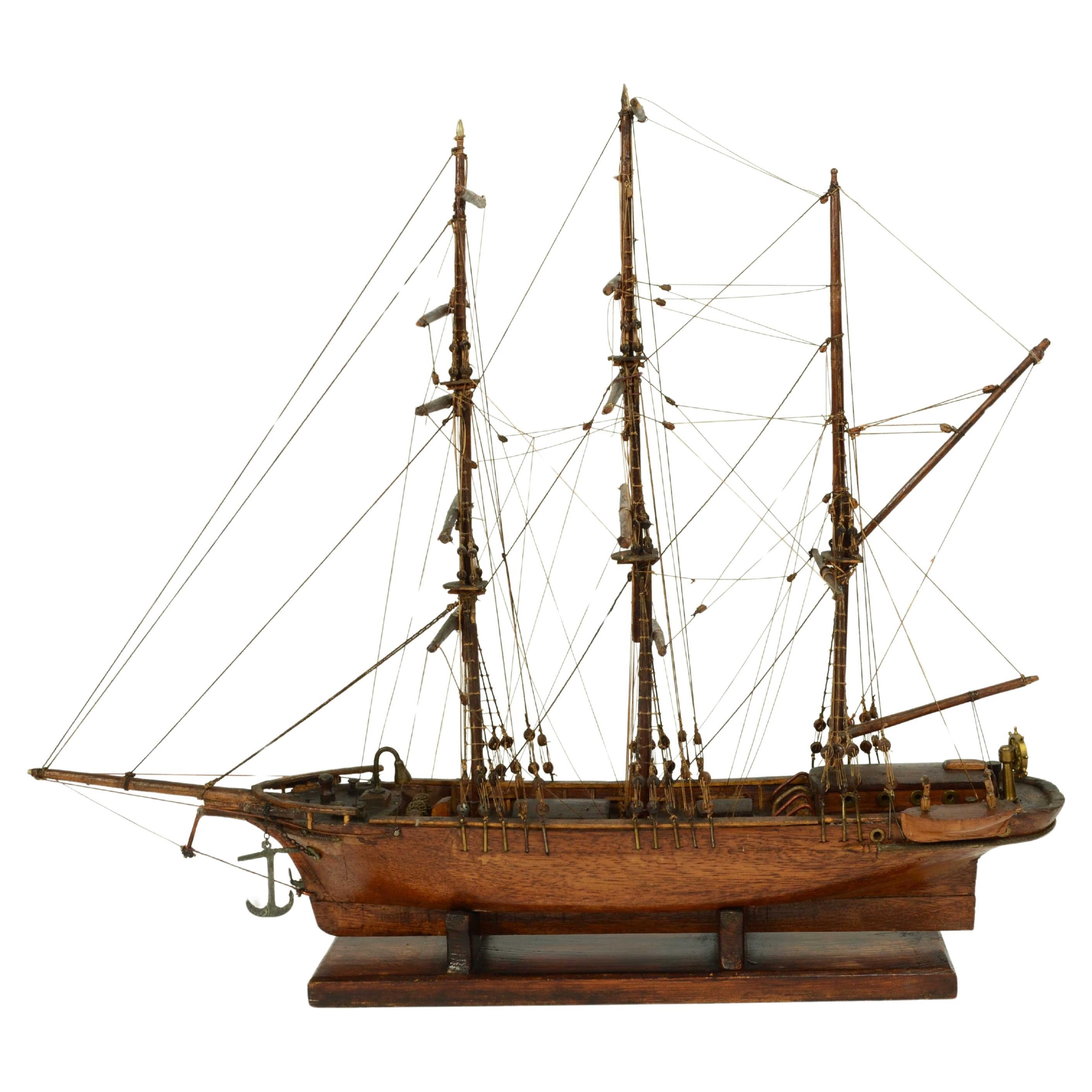
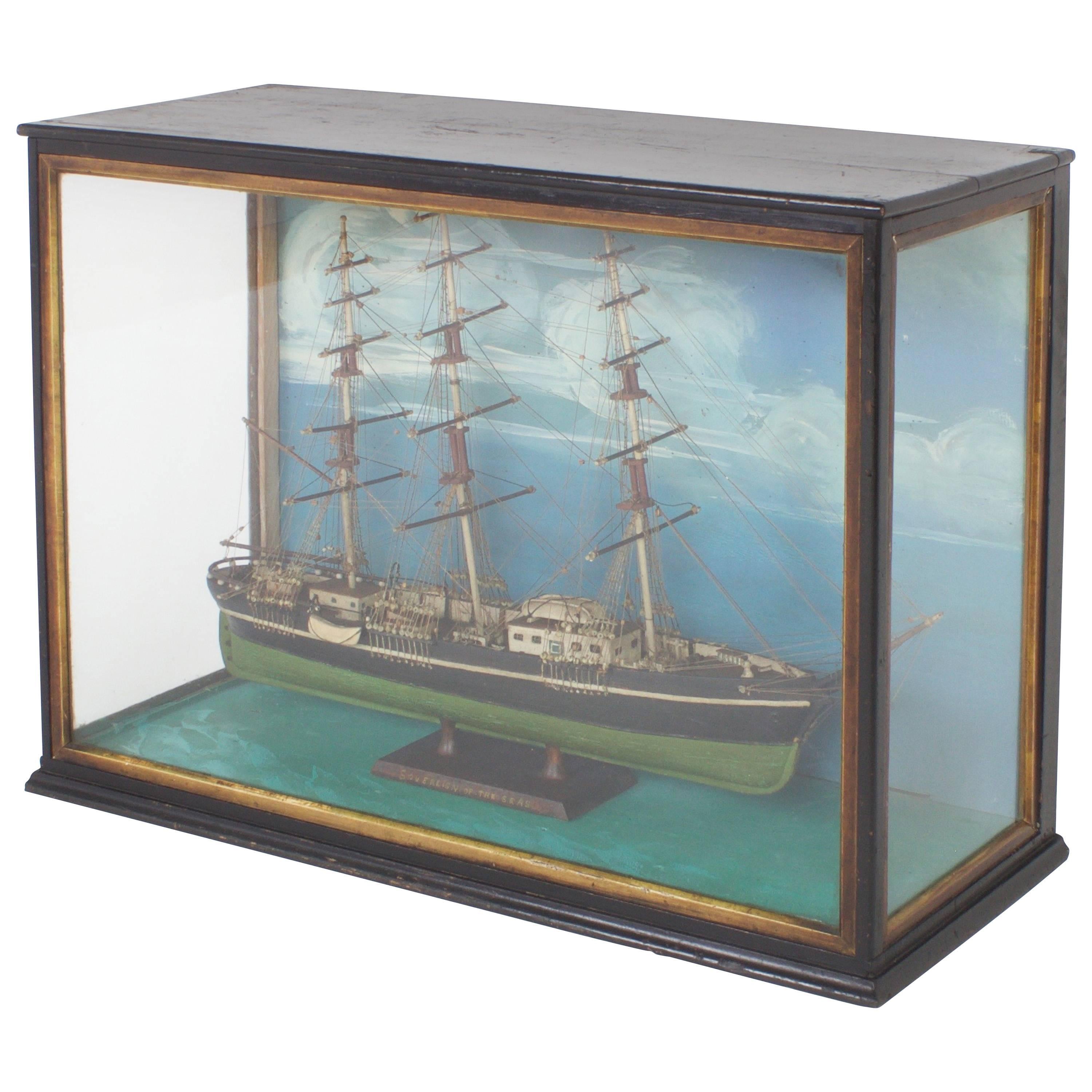
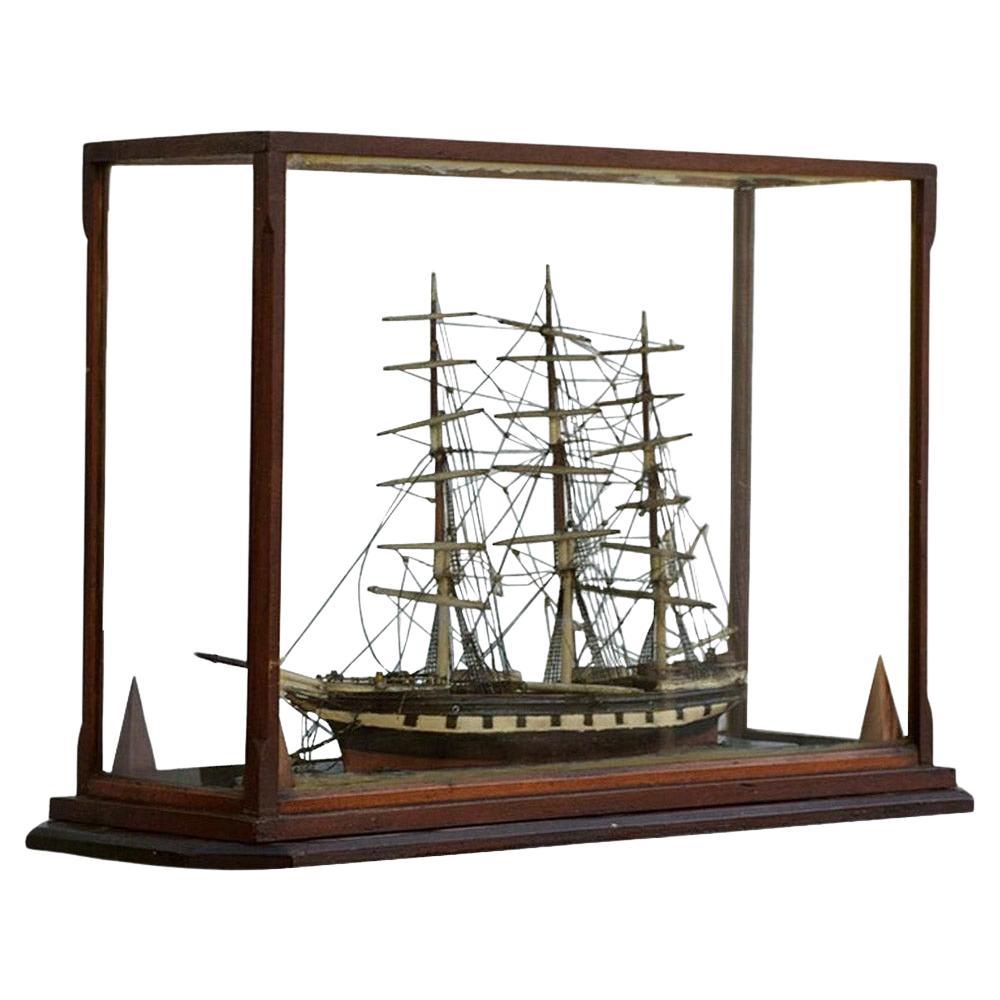
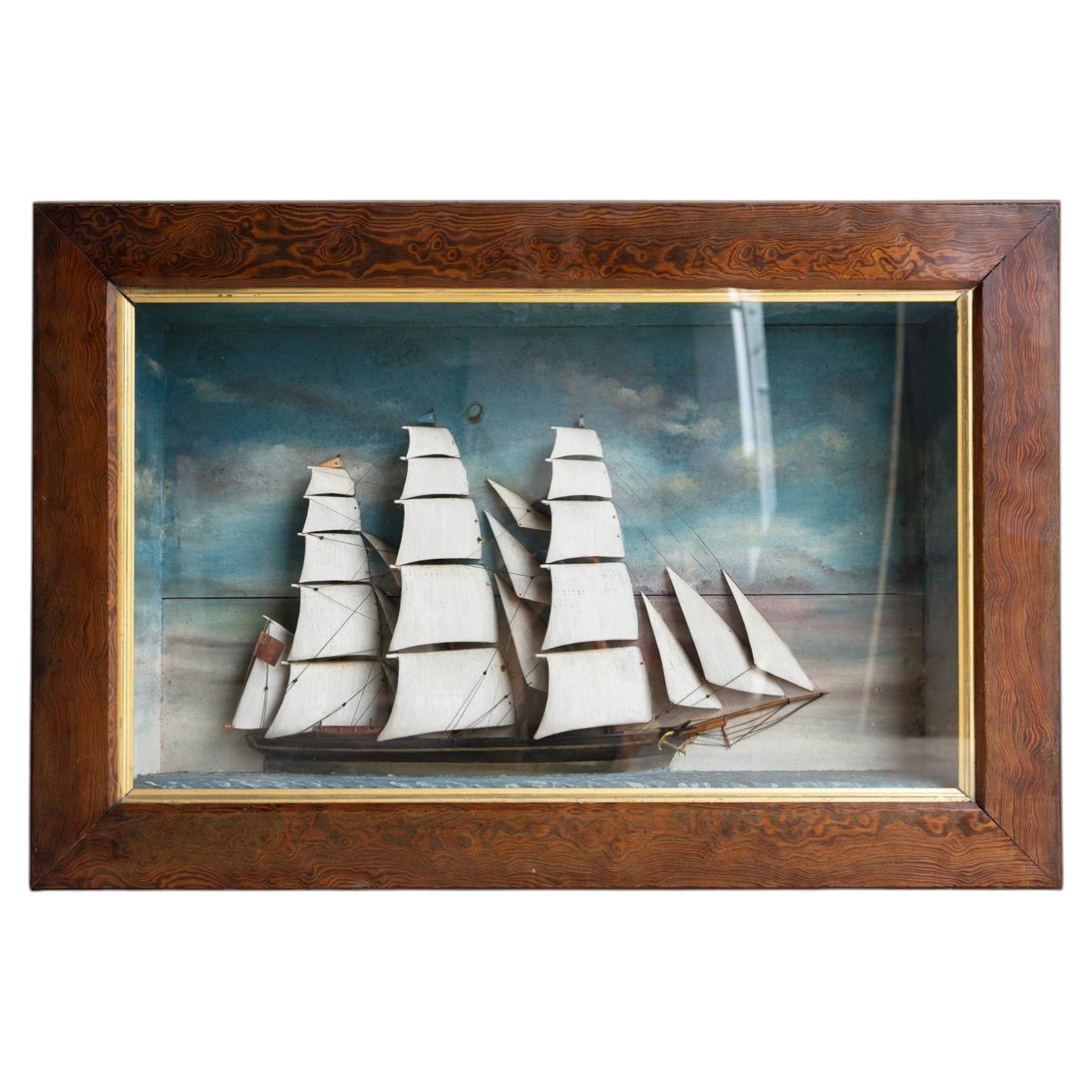
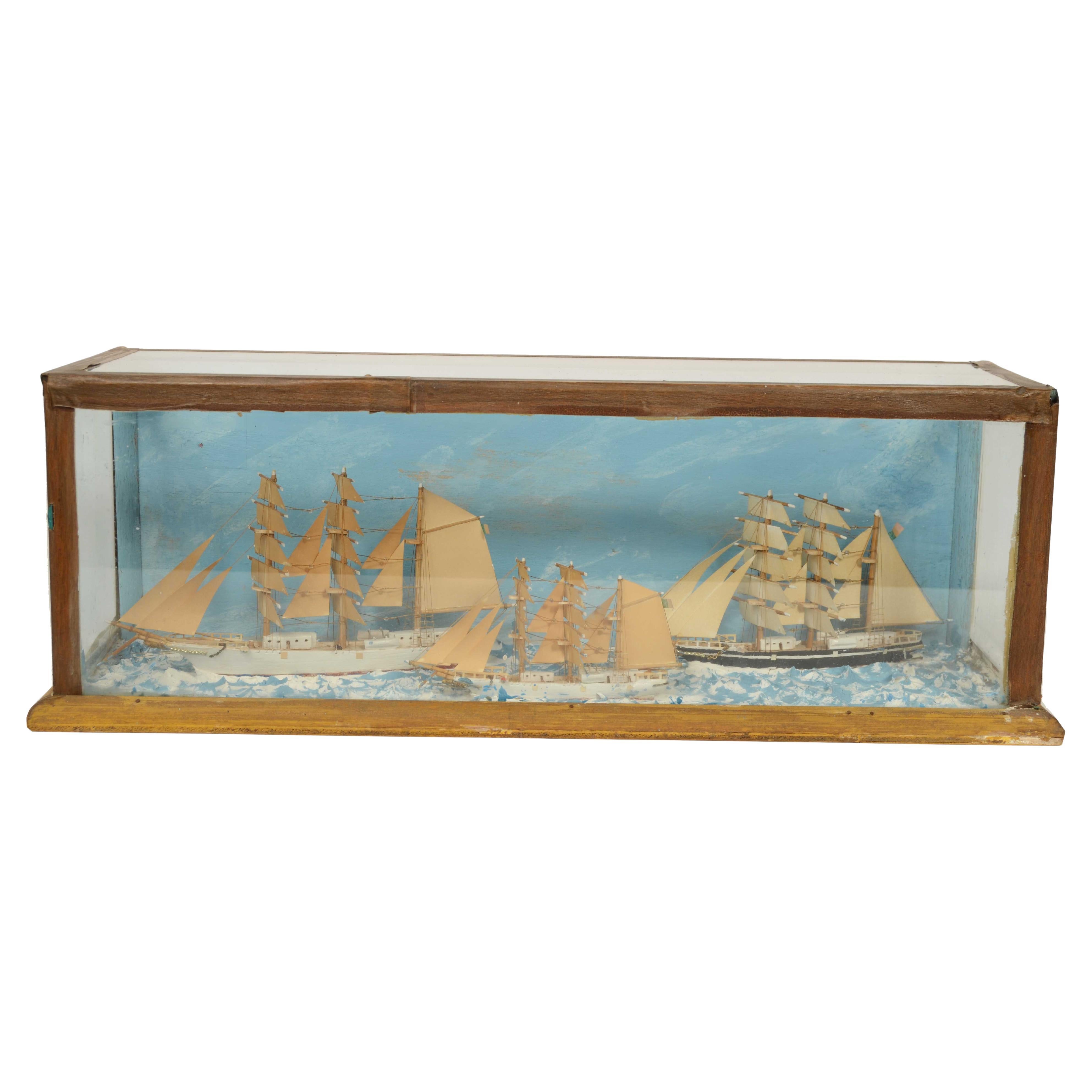
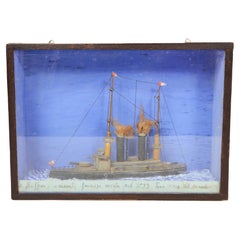
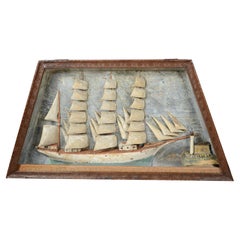
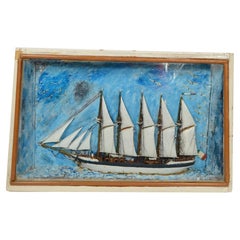
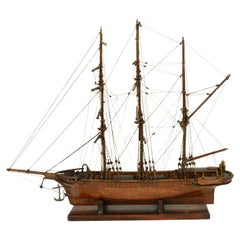
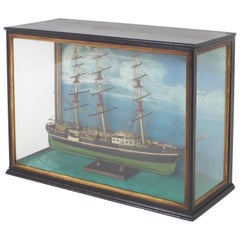
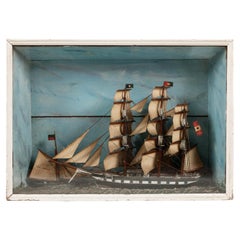
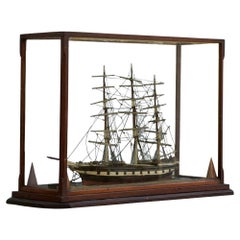
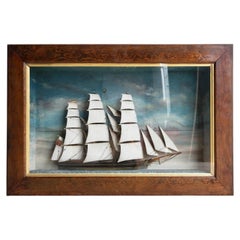
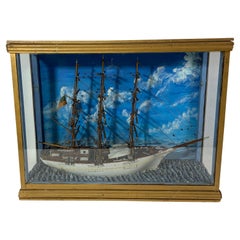
Nautical diorama in wood and glass case depicting half hull of a brig with unfurled sails in very well defined wood with cloth sails, signed lower right G. De Gasperi.
Ligurian manufacture of the early 1900s. Bon état.
Measures 62x9.3x35 cm - 24.4x3.7x13.8 inches.
A diorama is a small-scale setting that recreates, as realistically as possible, scenes of various kinds, usually made for technical use, especially engineering and architectural (reproduction of buildings, industrial objects, and surfaces), for educational purposes or as a hobby (model making).
Il modellismo navale nasce per motivi religiosi. Not content with the triviality of his own life, man wants another, and an eternal one at that, but the soul - by definition immaterial - needs a means to reach the afterlife; it must cross a river, and to do so it needs a boat. The earliest model is a silver boat about sixty centimeters long found in excavations at Ur in Mesopotamia, present-day Iraq, and dates back to 2,000 BCE. From then we have to reach Ancient Egypt, and here we have an incredible amount of models found in their tombs. Curiously, between the Egyptians and the Middle Ages we have no more traces of models: model making was reborn in the 15th century, again for religious reasons, but this time as an ex-voto, although the most important and valuable models were those built by shipyards: in fact, until the 17th century, ships were not designed with a drawing; length, width, masts, rigging were decided and then relied on a trusted shipyard who "by eye" built the ship according to the instructions received. In order to convince the ruler or minister who was to finance the construction, however, it was necessary to show him something, and to show him what the ship would look like, a model was then built, often a large one, and the better it was made, the better it responded to the marketing of the time; often the king fell in love with the model and kept it for himself, which is why many of these models-true works of art-have come down to us and are all jealously guarded in the various naval museums. In the 1700s and 1800s, many models are built by prisoners of war who locked up in prison ships would beguile time in this way and perhaps be able to get some favorable treatment in return; whaling ship sailors who often had a lot of free time while searching for cetaceans would build them in their cramped quarters in the forecastle.