Want more images or videos?
Request additional images or videos from the seller
1 of 6

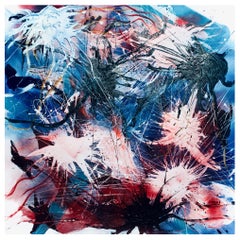
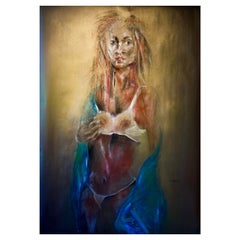
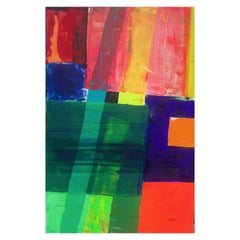
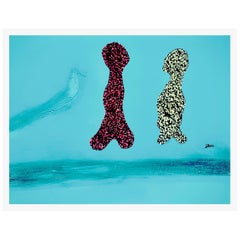
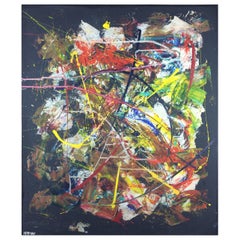
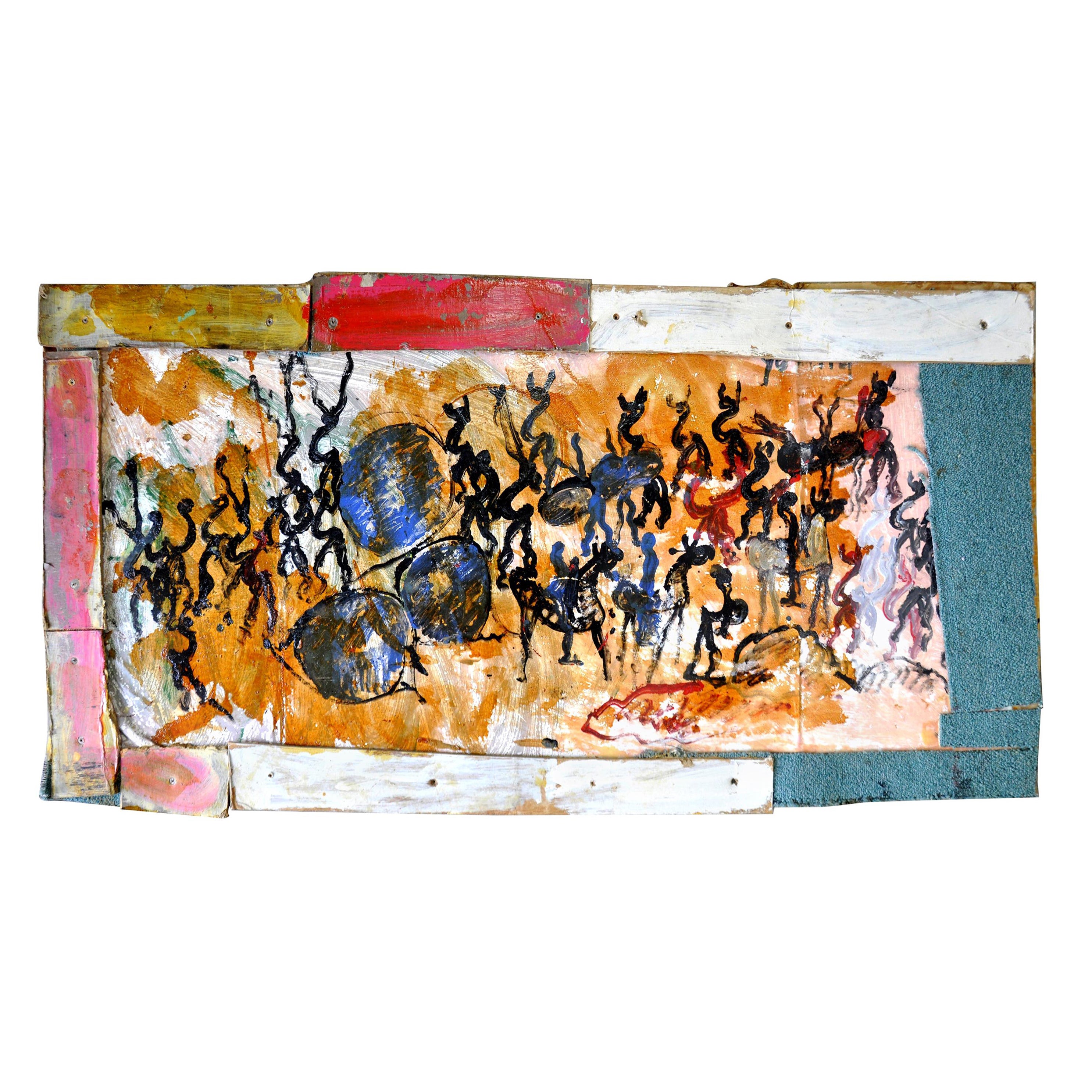
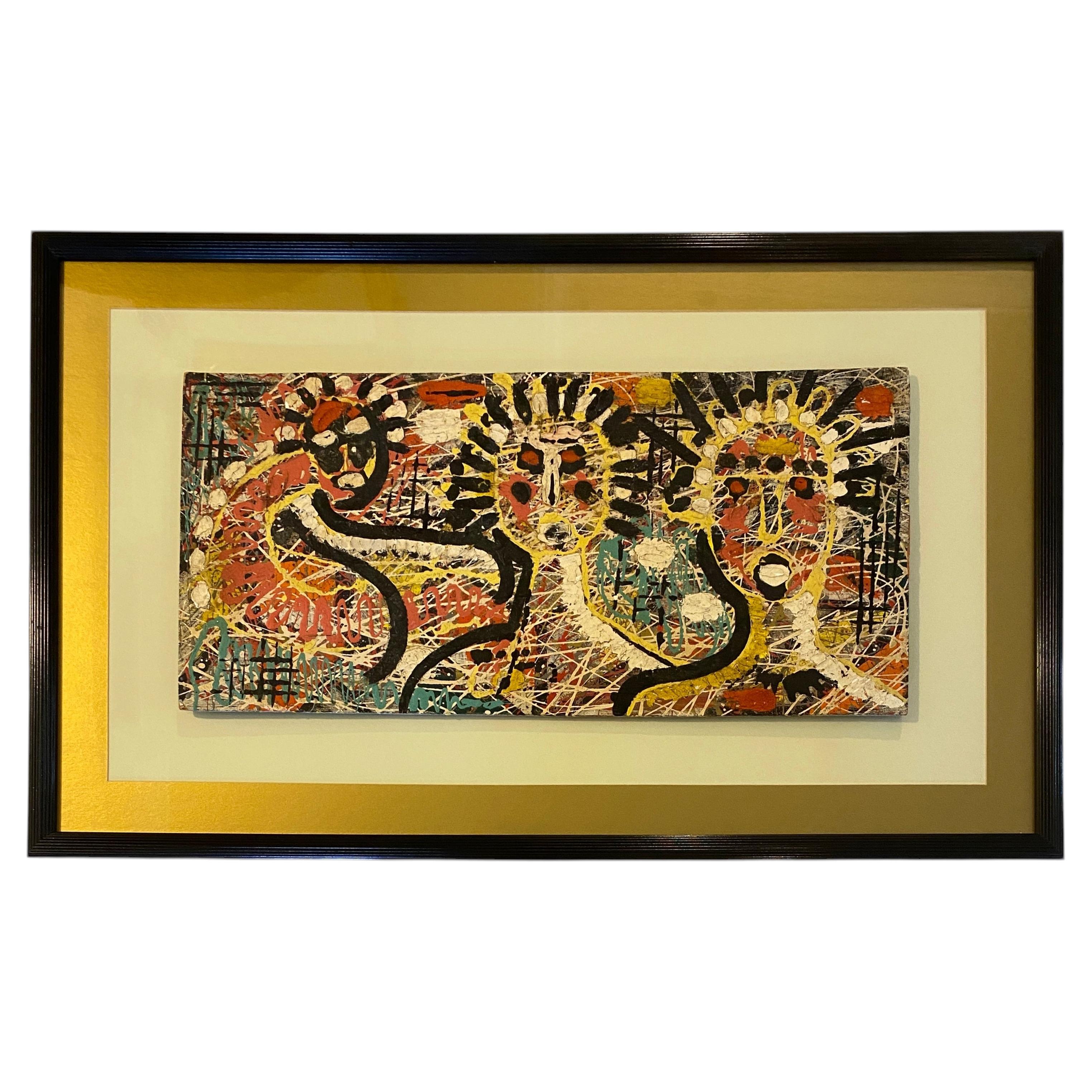
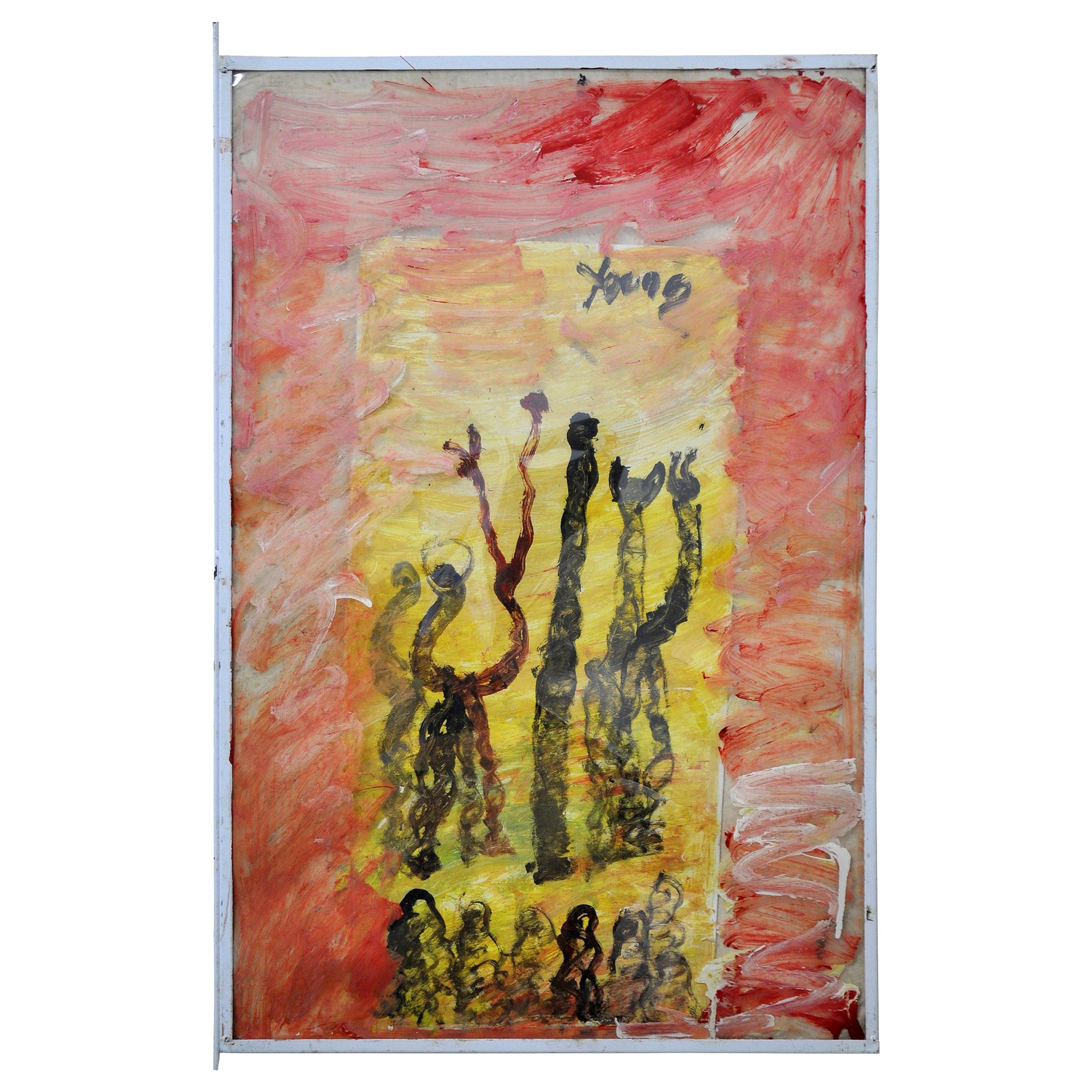
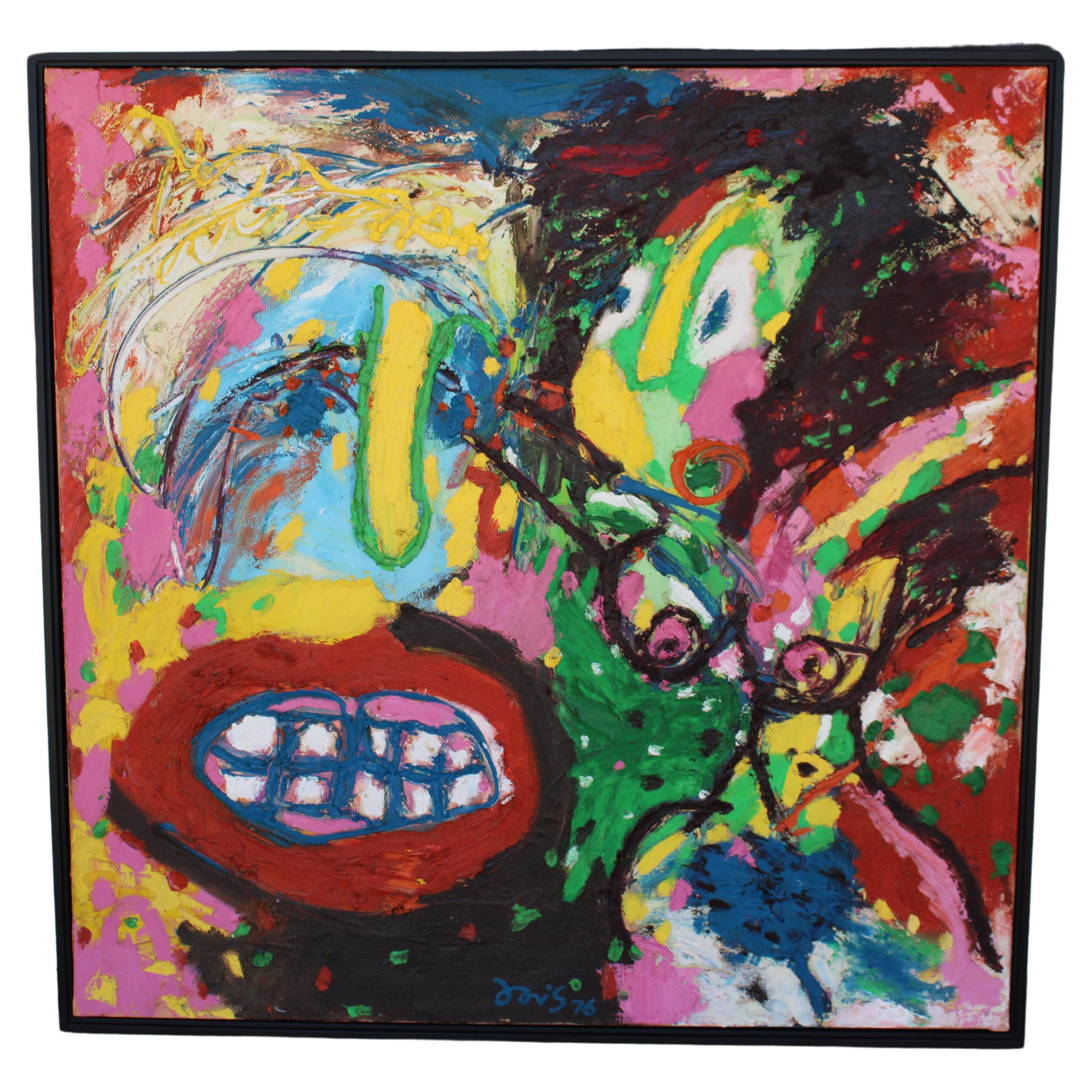
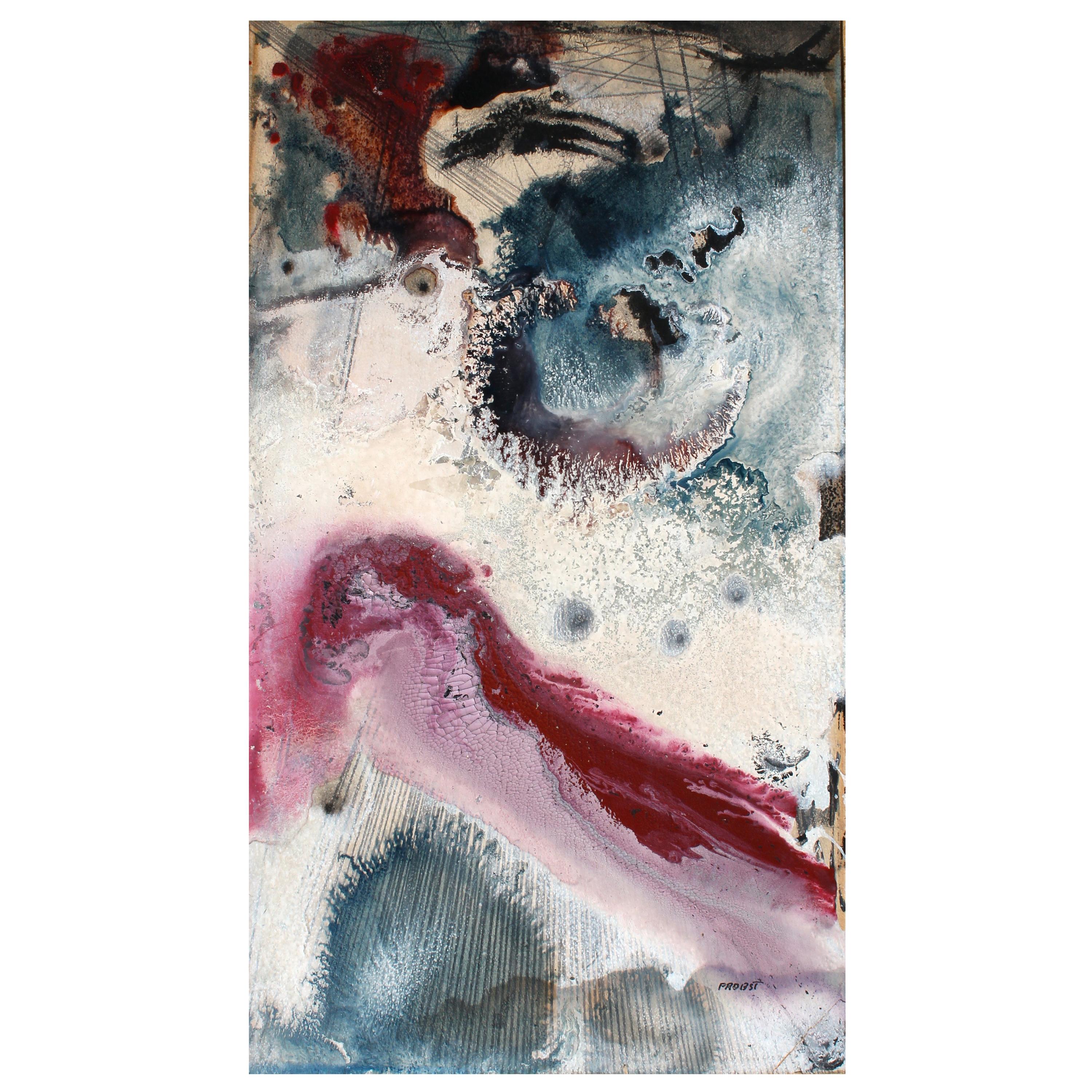
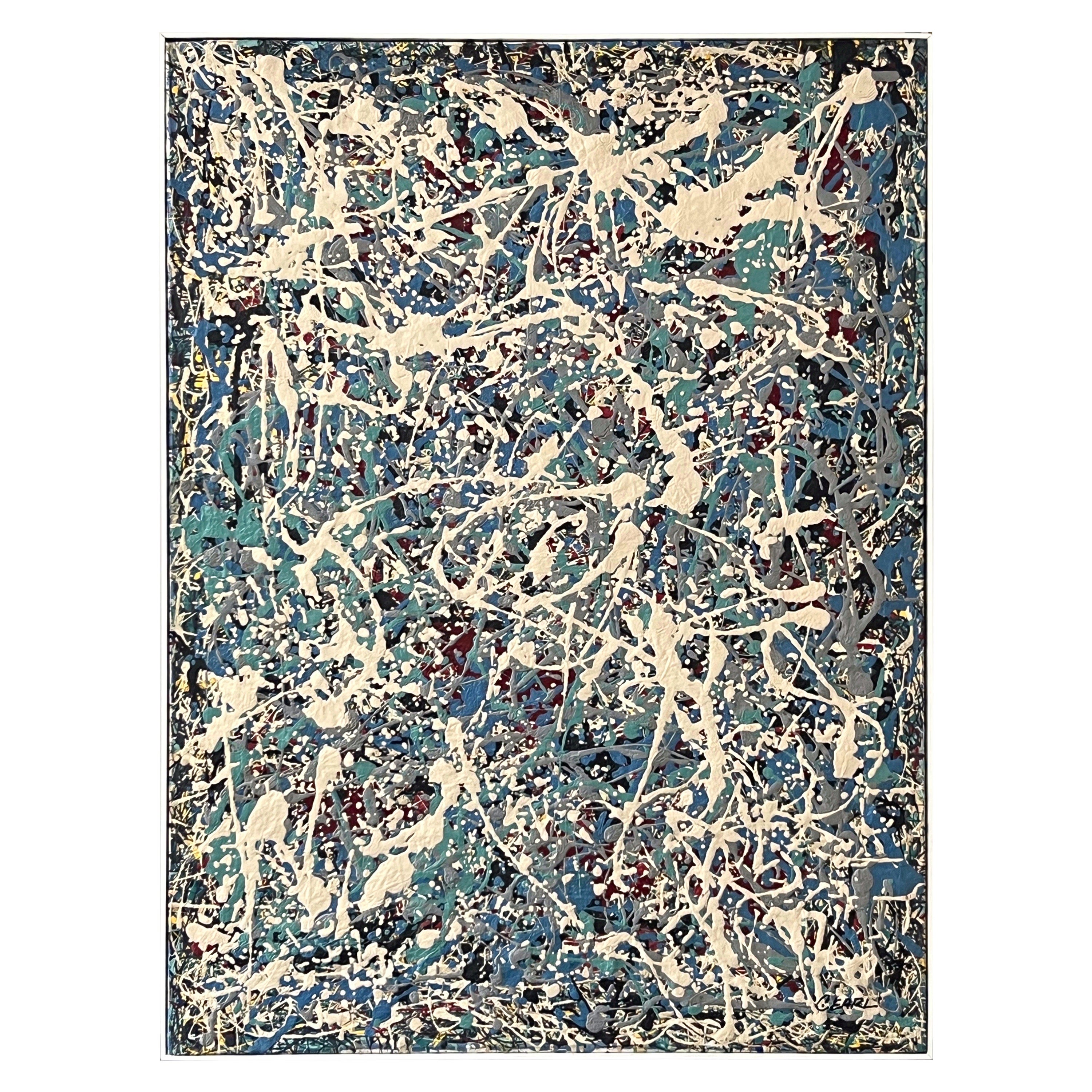
Mixed Medium and Chalk Painting, Little Man Series

$7,000
£5,276.38
€6,171.40
CA$9,907.82
A$10,087.60
CHF 5,809.55
MX$121,547.79
NOK 67,420.16
SEK 68,022.78
DKK 46,128.68

About the Item

Part of the Little Man Series by Steven Colucci - Mixed media / Acrylic and chalk. Steven Colucci was born to an Italian family in the South Bronx, near Yankee Stadium. His father owned and operated the dry cleaning service used by New York Giants. Colucci remembers sharing dinners with legendary athletes like Tucker Frederickson, Rosey Grier, Jim Brown and Frank Gifford. At 12 years old, he was diagnosed with severe dyslexia and forced to enroll at New York University Reading Institute, a small-private school in the East Village. During his years at NYU Reading Institute, he was encouraged to express himself through painting; he became particularly in representing movements through paint and carefully studied the works of John Marin, Jackson Pollock and Willem de Kooning. After finishing the program at NYU Reading Institute, Colucci returned to William Taft high school in the Bronx, and remained focused on painting and won a scholarship to the School of Visual Arts. After graduating with the B.A. in painting, he moved to Paris to continue his studies in art and movement. It was in Paris that he began to study pantomime and ballet under the tutelage of world-famous movement artist Etienne Decroux. Decroux worked with him honing his talent, until he was discovered by Marcel Marceau in the late 70s. Marceau had few protégés, and Colucci quickly became one of them. For the next decade under Marceau’s instruction, he developed his own artistic voice and style. In the 1980s, he moved back to New York where he developed a dance and mime program, which offered one-on-one workshops with the world-renowned dancers and musicians like Martin VanHamel, Kevin McKenzie, Dennis Koster, Gerald Busby and more. He brought his workshop to numerous colleges across the United States including Bard College, nationally recognized for its prestigious arts program and the Philadelphia Art Museum. Ronal Wilford, President of Columbia Artists Management, recognized Colucci’s work as high art. Between 1980s and 1990s he was asked to collaborate with various dancers and artists including Alvin Ailey, Melba Moore, Royal Ballet of Flanders, Julio Iglesias ad Etienne Decroux to name a few. By the late 1990s Colucci refocused on painting once again and retreated to his studio in Westhampton, L.I. His artwork has been exhibited at National Arts Club in Gramercy Park, the Grant Gallery and the Belenky Gallery in SoHo. His work is part of the permanent collection of the Mark Hachem Gallery in New York and Paris. The artist is a recipient of the prestigious Sam Flax memorial Award and the Orestes S. Lapolla Memorial Award from The School Art League of New York City and has been featured as a guest artist at the Museum of Modern Art. Steven Colucci’s paintings and Haut Couture exhibition at the Mark Hachem Gallery, Madison Avenue, New York marked him debut as an haute couture designer. He feels fashion is a rendezvous of all the art forms making it a natural step for his career.
  • Similar to:
    (after) Jackson Pollock (Artist)
  • Dimensions:
    Height: 72 in (182.88 cm)Width: 48 in (121.92 cm)Depth: 0.5 in (1.27 cm)
  • Materials and Techniques:
  • Period:
  • Date of Manufacture:
    2017
  • Production Type:
    New & Custom(One of a Kind)
  • Estimated Production Time:
    Available Now
  • Condition:
  • Seller Location:
    New York City, NY
  • Reference Number:
    1stDibs: LU5191129125692

More From This Seller

View All
Mixed Media Painting by Steven Colucci, Sea Series

Mixed Media Painting by Steven Colucci, Sea Series

By Jackson Pollock

Located in New York City, NY

Steven Colucci’s iconoclastic approach to performance and the visual arts have not only long blurred the boundaries between these disciplines, but have challenged its most basic assumptions. The title of this show references a most rudimentary dance move -- the plié -- and our assumptions of what to expect in relation to this. Also the suggestion that we can simply press a button and a preconceived outcome will be courteously delivered -- a form of prefabricated belief in itself. Steven Colucci’s artwork turns such basic assumptions on their heads. Finding early inspiration in the New York school of abstract expressionists such as Jackson Pollock with his action painting, and then further by his professor -- a then young Vito Acconci while studying at the School of Visual Arts, Steven Colucci went from exploring the raw existentialist experimentation of New York’s early painting and performance scenes, to investigating the other end of the spectrum -- the rigorously measured and controlled disciplines of pantomime and ballet; studying in Paris under the tutelage of world-famous Marcelle Marceau, and engaging with the concepts of dramatic movement pioneer and intellectual Etienne Decroux. Colucci has explained the difference between the extremes of pantomime and dance as being that pantomime forces movement via an internal capacity -- movement directed inward to the core of one’s self -- a source requiring extreme mental and physical control. Dance by contrast is an external expression; likewise requiring great precision, although instead an extension of self or sentiment that projects outwardly. While such historical ‘movement’ disciplines serve as foundation blocks for Steven’s artistic explorations, it is the realm in between that he is best known for his contributions -- an experimental movement and performance art that simultaneously honors, yet defiantly refutes tradition; rejecting a compartmentalization regarding art and movement, yet incorporating its elements into his own brand of experimental pastiche. Colucci’s performance works manifest as eerily candy-coated and familiar, yet incorporate unexpected jags of the uncanny throughout, exploiting a sort of coulrophobia in the viewer; an exploration of a cumulative artifice that binds human nature against its darker tendencies; highlighting traditions of artifice itself -- the fabricated systemologies that necessitate compartmentalization in the first place. It is evident in Steven Colucci’s paintings that he has established a uniquely distinctive pictorial vocabulary; a strong allusion to -- or moreso an extension of -- his performance works. Colucci’s paintings depict a sort of kinetic spectrum, or as he refers to them “a technical expression of physicality and movement”. Whereas the French performance and visual artist Yves Klein used the human body as a “paint brush” to demarcate his paintings and thereby signify a residue of performance, Colucci’s utilization of nonsensical numbers and number sequences taken from dance scores, as well as heat-induced image abstraction depicting traces of movement likewise inform his vocabulary. In the strand of the choreographed, yet incorporating moments of chance, Colucci’s paintings represent an over arching structure; a rhythm of being and state, yet detail erratic moments -- moments that denote a certain frailty -- the edge of human stamina. Colucci’s paintings dually represent a form of gestural abstraction -- and also the reverse of this -- a unique anthropomorphization of varying states of movement -- that sometimes present as a temperature induced color field, at others are juxtapositions of movement and depictions of physical gestural images themselves. Colucci’s use of vernacular and found materials such as cardboard evoke his mastery of set design, and also reference a sort of collective experience of urbanity and the ephemeral. Such contradictions seem to permeate not only Steven Colucci’s artwork, but also are reflected in his person -- one who grew up in New York’s Bronx during a zeitgeist moment in visual and performing arts in the 1960s -- one who shifts with ease from happenings and experiments in New York City, to his meticulously choreographed megaproductions at Lincoln Center or starring in the Paris ballet...

Category

2010s Paintings

Materials

Acrylic

Mixed Media Painting by Steven Colucci

Mixed Media Painting by Steven Colucci

By Jackson Pollock

Located in New York City, NY

Steven Colucci’s iconoclastic approach to performance and the visual arts have not only long blurred the boundaries between these disciplines, but have challenged its most basic assumptions. The title of this show references a most rudimentary dance move --the plié --and our assumptions of what to expect in relation to this. Also the suggestion that we can simply press a button and a preconceived outcome will be courteously delivered --a form of prefabricated belief in itself. Steven Colucci’s artwork turns such basic assumptions on their heads. Finding early inspiration in the New York school of abstract expressionists such as Jackson Pollock with his action painting, and then further by his professor --a then young Vito Acconci while studying at the School of Visual Arts, Steven Colucci went from exploring the raw existentialist experimentation of New York’s early painting and performance scenes, to investigating the other end of the spectrum --the rigorously measured and controlled disciplines of pantomime and ballet; studying in Paris under the tutelage of world-famous Marcelle Marceau, and engaging with the concepts of dramatic movement pioneer and intellectual Etienne Decroux. Colucci has explained the difference between the extremes of pantomime and dance as being that pantomime forces movement via an internal capacity --movement directed inward to the core of one’s self --a source requiring extreme mental and physical control. Dance by contrast is an external expression; likewise requiring great precision, although instead an extension of self or sentiment that projects outwardly. While such historical ‘movement’ disciplines serve as foundation blocks for Steven’s artistic explorations, it is the realm in between that he is best known for his contributions --an experimental movement and performance art that simultaneously honors, yet defiantly refutes tradition; rejecting a compartmentalization regarding art and movement, yet incorporating its elements into his own brand of experimental pastiche. Colucci’s performance works manifest as eerily candy-coated and familiar, yet incorporate unexpected jags of the uncanny throughout, exploiting a sort of coulrophobia in the viewer; an exploration of a cumulative artifice that binds human nature against its darker tendencies; highlighting traditions of artifice itself - the fabricated systemologies that necessitate compartmentalization in the first place. It is evident in Steven Colucci’s paintings that he has established a uniquely distinctive pictorial vocabulary; a strong allusion to --or moreso an extension of --his performance works. Colucci’s paintings depict a sort of kinetic spectrum, or as he refers to them “a technical expression of physicality and movement”. Whereas the French performance and visual artist Yves Klein used the human body as a “paint brush” to demarcate his paintings and thereby signify a residue of performance, Colucci’s utilization of nonsensical numbers and number sequences taken from dance scores, as well as heat- induced image abstraction depicting traces of movement likewise inform his vocabulary. In the strand of the choreographed, yet incorporating moments of chance, Colucci’s paintings represent an over arching structure; a rhythm of being and state, yet detail erratic moments --moments that denote a certain frailty --the edge of human stamina. Colucci’s paintings dually represent a form of gestural abstraction --and also the reverse of this --a unique anthropomorphization of varying states of movement – that sometimes present as a temperature induced color field, at others are juxtapositions of movement and depictions of physical gestural images themselves. Colucci’s use of vernacular and found materials such as cardboard evoke his mastery of set design, and also reference a sort of collective experience of urbanity and the ephemeral. Such contradictions seem to permeate not only Steven Colucci’s artwork, but also are reflected in his person – one who grew up in New York’s Bronx during a zeitgeist moment in visual and performing arts in the 1960s – one who shifts with ease from happenings and experiments in New York City, to his meticulously choreographed megaproductions at Lincoln Center or starring in the Paris ballet...

Category

2010s Paintings

Materials

Acrylic

My eyes on you -Mixed Media Painting by Steven Colucci

My eyes on you -Mixed Media Painting by Steven Colucci

By Jackson Pollock

Located in New York City, NY

Steven Colucci is a perfectionist. As a painter, he describes himself as “a dictator, a controlling ballet master with a stick,” dispassionately choreographing his composition to achieve the exact result he desires. The paintings of the “Sea Series,” largely completed in 2010, are actually the culmination of 4-5 years of practice for the artist, during which he consistently developed and refined the language and formal elements that visually distinguish the series, sometimes repeating the same image for months until he was satisfied. Colucci’s methods and philosophy reflect his experience with movement as a performing art. While he studied with and admires Vito Acconci, Colucci is no proponent of conceptualism, finding his voice in the intense discipline of traditional forms, explaining, “If you don’t practice art like a classical pianist, every day, you can’t execute your concepts.” After completing his studies at New York’s School of Visual Arts, he moved to Paris, where he studied and performed mime and ballet, working closely with Marcel Marceau, who also painted, and Etienne Decroux, a sculptor as well as the originator of the form “classical mime,” which has roots in the sculpture of Rodin. If the word “sea” in the title of a painting conjures for you images of little easels and landscape canvases featuring sandy beaches, waves, and vast horizons, think again – Colucci’s oceanic visions are experiential, viewing them you are often looking down at the sea, within it, or even dreaming of the ocean. Water, deep or shallow, still or fast-moving, rules how we see light and subjects, as the artist works to reflect what he calls “the spirit, the soul of the water.” In “Deep Blue,” he conjures this anima via a window through levels of roiling currents of rich dark waves and dancing highlights, inviting the viewer to experience the sea as a vibrant and enveloping sensual entity. Colors, too, differ from the subdued palette of the seaside afternoon painter. Often his choices originate in what Colucci describes as the rhythm of color present in Afro-Carribean art and design. In the paintings, these hues express the water’s likeness to the seamless flow of the Dominican culture’s music and dance, which he so enjoys during frequent visits to Upper Manhattan’s El Barrio district, a movement with the melodic line that he so simply and perfectly employs in the delightfully sexy “Swimming with the Fish.” As our bodies, like the sea, are largely water, Colucci’s water visions...

Category

2010s Paintings

Materials

Acrylic

Mixed Media Painting by Steven Colucci

Mixed Media Painting by Steven Colucci

By John Byard

Located in New York City, NY

Steven Colucci’s iconoclastic approach to performance and the visual arts have not only long blurred the boundaries between these disciplines, but have challenged its most basic assumptions. The title of this show references a most rudimentary dance move --the plié --and our assumptions of what to expect in relation to this. Also the suggestion that we can simply press a button and a preconceived outcome will be courteously delivered --a form of prefabricated belief in itself. Steven Colucci’s artwork turns such basic assumptions on their heads. Finding early inspiration in the New York school of abstract expressionists such as Jackson Pollock with his action painting, and then further by his professor --a then young Vito Acconci while studying at the School of Visual Arts, Steven Colucci went from exploring the raw existentialist experimentation of New York’s early painting and performance scenes, to investigating the other end of the spectrum --the rigorously measured and controlled disciplines of pantomime and ballet; studying in Paris under the tutelage of world-famous Marcelle Marceau, and engaging with the concepts of dramatic movement pioneer and intellectual Etienne Decroux. Colucci has explained the difference between the extremes of pantomime and dance as being that pantomime forces movement via an internal capacity --movement directed inward to the core of one’s self --a source requiring extreme mental and physical control. Dance by contrast is an external expression; likewise requiring great precision, although instead an extension of self or sentiment that projects outwardly. While such historical ‘movement’ disciplines serve as foundation blocks for Steven’s artistic explorations, it is the realm in between that he is best known for his contributions --an experimental movement and performance art that simultaneously honors, yet defiantly refutes tradition; rejecting a compartmentalization regarding art and movement, yet incorporating its elements into his own brand of experimental pastiche. Colucci’s performance works manifest as eerily candy-coated and familiar, yet incorporate unexpected jags of the uncanny throughout, exploiting a sort of coulrophobia in the viewer; an exploration of a cumulative artifice that binds human nature against its darker tendencies; highlighting traditions of artifice itself - the fabricated systemologies that necessitate compartmentalization in the first place. It is evident in Steven Colucci’s paintings that he has established a uniquely distinctive pictorial vocabulary; a strong allusion to --or moreso an extension of --his performance works. Colucci’s paintings depict a sort of kinetic spectrum, or as he refers to them “a technical expression of physicality and movement”. Whereas the French performance and visual artist Yves Klein used the human body as a “paint brush” to demarcate his paintings and thereby signify a residue of performance, Colucci’s utilization of nonsensical numbers and number sequences taken from dance scores, as well as heat- induced image abstraction depicting traces of movement likewise inform his vocabulary. In the strand of the choreographed, yet incorporating moments of chance, Colucci’s paintings represent an over arching structure; a rhythm of being and state, yet detail erratic moments --moments that denote a certain frailty --the edge of human stamina. Colucci’s paintings dually represent a form of gestural abstraction --and also the reverse of this --a unique anthropomorphization of varying states of movement – that sometimes present as a temperature induced color field, at others are juxtapositions of movement and depictions of physical gestural images themselves. Colucci’s use of vernacular and found materials such as cardboard evoke his mastery of set design, and also reference a sort of collective experience of urbanity and the ephemeral. Such contradictions seem to permeate not only Steven Colucci’s artwork, but also are reflected in his person – one who grew up in New York’s Bronx during a zeitgeist moment in visual and performing arts in the 1960s – one who shifts with ease from happenings and experiments in New York City, to his meticulously choreographed megaproductions at Lincoln Center or starring in the Paris ballet...

Category

2010s Paintings

Materials

Acrylic

Mixed Media Painting by Steven Colucci- Two Men

Mixed Media Painting by Steven Colucci- Two Men

By Jeff Koons

Located in New York City, NY

Steven Colucci’s iconoclastic approach to performance and the visual arts have not only long blurred the boundaries between these disciplines, but have challenged its most basic assumptions. The title of this show references a most rudimentary dance move --the plié --and our assumptions of what to expect in relation to this. Also the suggestion that we can simply press a button and a preconceived outcome will be courteously delivered --a form of prefabricated belief in itself. Steven Colucci’s artwork turns such basic assumptions on their heads. Finding early inspiration in the New York school of abstract expressionists such as Jackson Pollock with his action painting, and then further by his professor --a then young Vito Acconci while studying at the School of Visual Arts, Steven Colucci went from exploring the raw existentialist experimentation of New York’s early painting and performance scenes, to investigating the other end of the spectrum --the rigorously measured and controlled disciplines of pantomime and ballet; studying in Paris under the tutelage of world-famous Marcelle Marceau, and engaging with the concepts of dramatic movement pioneer and intellectual Etienne Decroux. Colucci has explained the difference between the extremes of pantomime and dance as being that pantomime forces movement via an internal capacity --movement directed inward to the core of one’s self --a source requiring extreme mental and physical control. Dance by contrast is an external expression; likewise requiring great precision, although instead an extension of self or sentiment that projects outwardly. While such historical ‘movement’ disciplines serve as foundation blocks for Steven’s artistic explorations, it is the realm in between that he is best known for his contributions --an experimental movement and performance art that simultaneously honors, yet defiantly refutes tradition; rejecting a compartmentalization regarding art and movement, yet incorporating its elements into his own brand of experimental pastiche. Colucci’s performance works manifest as eerily candy-coated and familiar, yet incorporate unexpected jags of the uncanny throughout, exploiting a sort of coulrophobia in the viewer; an exploration of a cumulative artifice that binds human nature against its darker tendencies; highlighting traditions of artifice itself - the fabricated systemologies that necessitate compartmentalization in the first place. It is evident in Steven Colucci’s paintings that he has established a uniquely distinctive pictorial vocabulary; a strong allusion to --or moreso an extension of --his performance works. Colucci’s paintings depict a sort of kinetic spectrum, or as he refers to them “a technical expression of physicality and movement”. Whereas the French performance and visual artist Yves Klein used the human body as a “paint brush” to demarcate his paintings and thereby signify a residue of performance, Colucci’s utilization of nonsensical numbers and number sequences taken from dance scores, as well as heat- induced image abstraction depicting traces of movement likewise inform his vocabulary. In the strand of the choreographed, yet incorporating moments of chance, Colucci’s paintings represent an over arching structure; a rhythm of being and state, yet detail erratic moments --moments that denote a certain frailty --the edge of human stamina. Colucci’s paintings dually represent a form of gestural abstraction --and also the reverse of this --a unique anthropomorphization of varying states of movement – that sometimes present as a temperature induced color field, at others are juxtapositions of movement and depictions of physical gestural images themselves. Colucci’s use of vernacular and found materials such as cardboard evoke his mastery of set design, and also reference a sort of collective experience of urbanity and the ephemeral. Such contradictions seem to permeate not only Steven Colucci’s artwork, but also are reflected in his person – one who grew up in New York’s Bronx during a zeitgeist moment in visual and performing arts in the 1960s – one who shifts with ease from happenings and experiments in New York City, to his meticulously choreographed megaproductions at Lincoln Center or starring in the Paris ballet...

Category

2010s Paintings

Materials

Acrylic

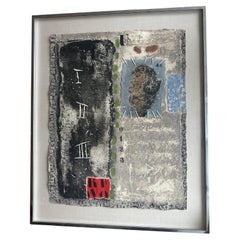
Signed color aquatint, etching, carborundum, and collage by James Coignard

Signed color aquatint, etching, carborundum, and collage by James Coignard

Located in New York City, NY

This dynamic mixed-media by James Coignard, exemplifies the artist’s innovative approach to abstraction. A perfect fusion of color aquatint, etching, carborundum, and collage, the pi...

Category

Vintage 1970s Paintings

Materials

Thread, Paper

You May Also Like

20th Century Abstract Painting, Oil on Board, Mid-Century Modern

20th Century Abstract Painting, Oil on Board, Mid-Century Modern

By (after) Jackson Pollock

Located in Miami, FL

Stunning piece of abstract artwork. Very decorative and interesting midcentury original abstract composition, oil on board. Abstract Expressionism was a movement or artists that be...

Category

20th Century French Mid-Century Modern Paintings

Materials

Paint

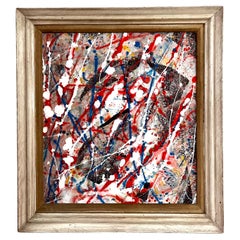
Abstract Expressionist Painting style of J. Pollock signed R. Maloney, 1962

Abstract Expressionist Painting style of J. Pollock signed R. Maloney, 1962

By Jackson Pollock

Located in Philadelphia, PA

Colorful Abstract Expressionist / Drip Painting in the style of Jackson Pollock signed R. Maloney, 1962 paint on board in original vintage frame "bright and colorful with the righ...

Category

Vintage 1960s American Mid-Century Modern Paintings

Materials

Paint

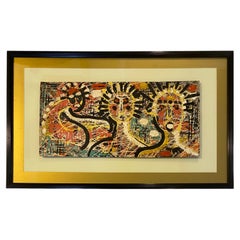
Jean-Michel Basquiat Style Neo-Expressionist Mixed Media Abstract Figural Painti

Jean-Michel Basquiat Style Neo-Expressionist Mixed Media Abstract Figural Painti

By (after) Jean-Michel Basquiat

Located in Miami, FL

A visually explosive Neo-Expressionist mixed media painting executed in the unmistakable spirit of Jean-Michel Basquiat, featuring animated figural forms, tribal-inspired mask imager...

Category

Late 20th Century American Mid-Century Modern Paintings

Materials

Paint

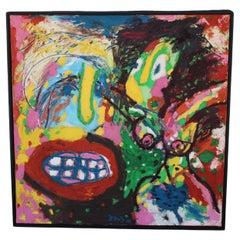
Abstract Folk Art Painting by Michael Davis

Abstract Folk Art Painting by Michael Davis

Located in Palm Springs, CA

Abstract Folk Art painting on canvas by Michael Davis and dated 1976. Painting measures 38" wide, 2.25" deep and 38" high.

Category

Vintage 1970s American Folk Art Paintings

Materials

Canvas

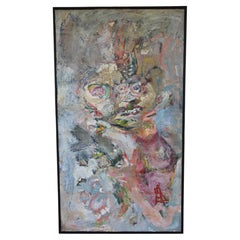
Outsider Abstract Oil Painting

Outsider Abstract Oil Painting

Located in Palm Springs, CA

Abstract, outsider oil painting on canvas. Painting measures 33.5" wide, 2.25" deep and 59.5" high. We had a new frame made for the canvas and added a black floater frame.

Category

1990s American Post-Modern Paintings

Materials

Canvas

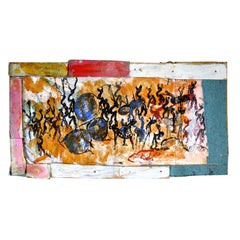
Untitled, Purvis Young Mixed-Media Painting, 1980s

Untitled, Purvis Young Mixed-Media Painting, 1980s

By Purvis Young

Located in Miami, FL

Abstract mixed-media work by artist Purvis Young. Folk Art portraying bleeding and pregnant figures in a crowd, policemen on horseback and large blue eyes. Young used eyes as symbols...

Category

Vintage 1980s American Folk Art Paintings

Materials

Paint, Reclaimed Wood, Canvas, Paper