Want more images or videos?
Request additional images or videos from the seller
1 of 20

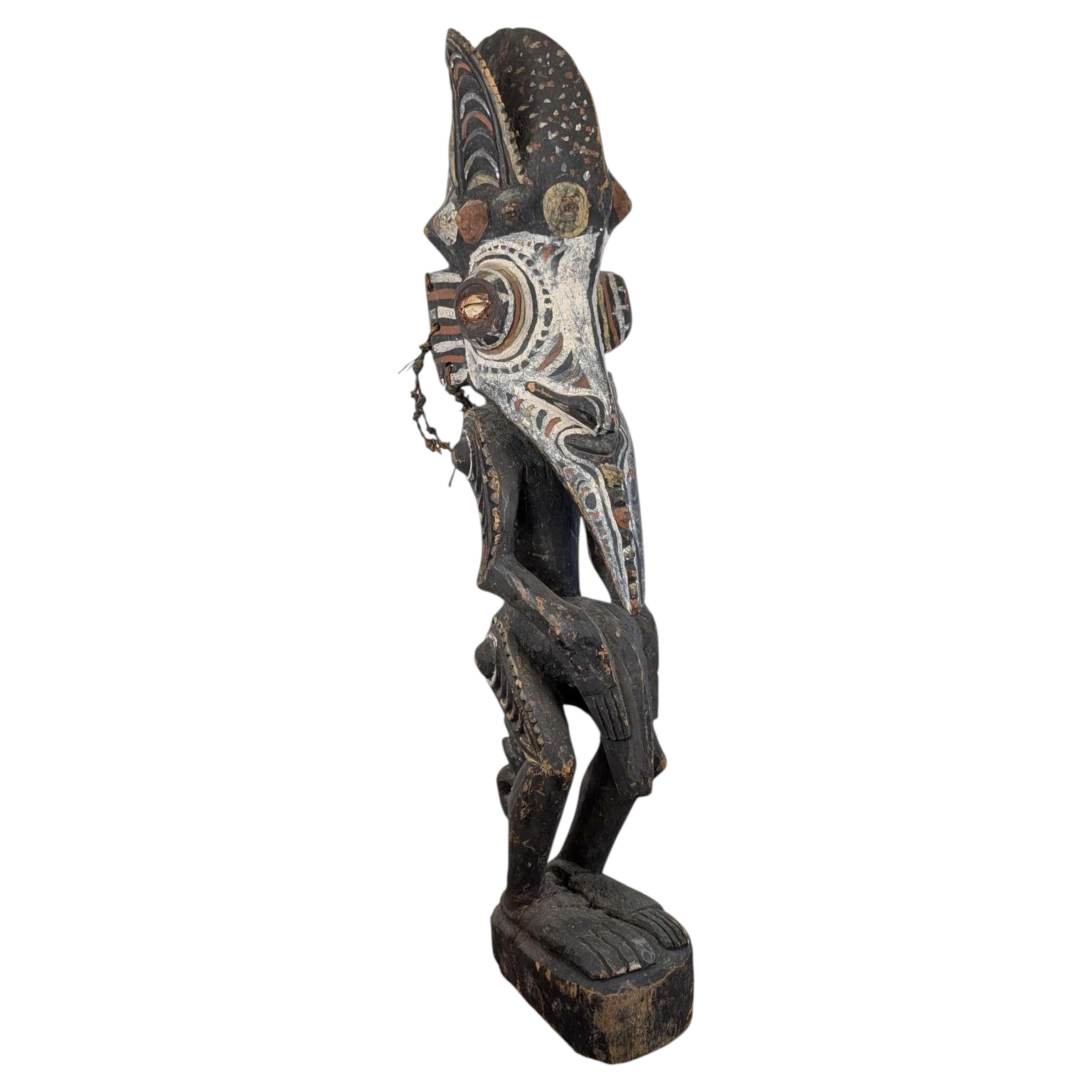
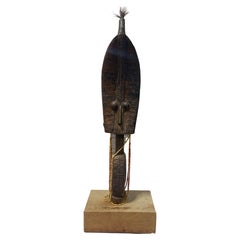
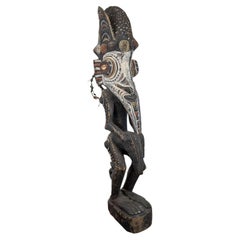
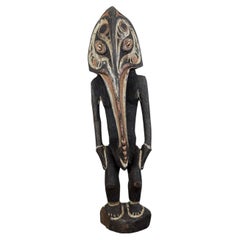
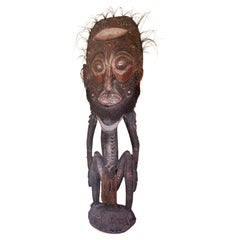
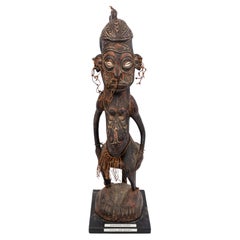
Sepik River People Papua New Guinea Oceanic Primitive Wood Totem Spirit Figure

$1,495
£1,128.13
€1,312.98
CA$2,110.54
A$2,118.21
CHF 1,235.19
MX$25,751.29
NOK 14,193.62
SEK 14,597.41
DKK 9,814.41

About the Item

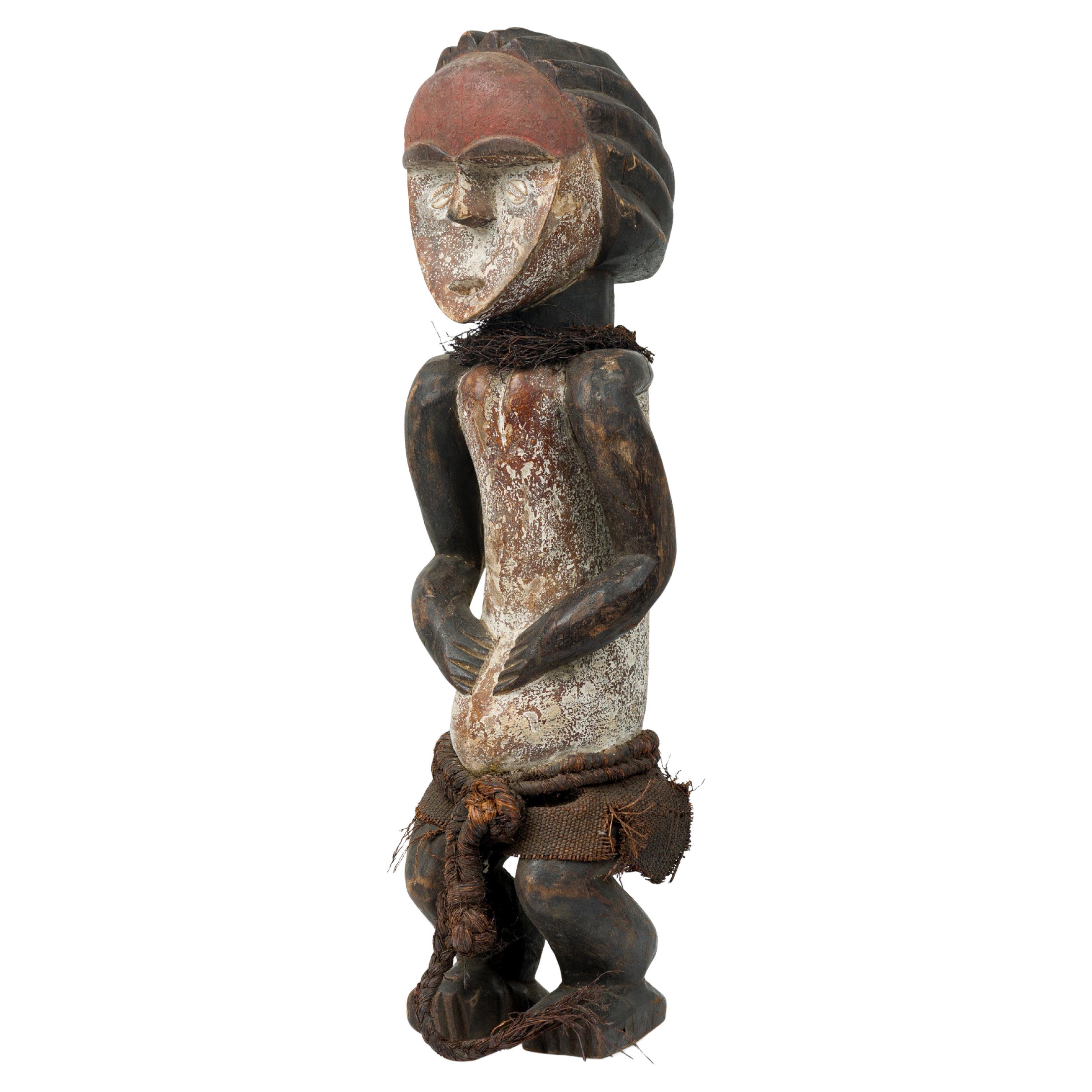
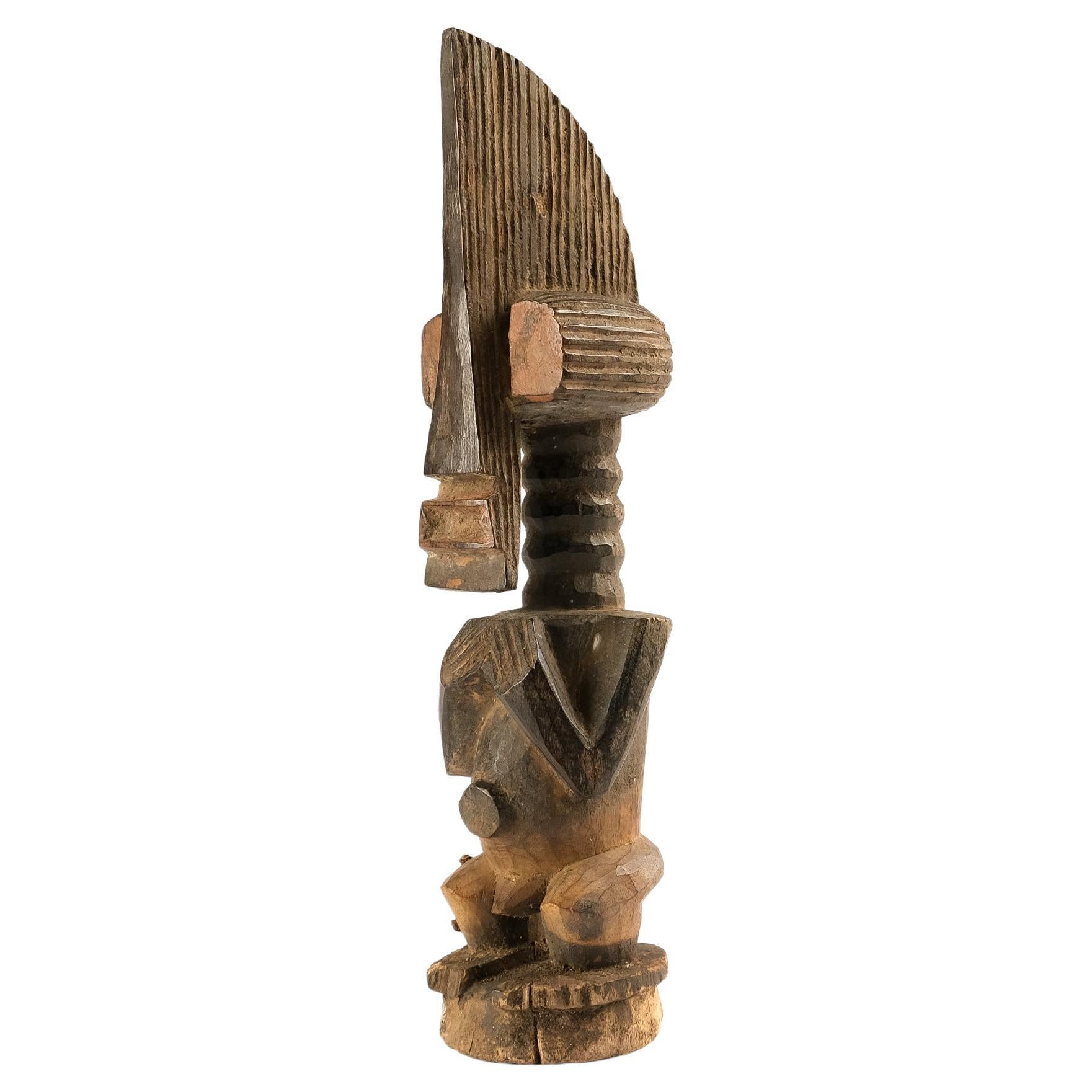
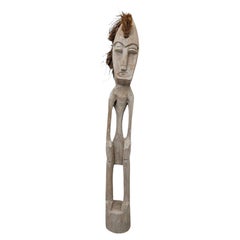
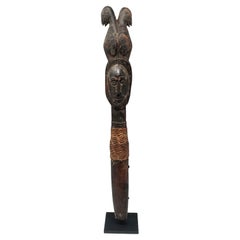
A fantastic hand-carved primitive wood totem sculpture/ figure from the Sepik River people (Ambunti and Wewak) of Papua New Guinea. This work, which features tusked ancestral spirit figure, is hand crafted from wood and ornamented with bone, traditional pigmentation/paint and ocean shells. It has a beautiful aged patina and comes with a custom display case. This piece is from a private Los Angeles collection. It would be a great addition to any Oceanic art/ artifacts collection or make for an eye-catching stand-alone accent work in about any setting. We are listing as mid 20th century but it could be older. Totem dimensions: 15.5" High, 5" wide, 4" Deep. Display case: 18.25" x 8.25" x 6.25"
  • Dimensions:
    Height: 18.25 in (46.36 cm)Width: 8.25 in (20.96 cm)Depth: 6.25 in (15.88 cm)
  • Style:
    Folk Art (Of the Period)
  • Materials and Techniques:
  • Place of Origin:
  • Period:
  • Date of Manufacture:
    Early to Mid-1900s
  • Condition:
    In very good vintage condition with natural organic wear consistent with age and use and acceptable for items of this nature (please see photos). Special, unique and engaging overall.
  • Seller Location:
    Studio City, CA
  • Reference Number:
    1stDibs: LU2254345690052

More From This Seller

View All
African Songye Luba Congo Bwadi Bwa Kifwebe Wood Carved Ceremonial Dance Mask

African Songye Luba Congo Bwadi Bwa Kifwebe Wood Carved Ceremonial Dance Mask

Located in Studio City, CA

A wonderful hand carved wood Kifwebe mask created by the Songye and Luba peoples of the Democratic Republic of the Congo. Kifwebe mask are used by the Bwadi Bwa Kifwebe secret socie...

Category

Mid-20th Century Congolese Folk Art Masks

Materials

Wood, Paint

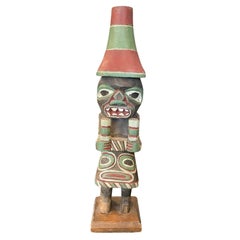
Pacific Northwest Coast Indigenous Native American Signed Wood Carved Totem Pole

Pacific Northwest Coast Indigenous Native American Signed Wood Carved Totem Pole

Located in Studio City, CA

A beautifully designed, wonderfully carved Pacific Northwest Coast First Nation Native American indigenous hand carved wood totem pole. The work depicts a watchman (or watcher) figu...

Category

Mid-20th Century Canadian Native American Sculptures and Carvings

Materials

Wood, Paint

Large Figurative African Mangbetu Anthropomorphic Ceramic Vessel or Jar

Large Figurative African Mangbetu Anthropomorphic Ceramic Vessel or Jar

Located in Studio City, CA

This is a wonderful piece likely made by the Mangetu tribe of the Democratic Republic of the Congo. It is finely detailed and quite large and hefty. These pieces were originally made...

Category

20th Century Congolese Folk Art Figurative Sculptures

Materials

Terracotta

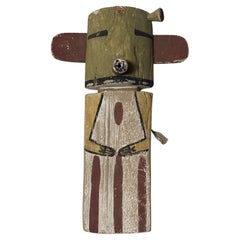
Southwestern Native American Hopi Hand Carved Child Cradle Kachina Katsina Doll

Southwestern Native American Hopi Hand Carved Child Cradle Kachina Katsina Doll

Located in Studio City, CA

A wonderfully hand-painted and decorated Native American Hopi Kachina Katsina doll. We believe this was a child's cradle first Kachina doll. It is hand carved from light wood (likel...

Category

20th Century American Native American Native American Objects

Materials

Wood, Paint

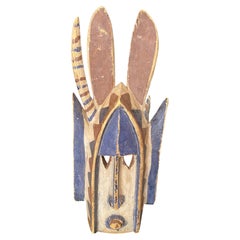
African Dogon Wood Carved Awa Walu Zoomorphic Antelope Ceremonial Dance Mask

African Dogon Wood Carved Awa Walu Zoomorphic Antelope Ceremonial Dance Mask

Located in Studio City, CA

A beautiful and engaging, large African Awa Society mask by the Dogon people of inland West Africa who today reside primarily in Mali. The Dogon people are best known for their relig...

Category

Mid-20th Century Malian Folk Art Masks

Materials

Wood, Paint

You May Also Like

Large Iatmul Ceremonial Agiba Figure, East Sepik River, Papua New Guinea

Large Iatmul Ceremonial Agiba Figure, East Sepik River, Papua New Guinea

Located in Nottingham, GB

The Sepik River region of Papua New Guinea is celebrated as one of the world's great centres of indigenous sculpture, where carving traditions developed as an essential expression of...

Category

20th Century Tribal Art

Materials

Wood

Oceanic Ancestral Figure with Shell Inlay, Middle Sepik Region, Papua New Guinea

Oceanic Ancestral Figure with Shell Inlay, Middle Sepik Region, Papua New Guinea

Located in Nottingham, GB

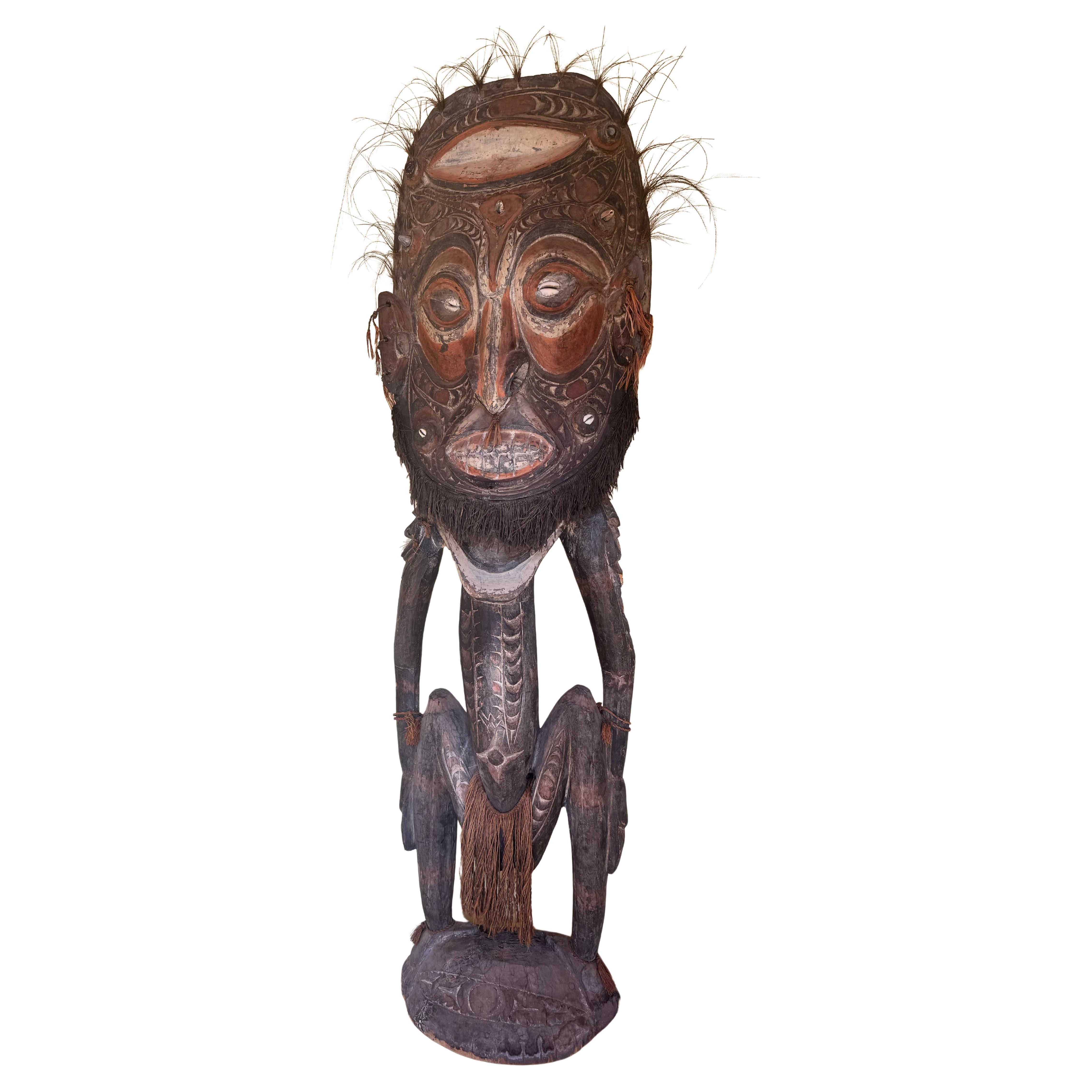
The Sepik River region of Papua New Guinea has long been recognised as one of the great centres of Oceanic art, renowned for its extraordinary diversity of sculptural traditions. Stretching through remote villages connected by waterways and shared ceremonial practices, the region fostered distinctive artistic languages that gave visual form to ancestry, spirituality and communal identity. Carved figures depicting ancestors, protective spirits and mythological beings served as intermediaries between the visible and unseen worlds, occupying an essential place within ritual life. Styles vary considerably between communities, from the flowing forms associated with Iatmul carving to the dramatic hooked silhouettes of yipwon figures. Despite these differences, Sepik sculpture is united by its expressive power and its role in maintaining relationships between the living, their ancestors and the forces that shaped the world around them. This compelling ancestral figure originates from the Middle Sepik River region of Papua New Guinea and dates to the early to mid-twentieth century. Carved from dense hardwood, it embodies the dramatic abstraction and spiritual intensity for which Sepik sculpture is celebrated. The figure stands in a dynamic posture with sharply bent knees and angular arms, its hands splayed and feet flattened in a manner that conveys both tension and authority. The body has been deeply incised and enriched with natural earth pigments in red, white and black, creating a striking interplay between carved texture and painted surface. Blackened pigment defines the principal forms, while contrasting colours emphasise the limbs, facial features and other key details, heightening the visual impact of the composition. The head is particularly arresting. Elongated and mask-like in appearance, it features a pronounced brow and a dramatic beak-like hooked nose that projects confidently from the face. Set within hollowed sockets are a pair of inlaid cowrie shell eyes, their luminous surfaces animating the figure with an intense and watchful presence. This combination of angular anatomy, exaggerated facial structure and shell ornamentation is consistent with the carving traditions of the Iatmul peoples and related communities of the Middle Sepik, where ancestral imagery occupied a central role in ceremonial life. Figures of this type were often displayed within ceremonial structures or brought into ritual contexts to invoke the guidance, protection and authority of ancestral spirits. They acted as powerful reminders of lineage and continuity, reinforcing the bonds between generations while maintaining connections with the supernatural realm. Rich in character and sculptural strength, this figure exemplifies the expressive sophistication of Sepik art...

Category

20th Century Tribal Art
Materials

Wood

Monumental Papua New Guinea Spirit Figure, Mid-20th Century

Monumental Papua New Guinea Spirit Figure, Mid-20th Century

Located in Wien, AT

Impressively carved from a single block of wood, this monumental male spirit or ancestor figure originates from the Middle Sepik region of Papua New Guinea. The figure combines stron...

Category

Mid-20th Century Papua New Guinean Tribal Tribal Art

Materials

Hardwood, Feathers

Papua New Guinean Polychromed Carved Figure

Papua New Guinean Polychromed Carved Figure

Located in Queens, NY

Papua New Guinean carved polychromed ancestral figure with fiber and shell detail

Category

20th Century Unknown Tribal Figurative Sculptures

Materials

Chrome

Large Oceanic Asmat Carved Wood Figure, Papua New Guinea

Large Oceanic Asmat Carved Wood Figure, Papua New Guinea

Located in Nottingham, GB

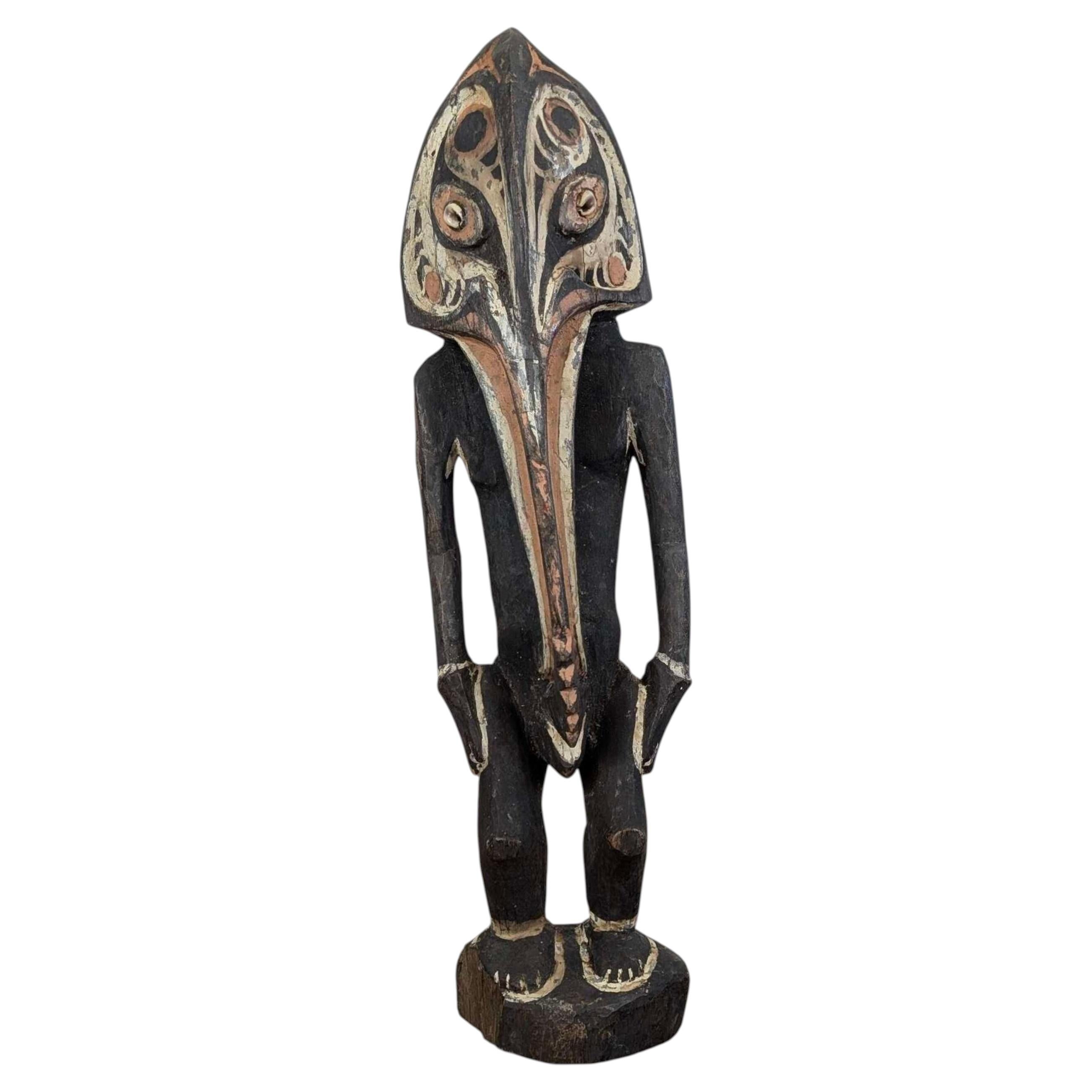
The Asmat people of southwestern Papua New Guinea are renowned for one of the most powerful sculptural traditions in Oceania. For the Asmat, wood carving was never merely decorative; it formed an essential part of spiritual life and ancestral remembrance. Ancestors remained active within the community, influencing the fortunes of the living and requiring continued acknowledgement through ritual and artistic expression. Drawing upon the forests that sustained them, Asmat carvers transformed hardwood into vessels of memory and identity, believing that the worlds of people, spirits and nature existed in profound connection. The expressive force and striking abstraction of Asmat sculpture captivated Western artists, anthropologists and collectors throughout the twentieth century, and these works remain among the most celebrated examples of Melanesian art. Description of the Ancestral Figure This substantial ancestral figure has been carved from a single block of indigenous tropical hardwood. Its commanding scale and architectural presence immediately distinguish it as an object of significance, equally compelling as a work of Oceanic art and as a sculptural focal point. The figure is depicted in a formal, frontal pose with elongated limbs and simplified anatomical features characteristic of the Asmat aesthetic. The face is rendered with quiet restraint, its stylised features conveying a sense of dignity and spiritual authority rather than individual portraiture. The elongated proportions lend the figure a timeless quality, reinforcing its role as an embodiment of ancestral presence rather than a representation of earthly likeness. A woven fibre headdress crowns the head, preserving an important cultural detail associated with traditional Asmat adornment. Such elements served not only as markers of identity and status but also strengthened the connection between the carved image and the spirit it was intended to honour. The entire surface has been treated with a white lime wash, creating a dramatic contrast against the underlying wood. This traditional finish gives the sculpture a striking, almost spectral appearance, evoking the presence of the ancestor and enhancing the deeply cut forms beneath. Traces of natural pigment remain visible throughout, accentuating the chisel work around the facial features and emphasising the rhythmic transitions between the torso, limbs and integrated circular base. The figure possesses the raw, expressive energy for which Asmat carving...

Category

20th Century Tribal Art
Materials

Wood

Early 20th Century Sago Peg, Abelam/Wosera People, Papua New Guinea

Early 20th Century Sago Peg, Abelam/Wosera People, Papua New Guinea

Located in Point Richmond, CA

Sago peg, tapak, Abelam/Wosera people, East Sepik Province, Papua New Guinea Sago pegs are used to secure a screen mesh during the preparation of sago flour. This example depicts a ...

Category

Early 20th Century Papua New Guinean Tribal Abstract Sculptures

Materials

Shell