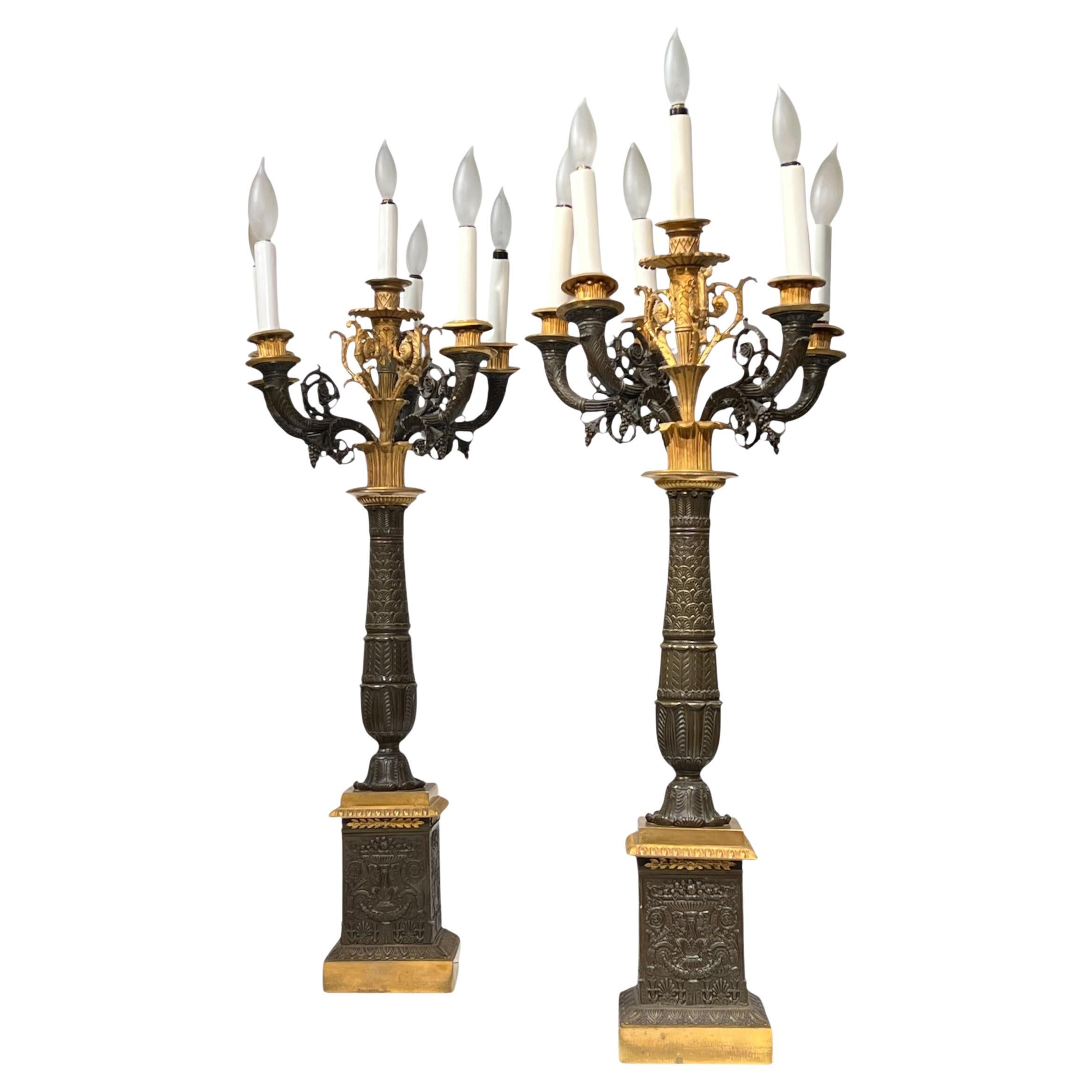
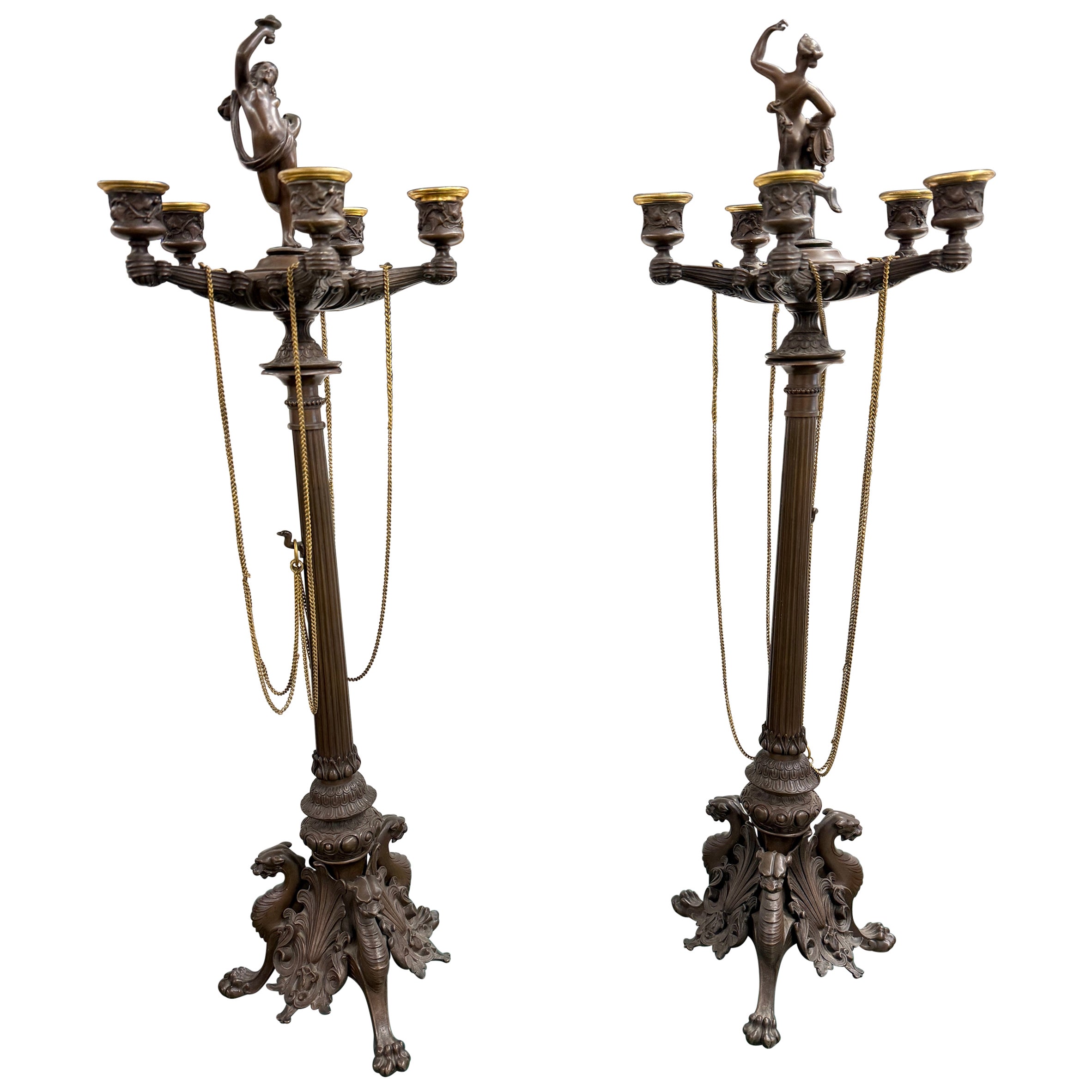
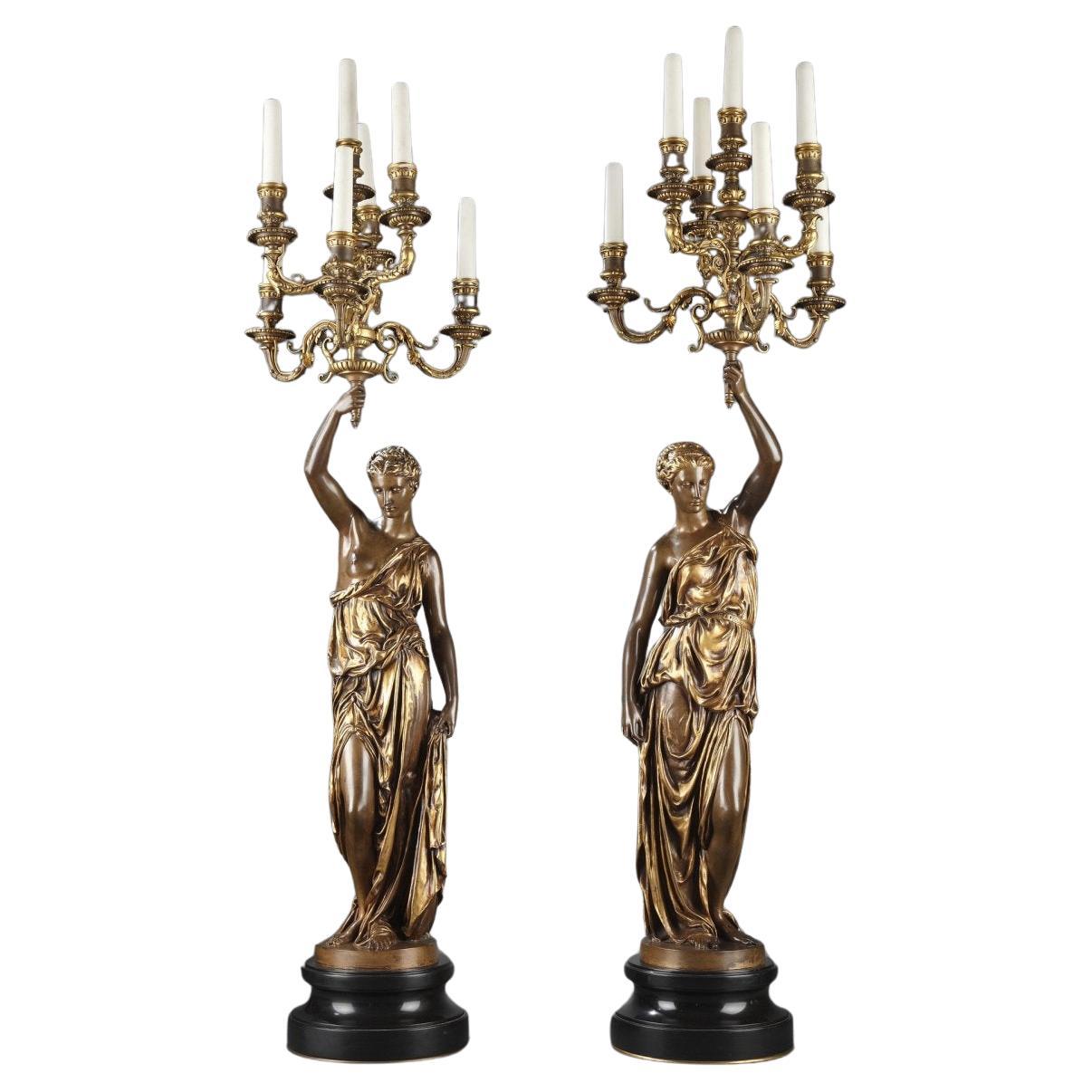

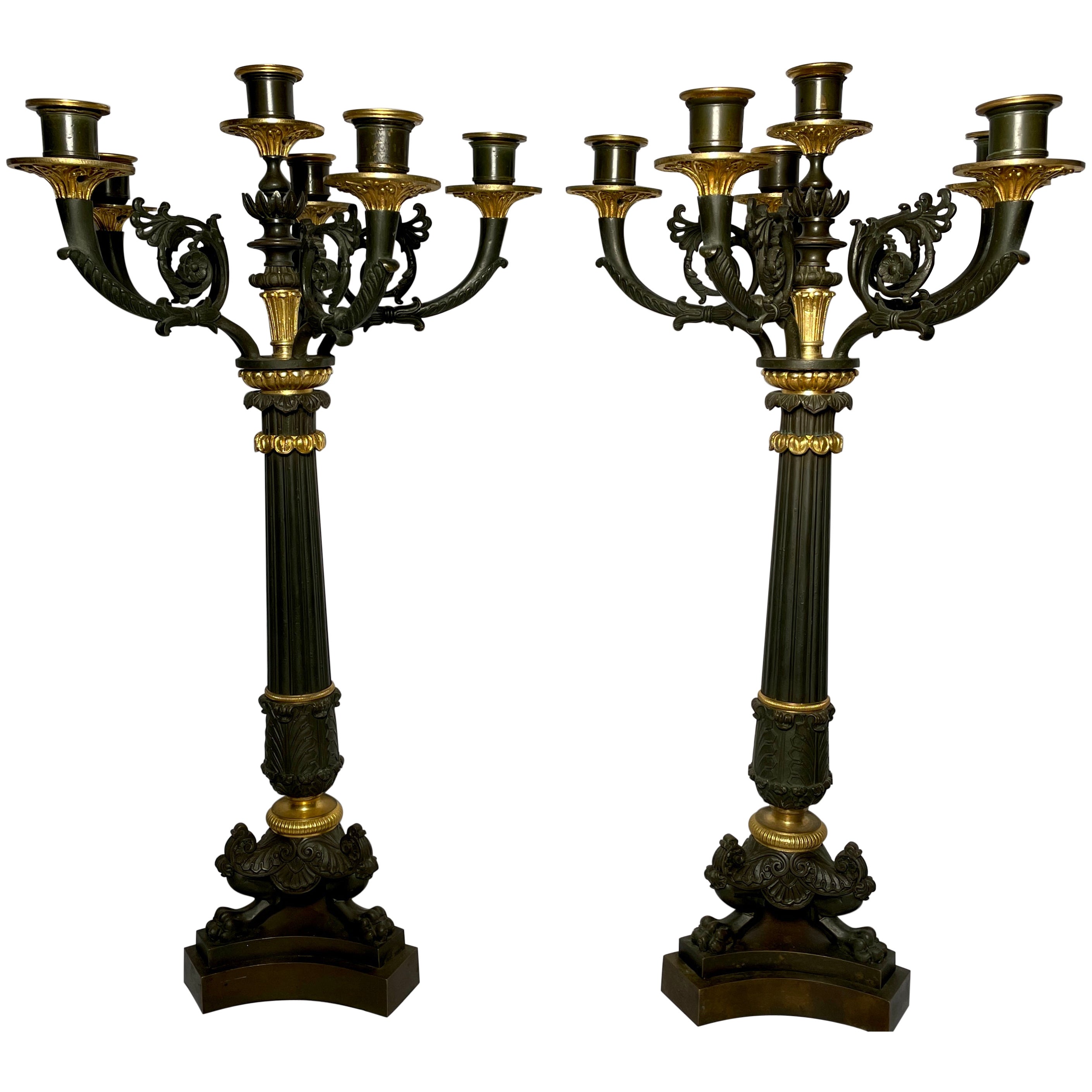
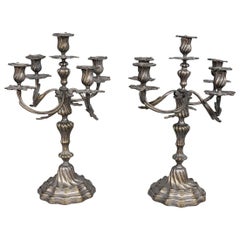
1900 Pair of Candlestick Louis XV Style Silver Plated 6 Lights
Located in Marseille, FR
1900 pair of candlestick Louis XV style silver plated 6 lights.
Category
Antique Early 1900s French Louis XV More Lighting
Materials
Silver Plate
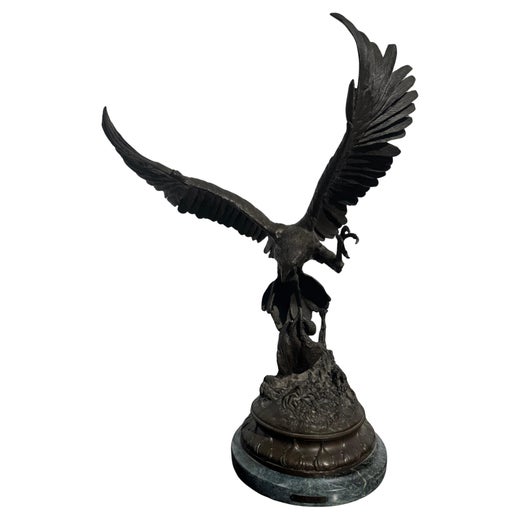
Jules Moigniez was born in Senlis sur L'Oise, France in 1835 and died in Saint-Martin-du-Teire, France on May 29, 1894. The son of a metal gilder, Moigniez was a student of Paul Comolera. Moigniez debuted at the Exposition Universelle in 1855 with Pointer, Pheasant, Falcon and Weasel each in plaster. Moigniez contributed regularly to the Paris Salon from 1859–92 during which he exhibited over 30 sculptures including Pointer, Pheasant, Falcon and Weasel in bronze. Moigniez was awarded an honorable mention at the Salon and received a medal in London at the Great Exposition in 1862. Moigniez lived most of his life in Paris. During his career, Moigniez was widely popular in France, England and America. His bronzes were most decorative, particularly those of game birds. Moigniez also sculpted dogs, farm animals and equestrian groups. Moigniez's dogs reflected the "naturalism" style of Pierre Jules Mene. Moigniez’s bird sculptures were reminiscent of paintings by deHondecoeter, Casteels and Snyders. Moigniez’s sculptures of birds reflect dynamic movement as if captured through a high-speed photographic portrait. Moigniez bronzes were edited, cast, by the foundry his father opened in 1857. A wide variety of patinations, including silver plate, golden bronze and gilding were unique to these lifetime casts. After Moigniez’s death, most of his bronzes were cast by A. Gouge, who also edited most of Comolera's sculptures.
1900 Pair of Candlestick Louis XV Style Silver Plated 6 Lights
Located in Marseille, FR
1900 pair of candlestick Louis XV style silver plated 6 lights.
Silver Plate
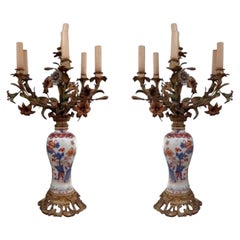
Pair of Imari Lamps Mounted in 19th Century Bronze
Located in Marseille, FR
Pair of Arita porcelain lamp called Imari on gilt bronze frame decorated with flowers in polychrome sheet metal from the 19th century. Imari porcelain is a style of Japanese ceramics...
Porcelain
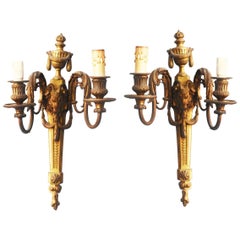
Pair of French 19th Century Louis XVI Style Figural Wall Lights
Located in Marseille, FR
A very fine pair of French 19th century Louis XVI style gilt bronze two-light figural wall lights (Sconces - Appliqués). Each with goat-head surmounted by a fruit basket and acanthus...
Bronze
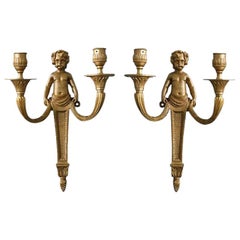
Pair of Gilt Bronze Sconces Louis XVI Style
Located in Marseille, FR
Pair of gilded bronze light wall sconces with babies. French work of the early 19th century. Louis XVI style.
Bronze
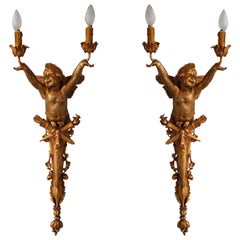
Pair Large 2 Lights Sconces 1900 Art Nouveau Gilded Bronze with Baby
By Gustave-Joseph Chéret
Located in Marseille, FR
Pair of large Art Nouveau sconces with two branches of light, in gilded bronze. In the shape of a putto with quiver, torch and foliage. Signed "Joseph Chéret". Stamp of foundry "Sole...
Bronze
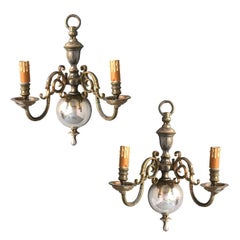
Pair of Hollandaise Sconces in Silvered Bronze 2 Lights
Located in Marseille, FR
Pair of Dutch sconces in silvered bronze 2 lights measuring 46 cm by 35 cm and 20 cm deep. Additional information: Material: Bronze Style: 1940s to 1960s.
Bronze
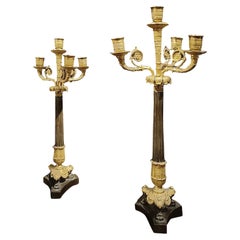
EARLY 19th CENTURY PAIR OF CARLO X BRONZE CANDLESTICKS
Located in Firenze, FI
Pair of graceful bronze candlesticks belonging to the Charles X period. The candlesticks are characterized by particular finishes in gilded bronze and burnished bronze. Each candelab...
Bronze
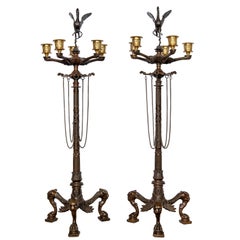
Pair of Gilt and Patinated Bronze Candelabra, France, 19th Century
Located in Buenos Aires, Buenos Aires
Pair of gilt and patinated bronze candelabra. France, 19th century.
Bronze
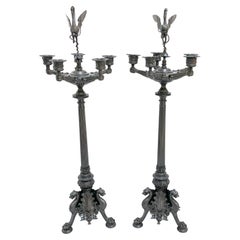
Pair of Napoleon III Patinated Bronze Patina 5-Light Candelabra, France C 1870s
Located in West Palm Beach, FL
Pair of Napoleon III Patinated Bronze Patina 5-Light Candelabra France Circa 1870s A exquisite pair of Napoleon III patinated bronze candelabra, crafted in France during the 1870s. Standing at an impressive 30 inches tall, these candelabra are a true testament to the opulence and craftsmanship of the era. Each candelabrum features a central figural sculpture of a bird holding a serpent, perched upon a tortoise. This intricate sculpture showcases the attention to detail and artistic skill of the bronze sculptor. Above the sculpture, a five-light bobeche candelabrum adds a touch of grandeur and elegance to the piece. Supported on a fluted column, the candelabra rest on triparte acanthus leaf and lion caryatids with paw feet. These decorative elements add a regal and classical aesthetic, reflecting the influence of the Neoclassical style during the Napoleon III period. In their recent use, the candelabra were adapted as lamps, and as a result, the bird finials are now removable. They were previously used as lamp finials...
Bronze
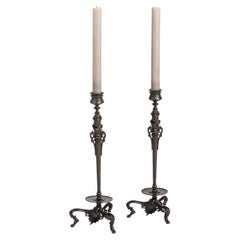
Pair of French Napoleon III Bronze Candlesticks by Foundry F. Barbedienne 1860s
By F. Barbedienne Foundry
Located in Salzburg, AT
Pair of very elegant classicist candlesticks in fine patinated bronze, signed BARBEDIENNE. The execution of the casting is extremely finely worked with delicate leaves on the outer wall of the candlestick, with a head of antiquity on the upper part of the stem which flows into the lower part with fluting and side volutes. The 3 curved legs stand on raised feet with delicate strappy sandals. Measures: The diameter at the top is 3.5cm and at the bottom 13.5cm Ferdinand Barbedienne (* August 6, 1810 in Saint-Martin-de-Fresnay, Calvados department, France; † March 21, 1892 in Paris) was a French sculptor, bronze ware manufacturer, and gallery owner. One of the most important and popular Éditeurs d'art, or publishers of art articles, he had most of the French sculptors of his time under contract. Life and work Ferdinand Barbedienne was the son of a farmer. At the age of 13, he learned the Craft of saddlery. In 1822 he moved to Paris, where he first worked as a clerk in a wallpaper shop. He received start-up capital from his employer to open his own store, which he set up on Rue Notre-Dame-de-Lorette in 1834. He pursued the idea of exhibiting bronze statues in addition to his core business and mass producing them in small format. In 1838, he joined forces with the mechanic Achille Collas, who had developed the machine á reduction (réducteur for short); a device based on the principles of the pantograph that could reproduce three-dimensional objects in any size - reduced or enlarged. On November 29, 1838, both signed the founding contract for the company Société Ferdinand Barbedienne et Achille Collas, which aimed to commercially exploit the mechanized production of sculptural works for an initial 20 years. Barbedienne took care of the commercial management of the company, while Collas contributed the patent on his invention and seven existing machines, and with his profound knowledge of machinery was responsible for the production processes. Together they decided on the subject matter of the objects, the selling prices, and all other financial matters. In 1841, they produced casts of the Apollo of Belvedere, the Spinario, and 21 pieces with the motif of a bas-relief of the Parthenon. These were followed by versions of the Laocoon group, the Venus of Arles, and the Borghese Fencer, among others. Special interest was initially shown in works from antiquity, for which casts from the Atelier de Moulage in the Louvre served as models. The company continued to produce works by representatives of the Renaissance such as Michelangelo, Donatello, Giovanni Bologna or by French sculptors such as Jean Goujon, Jean-François Flamand, Pierre Puget, François Girardon, Antoine Coysevox...
Bronze
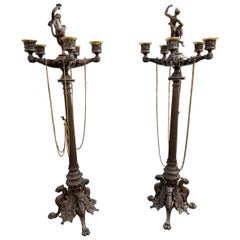
Pair of 19th Century Bronze Neoclassical French Candelabra
Located in Palm Springs, CA
An exquisite pair of 19th Century Neo Classical French bronze candelabra. They each feature 5 candle holders and central female figure on top. All of the bobeches are present. The ch...
Bronze
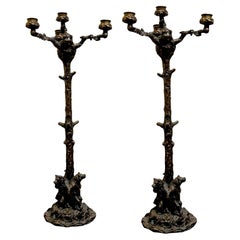
19th Century Bronze pair of candlesticks with bears of Christophe Fratin
By Christophe Fratin
Located in Paris, FR
Here is a stunning pair of finely chiseled, bronze candlesticks from the mid-19th century. These bronze candelabras, with a body resembling a tree trunk adorned with oak leaves and a...
Bronze