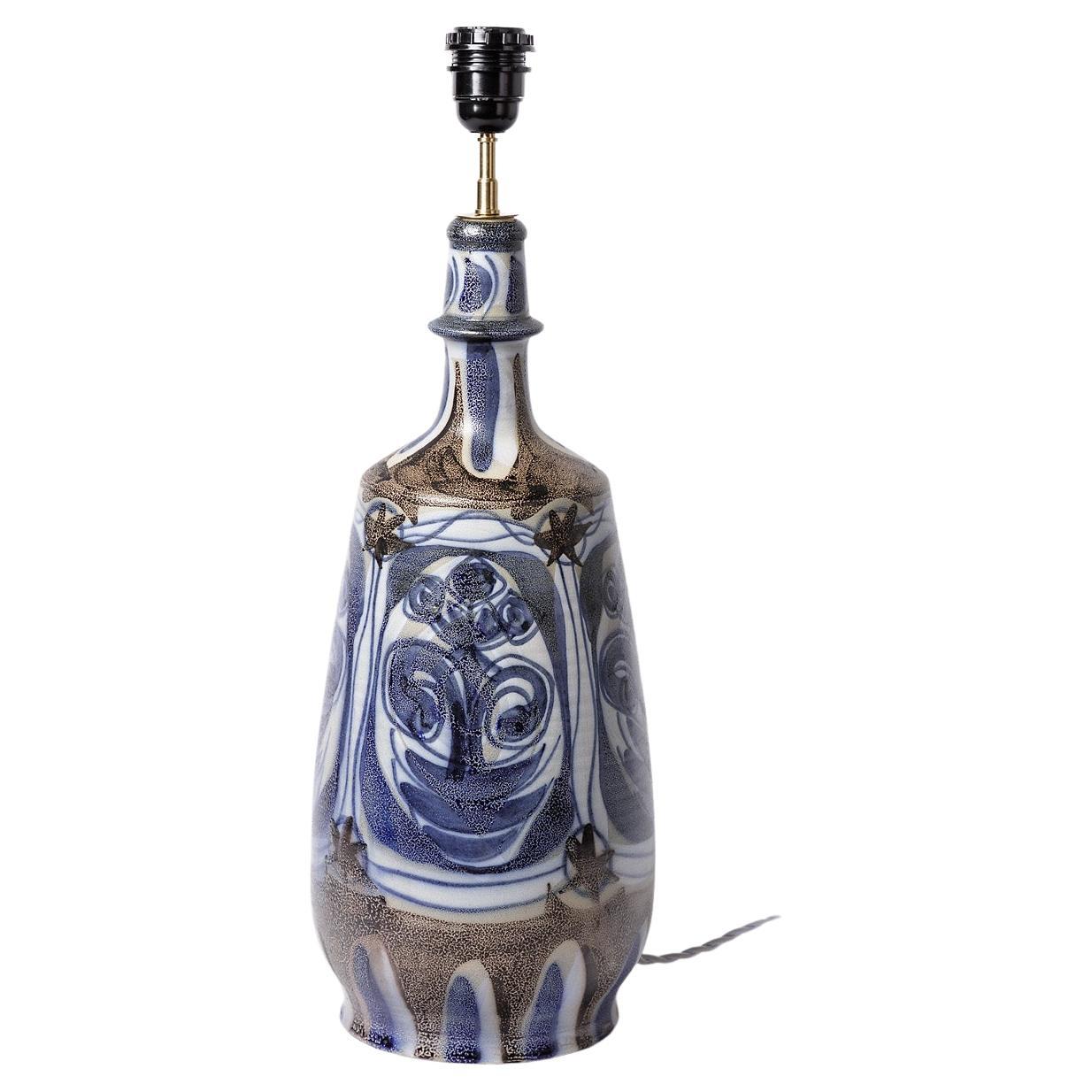
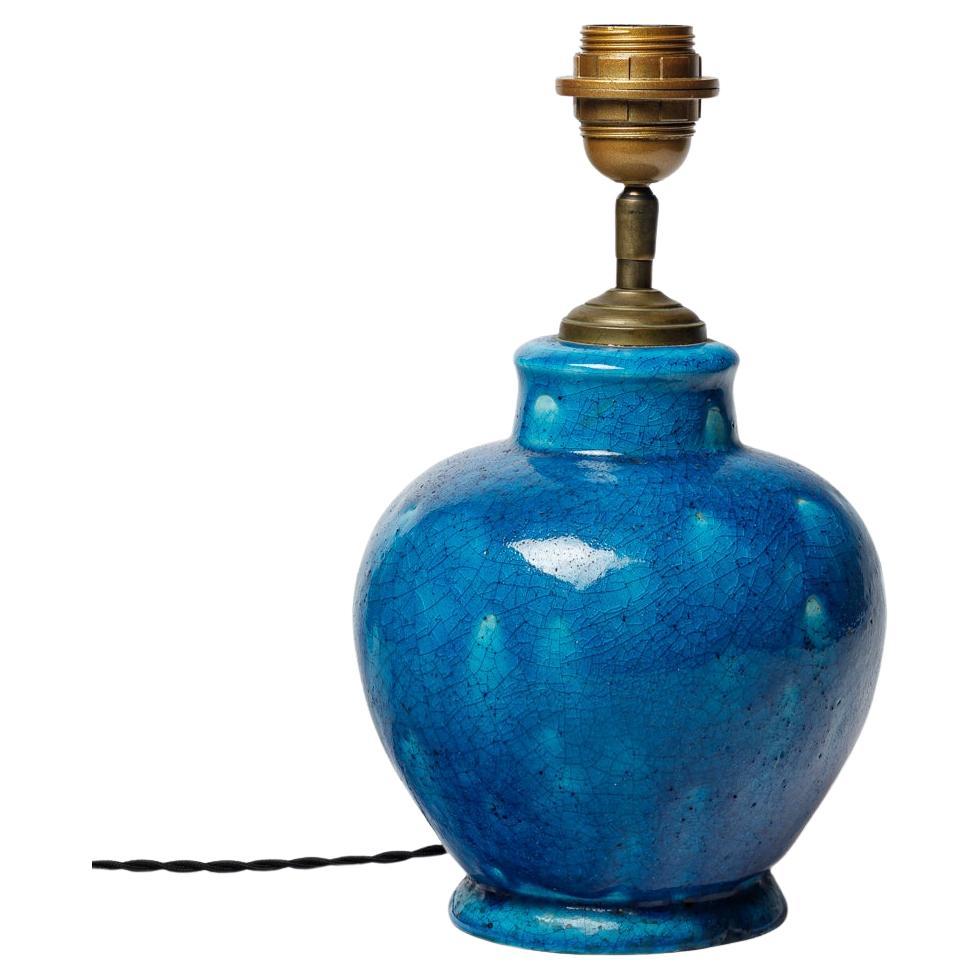
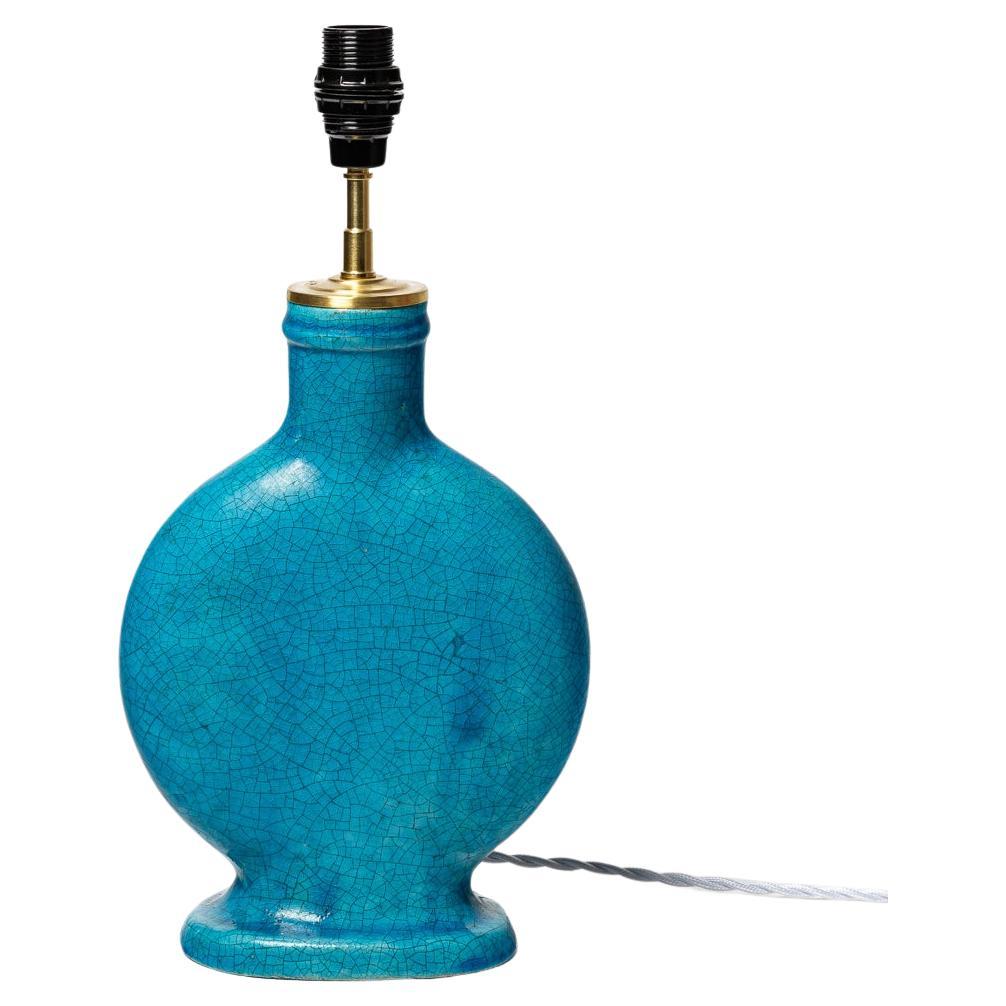
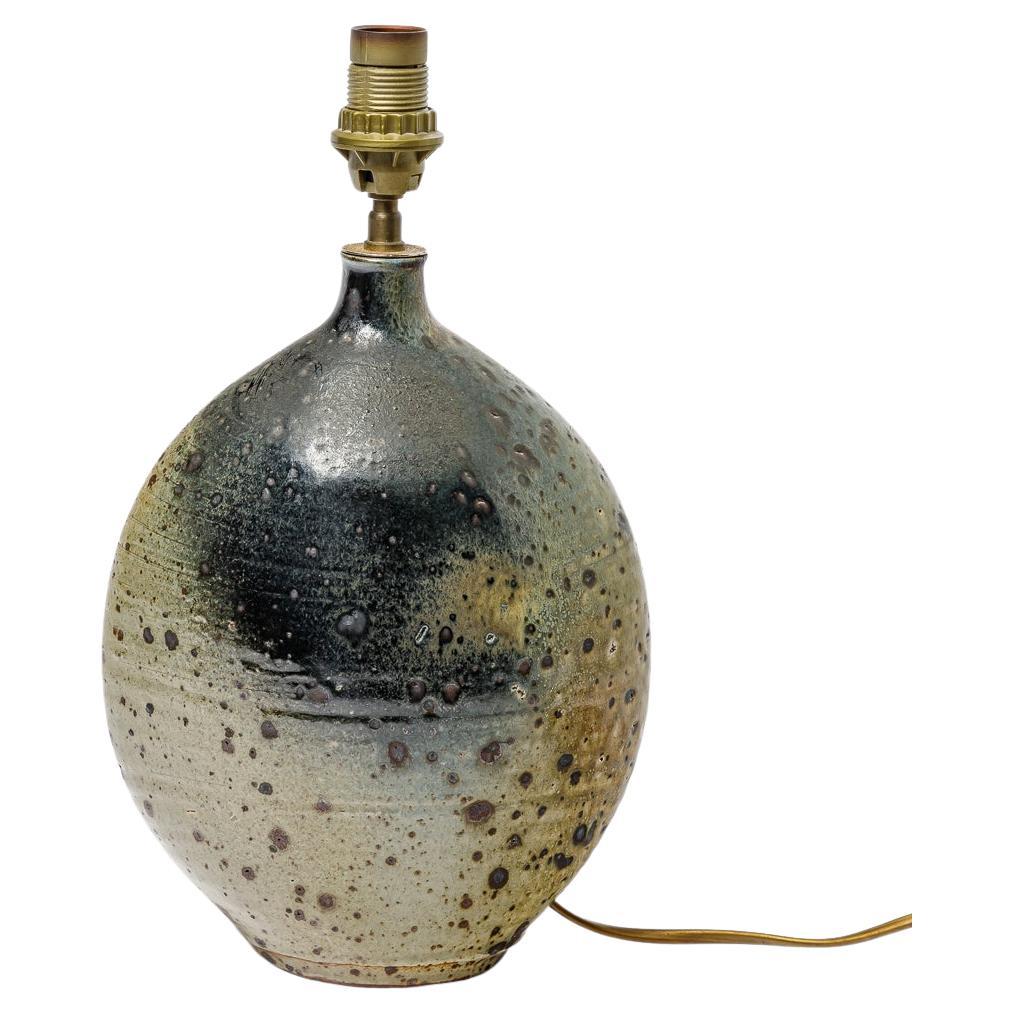
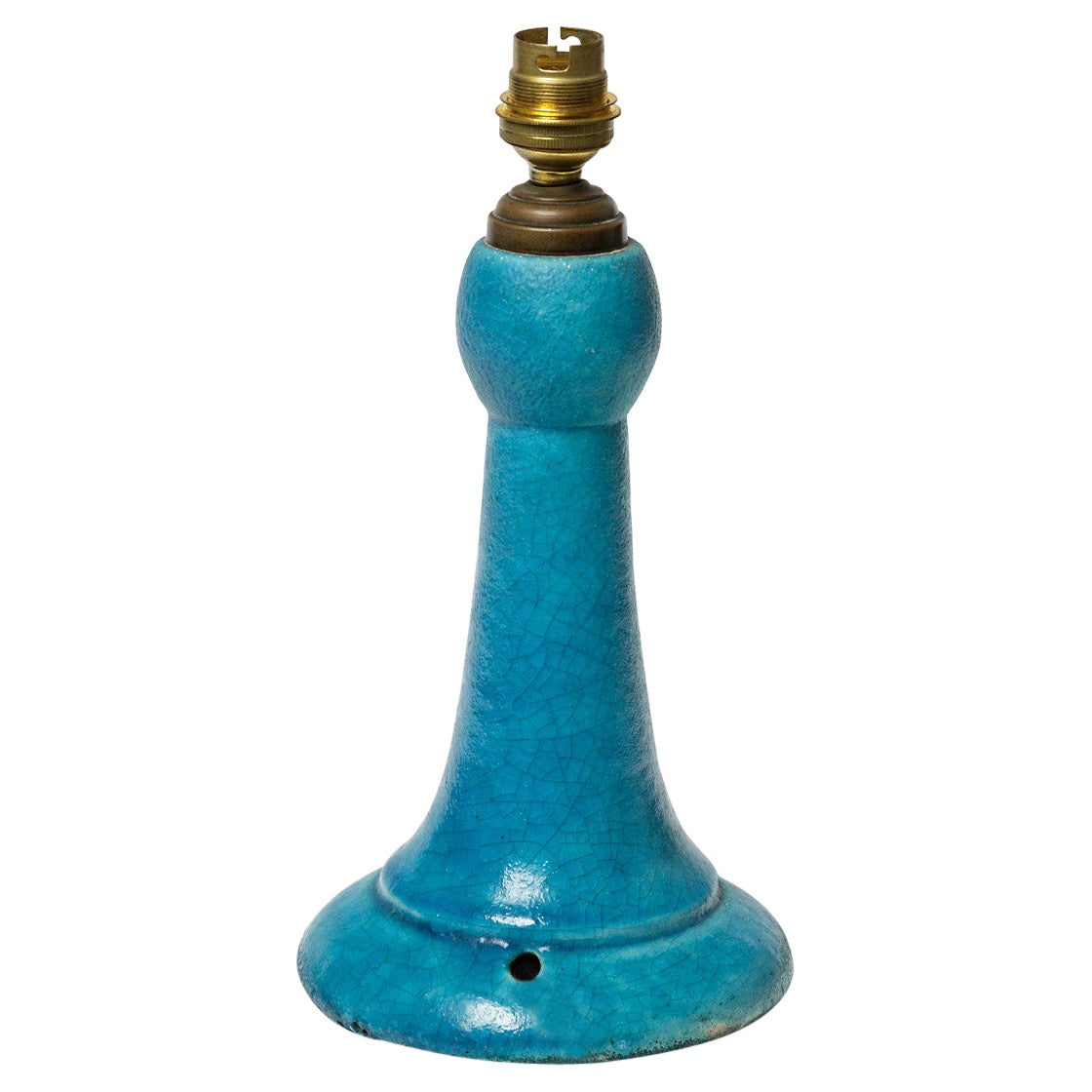
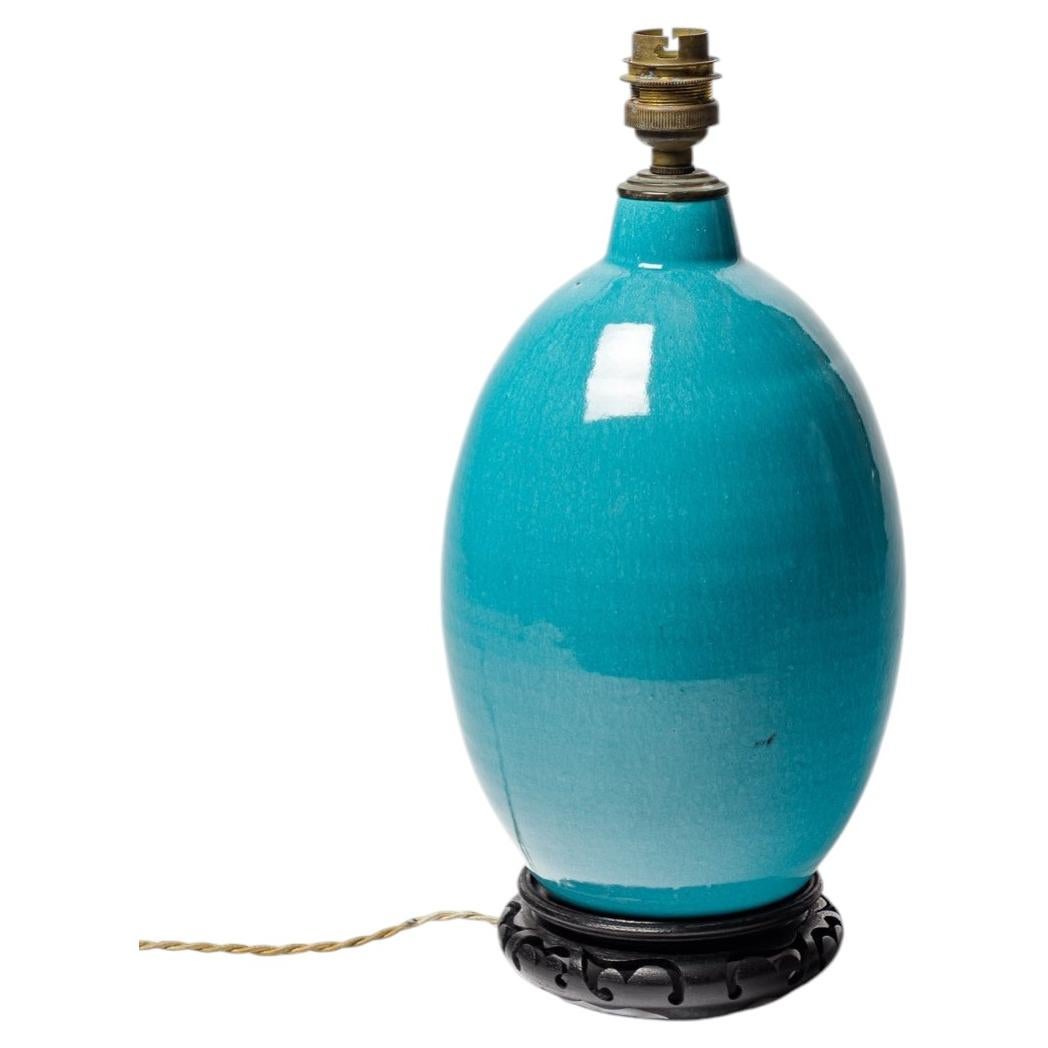
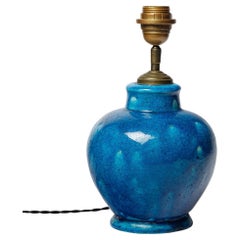
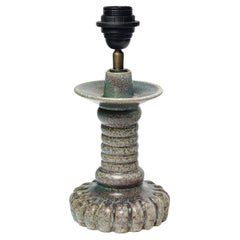
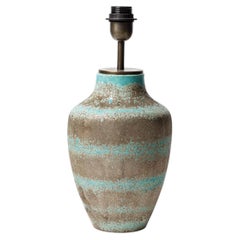
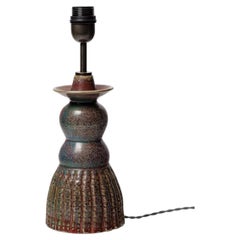
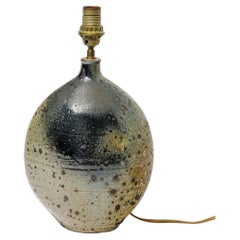
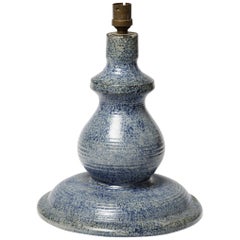
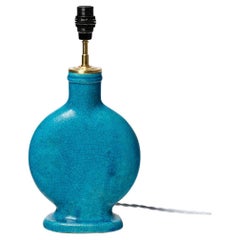
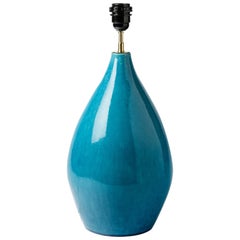
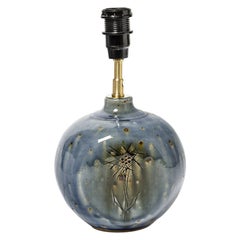
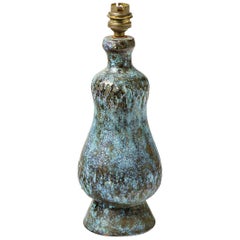
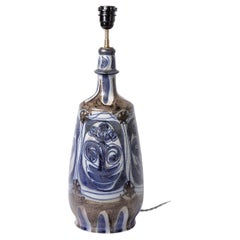
Blue glazed ceramic table lamp by Jean Maubrou.
Artist monogram under the base. Circa 1940-1950.
Perfect original conditions.
H : 9.1 x 5.9 x 4.9 inches (ceramic only).
Sold with a European electrical system.
-
A student of LACHENAL, Jean MAUBROU settled in Saint-Amand around 1923 at La Bertille, in the former studio of CARRIÈS, in the upper Faubourg des Poteries.
He later built another workshop a little further down, on the site of a brickyard owned by his father, which is now the location of the pottery school (CNIFOP). He initially focused on commercial production: faience ceramics, of which he was a pioneer in Saint-Amand.
This production (vases, coffee and tea sets, small pots for cacti or plants), which provided his livelihood, allowed him from around 1945 to devote himself to more artistic stoneware creations, mainly unique pieces. He was also the first to use an electric kiln, as early as 1948, for ceramic production.
Regarding stoneware, a large round kiln of 7–8 m³, built by Lucien ARNAUD, was used for his wood firings. His work was halted in 1939 with the outbreak of war. He was mobilized and, like many of his fellow citizens, taken prisoner in Germany. Health problems led to his repatriation before the end of the war, and he resumed his pottery activity after a period of convalescence.
In the meantime, he had rented his workshops to Pierre PIGAGLIO, born in 1913, who continued commercial ceramic production alongside his own stoneware creations. Jean MAUBROU trained several students, three of whom remained in Saint-Amand: Jean GAUBIER, who established himself a little further down the Faubourg des Poteries; Adrien LACHENY, who set up a workshop on the Route des Thus with his brothers; and Georges ROBIN, who took over Maubrou’s workshop.
In November 1951, he exhibited at Galerie Sèves in Montparnasse and met with great success, leading to the official recognition of his achievements. A vase was acquired by the Ministry of Arts and Letters to decorate the salon of an embassy.
His stoneware, of rather heavy design but very well thrown and finished, was coated with superb glazes, mainly three: a copper red that turned green or turquoise depending on the kiln atmosphere, a silky cream sometimes with crystallizations, and a satin black.
All were lightly salted using small salt cups which, under the action of fire, produced incomparable effects.
In January 1957, after transferring his workshop to Georges ROBIN, he retired with his wife to Cosne-sur-Loire, where he died in 1965.
Source: Grès de Puisaye – de Jean Carriès à nos jours – Marques & signatures, Emmanuel NESLY, 2026.