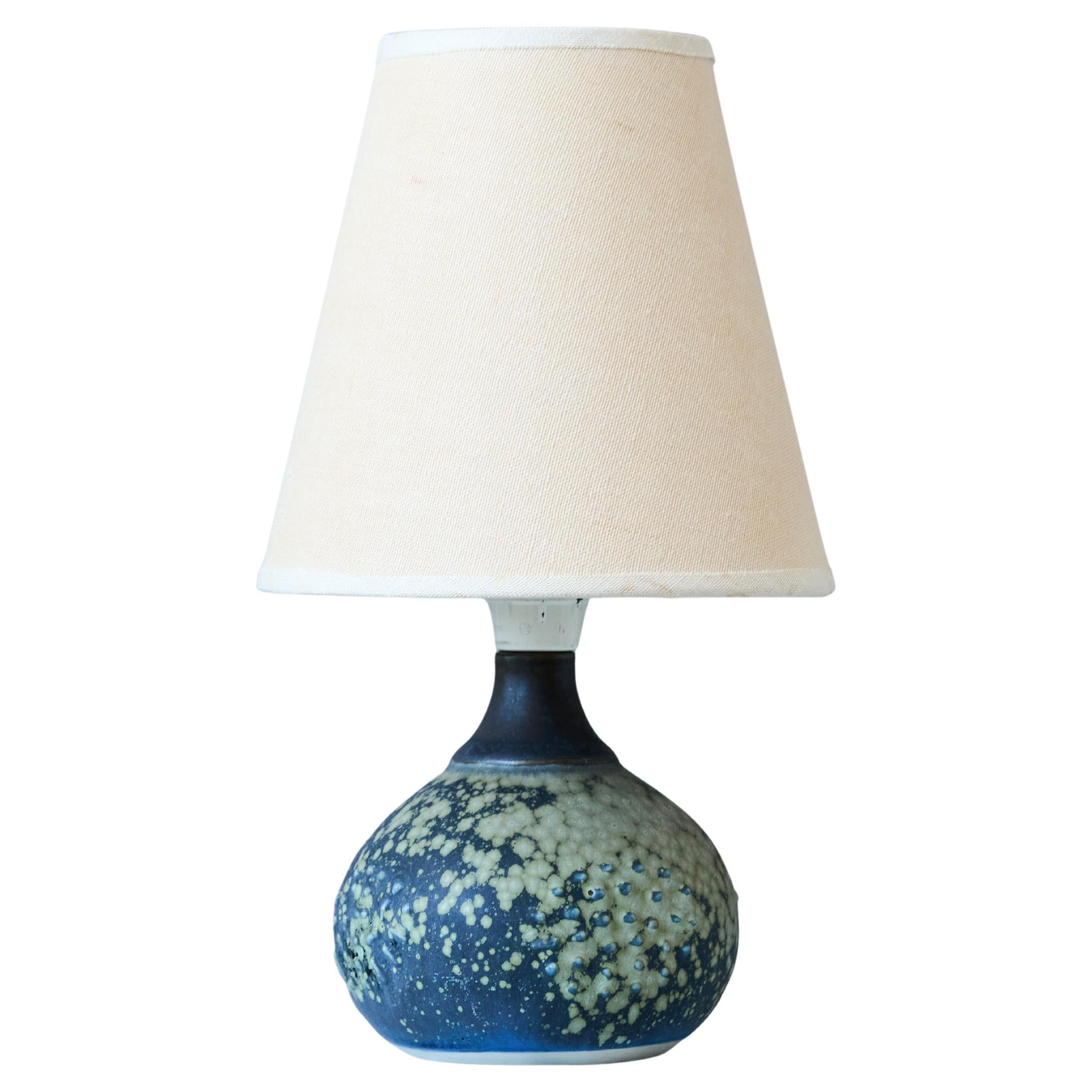
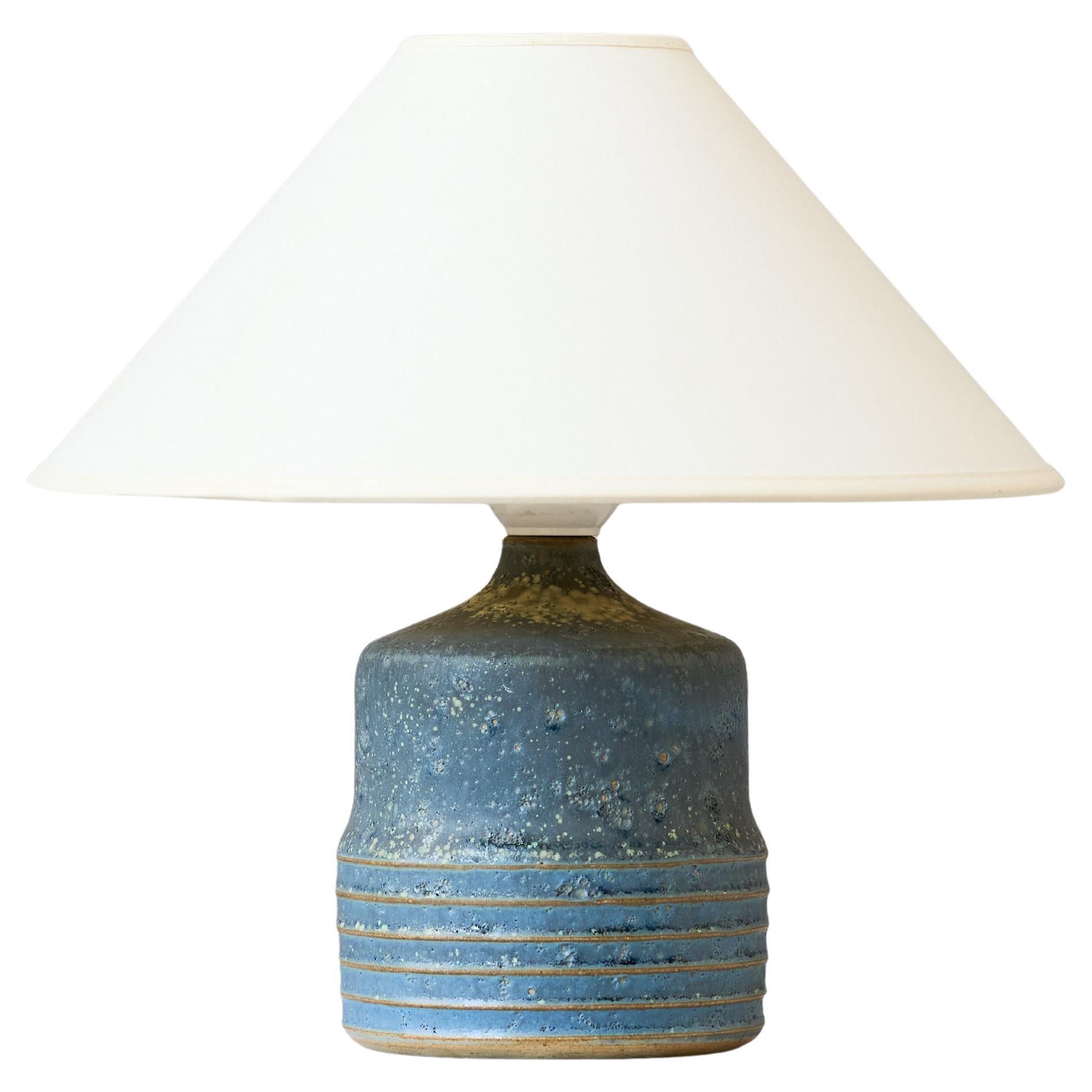
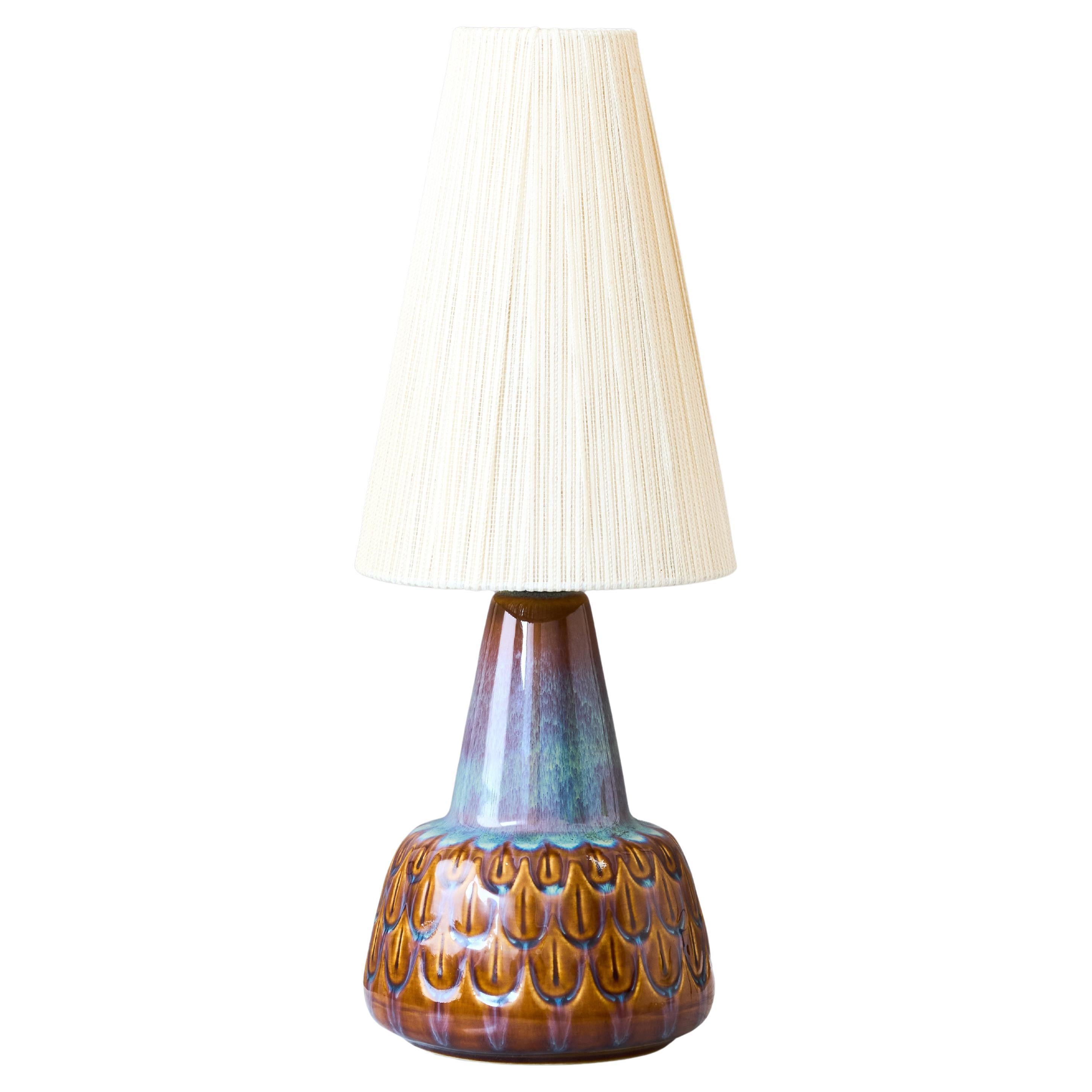
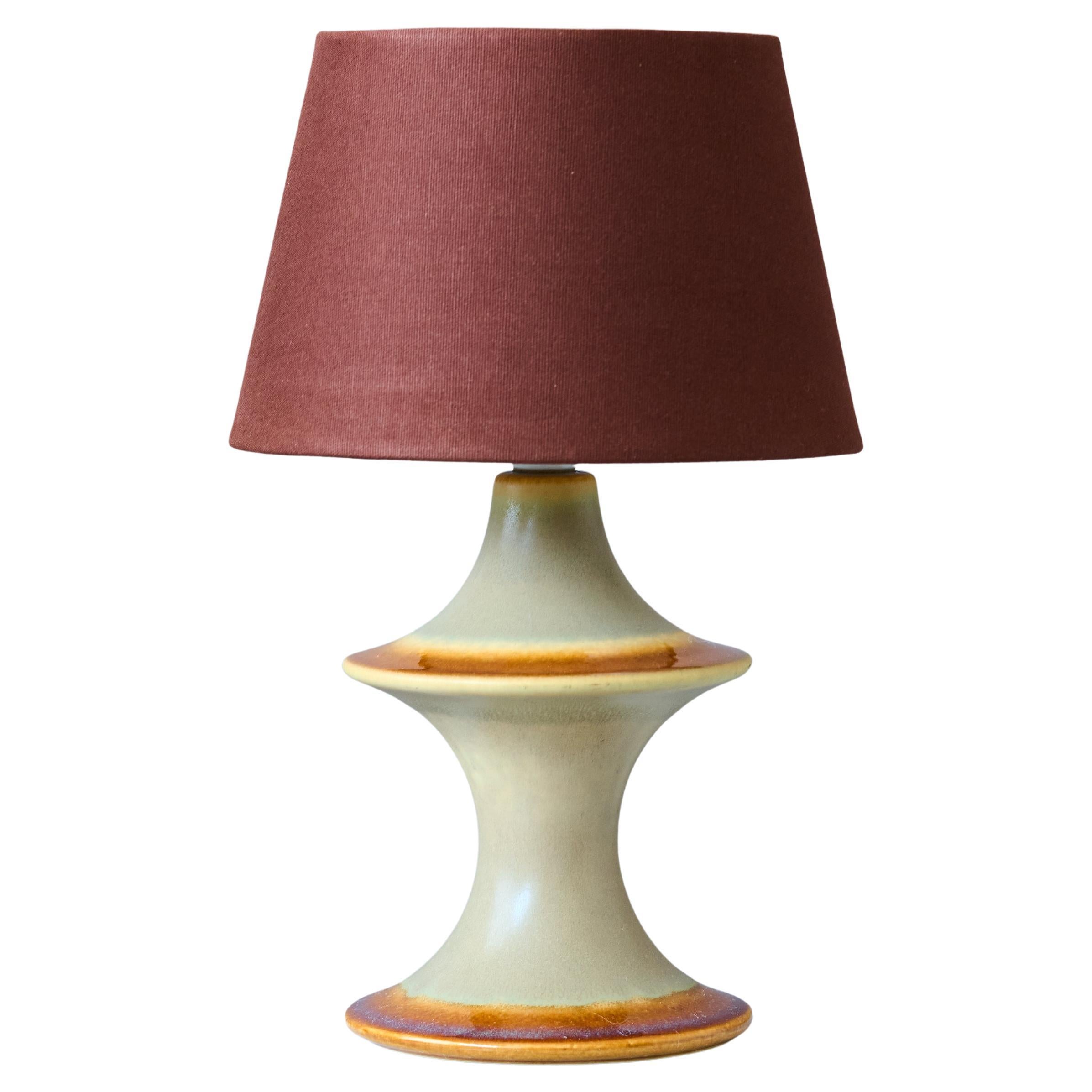
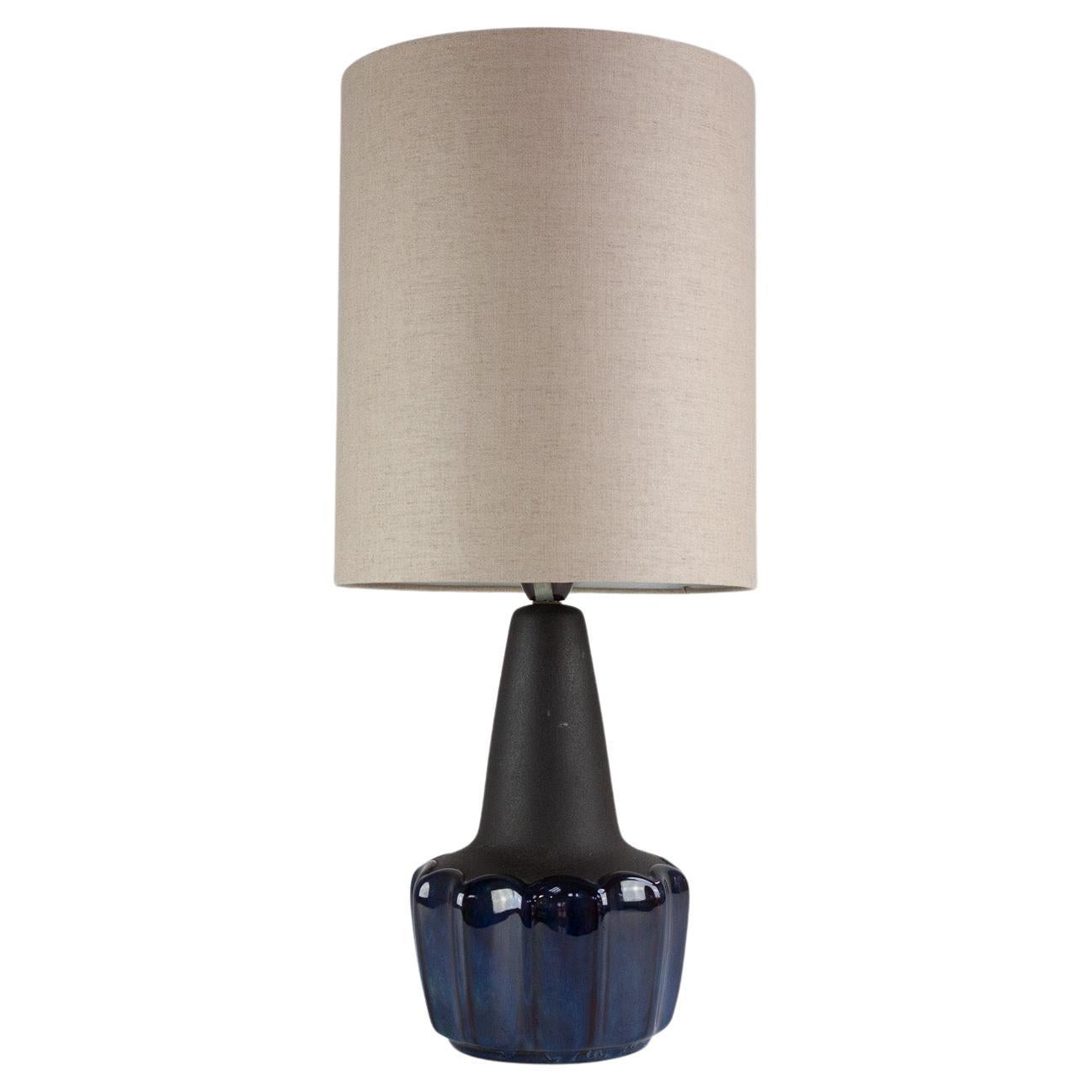
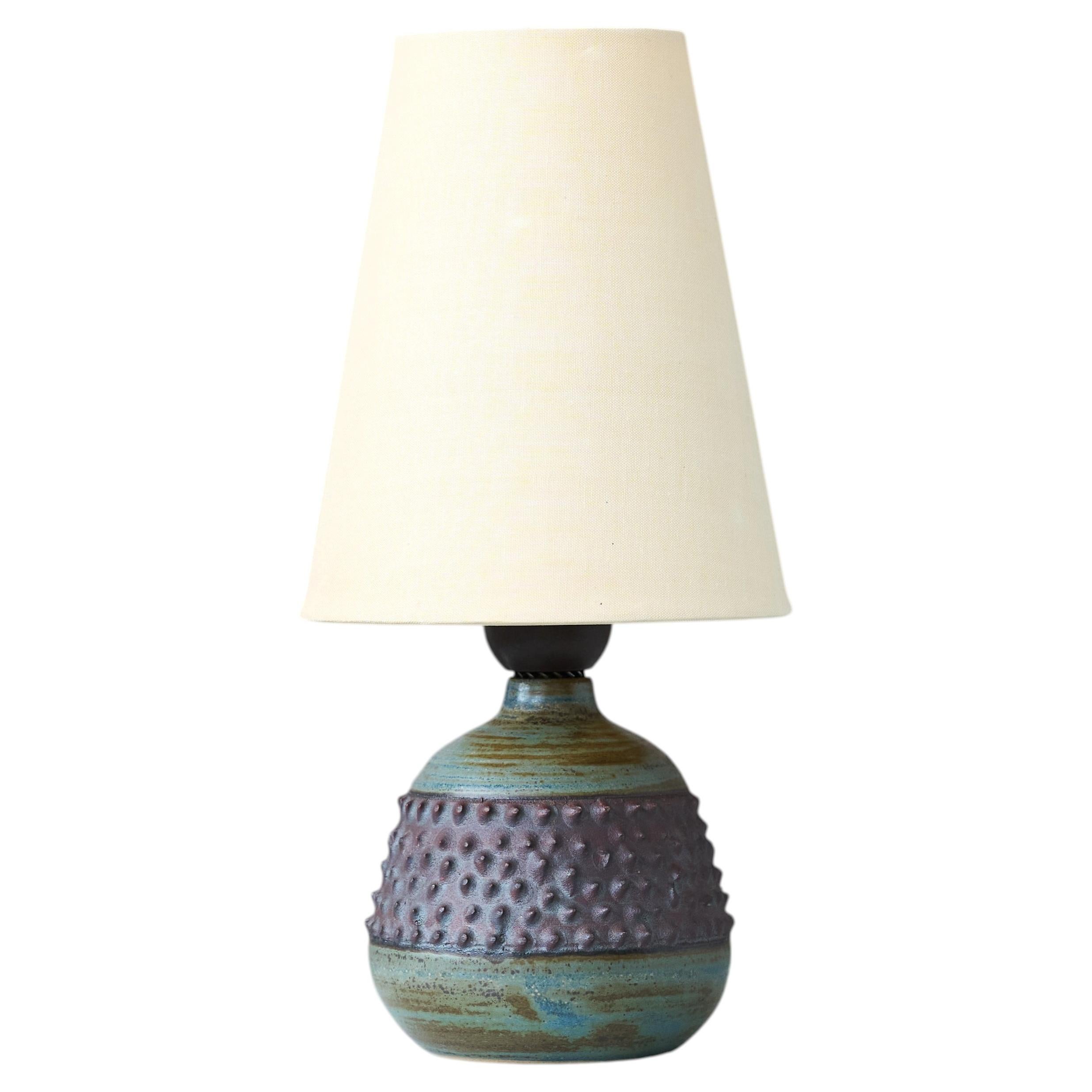
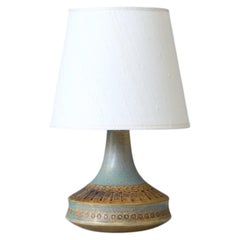
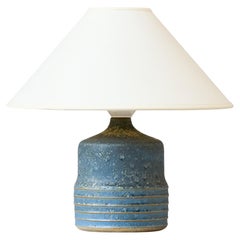
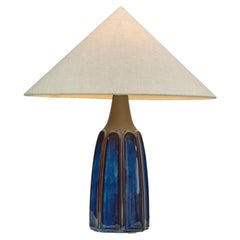
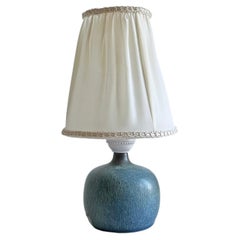
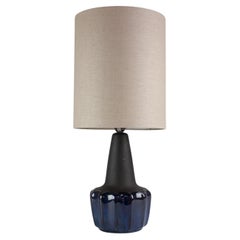
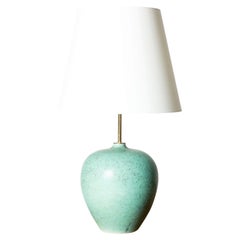
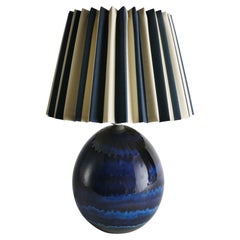
A beautiful mid-century stoneware table lamp with amazing incised pattern.
Handmade by Otto Klaesson for Klase in Höganäs, Sweden, 1960s.
Great original condition. No chips, cracks or crazing.
Signed 'Klase Höganäs' and 'Stengods'.
Sold without lampshade.
Dimensions of the lamp (without the shade):
Height (incl. the socket): 17,5 cm (6.9 in.)
Diameter: 14 cm (5.5 in.)
Light source: E26/E27 screw bulb.
Switch on the white cord. European electrical plug (but we can change it for an American if you'd like).
Otto Klaesson (1934–2002) was a Swedish ceramic artist whose work embodied the rich stoneware traditions of Höganäs while reflecting the individual spirit of the studio pottery movement that flourished during the second half of the twentieth century. Through his workshop, Klase Keramik, he created ceramics distinguished by their robust forms, richly textured glazes, and deep respect for the craft of pottery. His work occupies an important place within the history of Swedish stoneware, linking the industrial ceramic heritage of Höganäs with the more personal and artistic expression of the independent studio potter.
Born in southern Sweden in 1934, Klaesson grew up in a region where clay and ceramics had shaped local culture and industry for generations. Höganäs, with its abundant clay deposits and long history of stoneware production, provided an environment in which ceramic craftsmanship remained a living tradition. From an early age he developed an appreciation for the material and the processes of the potter’s craft, interests that would eventually become the foundation of his life’s work.
After training in ceramics and gaining practical experience within the ceramic industry, Klaesson established his own workshop in Höganäs under the name Klase Keramik. At a time when industrial production increasingly dominated the marketplace, he chose a path centred on small-scale craftsmanship and artistic independence. This decision placed him within the broader Scandinavian studio pottery movement, whose practitioners sought to preserve the direct relationship between maker, material, and object.
Klaesson’s ceramics are characterised by a strong sense of form and an intimate understanding of stoneware. His vessels often possess a quiet monumentality, combining simple silhouettes with surfaces rich in texture and variation. Rather than relying on elaborate decoration, he allowed the inherent qualities of clay and glaze to become central elements of the artistic expression. This approach reflected both the traditions of Höganäs stoneware and the influence of modern Scandinavian aesthetics.
Particularly admired were his glazes, which frequently displayed complex interactions of colour, texture, and firing effects. Earthy browns, deep blues, muted greens, and warm iron-rich tones recur throughout his work, creating surfaces that seem shaped as much by the kiln as by the hand of the potter. These glazes enhanced the tactile qualities of his vessels and reinforced their connection to the natural materials from which they were made.
Nature remained an enduring source of inspiration. Many of Klaesson’s forms suggest geological formations, weathered stone, or organic growth patterns without directly imitating them. His work reflects an appreciation for natural processes and a willingness to embrace the subtle unpredictability inherent in ceramic firing. This balance between control and chance became one of the defining characteristics of his artistic language.
Unlike many designers associated with large ceramic manufacturers, Klaesson maintained close involvement in every stage of production. From throwing and modelling to glazing and firing, he approached ceramics as a holistic craft in which artistic vision and technical execution were inseparable. This commitment to the handmade object gave his work an authenticity and individuality that continue to resonate with collectors.
Throughout his career, Klase Keramik became a respected name among enthusiasts of Swedish studio pottery. While his work was never produced on the scale of the major factories, it earned admiration for its consistency, technical quality, and artistic integrity. His ceramics found their way into private collections throughout Sweden and abroad, contributing to the continued vitality of Höganäs as a centre for ceramic art long after the decline of large-scale industrial production.
When Otto Klaesson died in 2002, he left behind a body of work that reflects both the traditions and the renewal of Swedish stoneware. Today his ceramics remain valued for their craftsmanship, their rich glaze effects, and their enduring sense of connection to the material from which they were formed. Through Klase Keramik, Klaesson demonstrated that the ancient craft of pottery could remain relevant and expressive in the modern era, securing his place among the notable studio potters of twentieth-century Sweden.