
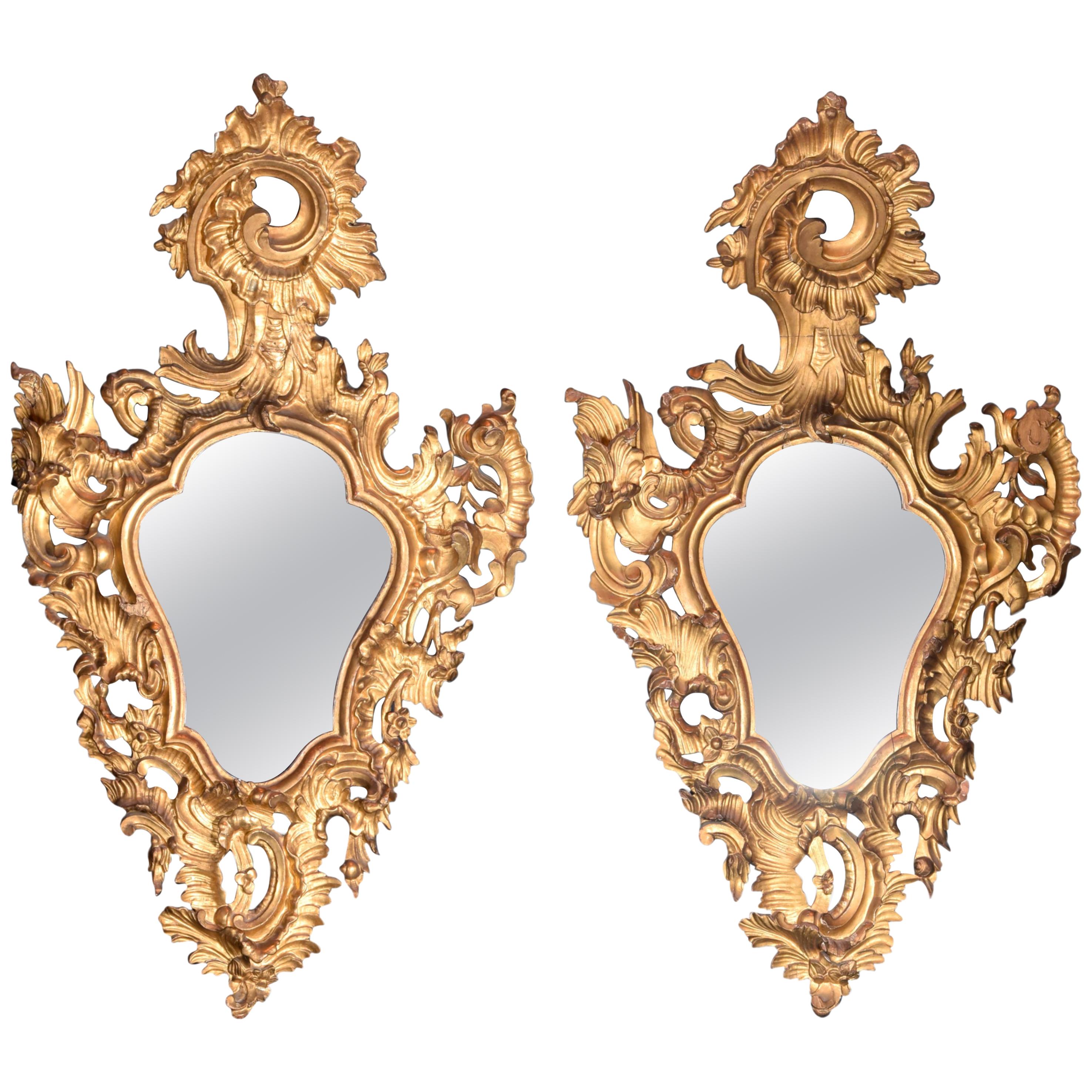
Pair Of Italian Rococo Giltwood Mirrors
Located in Essex, MA
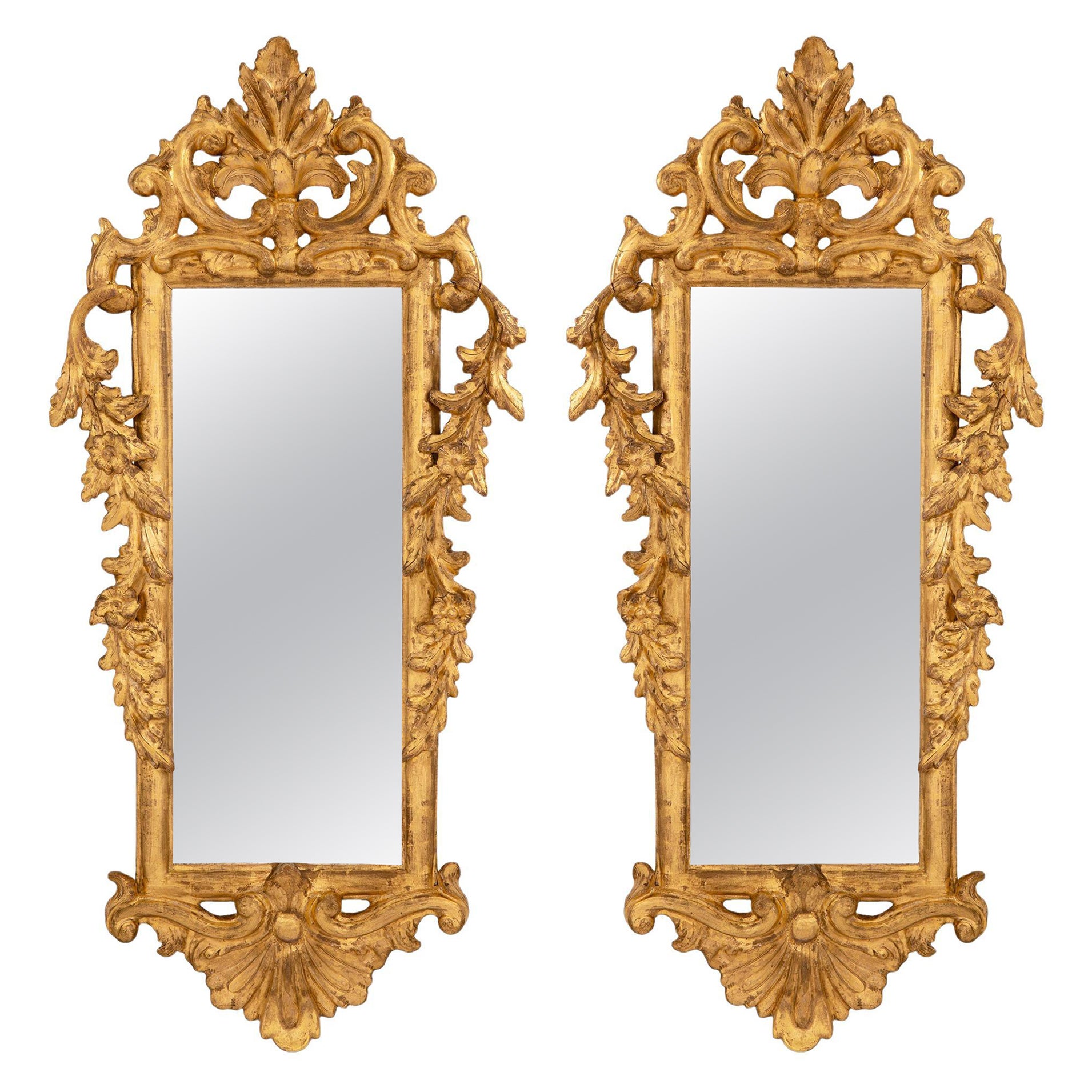
Each with original gilded surface. Originally had a single candle arm likely in brass.
Category
Antique Mid-18th Century Italian Rococo Girandoles
Materials
Giltwood
Pair Of Italian Rococo Giltwood Mirrors
Located in Essex, MA
Each with original gilded surface. Originally had a single candle arm likely in brass.
Giltwood
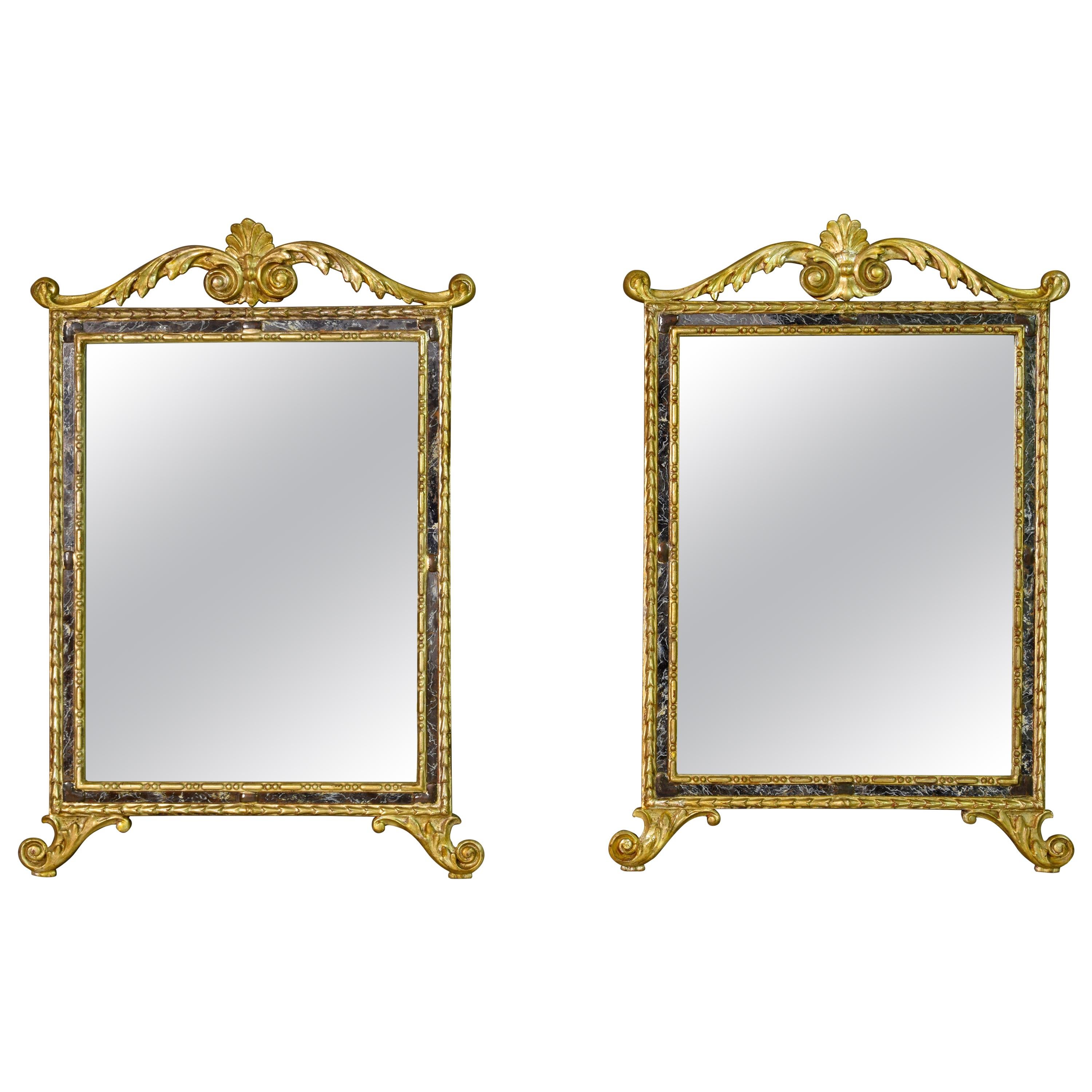
Pair Of Italian Neoclassical Painted And Giltwood Mirrors
Located in Essex, MA
Small mirrors nice to flank a painting or other artwork. Arched scrolled crest over a mirror plate surrounded by a white painted border.
Giltwood
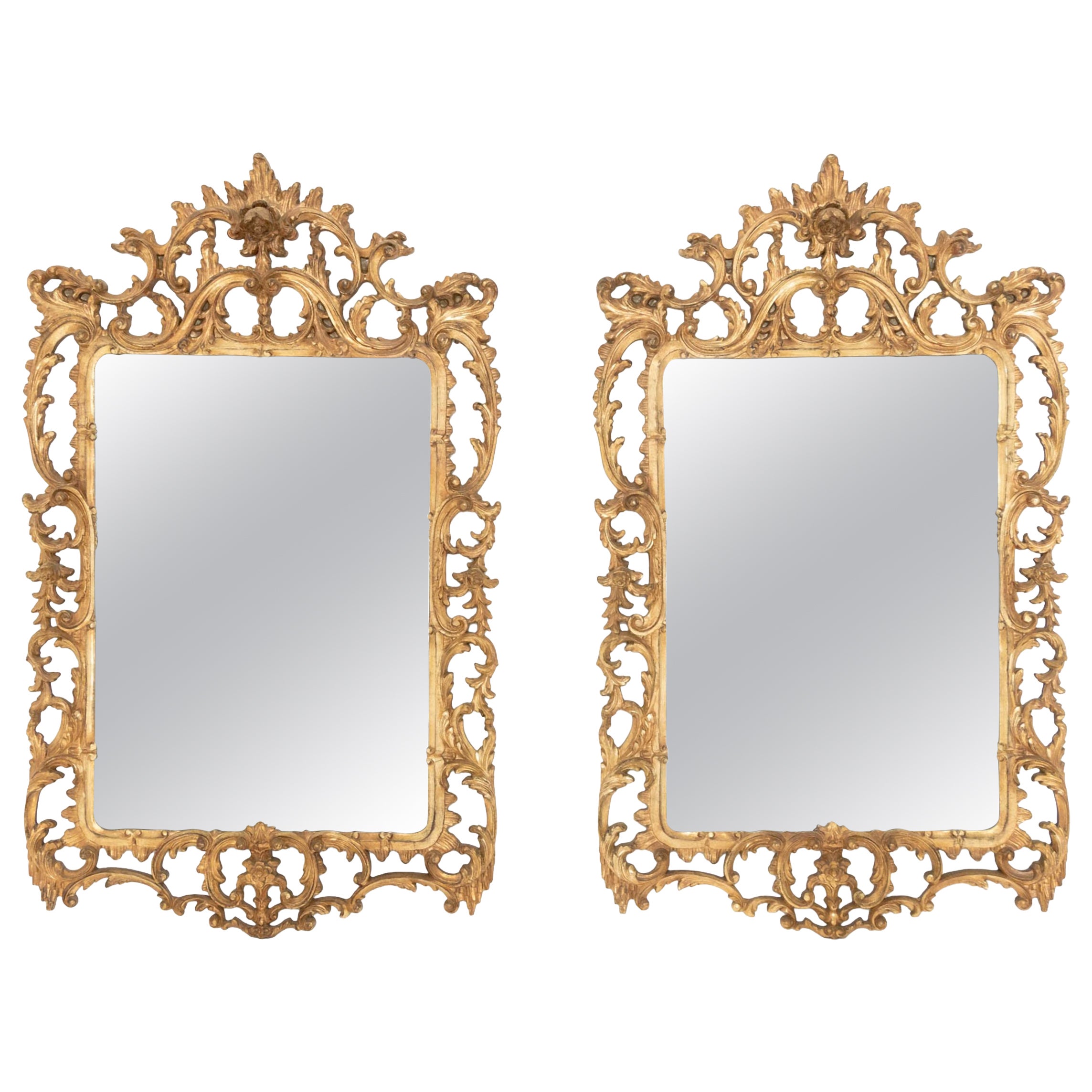
Pair of George III Style Giltwood Mirrors
Located in Essex, MA
A beautiful pair all carved wood and gilded. True pair with the birds facing each other with a bird crest flanked by trailing leaves over an oval mirror plate with carved gadrooned o...
Pine, Giltwood
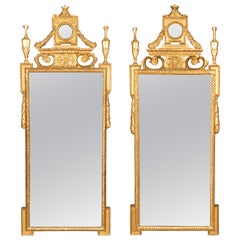
Pair of Italian Neoclassic Giltwood Mirrors
Located in Essex, MA
Each with panel and inset round mirror superstructure flanked by laurel swags over open scroll and rosette decoration all flanked by a pair of urns, all over a mirror plate set in guilloche carved frames with laurel swags. Beautiful original gilding in excellent condition. Removed from a Sherry Netherland...
Giltwood
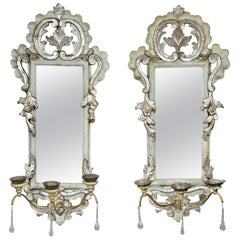
Pair of Italian Rococo Gray Painted and Silver Gilt Girandole Mirrors
Located in Essex, MA
Each with a double scroll crest with central opening with leaf, over a mirror plate within a carved frame, similarly carved base with three candle arms. Provenance; Henry Forbes Bige...
Other
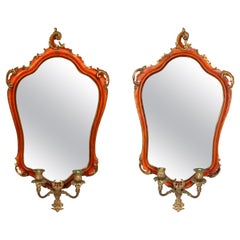
Pair Of Italian Red Painted Girandole Mirrors
Located in Essex, MA
Carved cartouche shaped frames with mirror plate and two arm attached candle sconce.
Bronze
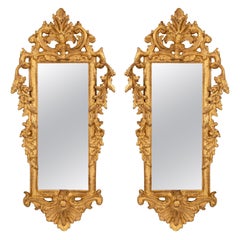
Pair of Italian 18th Century Rococo Style Giltwood Mirrors
Located in West Palm Beach, FL
A very attractive pair of Italian 18th century Rococo st. giltwood mirrors. Each uniquely scaled mirror is set within a rectangular giltwood frame with ‘S’ scrolled draping floral ga...
Mirror, Giltwood
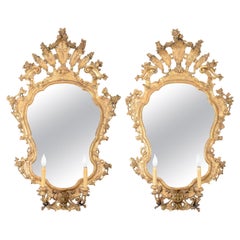
Pair of Large Italian Rococo Giltwood Mirrors (Girandoles)
Located in Kittery Point, ME
Pair of Roman Rococo Giltwood Mirrors (Girandoles), each shaped plate within a cartouche-shaped frame surmounted by a pierced fan-shaped cresting carved with bunches of grapes, flowe...
Giltwood
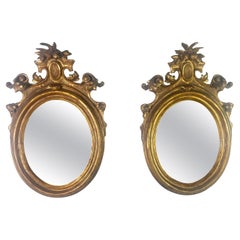
Pair of 19th Century Italian Rococo Style Giltwood Mirrors
Located in Los Angeles, CA
Pair of 19th century oval-shaped mirrors with ornate, gilded frames. The frames are designed in a Rococo style, featuring intricate carvings and embellishments. Each mirror has a h...
Giltwood, Mirror
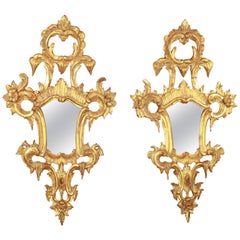
Pair of 18th Century North Italian Rococo Giltwood Mirrors
Located in Berlin, DE
A pair of 18th century North Italian giltwood mirrors and former girandoles or sconces. Elaborately carved in symmetrical form with flowers, leaves, Ho Ho Birds, scrollwork and rocailles. A metal mount for the candle branches still attached at the bottom of the mirror. The mirror used...
Mirror, Giltwood
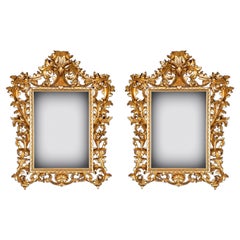
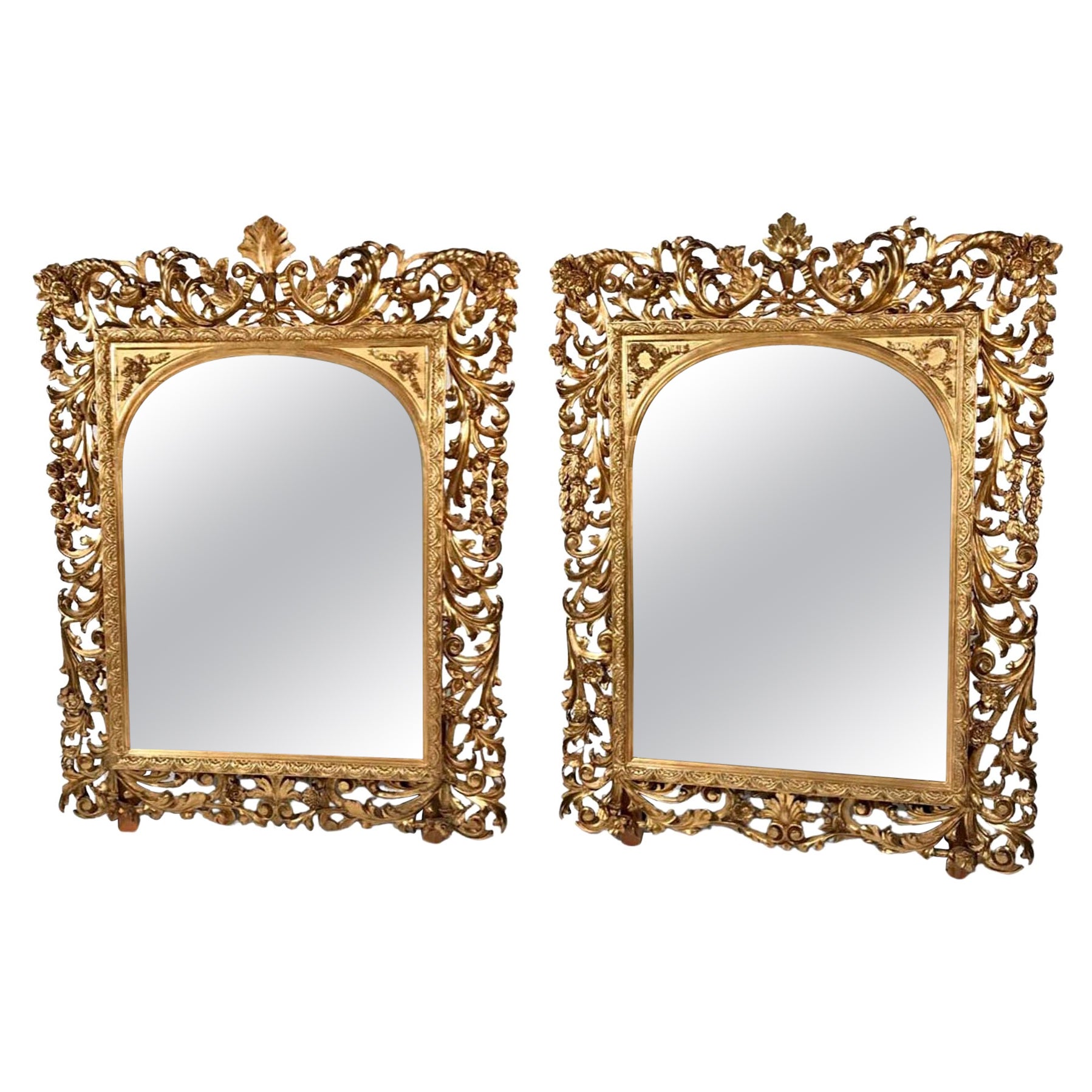
Pair Of 19th Century Italian Florentine Giltwood Mirrors
Located in Dublin, IE
A pair of late 19th-century Rococo Revival giltwood 'Florentine' wall mirrors, featuring ornate acanthus leaf carvings and scrolled cresting. The frames are hand-carved with rich fol...
Giltwood
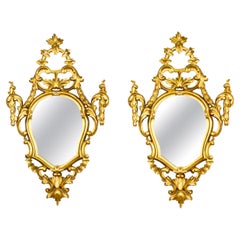
Antique Pair Florentine Rococo Giltwood Mirrors 19th Century
Located in London, GB
This is a superb pair of antique Italian Florentine giltwood mirrors, circa 1870 in date. The oval mirrors plates are set within a Rococo boldly-carved scrolling acanthus frame, and they retain the original gilding. Florentine style refers to the art and architecture coming out of Florence, Italy during the Renaissance period. Florentine furniture is characterized by the heavy use of gold gilding on wood and very elaborate hand carved decoration. This impressive pair is certain to make a charming addition to that one special room in your home. Condition: In excellent condition having been beautifully cleaned and waxed in our workshops, please see photos for confirmation. Dimensions in cm: height 102 x width 63 x depth 4 Dimensions in inches: height 3 foot, 4 inches x width 2 feet, 1 inch x depth 2 inches Rococo Although Rococo is usually thought of as developing first in the decorative arts and interior design, its origins lie in the late Baroque architectural work of Borromini (1599–1667) mostly in Rome and Guarini (1624–1683) mostly in Northern Italy but also in Vienna, Prague, Lisbon, and Paris. Italian architects of the late Baroque/early Rococo were wooed to Catholic (Southern) Germany, Bohemia and Austria by local princes, bishops and prince-bishops. Inspired by their example, regional families of Central European builders went further, creating churches and palaces that took the local German Baroque style to the greatest heights of Rococo elaboration and sensation. An exotic but in some ways more formal type of Rococo appeared in France where Louis XIV's succession brought a change in the court artists and general artistic fashion. By the end of the king's long reign, rich Baroque designs were giving way to lighter elements with more curves and natural patterns. These elements are obvious in the architectural designs of Nicolas Pineau. During the Régence, court life moved away from Versailles...
Mirror, Giltwood