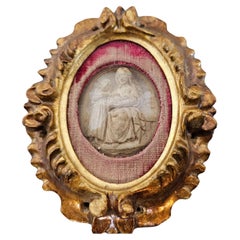
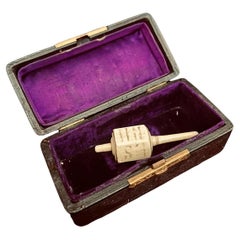
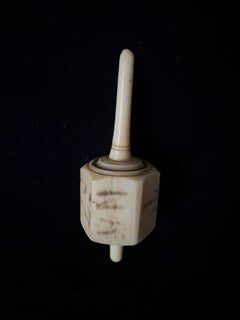
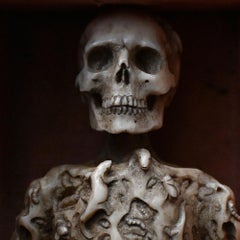
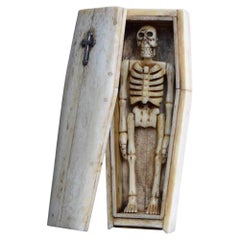
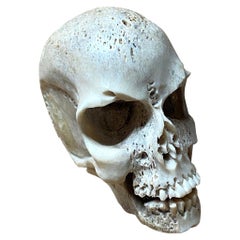
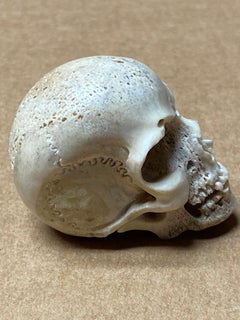
Vanitas or Memento Mori skull. Carved bone. 17th century.
Small human skull made of bone carved in its color with a clear naturalistic intention (visible in details such as the nose, the lower area, etc.). In the Baroque, the human skull is a common element and protagonist in a series of themes: on the one hand, there are the "Vanitas" or "Memento Mori" (painting, sculpture, relief, etc., sometimes combining carving with another figure -like the ivory rosary bead from the first half of the 16th century from the Bowdoin College Museum of Art in which the skull appears combined with reptiles; Memento Mori in a private collection made in Germany in the 17th century in which a skull and a half is combined face of Christ-); on the other hand, it is not possible to forget the reliquaries with the bones of saints, very often jeweled and decorated skeletons of the Valdsassen Basilica in Waldsassen, Germany; reliquaries in churches and cathedrals; etc.); and in addition, it is necessary to remember the representations of Death in the form of a human skeleton or already decomposing body (present in all supports in tombs -Bernini, tomb of Urban VII, Saint Peter of the Vatican-), macabre dances -even from the Age Media-, allegories, etc.). Although it is true that, normally, death and these representations of human skulls associated with it usually present some lack in teeth or structure (to highlight the decay, etc.), there are also some from the Baroque period in which there are no missing teeth; note, also, that the treatment of the eye sockets is somewhat particular in the present case, and that examples are preserved in marble, wood, ivory, bone, terracotta, etc. This element (which already appears in the Renaissance as demonstrated by the account of the rosary with lovers and the death skull...
Category
17th Century European Baroque Antique Bone Religious Items