Video Loading
Want more images or videos?
Request additional images or videos from the seller
1 of 8

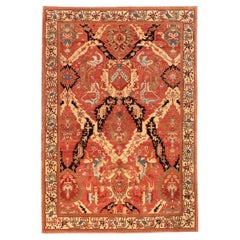
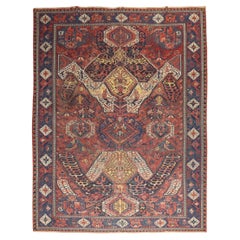
Ararat Rugs Dragon Rug, Antique Caucasus Museum Revival Carpet, Natural Dyed

$8,500
£6,414.14
€7,464.49
CA$11,999.71
A$12,041.67
CHF 7,022.85
MX$146,412.02
NOK 80,699.49
SEK 82,995.31
DKK 55,800.99

About the Item

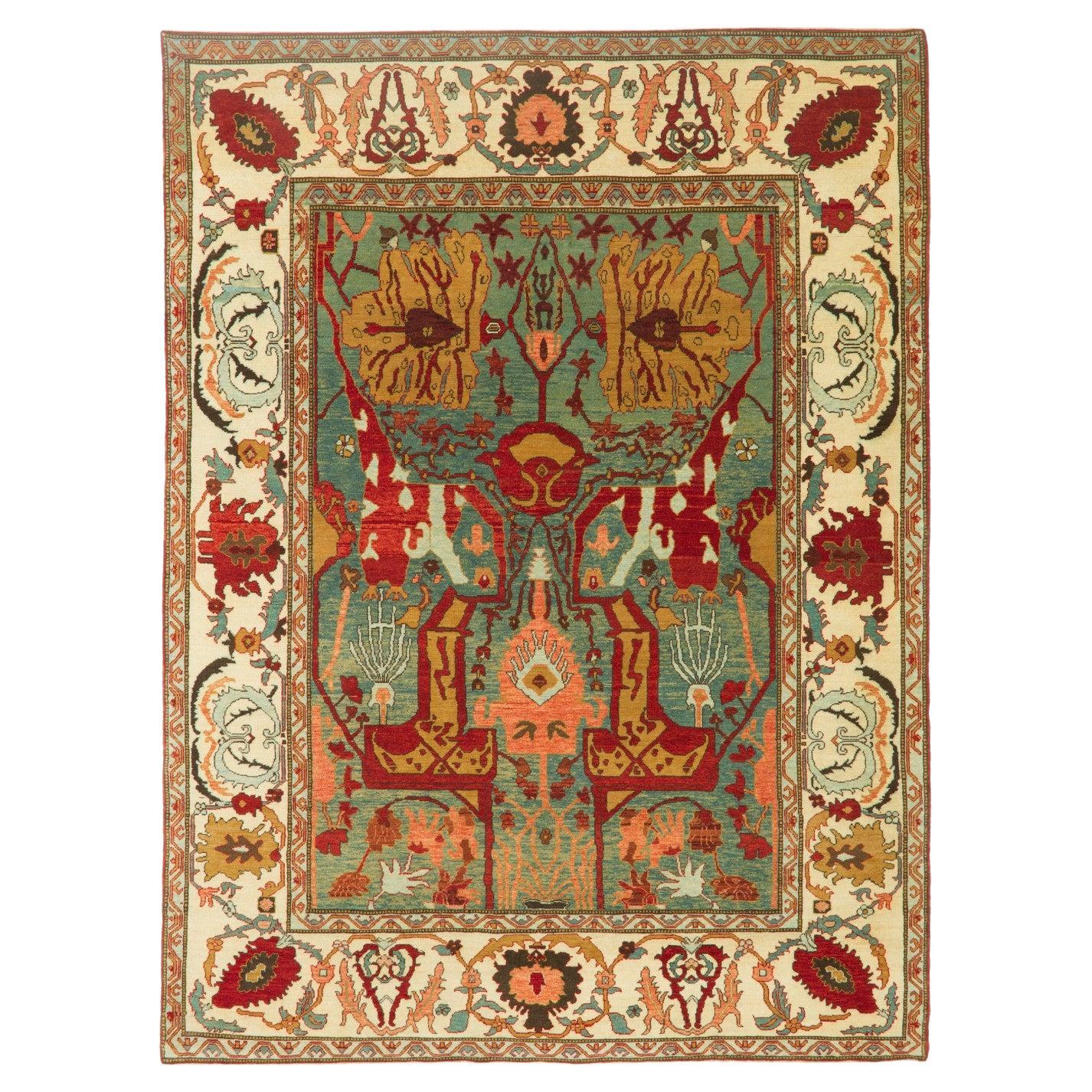
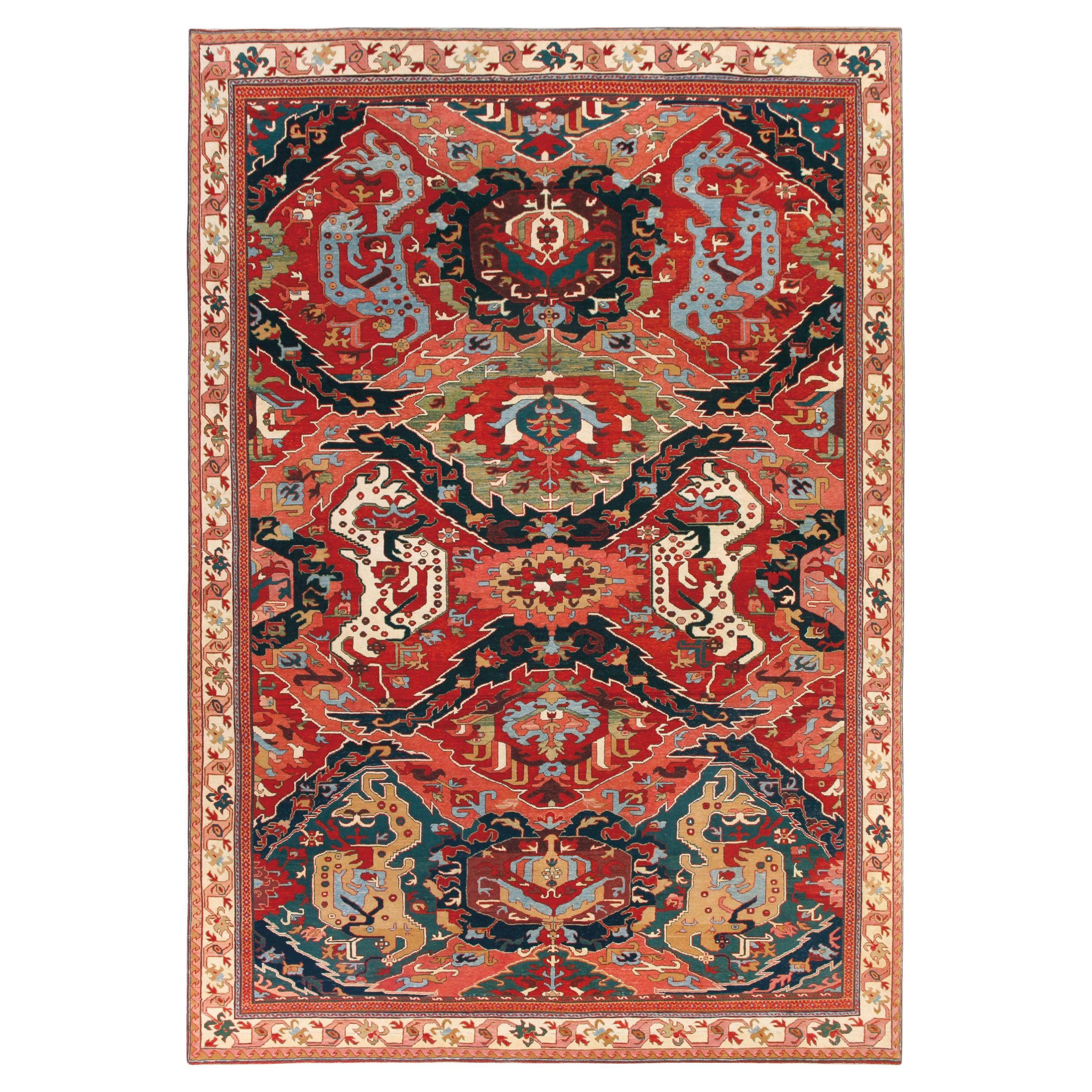
There has long been a fascination with the symbolism of the dragon and its depiction in carpet weavings. The design of ‘Dragon’ carpets consists of a field pattern composed of different colored overlaid lattices formed of pointed, serrated leaves creating intersecting lozenges, which alternately contain palmettes and are flanked by confronting stylized dragons, birds, or animal figures. The most archaic of the ‘Dragon’ carpets include dragon motifs with birds and running animals relatively naturalistically drawn, which stand either alone or in confronting pairs facing a tree. The Graf carpet, originally found in a Damascene mosque, now in the Islamiches Museum, Berlin, is considered to be the oldest example of this type, see Serare Yetkin, Early Caucasian Carpets in Turkey, Vol. II, London, 1978, p.8, fig.118. Yetkin defines four types of ‘Dragon’ carpet: ‘Archaic’, ‘Four-Dragon’, ‘Dragon-and-Phoenix’ and as a further combined development of the latter, the ‘Two-Dragon’ style, of which the present carpet falls into the ‘Dragon-and-Phoenix group along with other examples, some of which include two fragments, one in the Museum fur Kunst und Gerwerbe, Hamburg; another in the Christian Museum, Esztergom, Hungary, a complete carpet in the Kier collection; an incomplete example in the Textile Museum, Washington, D.C; the ‘Cassirer’ Dragon carpet in the Thyssen-Bornemisza collection, Lugano; the Ali Pasa Mosque carpet in Tokat, and a further example in the Vakiflar Hali Museum, Istanbul (S. Yetkin, op. cit. pp.16-20). It has been suggested that the earliest examples of the Caucasian ‘Dragon’ carpets have a greater number of repeats across the width of the weaving than in later pieces. An example of a ‘Four-Dragon’ carpet, also coincidentally from the collection of Charles Deering as the present carpet, was sold in Sotheby’s, New York, 27 September 2000, lot 35. Animal combat groups were popular motifs in the late 16th and early 17th century, appearing in Persian paintings, book covers, and of course within the magnificent carpets of the Safavid court, from which it is probable that Caucasian ‘Dragon’ carpets were modeled (Duncan Haldane, Islamic Bookbindings in the Victoria and Albert Museum, London, 1983, no.106, pp.110-111, for example). Many of the classical Caucasian carpets of the 17th and early 18th centuries can be traced back to the ‘Vase’ carpets of the 17th century. The lattice used in these carpets itself relates to the lattice of ‘Vase’ carpets (Ellis, op. cit, pp.12-13), but already in the present early ‘Dragon’ carpet, the coloring of the serrated panels means that the overlay play of the lattice has been lost. The design of this rug is interpreted with a series of borders and soft colors are chosen by our designers for this rug. Color summary: 10 colors in total, most used 3 colors are; Emerald Green 407 (Chamomile – indigo) Burlywood 135 (Spurge – Madder Root) Caramel 537 (Tea) Group: Caucasian Rugs Family Area: Caucasus Material of Pile: Natural Dyed Hand-spun Wool Material Warp / Weft: Wool on Wool Structure: Symmetrical knot on depressed warp inclining to the right Knots Density: 39x39 Production Place: Southeastern Anatolia – Diyarbakir Stock Location: Tokyo Size (EU): 271 x 171cm Size (US): 8'10" x 5'7" Area (EU): 4.6m² Area (US): 49.9ft².
  • Creator:
    Ararat Rugs (Manufacturer)
  • Dimensions:
    Width: 67.33 in (171 cm)Length: 106.7 in (271 cm)
  • Style:
    Revival (In the Style Of)
  • Materials and Techniques:
    Natural Fiber,Organic Material,Wool,Hand-Knotted,Hand-Woven,Vegetable Dyed
  • Place of Origin:
  • Period:
  • Date of Manufacture:
    2022
  • Production Type:
    New & Custom(One of a Kind)
  • Estimated Production Time:
    Available Now
  • Condition:
  • Seller Location:
    Tokyo, JP
  • Reference Number:
    Seller: 003911stDibs: LU8206232799812

More From This Seller

View All
Ararat Rugs Dragon Rug, Antique Caucasus Museum Revival Carpet, Natural Dyed

Ararat Rugs Dragon Rug, Antique Caucasus Museum Revival Carpet, Natural Dyed

By Ararat Rugs

Located in Tokyo, JP

There has long been a fascination with the symbolism of the dragon and its depiction in carpet weavings. The design of ‘Dragon’ carpets consists of a field pattern composed of differ...

Category

21st Century and Contemporary Caucasian Oushak Caucasian Rugs

Materials

Wool, Natural Fiber, Organic Material
Ararat Rugs Dragon Rug, Antique Caucasus Museum Revival Carpet, Natural Dyed

Ararat Rugs Dragon Rug, Antique Caucasus Museum Revival Carpet, Natural Dyed

By Ararat Rugs

Located in Tokyo, JP

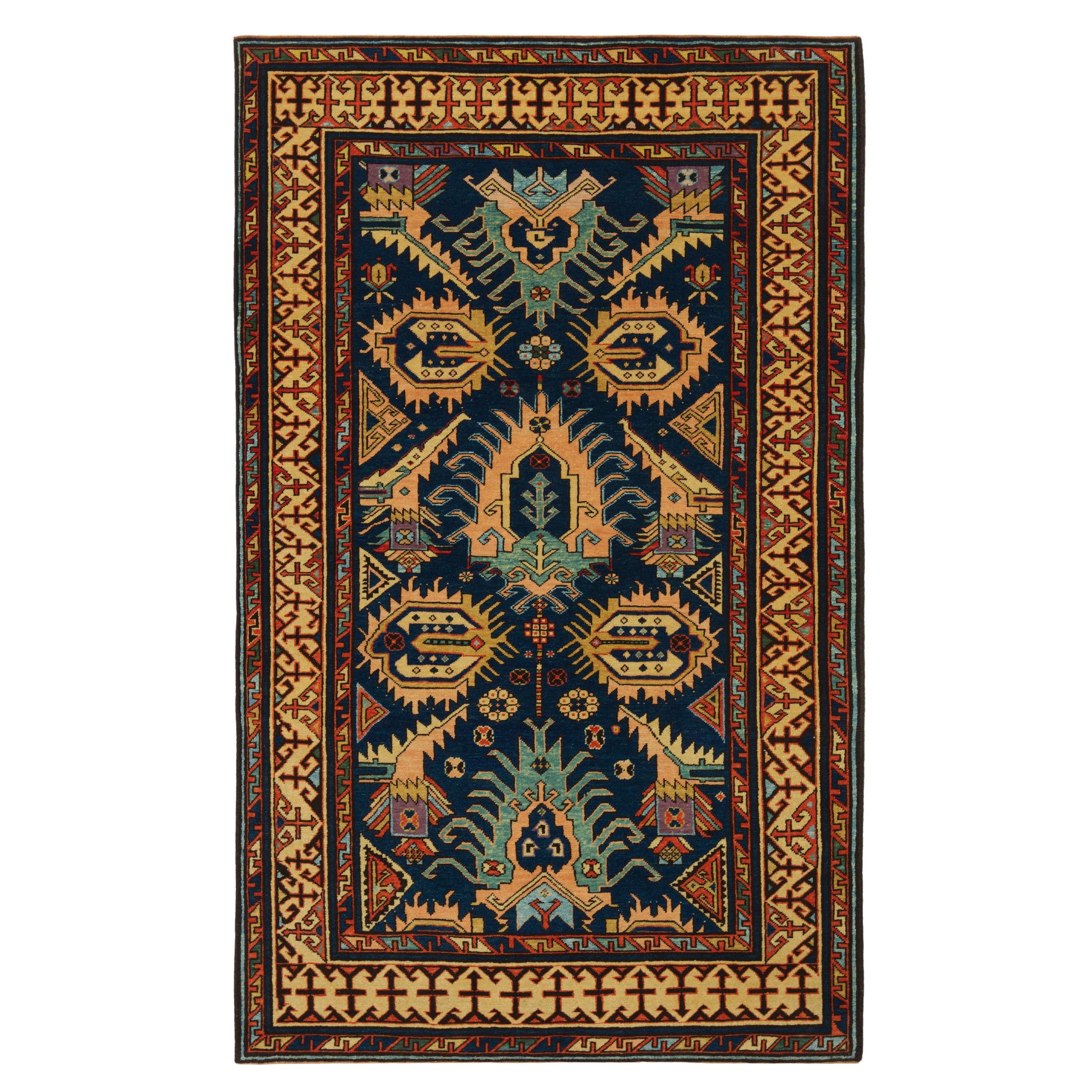
The design source of the rug comes from the book Orient Star – A Carpet Collection, E. Heinrich Kirchheim, Hali Publications Ltd, 1993, nr.57. There has long been a fascination with the symbolism of the dragon and its depiction in carpet weavings. The design of ‘Dragon’ carpets consists of a field pattern composed of different colored overlaid lattices formed of pointed, serrated leaves creating intersecting lozenges, which alternately contain palmettes and are flanked by confronting stylized dragons, birds, or animal figures. The most archaic of the ‘Dragon’ carpets include dragon motifs with birds and running animals that are relatively naturalistically drawn, which stand either alone or in confronting pairs facing a tree. The Graf carpet, originally found in a Damascene mosque, now in the Islamic Museum, Berlin, is considered to be the oldest example of this type, see Serare Yetkin, Early Caucasian Carpets in Turkey, Vol. II, London, 1978, p.8, fig.118. Yetkin defines four types of ‘Dragon’ carpet: ‘Archaic’, ‘Four-Dragon’, ‘Dragon-and-Phoenix’ and as a further combined development of the latter, the ‘Two-Dragon’ style, of which the present carpet falls into the ‘Dragon-and-Phoenix group along with other examples, some of which include two fragments, one in the Museum fur Kunst und Gerwerbe, Hamburg; another in the Christian Museum, Esztergom, Hungary, a complete carpet in the Kier collection; an incomplete example in the Textile Museum, Washington, D.C; the ‘Cassirer’ Dragon carpet in the Thyssen-Bornemisza collection, Lugano; the Ali Pasa Mosque carpet in Tokat, and a further example in the Vakiflar Hali Museum, Istanbul (S. Yetkin, op. cit. pp.16-20). It has been suggested that the earliest examples of the Caucasian ‘Dragon’ carpets...

Category

21st Century and Contemporary Turkish Revival Caucasian Rugs

Materials

Wool, Natural Fiber, Organic Material
Ararat Rugs Dragon Rug, Antique Caucasus Museum Revival Carpet, Natural Dyed

Ararat Rugs Dragon Rug, Antique Caucasus Museum Revival Carpet, Natural Dyed

By Ararat Rugs

Located in Tokyo, JP

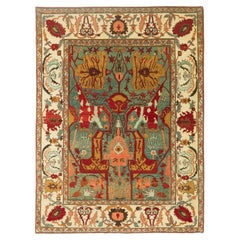
The source of the rug comes from the book Caucasian Carpets, E. Gans-Reudin, Thames and Hudson, Switzerland, 1986, pg.37. This luxurious and varied work is known as the Cassirer drag...

Category

21st Century and Contemporary Turkish Revival Caucasian Rugs

Materials

Wool, Natural Fiber, Organic Material
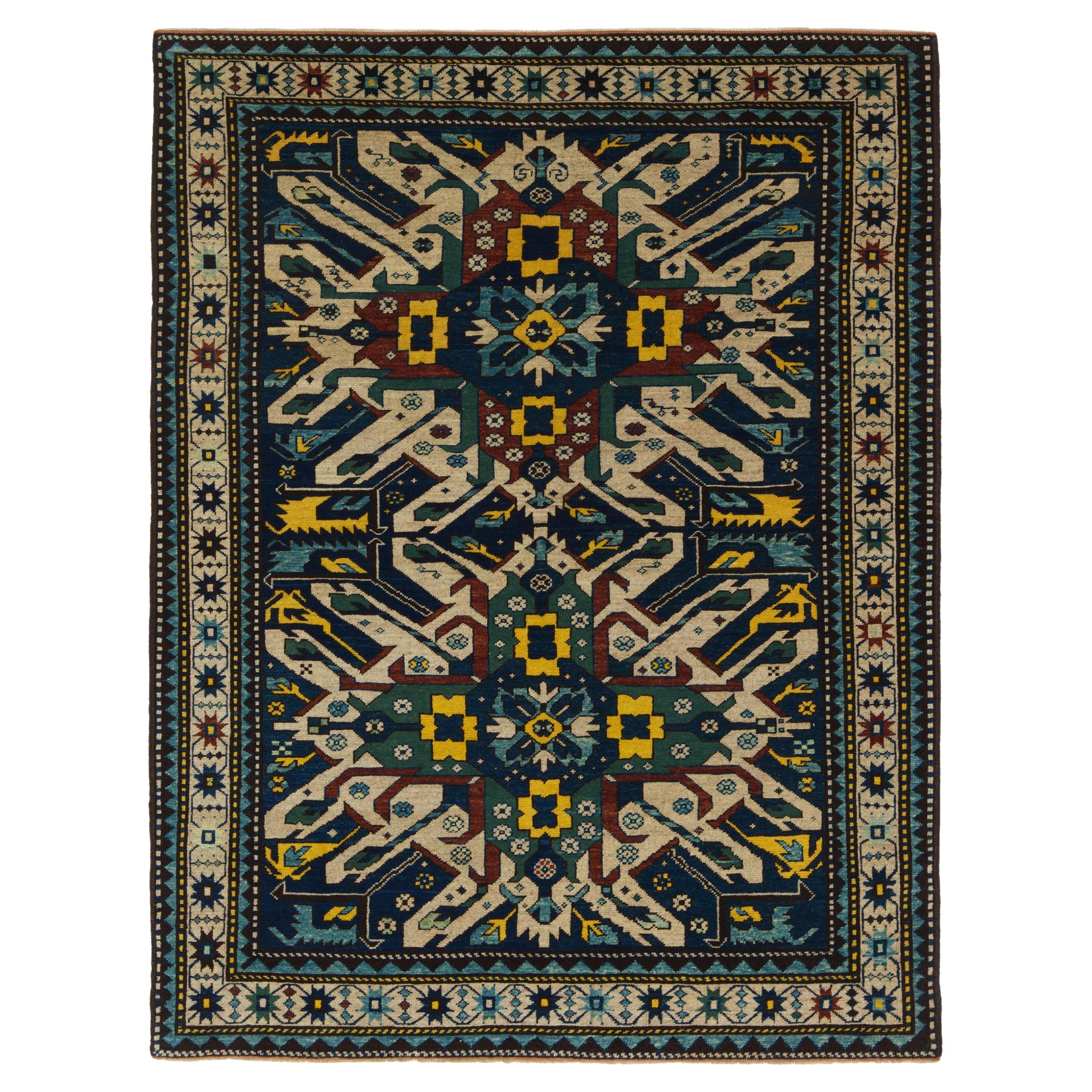
Ararat Rugs Gerous Arabesque Rug, Antique Persian Revival Carpet, Natural Dyed

Ararat Rugs Gerous Arabesque Rug, Antique Persian Revival Carpet, Natural Dyed

By Ararat Rugs

Located in Tokyo, JP

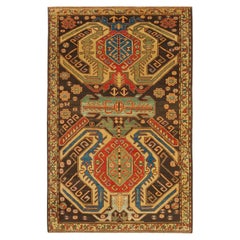
The source of the rug comes from the book Islamic Carpets, Joseph V. McMullan, Near Eastern Art Research Center Inc., New York 1965 nr.22. This is a system of arabesque-designed 19th...

Category

21st Century and Contemporary Turkish Revival Persian Rugs

Materials

Wool, Natural Fiber, Organic Material
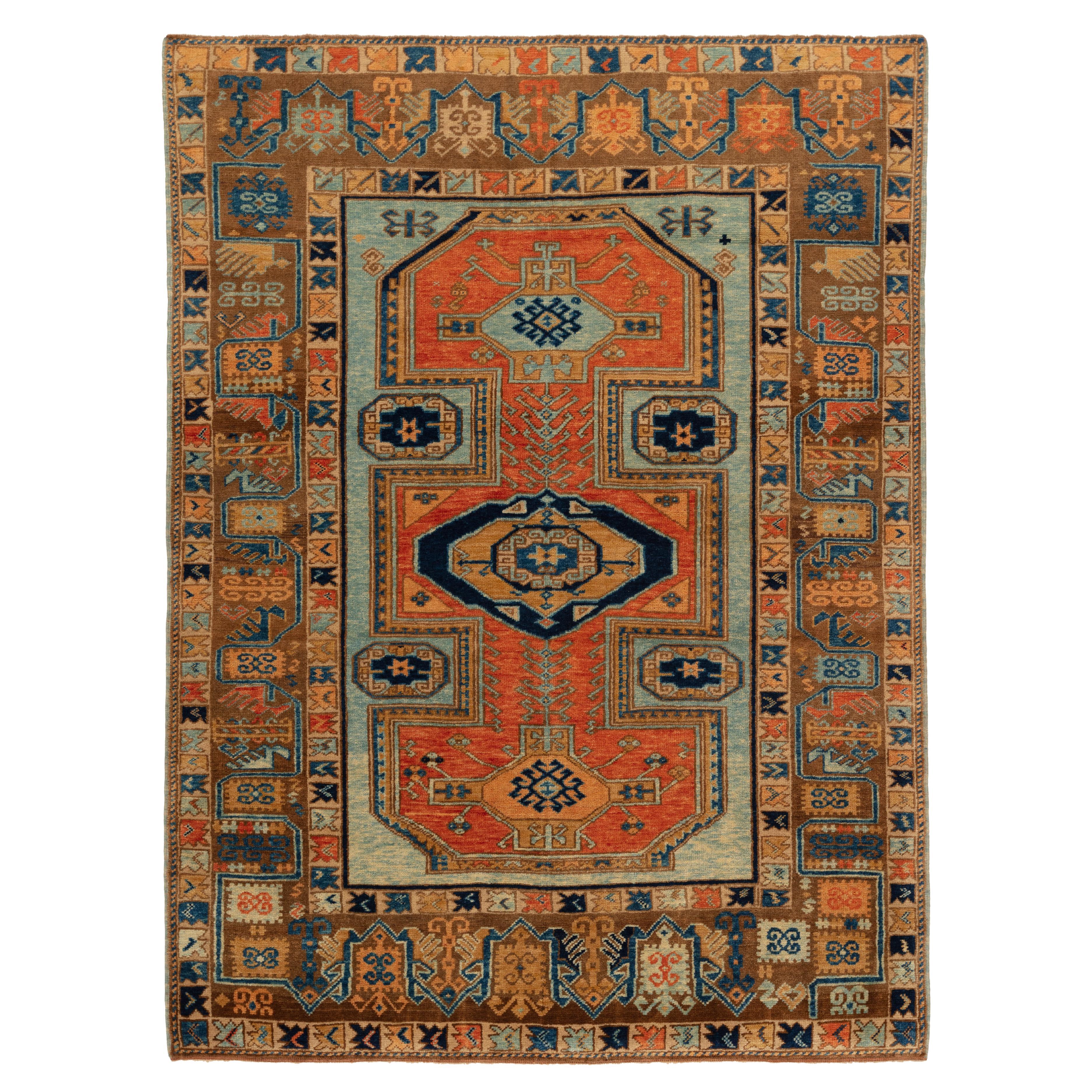
Ararat Rugs Lenkoran Rug Caucasian Revival 19th Century Carpet, Natural Dyed

Ararat Rugs Lenkoran Rug Caucasian Revival 19th Century Carpet, Natural Dyed

By Ararat Rugs

Located in Tokyo, JP

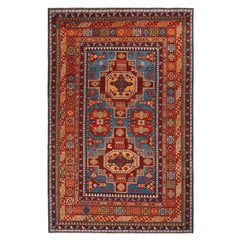
The source of the rug comes from the book Oriental Rugs Volume 1 Caucasian, Ian Bennett, Oriental Textile Press, Aberdeen 1993, pg.160. A distinctive group of Talish rugs is named af...

Category

21st Century and Contemporary Turkish Revival Caucasian Rugs

Materials

Wool, Natural Fiber, Organic Material
You May Also Like

Zabihi Collection 19th Century Rare Dragon Soumac Flat-Weave Rug

Zabihi Collection 19th Century Rare Dragon Soumac Flat-Weave Rug

Located in New York, NY

late 19th-century room size magnificent large antique Caucasian Soumak rug features a rare Dragon medallion pattern. The rust ground with contrasting green, blue, and yellow tones ma...

Category

Antique 19th Century Georgian Kazak Caucasian Rugs

Materials

Wool

Vintage Turkish Oushak Rug with Arts & Crafts Style, Entry or Foyer Accent Rug

Vintage Turkish Oushak Rug with Arts & Crafts Style, Entry or Foyer Accent Rug

Located in Dallas, TX

73781, vintage Turkish Oushak rug with Arts & Crafts style, Entry or Foyer Accent rug. This hand knotted wool vintage Turkish Oushak rug features an all-over floral lattice pattern s...

Category

Mid-20th Century Turkish Oushak Turkish Rugs

Materials

Wool

Nazmiyal Collection Antique Caucasian Dagestan Rug 3ft 7in x 4ft 9in

Nazmiyal Collection Antique Caucasian Dagestan Rug 3ft 7in x 4ft 9in

Located in New York, NY

Charming Antique Caucasian Dagestan Tribal Shabby-Chic Rug, Country of Origin: The Caucasus, Circa Date: 1800

Category

Antique Early 19th Century Azerbaijani Central Asian Rugs

Materials

Wool

Antique Hajijalili Revival Rug Fable Collection

Antique Hajijalili Revival Rug Fable Collection

By Mehraban Rugs

Located in WEST HOLLYWOOD, CA

Rug Number 26511 Size 7' 9" X 10' 10" Design Hajijalili Collection Traditional Re-Creations Material Wool Texture Pile Weave Origin Pakistan Age New

Category

2010s Pakistani Central Asian Rugs

Materials

Wool

Zabihi Collection Antique Caucasian Chi Chi Kuba 19th Century Rug

Zabihi Collection Antique Caucasian Chi Chi Kuba 19th Century Rug

Located in New York, NY

A Caucasian Kuba rug from the late 19th century. Measures: 4'3'' x 5'5''. Antique Caucasian rugs from the Shirvan district village are still considered one of the best decorative a...

Category

Antique Late 19th Century Caucasian Kazak Caucasian Rugs

Materials

Wool

Antique Rug Caucasian Karabagh Carpet Handmade Tribal Rustic Wool Rug for Sale

Antique Rug Caucasian Karabagh Carpet Handmade Tribal Rustic Wool Rug for Sale

Located in Wembley, GB

This antique Caucasian Karabagh carpet is a captivating piece of tribal artistry handcrafted in the rugged landscapes of Azerbaijan. Dating back to the 1900s, this vintage treasure b...

Category

20th Century Caucasian Art Deco Turkish Rugs

Materials

Cotton, Wool