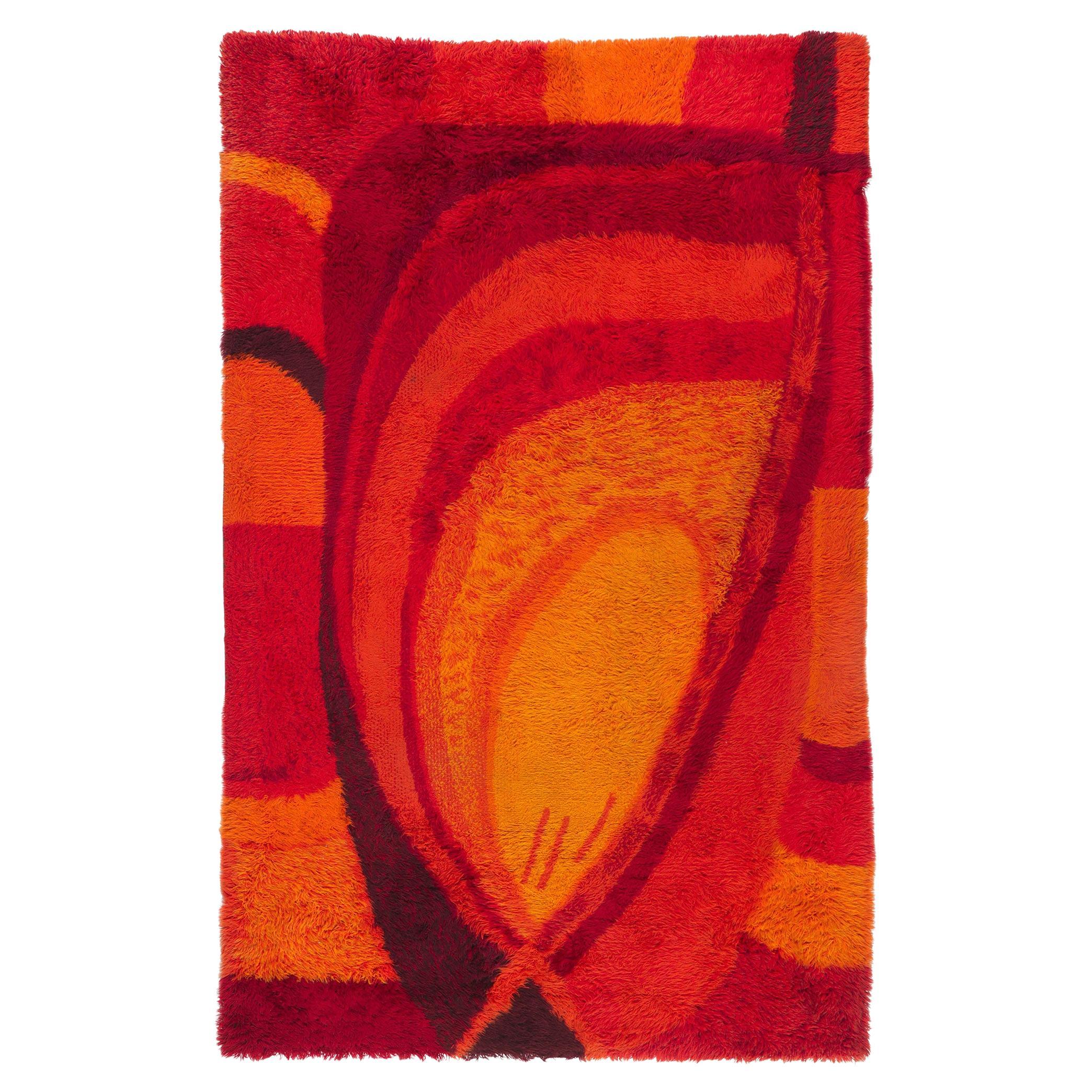
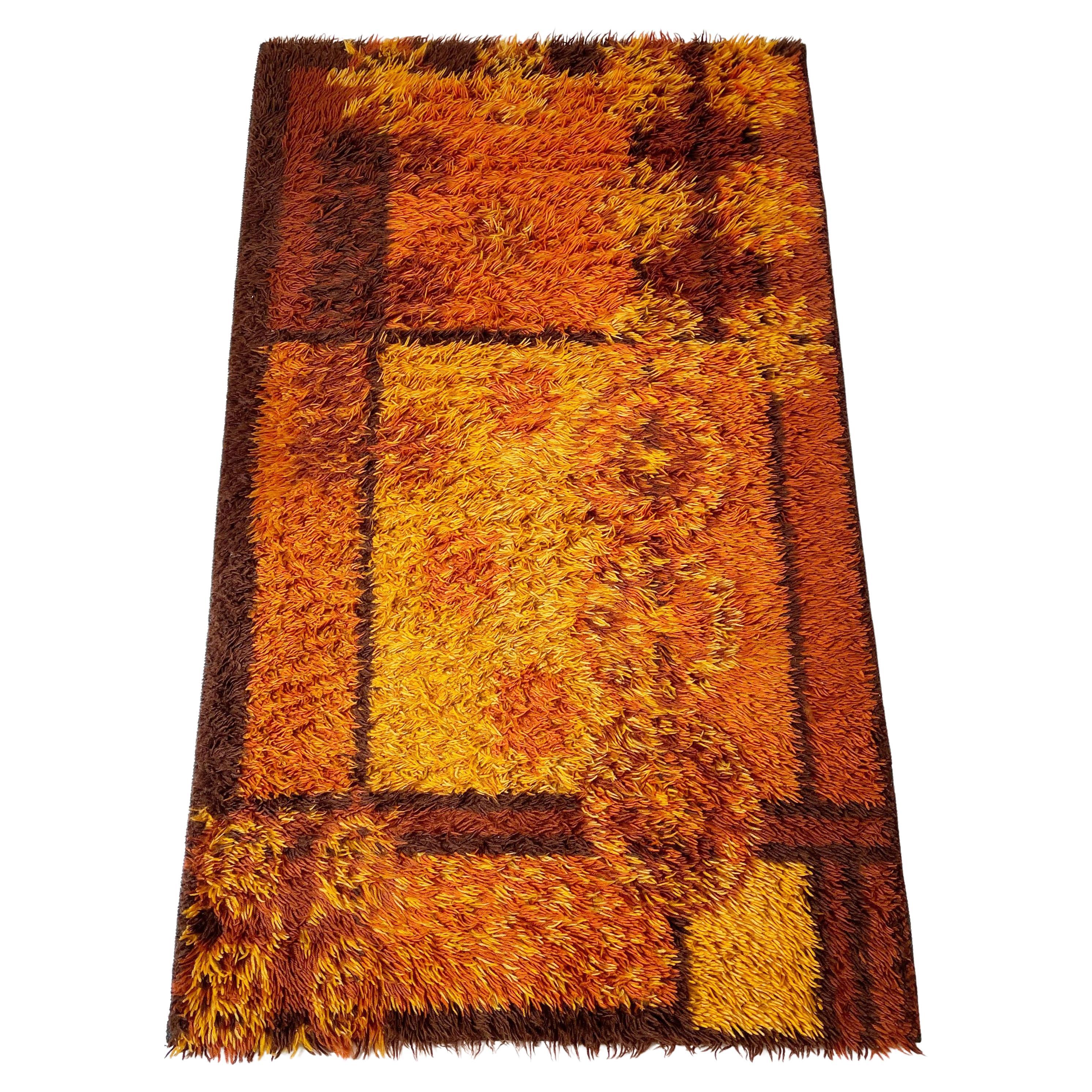
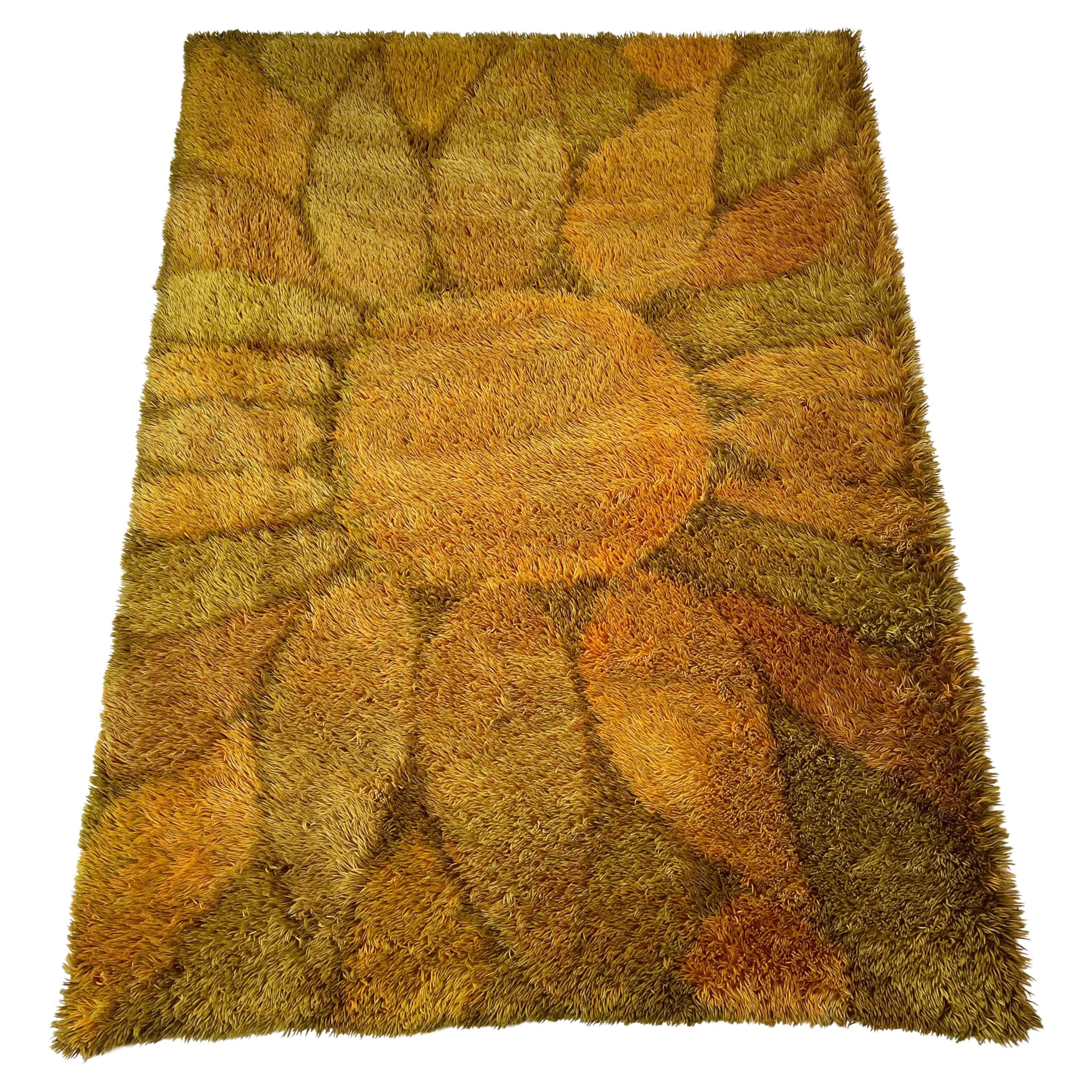
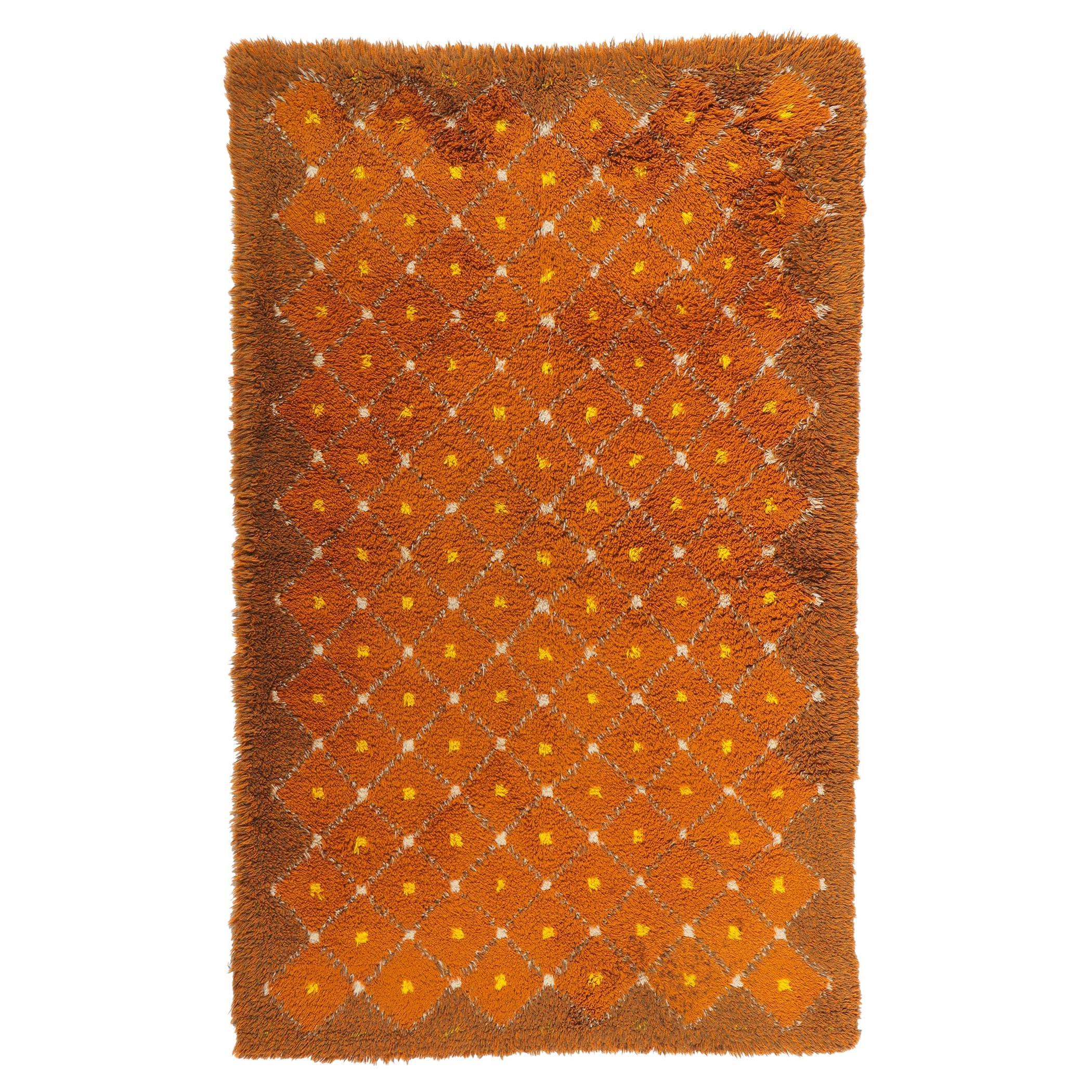
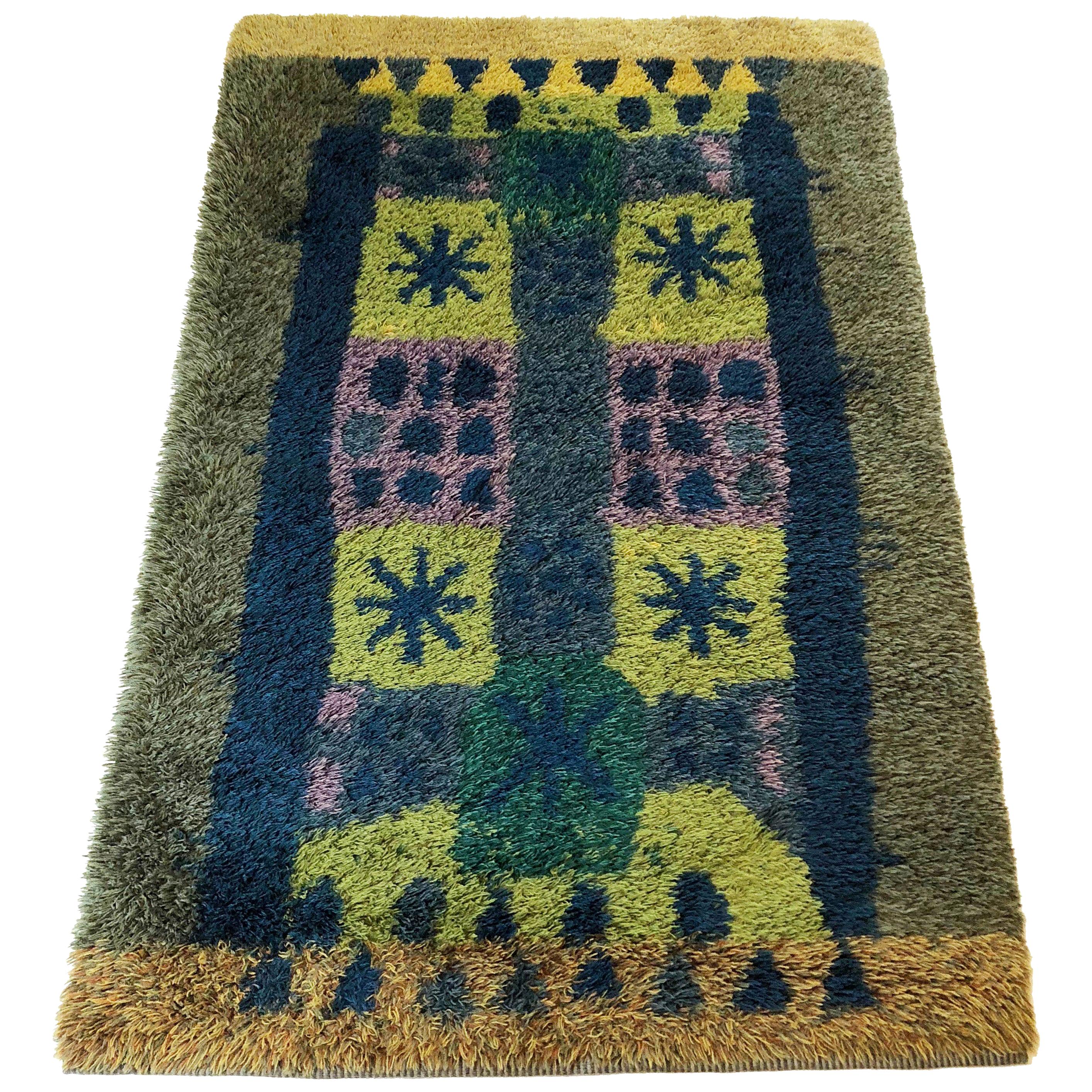
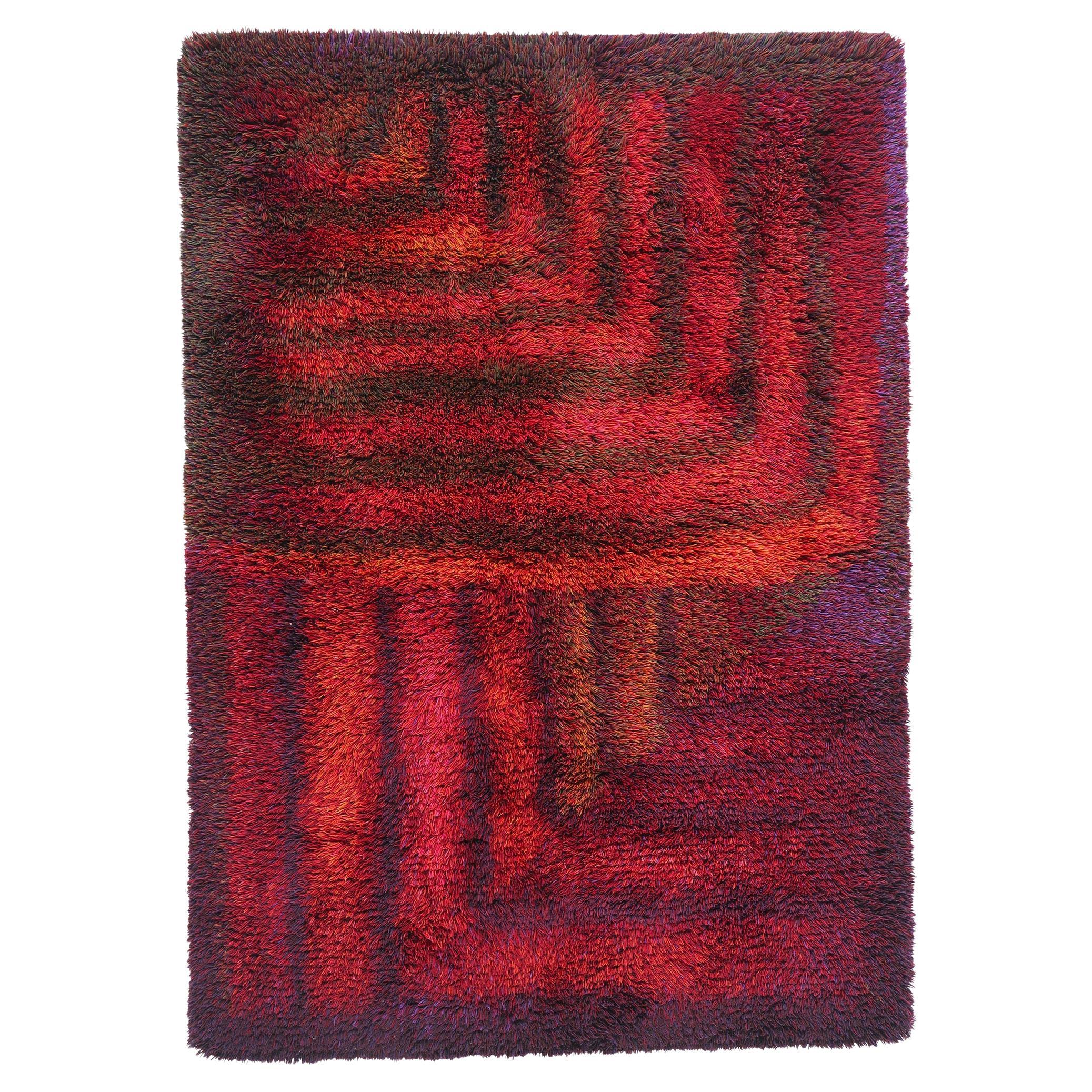
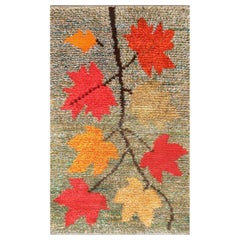
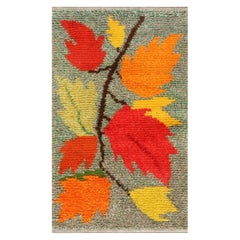
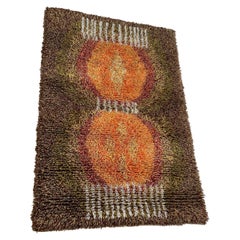
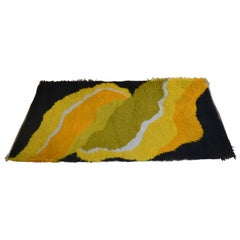
An extraordinary and highly collectible example of Scandinavian textile modernism, this 1967 Ege Rya wool shag rug, titled “Autumn Leaf,” stands as one of the most refined works by Danish textile artist Ylva (Ilva) Kling.
Executed in 100% premium wool, the piece embodies the sculptural depth, chromatic subtlety, and tactile luxury that define the finest mid‑century Rya production.
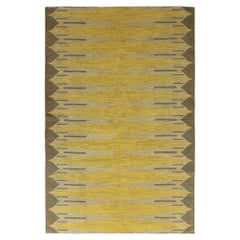
Kling’s composition is a poetic abstraction of autumn foliage: a cascade of stylized leaves rendered in ochre, ember red, moss green, and muted gold, set against a soft, atmospheric ground. The palette is both serene and expressive, creating a visual field that reads as a textile painting as much as a functional rug.
The work’s presence is quietly monumental — warm, modern, and unmistakably Scandinavian.
Originally displayed as a wall hanging, the piece retains its original wooden rod and metal hooks, underscoring its status as a textile artwork. On the reverse, it is signed and dated a tergo: “JAN. 1967 YLVA KLING.”
Professionally cleaned and beautifully preserved, the rug remains in very good vintage condition, with only gentle wear to the lower fringe consistent with age and authenticity.
Dimensions: 77 × 150 cm. 30 × 59 in)
Designer Profile:
Ylva Kling was a Danish textile artist active in the 1960s and early 1970s.
She designed for Ege Rya, one of Denmark’s most important mid‑century textile manufacturers.
Her work is characterized by organic, nature‑inspired motifs, soft, atmospheric palettes, painterly compositions, high‑pile wool textures typical of the Rya tradition.
Kling is less documented than major names like Marianne Richter or Anna Greta Sjöqvist, which actually increases the desirability of signed, dated pieces, especially those with original hanging hardware.
Her rugs appear infrequently on the market, and signed examples from the 1960s are considered collectible Scandinavian modern textiles.
Her Market Position work is strong her presence is rare.
Collectors value her work for its refined mid‑century Danish aesthetic, the superior quality of Ege’s wool craftsmanship, the rarity of her small‑run designs, and the growing demand for sculptural textile wall art.