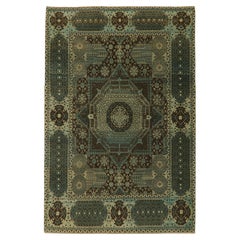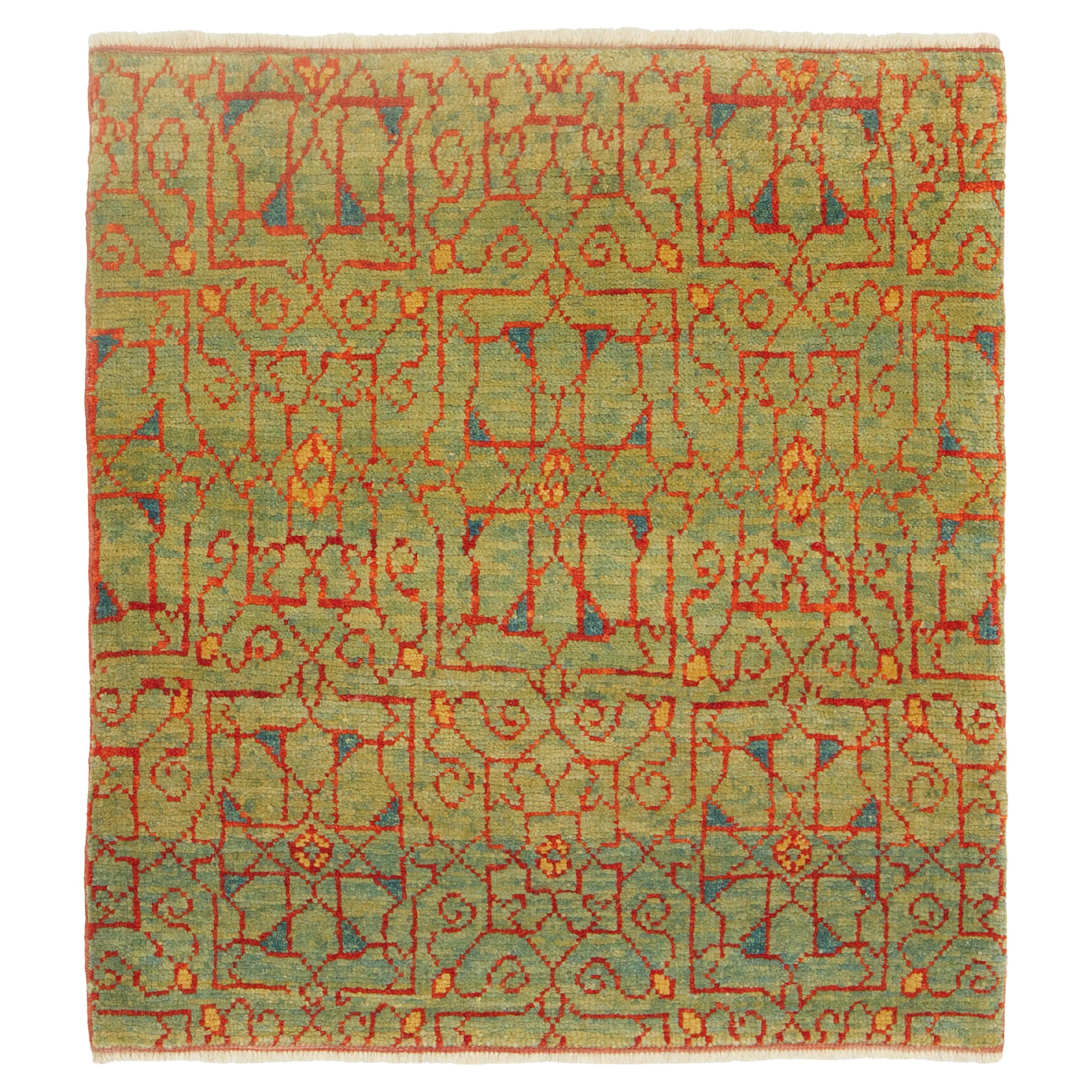
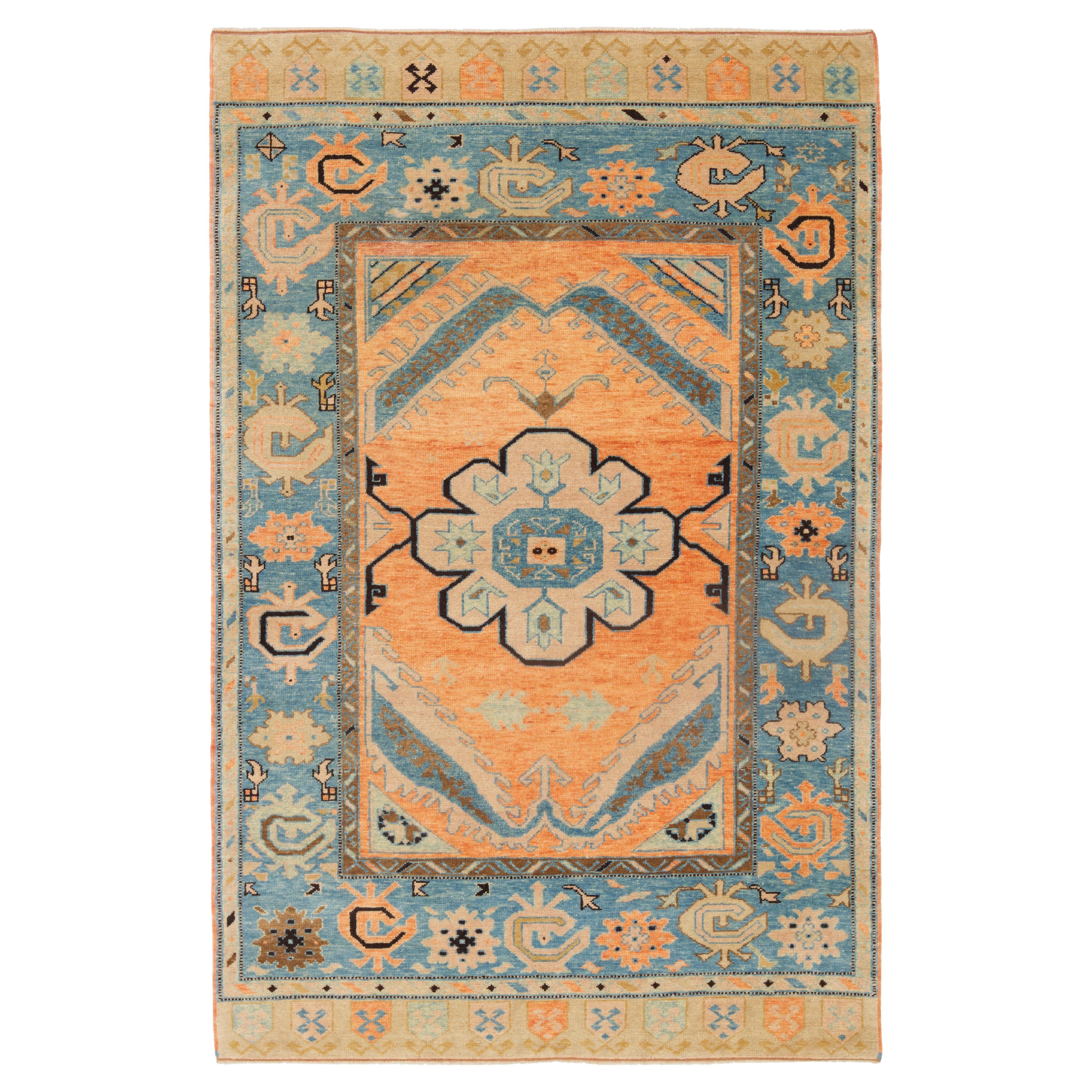
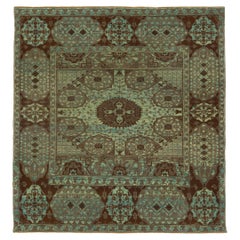
Ararat Rugs Mamluk Carpet with Cup Motif, Antique Revival Rug, Natural Dyed
By Ararat Rugs
Located in Tokyo, JP
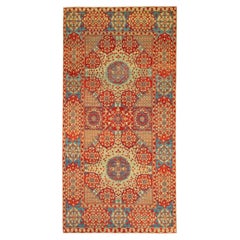
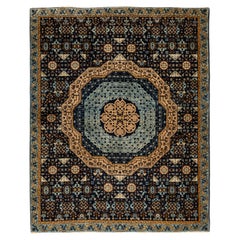
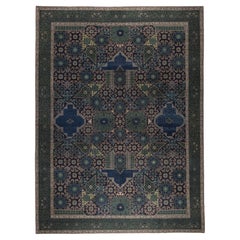
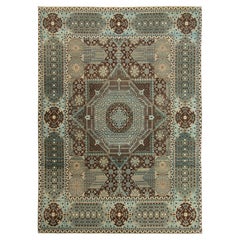
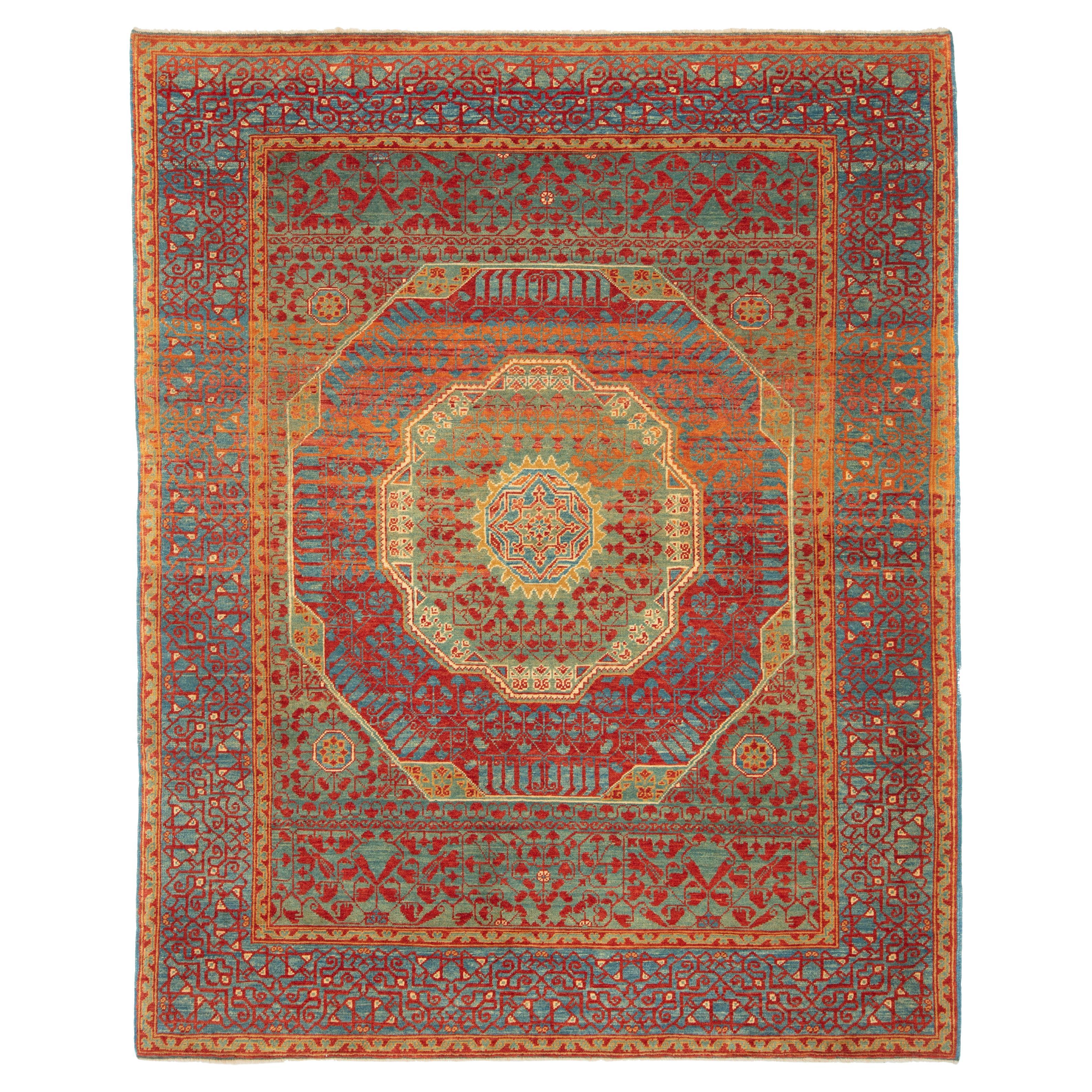
The source of the rug comes from the book Renaissance of Islam, Art of the Mamluks, Esin Atil, Smithsonian Institution Press, Washington D.C., 1981 nr.125. This is a rug with a cup motif design late 15th-century rug from the Mamluk Sultanate of Cairo, Egypt. It is exhibited at the Washington, D.C. The Textile Museum, R.16.1.2 . The layout of this rug is characteristic of the smaller, almost square Mamluk carpet. A wide border encloses the field, divided into horizontal units consisting of a central square flanked above and below by rectangular panels. The height of the rectangular panels is approximately one-third that of the square and is equal to the width of the border. The corners of the central square are cut into triangles, creating an octagon with green ground. The octagon contains a blue polylobed medallion, which encloses an eight-pointed star with a multipetaled rosette in the core. The area between the star and the lobed medallion has floral motifs springing outward from the arms of the star. The angles of the octagon bear eight isolated and irregular polygons with a red ground; each of these units is adorned with a multipetaled rosette enclosed by a square with papyrus motifs springing from its sides and corners. The field of the octagon is filled with similar papyrus sprays, some of which appear to grow from the eight-stemmed cups placed between the polygons. The triangles in the corners bear a checkerboard pattern with a stylized lotus blossom (or fleur-de-lis) in each segment. The compositional layout of the rug is reminiscent of the illuminated frontispieces, which reveal similar proportions and internal divisions. Radiating designs of geometric components filled with floral motifs are a characteristic feature of Mamluk art...
21st Century and Contemporary Turkish Revival Turkish Rugs
Wool, Natural Fiber, Organic Material