Want more images or videos?
Request additional images or videos from the seller
1 of 5

Turkish Silk Hereke Prayer Rug

$3,438.70
£2,500
€2,977.47
CA$4,801.22
A$4,871.41
CHF 2,782.86
MX$58,980.61
NOK 32,693.25
SEK 32,649.96
DKK 22,257.79

About the Item

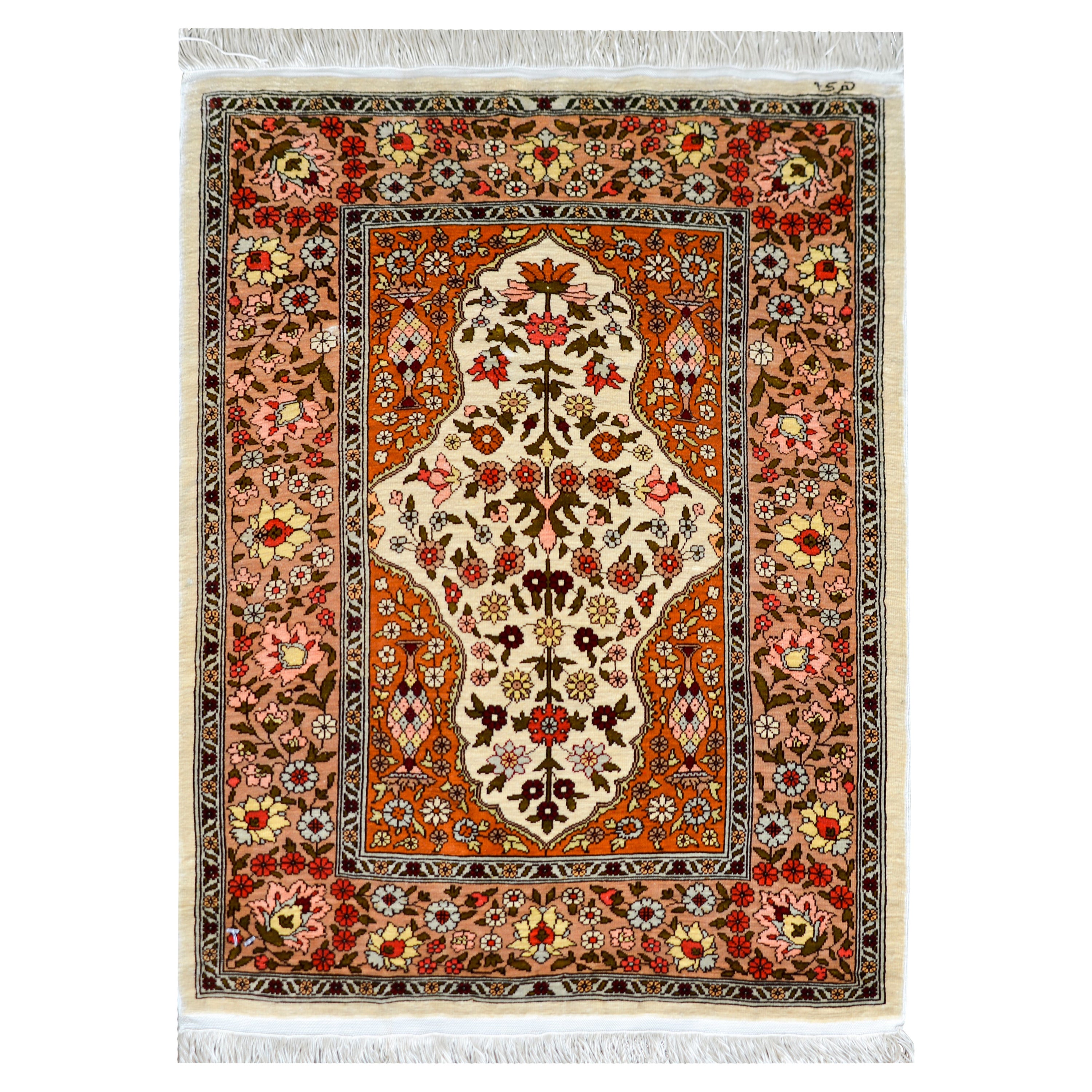
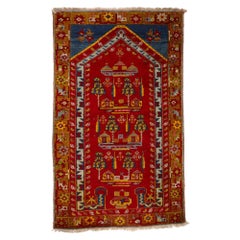
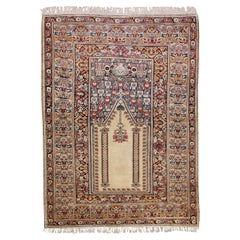
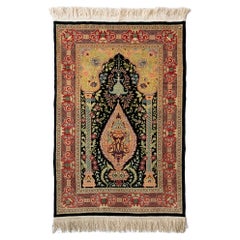
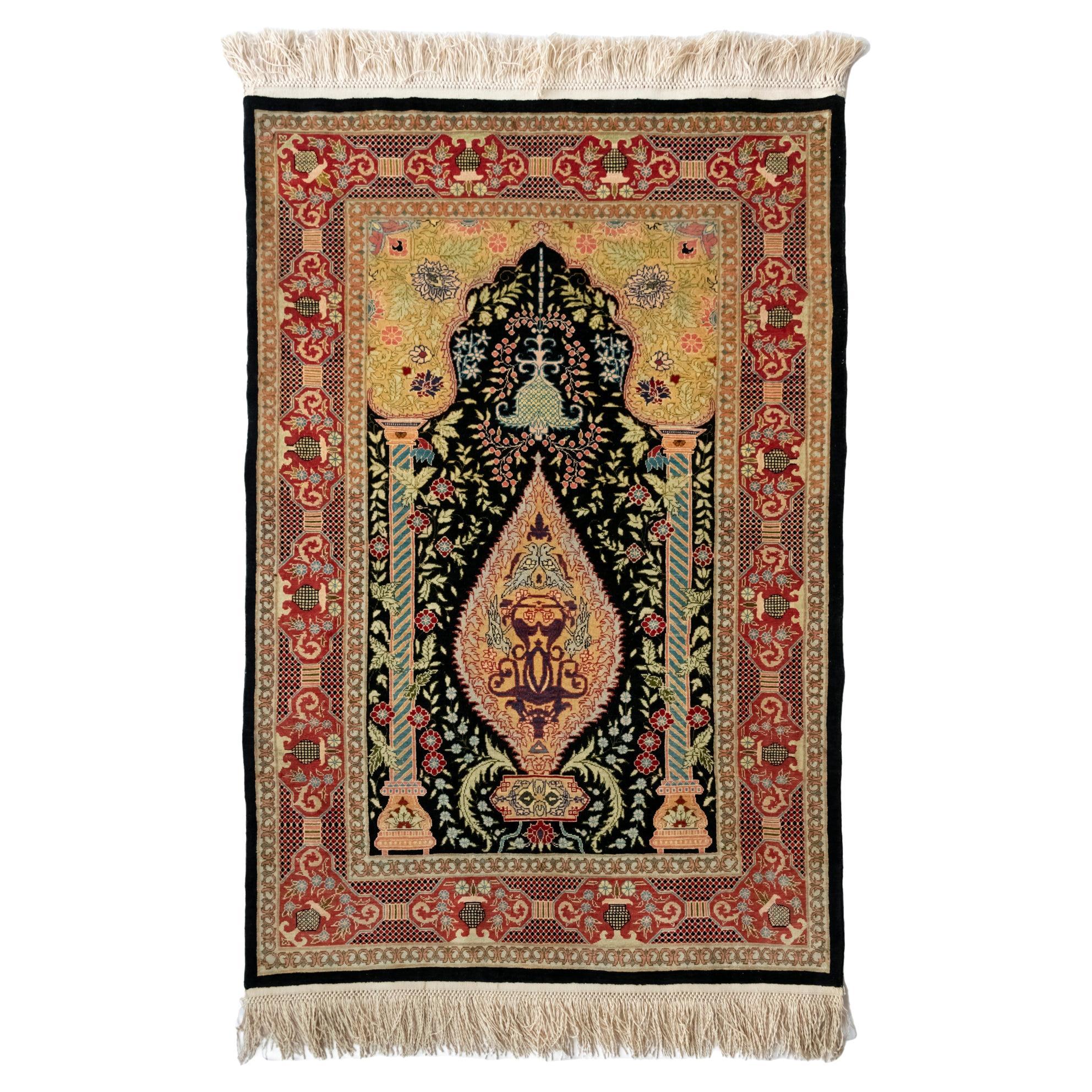
Turkish silk Hereke prayer rug Turkish, Late 20th Century Height 90cm, width 41cm Hailing from the coastal town of Hereke in Turkey, this remarkable rug serves as a splendid testament to the rich tradition of Turkish carpet weaving from the 20th century. Adhering to the classic design conventions of Hereke prayer rugs, this carpet is embellished with enchanting hues of marigold, green, ivory, yellow, and maroon. It features a central panel teeming with harmonious floral and foliage patterns, displaying a profound sense of symmetry and flowing grace, which is constructed in the shape of a directional pyramid, typical of prayer rugs. Encircling the central panel, we find a finely detailed thin border decorated with recurring orange architectural motifs. The outer, larger, border is a frieze which is beautifully adorned with polychrome floral designs, including boteh motifs, against a marigold backdrop. These decorations are arranged in a pattern sequence, effectively contextualising the central panel’s plentiful decorations. The rug's outer are lined by an identical motif border to the one framing the central panel, accentuated by a deeper maroon band, thereby underlining the rug's overall beauty. Tasselled cream fringes elegantly drape from two sides, adding a whimsical touch to the piece. Abdulmejid I, 31st Sultan of the Ottoman Empire, established the Royal Court Manufacture in Hereke in 1843. With time, the manufacture became renowned for its high-quality silk carpets. Although it would close its doors in the aftermath of the Empire’s demise, local families revived the tradition by establishing their own shops and continuing the legacy of the city’s rugmaking traditions. This splendid Hereke rug, with its warm hues and intricate designs, promises to infuse any interior space with an aura of sophistication and warmth.
  • Dimensions:
    Width: 16.15 in (41 cm)Length: 35.44 in (90 cm)
  • Style:
    Islamic (In the Style Of)
  • Materials and Techniques:
    Silk,Hand-Woven
  • Place of Origin:
  • Period:
  • Date of Manufacture:
    Late 20th Century
  • Condition:
    Wear consistent with age and use.
  • Seller Location:
    London, GB
  • Reference Number:
    Seller: 12013C1stDibs: LU956335027482

More From This Seller

View All
Anatolian Kirsehir Prayer Rug with a Village Design

Anatolian Kirsehir Prayer Rug with a Village Design

Located in London, GB

Anatolian Kirsehir prayer rug with a village design Turkish, 20th Century Height 155cm, width 96cm This eye-catching pictorial prayer rug was skilfully woven from wool by Turkish ...

Category

20th Century Turkish Turkish Rugs

Materials

Wool

Antique Caucasian Hand-Woven Wool Rug

Antique Caucasian Hand-Woven Wool Rug

Located in London, GB

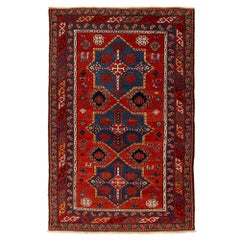
This beautiful wool rug was woven in circa 1870 in the Shirvan district of eastern Caucasus. This district is well-known for its history of producing fine rugs and carpets. Shirvan r...

Category

Antique 1870s Caucasian Islamic Caucasian Rugs

Materials

Wool

Antique Chinese Peking Wool Rug

Antique Chinese Peking Wool Rug

Located in London, GB

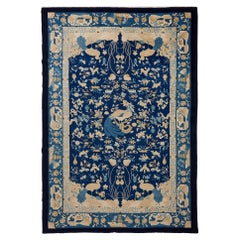
Antique Chinese Peking wool rug Chinese, c. 1890 Width 268cm, depth 185cm This find blue-field carpet is from Peking, China, and was created durin...

Category

Antique Late 19th Century Chinese Chinese and East Asian Rugs

Materials

Wool

Indian Kashmir Wool Shawl

Indian Kashmir Wool Shawl

Located in London, GB

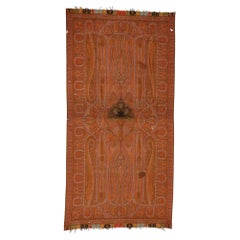
Indian Kashmir wool shawl Indian, Early 20th Century Height 316cm, width 166cm The superb shawl is woollen and was crafted by skilled Indian weavers in the early 20th century. Tradi...

Category

Early 20th Century Indian Quilts and Blankets

Materials

Wool

Antique Indian Embroidered Dress Band

Antique Indian Embroidered Dress Band

Located in London, GB

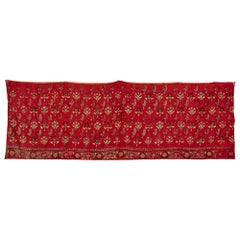
This wonderful embroidered band was created in India in the early 19th Century. The band was originally designed to form part of a skirt or dress. It still may be used for this purpo...

Category

Antique Early 19th Century Indian Anglo-Indian Indian Rugs

Materials

Silk, Satin

Marbediah Rug Depicting Views of Jerusalem

Marbediah Rug Depicting Views of Jerusalem

Located in London, GB

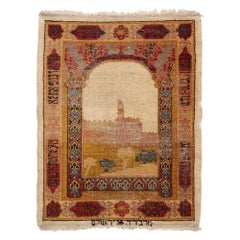
Marbediah rug depicting views of Jerusalem Israel, c. 1920 Height 94cm, width 70cm Woven in the early 20th century, the medium-sized rug’s design wonderfully illustrates a landscape view of Jerusalem alongside Hebrew writing. The central panel showcases a distant view of Jerusalem, where a tall building is placed within a woodland scenery. A wide border frames the view, its colours transitioning into paler shades towards the top of the image. Motifs depicting traditional Jewish objects...

Category

Early 20th Century Israeli Central Asian Rugs

Materials

Wool

You May Also Like

Antique Ghiordes Prayer Rug

Antique Ghiordes Prayer Rug

Located in New York, NY

Antique Ghiordes Prayer rug. A beautiful antique prayer rug in the classical Turkish tradition. Great color palette. Very well preserved.

Category

Antique 19th Century Turkish Turkish Rugs

Materials

Wool, Cotton

Pure Silk Hereke Ozipek Turkish Rug Signed

Pure Silk Hereke Ozipek Turkish Rug Signed

Located in Lohr, Bavaria, DE

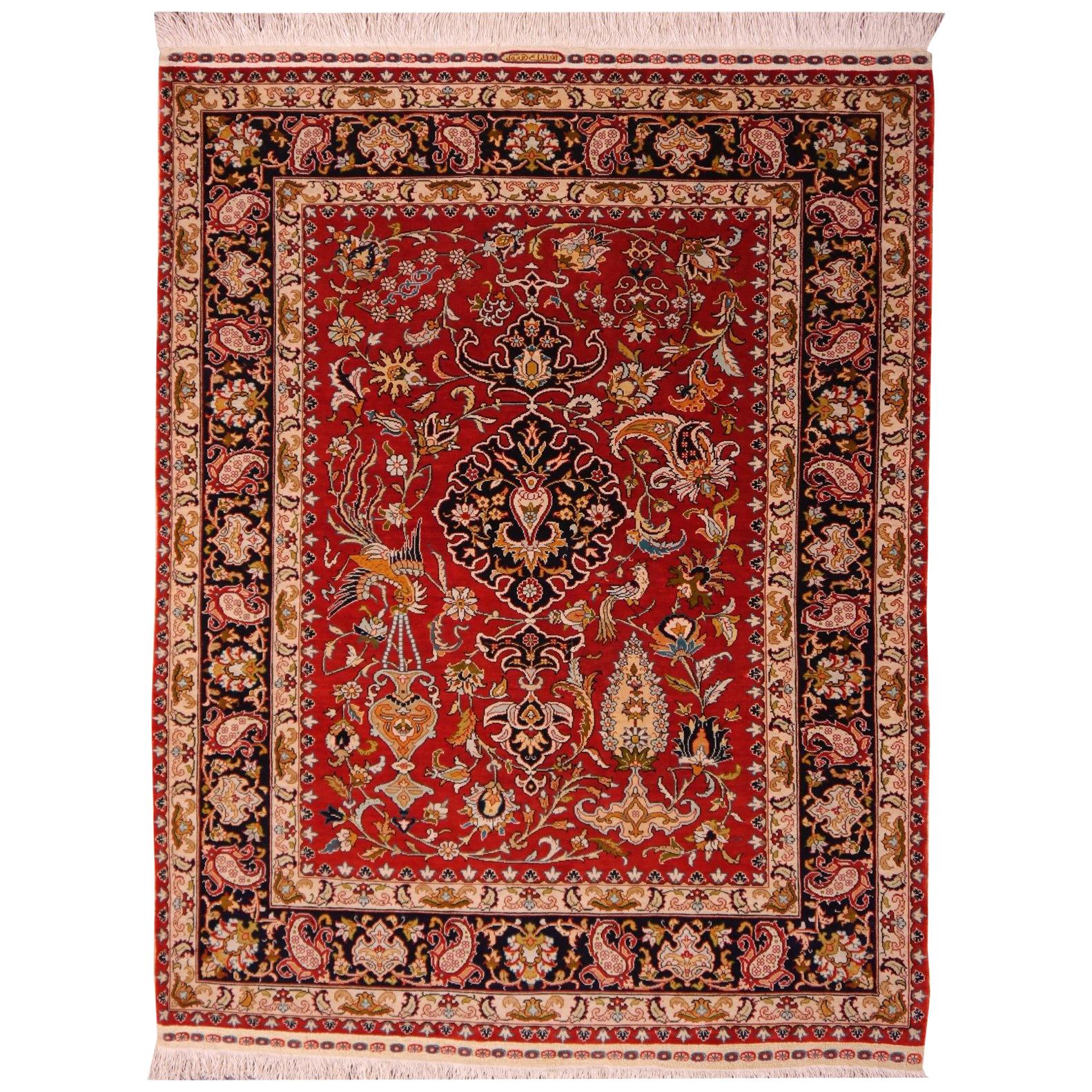
Very fine Turkish pure silk Hereke prayer rug from the famous Ozipek workshop. Fine Hereke Silk Rug – Ozipek Workshop Signed 101 x 76 cm (3.31 x 2.49 ft / 39.8 x 29.9 in) Late 20th Century Origin: Hereke, Turkey Manufacture: Ozipek (Özipek) workshop Period: 4th quarter of the 20th century (circa 1975–1999) Signature: Yes, signed in cartouche Condition: Excellent, collectible condition This exquisite Hereke silk rug, handwoven in the famous weaving town of Hereke, Turkey, is a masterclass in elegance, symmetry, and artistic finesse. Measuring 101 x 76 cm (3.31 x 2.49 ft / 39.8 x 29.9 in), it is a signed work from the renowned Ozipek (Özipek) workshop, one of the most respected names in modern Hereke silk weaving. Historical Background – Hereke & Imperial Ties: The town of Hereke, located near Istanbul, rose to prominence in the mid-19th century when Sultan Abdulmecid I founded the Imperial Hereke Weaving Factory in 1843. The goal was to produce the finest carpets for the Ottoman palaces, using silk, wool, and gold threads. These carpets were not only for domestic splendor but also served as diplomatic gifts. In the late 19th century, Hereke carpets gained recognition across Europe — especially in Germany, where Kaiser Wilhelm II became an admirer. On his visits to the Ottoman Empire, the Kaiser received several Hereke rugs as official gifts and reportedly commissioned carpets for his palaces, including Neues Palais in Potsdam. This cross-cultural appreciation helped cement Hereke’s reputation as a producer of imperial-quality rugs. Ozipek Workshop: The Ozipek workshop (sometimes spelled Özipek), active from the mid-20th century onward, continued the Hereke tradition of ultra-fine silk weaving. They are known for their high knot density, refined drawing, and classical Ottoman-Persian motifs. Rugs from this workshop are often signed, as seen in this piece, and are highly valued by collectors. Design & Pattern: This Hereke silk rug features a classic central medallion surrounded by an elegant arrangement of floral motifs, birds and delicate arabesques, creating a perfect symmetry. The field is richly detailed with scrolling vines, lotus blossoms, and stylized palmettes. The border is framed by narrow guard bands with complementary floral accents, enhancing the refined structure of the composition. This type of design reflects a synthesis of Persian Safavid influence and Ottoman decorative aesthetics, which is typical of elite Hereke production. Dominant Colors (Pantone Approximation): Royal Red – Pantone 7621 C (Main field and floral accents) Champagne Gold – Pantone 7506 C (Medallion and border highlights) Midnight Navy – Pantone 2766 C (Outlines and field contrast) Ivory Silk – Pantone 7527 C (Background and border fill) Technical Details: Material: 100% natural silk (warp, weft, and pile) Technique: Hand-knotted (double knot / Turkish knot) Knot Density: Exceptionally fine – often 1,000,000+ knots/m² (up to 654 knots/in²) Use: Collector's item, wall hanging, or luxury décor Signed: Yes, within the border This signed Hereke silk rug by Ozipek is not merely a decorative piece but a testament to imperial textile heritage, offering a tangible connection to the grandeur of the Ottoman court and its European patrons. Its fine craftsmanship, intricate design, and luxurious silk composition make it a sought-after treasure for connoisseurs of fine textiles and classical Turkish weaving. Production method: Hand-knotted Shape: Rectangular Colors: brown-red, gold, beige, black Pile height: approx. 2 – 3 mm Knot density: per m² 1,000,000, kpsi 654 inch² A+ export quality Made in Hereke, Türkiye by the Özipek workshop Usage: Tapestry, Floor Carpet Sustainable: Yes, from natural products Fair Trade: Yes, Label Step Fair Trade Carpets, no child labor, ecologically compatible production. We are Label Step Fair Trade Partners. Hereke silk carpets have always been among the exquisite works of art in carpet production. Its origins go back to the Ottoman Sultan Abdülmecid I, who founded the Hereke Imperial Manufactory to produce all the textiles for his Dolmabahçe Palace on the Bosphorus. Due to the friendship between the German Empire and the Ottoman Empire, there were plenty of contacts between the oriental art of weaving and European customers. As is well known, a particularly great admirer of Hereke carpets was Kaiser Wilhelm II, who brought an impressive collection of exquisite carpets from Hereke with him in 1894. In the 20th century Hereke has developed into the most important production site for exquisite silk carpets. Floral carpets and prayer rugs in sizes 90 x 60 cm, 120 x 80 cm, 150 x 100 cm and 200 x 130 cm are common. Larger carpets are also available, but due to their high price these are much rarer. Simple qualities in wool on cotton warp start with a knot density of approx. 300,000 knots per m², particularly fine pieces reach fineness of over 4,000,000 knots per m². A floral drawing or floral repeat is typical. Well-known weaving masters or manufacturers are Ozipek, Derin, Han Hali. Turkish Hereke silk rugs are the most exclusive and highly priced rugs of all silk rugs...

Category

20th Century Turkish Islamic Turkish Rugs
Materials

Silk

Small Hereke Pure Silk Turkish Rug

Small Hereke Pure Silk Turkish Rug

Located in Vilnius, LT

Very fine hand knotted small Turkish pure silk Hereke rug.  

Category

21st Century and Contemporary Turkish Turkish Rugs

Materials

Silk

Antique Signed Silk Hereke Rug - Mid 20th century

Antique Signed Silk Hereke Rug - Mid 20th century

Located in Sultanahmet, 34

This refined mid 20th century signed silk Hereke rug, woven in Hereke, Turkey, is an exceptional example of the region’s renowned court-style carpet production. Hereke silk rugs of t...

Category

Mid-20th Century Turkish Turkish Rugs

Materials

Silk

Nice Vintage Turkish Hereke Rug

Nice Vintage Turkish Hereke Rug

Located in Saint Ouen, FR

Beautiful late 20th century Hereke rug with nice floral and central medallion design and beautiful colors, entirely hand knotted with wool velvet on cotton foundation.

Category

Late 20th Century Turkish Tabriz Turkish Rugs

Materials

Wool

Antique Melas Turkish Prayer Rug

Antique Melas Turkish Prayer Rug

Located in WYNNUM, QLD

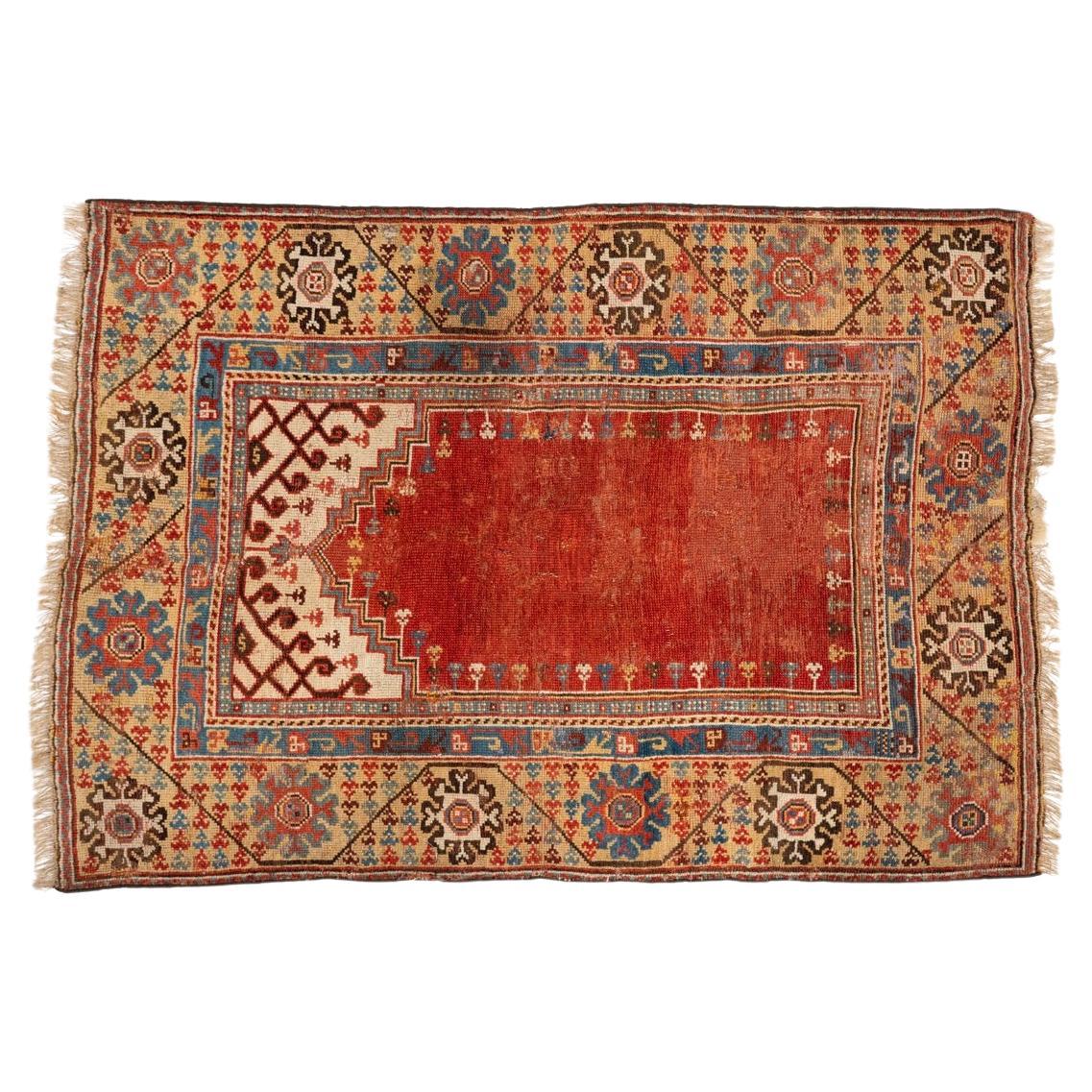
This is admittedly a collector’s piece, for a connoisseur. Melas rugs became known and appreciated in Europe as early as 1700, though its history of weaving goes back at least severa...

Category

Antique Early 19th Century Turkish Turkish Rugs

Materials

Wool