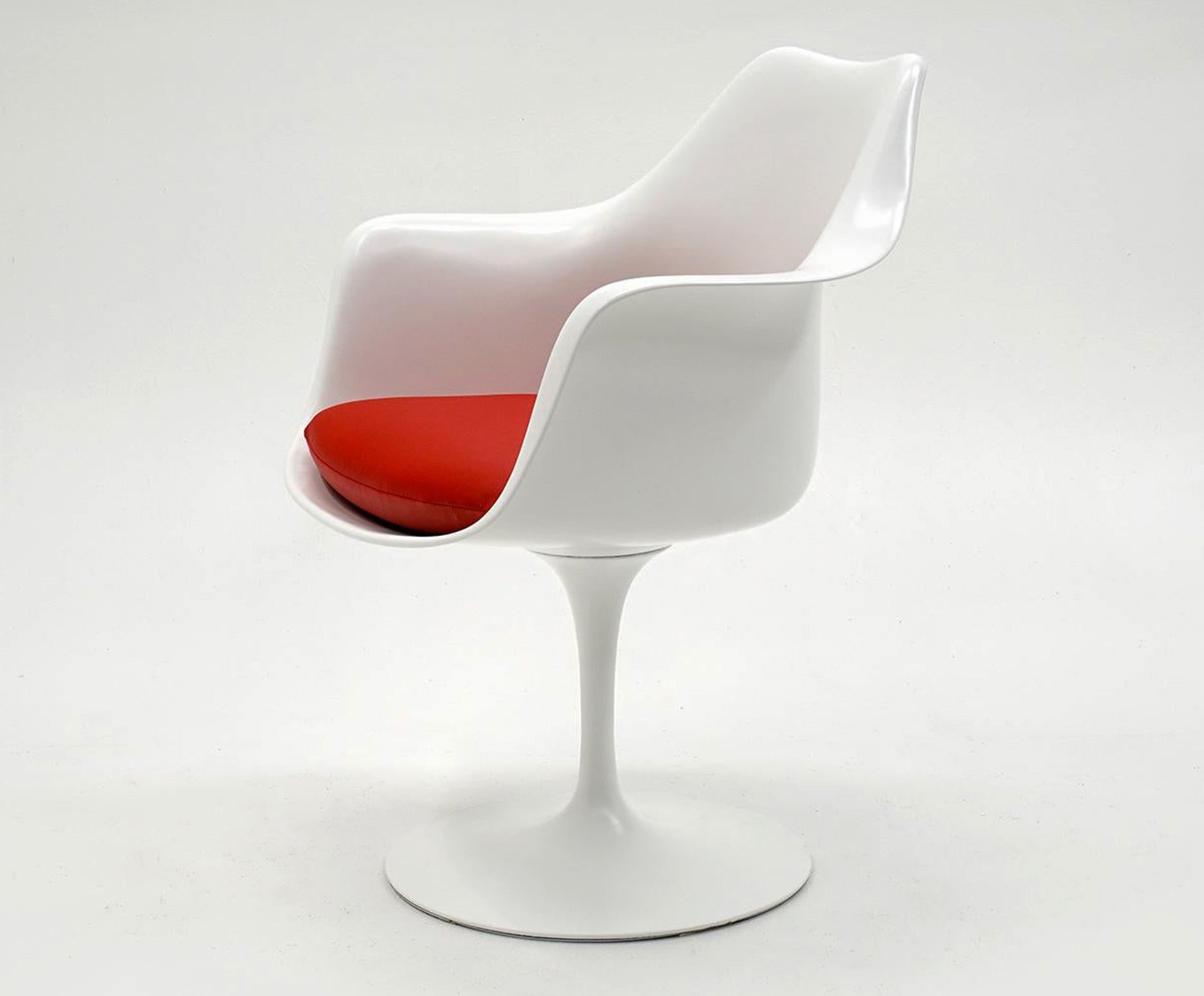
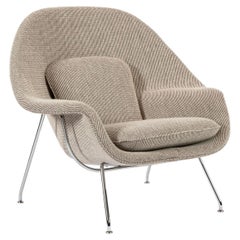
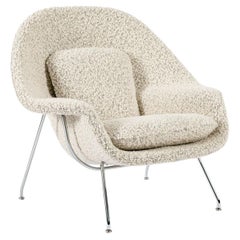
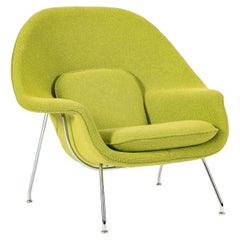
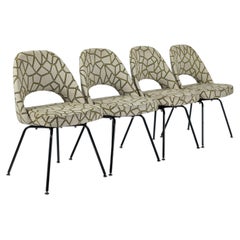
Eero Saarinen (1910–61) absolutely hated clutter. "The undercarriage of chairs and tables in a typical interior makes an ugly, confusing, unrestful world,” the Finnish-American architect and industrial designer once said. “I wanted to clear up the slum of legs.” With the original Tulip armchair, he did just that, streamlining the standard four-legged piece into a graceful shape atop a single pedestal.
The 1957 design — which is in the permanent collection of the Museum of Modern Art in New York — was one of Saarinen’s last; he died in 1961. Its sculptural shape displays the best of Saarinen, who referred to himself as a “form giver,” whether that form was a flower-shaped seat or the swooping curve of the Gateway Arch, a more than 600-foot-tall stainless-steel-clad concrete monument in St. Louis, Missouri, that he designed in the late 1940s.
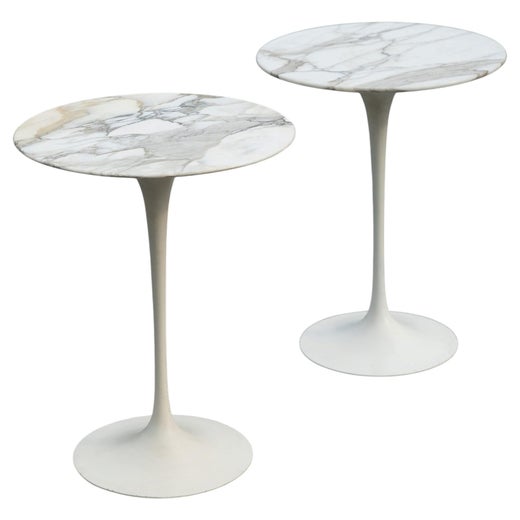
The Tulip armchair was part of Saarinen’s Pedestal collection of armless chairs, stools, dining tables and more — a mid-century modernist exercise in simplifying. The series was designed for Knoll, which continues to produce it today. Visitors to the TWA Hotel, the 2019 reinvention of Saarinen’s iconic airport terminal, will find Tulip chairs dotting the structure.
Interestingly, the Tulip armchair’s shape suggests one single plastic form, but despite Saarinen’s many experiments to achieve this, it is actually constructed in two pieces: an aluminum frame obscured in a plastic finish and a fiberglass upper-shell seat. Two parts or one, it achieves Saarinen’s desired streamlined effect.