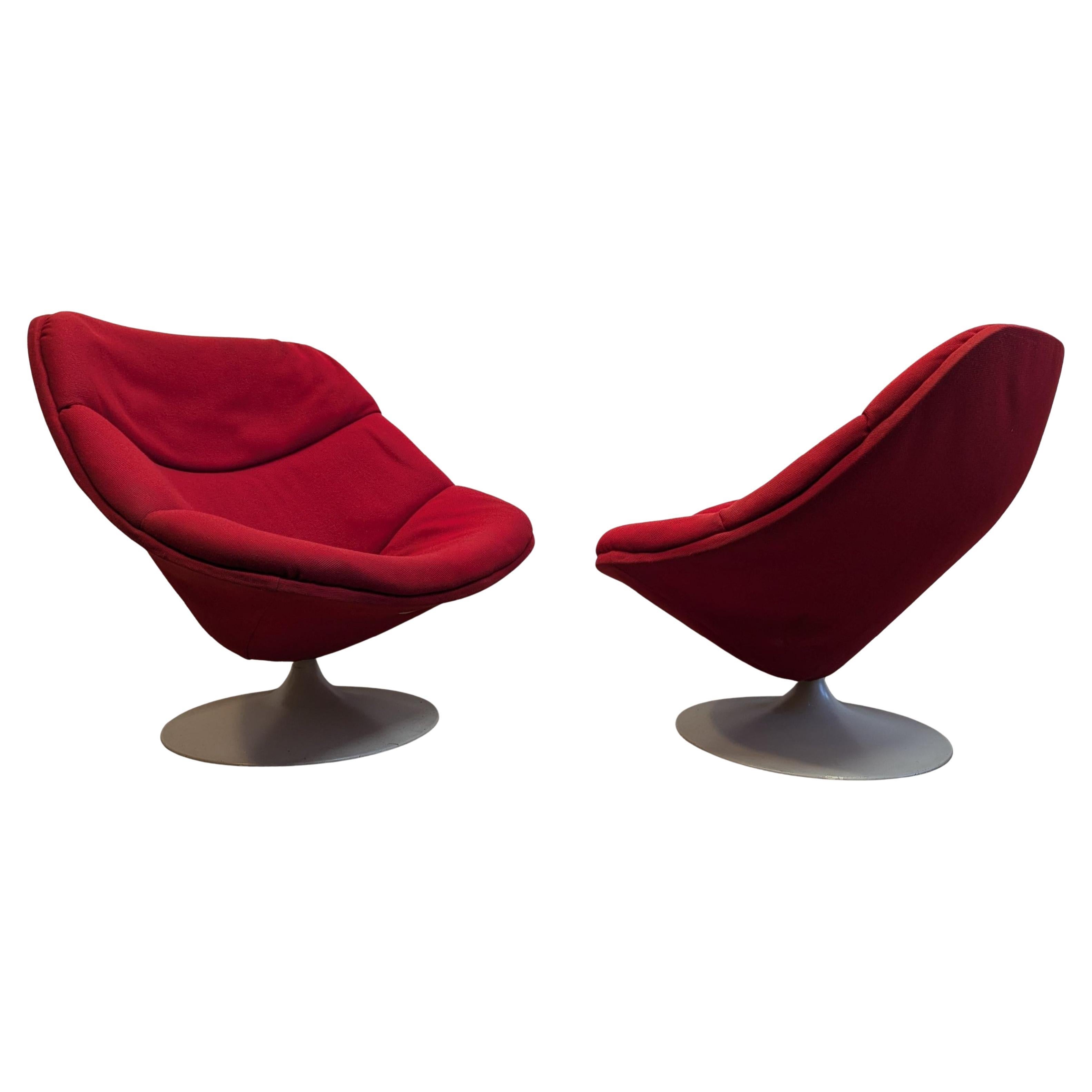
Pierre Paulin for Artifort Oyster Chair Mid Century
By Pierre Paulin, Artifort
Located in Fort Lauderdale, FL
Pierre Paulin Oyster Chair. Rare model 156.
Category
Vintage 1960s French Mid-Century Modern Lounge Chairs
Materials
Fabric
Pierre Paulin introduced a fresh breeze into French furniture design in the 1960s and ’70s, fostering a sleek new Space-Age aesthetic. Along with Olivier Mourgue, Paulin developed chairs, sofas, dining tables and other furnishings with flowing lines and almost surreal naturalistic forms. And his work became such a byword for chic, forward-looking design and emerging technologies that two French presidents commissioned him to create environments in the Élysée Palace in Paris.
Paulin was born in Paris to a family of artists and designers. He initially sought to become a ceramist and sculptor and was studying in the town of Vallauris near the Côte d'Azur — a center for pottery making, where Pablo Picasso spent his postwar summers crafting ceramics — but broke his hand in a fight. He enrolled at the École Camondo, the Paris interior design school. There, Paulin was strongly influenced by the work of Charles and Ray Eames, George Nelson and Arne Jacobsen, as was reflected in his early creations for the manufacturer Thonet-France.
It was at the Dutch firm Artifort, which he joined in 1958, where Paulin blossomed. In a few years, he produced several of his signature designs based on abstract organic shapes. These include the Butterfly chair (1963), which features a tubular steel frame and slung leather, and a group of striking seating pieces made with steel frames covered in polyurethane foam and tight jersey fabric: the Mushroom (1960), Ribbon (1966) and Tongue (1967) chairs. The revered designer not only introduced new construction techniques to Artifort furniture but contributed fresh materials, Pop art colors and dazzling shapes to the mid-century modern era as a whole.
In 1971, the Mobilier National — a department of France’s Ministry of Culture in charge of furnishing top-tier government offices and embassies — commissioned Paulin to redesign President Georges Pompidou’s private apartment in the Élysée Palace. In three years, Paulin transformed the staid rooms into futuristic environments with curved, fabric-clad walls and furnishings such as bookcases made from an arrangement of smoked-glass U shapes, flower-like pedestal chairs and pumpkin-esque loungers.
Ten years later, the Mobilier National called on Paulin again, this time to furnish the private office of President François Mitterand. Paulin responded with an angular, postmodern take on neoclassical furniture, pieces that looked surprisingly at home in the paneled, Savonnerie-carpeted Louis XVI rooms. As those two Élysée Palace projects show, Paulin furniture works well both in a total decor or when used as a counterpoint to traditional pieces. His creations have a unique personality: bright and playful yet sophisticated and suave.
Find vintage Pierre Paulin lounge chairs, armchairs, coffee tables and other furniture on 1stDibs.
The sterling reputation that Artifort enjoys isn’t limited to the innovative upholstery and fluid, organic shapes for which its products are widely known — the legendary Dutch brand’s vintage seating and other furniture is also celebrated for its embodiment of functionality, comfort and quality. These are among the principles that underpin the philosophy toward modern furniture design at Artifort, which has been at the crossroads of furniture and art for over 125 years.
Prior to 1928, the year Artifort officially became a brand, Jules Wagemans had a small upholstery business in Maastricht, the Netherlands. After setting up in 1890, his son, Henricus Wagemans, broadened the scope of the company to include furniture production. By the end of the 1920s, their showroom in Amsterdam had made them a recognizable brand across the Netherlands.
Then named H. Wagemans & Van Tuien, the company changed its name to Artifort after the economic recession. Artifort came from two Latin words meaning “art” and “strong” — a perfect description for the style of each design and the manufacturer’s intention to create sturdy furnishings. Artifort’s reputation for durable armchairs and sofas endures, and vintage editions of this seating are now family heirlooms in many homes.
Artifort became a magnet for high-profile and up-and-coming designers alike. Many furniture designers’ careers began thanks to collaborations with Artifort, such as Dutch industrial and jewelry designer Gijs Bakker and Indonesian-born designer Kho Liang Ie. Also known for designing the interiors at Amsterdam’s Schiphol Airport, Kho Liang Ie was an aesthetic consultant at Artifort and used his expertise to turn the company into a world-class brand. Perhaps his largest contribution, however, was attracting the talents of French furniture and interior designer Pierre Paulin and English furniture designer Geoffrey D. Harcourt.
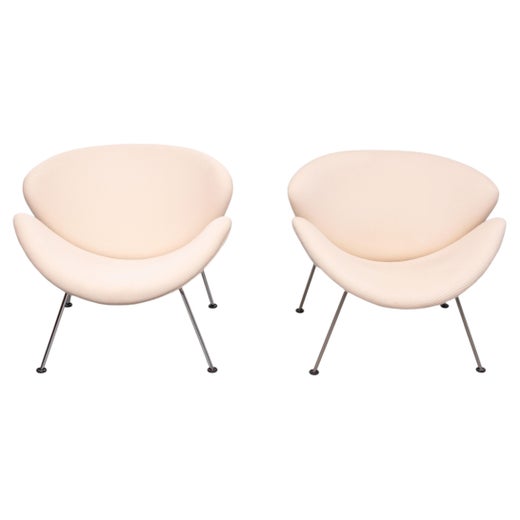
Paulin’s bright and colorful lounge chairs, such as his Orange Slice chair and Mushroom chair, are still central to the Artifort identity. The revered designer not only introduced new construction techniques to Artifort furniture, but contributed fresh materials, Pop art colors and dazzling shapes to the mid-century modern era as a whole, while Harcourt deserves credit for popularizing Artifort internationally and extending their reach into foreign markets.
Another talent boom in the 1990s at Artifort yielded collaborations with Jasper Morrison, Wolfgang Mezger and René Holten. Iranian designer Khodi Feiz was named art director in 2014 and has continued the tradition of recruiting top designers such as Claesson Koivisto Rune, Ilse Crawford and Luca Nichetto.
Find a collection of vintage Artifort lounge chairs, tables and more on 1stDibs.
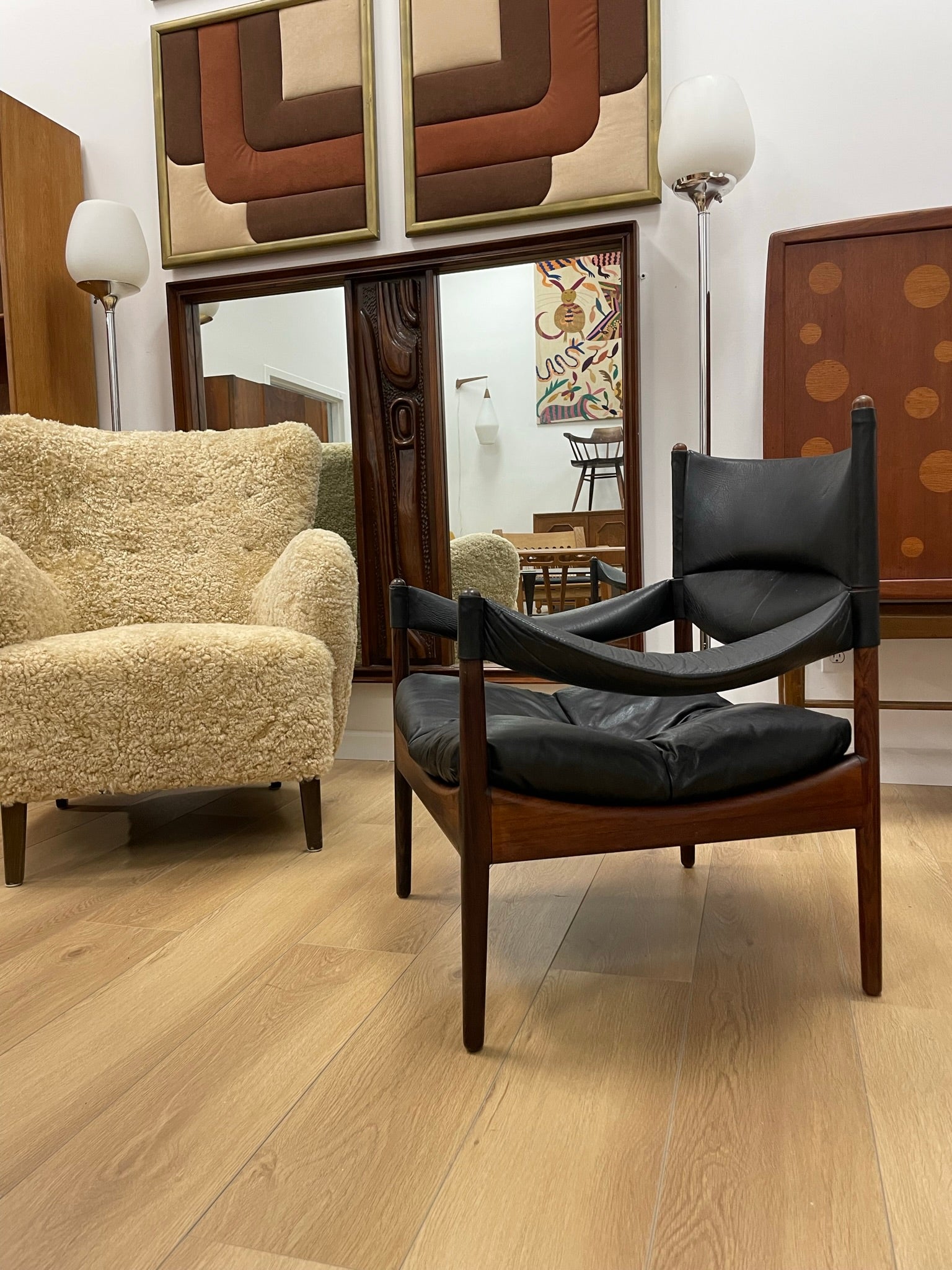
Pierre Paulin for Artifort Oyster Chair Mid Century
By Pierre Paulin, Artifort
Located in Fort Lauderdale, FL
Pierre Paulin Oyster Chair. Rare model 156.
Fabric
Pierre Paulin for Artifort Mid Century Big Globe Chair
By Pierre Paulin
Located in Fort Lauderdale, FL
Big Globe Lounge Chair F422 designed by Pierre Paulin for Artifort in 1959. Original fabric. Labeled.
Fabric
Djinn Armchair and Ottoman by Olivier Mourgue for Airborne
By Olivier Mourgue
Located in Fort Lauderdale, FL
Iconic Djinn armchair and ottman designed by Olivier Mourgue for French company Airborne. Tubular steel frame and original fabric. Imported from Denmark. Needs upholstery. Ottoman me...
Fabric
Verner Panton Amoebe Chair by Vitra
By Verner Panton
Located in Fort Lauderdale, FL
Amoebe Chair by Verner Panton, designed in the 70s. Labeled
Fabric
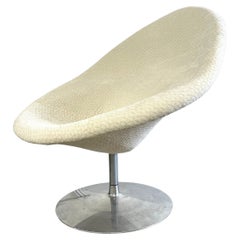
Pierre Paulin for Artifort Mid Century Big Globe Chair
By Pierre Paulin, Artifort
Located in Fort Lauderdale, FL
Big Globe Lounge Chair F422 designed by Pierre Paulin for Artifort. Designed in 1959. Newer upholstery
Fabric
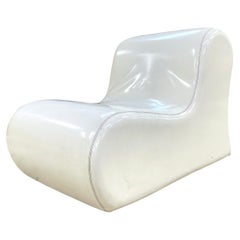
Mid Century Pop Art "Soft" Lounge Chair 922 Ueli Berger and Susi Berger
By Susi & Ueli Berger
Located in Fort Lauderdale, FL
Rare "soft" Chair designed by the Swiss architects Susi and Ueli Berger for the manufacture Victoria-Werke AG. The "soft" chair was created in 1967 and produced from 1969 to 1974. Sw...
Fabric
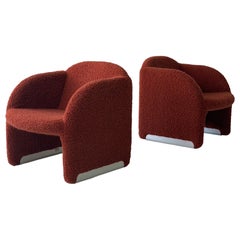
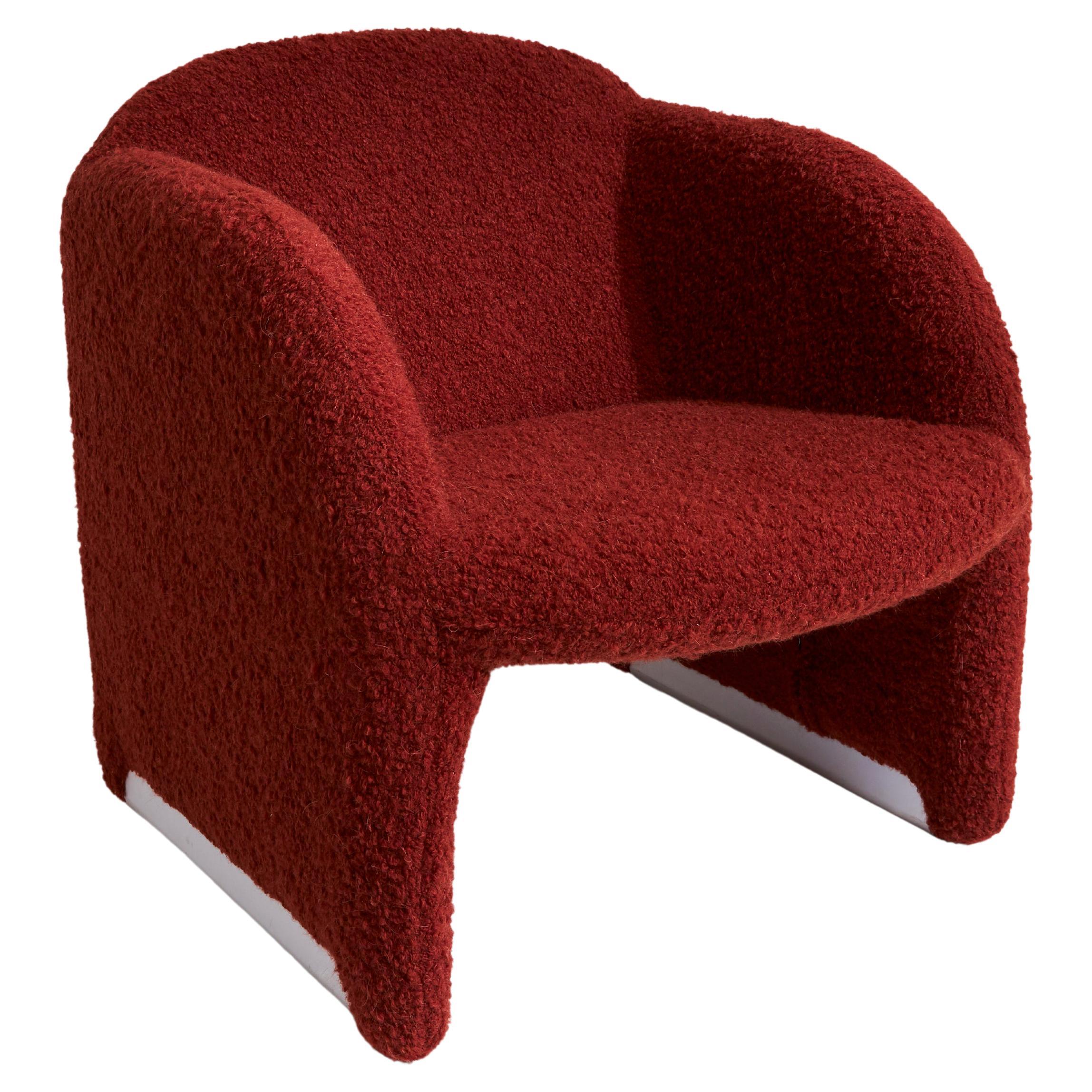
Ben Chairs by Pierre Paulin for Artifort
By Pierre Paulin, Artifort
Located in Chicago, IL
c. 1960s. Netherlands. Price is for the set. Contact us if you’d like to purchase a single item. Res Lambchop fabric
Fabric
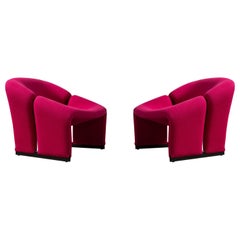
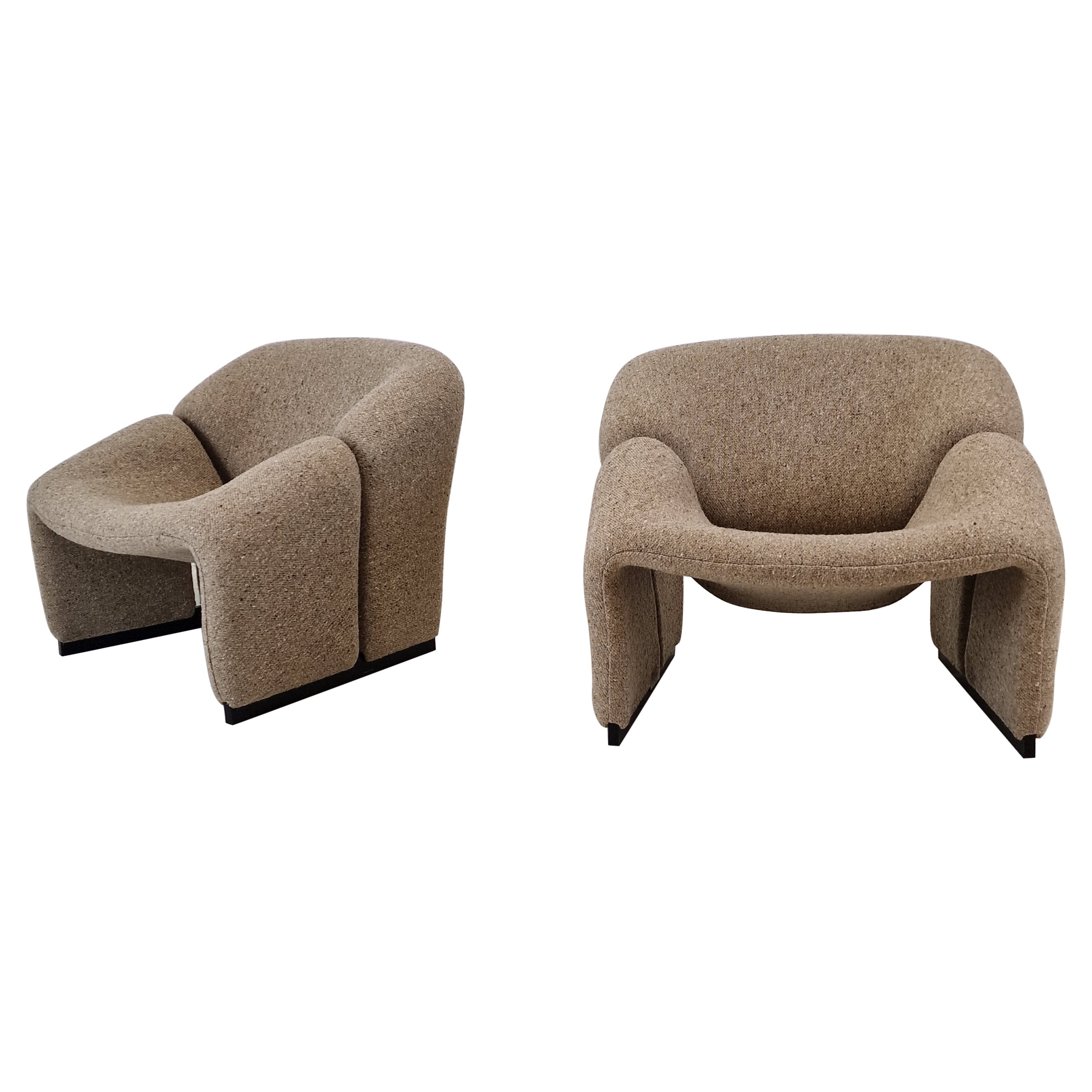
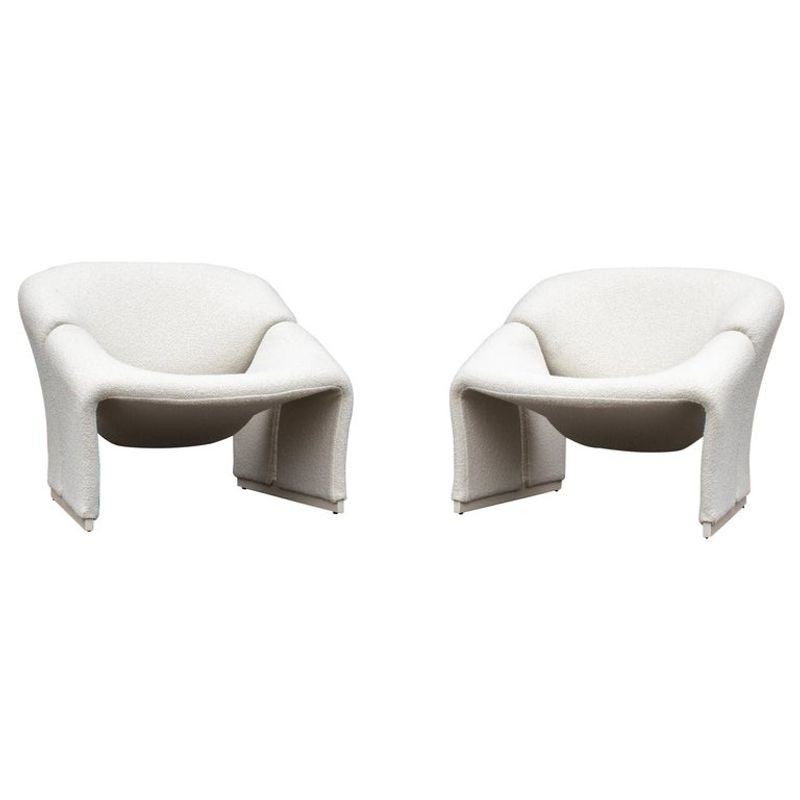
Pair of Pierre Paulin "M" Lounge Chairs Model F580 for Artifort 1st Edition
By Pierre Paulin, Artifort
Located in Dallas, TX
Pair of First Edition Pierre Paulin F580 Lounge Chairs for Artifort, 1960s – Sculptural Serenity in Motion A rare, all-original pair of first edition F580 lounge chairs by visionary ...
Wool
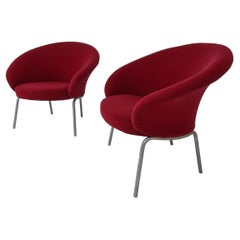
Rare Set of Model F570 Lounge Chairs by Pierre Paulin for Artifort, 1963's
By Artifort, Pierre Paulin
Located in Oud Beijerland, NL
An exceptionally rare pair of Model F570 lounge chairs, designed by Pierre Paulin for Artifort in 1963. Regarded as one of Paulin's most refined early designs, the F570 combines scu...
Metal
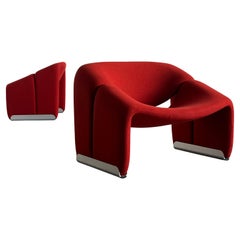
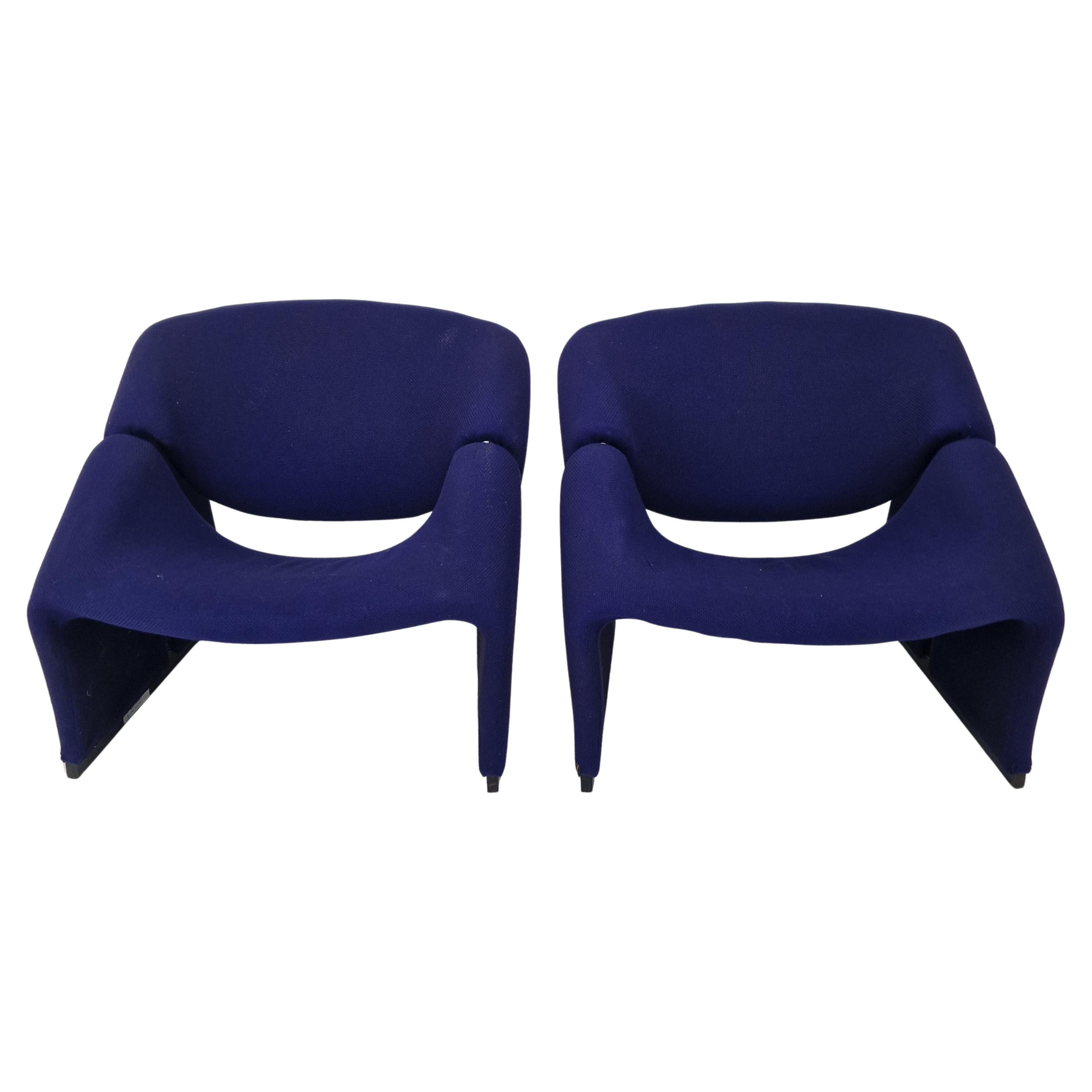
Pair of Iconic F598 ‘Groovy’ Chairs by Pierre Paulin for Artifort, 1980s
By Pierre Paulin, Artifort
Located in Zagreb, HR
Pair of iconic F598 ‘Groovy’ chairs in vibrant red upholstery. Designed by the legendary Pierre Paulin in the early 1970s for Dutch manufacturer Artifort. The design was an evolution...
Metal
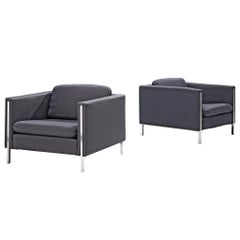
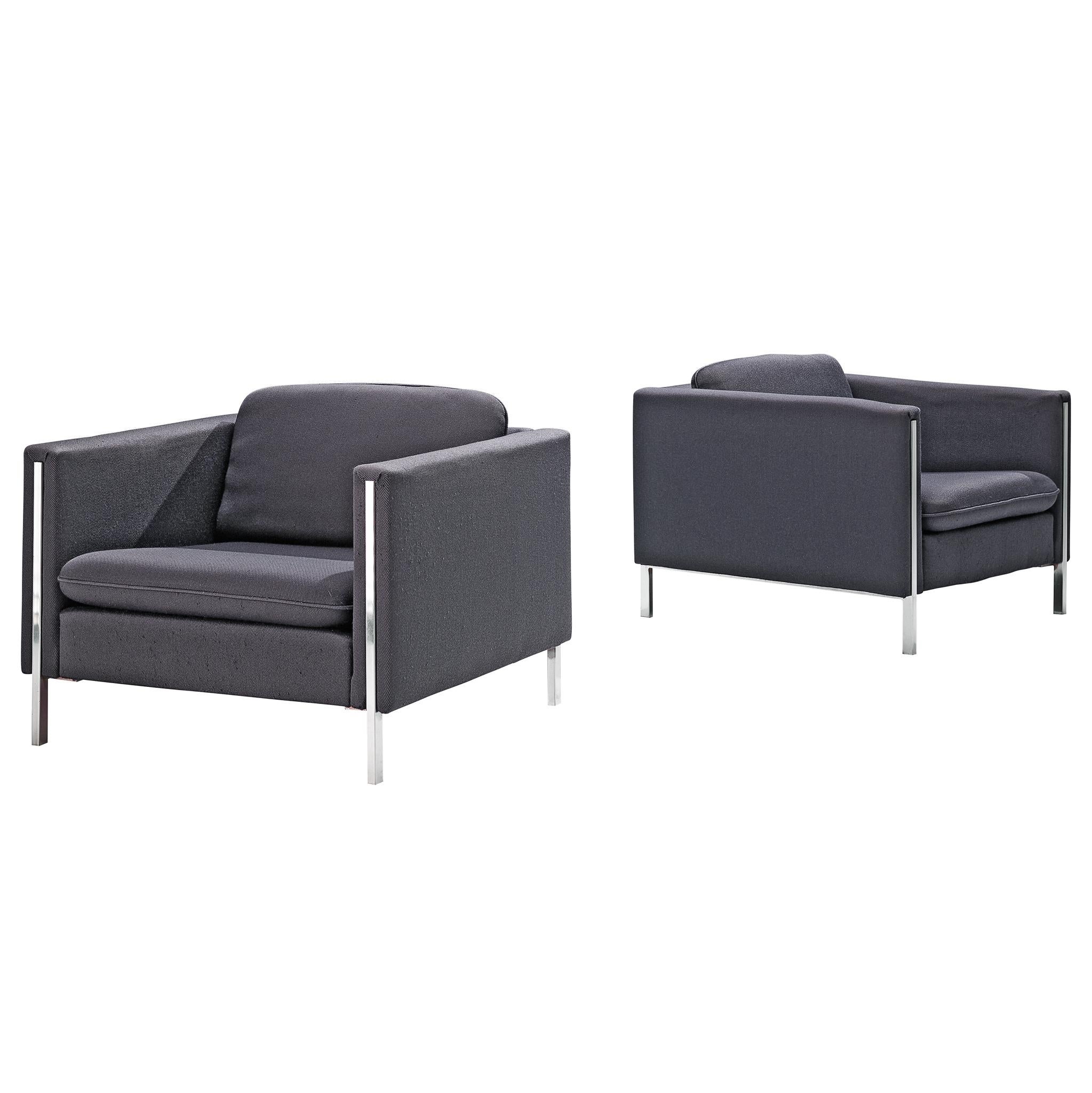
Pierre Paulin for Artifort Pair of Lounge Chairs
By Artifort, Pierre Paulin
Located in Waalwijk, NL
Pierre Paulin for Artifort, pair of armchairs, model '442/3', grey upholstery and steel by Pierre Paulin for Artifort, the Netherlands, 1960s These comfortable chairs shows elegant ...
Steel
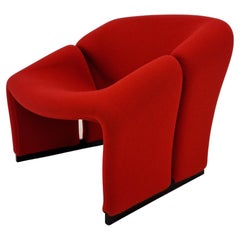
Mid Century Model F580 Groovy Chair by Pierre Paulin for Artifort, 1966
By Artifort, Pierre Paulin
Located in Oud Beijerland, NL
Lovely and very comfortable Artifort Groovy Chair (or "M" Chair), model F580. This model is designed by Pierre Paulin in 1966. This is the very first edition with very nice curves....
Metal
Now synonymous with 1960s and ’70s French chic, the designer conceived his modular modernist furnishings to change the way we decorate.
A new exhibition in Philadelphia stars a complex decade that continues to inspire.