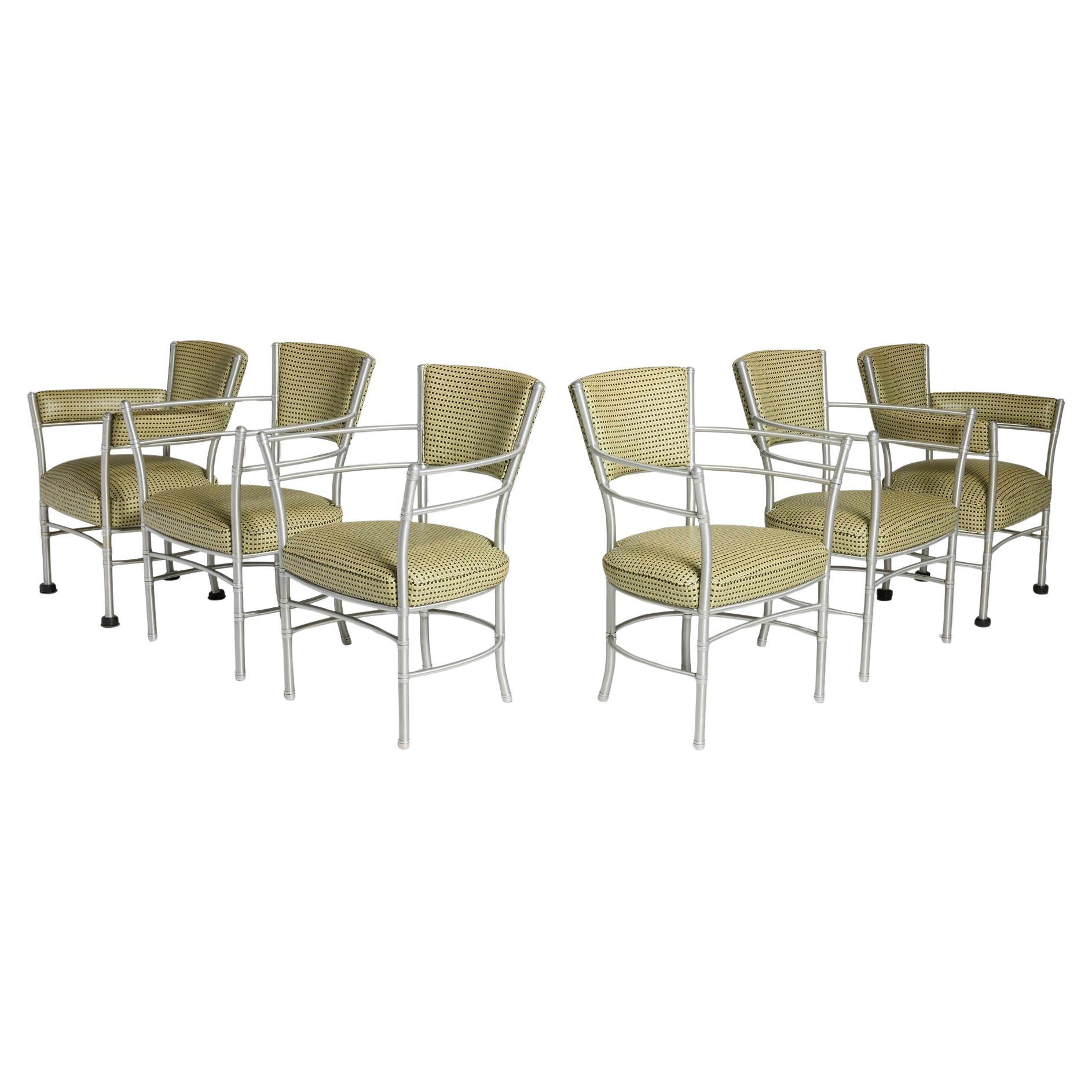
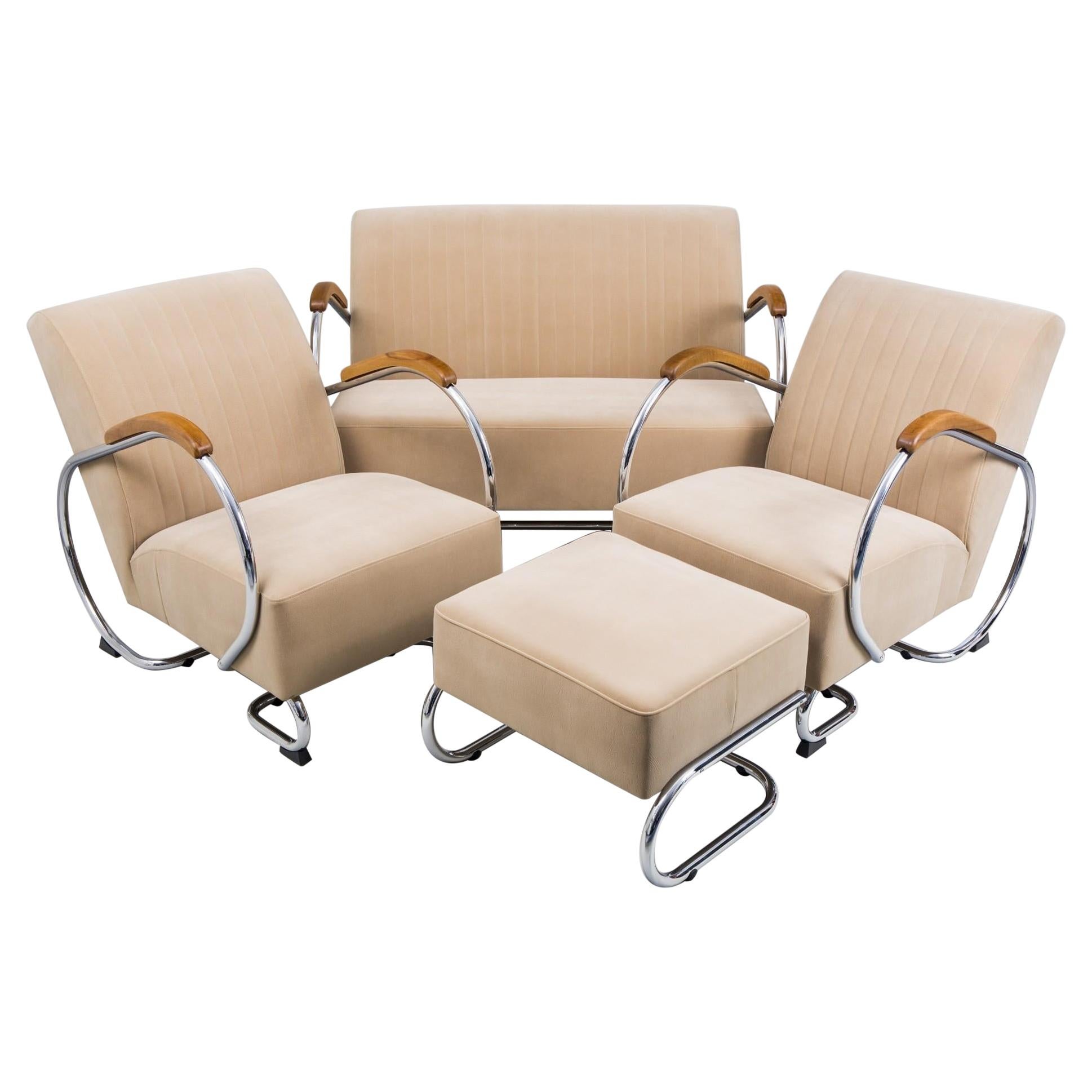
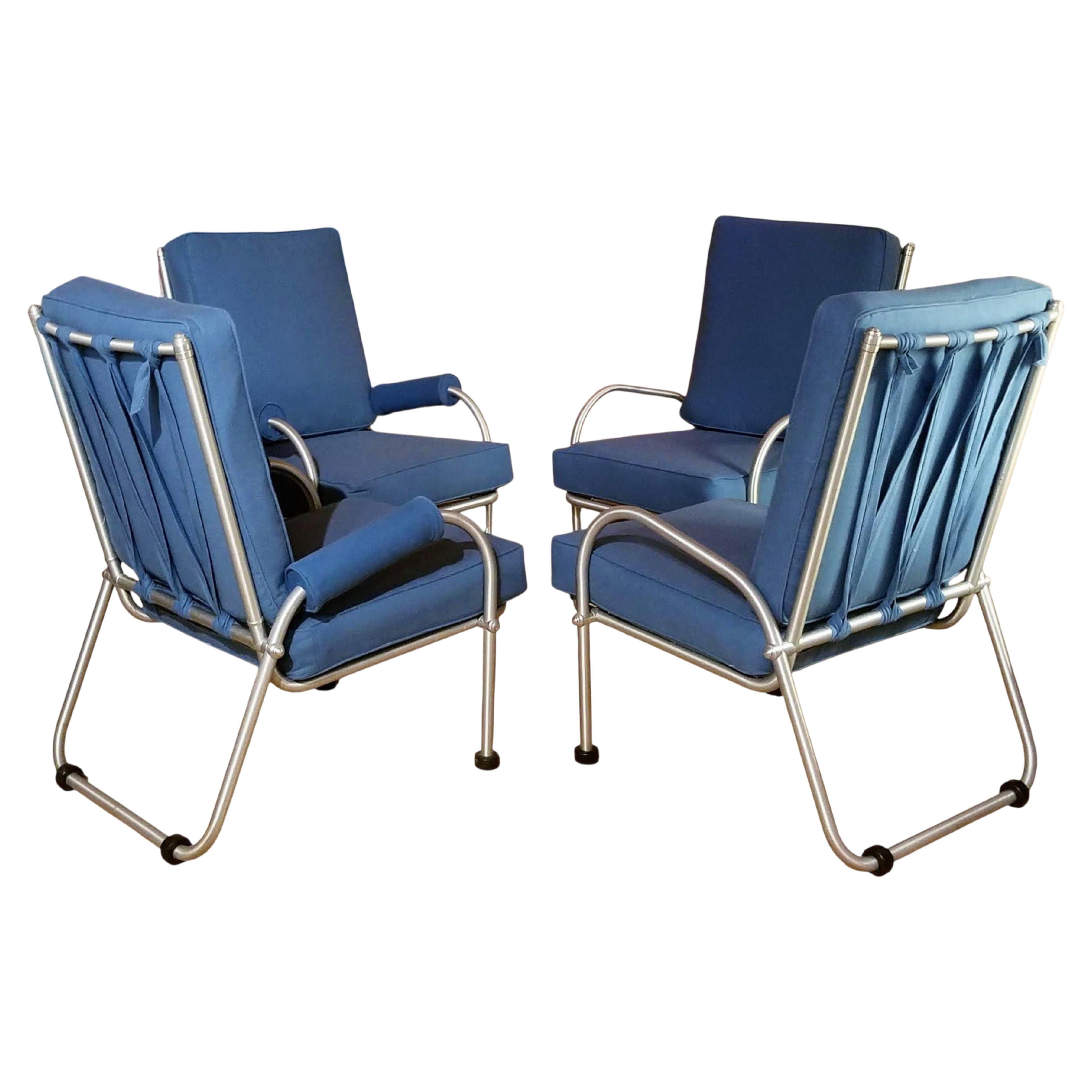
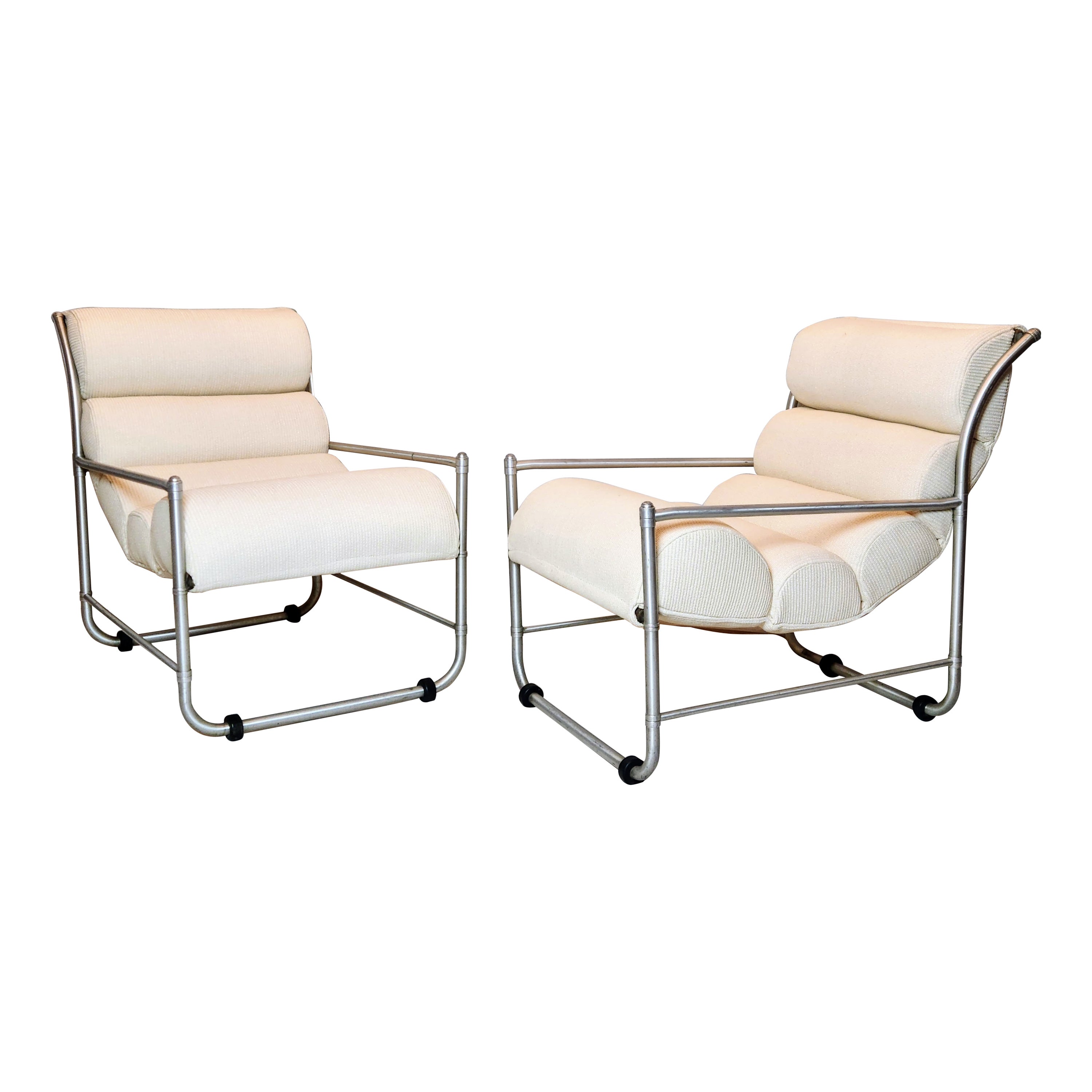
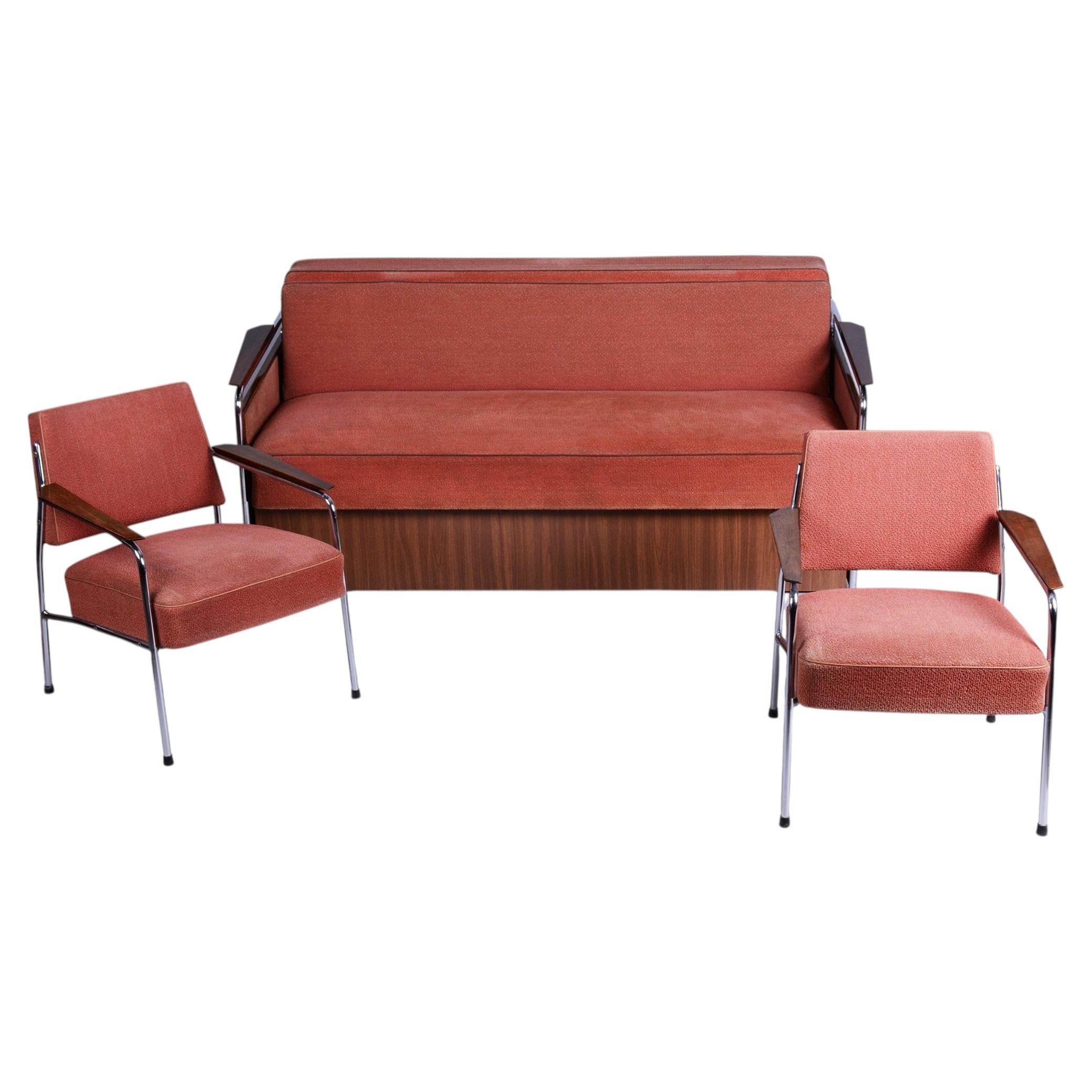
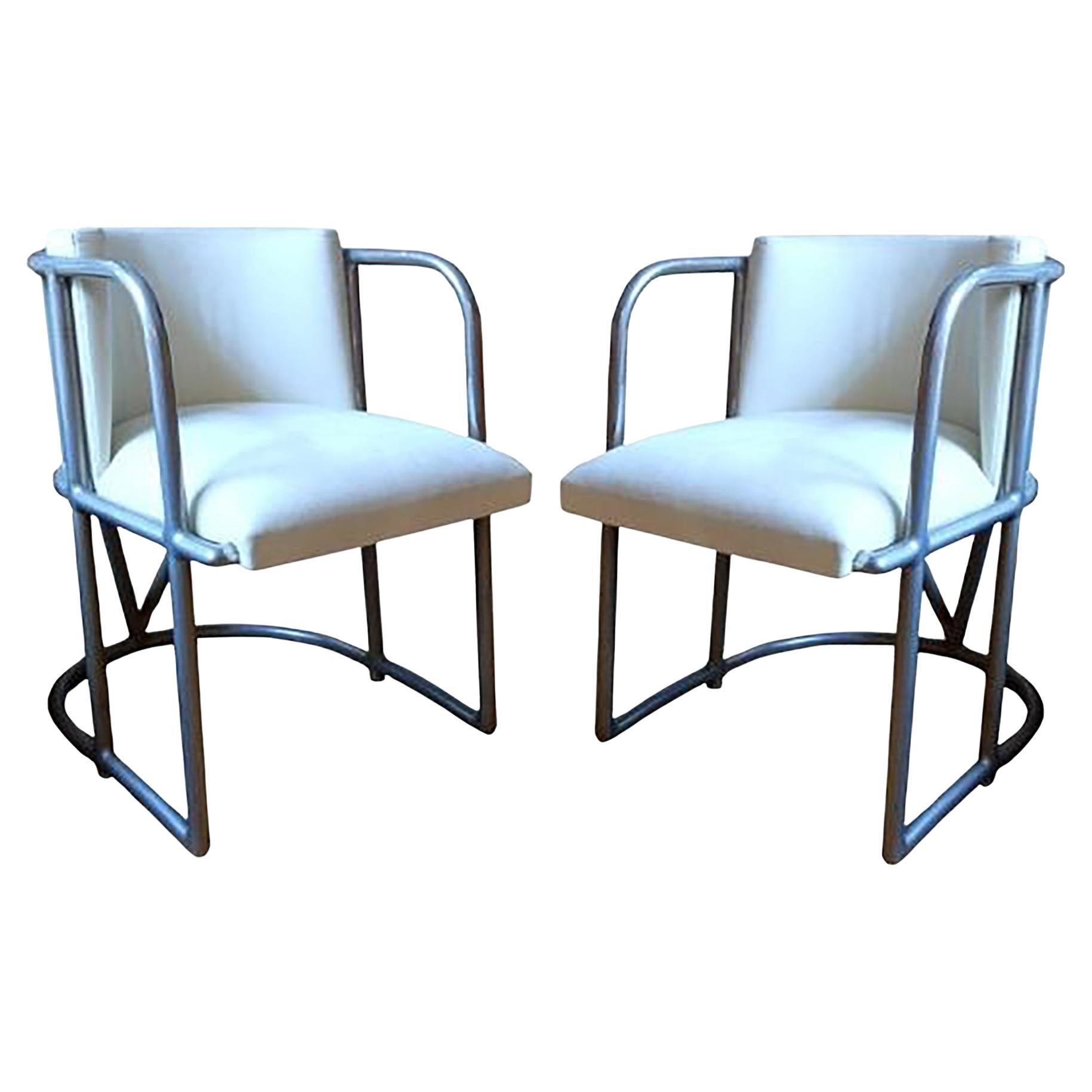
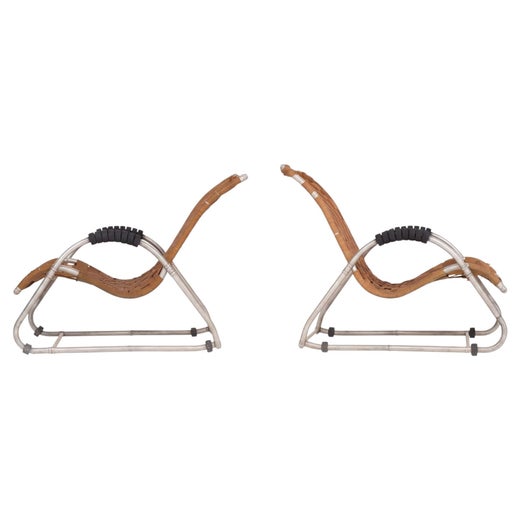
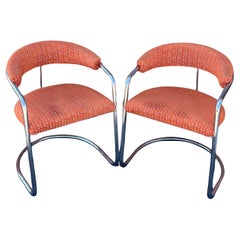
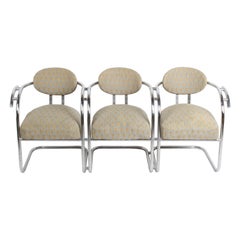
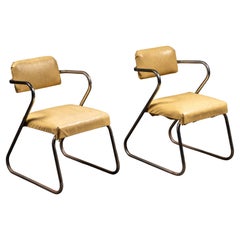
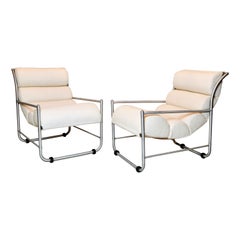
Warren McArthur for ClassiCon Streamline Moderne Three-Piece Tubular Aluminum Seating Set
Model #947 Settee and Pair of Model #1047 Armchairs, Circa 1990s
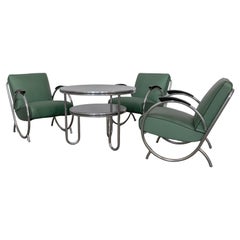
A refined and architecturally striking three-piece seating set produced by ClassiCon after designs by pioneering American modernist Warren McArthur. The set comprises a Model #947 settee together with a pair of Model #1047 armchairs, all executed in McArthur’s signature tubular aluminum construction with upholstered seating. #5226
The frames are formed from gracefully curved aluminum tubing with distinctive vertical supports and layered stretchers that emphasize both strength and visual lightness. The satin aluminum finish highlights the sculptural geometry of the frames while the upholstered seats provide comfort and warmth, creating a harmonious balance between industrial design and domestic elegance.
McArthur was one of the earliest designers to explore aluminum as a furniture material during the Machine Age of the early twentieth century. Inspired by aviation engineering and modern manufacturing techniques, his work introduced a new vocabulary of lightweight, highly engineered furniture forms that became synonymous with American Streamline Moderne design.
ClassiCon later produced authorized editions of several historic modernist designs, maintaining the original proportions and engineering principles while applying precise German craftsmanship. These licensed productions allow collectors and design enthusiasts to experience McArthur’s innovative forms in furniture built to contemporary quality standards.
The clean lines and airy construction of this seating group make it highly versatile, working beautifully in both modern and Art Deco inspired interiors. Arranged together, the set creates an elegant conversation grouping ideal for a living room, sunroom, office, or gallery-like setting.
Dimensions:
Model #947 Settee: 46"W x 25"D x 32.5"H, seat height 18.5"
Model #1047 Armchairs: 24"W x 25"D x 32.5"H, seat height 18.5"
Materials: Tubular aluminum frames, upholstered seats and backs, metal stretchers and capped supports
Condition: Very good vintage condition with light wear consistent with age and use. Frames show minor surface wear and natural patina to the aluminum. Upholstery presents well with a few light marks visible upon close inspection. Structurally sound and ready for use.
Marks: Stamped and labeled ClassiCon on the frame.
Circa: Circa 1990s, licensed production by ClassiCon after original Warren McArthur designs of the 1930s.
Warren McArthur, Jr. was born in Chicago, Illinois to Warren McArthur, Sr., a successful businessman, and Minnie Jewel McArthur. Frank Lloyd Wright was a friend of the McArthur family. In 1892, Wright designed the house for the McArthur family, located in Chicago.
McArthur attended Cornell University where he studied engineering. In the late 1920s, McArthur began his career as an industrial designer by creating furniture for the Arizona Biltmore Hotel, which was designed by his brother Albert Chase McArthur.
After the Wall Street Crash of 1929, the Arizona Biltmore failed, and McArthur moved to Los Angeles, California to create a furniture fabrication company. In the early 1930s, aluminum became a popular industrial design material, and McArthur developed a specialization in designing and making aluminum tubular furniture, including chairs, tables, sofas, lamps, and ashtrays.
McArthur soon began to receive commissions from prominent architects. Paul R. Williams commissioned McArthur to design 30 pieces of aluminum furniture for the Cord family who owned the Cord automobile company. He was also commissioned to make aluminum furniture for Rudolph Schindler's design for Sardi's restaurant location in Los Angeles.
So too, McArthur's aluminum furniture was popular with Hollywood stars and producers of the 1930s. His clients included Jack L. Warner, Marlene Dietrich, Fredric March, and Clark Gable.
In 1932, McArthur left Los Angeles and established the Warren McArthur Corp. in Rome, New York. He also set up a sales office and showroom in New York City at 1 Park Avenue in 1933.
McArthur's success continued to grow and his furniture "graced the most sophisticated homes, stores and offices in the country." His commissions included Union Pacific Railroad cars, Cunard passenger waiting lounges, Chrysler executive offices, and Marshall Field's department store hair salons. In 1934, Warren McArthur's furniture was exhibited at the Metropolitan Museum of Art's Exhibition of Contemporary American Industrial Art.