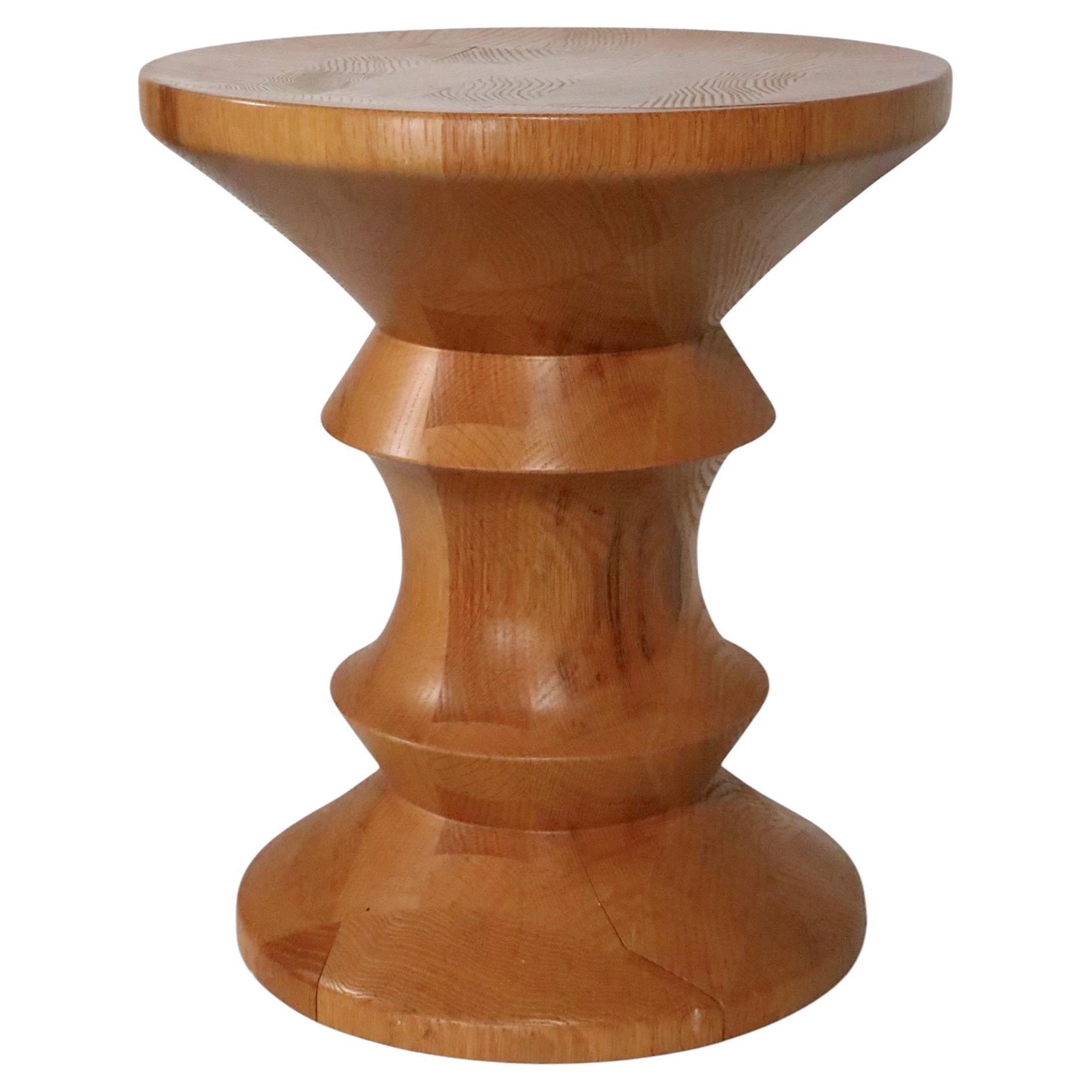
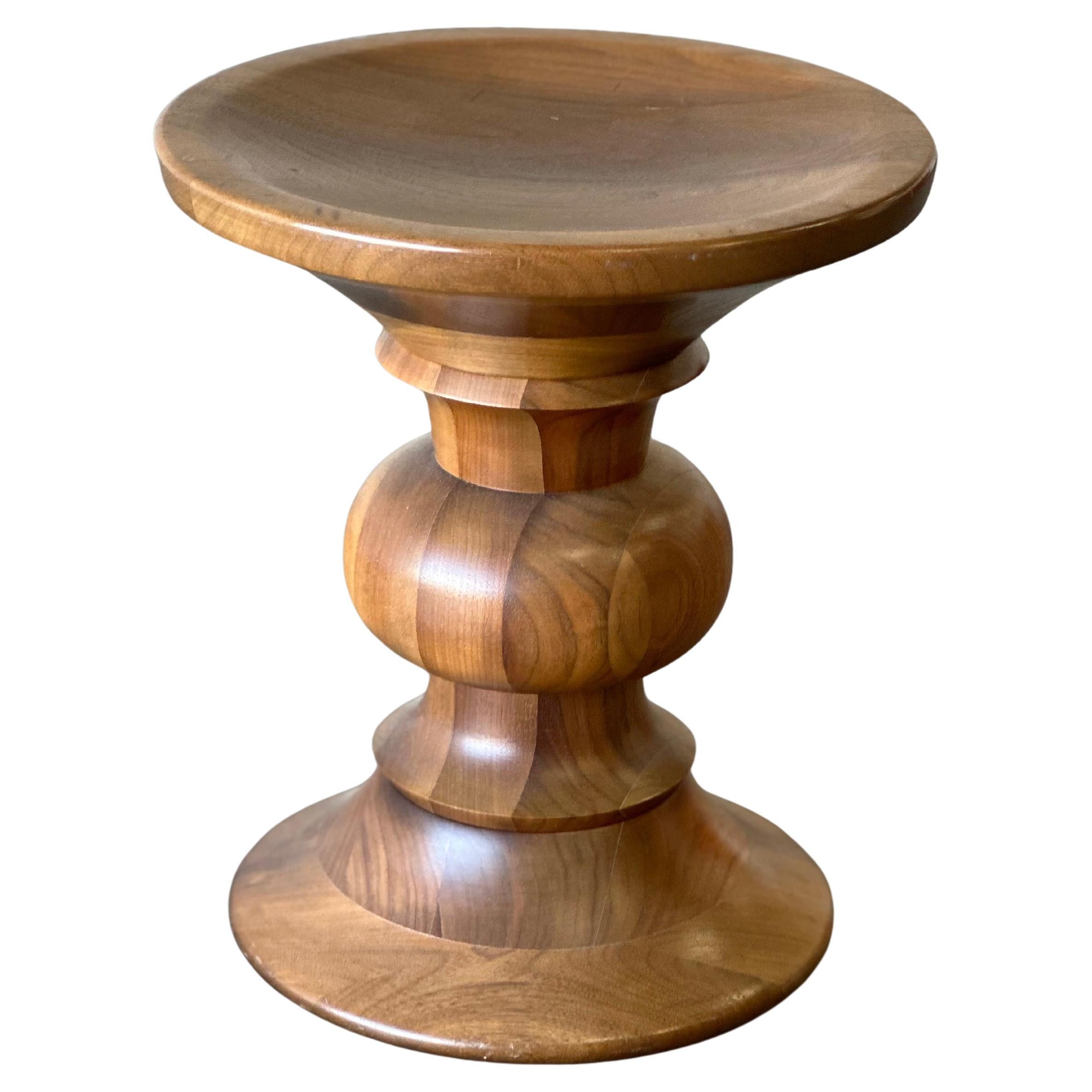
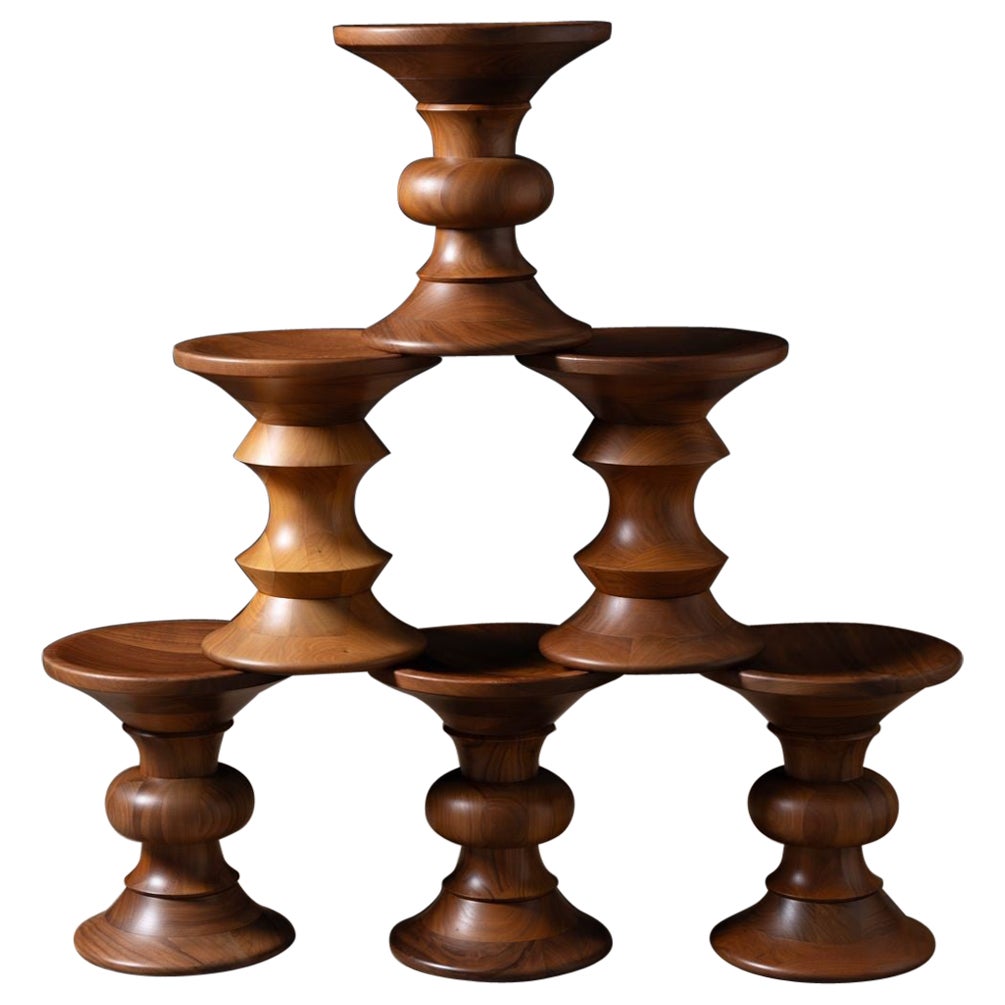
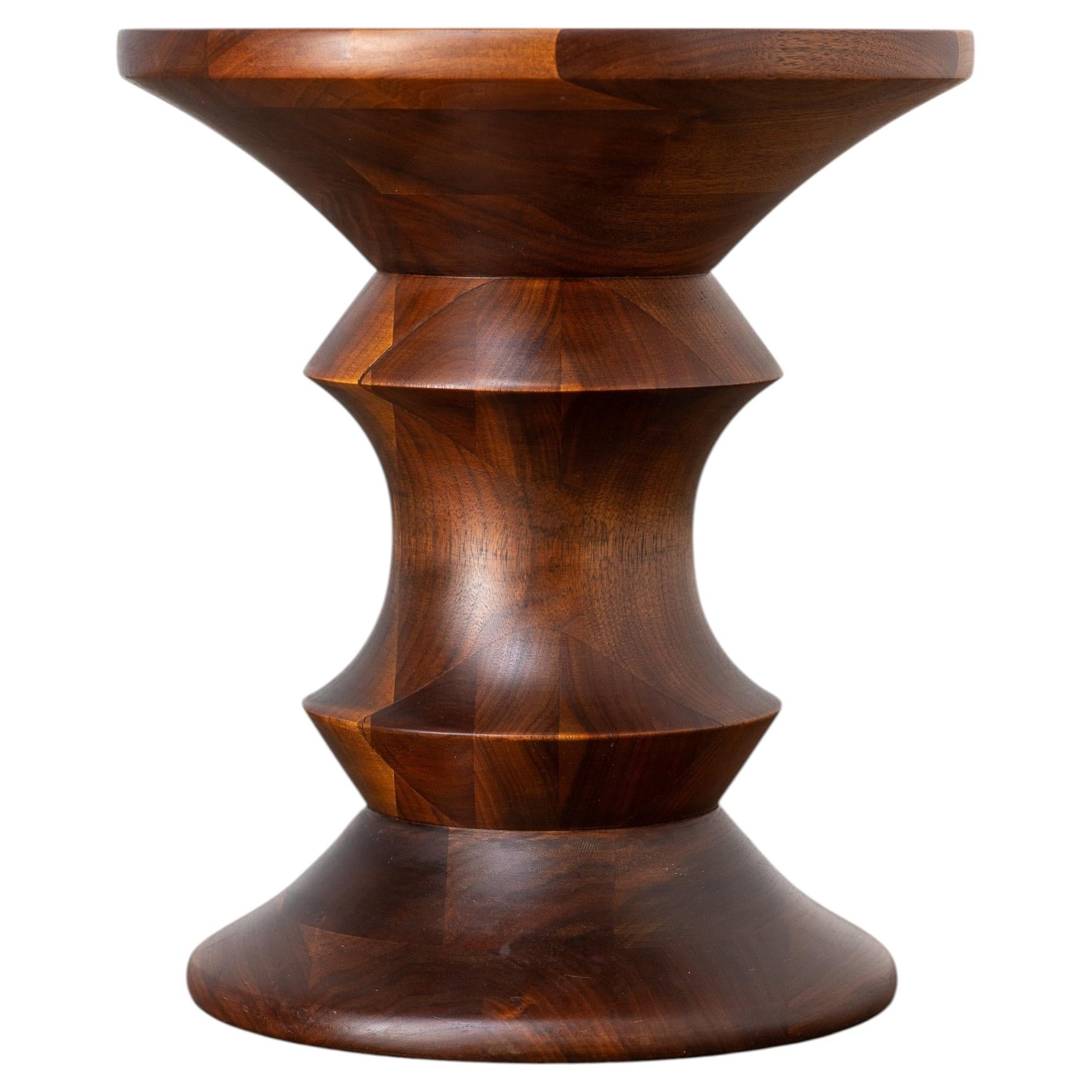
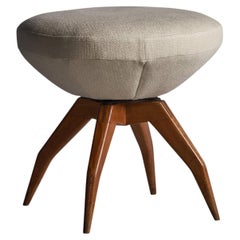
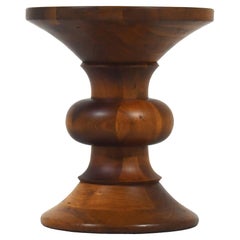
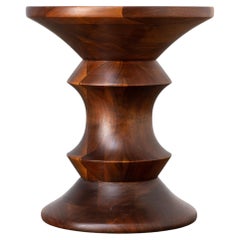
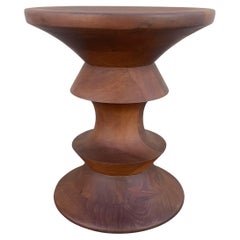
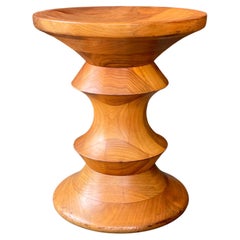
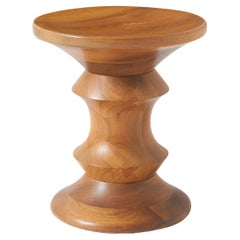
Gio Ponti Attribution, Stool, Walnut, Fabric, Italy, 1950s
By Gio Ponti
Located in High Point, NC
A walnut and beige fabric stool, design attributed to Gio Ponti, Italy, 1950s.
Vintage 1950s Italian Mid-Century Modern Stools
Fabric, Walnut
Charles Eames and Ray Eames were the embodiment of the inventiveness, energy and optimism at the heart of mid-century modern American design, and have been recognized as the most influential designers of the 20th century. The Eameses were lovers of folk craft who had a genius for making highly original chairs, tables, case pieces and other furniture using traditional materials and forms.
As furniture designers, filmmakers, artists, textile and graphic designers and even toy and puzzle makers, the Eameses were a visionary and effective force for the notion that design should be an agent of positive change. They are the happy, ever-curious, ever-adventurous faces of modernism.
Charles Eames (1907–78) studied architecture and industrial design. Ray Eames (née Beatrice Alexandra Kaiser, 1912–88) was an artist, who studied under the Abstract Expressionist painter Hans Hofmann. They met in 1940 at the Cranbrook Academy of Art in suburban Detroit (the legendary institution where Charles also met his frequent collaborator Eero Saarinen and the artist and designer Harry Bertoia) and married the next year.
His technical skills and her artistic flair were wonderfully complementary. They moved to Los Angeles in 1941, where Charles worked on set design for MGM. In the evenings at their apartment, they experimented with molded plywood using a handmade heat-and-pressurization device they called the “Kazam!” machine. The next year, they won a contract from the U.S. Navy for lightweight plywood leg splints for wounded servicemen — vintage Eames splints are coveted collectibles today; more so those that Ray used to make sculptures.
The Navy contract allowed Charles to open a professional studio, and the attention-grabbing plywood furniture the firm produced prompted George Nelson, the director of design of the furniture-maker Herman Miller Inc., to enlist Charles and (by association, if not by contract) Ray in 1946. Some of the first Eames items to emerge from Herman Miller are now classics: the Eames chair, the LCW, or Lounge Chair Wood, and the DCM, or Dining Chair Metal, supported by tubular steel.
The Eameses eagerly embraced new technology and materials, and one of their peculiar talents was to imbue their supremely modern design with references to folk traditions.
Their Wire chair group of the 1950s, for example, was inspired by basket weaving techniques. The populist notion of “good design for all” drove their molded fiberglass chair series that same decade, and also produced the organic-form, ever-delightful La Chaise. In 1956 the Eames lounge chair and ottoman appeared — the supremely comfortable plywood-base-and-leather-upholstery creation that will likely live in homes as long as there are people with good taste and sense.
Charles Eames once said, “The role of the designer is that of a very good, thoughtful host anticipating the needs of his guests.” For very good collectors and thoughtful interior designers, a piece of design by the Eameses, the closer produced to original conception the better, is almost de rigueur — for its beauty and comfort, and not least as a tribute to the creative legacy and enduring influence of Charles and Ray Eames.
The original Eames furniture for sale on 1stDibs includes chairs, tables, case pieces and other items.
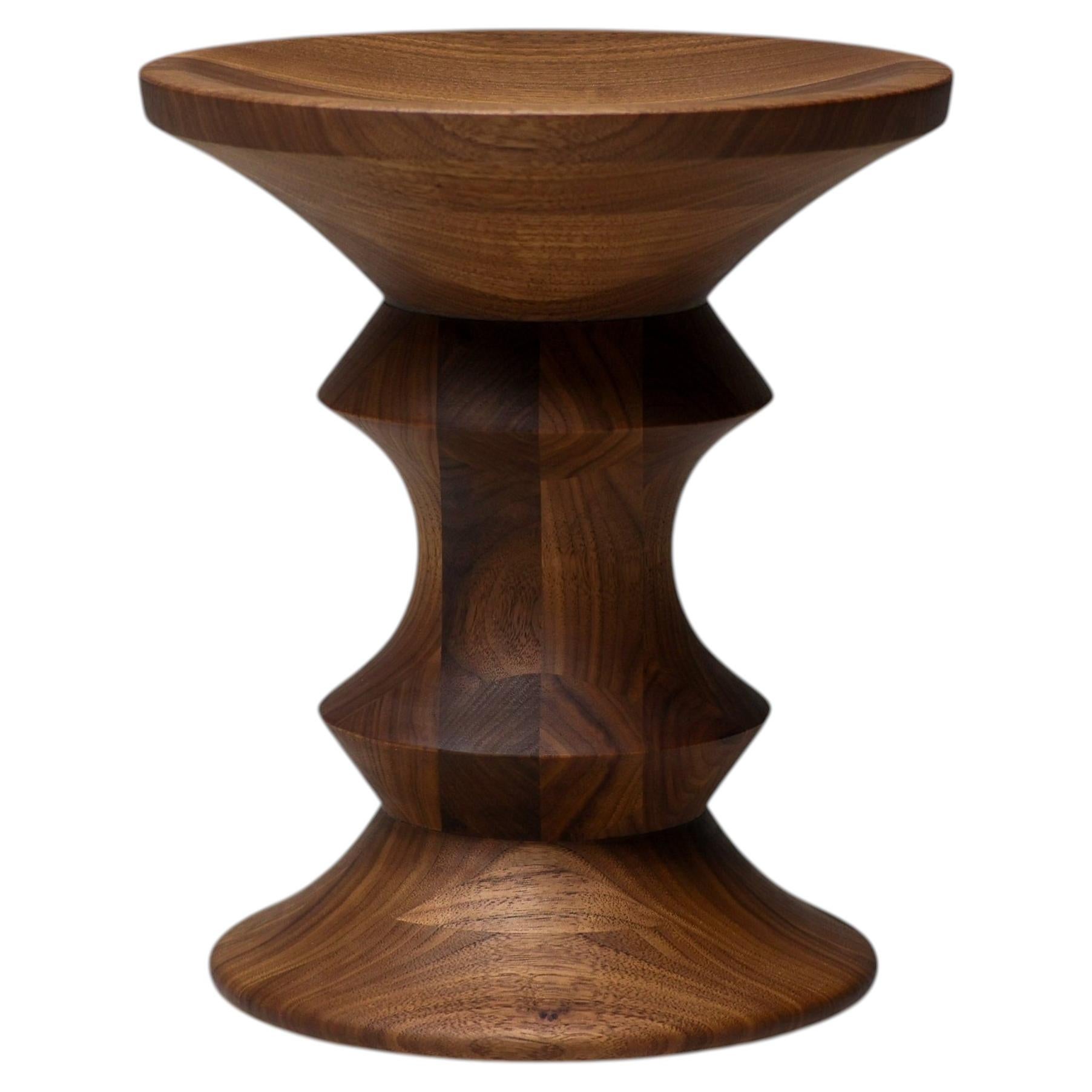
No other business of its kind did more than the Herman Miller Furniture Company to introduce modern design into American homes. Working with legendary designers such as Charles and Ray Eames, George Nelson and Alexander Girard, the Zeeland, Michigan-based firm fostered some of the boldest expressions of what we now call mid-century modern style. In doing so, Herman Miller produced some of the most beautiful, iconic and, one can even say, noblest chairs, sofas, tables and other furniture ever.
Founded in 1923, Herman Miller was originally known for grand historicist bedroom suites: heavily ornamented wood furniture that appealed to a high-minded, wealthier clientele. The company — named for its chief financial backer — began to suffer in the early 1930s as the Great Depression hit, and D.J. De Pree, the company’s CEO, feared bankruptcy. In 1932, aid came in the form of Gilbert Rohde, a self-taught furniture designer who had traveled widely in Europe, absorbing details of the Art Deco movement and other modernist influences. After persuading De Pree that the growing middle class required smaller, lighter household furnishings, Rohde set a new course for Herman Miller, creating sleek chairs, tables and cabinetry that were the essence of the Streamline Moderne style.
Rohde died suddenly in 1944. The following year, De Pree turned to George Nelson, an architect who had written widely about modern furniture design. Under Nelson’s leadership, Herman Miller would embrace new technologies and materials and audacious biomorphic forms.
Some of the pieces the company produced are now emblems of 20th century American design, including the Eames lounge chair and ottoman and Nelson’s Marshmallow sofa and Coconut chair. Such instantly recognizable furnishings have become timeless — staples of a modernist décor; striking, offbeat notes in traditional environments.
Find a range of vintage Herman Miller office chairs, desks, coffee tables and other furniture on 1stDibs.

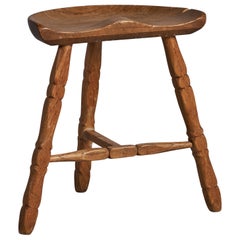
Sture G. Ohlsson, Stool, Wood, Sweden, 1960s
Located in High Point, NC
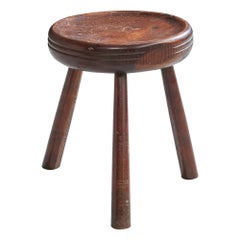
A wood stool produced by Sture G. Ohlsson, Sweden. c. 1960s. Wear consistent with age and use. Historic repairs to seat as illustrated. Overall Dimensions (inches): 17.0"H x 18.0"W...
Wood

Pierre Chapo, Stools, Elm, France, 1970s
By Pierre Chapo
Located in High Point, NC
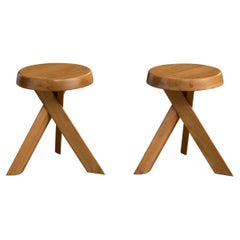
A pair of elm stools, model S13A, designed and produced by Pierre Chapo, France, c. 1970s. Provenance: Private collection, Lausanne, France Demosmobilia, Lugano, Switzerland We...
Elm
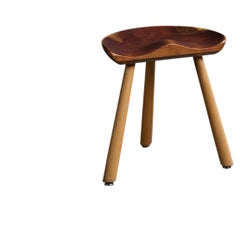
American Designer, Stool, Wood, Metal, United States, 1950s
Located in High Point, NC
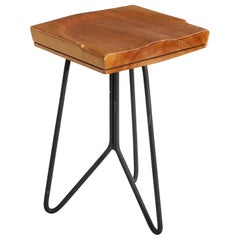
A wood and metal stool designed and produced in the United States, 1950s. Wooden seat presents with moderate war as illustrated. Metal Legs present with moderate oxidation as illust...
Metal

Mid Century Eames Time Life Walnut Stool Model 513 Shape B by Herman Miller
By Charles and Ray Eames
Located in Las Vegas, NV
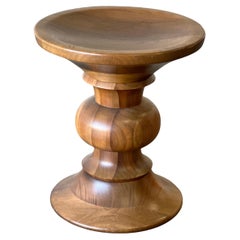
This model 513, or shape "B" walnut stool by Charles and Ray Eames was one of three shapes designed for the lobby of the Time Life building. This design features a pleasing combinati...
Walnut

Eames Walnut Time-Life Stool by Herman Miller 1965
Located in Highland, IN
The model 513, or shape "B" walnut stool by Charles and Ray Eames was one of three shapes designed for the lobby of the Time Life building. This design features a pleasing combinatio...
Walnut

Vintage Eames for Herman Miller "Applecore" Time Life Stool Model A
By Herman Miller, Charles and Ray Eames
Located in Brooklyn, NY
Time Life Stool A designed by Charles and Ray Eames and produced by Herman Miller in the United States, circa 1960s. Commissioned for the Time-Life Building in New York, Stool A refl...
Walnut

Mid Century Moder Time Life Stool by Charles & Ray Eames
By Ray Eames
Located in Delray Beach, FL
Early example of a Time Life stool by Charles and Ray Eames. Influenced by Rays background as a sculptor. Designed in the 1960s for the Time Life building. This is a very early examp...
Walnut

1970s Ray Eames Time Life Walnut Apple Core Stool Table Chess Plant Stand Rustic
By Herman Miller, Charles and Ray Eames
Located in Hyattsville, MD
Patinated 1970s production Herman Miller stool in its original finish. 4 matching stools were acquired at the same time from a Grosse Pointe Michigan Estate. This one is often re...
Walnut
A Time Life stool by Charles and Ray
By Charles and Ray Eames
Located in San Francisco, CA
A Time Life stool by Charles and Ray Eames for Herman Miller. Literature: Eames Design: The Work of the Office of Charles and Ray Eames, Neuhart, Neuhart and Eames, ppg. 248-249 Pro...
Walnut