SOLID HEAVY DUTY MADE FOR THE ETERNITY
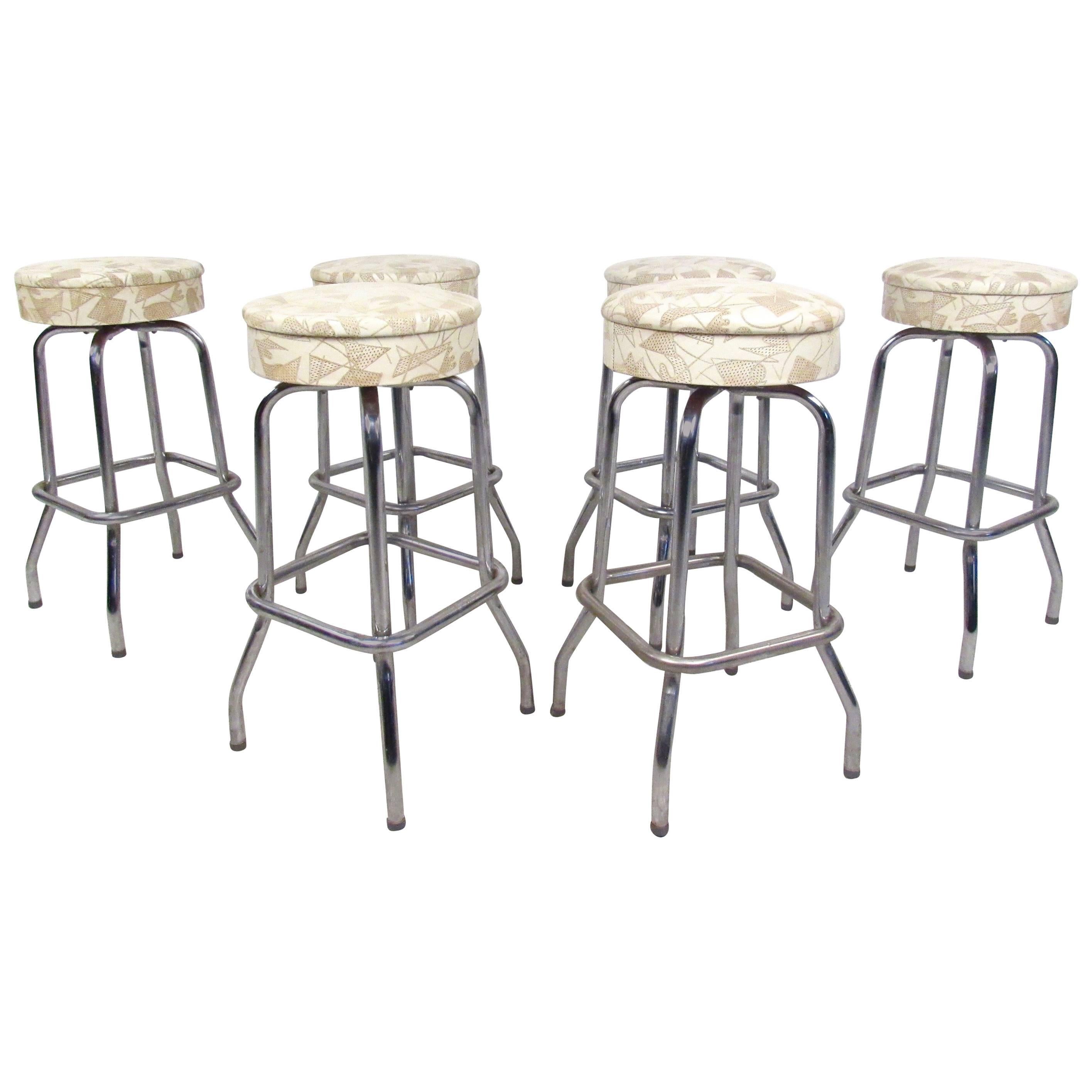
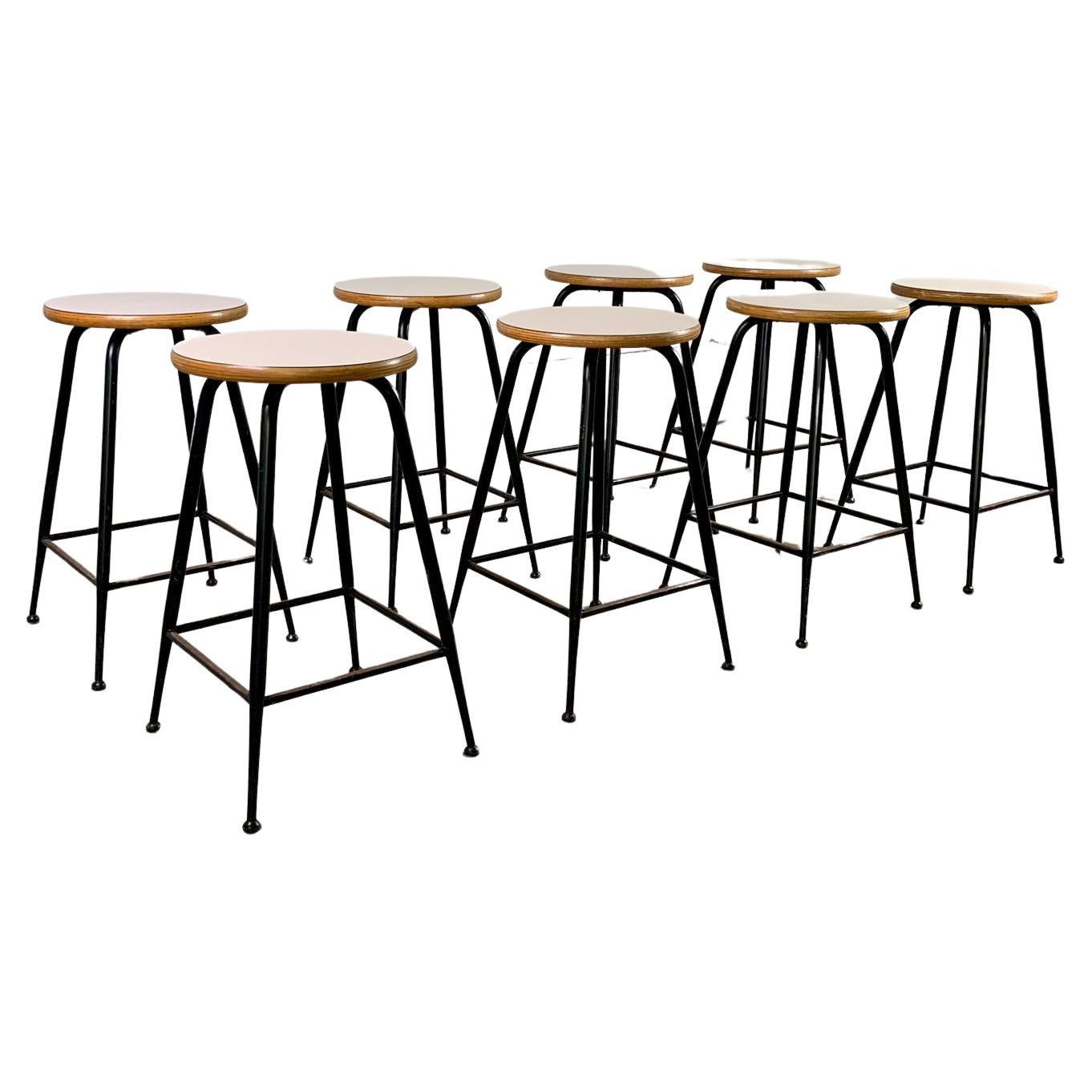
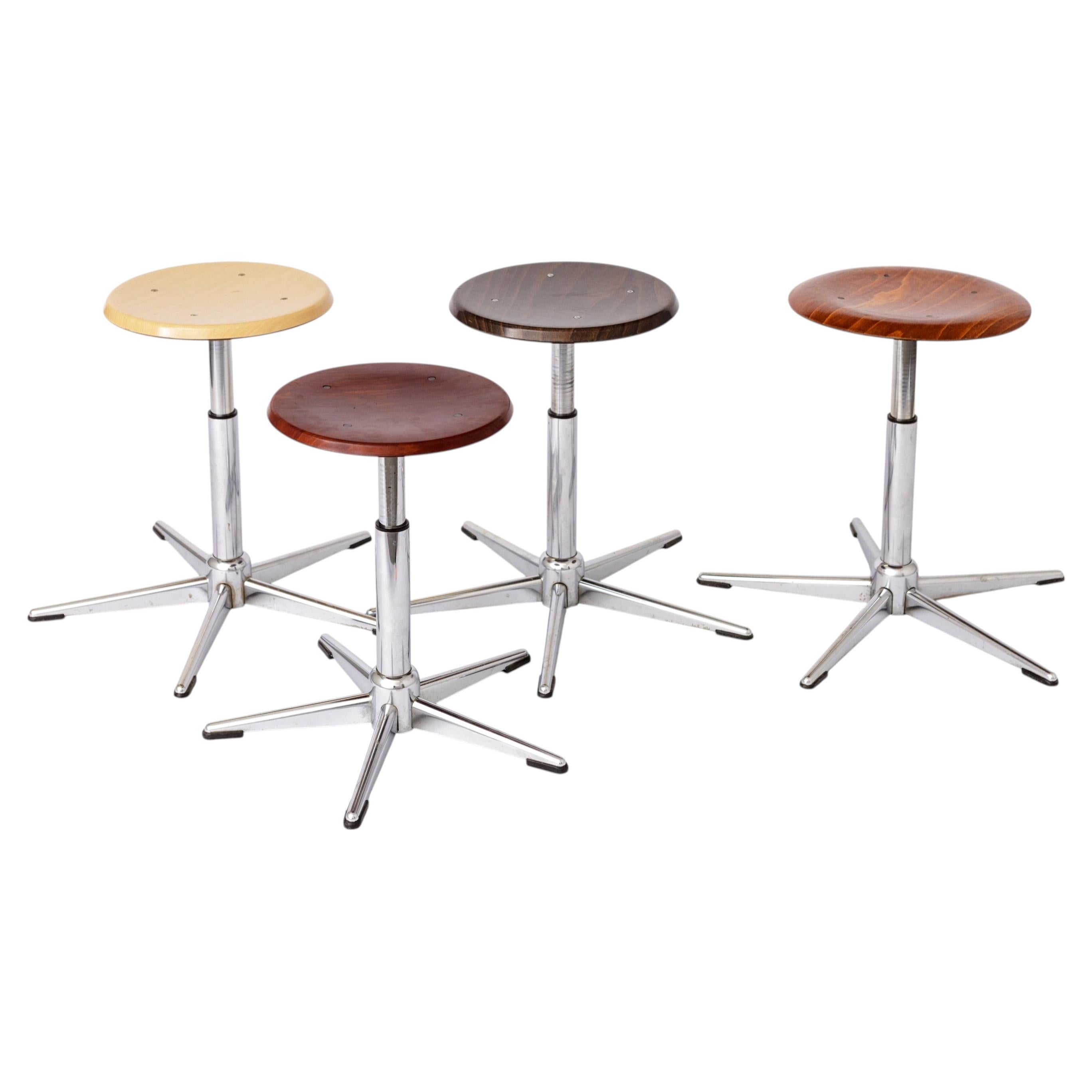
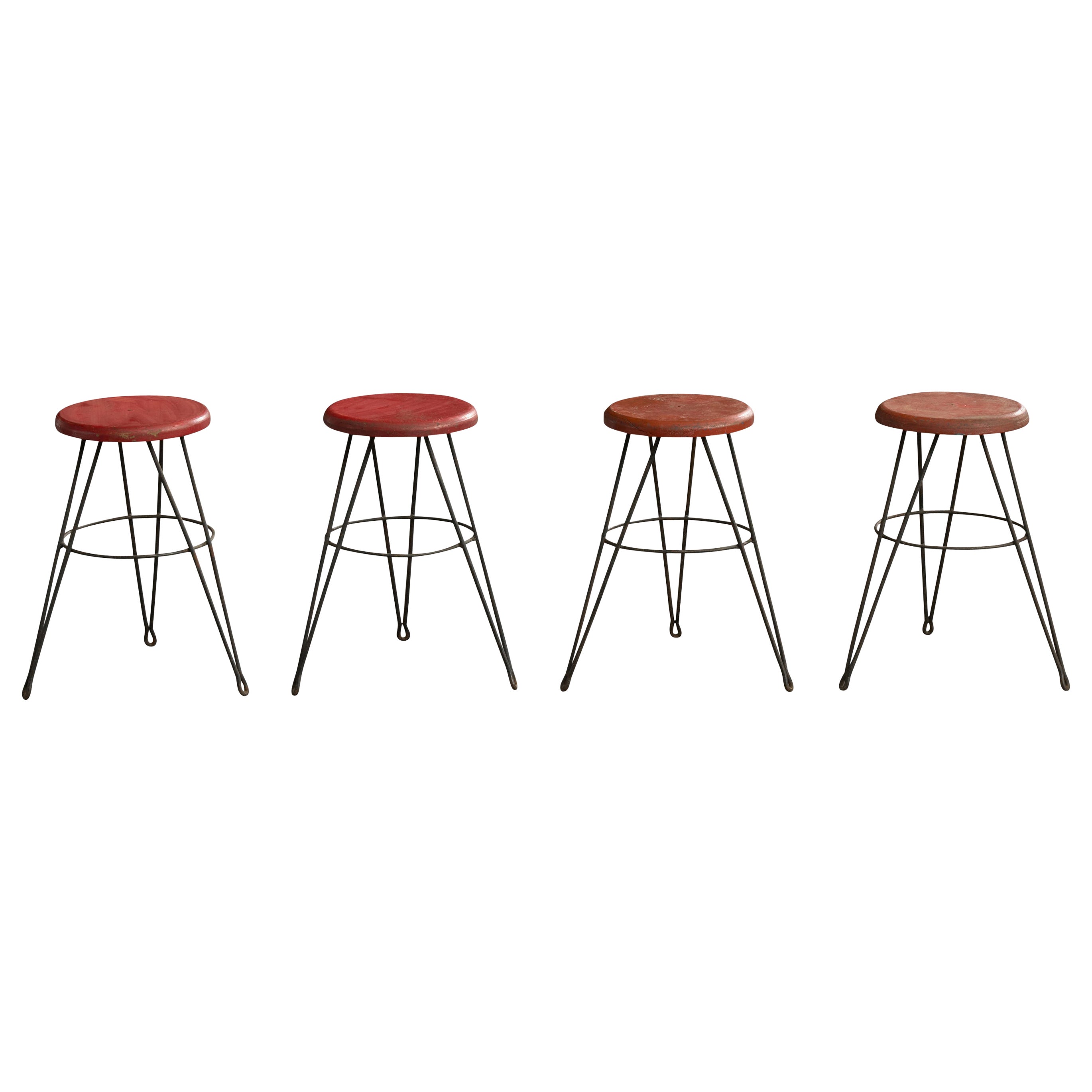
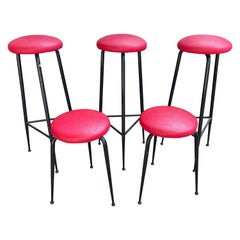
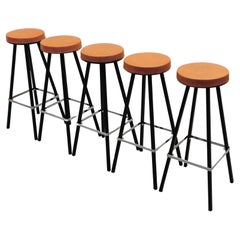
This is a set of six mid-century stools, designed and manufactured in Vienna circa 1950 by J. A. Talos, Vienna XII. The location in question is situated at Bezirk, Dörfelstraße 6-8.
The architecturally significant and highly representative edifice remains extant and is subject to monument protection. The company was in existence until 1976-78, according to the senior owner, the cabinet maker Anton Griessler. These details were kindly provided over the telephone by the Cabinet Maker's son.
The pursuit of research is a subject that is of great interest to us.
The design is credited to Günter Talos.
The company was renowned for its production of high-quality iron furniture and was honoured to participate in the Werkbundausstellung 1930.
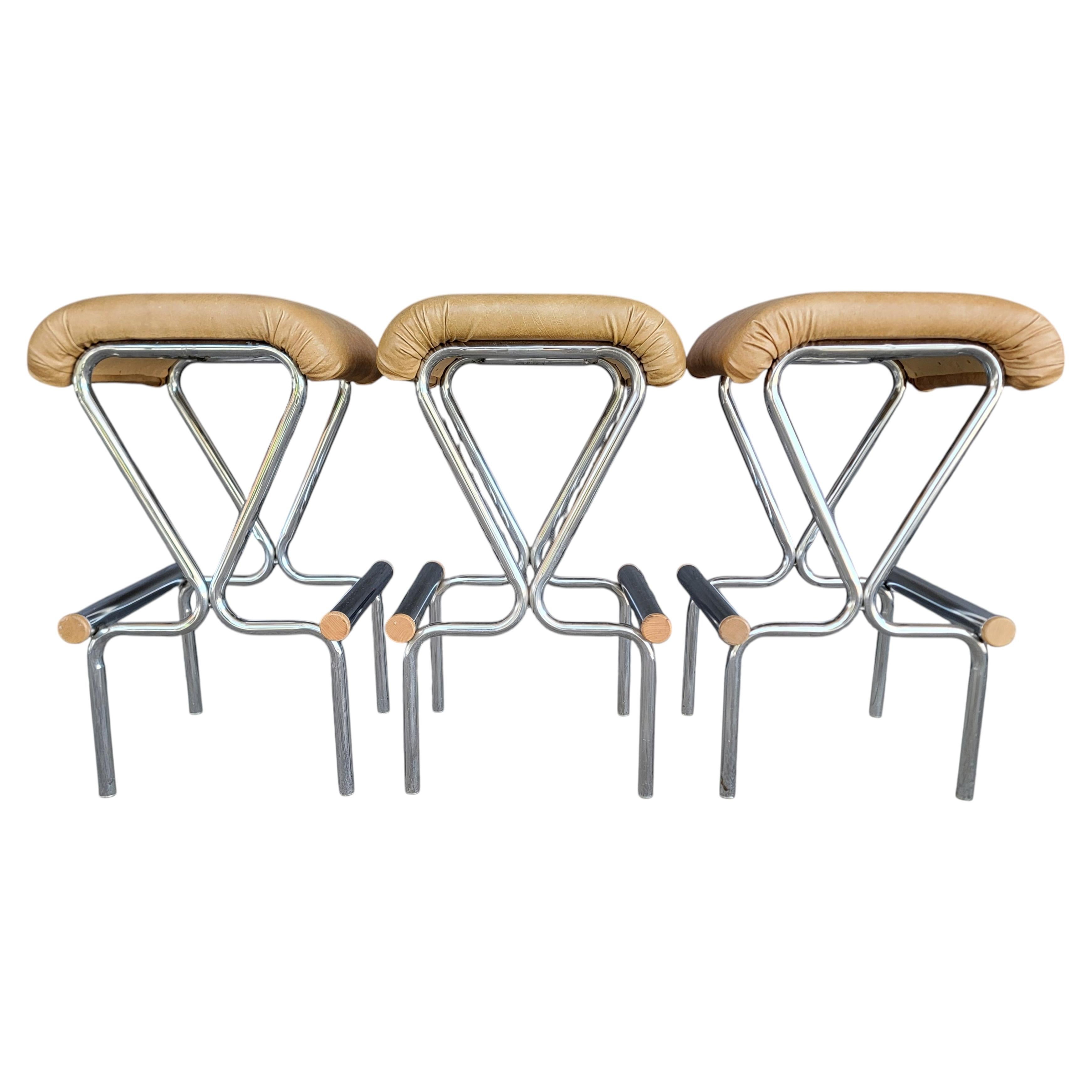
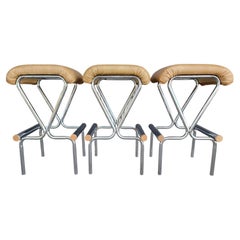
The triangular seat is upholstered in its original red leatherette, and is embellished by a solid, round, straight chromed ornament in its centre. The legs are constructed from solid steel and are chromed.
The item is in good vintage condition, with some indications of age.
Dimensions:
The object's width is 40 centimetres, its depth is also 40 centimetres, and its height is 46 centimetres. The seat height is also 46 centimetres.
The object's mass is 4.5 kilograms per unit.
The items were dispatched in two custom-made boxes, with a total of three stools included in each box, in order to maximise safety.
This text is intended for individuals who possess a scholarly interest in the captivating history of Viennese art and design from the early 20th century.
The Werkbund Exhibition of 1930 in Vienna was a significant event in the history of the Werkbund movement.
The Werkbund Wien constituted an association of artists, industrialists and craftsmen that broke away from the Österreichischer Werkbund, established in 1912, in 1921 under the leadership of Josef Hoffmann and reunited with it in May 1928. The latter was dissolved by the National Socialists in 1938.
History
In 1920, the fundamental discussion regarding the Austrian Werkbund's orientation, whether towards arts and crafts or towards serial, industrial production based on artistic designs, resurfaced at an exhibition in the Vienna Museum of Art and Industry. The impetus for this discourse was provided by the art critics Arthur Rössler and Hans Tietze, with the latter articulating his perspective on the elitist arts and crafts of the Wiener Werkstätte, characterising them as "a thousand cute things". xxxxxxxxxxxxxxxxxxxx Josef Frank supported their attitude, but did not attack Josef Hofmann personally. Josef Hofmann and his followers flatly rejected modern industrialization tendencies and wanted to see arts and crafts as traditional and elitist. The dispute led to the Vienna Werkbund splitting off from the Austrian Werkbund in May 1921.
Josef Hofmann and a large part of the board members henceforth formed the Werkbund Wien, which was incorporated as an association into the Deutscher Werkbund; the first president became Margarethe Stonborough-Wittgenstein, Ludwig Wittgenstein's sister. In the "old" Werkbund, the architect Robert Oerley took over the office of president.
Due to the personal union with the director of the Wiener Werkstätte, Josef Hofmann, the Werkbund Vienna remained in its infancy and did not achieve any particular effectiveness.[3] In 1925, on the occasion of the Austrian participation in the exhibition at the exposition des arts décoratifs et industriels modernes in Paris, the two groups came closer again and Josef Hofmann took over the artistic direction. He designed the pavilion, Josef Frank created the coffee house in front of it, Oskar Strnad an "organ tower" and Peter Behrens a glass house, so that representatives of all groupings were involved.
Starting in 1926, talks were held about reunification, which was finally accomplished in May 1928: The Vienna Werkbund rejoined the Austrian Werkbund. Hermann Neubacher, head of the Gemeinwirtschaftliche Siedlungs- und Bauaktiengesellschaft GESIBA, mayor of Vienna from 1938 and close to the German nationalist camp, was elected president, and the painter László Gábor was elected executive board member. Josef Frank and Josef Hofmann became vice presidents.
Under the artistic direction of architect Josef Frank, who stood for undogmatic modernism, the Werkbund housing estate in Vienna was built between 1930 and 1932. Frank was responsible for the overall spatial disposition of the complex, László Gábor (1895-1944), painter and executive secretary of the Werkbund, for the coloring concept. The client was the municipal housing company Gesiba under General Director Hermann Neubacher, the president of the Austrian Werkbund. Federal President Wilhelm Miklas and Mayor Karl Seitz spoke at the opening on June 4, 1932.
Between 1932 and 1934, tensions arose due to anti-Semitic tendencies towards Jewish architects and artists, and the old discord flared up. There was a new split and Josef Hofmann, together with other members, founded the "New Werkbund Austria", from which Jewish members were excluded. This led to the final break between Josef Hofmann and Josef Frank. Josef Frank moved to Sweden at the end of 1933. (During World War II, Frank again fled into exile, this time also to Manhattan, where he designed a variety of new patterns between 1941 and 1946 also for the famous Swedish Design Company Svenskt Tenn)
The "old" Werkbund was dissolved by the National Socialists in 1938.
Josef Frank expressed support for this attitude, but refrained from direct criticism of Josef Hofmann. Josef Hofmann and his followers categorically rejected modern industrialisation tendencies and sought to position arts and crafts as traditional and elitist. The aforementioned dispute resulted in the Vienna Werkbund's departure from the Austrian Werkbund in May 1921.
Consequently, Josef Hofmann and a significant proportion of the board members proceeded to establish the Werkbund Wien, which was formally incorporated into the Deutscher Werkbund as an association. Margarethe Stonborough-Wittgenstein, sister of Ludwig Wittgenstein, was elected as the inaugural president. In the "old" Werkbund, the architect Robert Oerley assumed the role of president.
The Werkbund Vienna remained in its infancy and did not achieve any particular effectiveness due to its personal union with the director of the Wiener Werkstätte, Josef Hofmann (see [3]). However, in 1925, on the occasion of the Austrian participation in the exhibition at the exposition des arts décoratifs et industriels modernes in Paris, the two groups came closer again and Josef Hofmann took over the artistic direction. The architectural conception of the pavilion was the responsibility of Josef Frank, while the coffee house in front of it was designed by Oskar Strnad. Peter Behrens was responsible for the "organ tower," and representatives from all groupings were involved in the design of the glass house.
Commencing in 1926, deliberations were initiated concerning the matter of reunification, which was ultimately realised in May 1928. The Vienna Werkbund rejoined the Austrian Werkbund. Hermann Neubacher, the head of the Gemeinwirtschaftliche Siedlungs- und Bauaktiengesellschaft GESIBA and Mayor of Vienna from 1938, who was closely associated with the German nationalist camp, was elected president, and the painter László Gábor was elected executive board member. Josef Frank and Josef Hofmann were elevated to the position of vice presidents.
The Werkbund housing estate in Vienna was constructed between 1930 and 1932 under the artistic direction of the architect Josef Frank, who was an advocate of undogmatic modernism.
The overall spatial disposition of the complex was the responsibility of Frank, while the coloring concept was the responsibility of László Gábor (1895-1944), who was both a painter and the executive secretary of the Werkbund. The client in question was the municipal housing company Gesiba, which was under the leadership of General Director Hermann Neubacher, who also served as the president of the Austrian Werkbund. On the 4th of June 1932, the inaugural speech was delivered by Federal President Wilhelm Miklas and Mayor Karl Seitz.
Between 1932 and 1934, tensions escalated due to the emergence of anti-Semitic sentiments directed towards Jewish architects and artists, thereby reactivating pre-existing discord. A schism within the organisation led to the establishment of the "New Werkbund Austria," of which Josef Hofmann was a founding member. Notably, the new group excluded Jewish members from its ranks. This ultimately resulted in the definitive rift between Josef Hofmann and Josef Frank. Josef Frank relocated to Sweden at the conclusion of 1933. In the period of the Second World War, Frank once more sought refuge in exile, this time in Manhattan. During the years 1941 to 1946, he created a range of new patterns for the renowned Swedish design company, Svenskt Tenn. The original Werkbund was disbanded by the National Socialists in 1938.