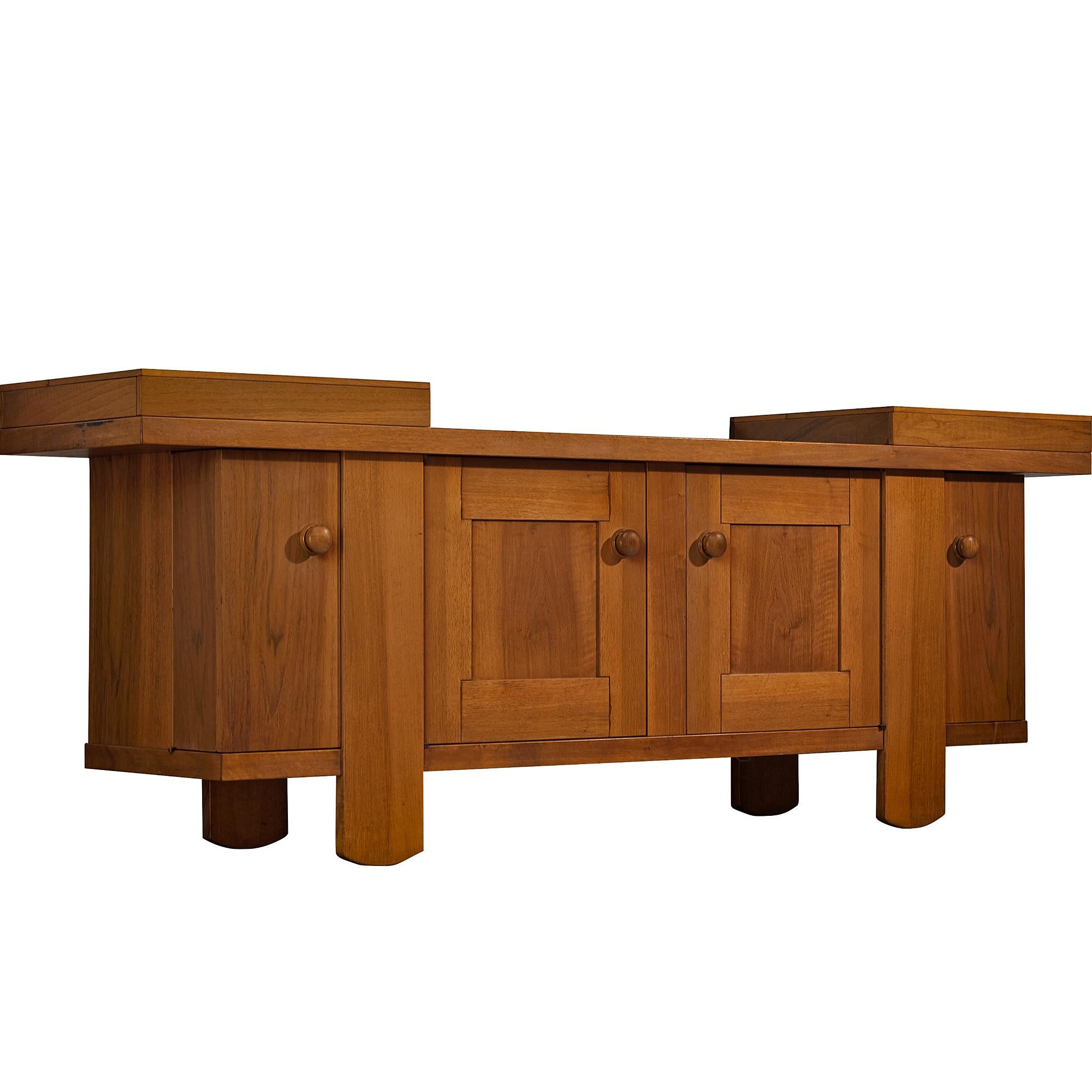
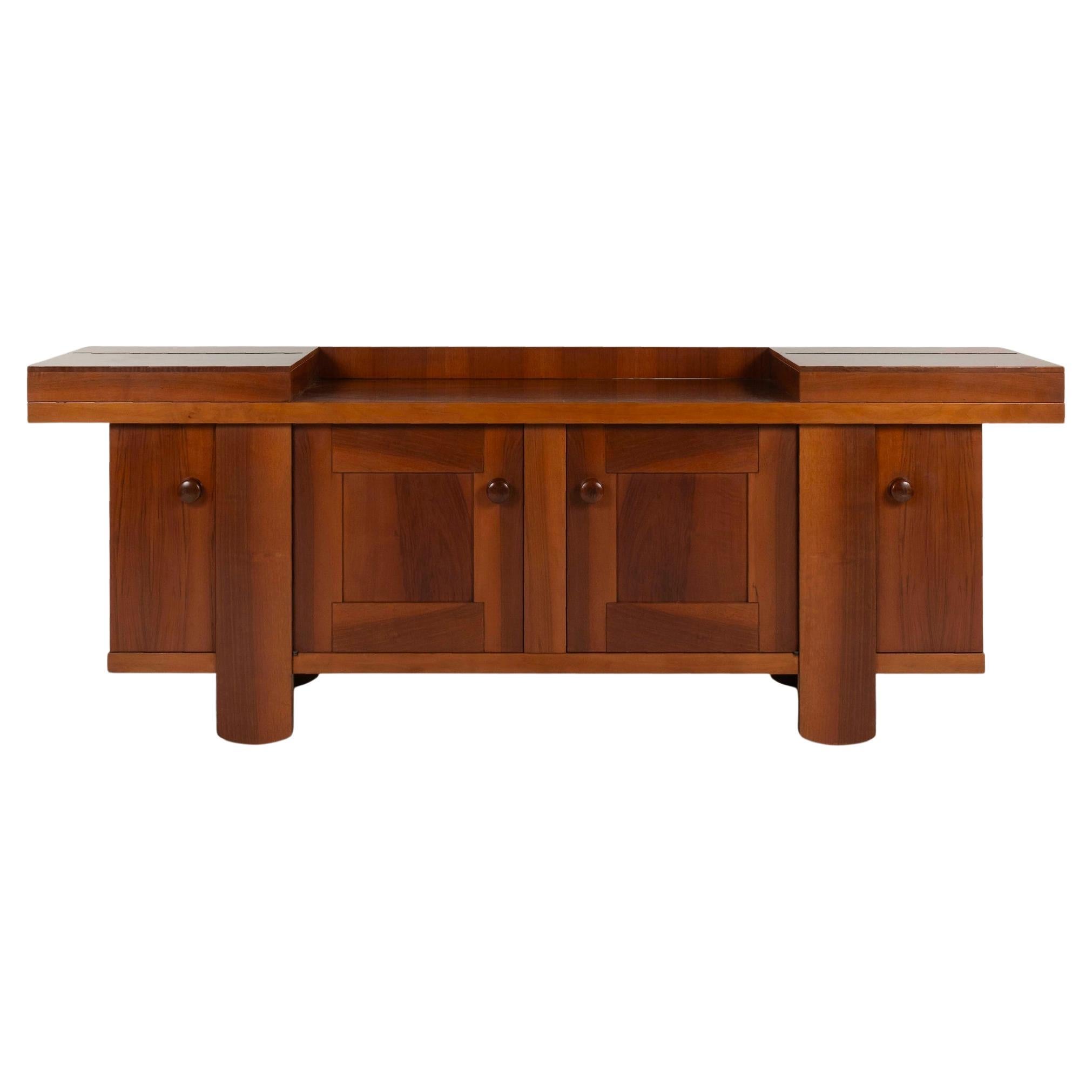
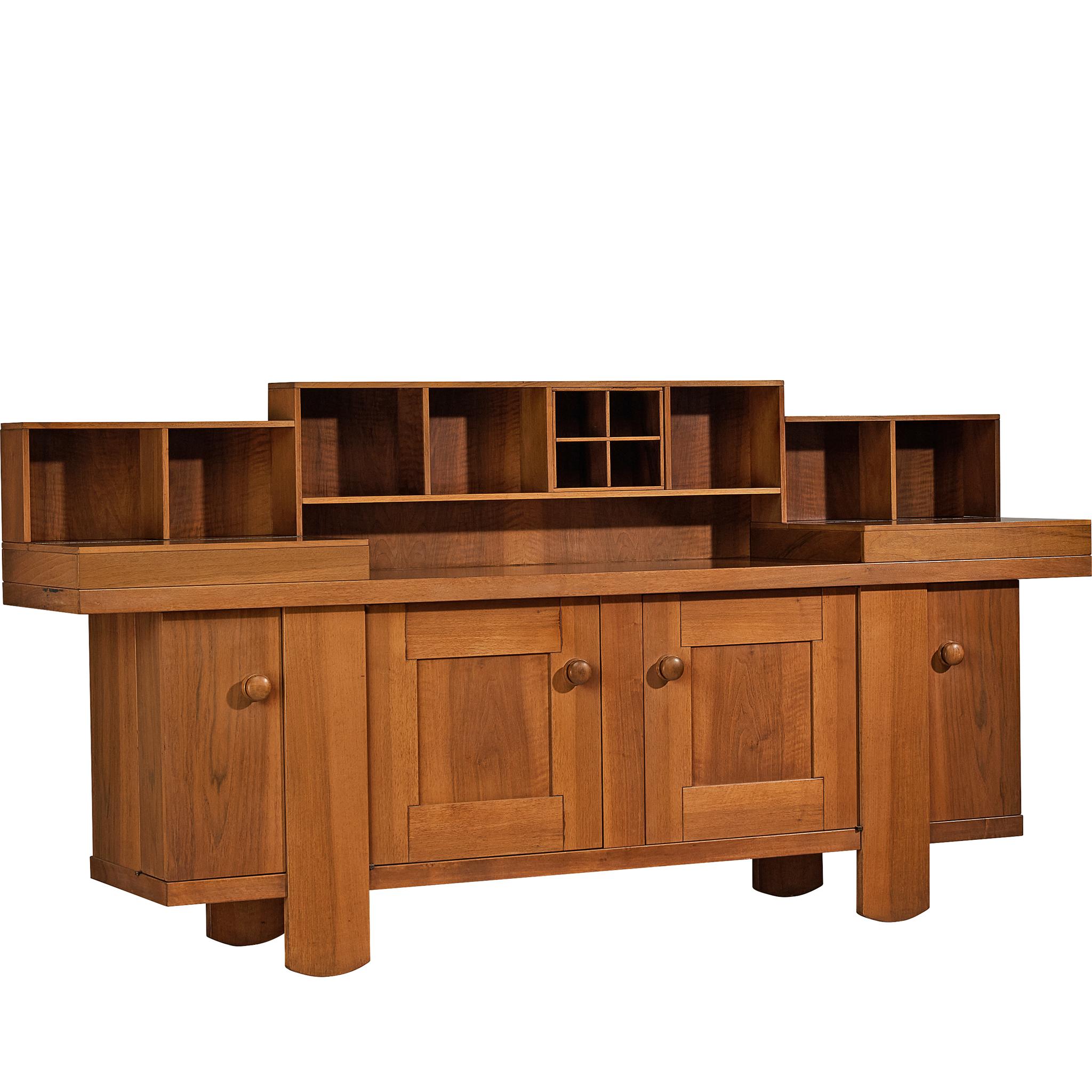
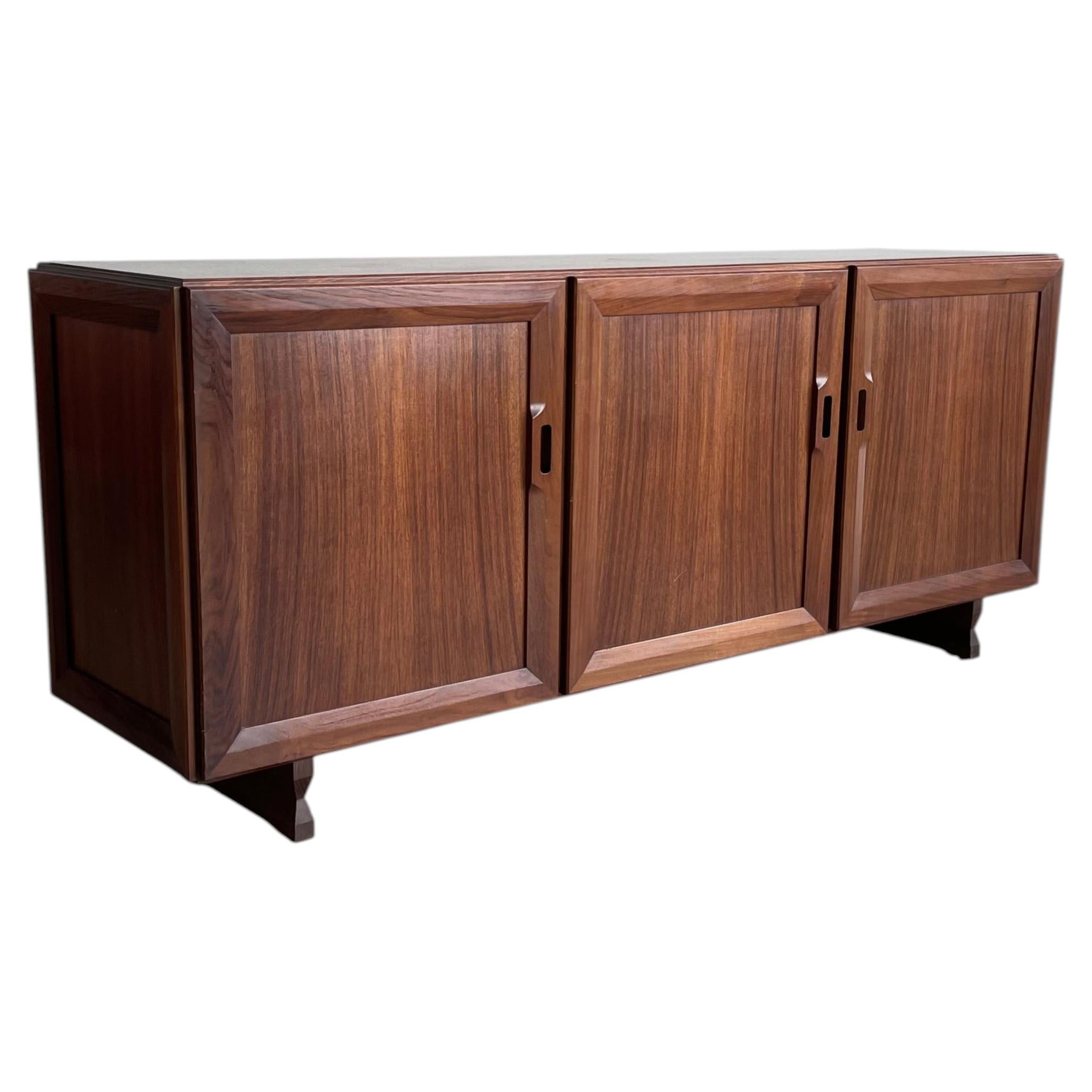
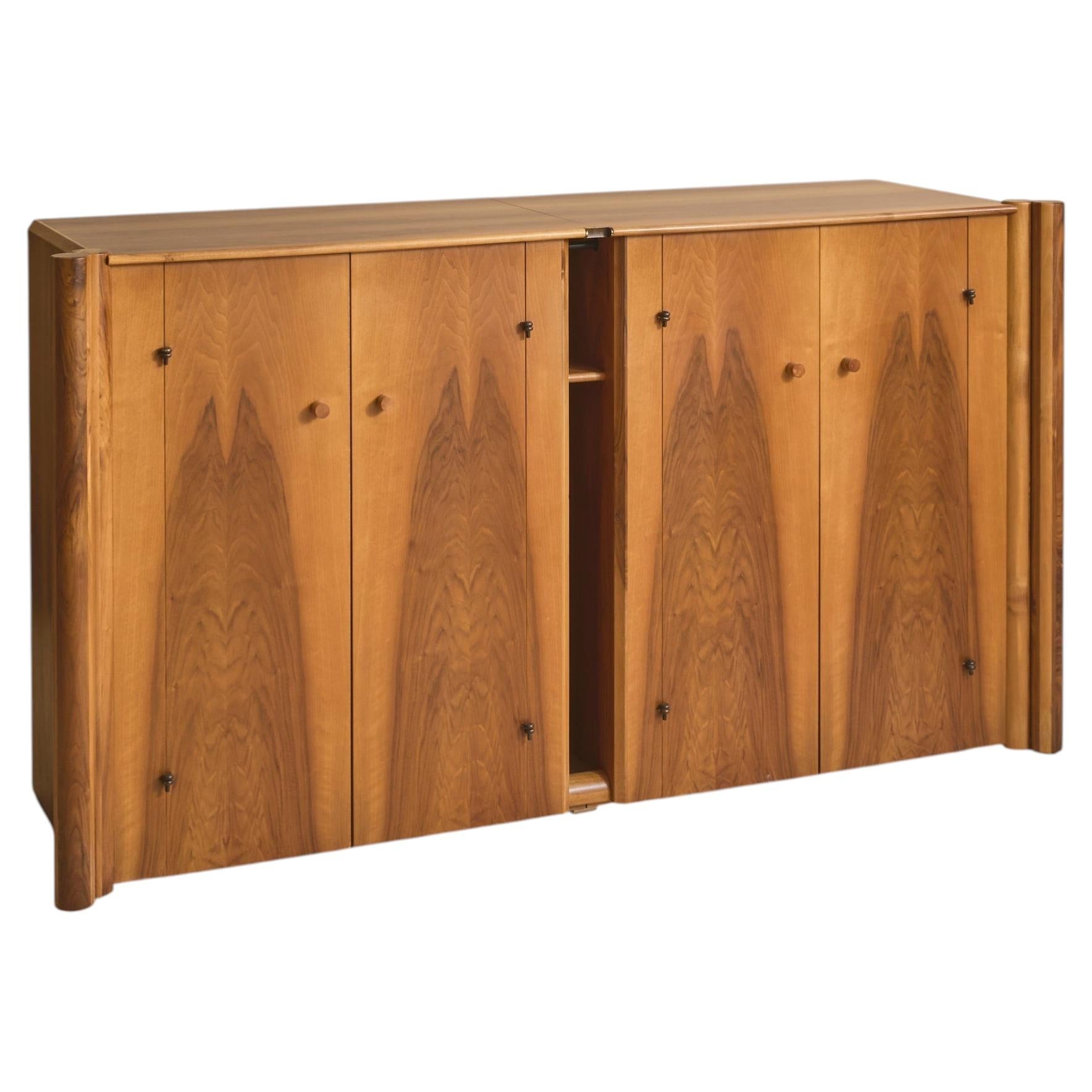
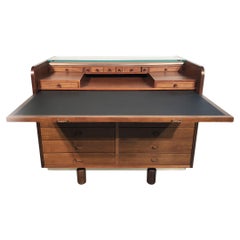
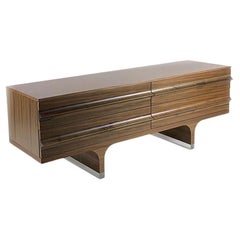
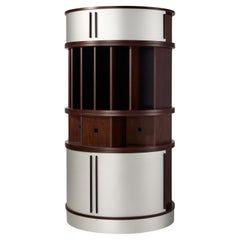
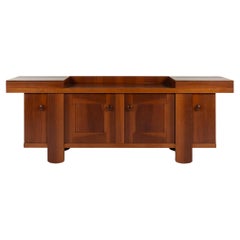
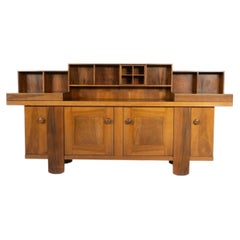
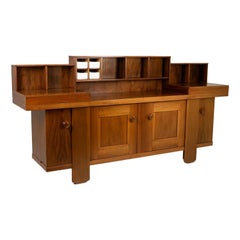
Pranzo is a sideboard clearly inspired by the Lombard cabinet-making tradition in walnut wood, in which the essential approach to design typical of Silvio Coppola is evident; a design devoid of ephemeral stylistic excesses and a design aimed at the aesthetic durability of the object that can withstand time and use. Pranzo is also characterized by the sophisticated use of details typical of Coppola's functional design, such as the pull-out drawer/tray from the flip-top, which can be easily carried up to the table to conveniently set it up with cutlery and napkins. Another special feature is the 2 side doors that open 180° allowing more practical and convenient access to the compartment.
Pranzo, along with other custom-designed pieces, was created as a piece of furniture for the famous Milanese restaurant El Prosper, a place that has been a favorite gathering place for graphic designers, journalists, intellectuals, architects and entrepreneurs in the industry for years, resulting in contracts and even the production of the finest pieces of Italian design./ The Pranzo sideboard is accompanied by a certificate of authenticity issued by Bernini, guaranteeing its uniqueness and historical value.
Bibliography: Made in Italy, L. Massoni, Ed. Giorgio Mondadori & associati Milano, p. 25, year 1986 - Ottagono #1, p.92, year 1966 - Ottagono #30, p. 81, 87, year 1973 - Domus n. 437, year 1966 - G. Gramigna, "Repertorio del design italiano 1950-1980", Mondadori, p. 207, year 1985
Designer: Silvio Coppola was a famous Italian architect, who was born on February 7, 1927, in Pescara, Italy, and died on February 22, 2011, in Milan, Italy. He was known for his contributions to furniture and object design, and was involved in projects that ranged from industrial design to architecture, as well as visual communication.
Silvio Coppola has worked with a number of Italian design brands such as Cassina, Alessi, Kartell and Bernini; for the latter, Coppola not only designed significant design products, which are now in high demand at the most prestigious auction houses, but also helped create important corporate visual communication tools such as catalog, invitations and posters, forgoing the obviousness of coated paper in favor of sheets of transparent PVC hot-laminated with a layer of metal.
He has also collaborated with major industries such as Bayer, Montecatini, Monteschell, Zucchi, Cinzano, Parmalat and Feltrinelli.
Among the various awards he received are the Palme d'Or for advertising in 1962 and the Rizzoli European Award in 1966.
His work was influenced by modernism and helped define the style and aesthetics of that period. His contribution to the world of design and architecture has been significant, and his work is still widely appreciated and studied.