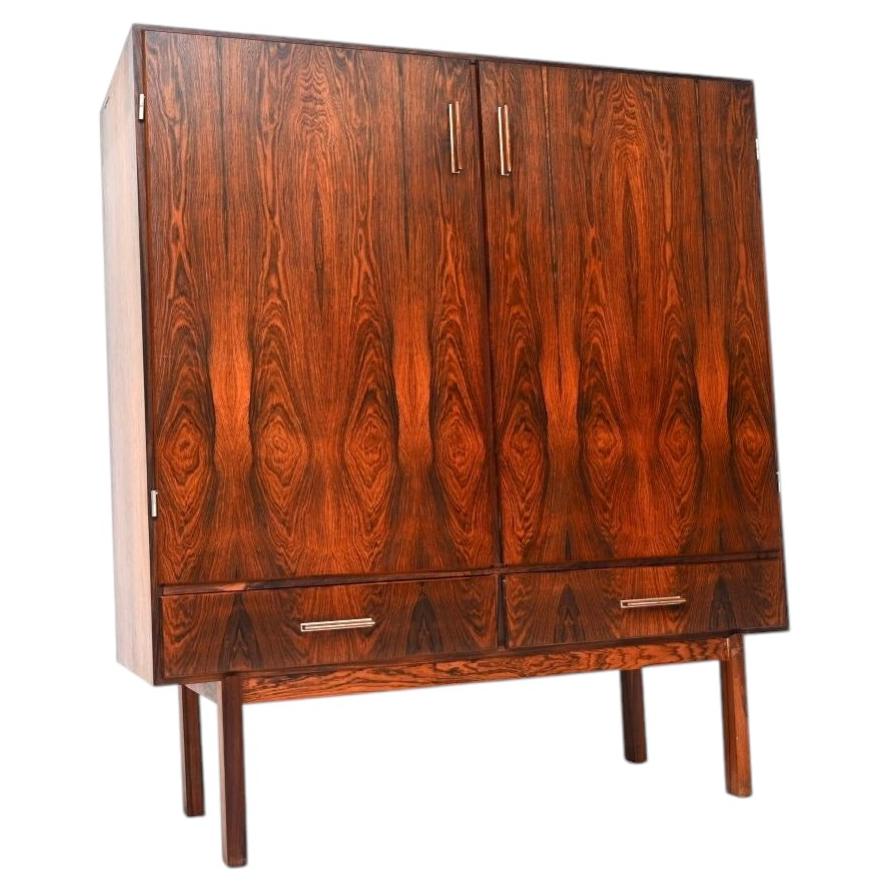
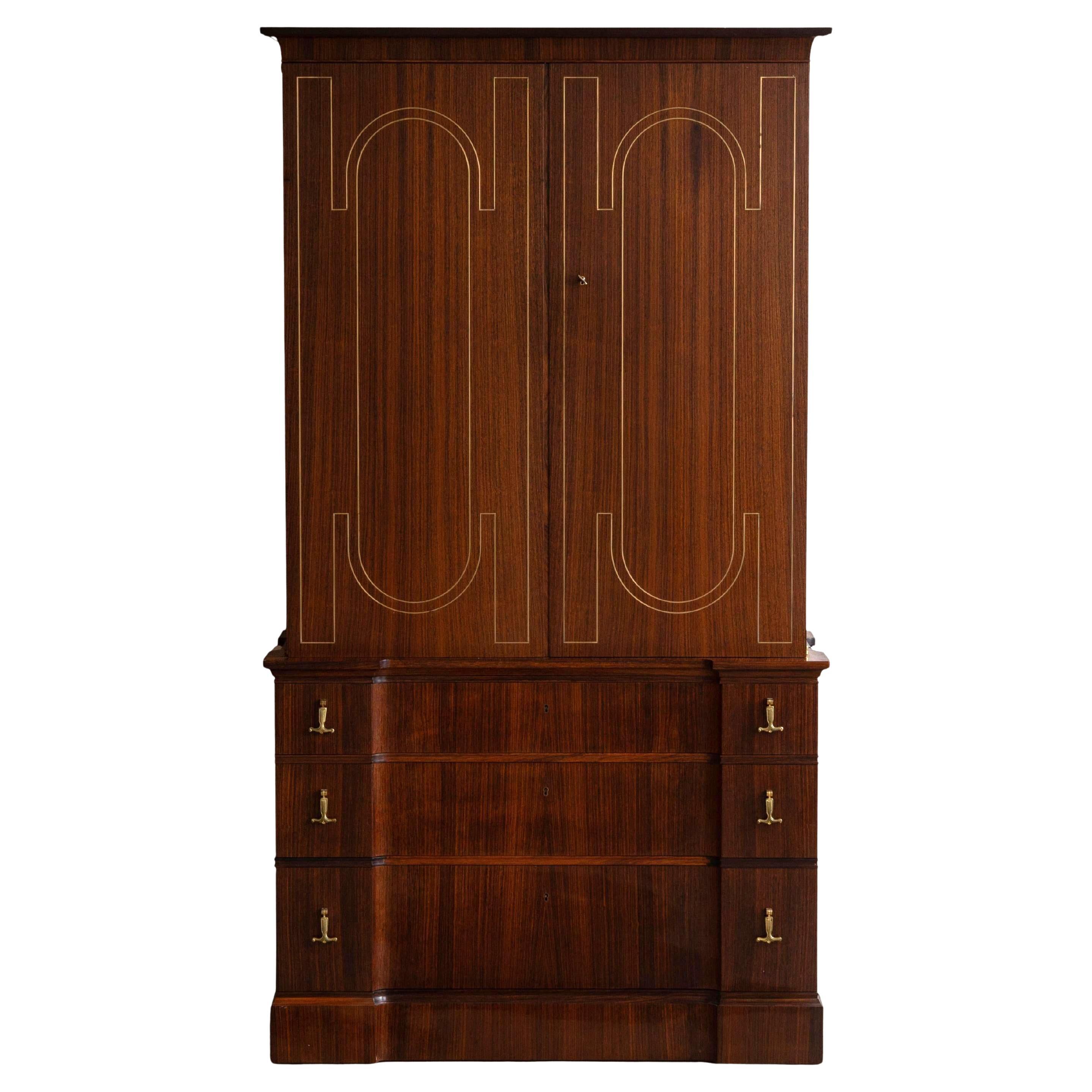
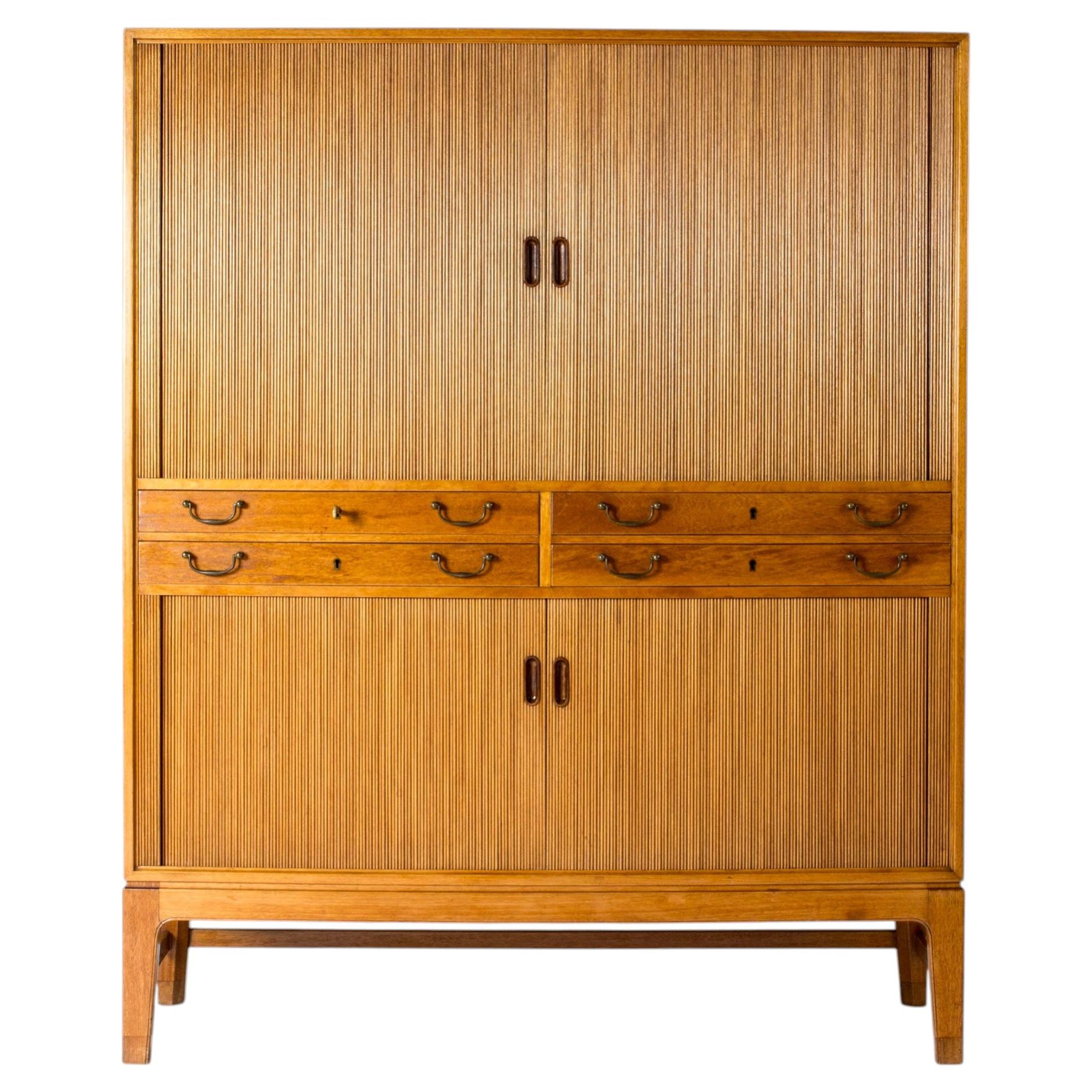
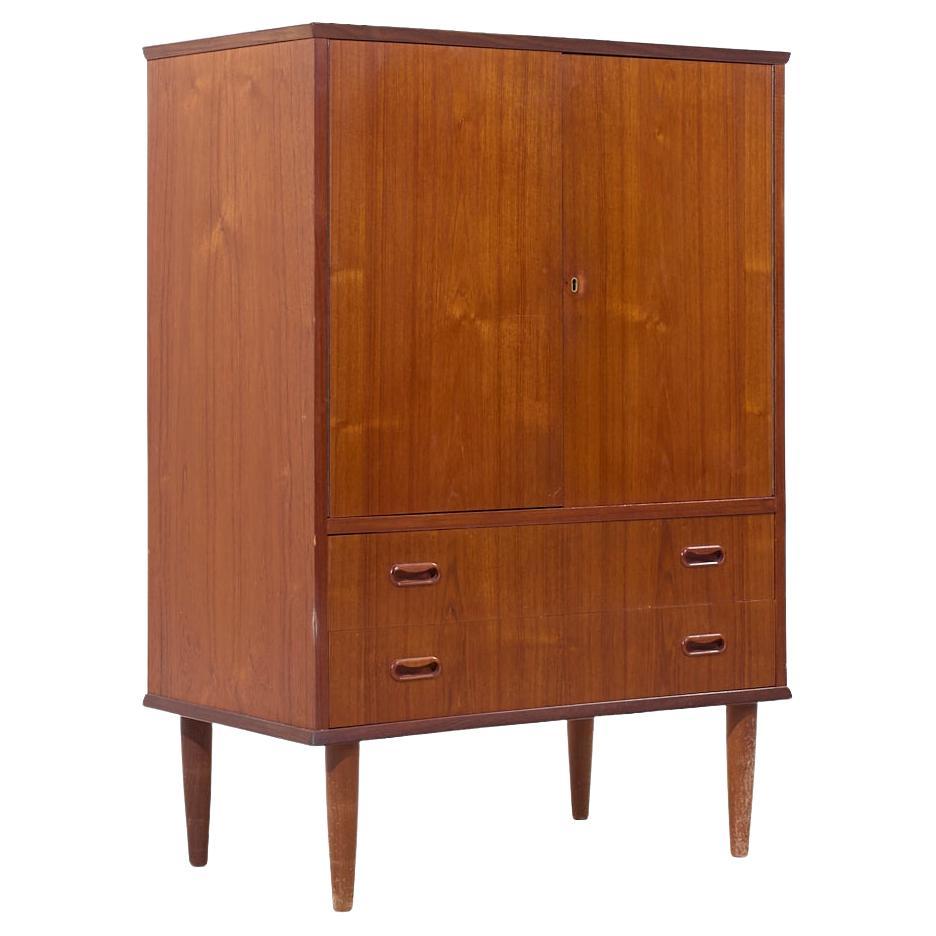
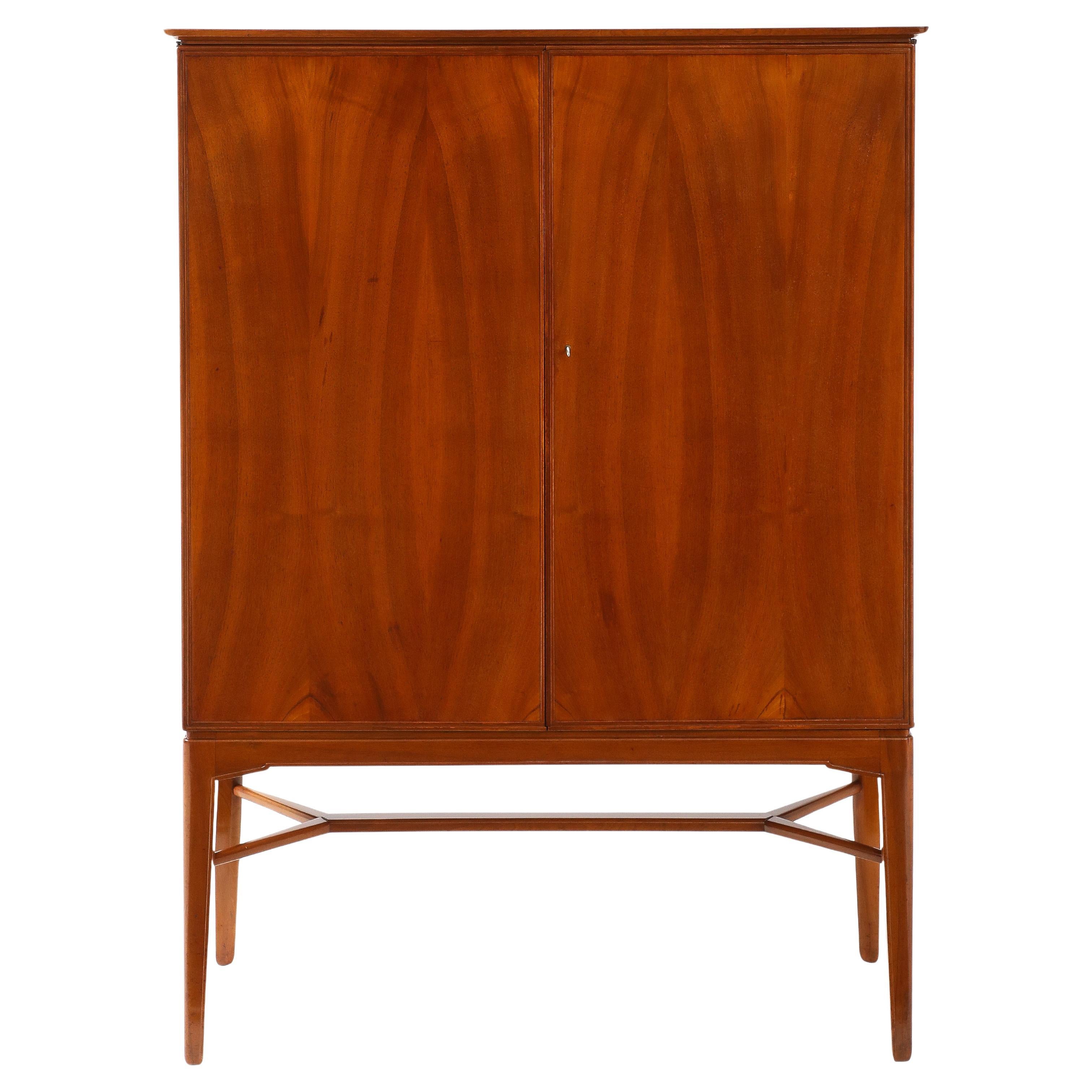
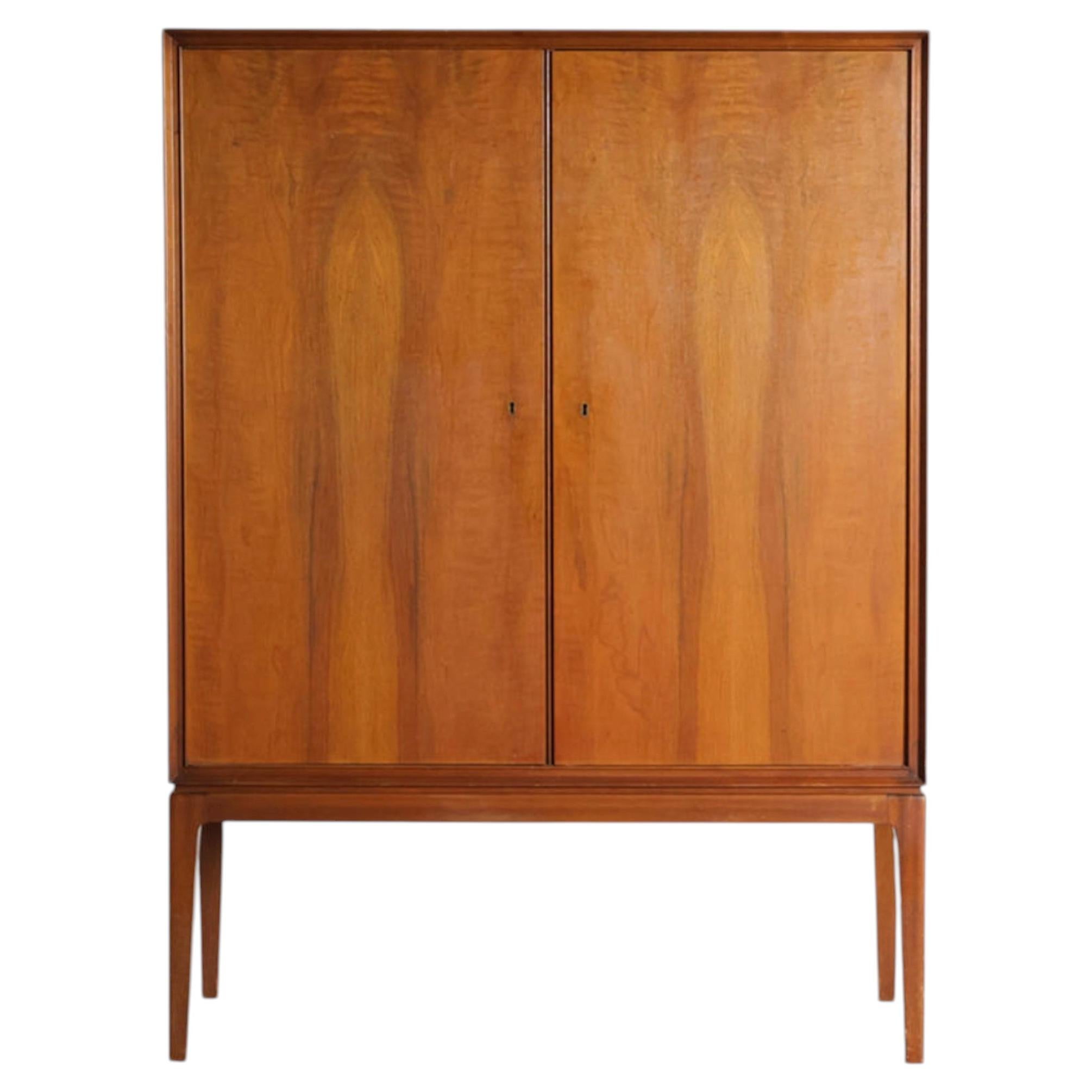
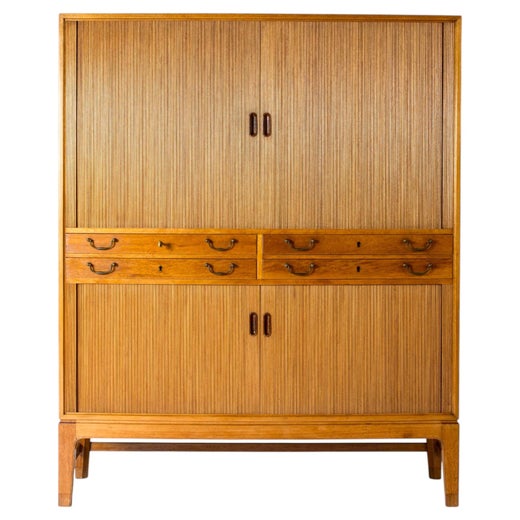
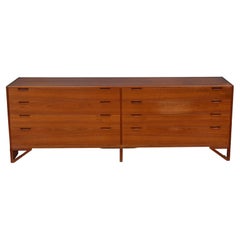
Svend Langekilde Long Dresser
Located in San Francisco, CA
Svend Langkilde design teak long dresser for Langkilde Mobler, Denmark.
Category
Vintage 1960s Danish Scandinavian Modern Dressers
Materials
Teak
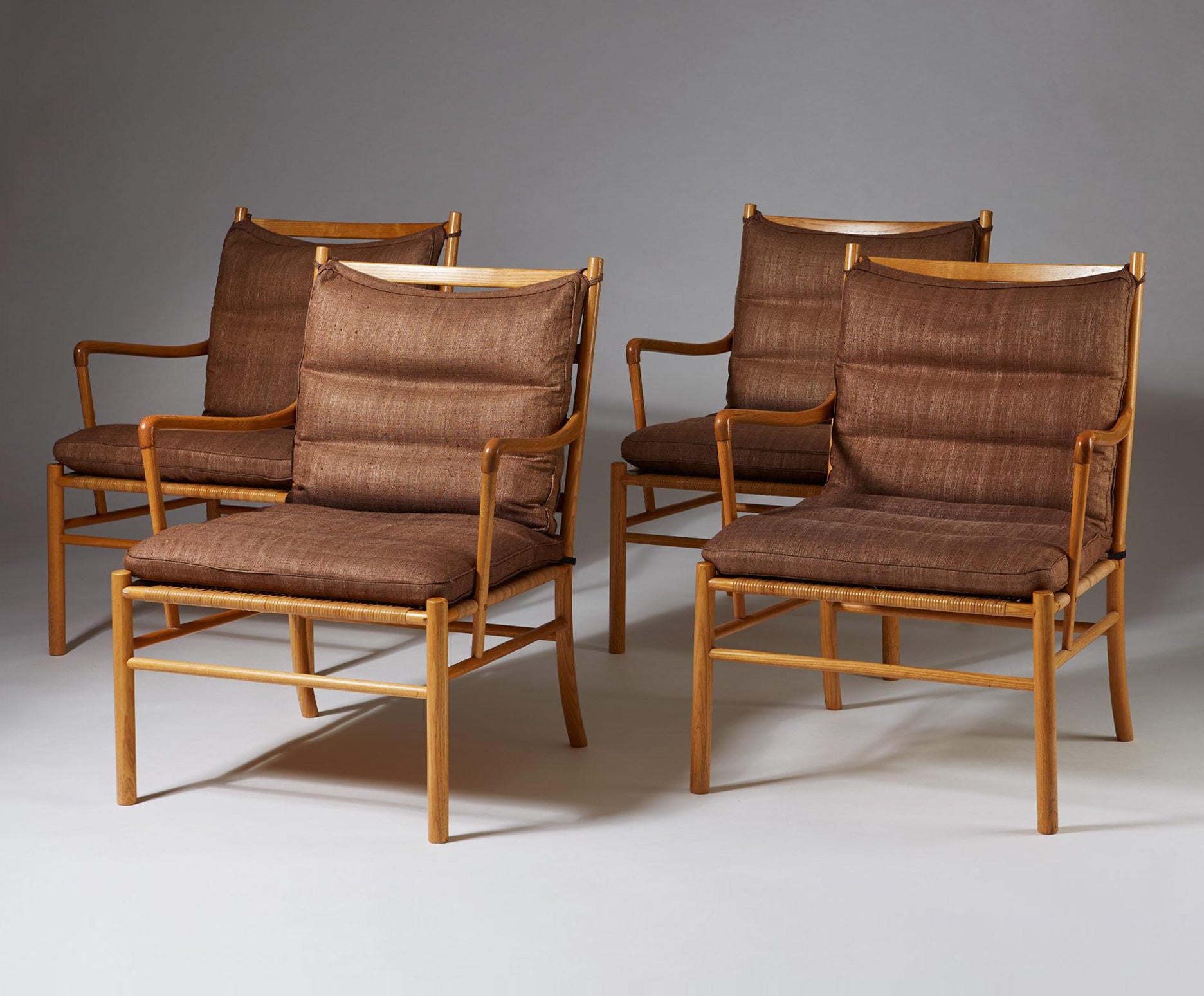
In creating his seminal work, the Colonial chair, in 1949, Danish designer Ole Wanscher (1903–85) found the ideal balance between minimalism and traditionalism through a simple silhouette, slim wooden framework and plush leather cushions. While Wanscher may not be a household name today in the way that his Danish contemporaries Arne Jacobsen, Finn Juhl and Hans Wegner are, he played a prominent role in mid-century Scandinavian design and is greatly respected by furniture historians.
Raised by an art historian father, Wanscher developed an appreciation for the arts at an early age, eventually going on to study architecture and furniture design under modernist master Kaare Klint at the Royal Danish Academy of Fine Arts. After graduating, he worked for Klint’s practice before starting his own firm. Then, after Klint’s death in 1954, Wanscher took over Klint’s academic role until his own retirement from the academy in 1973. His professional accolades include the Copenhagen Carpenters’ Guild Annual Award and the gold medal at the 1960 Milan Triennale.
An avid historian himself, Wanscher also traveled the world to study designs from different cultures and was particularly interested in furniture from Egypt, Greece and China, as well as from the Shaker movement and the Vienna Secession. He’d later publish the results of his global studies in The Art of Furniture: 5,000 Years of Furniture and Interiors. This approach, rooted in history, which was largely inspired by Klint’s own philosophy, set Wanscher apart from the segment of Scandinavian modernists who eschewed the past for the present and the future.
For the Colonial chair, Wanscher drew inspiration from 18th-century English furniture, namely ladder-backed chairs by Thomas Chippendale. He crafted the slim frame of roundwood timber, using curved armrests and legs — a Wanscher signature element — and thoughtfully placed mortise-and-tenon joints to create stability. And although the finished product radiates a sense of careful craftsmanship, Wanscher designed the Colonial chair to be easily manufactured: Its wood frame, woven cane seat and leather cushions can each be produced separately and joined at a later stage.
The Colonial chair was originally manufactured by P. Jeppesens Møbelfabrik, for whom Wanscher also designed the Colonial sofa and the Colonial coffee table to complete the Colonial collection. Today the chair is manufactured by Carl Hansen & Søn and sold alongside a footrest. It remains a crowd-pleaser with its timeless, elegant yet simple form.
A scholar and architect with the heart of an artist, Ole Wanscher helped define the functional, clean-cut style that formed the core of modern Danish furniture design. Influenced heavily by his world travels, Wanscher gained inspiration from English, Asian, Egyptian and traditional Shaker furniture, and he incorporated elements from these styles into his revered mid-century designs.
Wanscher’s deep respect for the use of traditional materials such as quality wood is reflected in his work, which is valued for being both beautiful and built to last. He was also a leader in the postwar “design for everyone” movement, creating many pieces intended for everyday life within the small confines of the average Danish household. Later, Wanscher became a prolific writer on the subject of furniture design. He is considered one of the most significant influences on the world of Scandinavian modernism.
The son of an art historian and a painter, Wanscher studied at the Royal Danish Academy of Fine Arts. From 1925 to 1927, Wanscher worked under the great Danish designer and professor Kaare Klint, who became one of the greatest stylistic influences on his output. Wanscher would go on to work as a professor at the academy from 1955 to 1973.
Wanscher founded his own furniture manufacturing company in 1929. Here he employed the top cabinetmakers of the day, most notably A.J. Iversen, with whom Wanscher collaborated for many years. While the workshop produced seductive handmade furniture with organic materials such as teak and mahogany, Wanscher intended to design durable seating, tables and more for the mass market — he was committed to making quality furniture available to a wider audience.
Of all of Wanscher’s designs, he is perhaps best known for his Colonial chair. This piece — which is part of a collection for Danish manufacturer P. Jeppesens that includes a sofa and a coffee table — exemplifies his penchant for combining minimalist design with traditional craftsmanship. Wanscher’s dining room tables, such as the Rungstedlund table, also epitomize the elegance of his work’s simple silhouettes and careful construction. These sleek tables serve as an ideal centerpiece for both modern and traditionally styled dining rooms, highlighting the versatility of Wanscher’s work.
Wanscher received a gold medal for his exemplary work at the 1960 Milan Triennale. He also received the Copenhagen Carpenters’ Guild Annual Award. Though Wanscher passed away in 1985, his iconic designs and scholarly writings remain relevant to this day.
Find vintage Ole Wanscher tables, seating and case pieces on 1stDibs.
Svend Langekilde Long Dresser
Located in San Francisco, CA
Svend Langkilde design teak long dresser for Langkilde Mobler, Denmark.
Teak
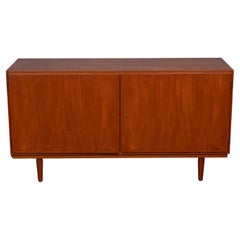
Scandinavian Modern Two Door Credenza
By Børge Mogensen
Located in San Francisco, CA
Scandinavian Modern credenza in the style of Borge Mogensen, Denmark. Made from high quality materials and construction techniques, just newly refinished and ready to install. Featur...
Teak

Scandinavian Modern Gustav Bertelsen Teak Credenza
By Gustav Bertelsen
Located in San Francisco, CA
Scandinavian Modern design tambour door credenza by Gustav Bertelsen, Denmark. High quality construction and materials by master cabinet maker Gustav Bertelsen. Three solid teak drawers across the top with lovely carved pulls. Beautiful contrasting lemon wood interior with four adjustable shelves. Elegant sculpted teak gallery top trim makes this a very usable storage cabinet...
Teak
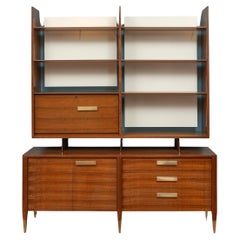
Gio Ponti Display Cabinet Model 4120 for Singer & Sons
By Gio Ponti
Located in San Francisco, CA
Rare and important display cabinet by the master Gio Ponti, model 4120 for Singer & Sons. Elegant and architectural display cabinet in gorgeous Italian walnut with brass sabots and p...
Brass
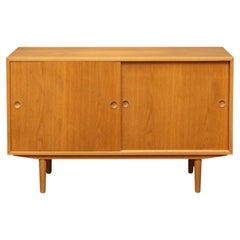
Borge Mogensen for Karl Andersson Credenza, Denmark
Located in San Francisco, CA
Borge Mogenson design oak credenza or cabinet for Karl Andersson, Denmark. High quality construction and use of materials combine for a simple refined credenza. Two sliding doors rev...
Oak
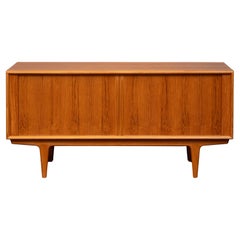
Bernard Pedersen & Son Teak Credenza
By Bernhard Pedersen & Son
Located in San Francisco, CA
Bernhard Pedersen & Son teak credenza, Denmark. A magnificent tambor door credenza, model BPS142 in excellent condition. This is a newer production model from 2020 or so in waxed tea...
Teak
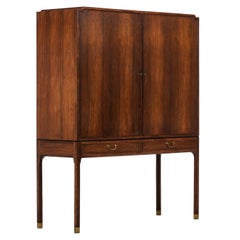
Ole Wanscher Cabinet Produced by Cabinetmaker A.J. Iversen in Denmark
By Ole Wanscher
Located in Limhamn, Skåne län
Very rare cabinet in rosewood and brass designed by Ole Wanscher. Produced by cabinetmaker A.J Iversen in Denmark.
Brass
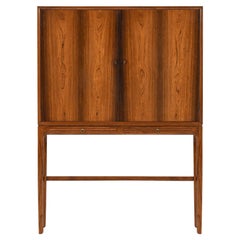
Ole Wanscher Cabinet Produced by Cabinetmaker a.J Iversen in Denmark
By Ole Wanscher
Located in Limhamn, Skåne län
Very rare cabinet designed by Ole Wanscher. Produced by cabinetmaker A.J Iversen in Denmark.
Brass
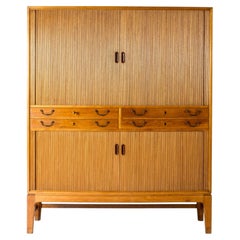
Scandinavian Modern Cabinet in Mahogany by Ole Wanscher, Denmark, 1940s
By Ole Wanscher, A. J. Iversen
Located in Östermalm, Stockholms län
Beautiful mahogany cabinet by Ole Wanscher, with two sets of drawers in the middle with elegant brass handles. Jalousie doors and beautiful handles in contrasting rosewood. Great att...
Brass
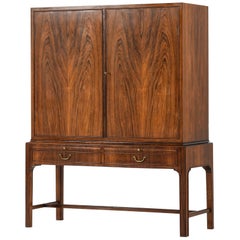
Cabinet in the Style of Kaare Klint by Cabinetmaker C.B. Hansen in Denmark
By Kaare Klint
Located in Limhamn, Skåne län
Very rare master cabinet in the style of Kaare Klint. Produced by cabinetmaker C.B. Hansen in Denmark.
Brass
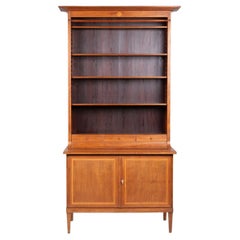
Danish Architect’s Drawing Cabinet
Located in Kastrup, DK
Architect’s Drawing Cabinet / Plan Chest Danish design, c. 1920 Exceptionally well-crafted drawing cabinet from around 1920, made as a unique piece and originally commissioned for a...
Mahogany, Maple
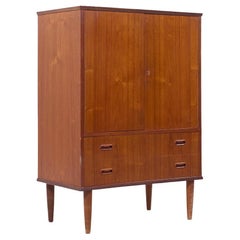
Arne Vodder Style Mid Century Danish Teak Armoire
By Arne Vodder
Located in Franklin Park, IL
Arne Vodder Style Mid Century Danish Teak Armoire This armoire measures: 32 wide x 18 deep x 45.25 inches high We take our photos in a controlled...
Teak