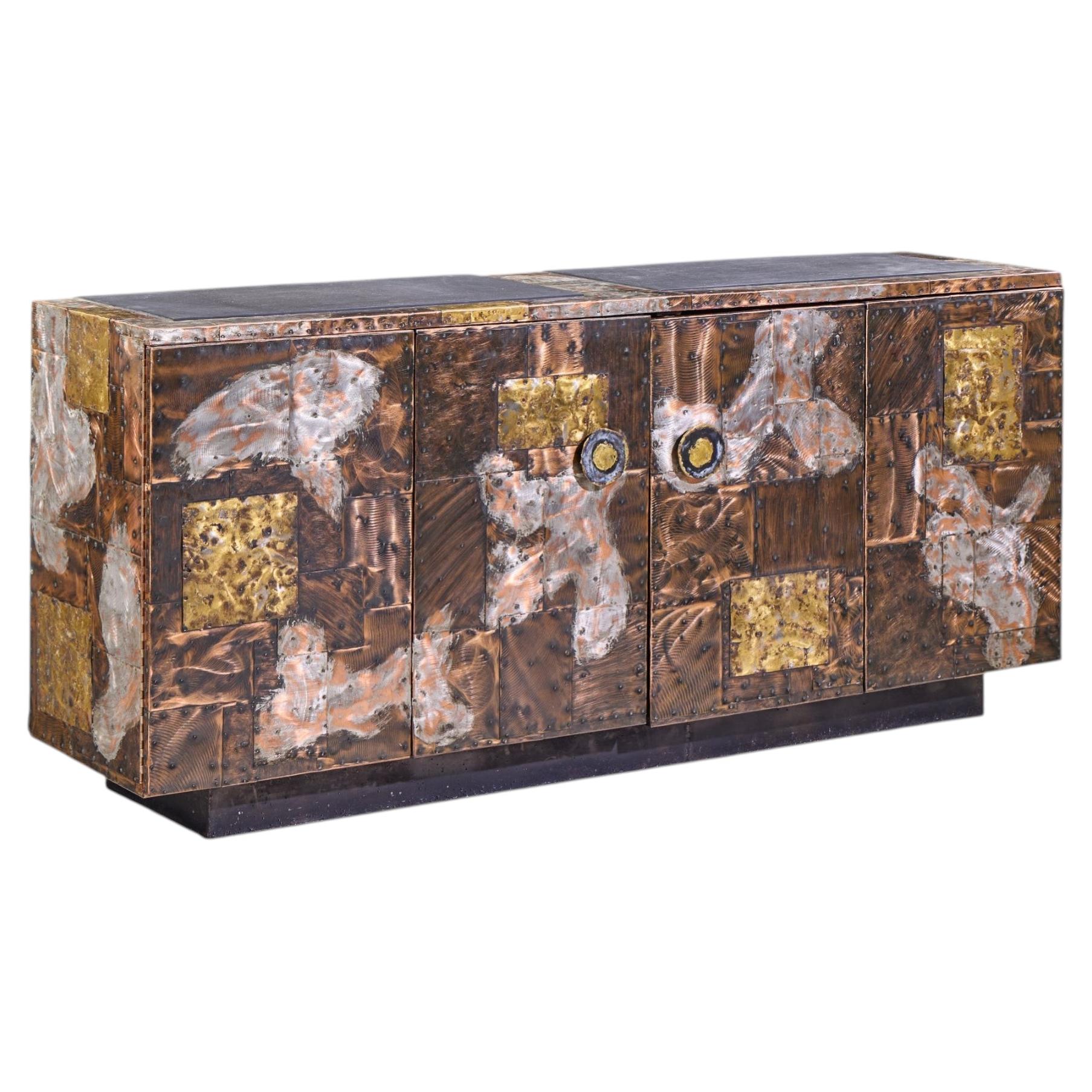
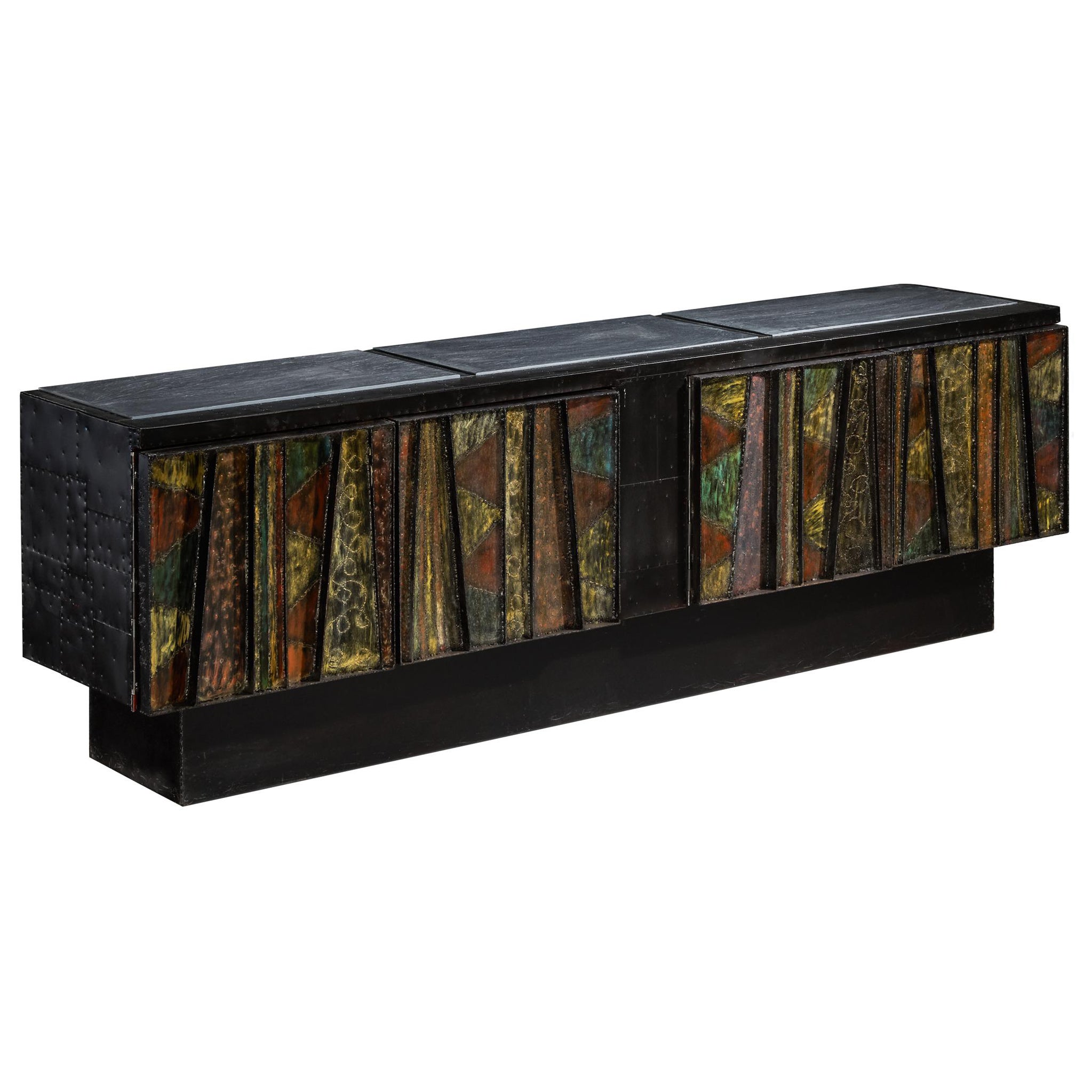
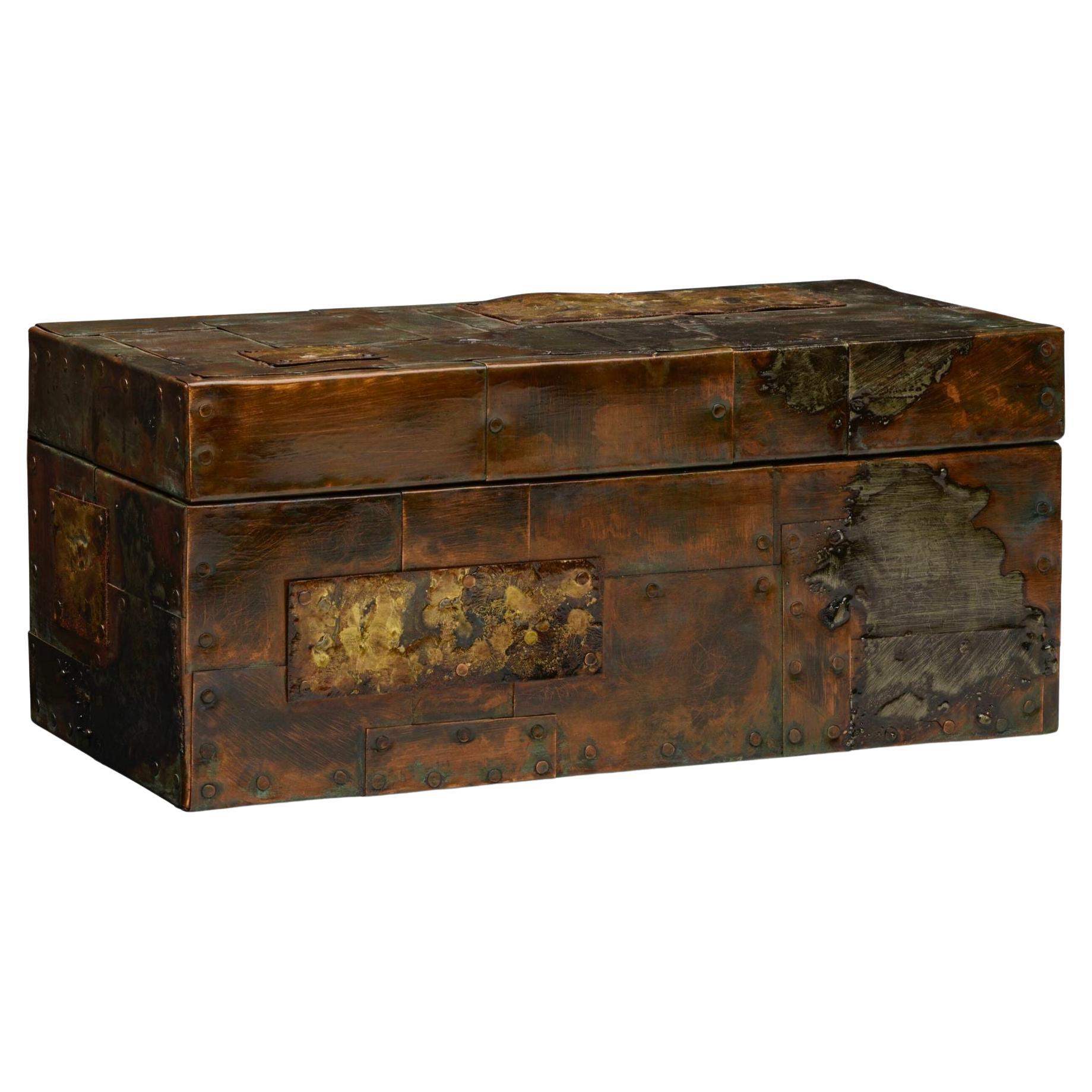
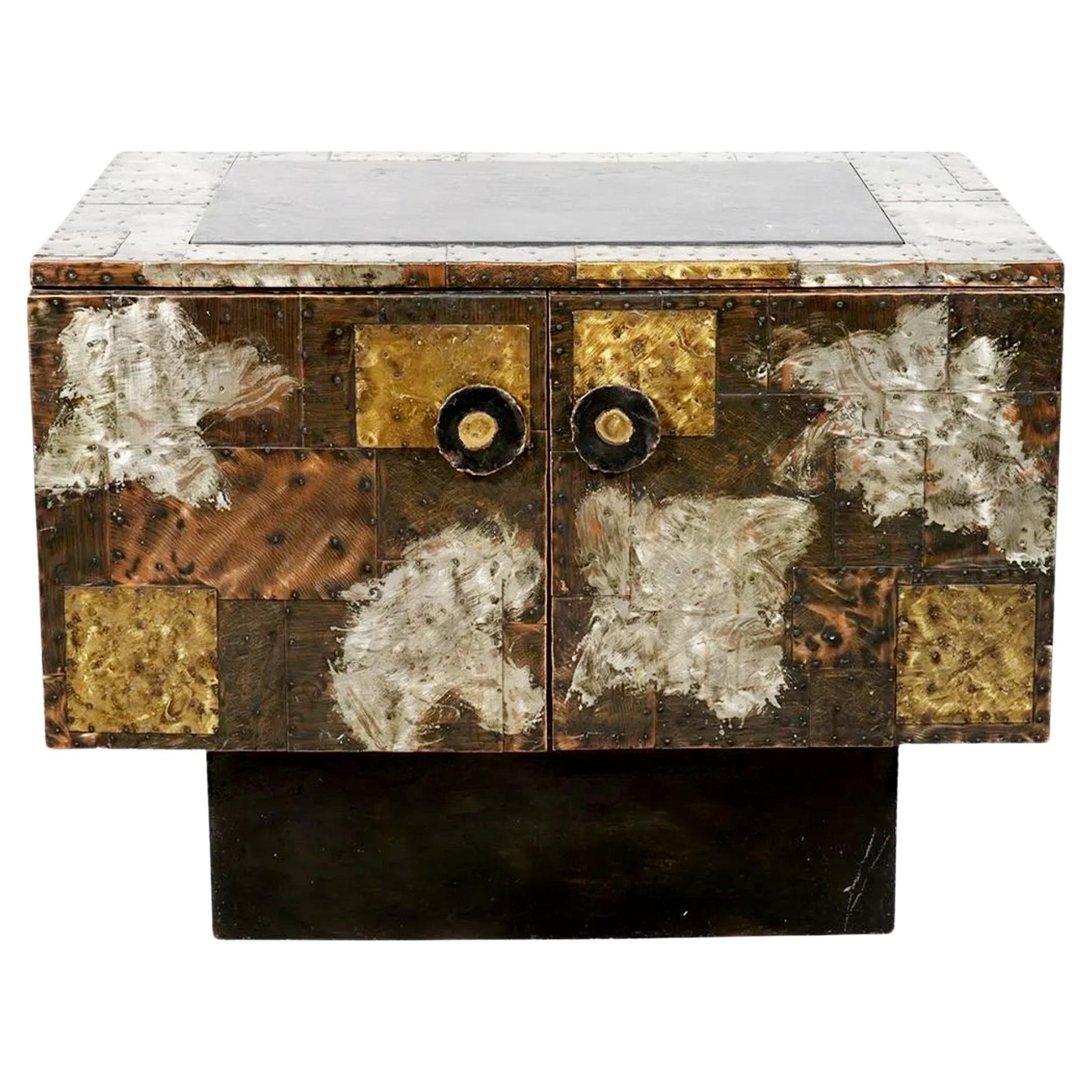
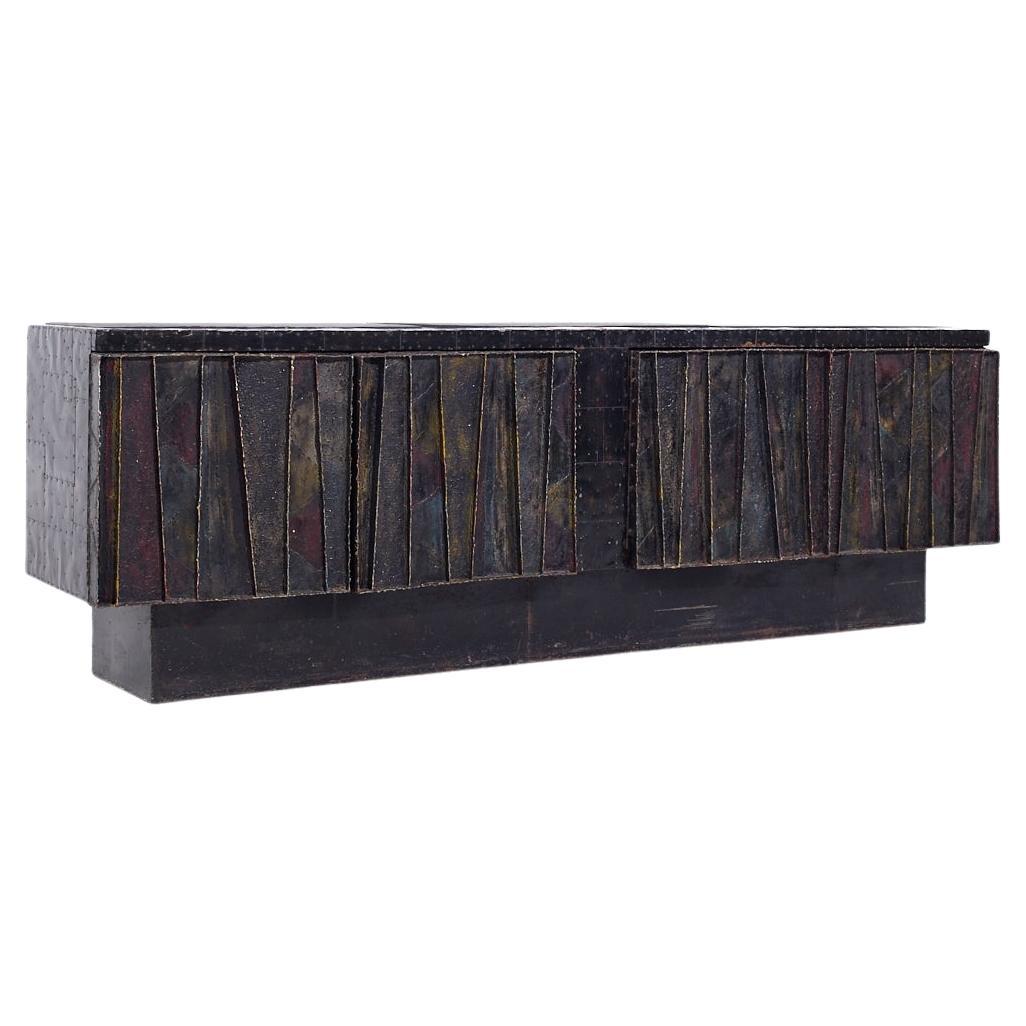
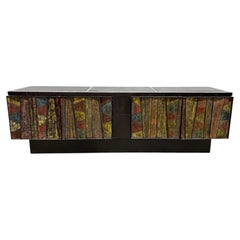
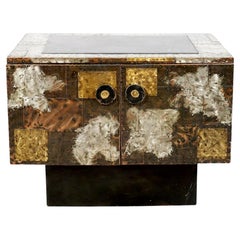
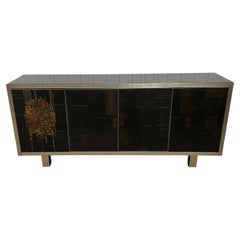
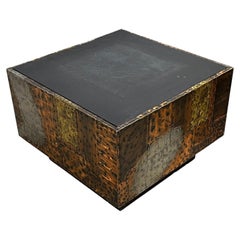
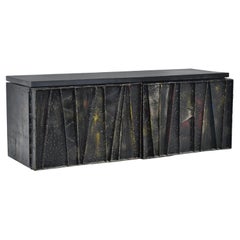
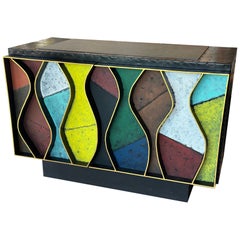
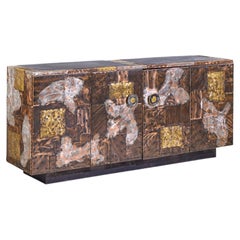
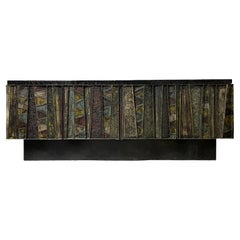
An exceptional and monumental cabinet, model PE-40A, designed by American sculptor and furniture master Paul Evans for Directional, signed and dated 1974. This important example represents Evans at the height of his sculptural experimentation, where furniture crossed fully into the realm of functional art.
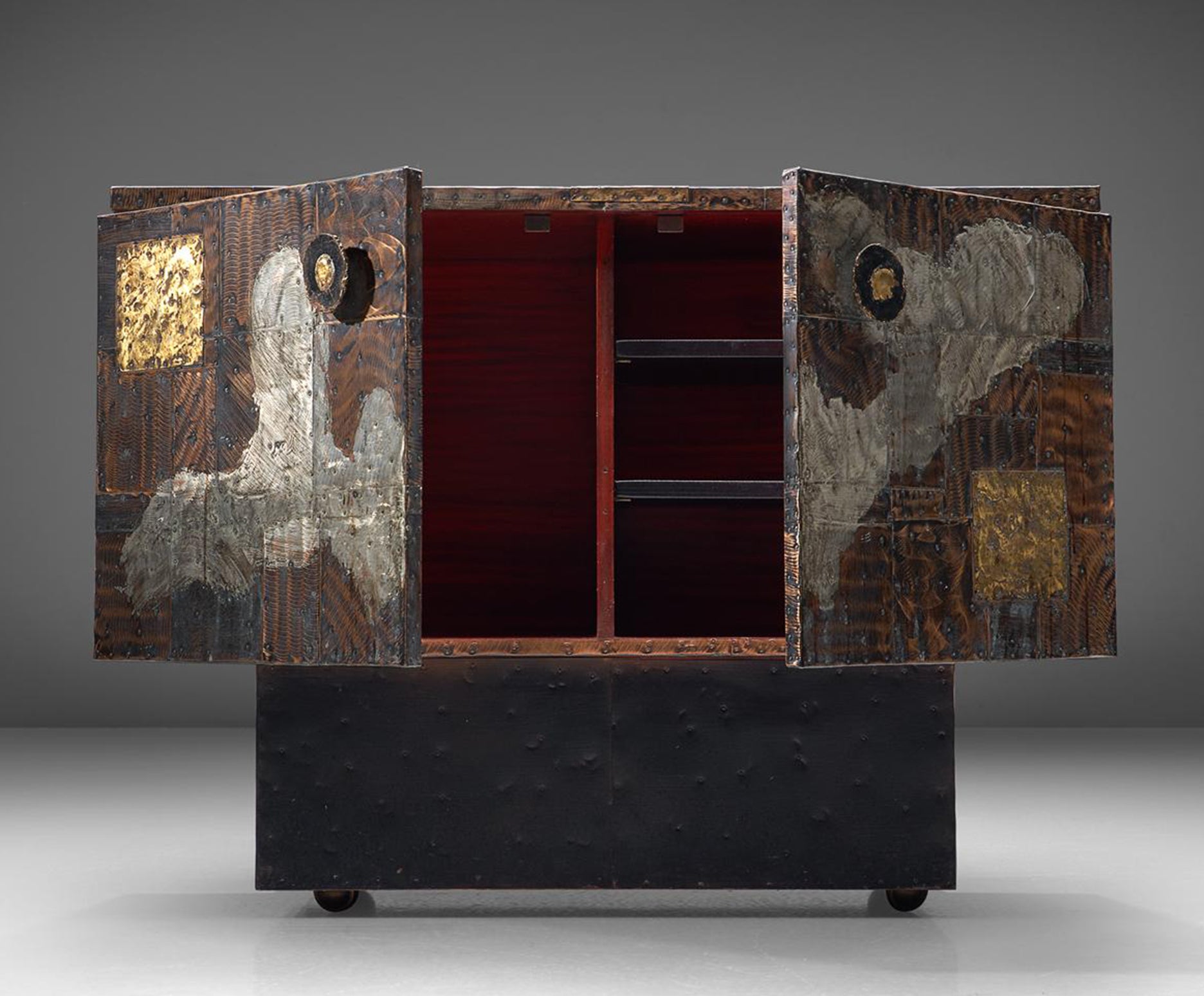
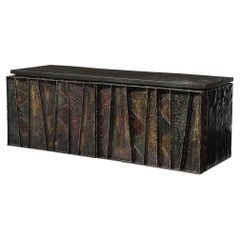
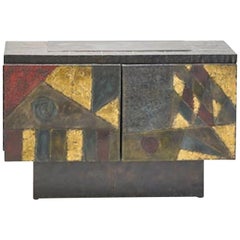
Executed in welded and enameled steel with gold colored accents, the cabinet’s façade is composed of deeply textured, hand-worked geometric panels arranged in a bold patchwork composition. Each panel exhibits Evans’ signature vocabulary of radial scoring, incised linework, circular punch patterns, diamond grids, and starburst motifs, accented by richly toned patinas and gilded elements that create dramatic visual depth and surface variation.
The cabinet retains its original removable slate inserts on the top surface, offering both material contrast and practical durability. The front features two doors with center bifold hinges, opening to reveal a well-proportioned interior with two shelves, making the piece as functional as it is sculptural.
This example is signed “Paul Evans” and dated “’74” on the underside of the right door, confirming authorship and period. The scale, complexity of the metalwork, and presence of original slate elements place this cabinet among the more desirable and visually commanding Directional models produced by Evans during the 1970s.
Paul Evans’ Directional work from this period is increasingly regarded as collectible American studio sculpture, sought after by private collectors, designers, and institutions alike. Cabinets of this caliber, particularly signed, large-scale examples with richly worked façades are far less common than seating or tables and consistently command strong interest in the high-end designer and collector market.
Ideal as a statement piece in Brutalist, Mid-Century Modern, Postmodern, or Architectural interiors, as well as in gallery environments, collectors’ residences, executive offices, or high-profile commercial projects. Its sculptural presence allows it to function as a focal point rather than ancillary storage.
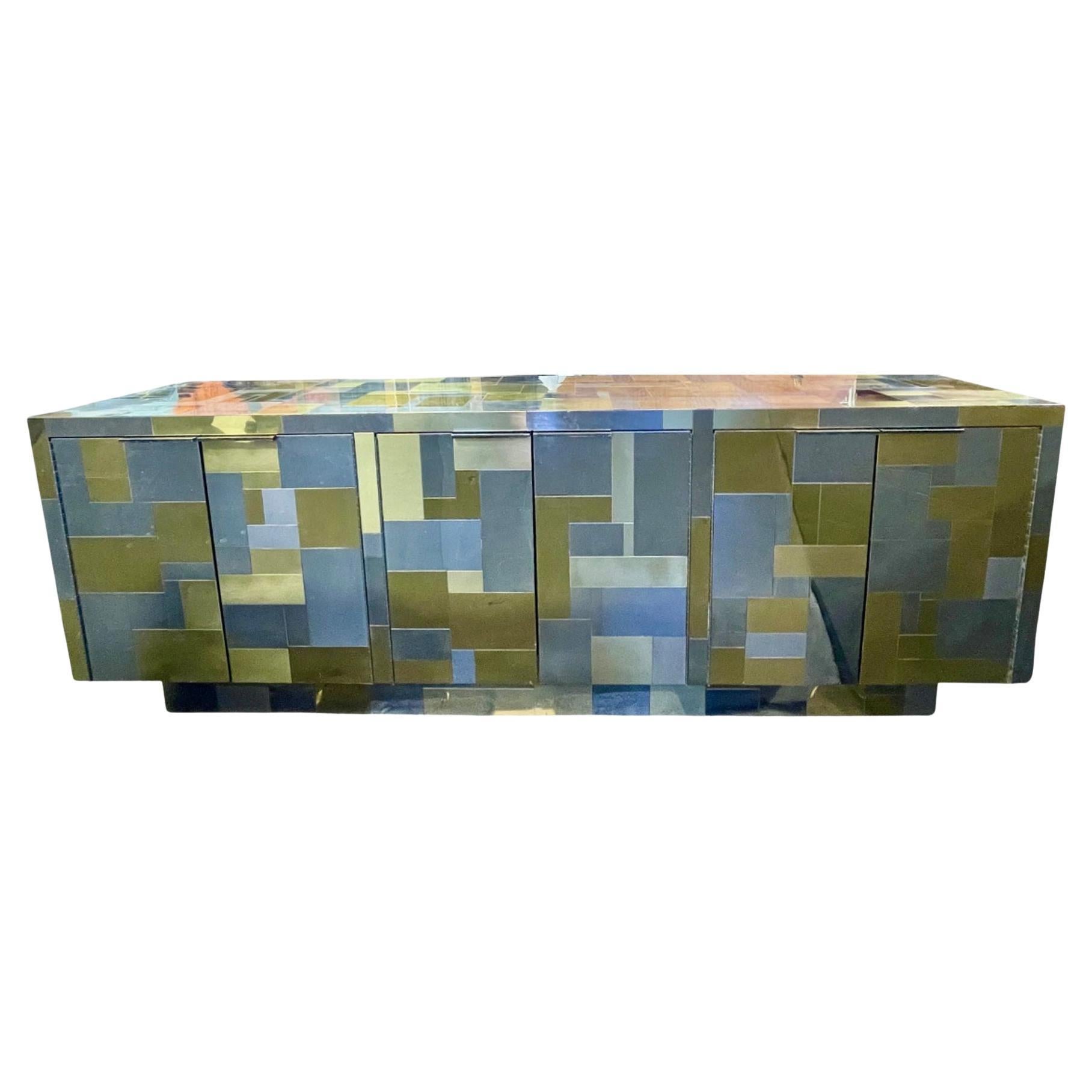
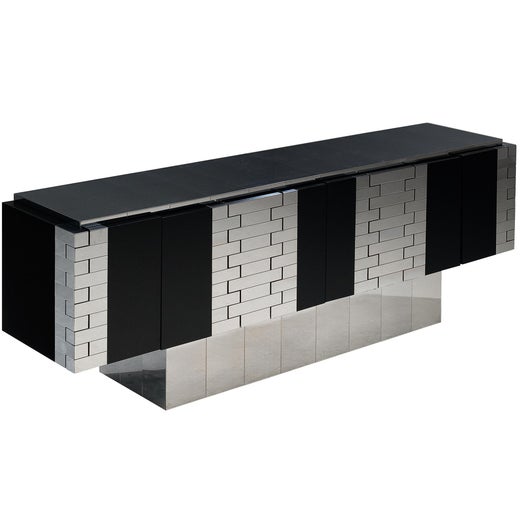
We also carry other Paul Evans designs, including Cityscape, Copper Patchwork, and Sculptured Metal Collections. Contact us for more information or see our other listings for more details.
ABOUT THE ARTIST:
Paul Evans was a pivotal figure in the American Studio Craft Movement, renowned for his innovative furniture designs that blurred the boundaries between art and function. Born in Newton, Pennsylvania, Evans honed his craft at institutions such as the Philadelphia Textile Institute, Rochester Institute of Technology, School for American Craftsmen, and Cranbrook Academy of Art.
In 1955, Evans relocated to New Hope, Pennsylvania, where he collaborated with Phillip Lloyd Powell, merging Powell’s woodwork with Evans’s metal craftsmanship. This partnership laid the foundation for Evans’s exploration into manipulating materials to achieve expressive surface effects.
By 1964, Evans joined Directional Furniture, marking a new chapter in his career. Directional provided Evans with a platform to showcase his avant-garde designs nationwide. His creations, characterized by bold textures and vibrant finishes, redefined contemporary furniture aesthetics. Despite their acclaim, Evans’s designs were eventually phased out due to production costs, prompting his departure from the company by the late 1970s.
Throughout the 1970s, Evans evolved his style, transitioning from textured, patinated surfaces to luminous, reflective metals interspersed with wood. His dedication to handmade craftsmanship and innovative design garnered international acclaim.
Tragically, Paul Evans passed away on March 7, 1987, leaving behind a profound legacy that continues to influence contemporary design and craftsmanship.
MEASUREMENTS:
H 31.5" x W 72" x D 21.5"
CONDITION:
Overall very good vintage condition and ready for immediate use. The metal exhibits light and even patina as to be expected. Colors are vibrant and rich. There is some minor waviness to the front doors, only noticeable upon close inspection. These convex contours may have been intentional or perhaps due to the metal expanding or contracting over time. It does not affect the use and is attractive, so it may have been intentional to the design. Some light scratching to the metal and to the wood in the interior. Slate has minor wear, including light scratches but no chips, cracks or any major issues. Overall this is a very attractive and nice example of the design, primarily the colors are clean, clear and vibrant making this a fantastic and prime collectors example.