Want more images or videos?
Request additional images or videos from the seller
1 of 9

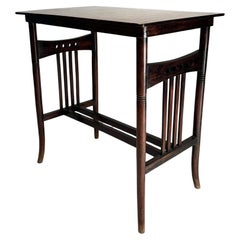
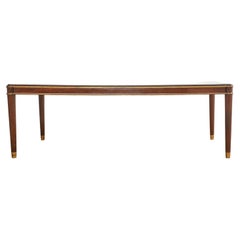
Rudolf Lorenz Center Table for Lorenz Mobel, Circa 1920, Austria

$6,500
£4,927.25
€5,746.49VAT Included
CA$9,329.29
A$9,405.72
CHF 5,355.73
MX$114,330.50
NOK 63,221.86
SEK 63,040.36
DKK 42,954.36

About the Item

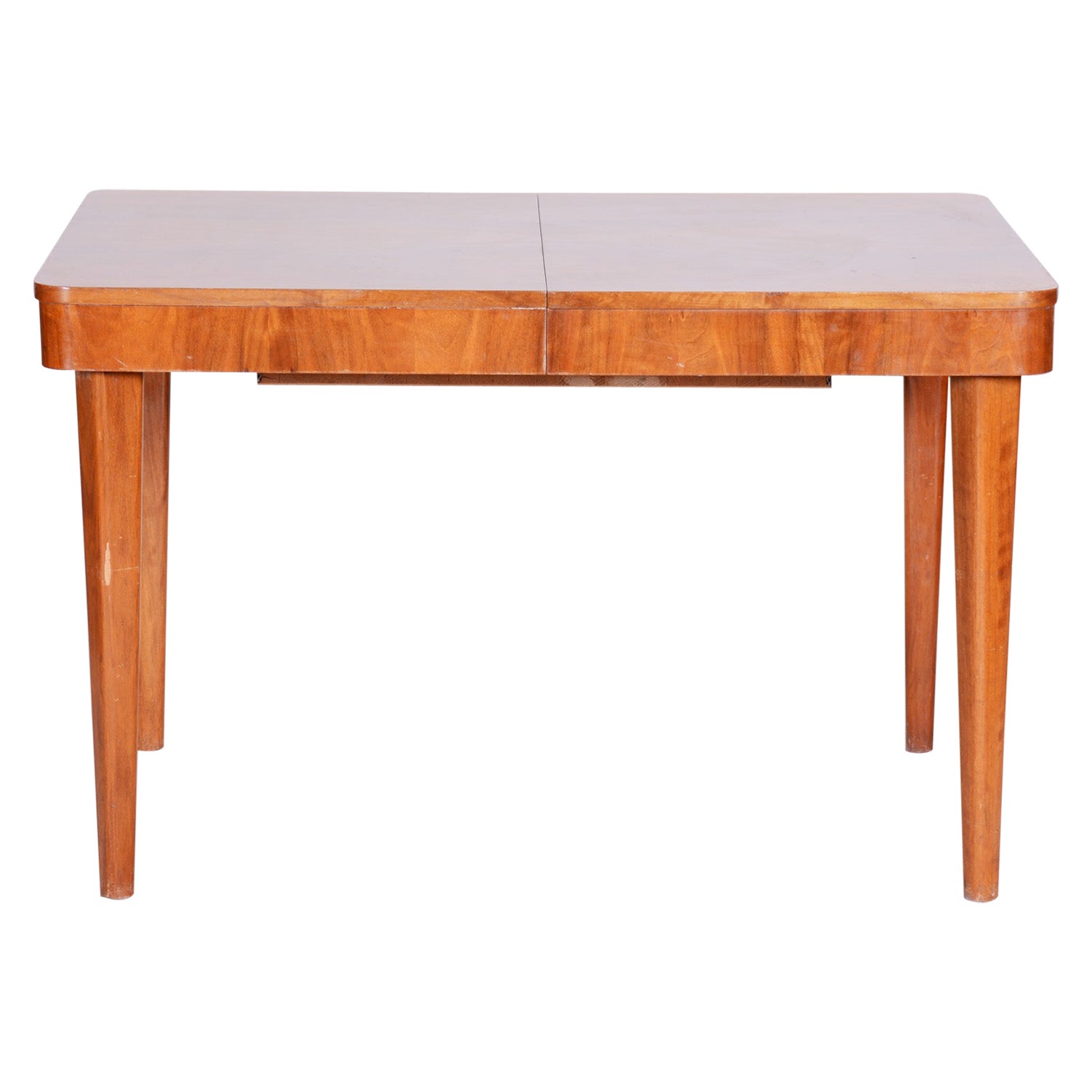
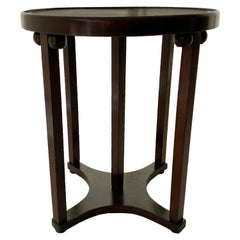
DESCRIPTION: Rudolf Lorenz Center Table for Lorenz Mobel, Circa 1920, Austria Vienna Secession Center Table by Rudolf Lorenz for Lorenz Mobel. Ebonized wooden table with nickel-plated brass details and a four-sided frieze. CONDITION: Good condition. Wear consistent with age and use. DIMENSIONS: Height: 78cm (31in) Width: 119.5cm (47in) Depth: 84cm (33in) ABOUT THE DESIGNER: Rudolf Lorenz was a Austrian furniture designer and active member of the Austrian "Vienne Secession" Movement. In 1919 Lorenz, with Samuel Goldfarb and Oskar Reiche created the "Lorenz Model" furniture company. This company remained active until 1938 when it was irradiated by the Austrian Nazi Group. ABOUT THE STYLE: “To every age its art, to every art its freedom.” The quote above is written above the door of the Secession Building, designed by Joseph Olbrich in Vienna in 1897. The building, purpose-built to hold exhibitions of the ‘new arts’ of modernity, was designed as a sort of visual manifesto of the Secession artists. It was a symbol of modern ideas, aesthetic principles and creativity. A group of artists had made a decisive break from the traditional fine arts and its institutions in Vienna. The two most dominant of which were the Akademie de bildende Kunste (the Academy of Fine Arts) and the Kunstlerhaus Genessenschaft – a private exhibiting society founded in 1861. Similarly to London, Paris, Rome and other artistic centres in Europe, the artistic world had become restrictive and continued to favour the academic painting and naturalism of the past. In consequence, new arts were often rejected by the exhibitors in favour of the old. The Secession Movement aimed to provide a space and forum for modern arts, and was hugely influential in its fleeting moment of impact. Possibly the most interesting characteristic of the Vienna Secession, as an artistic movement, was that it had no uniform artistic or aesthetic style. It was a cross pollination of ideas and its members sought inspiration from a multitude of sources, such as: the Arts and Crafts Movement of William Morris, folk art of the Austro-Hungarian Empire, Japanese art, Impressionism, the Glasgow School (particularly Charles Renee Mackintosh), the French and Belgian Art Nouveau, and Byzantium. Additionally, some of the artists went on to be associated with developing movements such as Modernism and Expressionism. The Secessionists believed in the equality of all forms of arts and crafts and sought to unite both in the Gesamtkunstwerk – total work of art. They rejected the increased industrialisation of the nineteenth century, and promoted a return to craftsmanship and handwork.
  • Creator:
    Rudolf Lorenz Gmbh Vienna (Designer)
  • Dimensions:
    Height: 31 in (78.74 cm)Width: 47 in (119.38 cm)Depth: 33 in (83.82 cm)
  • Style:
    Vienna Secession (Of the Period)
  • Materials and Techniques:
    Wood,Ebonized
  • Place of Origin:
  • Period:
  • Date of Manufacture:
    1928
  • Condition:
    Wear consistent with age and use. Good Vintage Condition.
  • Seller Location:
    Girona, ES
  • Reference Number:
    1stDibs: LU952641886752

More From This Seller

View All
Jules Leleu Gueridon, circa 1930, France

Jules Leleu Gueridon, circa 1930, France

By Jules Leleu

Located in Girona, Spain

Jules Leleu Gueridon, Made with mahogany and plated brass, circa 1930, France. Classic Art Deco design Sunburst table top 4 Art Deco designed Legs positioned on a pedestal base with bronze details Signed Good vintage condition. Jules Leleu (June 17, 1883–1961) was a French furniture designer. Born in Boulogne-sur-Mer, France, Leleu studied decorative painting and at the age of 26 succeeded his father in the family painting business. With his brother he began work in the Decorating field. After World War I, Leleu specialized in furniture making. He opened a Paris gallery, Maison Leleu, in 1924 and exhibited at the 1925 Exposition Industrielle et Arts Decoratifs, winning a grand prize at the exposition. Leleu designed the Grand Salon of the Ambassadors at the Society of Nations in Geneva and the French Embassies of several nations as well as the ocean liners SS Ile de France...

Category

Mid-20th Century French Art Deco Gueridon

Materials

Brass

Indiana Hickory Table, Circa 1920, USA

Indiana Hickory Table, Circa 1920, USA

Located in Girona, Spain

DESCRIPTION: Indiana Hickory Table, Circa 1920, USA Woven Hickory Table Top on central wooden base with decorative details. Unique piece. CONDITION: Good condition. Wear consistent w...

Category

Early 20th Century American American Craftsman Side Tables

Materials

Hickory

Art Deco Jean-Charles Moreux Coffee Table, circa 1940, France

Art Deco Jean-Charles Moreux Coffee Table, circa 1940, France

By Jean-Charles Moreux

Located in Girona, Spain

DESCRIPTION: Art deco coffee table by Jean-Charles Moreux made with oak and opaline glass. CONDITION: Very good vintage condition. Wear consistent with age and use. DIMENSIONS: He...

Category

Mid-20th Century French Art Deco Coffee and Cocktail Tables

Materials

Opaline Glass, Oak

Josef Hoffmann Gueridon, circa 1910, Austria

Josef Hoffmann Gueridon, circa 1910, Austria

By Josef Hoffmann

Located in Girona, Spain

Josef Hoffmann Gueridon. Made with bentwood. Vienna Secession Circa 1910, Austria. Vintage condition. The Austrian architect Josef Hoffmann was a central figure in the evolution of modern design, and a leader in an aesthetic movement born in Europe in the late 19th century that rejected florid, extravagant ornamentation in favor of a new emphasis on simplicity of line. As a founder of the turn-of-the-century Wiener Werkstätte (in English: the Viennese Workshops), a design cooperative that produced superbly crafted furniture and housewares, Hoffmann was a pioneering practitioner of what would become a fundamental principle of modernism: that good design is a way of life. Hoffmann came of age amidst a shift in the culture of the applied arts, as a conservative order that looked only to the past for inspiration was pushed aside. But what, exactly, would replace that order was in question, and Hoffmann’s career embodies the developing patterns of design’s new spirit. His architectural work reflects his time as a student of the Vienna architect Otto Wagner, who disdained excessive decoration and employed new materials such as steel girders and reinforced concrete to create buildings with airy, open interiors full of light. As a designer of furniture and interiors, Hoffmann was consistently open-minded about the aesthetics he explored. He was an early adherent of the flowing, organic forms of the Art Nouveau design movement that began to flourish in the late 1880s, but by the opening of the Wiener Werkstätte in 1903, Hoffmann’s designs embraced the beauty of geometry in pieces that feature grids and angular forms. Hoffmann’s greatest works reflect his ability to combine seemingly conflicting design visions into coherent wholes. His architectural masterpiece, the Stoclet Palace in Brussels, has an exterior that groups together simple geometric forms and spacious interiors marked by subtly naturalistic design details that lend rooms an air of charm and geniality. Hoffmann’s signature furniture design is an adjustable lounge chair, the Sitzmaschine (1905), that marries a curving frame with square and rectangular back- and side rests. This piece, like so many others by Hoffmann, reflects a groundbreaking, forward-thinking appreciation for the union of different looks and sources that marks the best of interior design in our own day. Moreover, items offered on these pages, which range from enameled silver jewelry, to a silver flower vase basket, to lighting pendants and sconces...

Category

Early 20th Century Austrian Vienna Secession Gueridon
Materials

Bentwood

Mid-Century Dining Table, circa 1970, France

Mid-Century Dining Table, circa 1970, France

Located in Girona, Spain

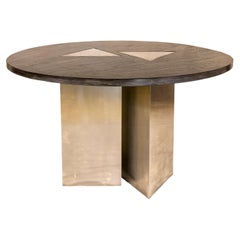
DESCRIPTION: Mid-Century Dining Table, circa 1970, France. Very decorative piece made with slate and stainless steel. CONDITION: Very good vintage condition. Wear consistent with a...

Category

Mid-20th Century French Mid-Century Modern Gueridon

Materials

Slate, Stainless Steel

Brutalist Cast Iron Center Table by Valenti, Circa 1970, Spain

Brutalist Cast Iron Center Table by Valenti, Circa 1970, Spain

By Valenti

Located in Girona, Spain

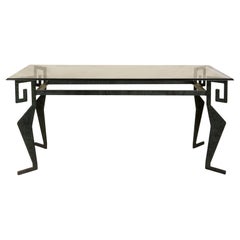
DESCRIPTION: Brutalist Cast Iron Center Table by Valenti, Circa 1970, Spain Antique Patina Greek Revival Solid Valenti Built with Glass Top CONDITION: Good condition. Wear consistent...

Category

Vintage 1970s Spanish Greek Revival Center Tables

Materials

Iron

You May Also Like

Gustav Siegel, for Jacob & Josef Kohn, a Vienna Secessionist Bentwood Table

Gustav Siegel, for Jacob & Josef Kohn, a Vienna Secessionist Bentwood Table

By J.&J. Khon 1, Gustav Siegel

Located in London, GB

Gustav Siegel made by Jacob & Josef Kohn. A Vienna Secessionist bentwood side or centre table. Original paper label to the underside. Jacob & Josef Kohn, also known as J. & J. Kohn...

Category

Vintage 1910s Austrian Vienna Secession Side Tables

Materials

Bentwood

Dining Table, Designed by Jindrich Halabala, 1940s, Made by Up Závody

Dining Table, Designed by Jindrich Halabala, 1940s, Made by Up Závody

By Up Závody, Jindřich Halabala

Located in Brandys nad Labem, Středočeský kraj

Art Deco table. Original condition Surface made by piano lacquers to the high gloss.

Category

Vintage 1940s Czech Art Deco Dining Room Tables

Materials

Lacquer, Beech, Walnut

Swedish Grace Art Deco Table, Sweden Late 1920s

Swedish Grace Art Deco Table, Sweden Late 1920s

Located in Skanninge, SE

Amazing Art Deco table made in Sweden during the so-called Swedish Grace 1920s period. Most likely by Carl Malmsten. Great quality and in a fine vintage condition. Freestanding, ...

Category

Vintage 1920s Swedish Art Deco Side Tables

Materials

Birch, Mahogany, Zebra Wood

Elegant beech coffee table from the Viennese Secession, J.J. Kohn

Elegant beech coffee table from the Viennese Secession, J.J. Kohn

By Jacob & Josef Kohn

Located in Argelato, BO

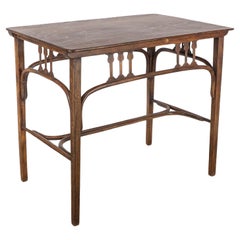
An elegant Viennese beech coffee table from the early 1900s, produced by J.J. Kohn. The beech was steam-bent, stained a warm dark mahogany, and polished. The four slender, slightly ...

Category

Antique Early 1900s Vienna Secession Side Tables

Materials

Beech

Adolphe Chanaux & Gilbert Pelletier Art Deco Dining Table, Circa 1930

Adolphe Chanaux & Gilbert Pelletier Art Deco Dining Table, Circa 1930

By Adolphe Chanaux & Co.

Located in London, GB

Art Deco dining table by French designers Adolphe Chanaux (1887-1965) & Gilbert Pelletier. Chanaux is famed for his association with Jean-Michel Frank with whom he worked with from...

Category

Early 20th Century Art Deco Dining Room Tables

Materials

Wood

Jules Leleu Attributed French Art Deco Dining Writing Table

Jules Leleu Attributed French Art Deco Dining Writing Table

Located in Rio Vista, CA

Fantastic French Art Deco dining table, writing table, or bureau plat attributed to Jules Leleu (French 1883-1961). The rectangular table features dramatic round column corners and a...

Category

20th Century French Art Deco Dining Room Tables

Materials

Bronze