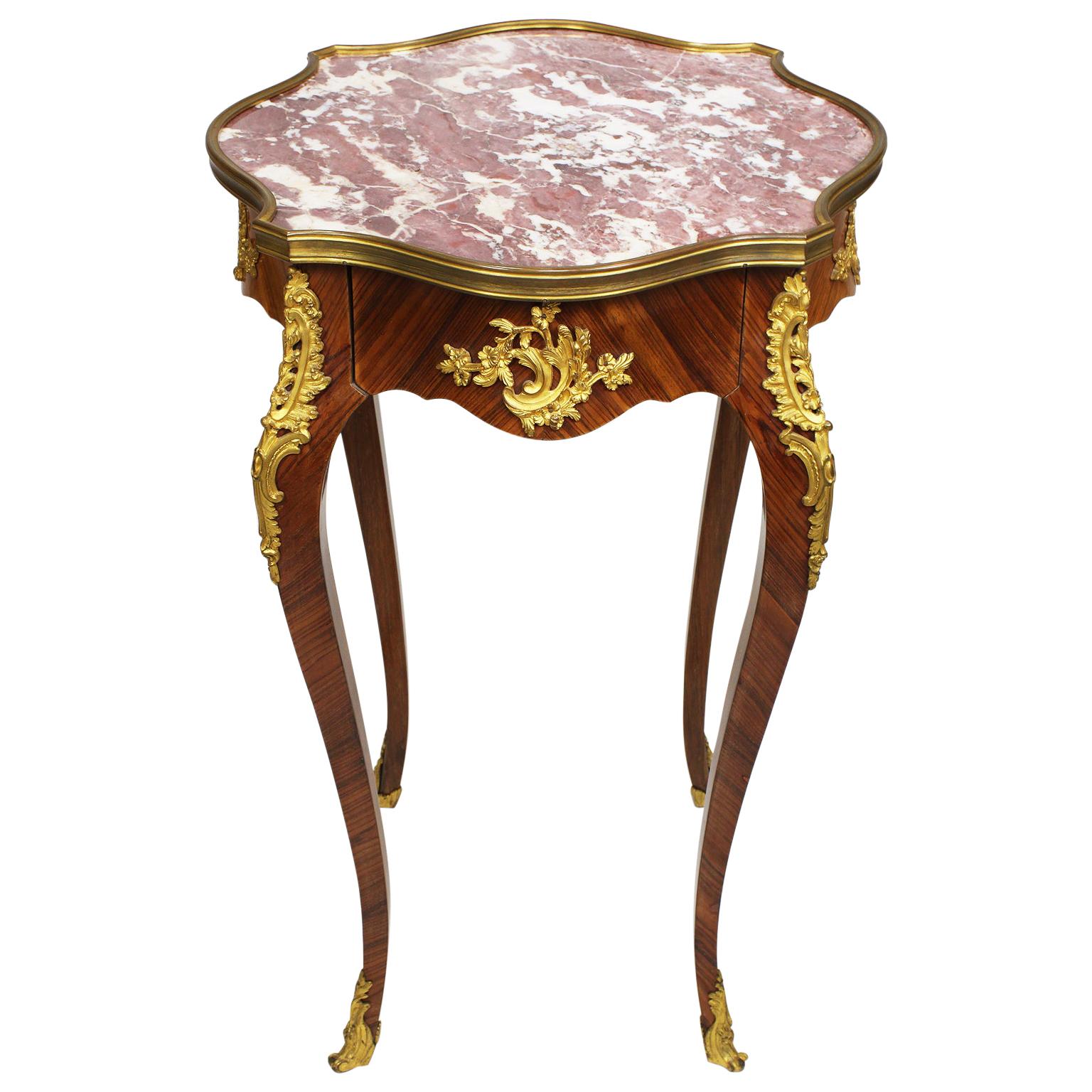
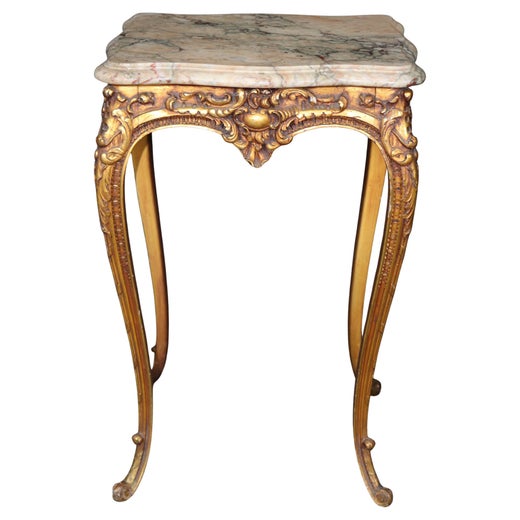
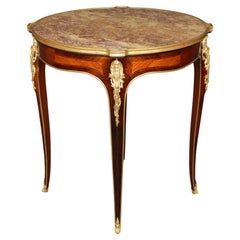
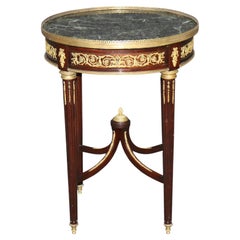
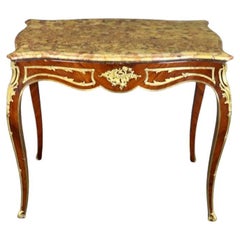
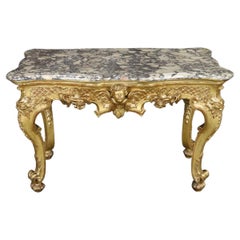
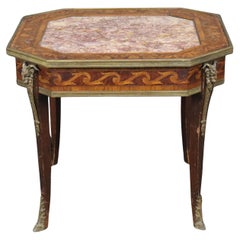
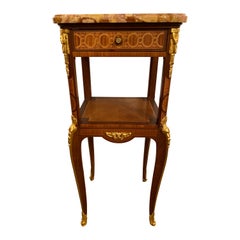
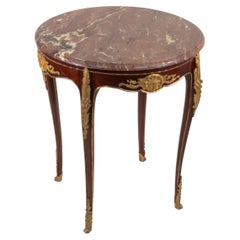
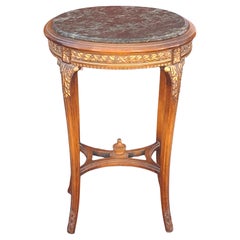
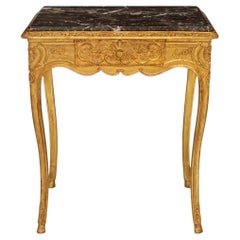
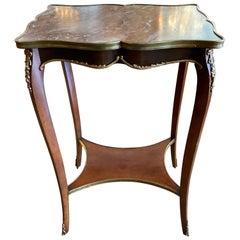
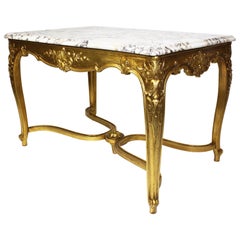
This rare François Linke–attributed Louis XV–style occasional table is the sort of object that doesn’t just sit quietly in a room—it clears its throat first, then tells you a story whether you asked for one or not. It’s elegant, yes, but also faintly mischievous, like it knows exactly how good it is and doesn’t feel the need to apologize.
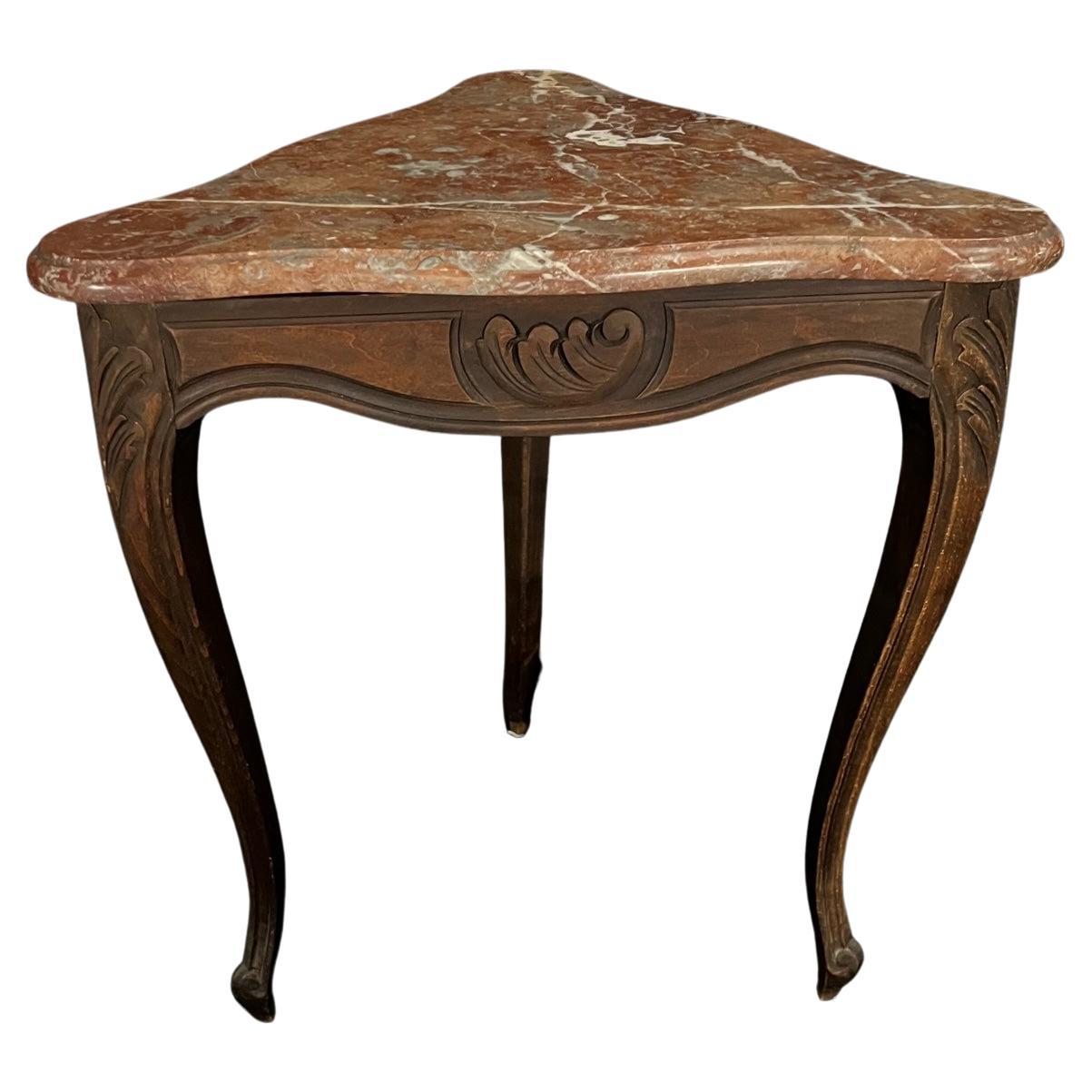
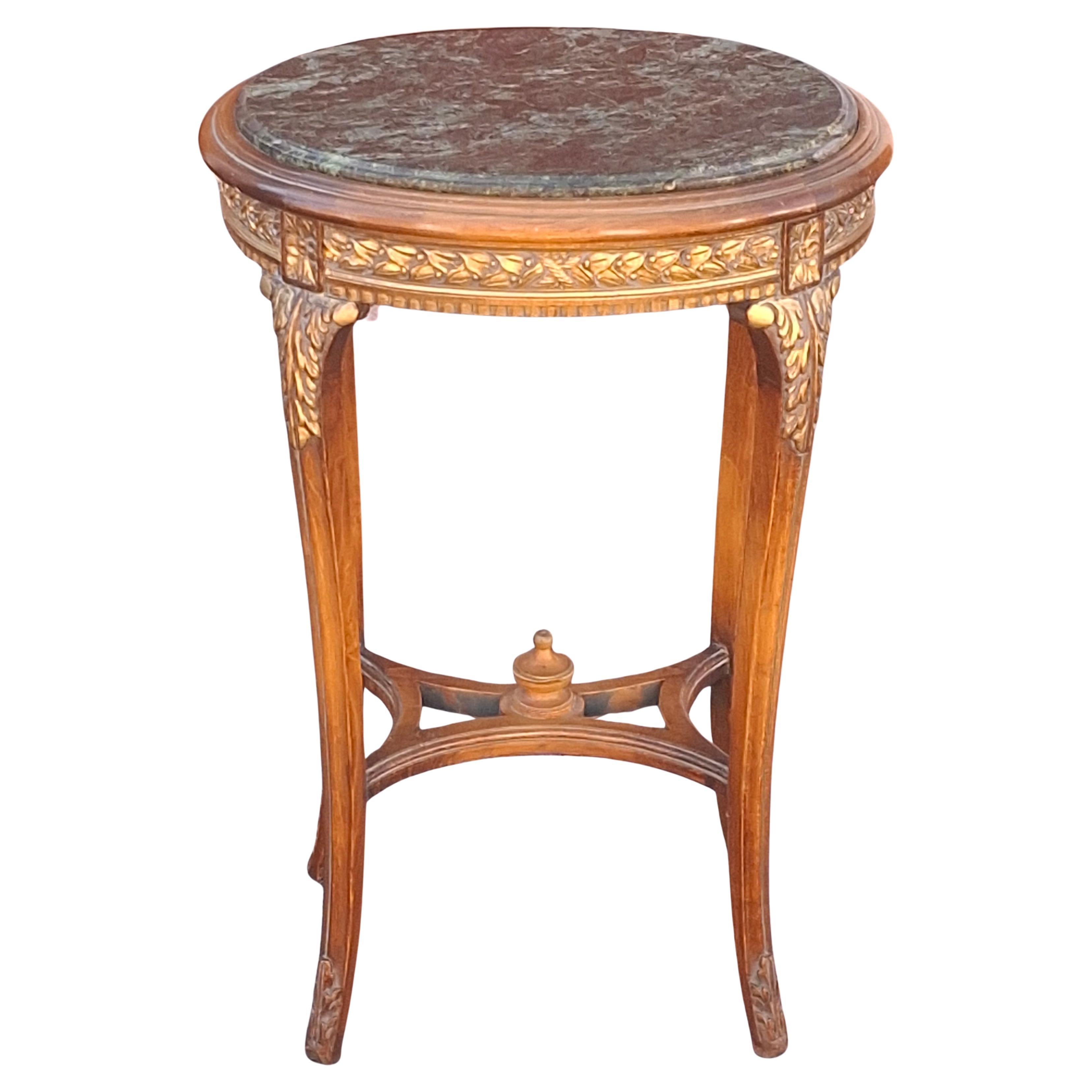
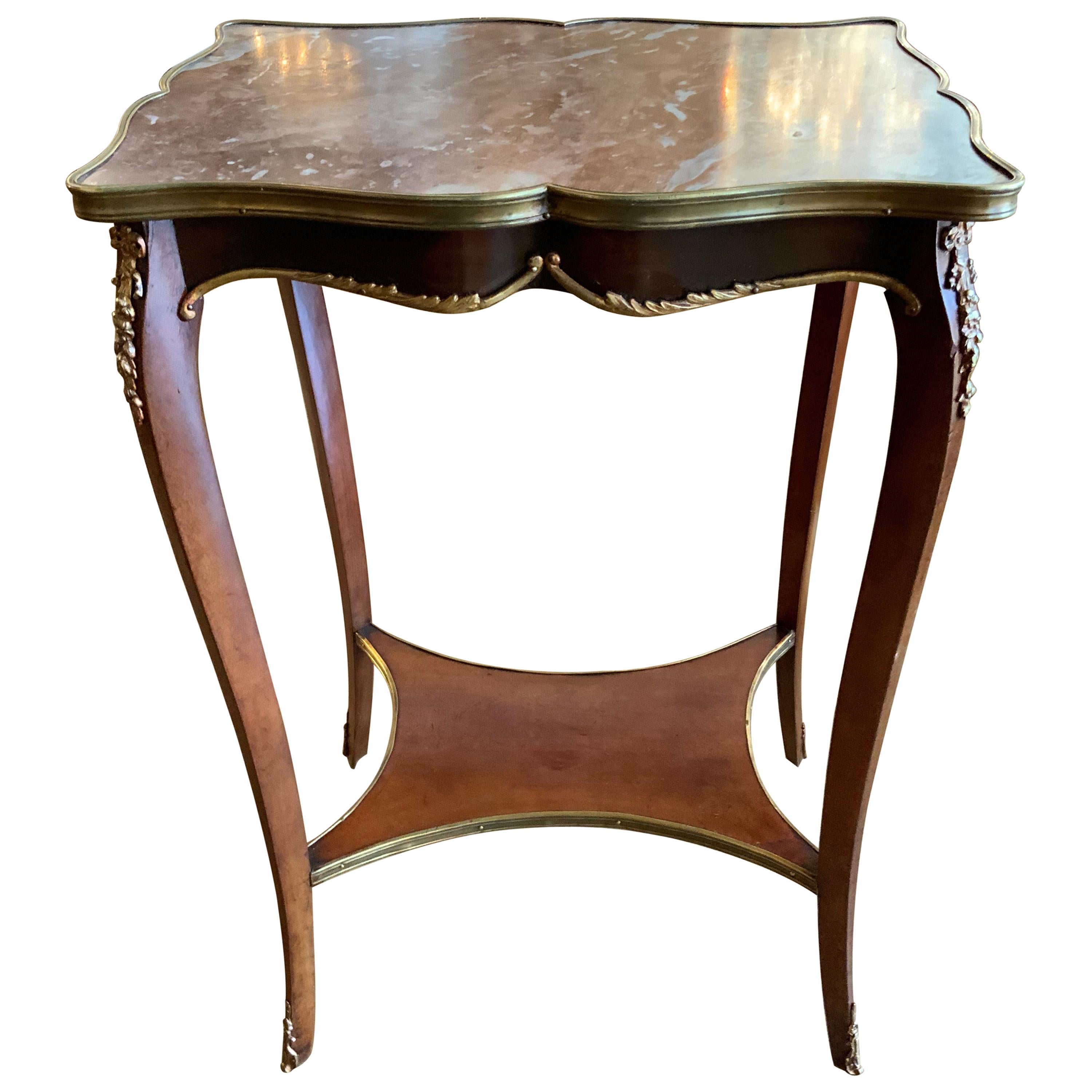
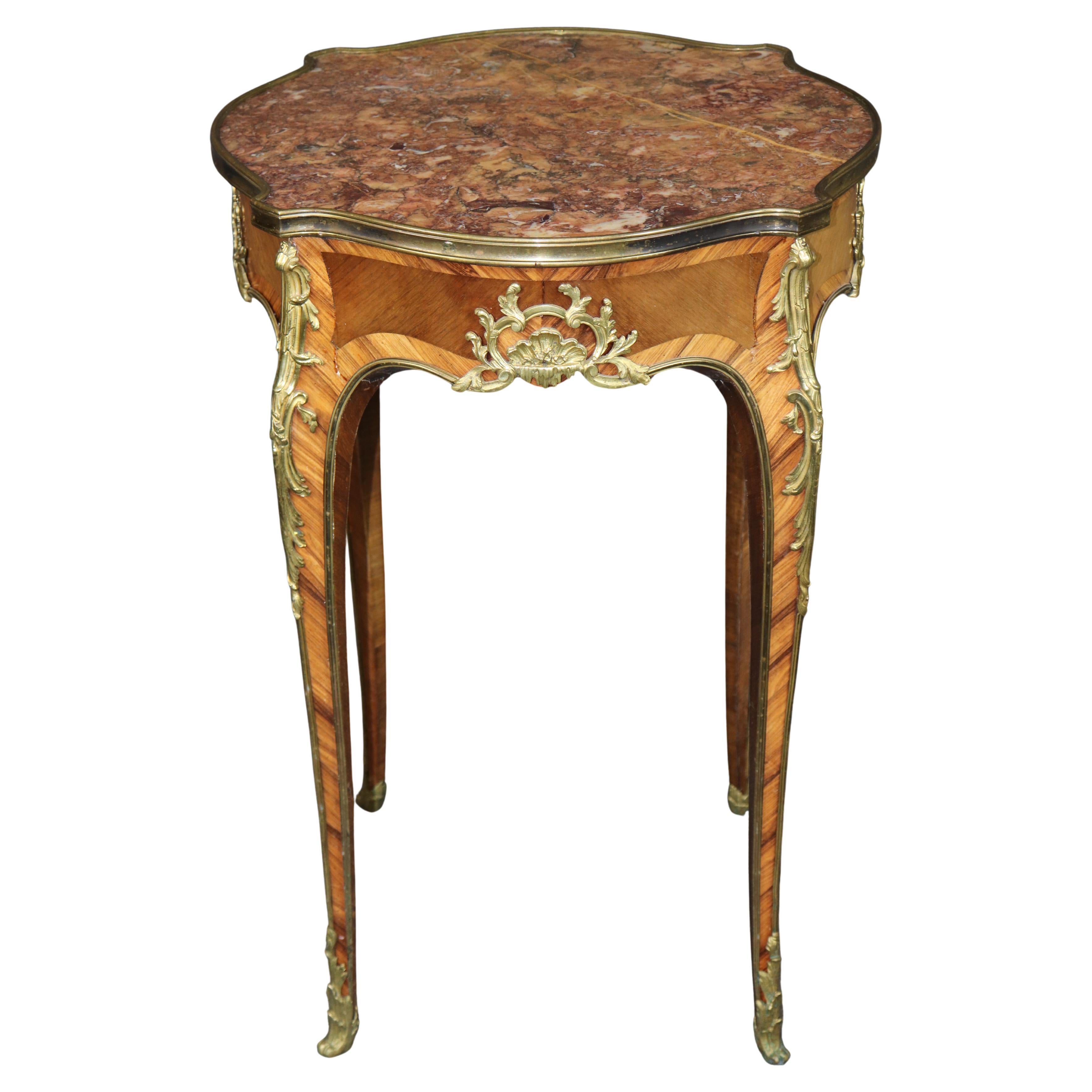
The form is classic Rococo revival, all curves and confidence. The cabriole legs sweep downward with that unmistakable French sense of movement, ending in delicate scroll feet that look less like they touch the floor and more like they’re pausing there temporarily. The apron is richly carved with asymmetrical scrolls, shells, and foliage, all flowing together as if the wood briefly forgot it was solid and decided to behave like water instead.
The surface is topped with a beautifully figured marble slab, softly shaped at the corners and naturally veined. It sits like a calm lake atop a very animated landscape. The marble shows gentle age and patina consistent with time—nothing distracting, just enough to remind you that this table has lived a life and done so with dignity.
Now, about the name that matters.
François Linke (1855–1946) was not merely a cabinetmaker; he was a phenomenon. Born in Bohemia and trained in Vienna, Linke arrived in Paris with a toolbox, a work ethic, and a very clear understanding that French aristocrats expected their furniture to be extraordinary. By the late 19th century, his Paris workshop had become synonymous with the highest level of craftsmanship in the Belle Époque.
Linke’s clients included European royalty, industrial magnates, and elite collectors—people who did not ask the price first. His furniture was shown at the great international exhibitions, including the 1900 Paris Exposition Universelle, where his work caused something of a polite uproar. It was Rococo reborn, but sharper, more confident, and technically flawless. His signature lay not just in design, but in execution: impossibly crisp carving, perfect proportions, and ormolu mounts that looked more like jewelry than hardware.
What makes this table special is that it captures that spirit on a smaller, more intimate scale. It’s not shouting across a ballroom. It’s leaning in close, speaking quietly, and assuming you’re smart enough to listen.
Placed beside a chair, beneath a mirror, or standing alone like a punctuation mark in a well-written room, this Linke table brings history, craftsmanship, and a sense of humor all at once. It’s refined without being stiff, luxurious without being unreasonably precious—and like all great furniture, it improves the room simply by being there.
Measures 28 tall x 18 wide x 15.5 deep.