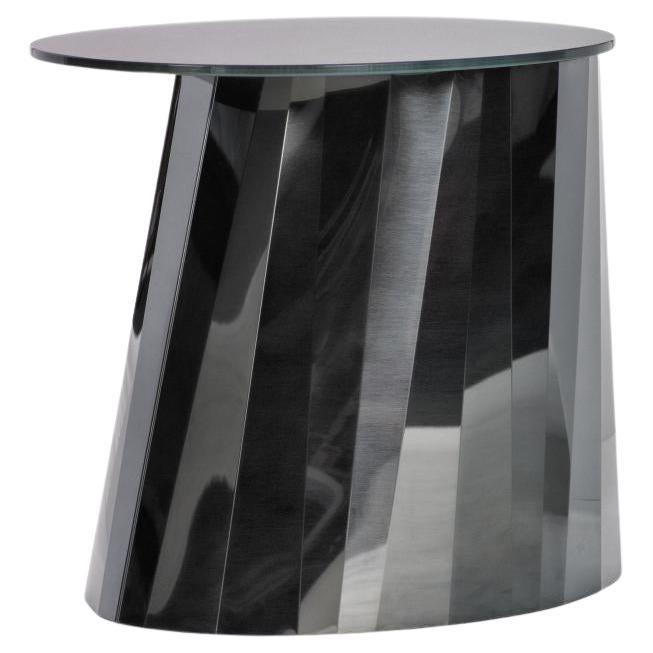
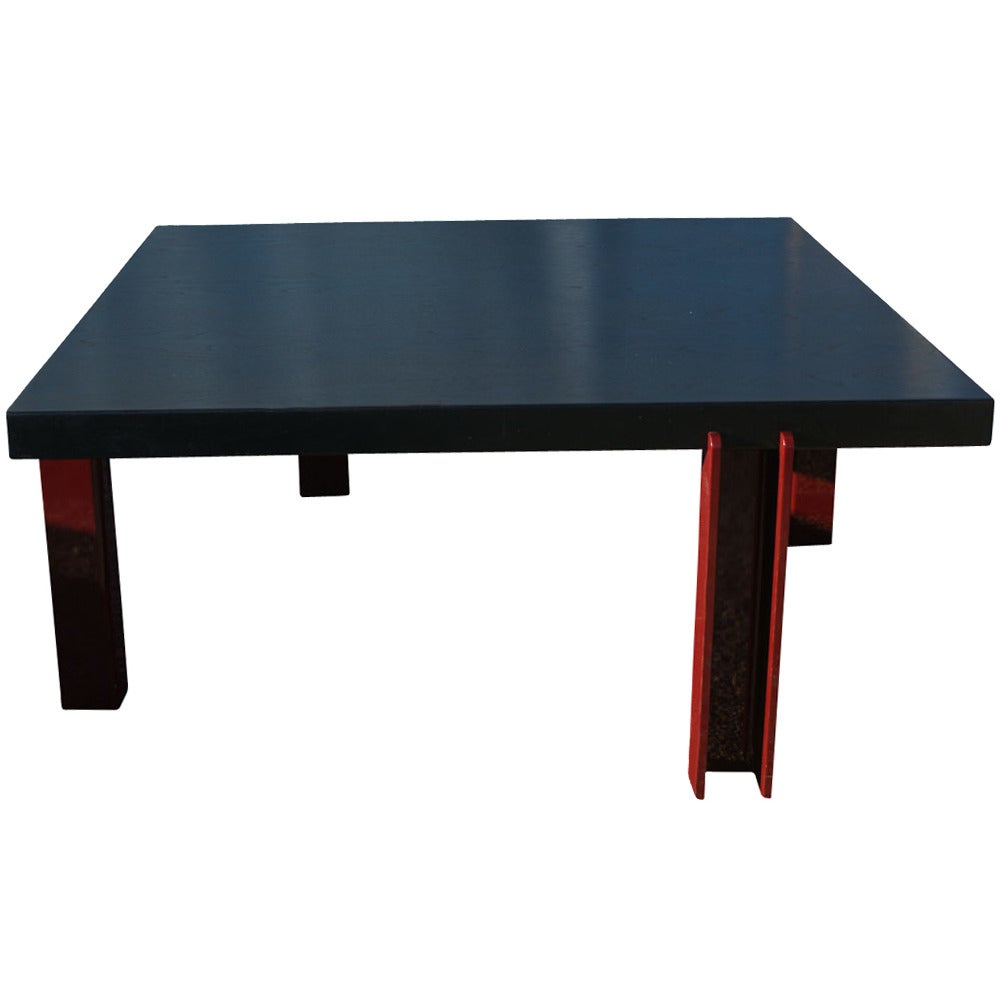
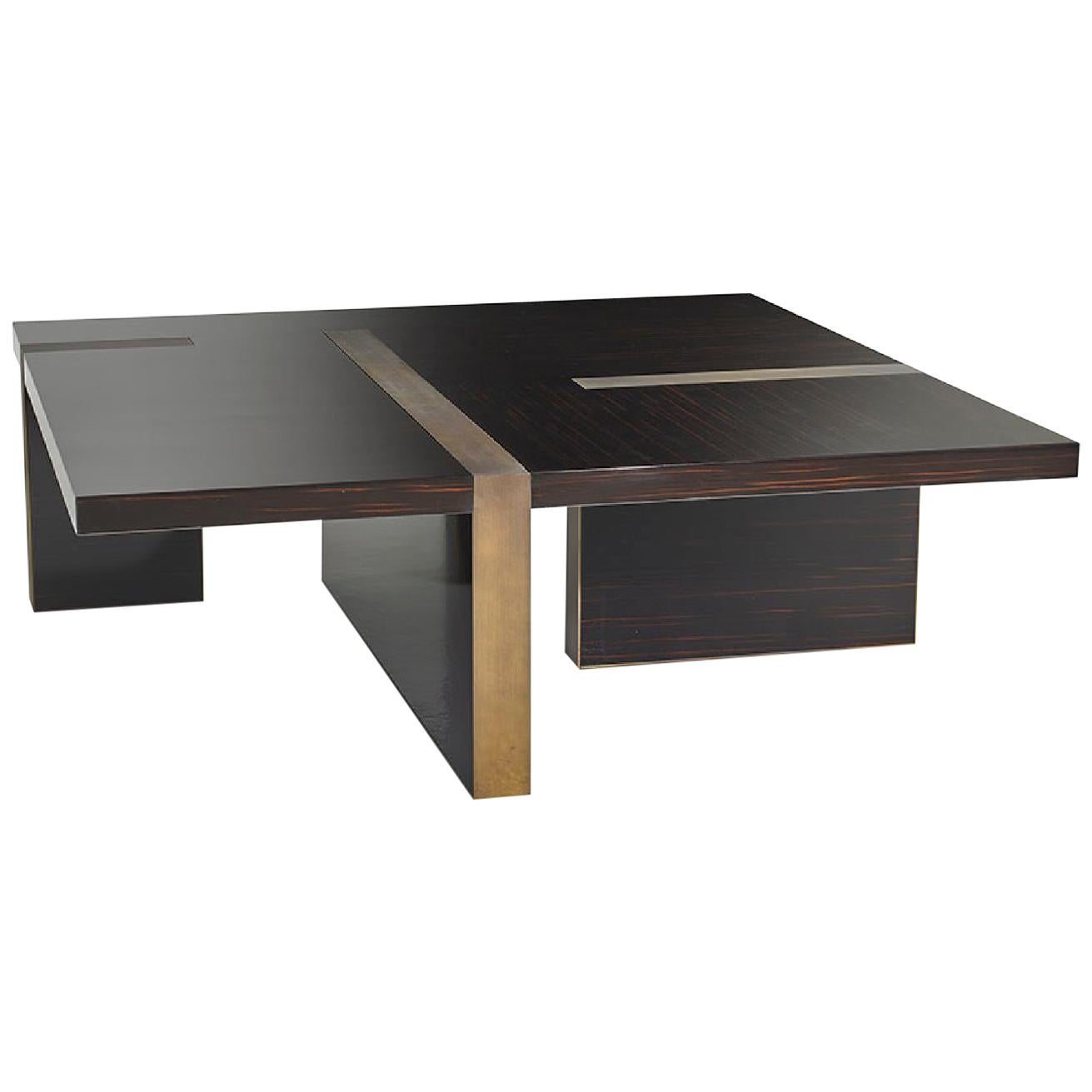
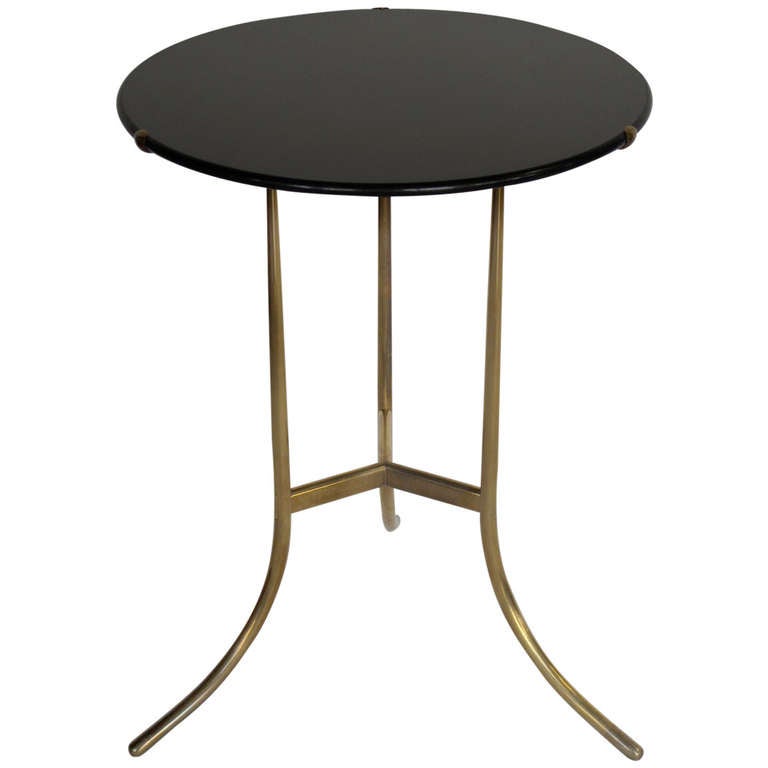
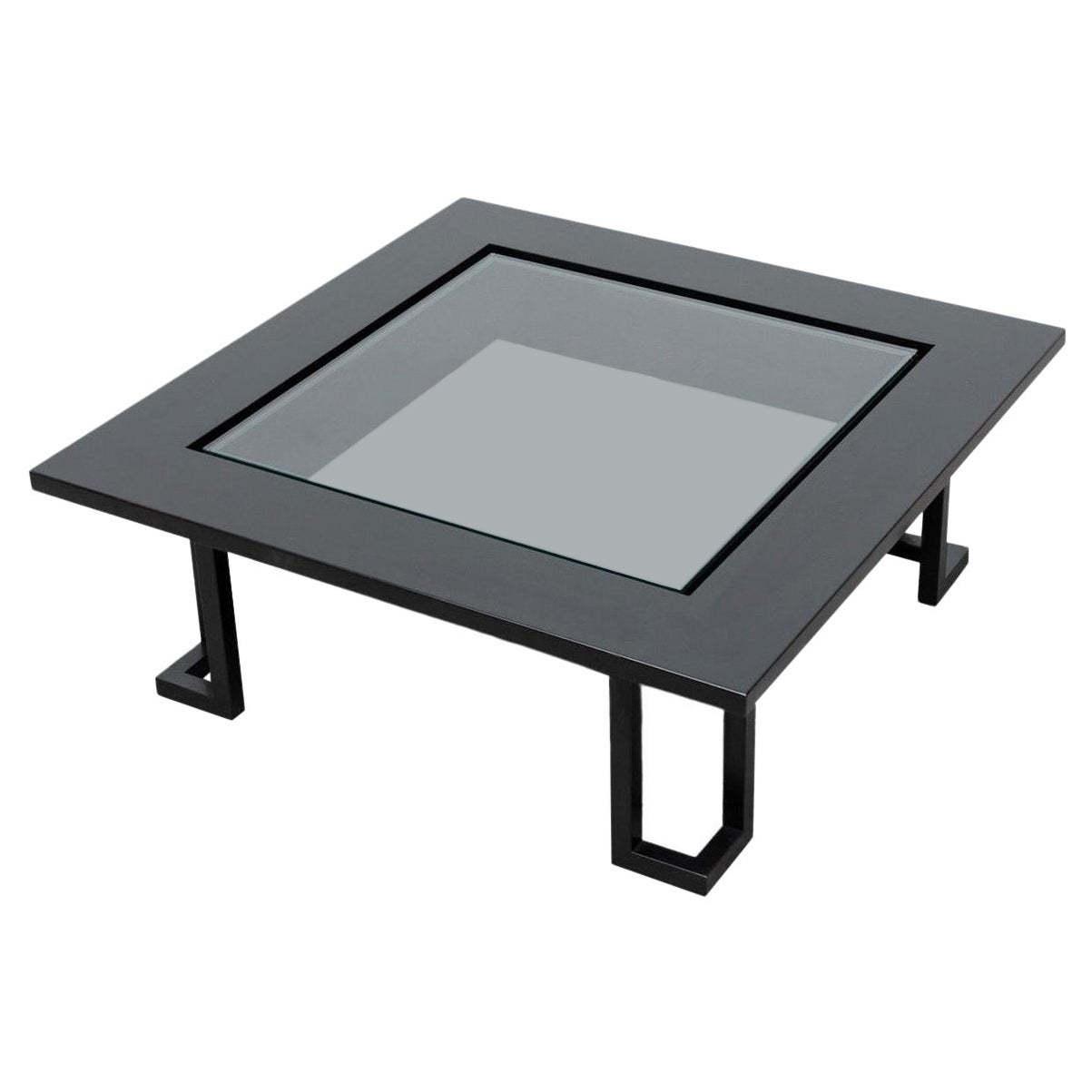
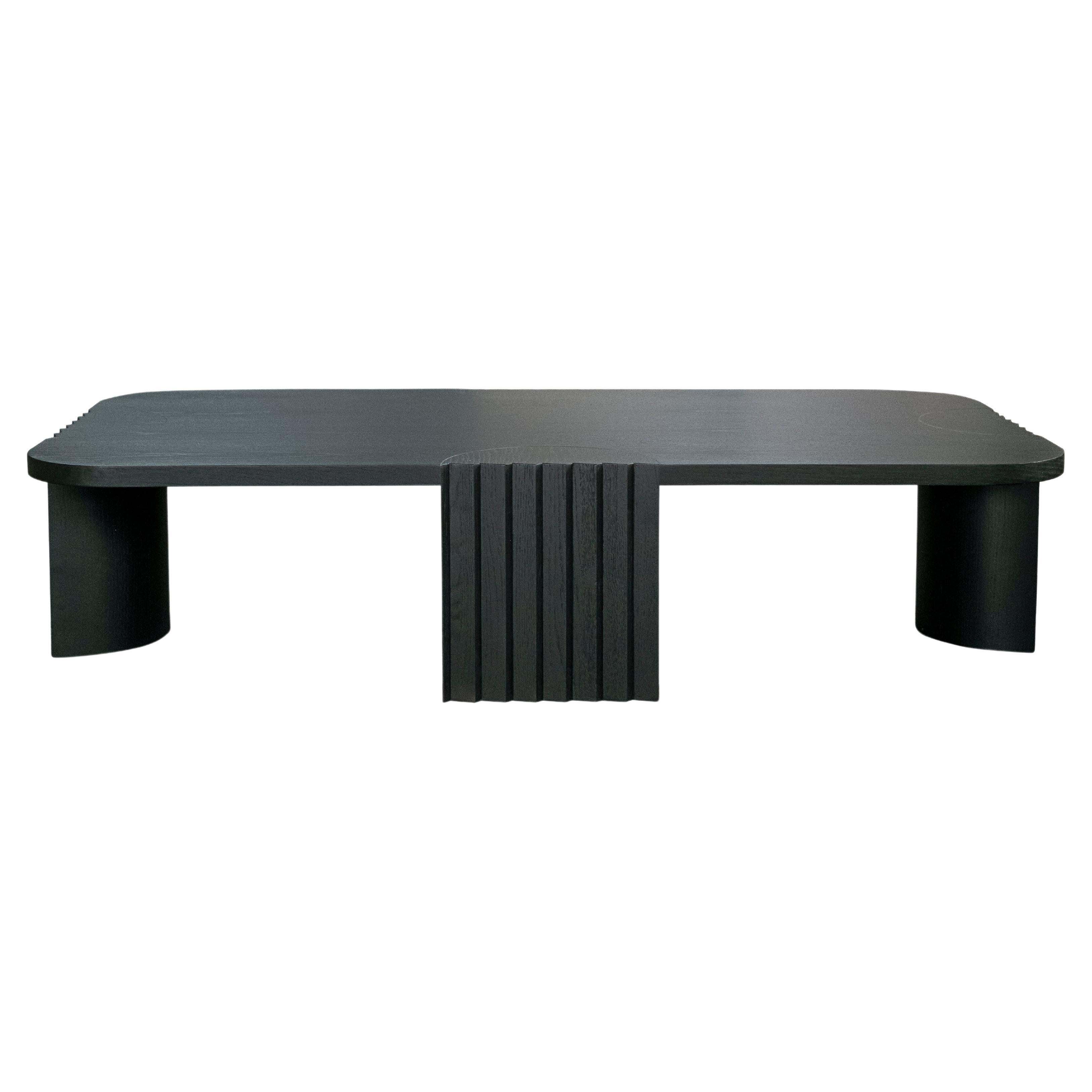
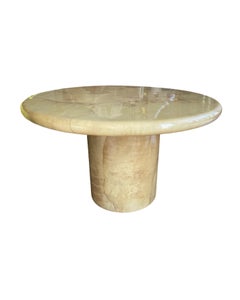
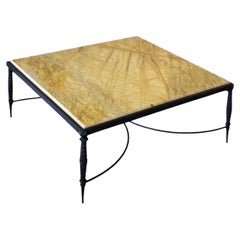
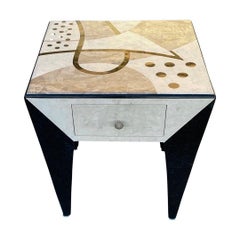
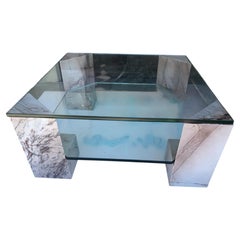
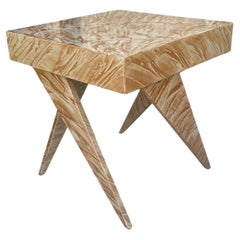
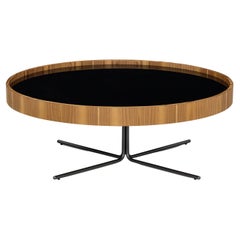
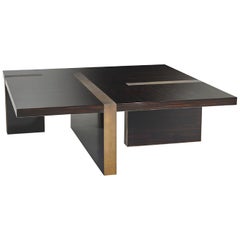
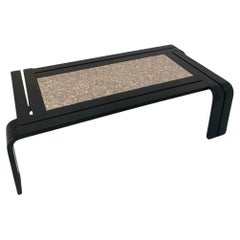
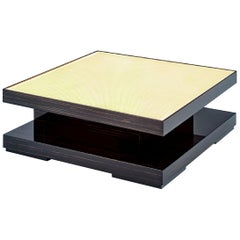
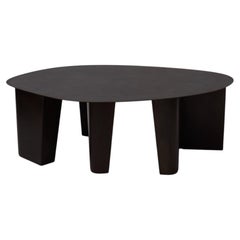
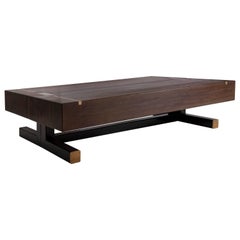
Iconic Steve Chase Design. Custom made for a multi-million dollar residence at Vintage CC, Indian Wells, Ca. It has all the elements he was famous for. Thick bullnose edge "black absolut" granite. A beautiful shade of wood (either maple of walnut) mixed with a chrome base and chrome band underneath top. These tables from the legendary Palm Springs CA based designer that became famous worldwide are very hard to find any longer. This table was purchased from the original owners. 42" w x 18" tall. Available now for delivery or pick up in Palm Desert, CA.
Steve Chase:
To understand exactly how famous Steve Chase was, hear this: In the late 1980s, legendary former first lady Jacqueline Bouvier Kennedy Onassis, multimillionaire oil magnate Armand Hammer, and the man himself were among the handful of well-heeled passengers awaiting takeoff from New York City to Paris on the Concorde. Upon glimpsing the trio, the flight attendant excitedly exclaimed, “Oh, my god! You’re interior designer Steve Chase!”
Then in his late 30s, the desert-based Chase — with his lanky frame, bronzed skin, and silvery coif — effortlessly exuded star quality. But his worldwide notoriety came courtesy not only of his countless celebrity and corporate clients (for instance, he designed the interior of the first Lear jet) but of his numerous appearances in Architectural Digest. By the time of his 1994 death to AIDS in Palm Springs at age 52, Chase’s image and work had been splashed across that glossy almanac’s pages more than any of his contemporaries’.
Born in New Hampshire but raised in Southern California, only-child Stephen Barrett Chase evinced an innate flair for design at an early age. After graduating from Providence’s Rhode Island School of Design and also the Art Center School in Los Angeles, he was recruited in 1967 by the distinguished desert designer Arthur Elrod to join his eponymous Palm Springs firm. It was there that Chase began to hone his signature, contributing to the creation of the crisp yet opulent California style, whose cornerstones include the showcasing of natural elements such as wood, granite, glass, and leather. When Elrod died in an automobile accident in 1974, Chase remained with the practice until 1980, when he broke out on his own, quickly rising to great, lasting heights.
THE PALM SPRINGS ART MUSEUM
Retired Palm Springs Art Museum chief curator Katherine Hough — who holds an undergraduate degree in architectural interiors — worked alongside Chase at Arthur Elrod Associates, and the two developed a fast friendship lasting more than 20 years. “He was just an extraordinarily creative, outstanding person,” she says. “Not your average kind of guy at all. He’d walk into a room — dressed beautifully, with great style — and have this presence that no one else had. No one could keep up with him. He was go, go, go. Always openly gay. A real individual. A leader. Never a follower.”
Hough also remembers how the exceedingly generous Chase would give Alaskan cruises or trips to Hawaii to his staff as a Christmas bonus. This magnanimity extended to Hough in the form of a promise he made to her early on in her tenure at the museum.
“Steve was a designer who liked to choose every single object in a client’s home, including all the accessories and all the artwork,” she recalls. “He worked with a few major art galleries in New York, Chicago, San Francisco, and Los Angeles. He would select contemporary art and encourage clients to buy it for their home — or homes. At the same time, he started collecting himself for his own residences. He told me he wanted to build a considerable collection that would complement the museum’s — one that he would eventually leave to the museum. And that’s exactly what he did.
“Through the two decades we knew each other,” she continues, “he would always check in with me. He didn’t want to duplicate work we already had. He’d say, ‘I won’t buy such-and-such artist if you already have a really great example of them.’ Later, when he became a member of our Contemporary Art Council Acquisitions Committee, if the museum could afford to purchase only one of a selection of desired works, he would buy the others, knowing that one day they would eventually make their way back to us.”
True to his word, Chase bequeathed 132 works of art — ceramics, glass, sculpture, and paintings by artists such as David Hockney, Ellsworth Kelly, Helen Frankenthaler, Ed Ruscha, Sam Francis, and Nathan Oliveira — to the museum. He also left $1.5 million to literally raise the facility’s roof and build a third floor. The Steve Chase Art Wing and Education Center was dedicated in November 1996.
“Without Steve Chase, we’d probably still be a natural science museum with desert animals and desert dioramas,” says Hough of the institution that began as the Palm Springs Desert Museum in the ’30s. “His collection launched us into a different realm, quality- and quantity-wise. It brought us into a new era. That’s when people — donors, other collectors — started taking us seriously.”