Video Loading
Want more images or videos?
Request additional images or videos from the seller
1 of 21

Sir Thomas Boleyn Handmade Brass Rubbing Art/British Royality

$1,430
£1,079.61
€1,263.61
CA$2,032.03
A$2,066.77
CHF 1,181.81
MX$24,999.25
NOK 13,846.90
SEK 13,843.58
DKK 9,446.21

About the Item

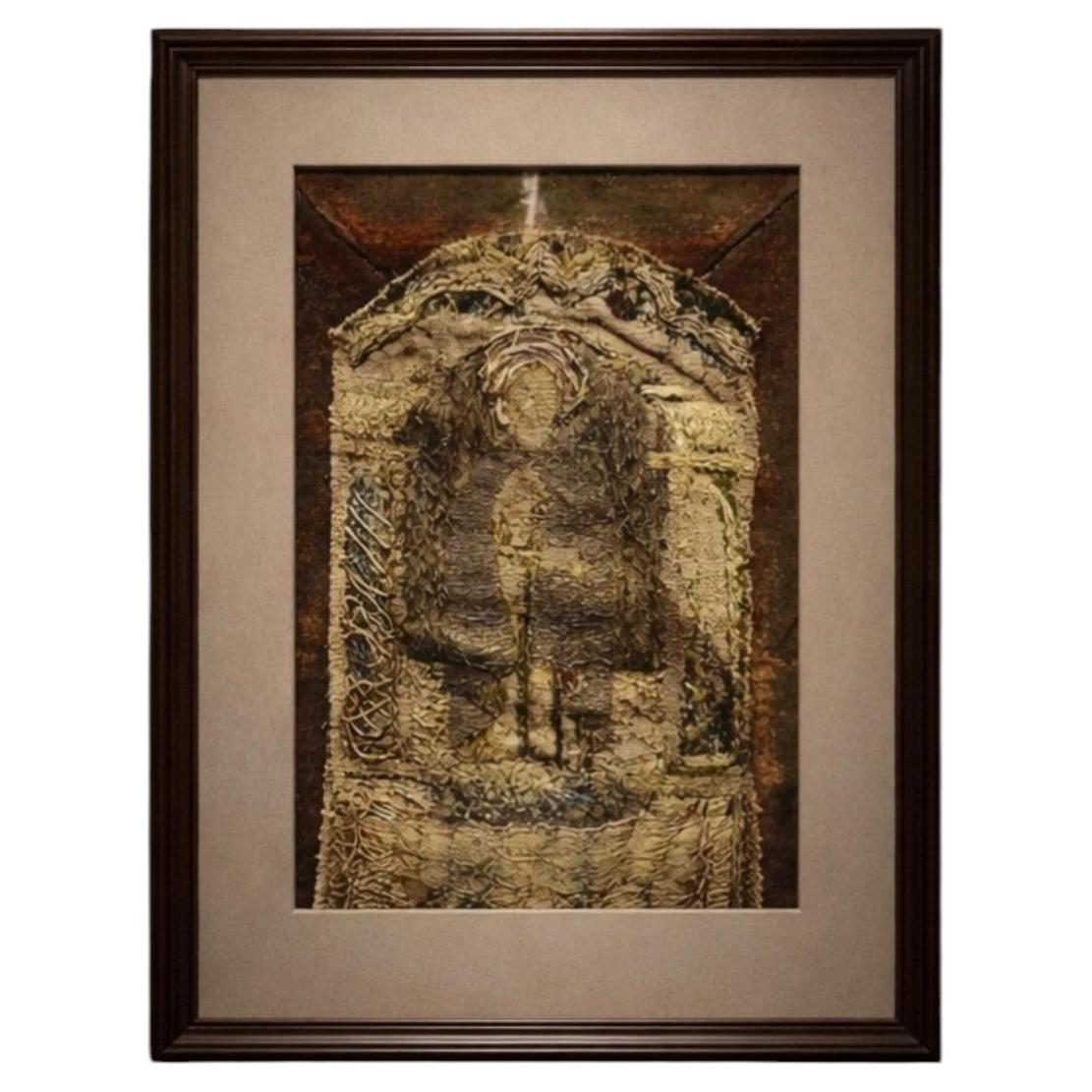
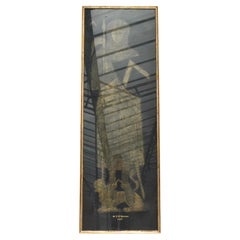
For your consideration, this brass rubbing is in good condition, Sir Thomas Boleyn (Bullen) circa 1539 , was the grandfather of Queen Elizabeth One. Appears to be gold leaf on black paper. Brass rubbing is a technique to copy monumental brasses, which are engraved metal effigies or plaques laid on tombs in churches. Stunning large rubbing of Sir Thomas He has been made with gold heelball on black paper produced specifically for brass rubbing. Sir Thomas Boleyn's brass is located in Hever, Kent, Great Britain. Sir Thomas was the father of Anne Boleyn, the second wife of Henry VIII and grandfather to Elizabeth I. Brass rubbings are done by stretching a linen rag paper over the deeply etched monumental brass that is usually found at the gravesite. After securing the paper, heelball (a very hard wax) is rubbed vigorously over the paper surface to get an exact copy of the brass plate. A single rubbing can take from 2 hours to 2 days to complete depending in its size, condition, and complexity. This is a stunning piece and would be an statement piece in any room Of your home Dimensions: (FRAME) 63" H x 31" W x 1.5" D Delivery within 200 miles from San Diego CA is available for an additional fee. (LA, OC, PS) Please visit take a look at our listings, we have an amazing curated collection of hard to find items.
  • Dimensions:
    Height: 63 in (160.02 cm)Width: 31 in (78.74 cm)Depth: 1.5 in (3.81 cm)
  • Style:
    Neoclassical (In the Style Of)
  • Materials and Techniques:
  • Place of Origin:
  • Period:
  • Date of Manufacture:
    1539
  • Condition:
    Wear consistent with age and use. Minor fading. Original vintage unrestored condition. Expect signs of vintage wear. Overall good condition. Firm and sturdy. Curated by AMBIANIC.
  • Seller Location:
    Chula Vista, CA
  • Reference Number:
    Seller: ACC102125061stDibs: LU971547142332

More From This Seller

View All
French Art Silverplate: Le Colin-Maillard Etching Jacques Firmin Beauvar

French Art Silverplate: Le Colin-Maillard Etching Jacques Firmin Beauvar

Located in Chula Vista, CA

Vintage French Art Silverplate: Le Colin-Maillard Etching Jacques Firmin Beauvarlet Artist: Jacques Firmin Beauvarlet (French, Abbeville 1731–1797) Artist: After Jean Honoré Fragonar...

Category

Early 20th Century French Rococo Drawings

Materials

Silver Plate

Vintage Silver-plated French Art Etching: La Rencontré Dangereuse

Vintage Silver-plated French Art Etching: La Rencontré Dangereuse

Located in Chula Vista, CA

Silver Plated French Art: La Rencontré Dangereuse Frame 12 w x 15.13 h x 1 d Art 6.75 w x 9.88 tall Etched with colors on silverplated sheet. Beautiful velvet and wood frame Made in ...

Category

Early 20th Century French Rococo Drawings

Materials

Silver Plate

Early 20th Century Byzantine Female Icon Gold Painting

Early 20th Century Byzantine Female Icon Gold Painting

Located in Chula Vista, CA

AMBIANIC presents Gold Byzantine Wall Art Female Icon 11.5tall x 9.75w x 1d inches  Art 9.5 x 7.75 Preowned Unrestored original Vintage Condition. Minor losses and fading. Distress. ...

Category

Early 20th Century Unknown Classical Roman Paintings

Materials

Gold Leaf

1970s Los Castillo Silver Virgin Mary Plaque Wall Art Taxco Mexico

1970s Los Castillo Silver Virgin Mary Plaque Wall Art Taxco Mexico

By Los Castillo

Located in Chula Vista, CA

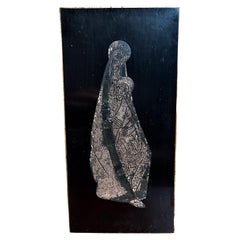
1970s Los Castillo Virgin Mary Silver Black Wall Art Taxco Mexico Silver on Black Lacquered Wood 10.25 H x 5 W x .75 Thick Made in Mexico. Maker sta...

Category

Late 20th Century Mexican Mid-Century Modern Decorative Art

Materials

Silver

1960s Fine Chinese Silk Art Embroidered Tapestry Panel

1960s Fine Chinese Silk Art Embroidered Tapestry Panel

Located in Chula Vista, CA

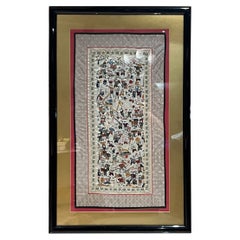
1960s Fine Chinese Silk Art Embroidered Tapestry Village Folk framed Frame 32.25 tall x 20.5 w x .5 thick Silk Art Silk art 24.75 tall x 13 Preowned...

Category

Vintage 1960s Mid-Century Modern Tapestries

Materials

Silk

You May Also Like

Monumental MidCentury Brass Rubbing Of A Medieval Knight Sir John D'Aubernoun

Monumental MidCentury Brass Rubbing Of A Medieval Knight Sir John D'Aubernoun

Located in Shepperton, Surrey

Monumental Brass Rubbing of Sir John D’Arbernon England, after the celebrated medieval brass at St Mary’s Church, Stoke D’Abernon, Surrey This striking monumental brass rubbing depi...

Category

Vintage 1950s British Medieval Decorative Art

Materials

Glass, Paper

Indian Mughal Inspired Brass Wall Hanging, 20th Century

Indian Mughal Inspired Brass Wall Hanging, 20th Century

Located in Islamabad, PK

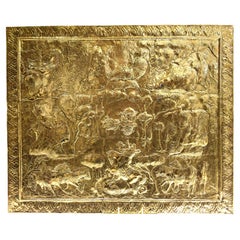
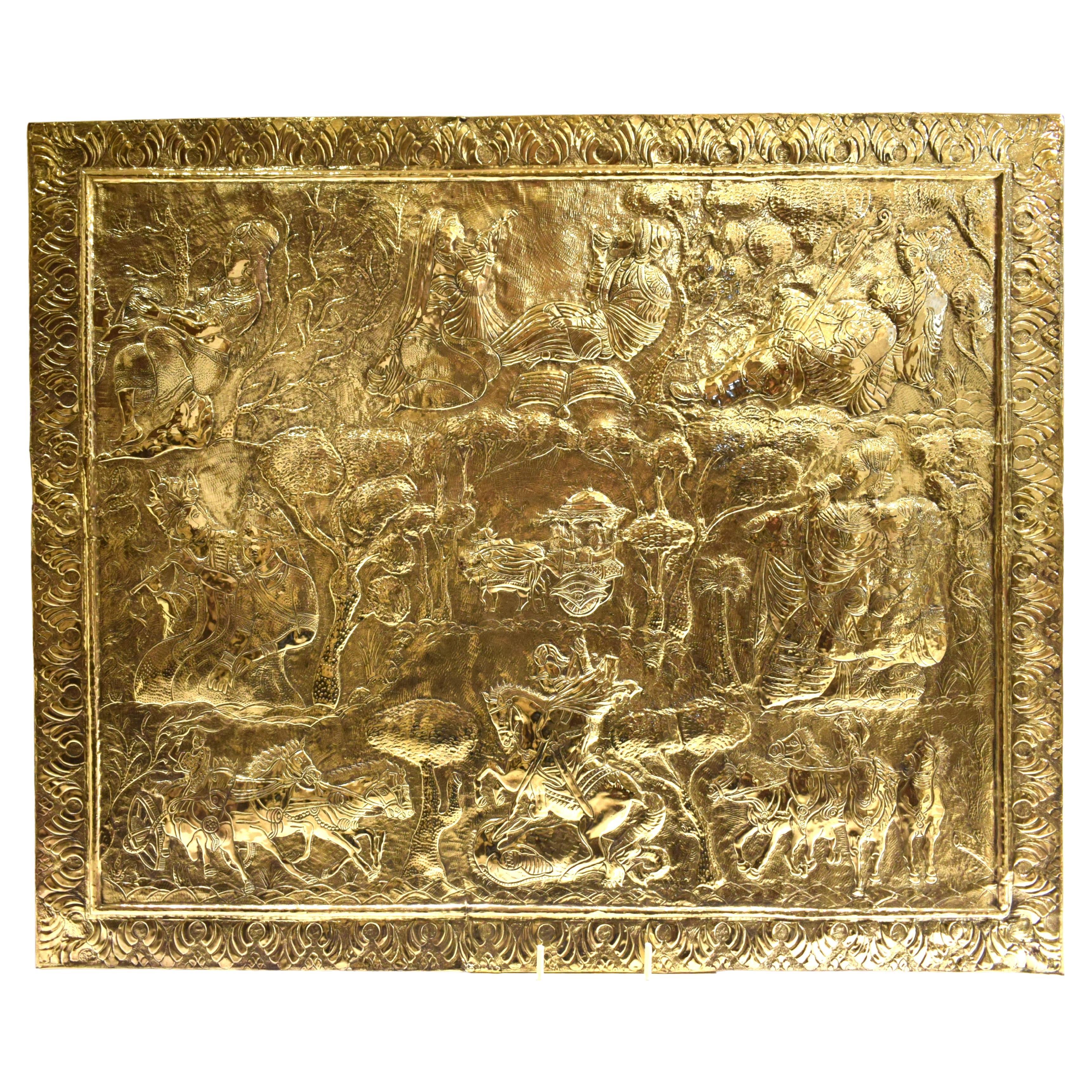
Visualize a captivating brass wall hanging from the 20th century, a masterpiece that intricately captures the essence of Mughal art and history. This large, hammered brass creation serves as both a work of art and a historical narrative, transporting observers to the opulent world of Mughal India. The brass wall hanging is generously sized, with a surface that gleams in the warm, golden hues characteristic of polished brass. Its weighty presence adds a sense of grandeur to any space, and the hammered texture across the entire piece adds depth and dimension to the artwork. Upon closer inspection, the surface of the brass wall hanging reveals a finely detailed Mughal scene. The artisan has skillfully hammered the brass to create a rich tapestry of imagery, showcasing the elegance and sophistication of Mughal life. The scene might include depictions of Mughal emperors and empresses, courtiers engaged in conversation, musicians playing traditional instruments, and gracefully adorned elephants parading through lush gardens. The meticulous craftsmanship extends to the fine details of clothing, jewelry, and architectural elements. The hammered technique imparts a textured quality to the figures and structures, creating a dynamic interplay of light and shadow that adds to the visual richness of the piece. The central focus of the brass wall hanging might be a magnificent Mughal palace or a serene garden, both rendered with precision and artistic flair. The scene is framed by intricate borders featuring geometric patterns and floral motifs, showcasing the artisan's dedication to both historical accuracy and aesthetic beauty. As a whole, this brass wall hanging stands...

Category

20th Century Indian Anglo Raj Decorative Art

Materials

Brass

19th Century Painted Plaque in Gilt Frame

19th Century Painted Plaque in Gilt Frame

Located in Tarrytown, NY

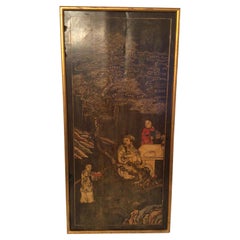
19th Century Painted Plaque in Gilt Frame The panel features intricate, hand-painted oriental scenery in golden colors, depicting figures in a landscape or court setting on a stone b...

Category

Antique 19th Century Chinese Chinoiserie Paintings and Screens

Materials

Stone

Palace Panel in Brass Repousse

Palace Panel in Brass Repousse

By Matteo Cibic

Located in Kolkata, IN

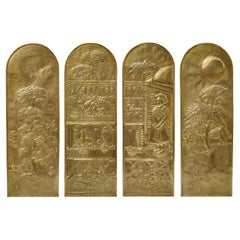
A royal odyssey meticulously handcrafted in brass repousse on four palatial panels. They have been finished elegantly with blue inlay work to enhance the richness of the metal. "Im...

Category

21st Century and Contemporary Indian Decorative Art

Materials

Brass

Antique Chinese Printed Ink Rubbing of Panthaka Arhat, (scroll mounted)

Antique Chinese Printed Ink Rubbing of Panthaka Arhat, (scroll mounted)

Located in Point Richmond, CA

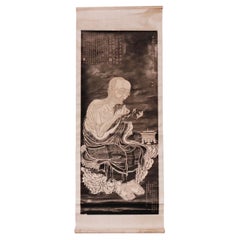
Chinese ink rubbing printing depicting Panthaka Arhat, no.4 of the 16 arhat images immortalized in stone at the former stupa at Shengyin Temple. Depicted here sitting on a rock with a book in his left hand and snapping his fingers in his right hand, symbolic of the speed at which he obtained enlightenment, accompanied by a beggar’s bowl and an incense burner, complete with colophons and silk scroll mounting. The Emperor Qianlong ordered the stone stele to be carved in 1764 after the arhat designs painted by the famed artist Guanxiu (832-912). Even though the temple was destroyed in the Taiping rebellion, the steles remain and have been reinstalled at the Hangzhou Stele Forest. Condition: Creases from rolling, otherwise fine condition. Mounting: 58” x 22”. 19th Century. Provenance: Frank “Till” & Peggy Durdin, San Diego, CA L'Asie Exotique, Palm Springs, CA For other rubbings of this stele see: Penn Museum, object number 2010-26-4 The Metropolitan Museum of Art AN#: 59.195.15 Fine Arts Library of Harvard University, record id: W280021_urn-3:FHCL:478850 For another example of this image rendered in jade and lacquer see: “Screen Paintings of Guanxiu’s Sixteen Arhats in the Collection of the Palace Museum” Luo Wehhua translated by Bruce Doar, Orientations, September 2010, p. 104. In this article the image is identified as the sixteenth arhat Abheda, It is explained in this article that Qianlong re-identified the arhats, thus the 16th Arhat attribution for this image. Also in this article the identical colophon by Qianlong above the image is translated as: “These accurate portraits of the Sixteen Arhats were created by the Tang Dynasty painter Guanxiu, as recorded in Xuanhe Huapu (Record of paintings in the Xuanhe Reign), and during the millennium from the Guangming reign period to the present day, the original works were to be found in Zhejiang, where they were housed in the collection of Shengyin Temple in Qiantang (Huangzhou). In spring of the dingchou year (1757) of his reign, the Qianlong emperor undertook a southern tour of inspection and stayed at an imperial lodge on the West Lake. He went to the temple to pay his respects and there he saw the arhats on display and wrote a description of these marvels. The sequence of the arhats and their names had been passed down since ancient times, but they did not correspond to their Sanskrit titles; the sequence of the arhat names conformed instead to the interpretation of the Sanskrit classics by the Zhangjia State Preceptor. The emperor penned the original names and positions in the sequence below each of the figures in accordance with the readings supplied in Tongwen Yuntong (Unified Rhymes), and below each he penned an encomium, which he signed. Then the images were returned to the collection, to be passed down as a perpetual treasure. Now, the fourth great arhat had long gone missing and we did not know where his painting was. But it was merely a trifling matter of matching the images with the names, and now surely we have found him! This I, the emperor, believe.” All 16 of these rubbings can be found in the Rubel Chinese Rubbings Collection at the Fine Arts Library of Harvard University with the following descriptive historical note: “Rubbing from stele depicting No. 4 of 16 arhats (Lohans, Buddhist saints) -- Nan ti mi duo luo qing you, Panthaka Arhat. Original painting attributed to Guanxiu, 832-912. Inscriptions written by Hongli, Emperor Qianlong (Gaozong, 1711-1799) of Qing Dynasty. 7 seals of Qianlong follow the inscriptions. Script style: in xing shu. Shi liu zun zhe -- "The 16 noble ones" are 16 lohans. Lohans are also called "a-lo-han" based on the transliteration of the Sanskrit term "arhat." (Japanese: Rakan; Chinese: Lohan; Tibetan: Gnas-brtan). Arhats or Arahants are saints or sages said to have renounced nirvana (freedom from the cycle of suffering and rebirth), vowed to remain in the world to protect the Dharma and propagate the Law of the Buddha in order to devote themselves more effectively to the relief of human misery, like the Bodhisattvas. These 16 Arhats, personal disciples distinguished by the Buddha, formed part of the 500 claimed by tradition to have attended the First Council in Rajagrha. The names and abodes of these 16 arhats are given in a work entitled "Record on the Duration of the Law, spoken by the Great arhat Nadimitra," which was translated into Chinese by the famous pilgrim Xuanzang (596-664) in 654. 16 lohans are quite often represented, especially in China and Japan, in sculpture and painting, in poses and with attributes. Every lohan can be easily with special icongraphic characteristics. Guanxiu (Jiang Deyin or Deyuan, a Buddhist monk also named Master Chan Yue, 832-912) -- painter during late Tang to Five Dynasties, specialized in painting lohan figures. Legend has it that the first portraits of the 18 Lohans...

Category

Antique 19th Century Chinese Qing Prints
Materials

Paper